
Vitamin K and Coumadin Andres Ferber MD September
Vitamin K and Coumadin Andres Ferber MD September 15 2009
Coumadin is an anticoagulant because…. 1) 2) 3) 4) It inhibits blood coagulation It prevents the (protein) synthesis of factors 2, 7, 9, 10 Its action results in hypo functioning factors 2, 7, 9, 10 All of the above
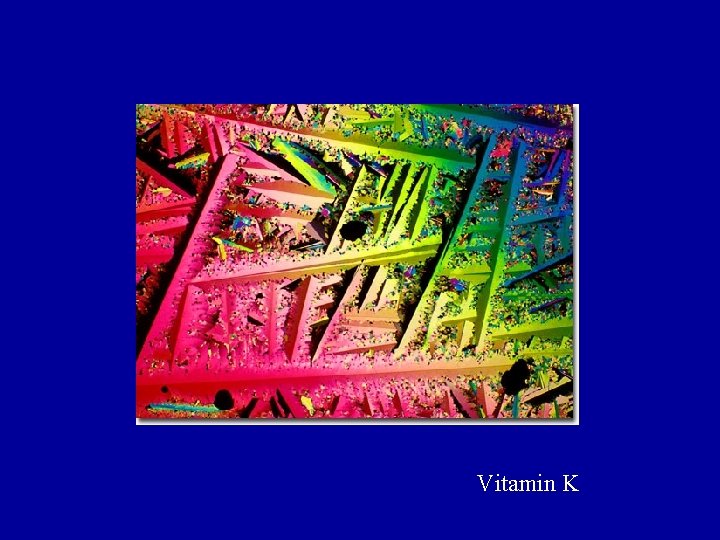
Vitamin K
Gamma Carboxylation • Introduction of an additional carboxylic group in the position gamma of glutamic acid • The vitamin K dependent factors; II, VII, IX, X, Protein C, Protein S, Protein Z and the Bone proteins; Bone Gla protein and Matrix Gla protein have a Gla domain where several glutamic acids are clustered and get gamma carboxylated. • • Other proteins including GAS-6 (growth arrest protein), two thyroid and spinal cord proteins and certain peptide toxin from mollusks contain Gla domains. In the coagulation factors gamma carboxylation increases Calcium binding. Upon Ca++ binding a conformational change of the molecule occurs exposing an three hydrophobic residues that are responsible for phospholipid membrane binding. This in turn produces a marked increased in the activity of the factor.
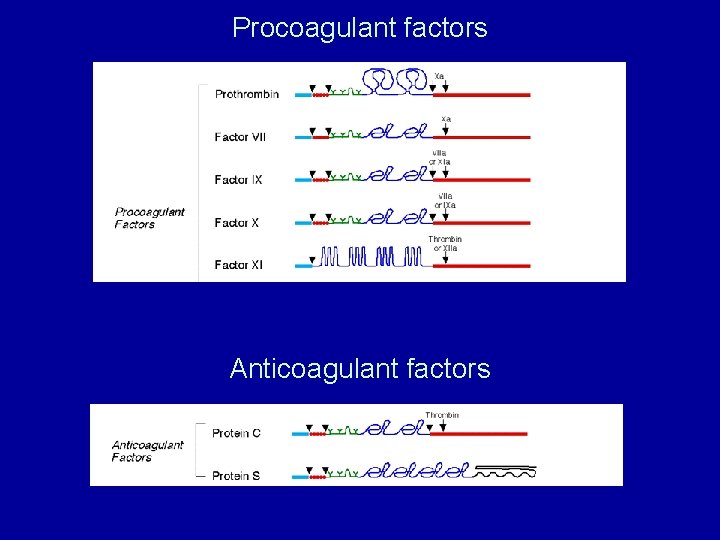
Procoagulant factors Anticoagulant factors
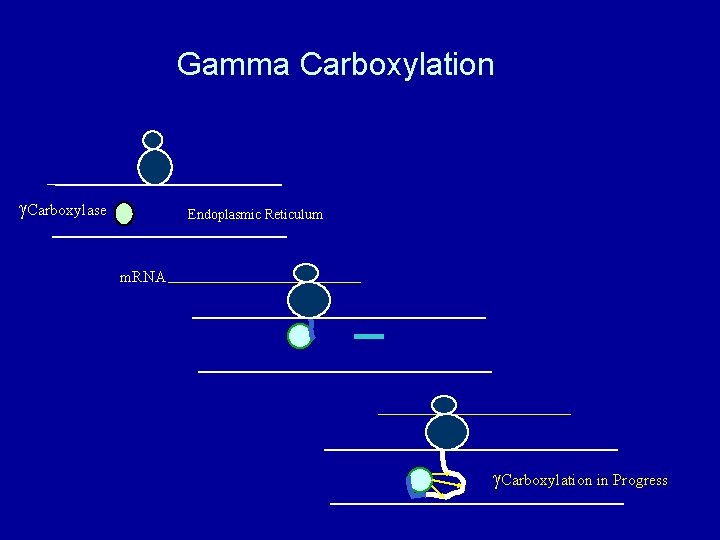
Gamma Carboxylation g. Carboxylase Endoplasmic Reticulum m. RNA g. Carboxylation in Progress
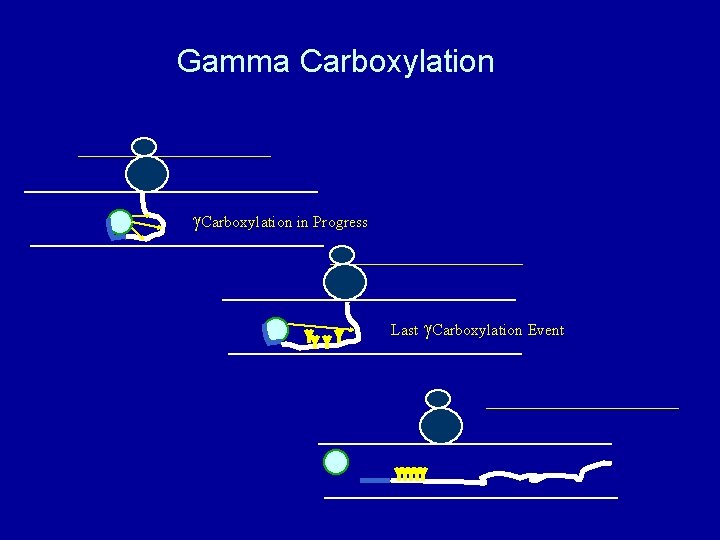
Gamma Carboxylation g. Carboxylation in Progress Last g. Carboxylation Event
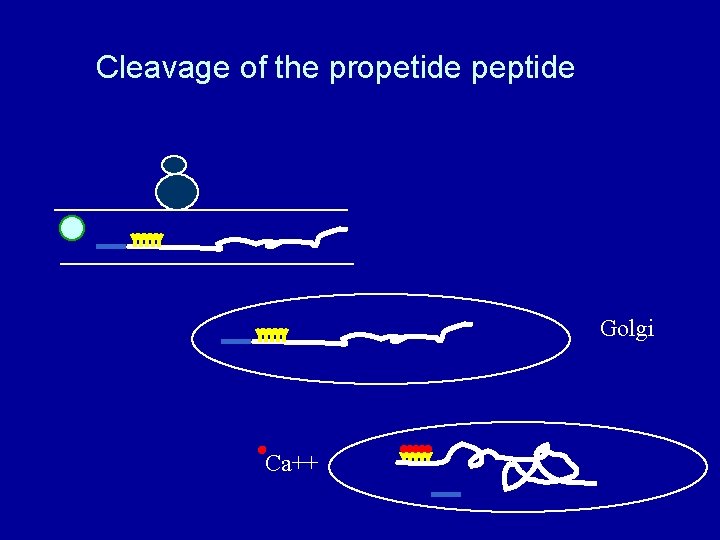
Cleavage of the propetide peptide Golgi Ca++
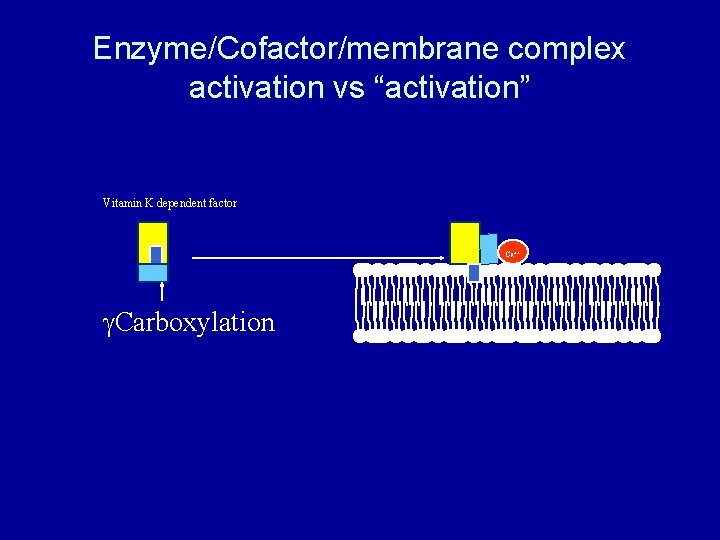
Enzyme/Cofactor/membrane complex activation vs “activation” Vitamin K dependent factor Ca++ g. Carboxylation
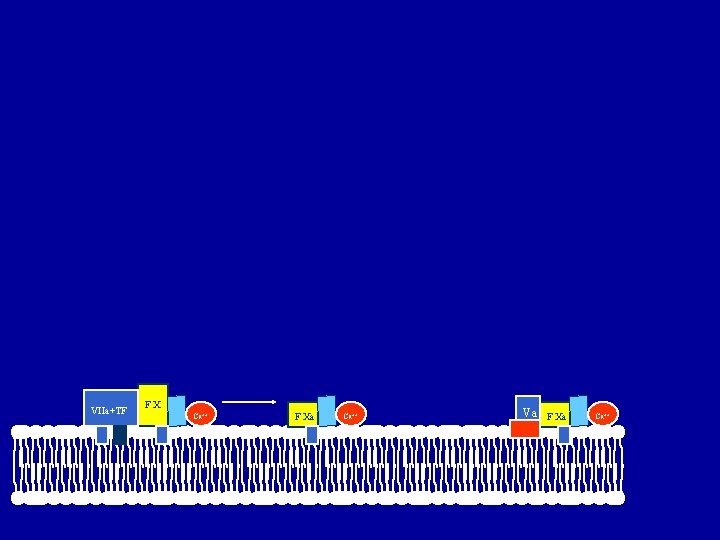
VIIa+TF F X Ca++ F Xa Ca++ Va F Xa Ca++
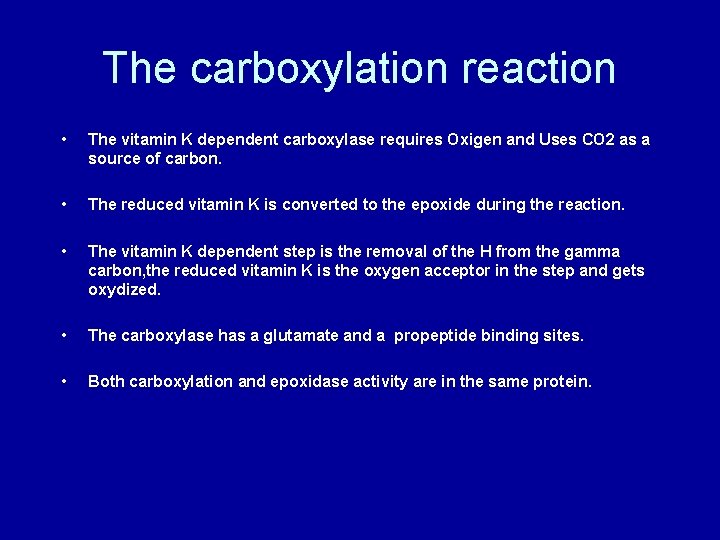
The carboxylation reaction • The vitamin K dependent carboxylase requires Oxigen and Uses CO 2 as a source of carbon. • The reduced vitamin K is converted to the epoxide during the reaction. • The vitamin K dependent step is the removal of the H from the gamma carbon, the reduced vitamin K is the oxygen acceptor in the step and gets oxydized. • The carboxylase has a glutamate and a propeptide binding sites. • Both carboxylation and epoxidase activity are in the same protein.
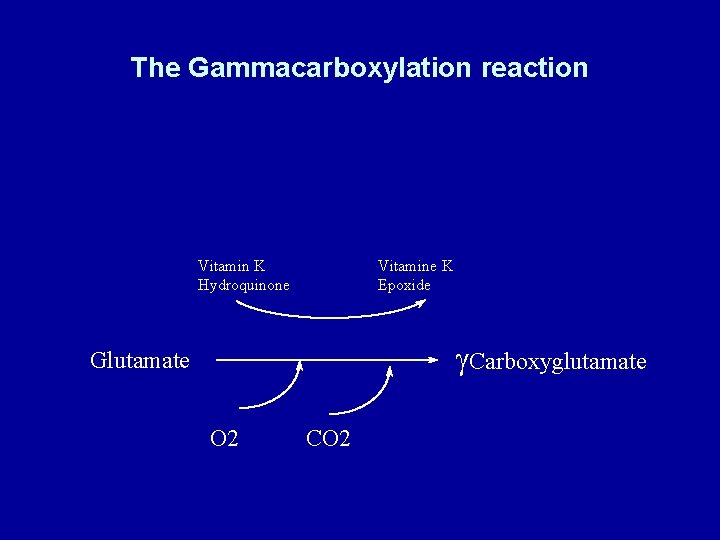
The Gammacarboxylation reaction Vitamin K Hydroquinone Vitamine K Epoxide g. Carboxyglutamate Glutamate O 2 CO 2
Recycling of vitamin K • After forming part of the polypeptide and after proteolyis free gamma carboxyglutamic acid enters the circulation and it is not re-used. It is excreted in the urine. Therefore there is a 1: 1 ratio of the number of Gla residues and the conversion of KH 2 into KO. • On the basis of nutritional intake of vitamin K and urinary Gla excretion it can be calculated that the number of carboxylation events exceeds the number of vitamin K molecules by several thousand folds. • Vitamin K is recycled • The enzyme KO reductase accomplishes that function.
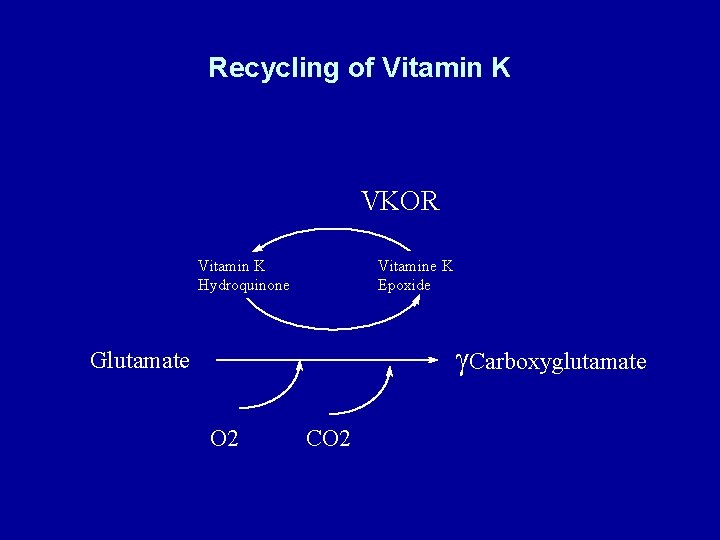
Recycling of Vitamin K VKOR Vitamin K Hydroquinone Vitamine K Epoxide g. Carboxyglutamate Glutamate O 2 CO 2
Coumadin
Coumadin • Coumadin interferes with KO reductase • Recycling of KO is blocked and results in exhaustion of KH 2 stores resulting in apparent vitamin K deficiency
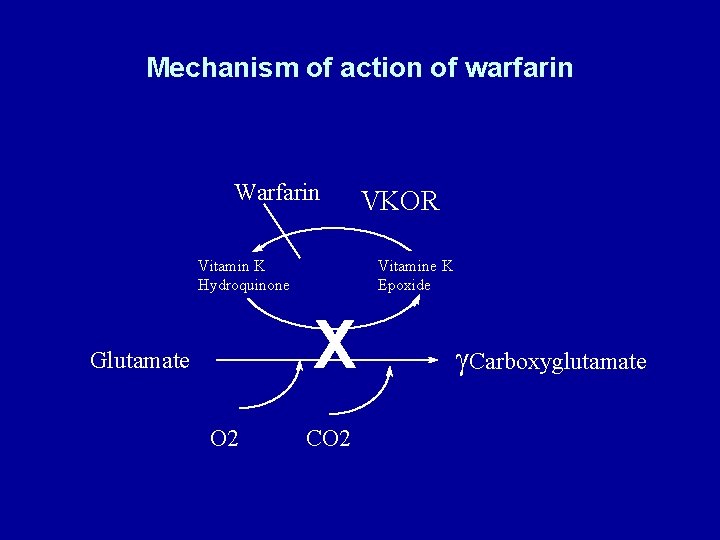
Mechanism of action of warfarin Warfarin Vitamin K Hydroquinone Vitamine K Epoxide X Glutamate O 2 VKOR CO 2 g. Carboxyglutamate
Coumadin • Because conversion of vitamin K to KH 2 is not affected the coumadin effect can be bypassed by administration of exogenous vitamin K
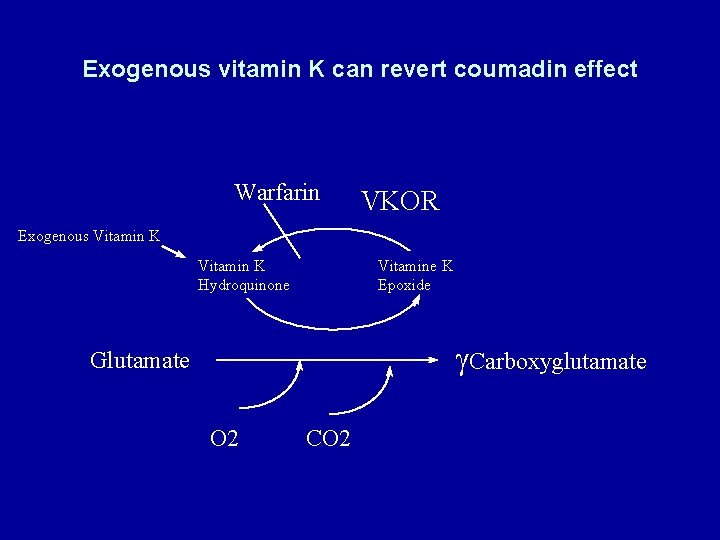
Exogenous vitamin K can revert coumadin effect Warfarin VKOR Exogenous Vitamin K Hydroquinone Vitamine K Epoxide g. Carboxyglutamate Glutamate O 2 CO 2
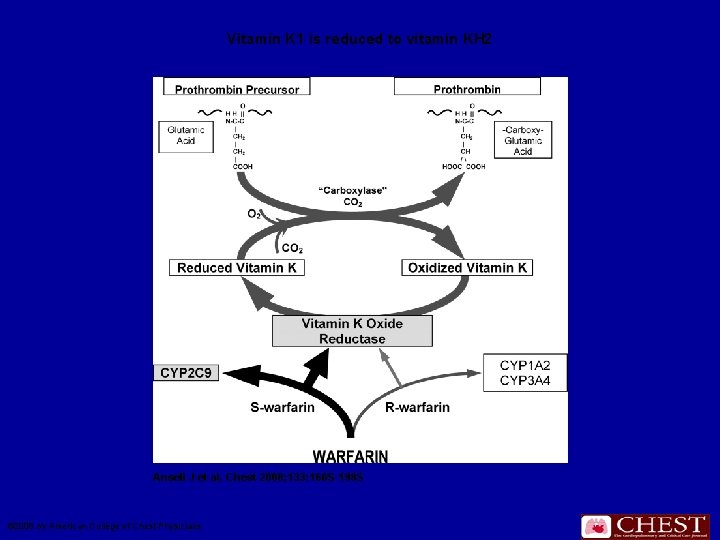
Vitamin K 1 is reduced to vitamin KH 2 Ansell J et al. Chest 2008; 133: 160 S-198 S © 2008 by American College of Chest Physicians
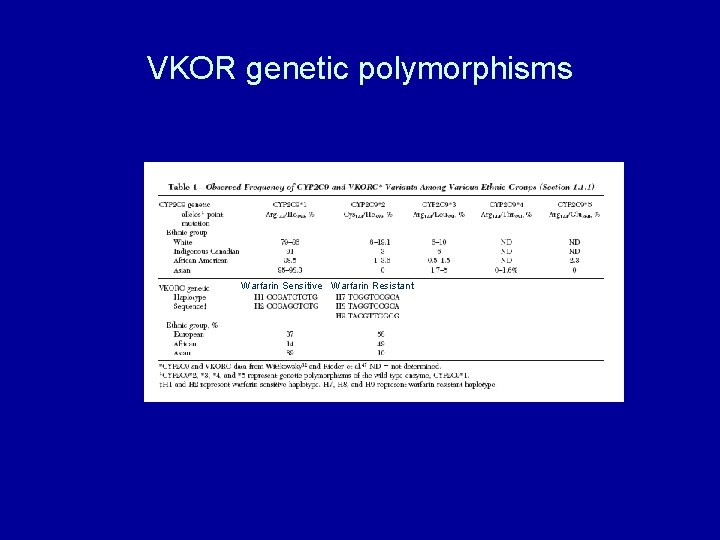
VKOR genetic polymorphisms Warfarin Sensitive Warfarin Resistant
Coumarins • Most clinically used coumarins have relatively short half life acenocoumarol 10 hs warfarin 40 hs phenprocoumon 100 hs • Rodents have developped resistance to this first generation coumarins by mutating their KO reductase to a form that has less affinity for coumarins • Second generation coumarins or super warfarins are used now as rodenticides. Their half life is 6 months or more. • Treatment of intoxication with these products may require high doses of vitamin K (up to 200 mg/day) for several years.
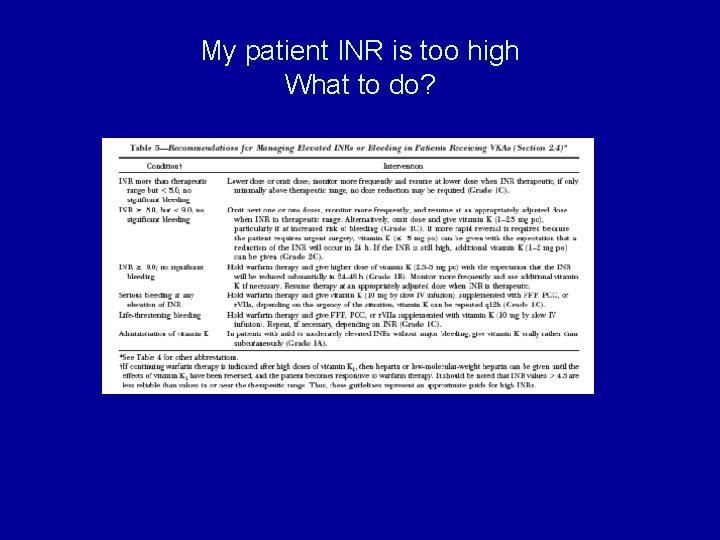
My patient INR is too high What to do?
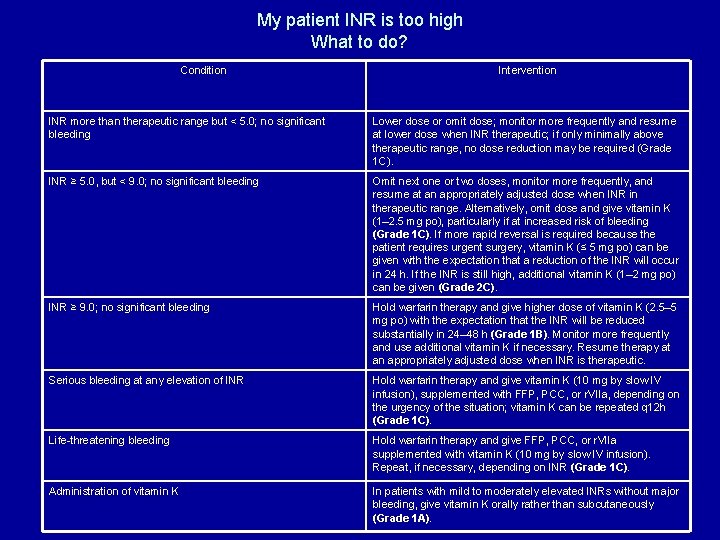
My patient INR is too high What to do? Condition Intervention INR more than therapeutic range but < 5. 0; no significant bleeding Lower dose or omit dose; monitor more frequently and resume at lower dose when INR therapeutic; if only minimally above therapeutic range, no dose reduction may be required (Grade 1 C). INR ≥ 5. 0, but < 9. 0; no significant bleeding Omit next one or two doses, monitor more frequently, and resume at an appropriately adjusted dose when INR in therapeutic range. Alternatively, omit dose and give vitamin K (1– 2. 5 mg po), particularly if at increased risk of bleeding (Grade 1 C). If more rapid reversal is required because the patient requires urgent surgery, vitamin K (≤ 5 mg po) can be given with the expectation that a reduction of the INR will occur in 24 h. If the INR is still high, additional vitamin K (1– 2 mg po) can be given (Grade 2 C). INR ≥ 9. 0; no significant bleeding Hold warfarin therapy and give higher dose of vitamin K (2. 5– 5 mg po) with the expectation that the INR will be reduced substantially in 24– 48 h (Grade 1 B). Monitor more frequently and use additional vitamin K if necessary. Resume therapy at an appropriately adjusted dose when INR is therapeutic. Serious bleeding at any elevation of INR Hold warfarin therapy and give vitamin K (10 mg by slow IV infusion), supplemented with FFP, PCC, or r. VIIa, depending on the urgency of the situation; vitamin K can be repeated q 12 h (Grade 1 C). Life-threatening bleeding Hold warfarin therapy and give FFP, PCC, or r. VIIa supplemented with vitamin K (10 mg by slow IV infusion). Repeat, if necessary, depending on INR (Grade 1 C). Administration of vitamin K In patients with mild to moderately elevated INRs without major bleeding, give vitamin K orally rather than subcutaneously (Grade 1 A).
PCCs (Replace factors) • Prothrombin Complex Concentrates – Variable amount of vit K factors including IX – Variable amounts of factor VII – No activated factors – Heparin – Natural anticoagulants
Recombinant factor VIIa (Activates Blood Coagulation X to Xa)
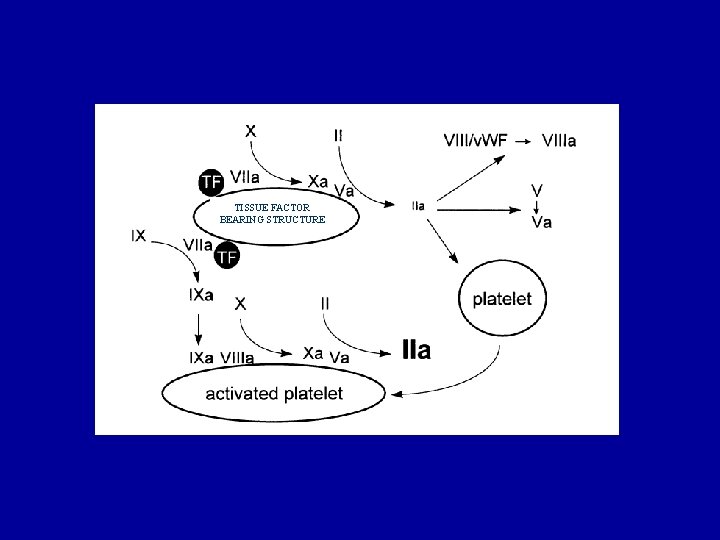
TISSUE FACTOR Tissue Factor Bearing cell BEARING STRUCTURE
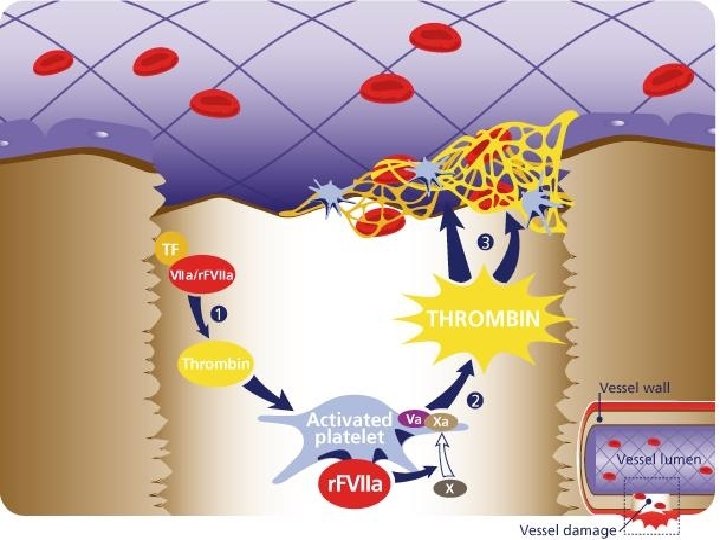
Mode of Action
- Slides: 31