
VITAMIN A Dr Manisha CHEMISTRY Common structural unit
- Slides: 31
VITAMIN A Dr Manisha
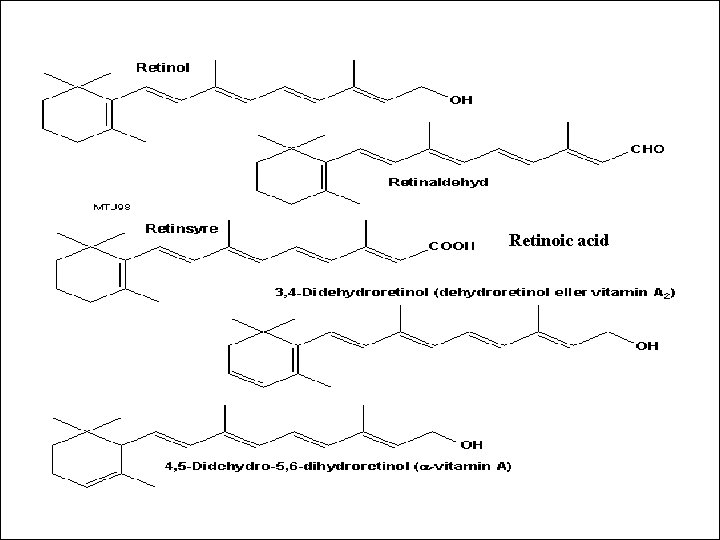
CHEMISTRY ¬Common structural unit ¬A trimethyl cyclohexenyl ring ¬An all trans configured chain with four double bonds.
Retinoic acid
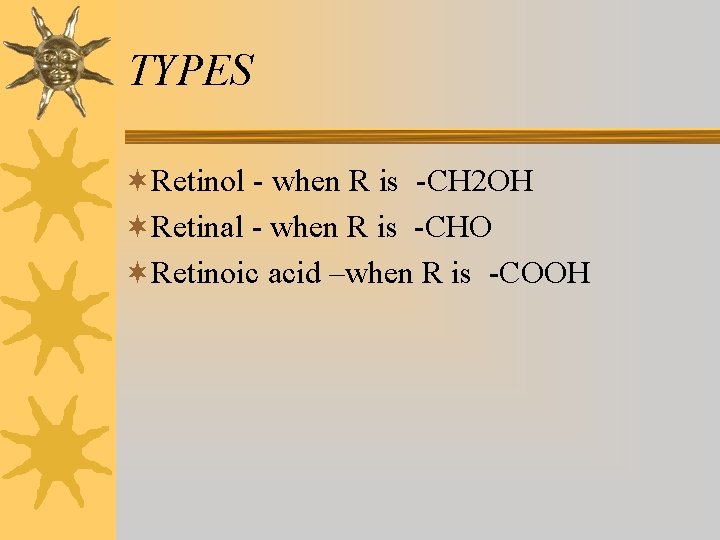
TYPES ¬Retinol - when R is -CH 2 OH ¬Retinal - when R is -CHO ¬Retinoic acid –when R is -COOH
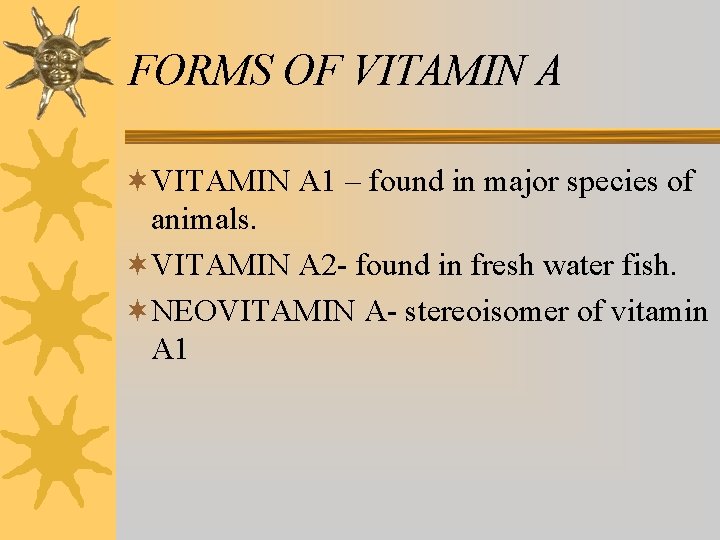
FORMS OF VITAMIN A ¬VITAMIN A 1 – found in major species of animals. ¬VITAMIN A 2 - found in fresh water fish. ¬NEOVITAMIN A- stereoisomer of vitamin A 1
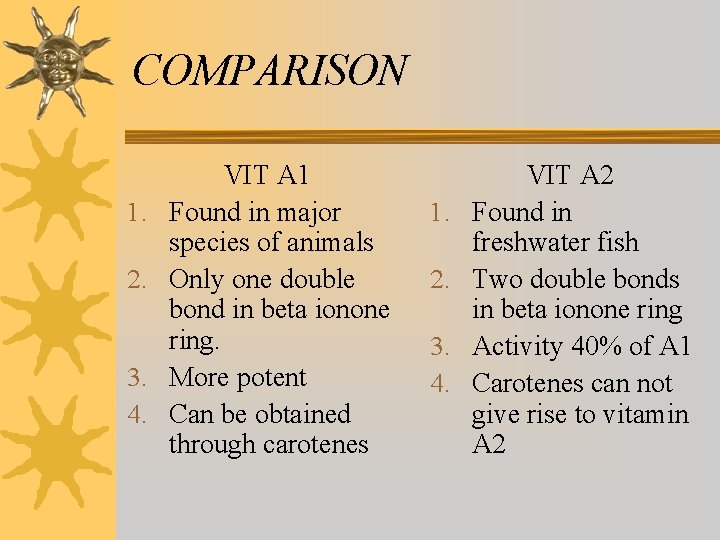
COMPARISON 1. 2. 3. 4. VIT A 1 Found in major species of animals Only one double bond in beta ionone ring. More potent Can be obtained through carotenes 1. 2. 3. 4. VIT A 2 Found in freshwater fish Two double bonds in beta ionone ring Activity 40% of A 1 Carotenes can not give rise to vitamin A 2
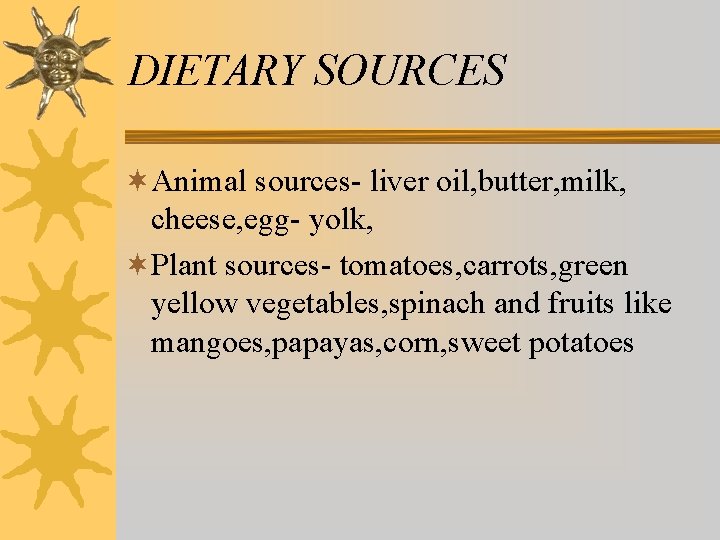
DIETARY SOURCES ¬Animal sources- liver oil, butter, milk, cheese, egg- yolk, ¬Plant sources- tomatoes, carrots, green yellow vegetables, spinach and fruits like mangoes, papayas, corn, sweet potatoes
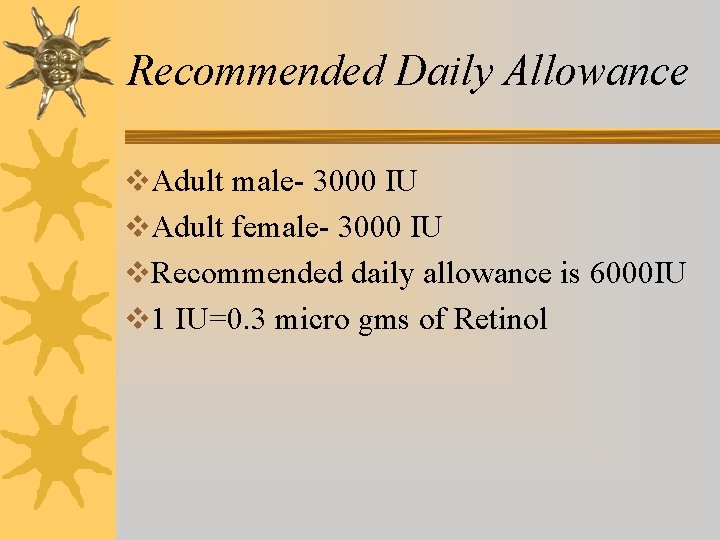
Recommended Daily Allowance v. Adult male- 3000 IU v. Adult female- 3000 IU v. Recommended daily allowance is 6000 IU v 1 IU=0. 3 micro gms of Retinol
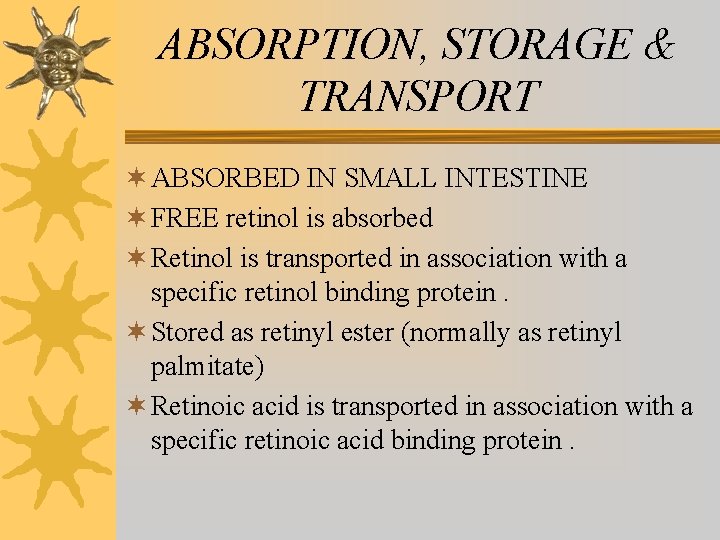
ABSORPTION, STORAGE & TRANSPORT ¬ ABSORBED IN SMALL INTESTINE ¬ FREE retinol is absorbed ¬ Retinol is transported in association with a specific retinol binding protein. ¬ Stored as retinyl ester (normally as retinyl palmitate) ¬ Retinoic acid is transported in association with a specific retinoic acid binding protein.
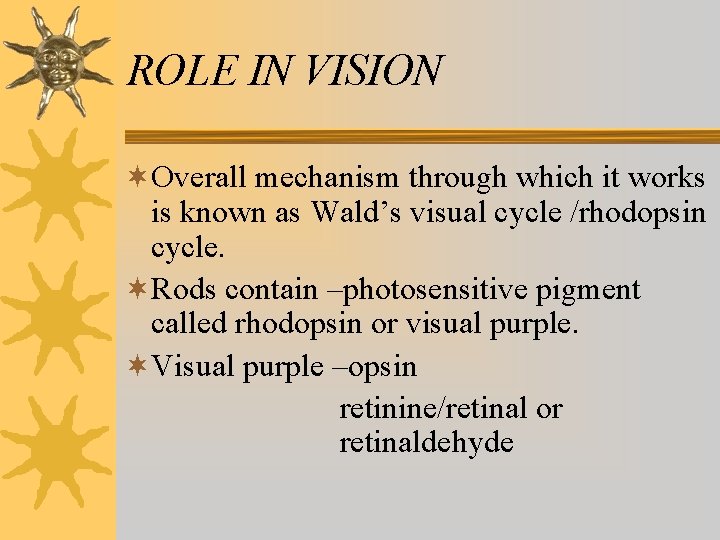
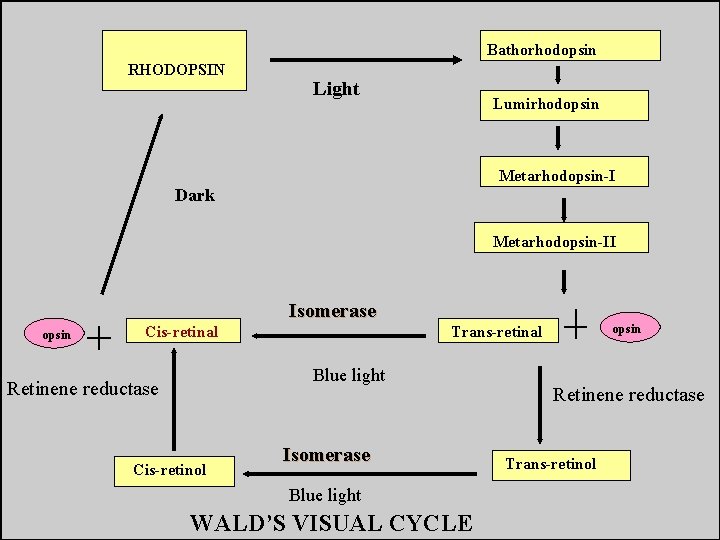
ROLE IN VISION ¬Overall mechanism through which it works is known as Wald’s visual cycle /rhodopsin cycle. ¬Rods contain –photosensitive pigment called rhodopsin or visual purple. ¬Visual purple –opsin retinine/retinal or retinaldehyde
Bathorhodopsin RHODOPSIN Light Lumirhodopsin Metarhodopsin-I Dark Metarhodopsin-II Isomerase opsin Cis-retinal Blue light Retinene reductase Cis-retinol opsin Trans-retinal Isomerase Blue light WALD’S VISUAL CYCLE Retinene reductase Trans-retinol
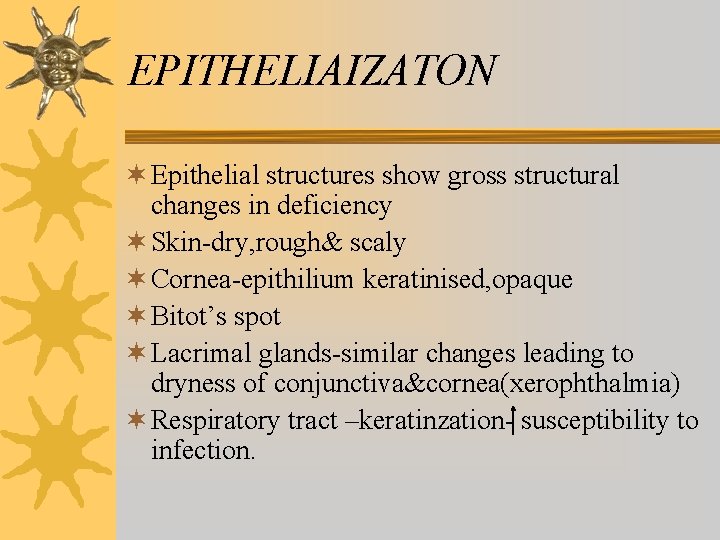
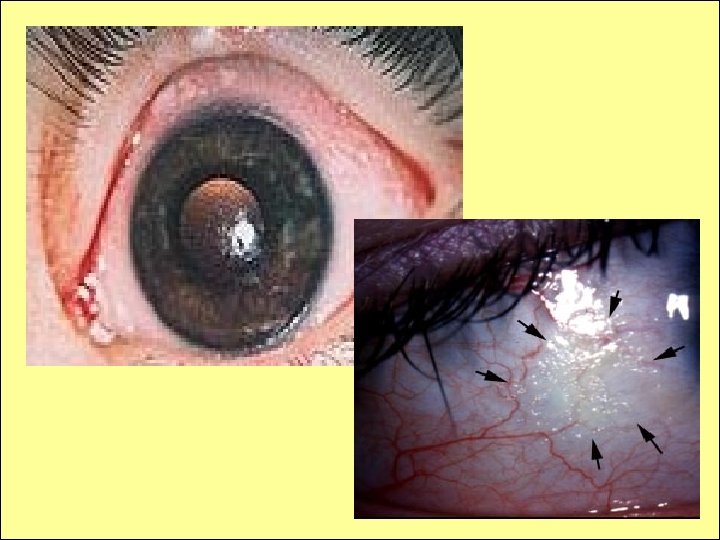
EPITHELIAIZATON ¬ Epithelial structures show gross structural changes in deficiency ¬ Skin-dry, rough& scaly ¬ Cornea-epithilium keratinised, opaque ¬ Bitot’s spot ¬ Lacrimal glands-similar changes leading to dryness of conjunctiva&cornea(xerophthalmia) ¬ Respiratory tract –keratinzation- susceptibility to infection.
BONE AND TEETH FORMATION ¬Deficiency results in slowing of endochondral bone formation and reduced osteoblastic activity. ¬Thinning of enamel and deposit of chalky deposit on the surface of the teeth.
ROLE IN REPRODUCTION ¬EXPERIMENTS ON RATS¬Deficient male-ill developed testes, immature sperms ¬Deficient female-unable to carry pregnancy to full term. ¬ROLE IN METABOLISM • Protein synthesis • DNA metabolism
Beta-Carotene as an antioxidant and anticancer ¬In addition to its antioxidant property, Beta - Carotene also has been shown to have anticancer action. ¬It increases the number of receptors on WBC for a molecule known as “major histocompatibility complex I”.
OCULAR MENIFASTATIONSVITAMIN A DEFICIENCY ¬Night blindness/ Nyctalopia-first symptom ¬Conjunctival xerosis-first clinical sign ¬Bitot’s spot-frequently bilateral ¬Corneal xerosis-cornea dry & nonwettable ¬Keratomalacia-ulceration of cornea.
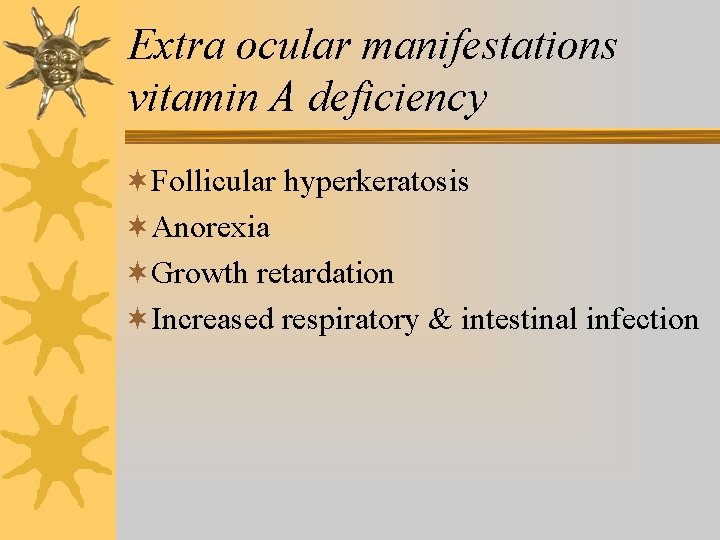
Extra ocular manifestations vitamin A deficiency ¬Follicular hyperkeratosis ¬Anorexia ¬Growth retardation ¬Increased respiratory & intestinal infection
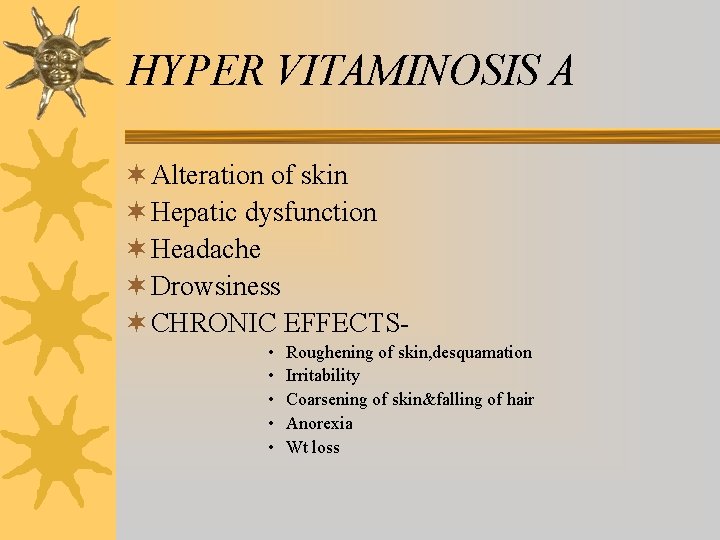
HYPER VITAMINOSIS A ¬ Alteration of skin ¬ Hepatic dysfunction ¬ Headache ¬ Drowsiness ¬ CHRONIC EFFECTS • • • Roughening of skin, desquamation Irritability Coarsening of skin&falling of hair Anorexia Wt loss
THERAPEUTIC USES OF RETINOIC ACID ¬Oral leukoplakia ¬Promyelocytic leukaemia
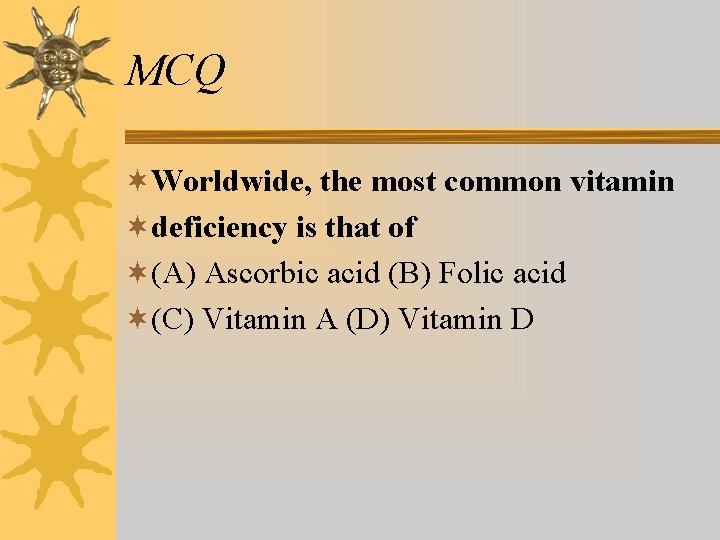
MCQ ¬Worldwide, the most common vitamin ¬deficiency is that of ¬(A) Ascorbic acid (B) Folic acid ¬(C) Vitamin A (D) Vitamin D
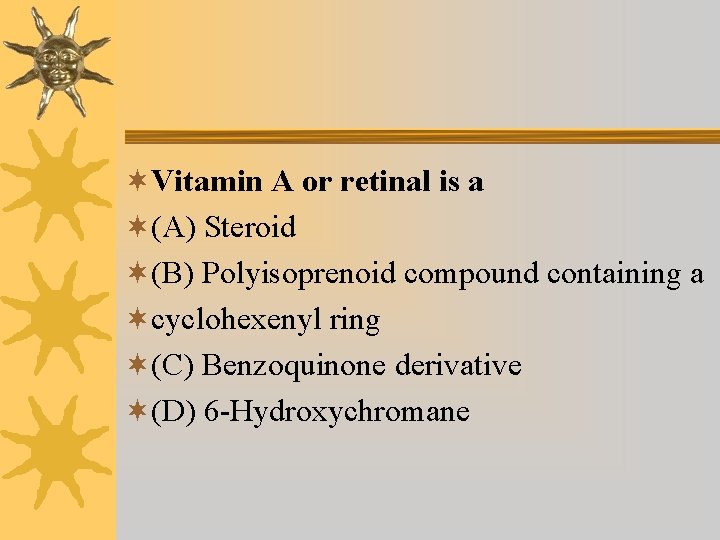
¬Vitamin A or retinal is a ¬(A) Steroid ¬(B) Polyisoprenoid compound containing a ¬cyclohexenyl ring ¬(C) Benzoquinone derivative ¬(D) 6 -Hydroxychromane
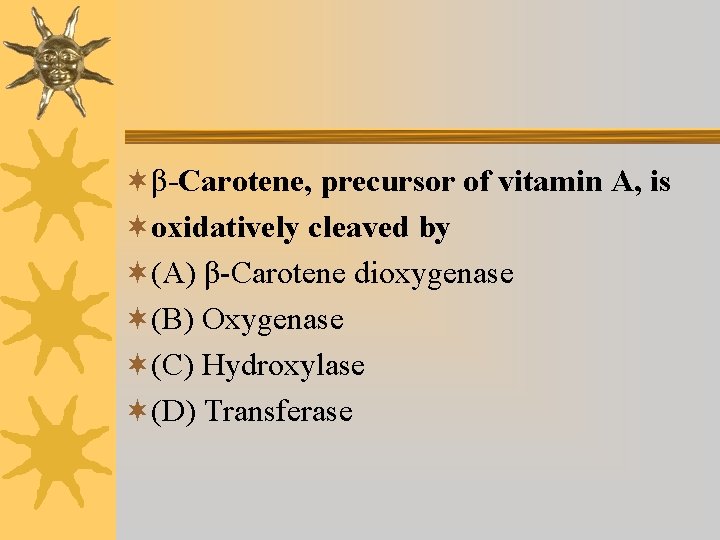
¬β-Carotene, precursor of vitamin A, is ¬oxidatively cleaved by ¬(A) β-Carotene dioxygenase ¬(B) Oxygenase ¬(C) Hydroxylase ¬(D) Transferase
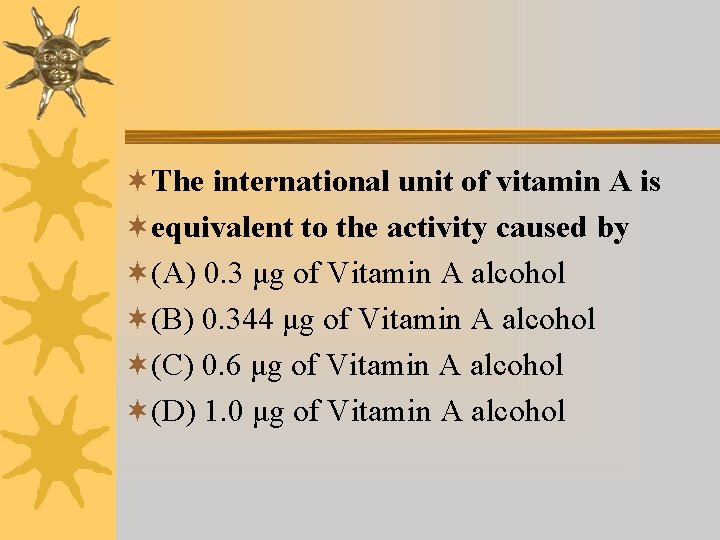
¬The international unit of vitamin A is ¬equivalent to the activity caused by ¬(A) 0. 3 μg of Vitamin A alcohol ¬(B) 0. 344 μg of Vitamin A alcohol ¬(C) 0. 6 μg of Vitamin A alcohol ¬(D) 1. 0 μg of Vitamin A alcohol
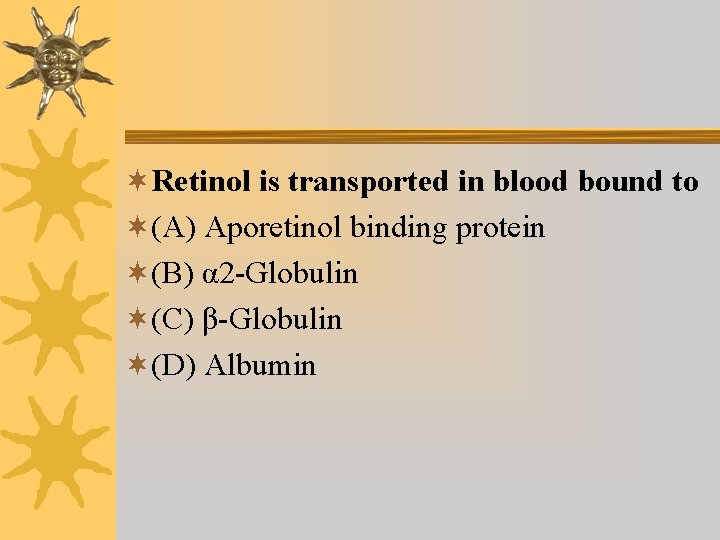
¬Retinol is transported in blood bound to ¬(A) Aporetinol binding protein ¬(B) α 2 -Globulin ¬(C) β-Globulin ¬(D) Albumin
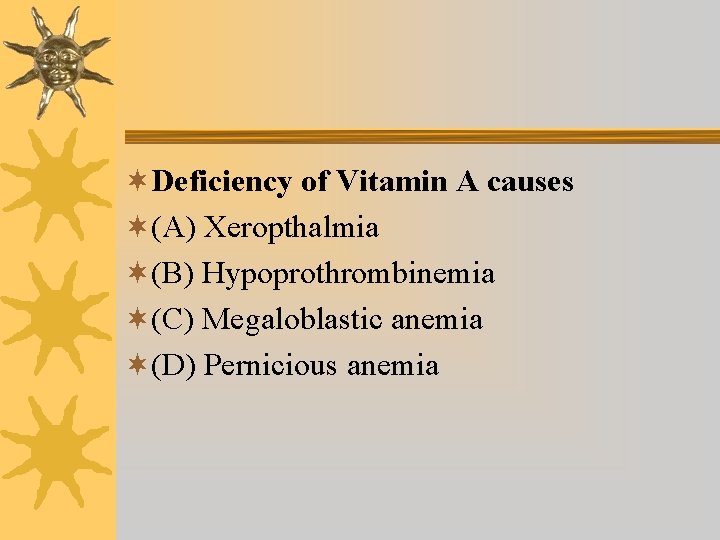
¬Deficiency of Vitamin A causes ¬(A) Xeropthalmia ¬(B) Hypoprothrombinemia ¬(C) Megaloblastic anemia ¬(D) Pernicious anemia
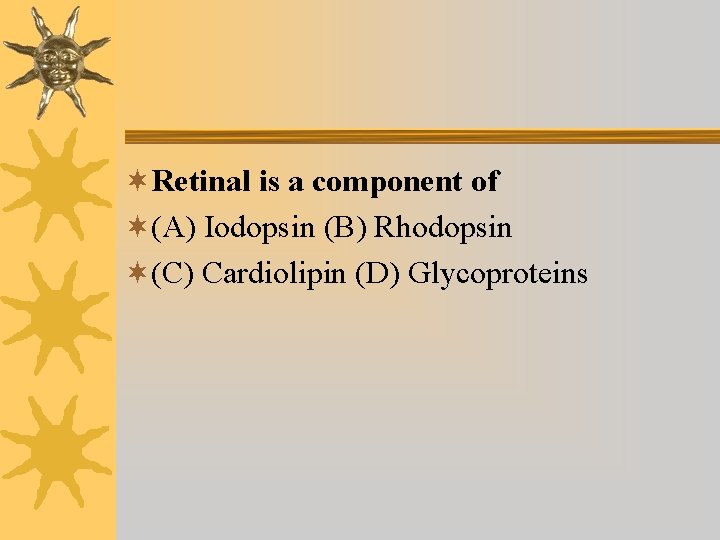
¬Retinal is a component of ¬(A) Iodopsin (B) Rhodopsin ¬(C) Cardiolipin (D) Glycoproteins
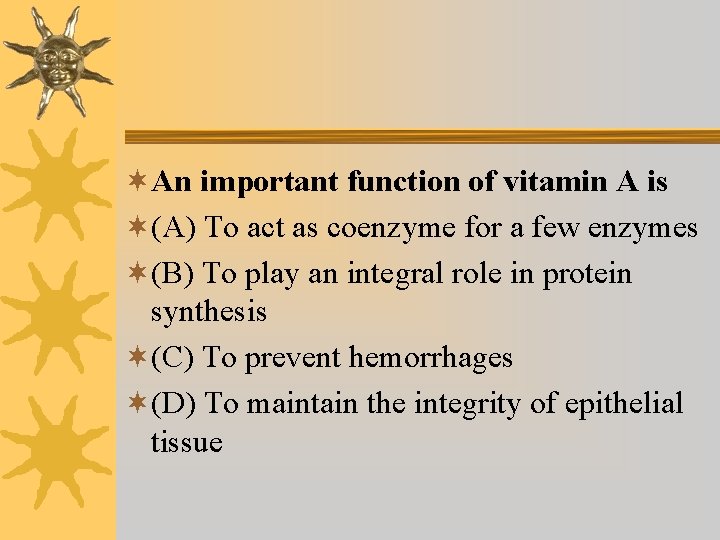
¬An important function of vitamin A is ¬(A) To act as coenzyme for a few enzymes ¬(B) To play an integral role in protein synthesis ¬(C) To prevent hemorrhages ¬(D) To maintain the integrity of epithelial tissue
¬Conversion of all-trans-retinal into alltrans¬retinol requires ¬(A) NAD (B) NADH ¬(C) NADP (D) NADPH
¬Two molecules of vitamin A can be formed ¬from 1 molecule of ¬(A) α-Carotene (B) β-Carotene ¬(C) γ-Carotene (D) All of these