
Vital Signs The Five Vital Signs n Level
- Slides: 23
Vital Signs
The Five Vital Signs n Level of responsiveness n Breathing n Pulse n Temperature n Blood pressure
Other Signs Skin temperature, moisture & color n Capillary refill time n State of the pupils n Ability to move n Response to pain and touch n
A AVPU V P U g. Alert g. Verbal stimuli g. Pain g. Unresponsive
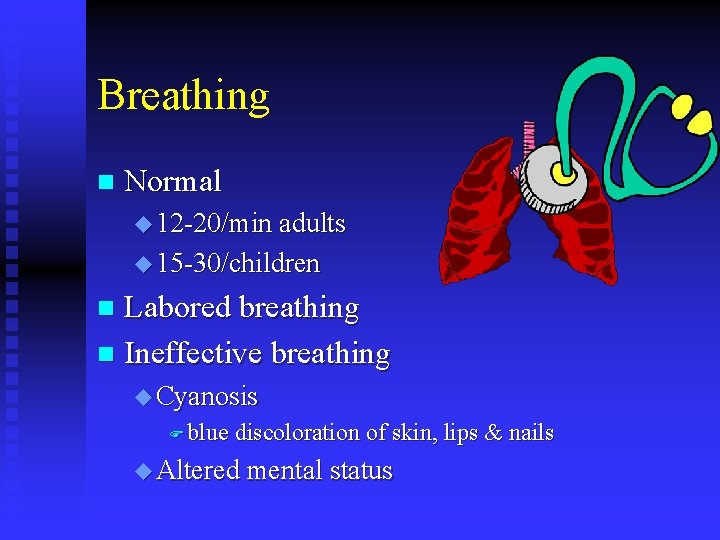
Breathing n Normal u 12 -20/min adults u 15 -30/children Labored breathing n Ineffective breathing n u Cyanosis F blue discoloration of skin, lips & nails u Altered mental status
Breathing - Other Signs Noise n Odor n u oral hygiene u alcohol u indigestion u diabetes u kidney failure u poisons
The Pulse n Rate u 50 -90 bpm/adult u 80 -100 bpm/child u don’t use your thumb Rhythm n Strength n
Normal Pulse Healthy person n Uncomplicated high blood pressure n Early shock n
Strong, Slow Pulse Sleep n Simple fainting n Early increased intracranial pressure n Well-conditioned athlete n
Weak, Slow Pulse Hypothermia n Late increased intracranial pressure n
Strong, Fast Pulse Early heat stroke n Fever n Overactive thyroid gland n Early shock n Excitement or fright n Strenuous physical activity n
Weak, Fast Pulse Overwhelming infection n Late heat stroke n Late shock n Diabetic coma n Some types of heart disease n
Irregular Pulse Sinus arrhythmia n Some types of heart disease n
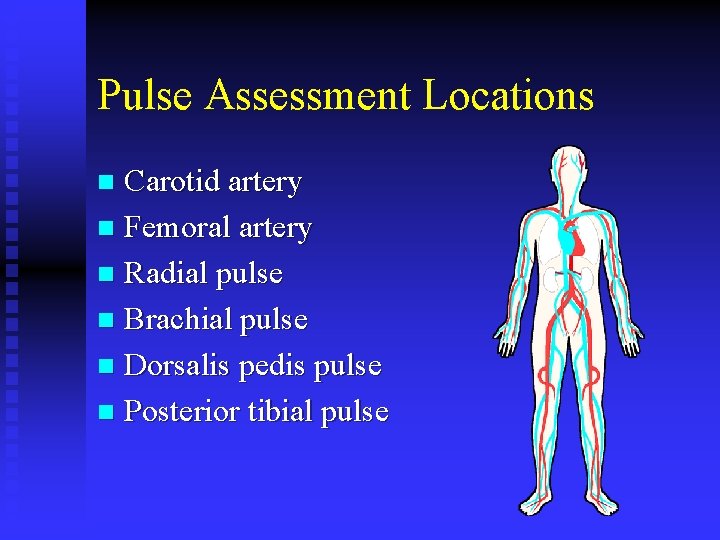
Pulse Assessment Locations Carotid artery n Femoral artery n Radial pulse n Brachial pulse n Dorsalis pedis pulse n Posterior tibial pulse n
Temperature Normal: 98. 6 ° F (37°C) n Hypothermia: 95°F (35°C) n Locations n u Oral u Ear u Axillary u Rectal
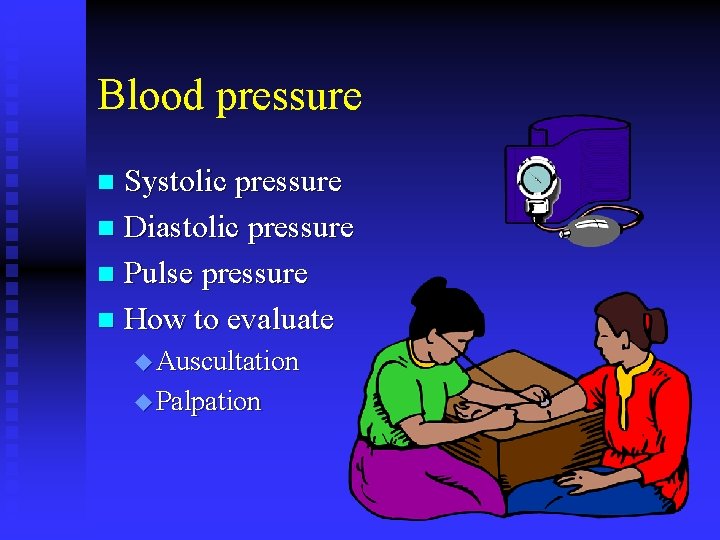
Blood pressure Systolic pressure n Diastolic pressure n Pulse pressure n How to evaluate n u Auscultation u Palpation
Skin Temperature, Moisture and Color Red, moist, warm skin n Red, dry, warm skin n Pale, moist, cool skin n Pale, dry, cool skin n Blue skin n Yellow skin n
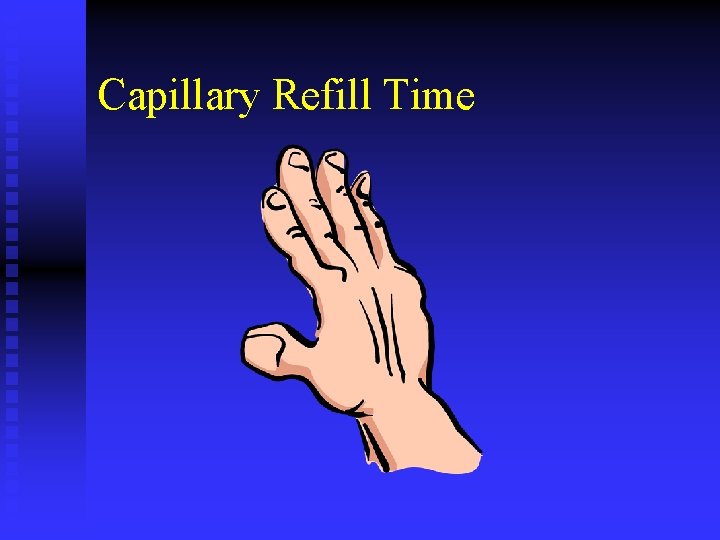
Capillary Refill Time
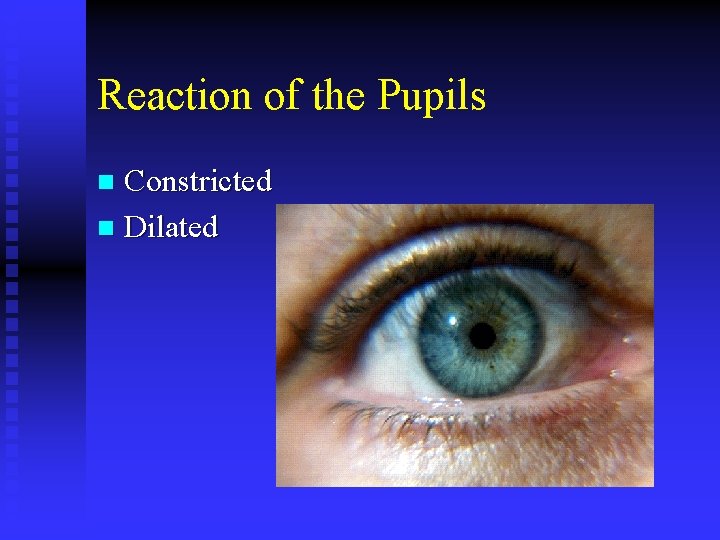
Reaction of the Pupils Constricted n Dilated n
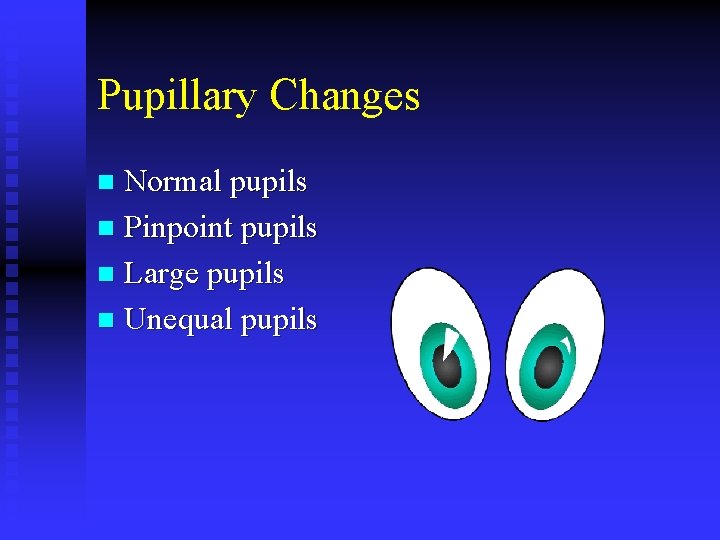
Pupillary Changes Normal pupils n Pinpoint pupils n Large pupils n Unequal pupils n
Reaction to Pain & Touch Feeling n Localization n
Ability to Move Free movement n Resisted movement n Weakness n One side vs. both sides n Paralysis n
Triad n n n Level of responsiveness State of pupils Lateralized extremity weakness