
Vital Signs Continued Chapter 9 1 Respiration is
- Slides: 23
Vital Signs Continued Chapter 9 1
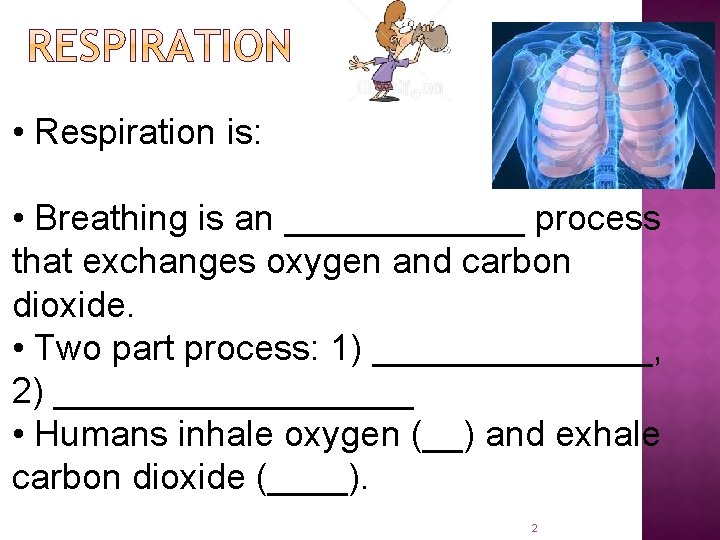
• Respiration is: • Breathing is an ______ process that exchanges oxygen and carbon dioxide. • Two part process: 1) _______, 2) _________ • Humans inhale oxygen (__) and exhale carbon dioxide (____). Copyright © The Mc. Graw-Hill Companies, Inc. 2
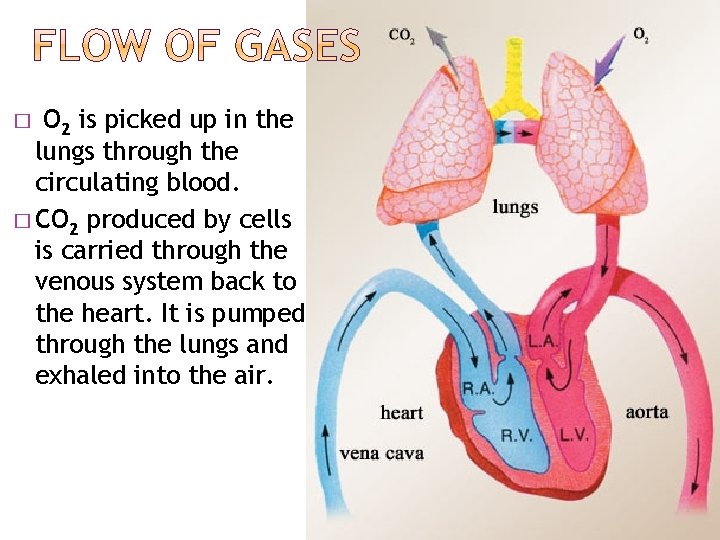
O 2 is picked up in the lungs through the circulating blood. � CO 2 produced by cells is carried through the venous system back to the heart. It is pumped through the lungs and exhaled into the air. � 3
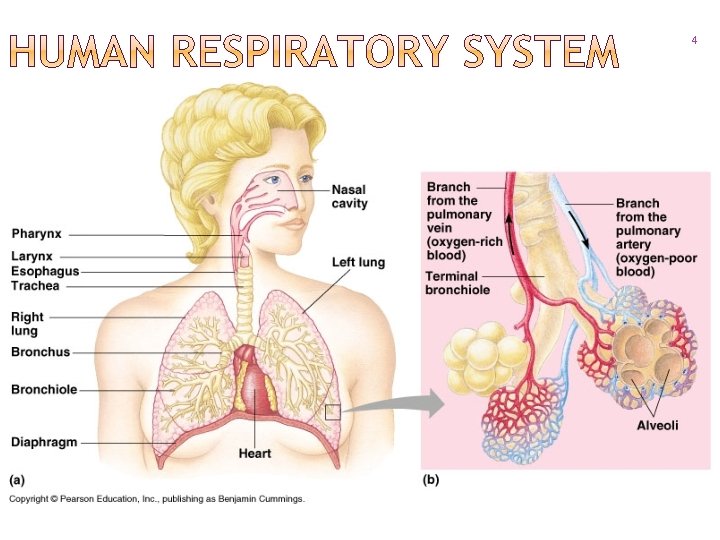
4
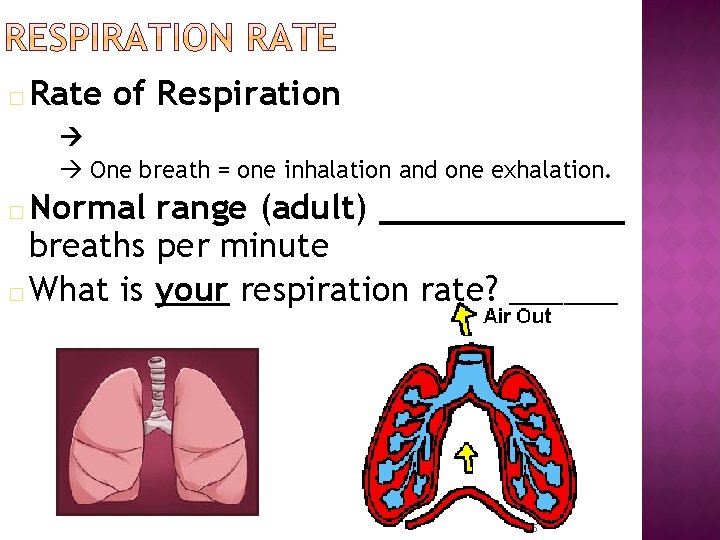
� Rate of Respiration One breath = one inhalation and one exhalation. Normal range (adult) ______ breaths per minute � What is your respiration rate? ______ � Copyright © The Mc. Graw-Hill Companies, Inc. 5
An increased respiratory rate is called ___________. � A decrease in respiratory rate and depth is called ________. � Rhythm of Respiration – should be regular. � Quality of Respiration - can be shallow or deep. � Copyright © The Mc. Graw-Hill Companies, Inc. 6
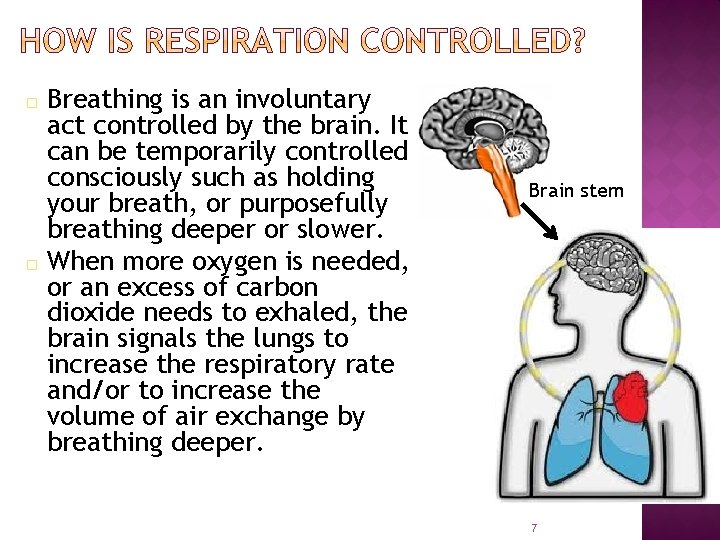
Breathing is an involuntary act controlled by the brain. It can be temporarily controlled consciously such as holding your breath, or purposefully breathing deeper or slower. � When more oxygen is needed, or an excess of carbon dioxide needs to exhaled, the brain signals the lungs to increase the respiratory rate and/or to increase the volume of air exchange by breathing deeper. � Copyright © The Mc. Graw-Hill Companies, Inc. Brain stem 7
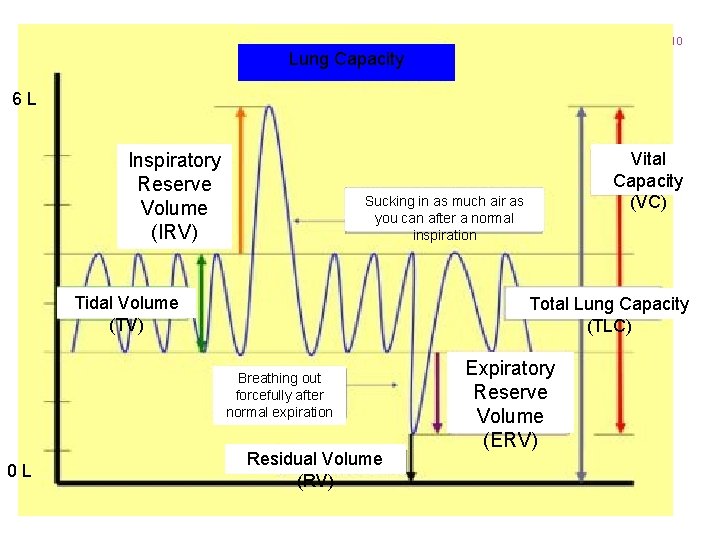
� � � Tidal Volume (TV) moved in or out of the lungs during quiet (resting) breathing ( ). Inspiratory Reserve Volume (IRV) – the beyond the TV ( of air that can be inhaled ). Expiratory Reserve Volume (ERV) increasing expiration by contracting our thoracic and abdominal muscles and exhaling additional air( ). Copyright © The Mc. Graw-Hill Companies, Inc. 8
� � � Residual Volume (RV) - the amount of air in the lungs m. L or 1 L) (1000 Vital capacity (VC) - the total of TV plus IRV plus ERV; it is called because it is vital for life, and the more air you can move, the better off you are. Total Lung Capacity (TLC) – the amount of air in the lungs after a deep inhalation – VC plus RV ( ) Copyright © The Mc. Graw-Hill Companies, Inc. 9
10 Lung Capacity 6 L Inspiratory Reserve Volume (IRV) Sucking in as much air as you can after a normal inspiration Tidal Volume (TV) Total Lung Capacity (TLC) Breathing out forcefully after normal expiration 0 L Vital Capacity (VC) Residual Volume (RV) Expiratory Reserve Volume (ERV)
________ is a method of assessing lung function by measuring the volume of air and speed flow of air in and out of the lungs. � This is called a ____________ (______) and is the most common lung function test. The measurement of breathing can be crucial in aiding treatment or discovery of various breathing ailments. � Spirometry is performed with a device known as a ______ which usually display their results in the form of graphs called spirograms. � Copyright © The Mc. Graw-Hill Companies, Inc. 11
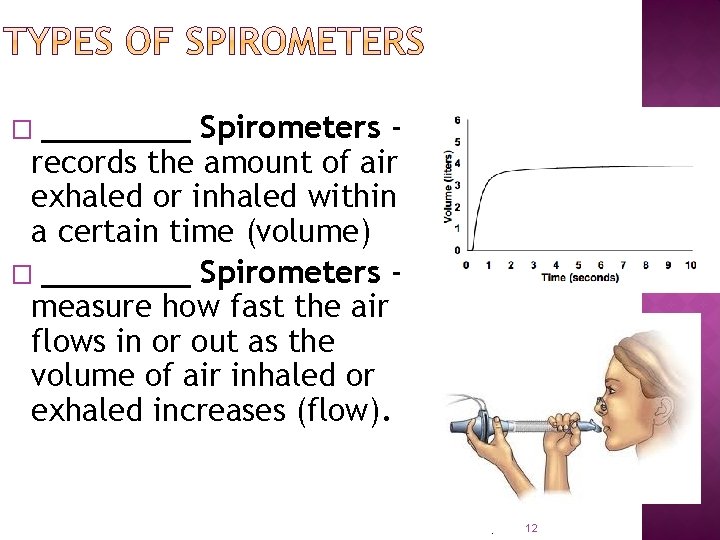
____ Spirometers records the amount of air exhaled or inhaled within a certain time (volume) � ____ Spirometers measure how fast the air flows in or out as the volume of air inhaled or exhaled increases (flow). � Copyright © The Mc. Graw-Hill Companies, Inc. 12
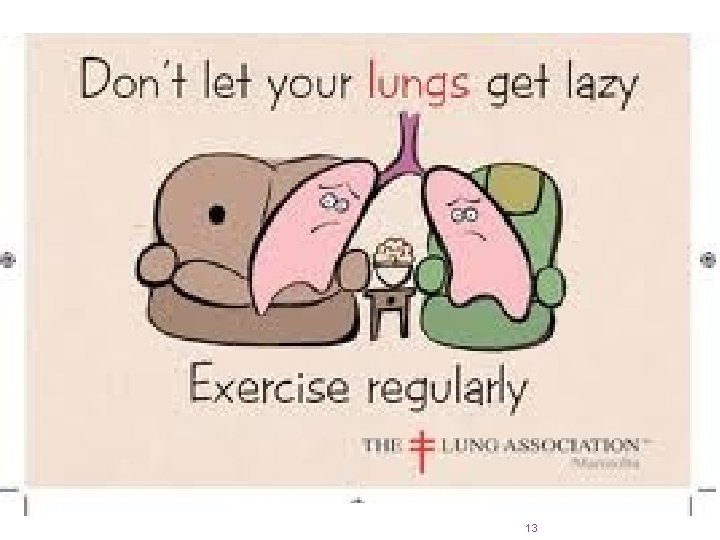
13
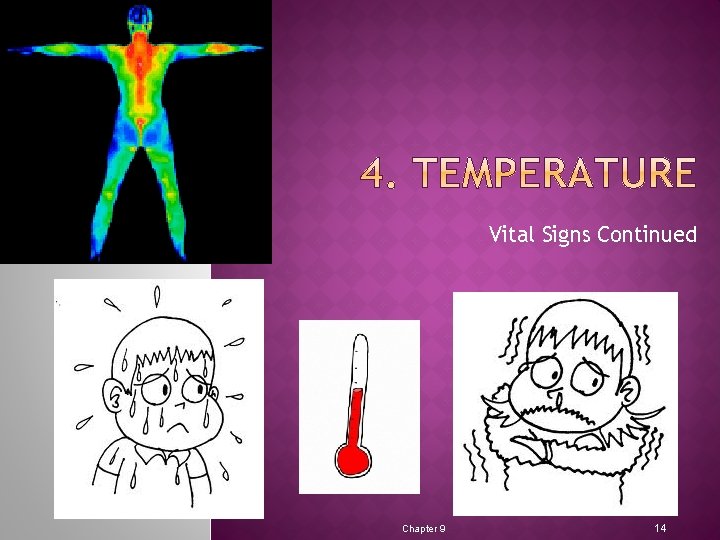
Vital Signs Continued Chapter 9 14
Normal adult temperature is 98. 6ºF, or ______. � Body temperature is one of the first vital sign assessments done. It is usually measured to obtain a quick evaluation of a person's health. � Copyright © The Mc. Graw-Hill Companies, Inc. 15
The main reason for checking body temperature is to determine any signs of systemic infection or inflammation in the presence of a fever. � Other causes of elevated temperature include ________ due to failed thermoregulation (control of body temperature). � ________ is a depression in body temperature. � Copyright © The Mc. Graw-Hill Companies, Inc. 16
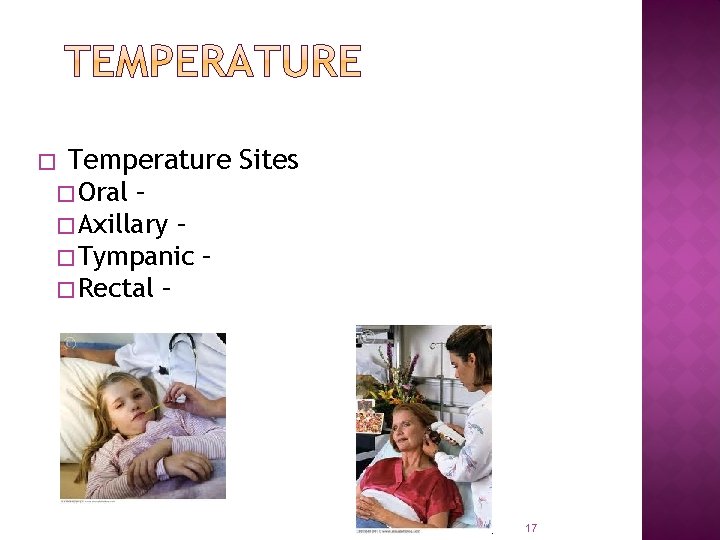
Temperature Sites � Oral – � Axillary – � Tympanic – � Rectal – � Copyright © The Mc. Graw-Hill Companies, Inc. 17
� Temperature can vary due to: � � �Other factors: _____ Copyright © The Mc. Graw-Hill Companies, Inc. 18
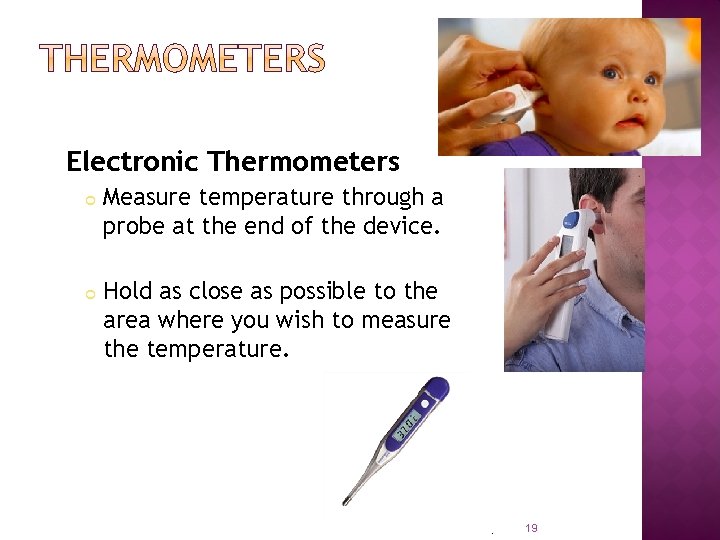
Electronic Thermometers Measure temperature through a probe at the end of the device. Hold as close as possible to the area where you wish to measure the temperature. Copyright © The Mc. Graw-Hill Companies, Inc. 19
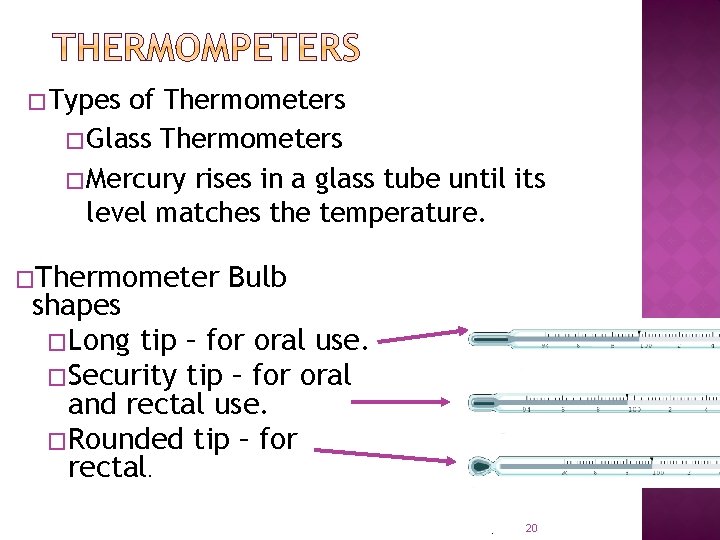
� Types of Thermometers � Glass Thermometers � Mercury rises in a glass tube until its level matches the temperature. �Thermometer Bulb shapes �Long tip – for oral use. �Security tip – for oral and rectal use. �Rounded tip – for rectal. Copyright © The Mc. Graw-Hill Companies, Inc. 20
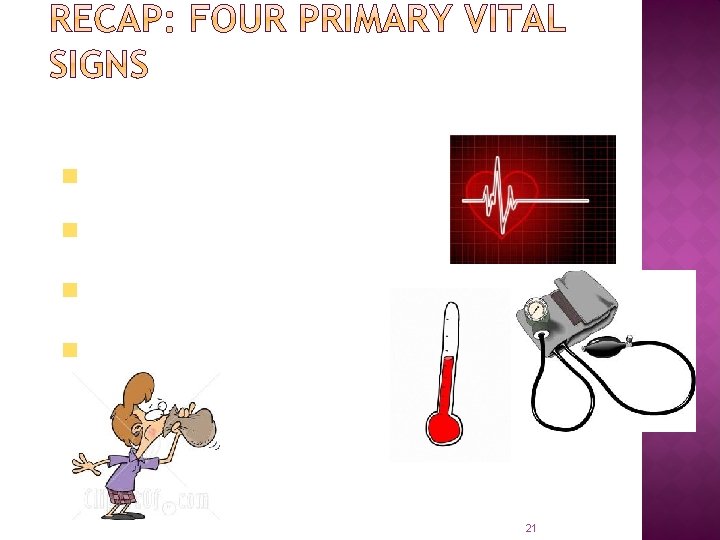
n n Copyright © The Mc. Graw-Hill Companies, Inc. 21
Besides exercise, what other ways can you keep your vitals happy? Copyright © The Mc. Graw-Hill Companies, Inc. 22
� When - _______________ � What do you need to understand: The four primary vital signs and their associated organs/systems. � Normal/abnormal values. � How they are measured and the medical technologies that are used to measure them. � The purpose and process of the lab investigations we conducted to explore the vital signs. � Happy Studying and Good Luck! Copyright © The Mc. Graw-Hill Companies, Inc. 23