
Visual Support for Language Learning and Literacy Boardmaker
Visual Support for Language, Learning and Literacy (Boardmaker) By Sally and Jane Rondow
• AAC Augmentative and Alternative Communication • VOCA Voice Output Communication Aid • SGD Speech Generating Device • PCS Picture Communication Symbols • PECS Picture Exchange Communication System • Boardmaker A graphic database of over 10, 000 PCS • Icon An image of a conventional nature • SET-BC Special Education Technology British Columbia
Visual Supports were initially developed to support the expressive communication of people with physical disabilities who were non speaking. eg. Bliss symbols, Pics, PCS
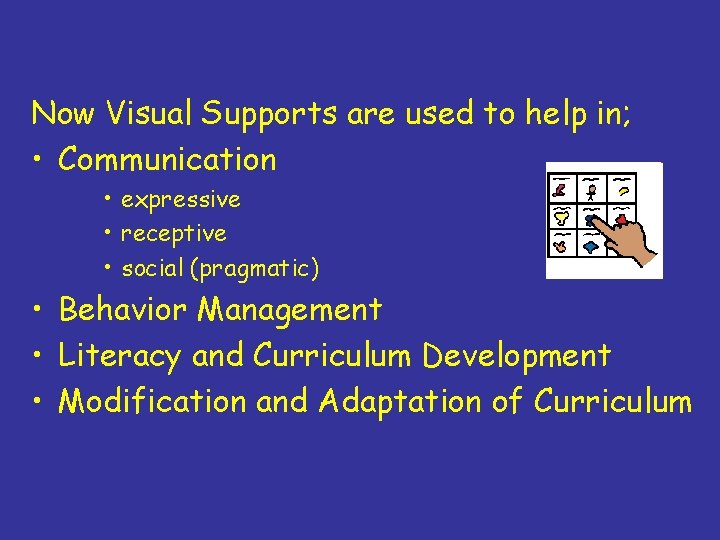
Now Visual Supports are used to help in; • Communication • expressive • receptive • social (pragmatic) • Behavior Management • Literacy and Curriculum Development • Modification and Adaptation of Curriculum
What is Communication ? “Any act by which one person gives to, or receives from, another person information about that person’s need, desire, perception, knowledge or affective state. Communication may be intentional or unintentional, may involve conventional or unconventional signals, may take linguistic or non linguistic forms or may occur through spoken or other modes. ” ASHA 1992
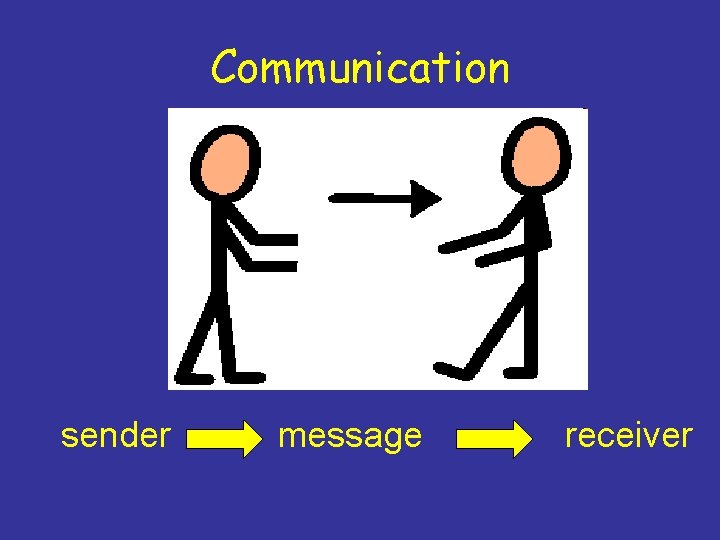
Communication sender message receiver
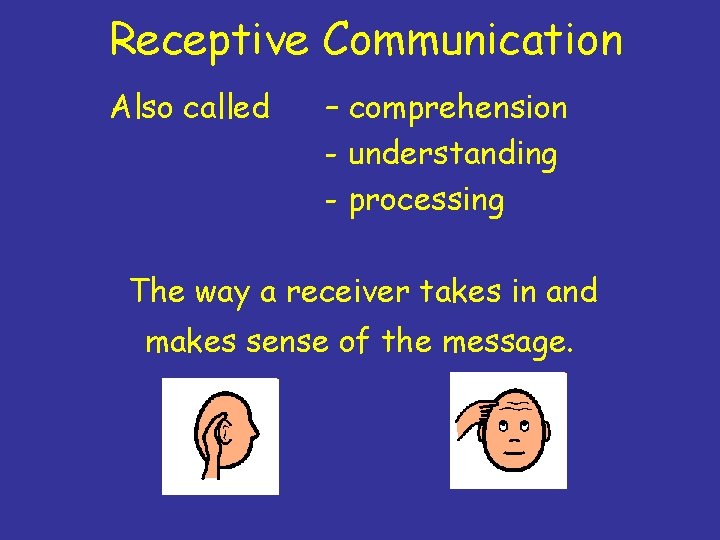
Receptive Communication Also called – comprehension - understanding - processing The way a receiver takes in and makes sense of the message.
Receptive Language DEMO
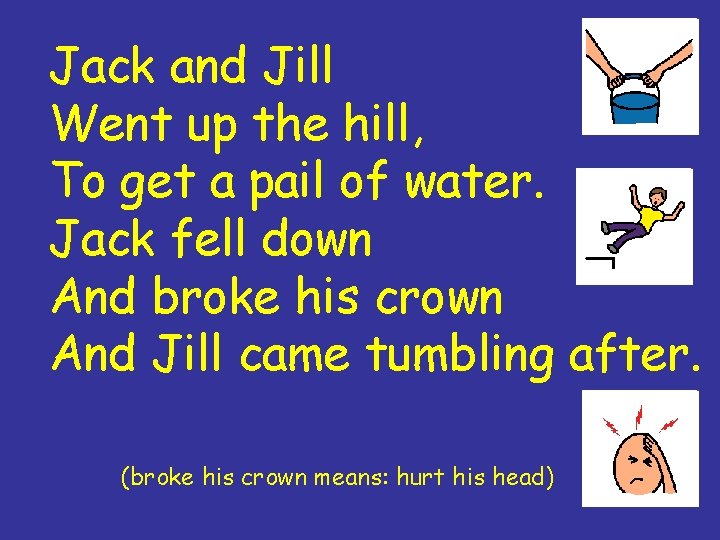
Jack and Jill Went up the hill, To get a pail of water. Jack fell down And broke his crown And Jill came tumbling after. (broke his crown means: hurt his head)
The difficulty that students with Autism have with UNDERSTANDING communication and social interaction is one of the most undiagnosed aspects of this disorder. Linda A. Hodgdon 1999
I THINK IN PICTURES. Words are like a second language to me. When somebody speaks to me, his words are instantly translated into pictures. Temple Grandin 1995 “Thinking in Pictures”
SHOW rather than TELL
LESS is MORE
Expressive Language The way a individual sends a message. May involve – language - speech - body language/ gesture - print
Expressive Language DEMO Summer Holiday
Pragmatic Language Pragmatic skills make communication effective. They include – attending - eye contact - turn taking - staying on topic - changing topic - proximity to partner - understanding perspective of others
Communication and Challenging Behaviour • People communicate in the most efficient and effective manner available. • Some people have no way to communicate except through challenging behaviour. • Some people may have other ways to communicate, but no one “listens” unless they use challenging behaviour. • Communication and behaviour are inseparable. Pat Mirenda May 1999
Who ? • • Visual Supports are used to assist a large range of people including those with: Physical disabilities Autism Down Syndrome Hearing impairments Behaviour disorders Language impairments Cognitive impairments
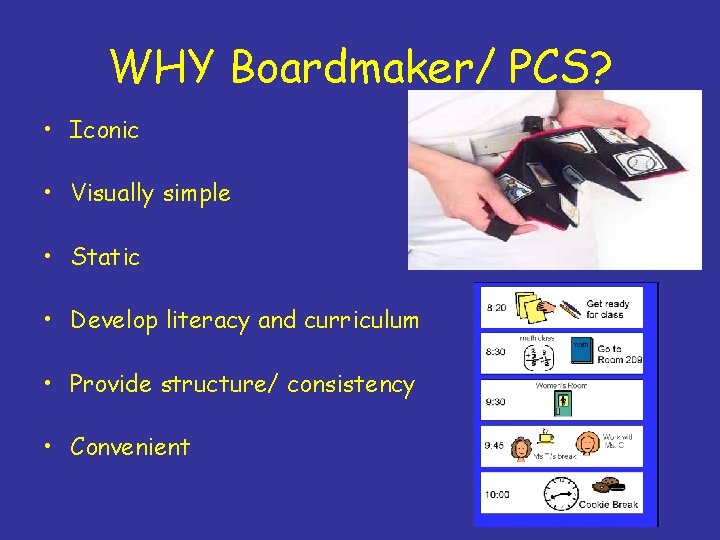
WHY Boardmaker/ PCS? • Iconic • Visually simple • Static • Develop literacy and curriculum • Provide structure/ consistency • Convenient
Iconic An icon has an obvious connection to what it represents. A word has no underlining connection to it’s referent. This is demonstrated by the use of different words in different languages to refer to the same thing. Icons are therefore much easier to comprehend than words.
Iconic demo
Visually Simple A simple line drawing on a white or lime green background is easier to process for some individuals then a photograph which may present too much information.
Visually simple demo
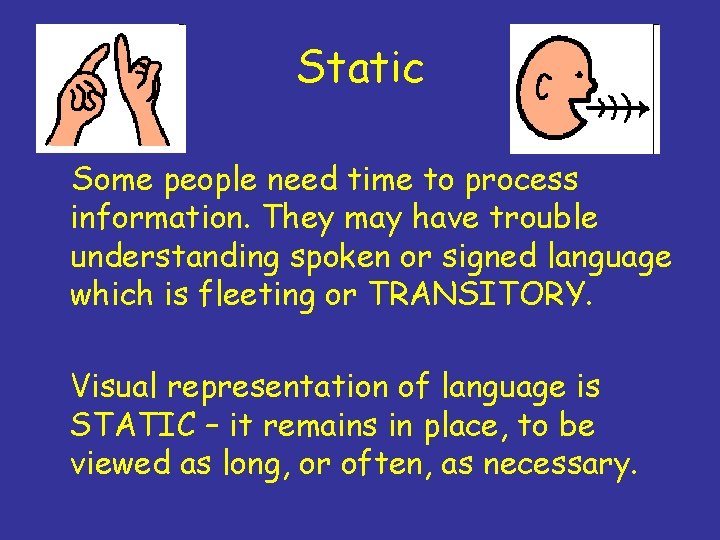
Static Some people need time to process information. They may have trouble understanding spoken or signed language which is fleeting or TRANSITORY. Visual representation of language is STATIC – it remains in place, to be viewed as long, or often, as necessary.
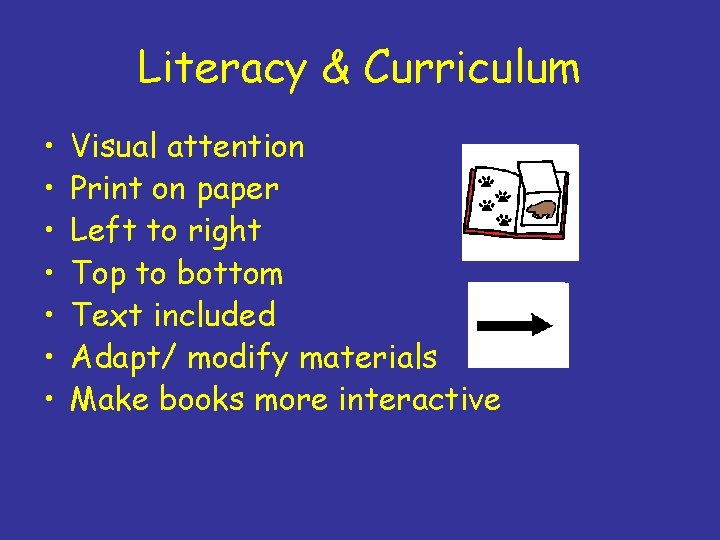
Literacy & Curriculum • • Visual attention Print on paper Left to right Top to bottom Text included Adapt/ modify materials Make books more interactive
Structure & Consistency The use of visual supports provides structure and consistency which helps students make sense of their environment and the language within it. The structure and consistency provided works well even when there a number of different adults working with the student.
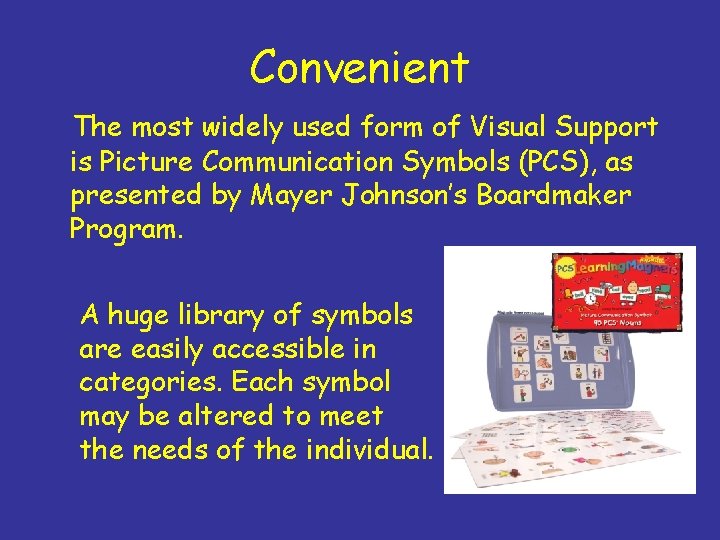
Convenient The most widely used form of Visual Support is Picture Communication Symbols (PCS), as presented by Mayer Johnson’s Boardmaker Program. A huge library of symbols are easily accessible in categories. Each symbol may be altered to meet the needs of the individual.
4 R’s of Visual Supports • Relevance • Readiness • Resistance • Reading
Relevance • Preferences/ affinities • About themselves or things/ people on their environment • Curriculum based/ theme boards… • Seasonal • Age and Gender appropriate
Readiness The only prerequisites for the implementation of visual supports (AAC) is breathing. Signs and symbols will attain meaning through consistent, frequent association with people, things and events. Consider- We do not wait until typical babies are “ready” to speak before we expose them to spoken language. Readiness
Resistance • Stop students talking • Implementation • Team not on side • Time consuming • Technology not available • People not trained
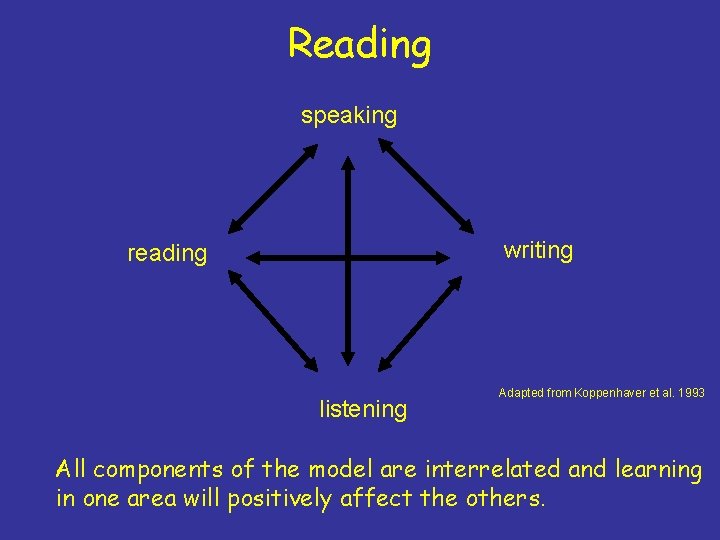
Reading speaking writing reading listening Adapted from Koppenhaver et al. 1993 All components of the model are interrelated and learning in one area will positively affect the others.
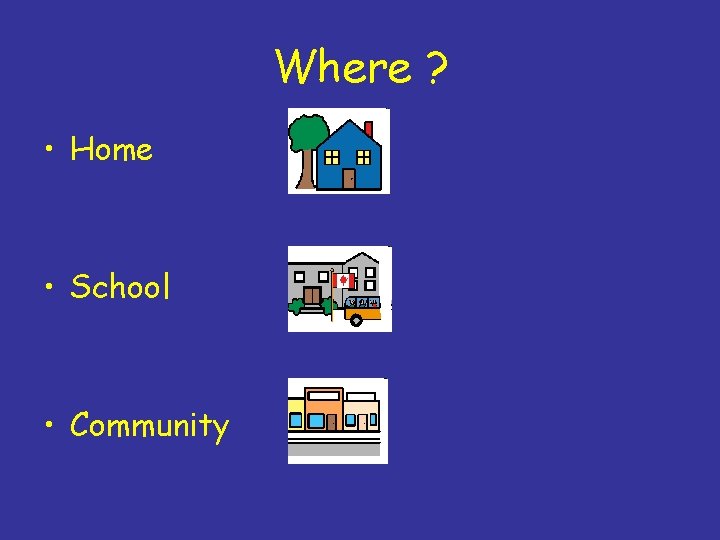
Where ? • Home • School • Community

SAMPLES
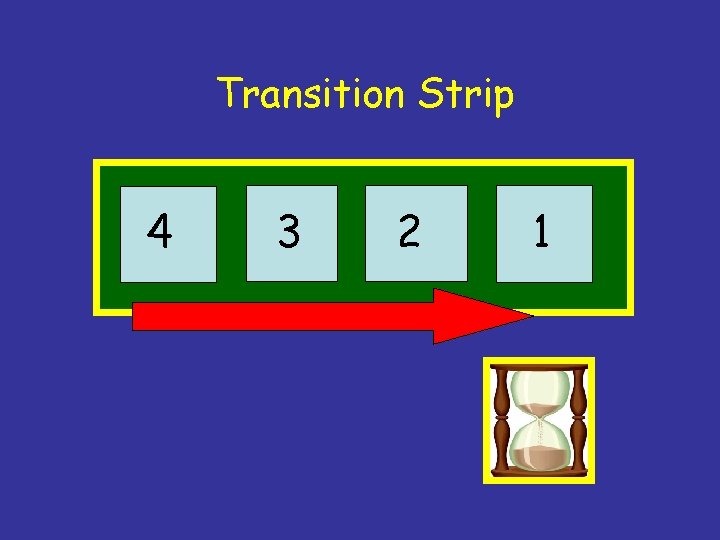
Transition Strip 44 3 2 11
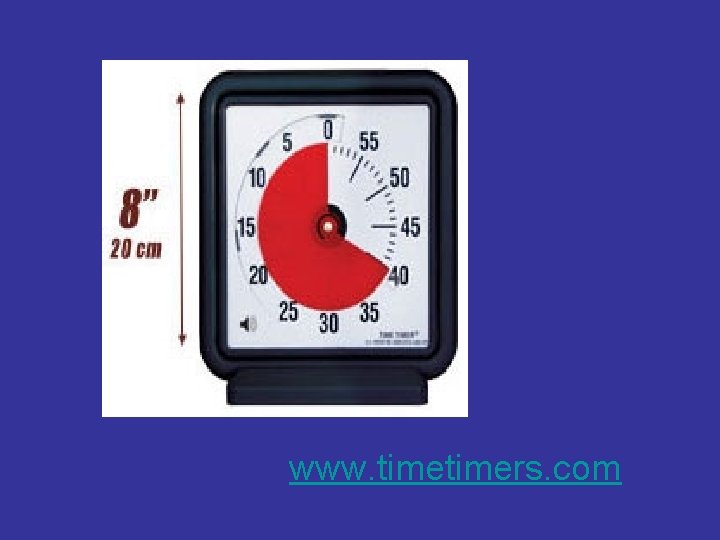
www. timers. com
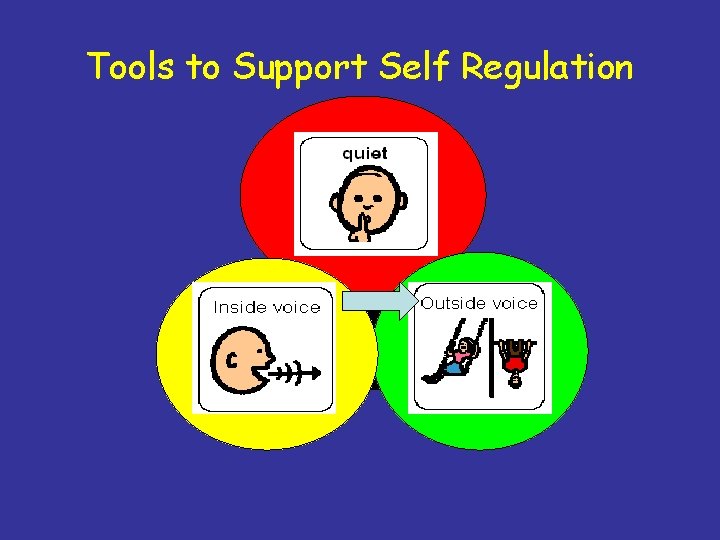
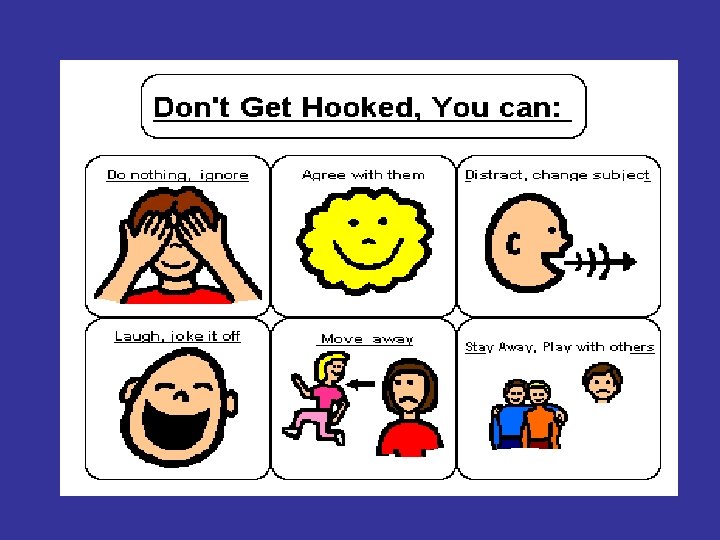
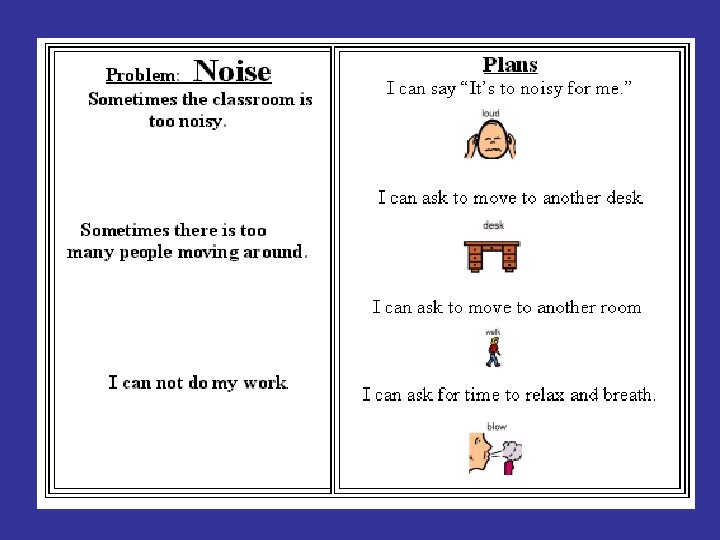
Tools to Support Self Regulation
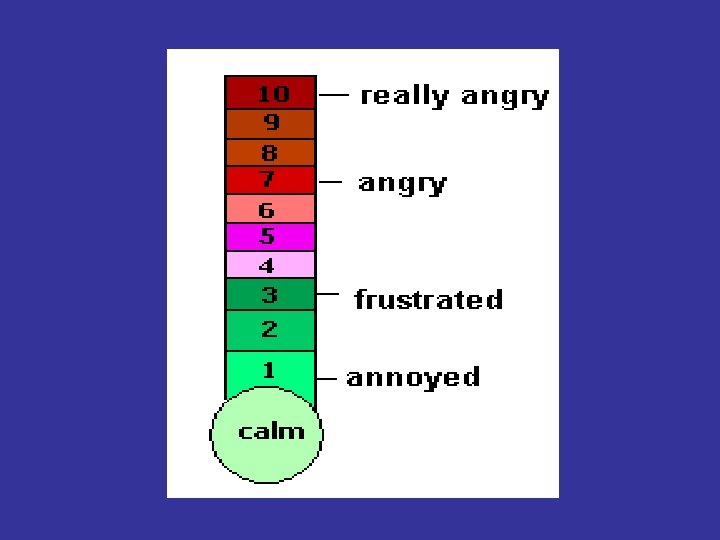
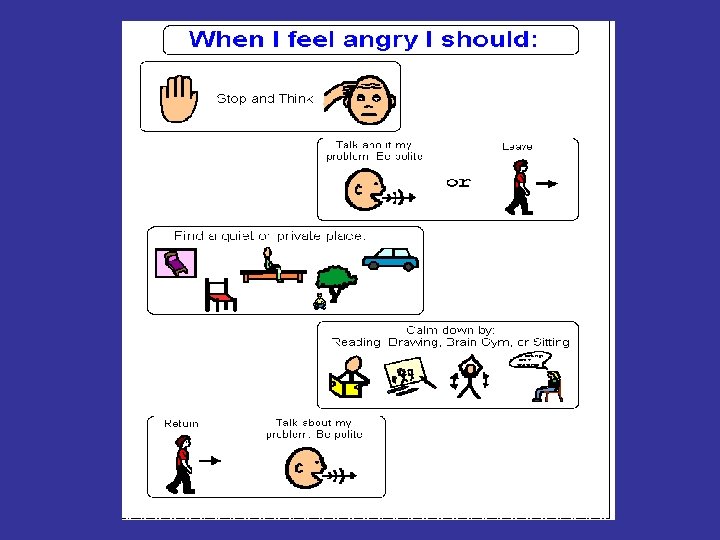
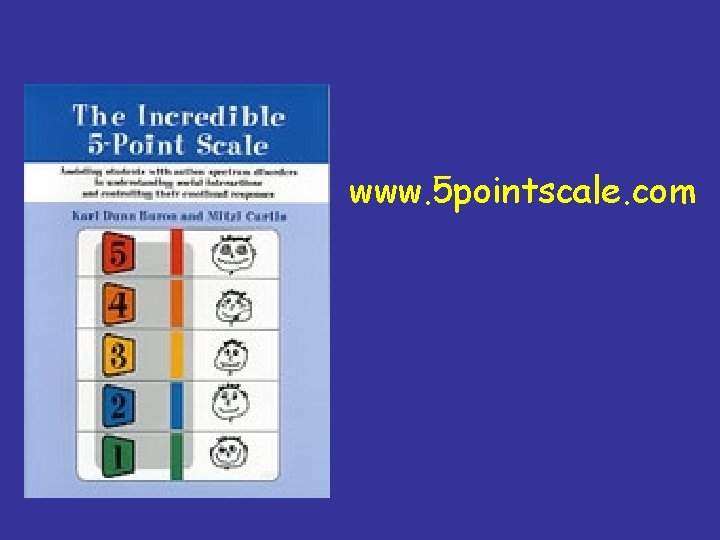
www. 5 pointscale. com
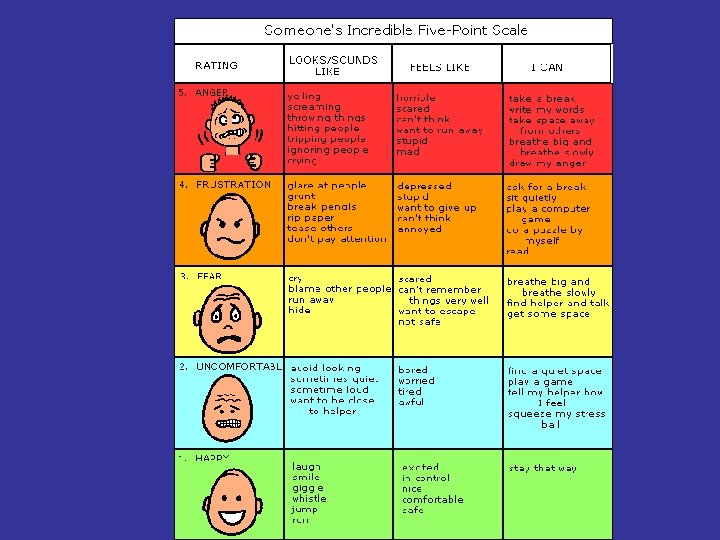
- Slides: 45