
Visual Saccades for Object Recognition Janusz Starzyk 1
Visual Saccades for Object Recognition Janusz Starzyk 1, 2, 1 School of Electrical Engineering and Computer Science Ohio University, Athens, OH, USA 2 University of Information Technology and Management, Rzeszow, Poland

Overview Embodied cognitive agents. MLECOG architecture. Visual saccades. Saliency selection. Attention focus. Scene reconstruction. Saccades through Gaussian match Object characterization Object identification Simulation results. Conclusions. http: //www. redorbit. com/news/science/
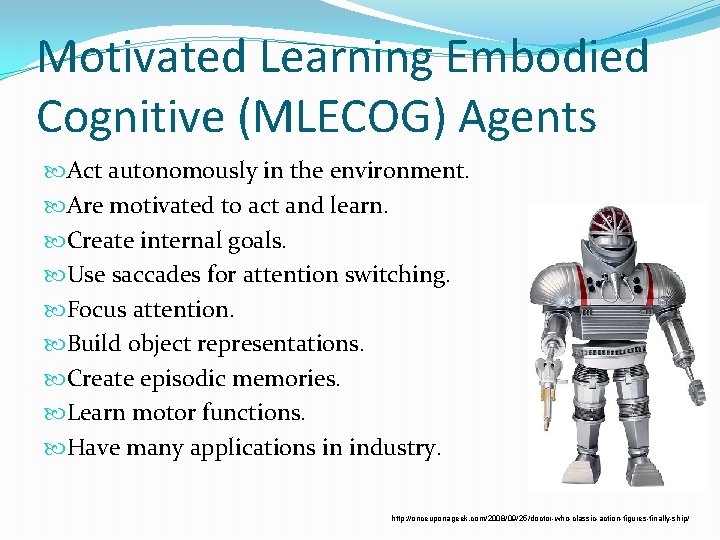
Motivated Learning Embodied Cognitive (MLECOG) Agents Act autonomously in the environment. Are motivated to act and learn. Create internal goals. Use saccades for attention switching. Focus attention. Build object representations. Create episodic memories. Learn motor functions. Have many applications in industry. http: //onceuponageek. com/2008/09/25/doctor-who-classic-action-figures-finally-ship/
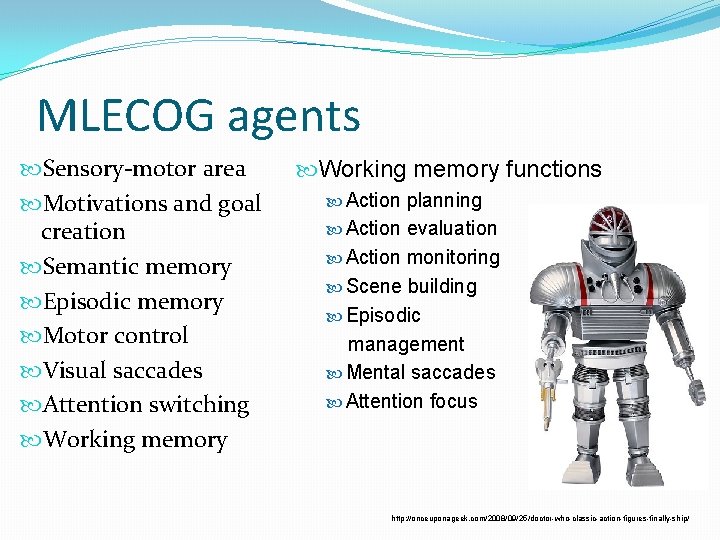
MLECOG agents Sensory-motor area Motivations and goal creation Semantic memory Episodic memory Motor control Visual saccades Attention switching Working memory functions Action planning Action evaluation Action monitoring Scene building Episodic management Mental saccades Attention focus http: //onceuponageek. com/2008/09/25/doctor-who-classic-action-figures-finally-ship/
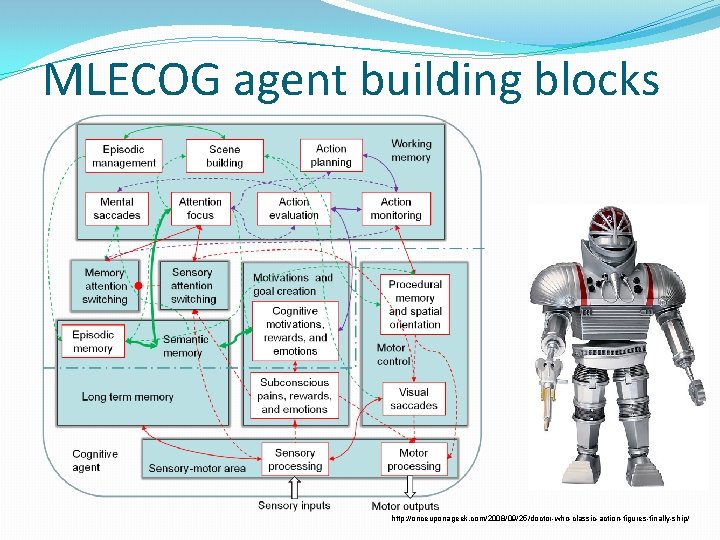
MLECOG agent building blocks http: //onceuponageek. com/2008/09/25/doctor-who-classic-action-figures-finally-ship/
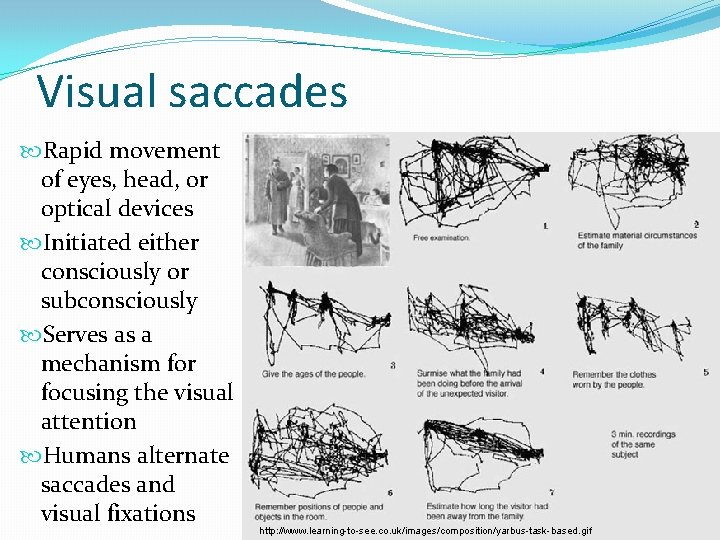
Visual saccades Rapid movement of eyes, head, or optical devices Initiated either consciously or subconsciously Serves as a mechanism for focusing the visual attention Humans alternate saccades and visual fixations http: //www. learning-to-see. co. uk/images/composition/yarbus-task-based. gif
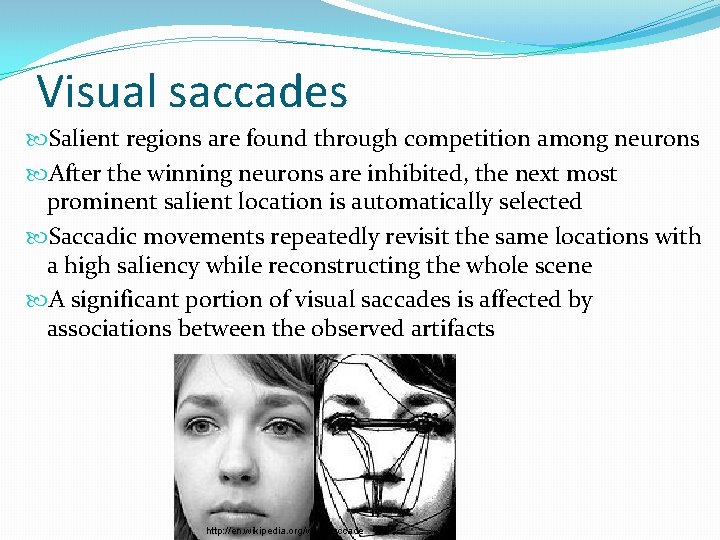
Visual saccades Salient regions are found through competition among neurons After the winning neurons are inhibited, the next most prominent salient location is automatically selected Saccadic movements repeatedly revisit the same locations with a high saliency while reconstructing the whole scene A significant portion of visual saccades is affected by associations between the observed artifacts http: //en. wikipedia. org/wiki/Saccade
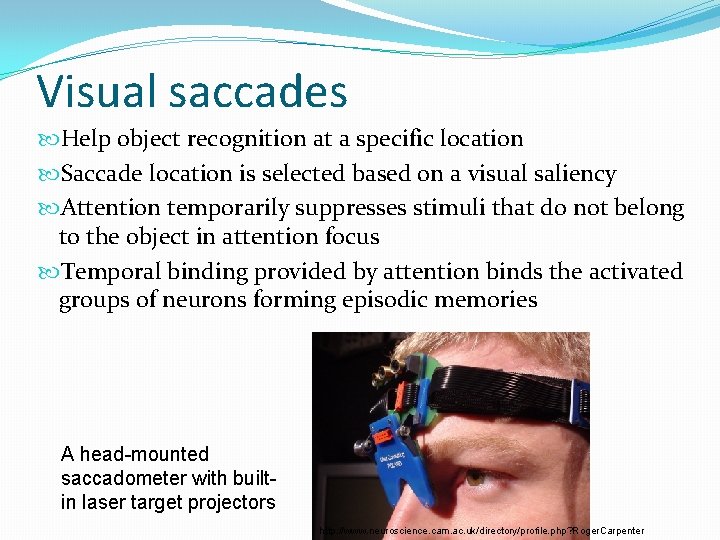
Visual saccades Help object recognition at a specific location Saccade location is selected based on a visual saliency Attention temporarily suppresses stimuli that do not belong to the object in attention focus Temporal binding provided by attention binds the activated groups of neurons forming episodic memories A head-mounted saccadometer with builtin laser target projectors http: //www. neuroscience. cam. ac. uk/directory/profile. php? Roger. Carpenter
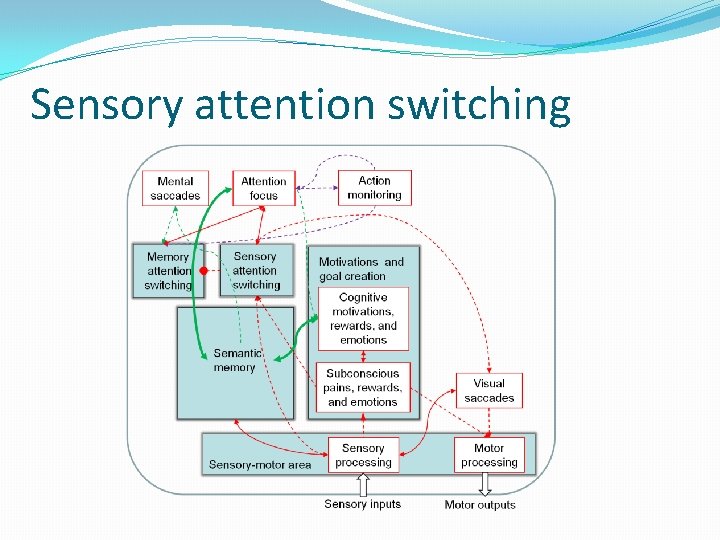
Sensory attention switching
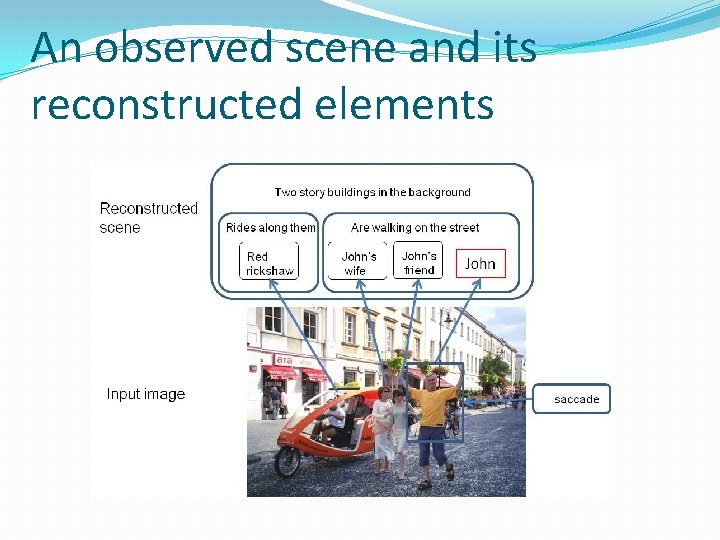
An observed scene and its reconstructed elements
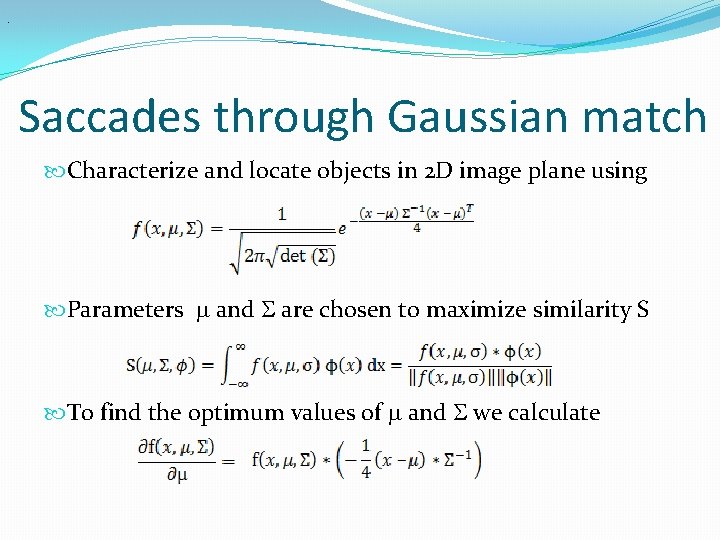
. Saccades through Gaussian match Characterize and locate objects in 2 D image plane using Parameters m and S are chosen to maximize similarity S To find the optimum values of m and S we calculate
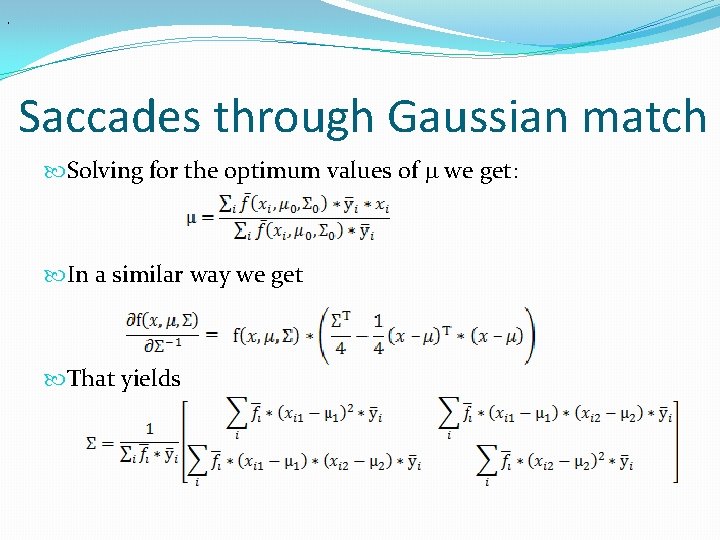
. , Saccades through Gaussian match Solving for the optimum values of m we get: In a similar way we get That yields
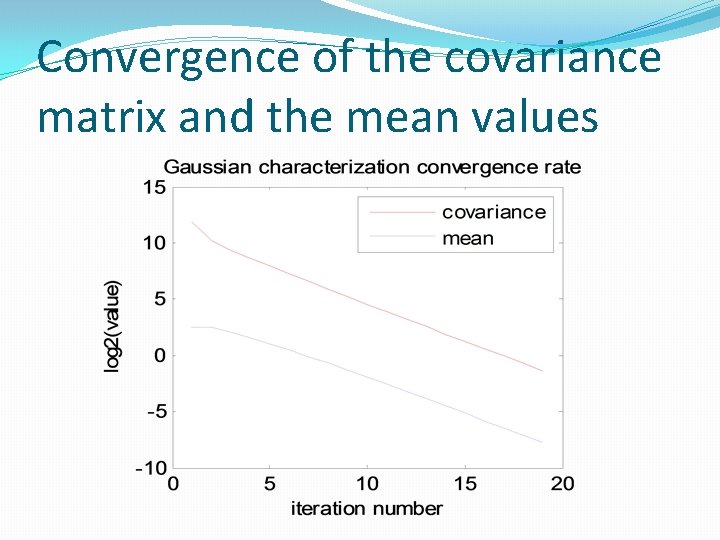
Convergence of the covariance matrix and the mean values
Object characterization algorithm Normalize the object image and remove background. Position the normalized object image in a scene. Fit best Gaussian function to obtain object location mo in the scene. Obtain covariance matrix So of its best fitting Gaussian function and similarity So measure between the normalized image and this Gaussian. The object image is characterized by mo , So and So.
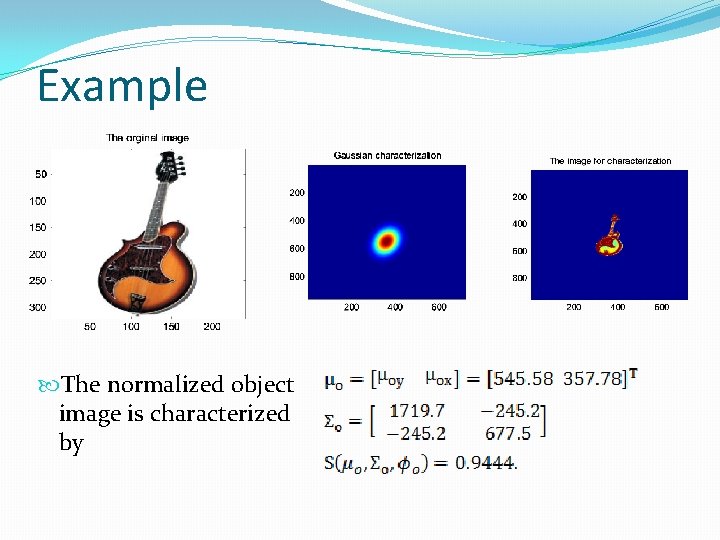
Example The normalized object image is characterized by
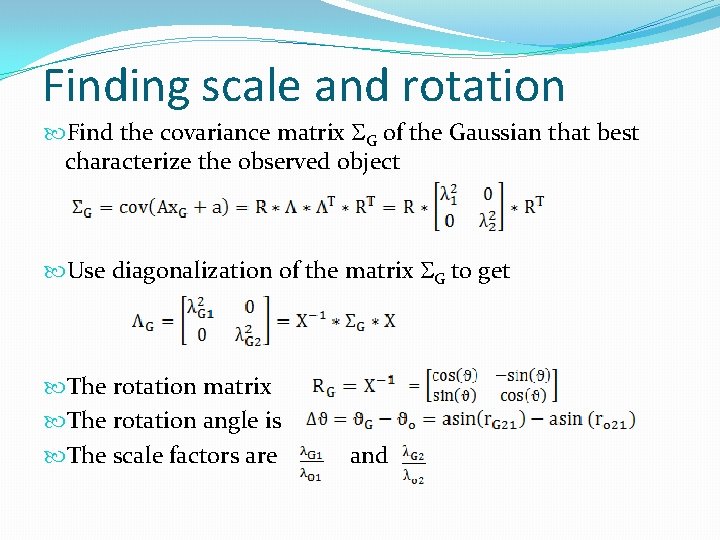
Finding scale and rotation Find the covariance matrix SG of the Gaussian that best characterize the observed object Use diagonalization of the matrix SG to get The rotation matrix The rotation angle is The scale factors are and
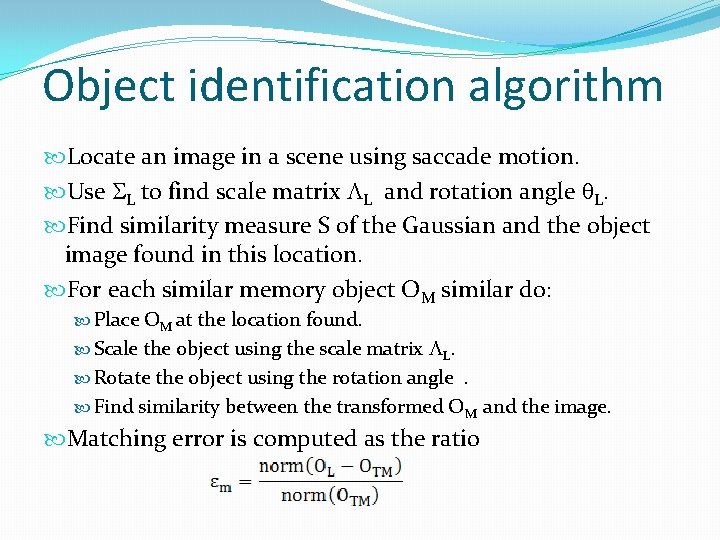
Object identification algorithm Locate an image in a scene using saccade motion. Use SL to find scale matrix LL and rotation angle q. L. Find similarity measure S of the Gaussian and the object image found in this location. For each similar memory object OM similar do: Place OM at the location found. Scale the object using the scale matrix LL. Rotate the object using the rotation angle. Find similarity between the transformed OM and the image. Matching error is computed as the ratio
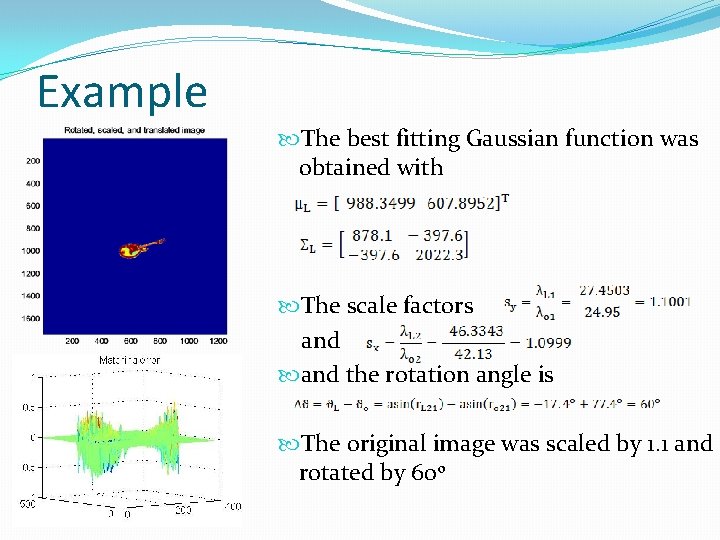
Example The best fitting Gaussian function was obtained with The scale factors and the rotation angle is The original image was scaled by 1. 1 and rotated by 60 o
Conclusion and future work Developed quick characterization and location of the object image Implementation of visual saccades idea for object recognition. Image is described based on the mean value and the covariance matrix of a 2 D Gaussian function. Similarity measure between the best Gaussian fit and the observed object is used for object characterization Memorized objects that have specific Gaussian similarity are extracted from the memory After proper rotation and scale, target objects are placed in the identified location for recognition
Conclusion and future work Equations that solve the optimization problem to find the most similar Gaussian are solved explicitly Exponentially fast convergence. Object location, its scale, and rotation can be quickly computed. This approach can be applied either to the entire image, its parts, or to a complex scene Inhibition of previously visited areas of the image will force saccadic searches Future work is to test this concept in realistic scenes Build hierarchical object representations in memory. Apply various resolution levels to minimize the processing time.

Questions? 21
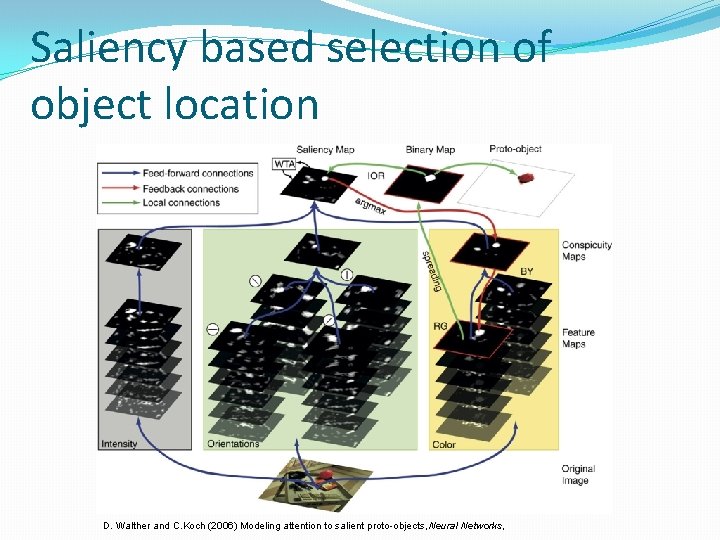
Saliency based selection of object location D. Walther and C. Koch (2006) Modeling attention to salient proto-objects, Neural Networks,
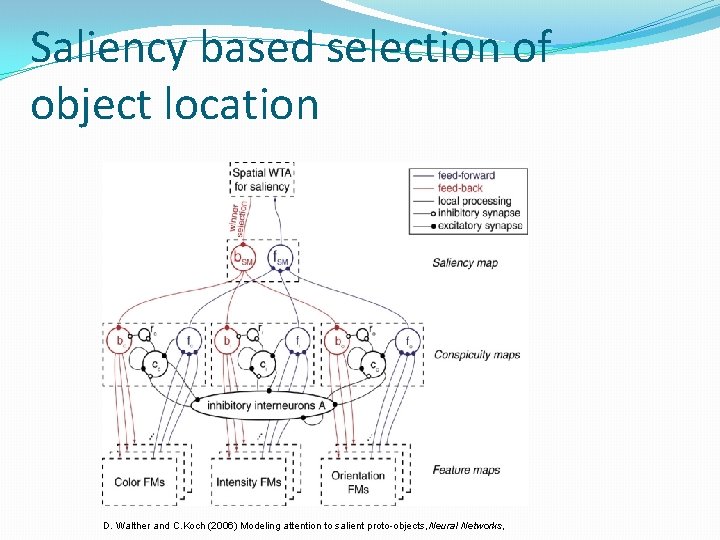
Saliency based selection of object location D. Walther and C. Koch (2006) Modeling attention to salient proto-objects, Neural Networks,
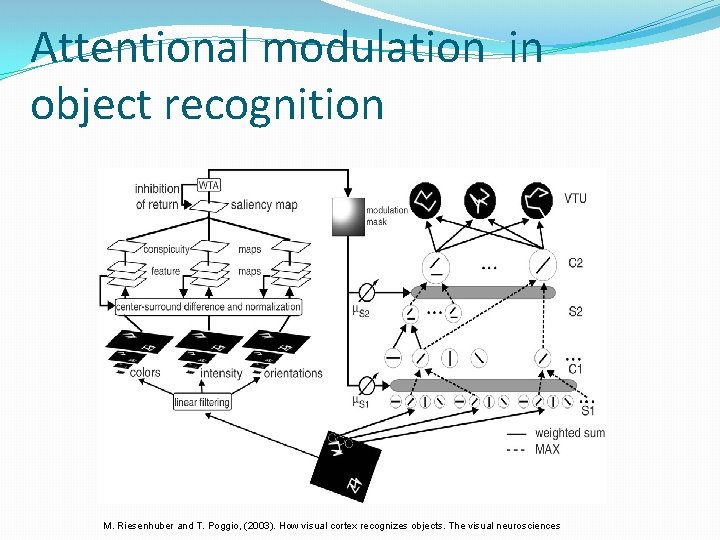
Attentional modulation in object recognition M. Riesenhuber and T. Poggio, (2003). How visual cortex recognizes objects. The visual neurosciences
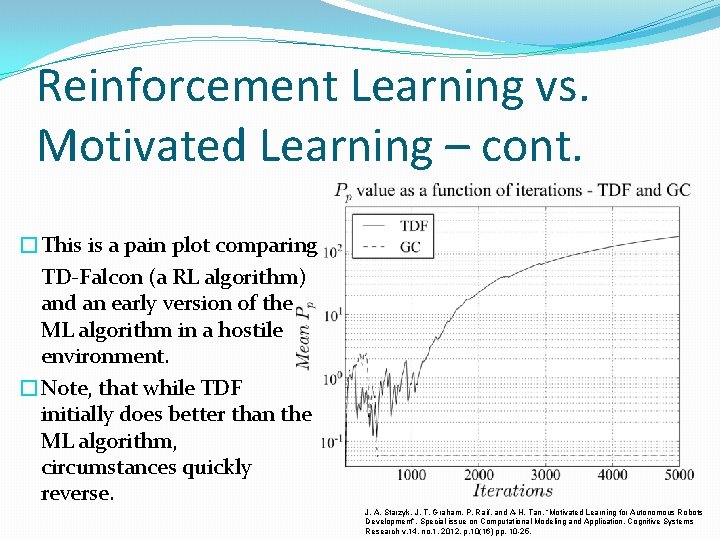
Reinforcement Learning vs. Motivated Learning – cont. �This is a pain plot comparing TD-Falcon (a RL algorithm) and an early version of the ML algorithm in a hostile environment. �Note, that while TDF initially does better than the ML algorithm, circumstances quickly reverse. J. A. Starzyk, J. T. Graham, P. Raif, and A-H. Tan, “Motivated Learning for Autonomous Robots Development”, Special issue on Computational Modeling and Application, Cognitive Systems Research v. 14, no. 1, 2012, p. 10(16) pp. 10 -25.

Agent works with a Hammer

Book resource was introduced
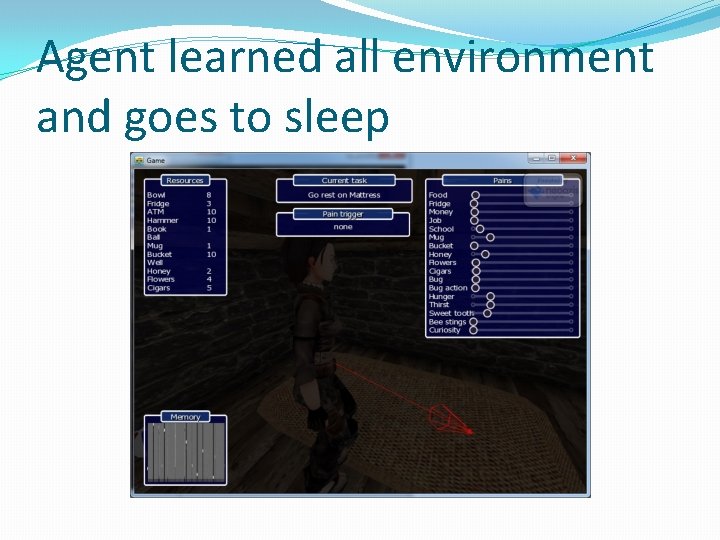
Agent learned all environment and goes to sleep
- Slides: 28