
Visual Plate Waste Analysis of Residents Living in
- Slides: 14
Visual Plate Waste Analysis of Residents Living in a Long-Term Care Facility to Better Detect Risk of Malnutrition Shannon Wildey, MS Department of Nutrition, University of the Incarnate Word
Introduction • Anywhere from 35 -50% of residents in long-term care facilities are considered to be malnourished (1) • Improved plate waste analysis may be a way to improve this problem • What is plate waste?
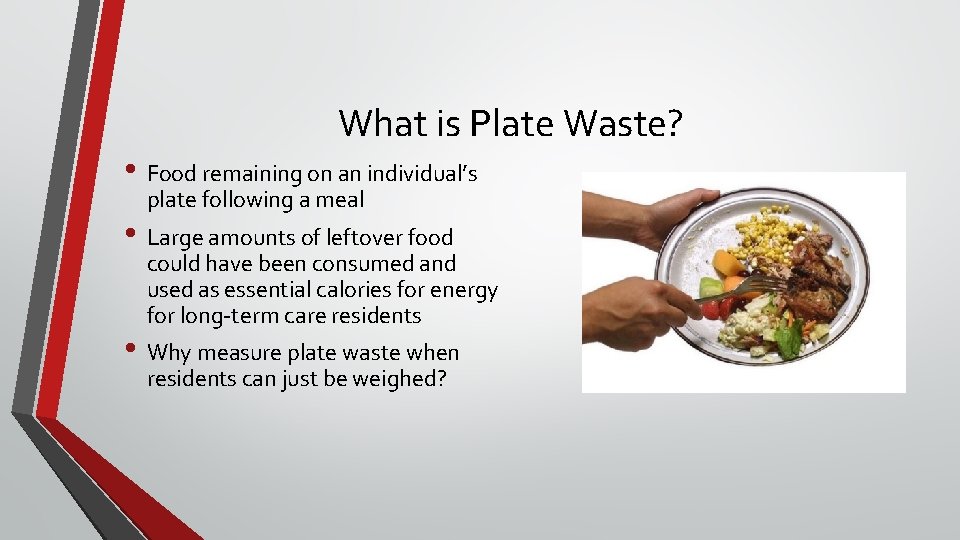
What is Plate Waste? • Food remaining on an individual’s plate following a meal • Large amounts of leftover food could have been consumed and used as essential calories for energy for long-term care residents • Why measure plate waste when residents can just be weighed?
Literature Review • Factors that contribute to plate waste: desirable meals, meal location, meal time of day (2 -4) • Current study adapted from breaking down plate waste into percentages for analysis (5) • Study purpose: To successfully test and implement an updated visual plate waste numerical tracking system to better detect risk of malnutrition
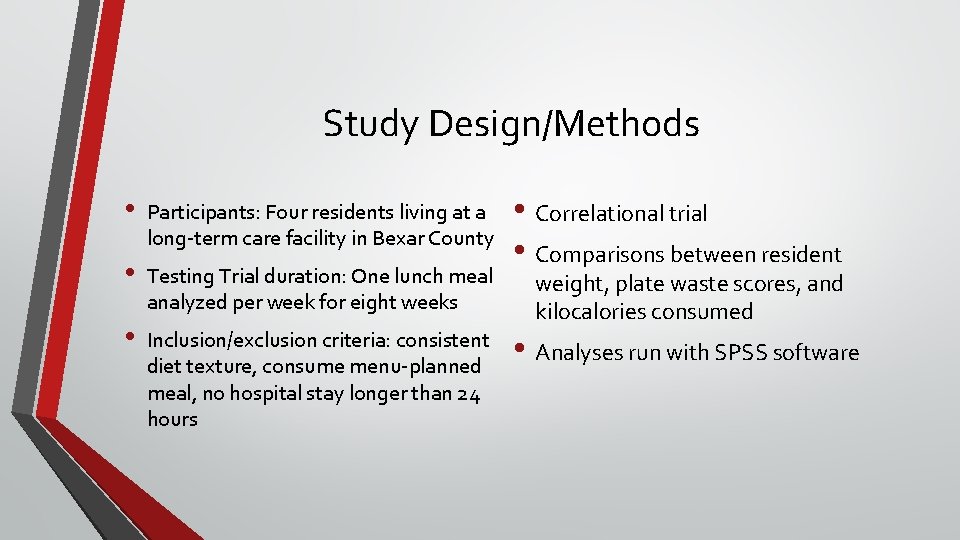
Study Design/Methods • Participants: Four residents living at a long-term care facility in Bexar County • Testing Trial duration: One lunch meal analyzed per week for eight weeks • Inclusion/exclusion criteria: consistent diet texture, consume menu-planned meal, no hospital stay longer than 24 hours • Correlational trial • Comparisons between resident weight, plate waste scores, and kilocalories consumed • Analyses run with SPSS software
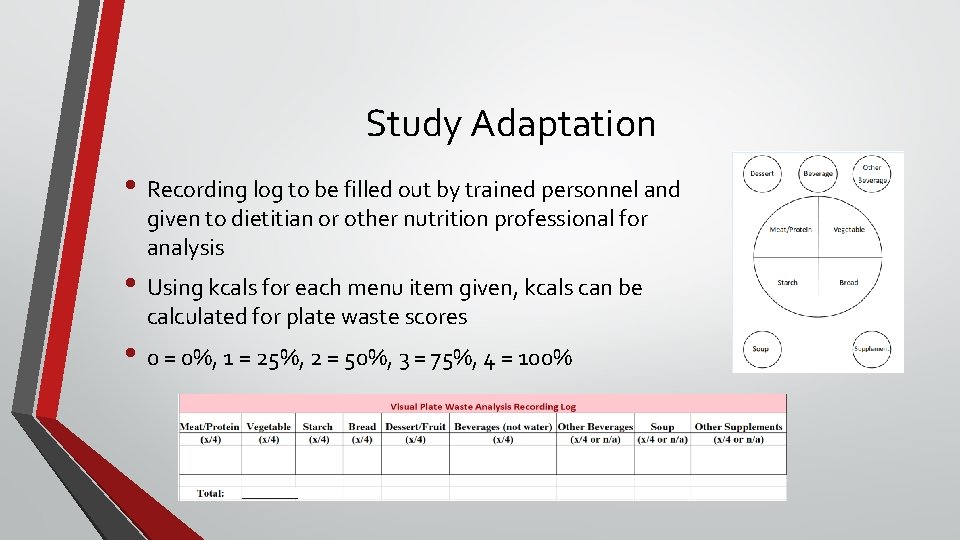
Study Adaptation • Recording log to be filled out by trained personnel and given to dietitian or other nutrition professional for analysis • Using kcals for each menu item given, kcals can be calculated for plate waste scores • 0 = 0%, 1 = 25%, 2 = 50%, 3 = 75%, 4 = 100%
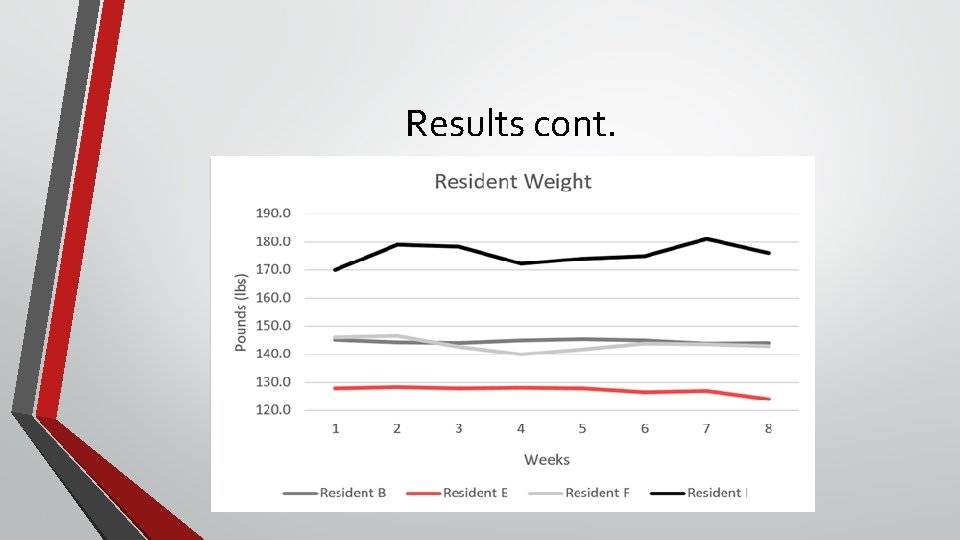
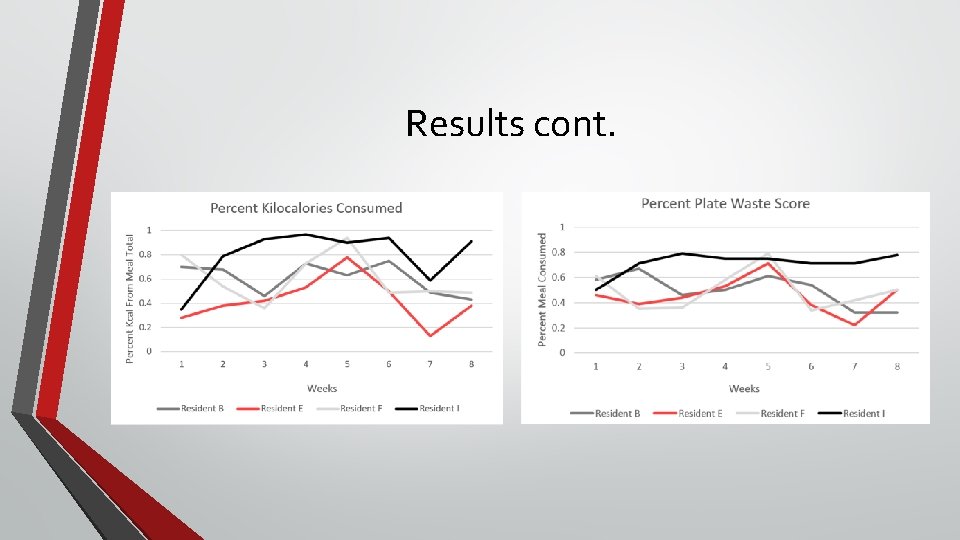
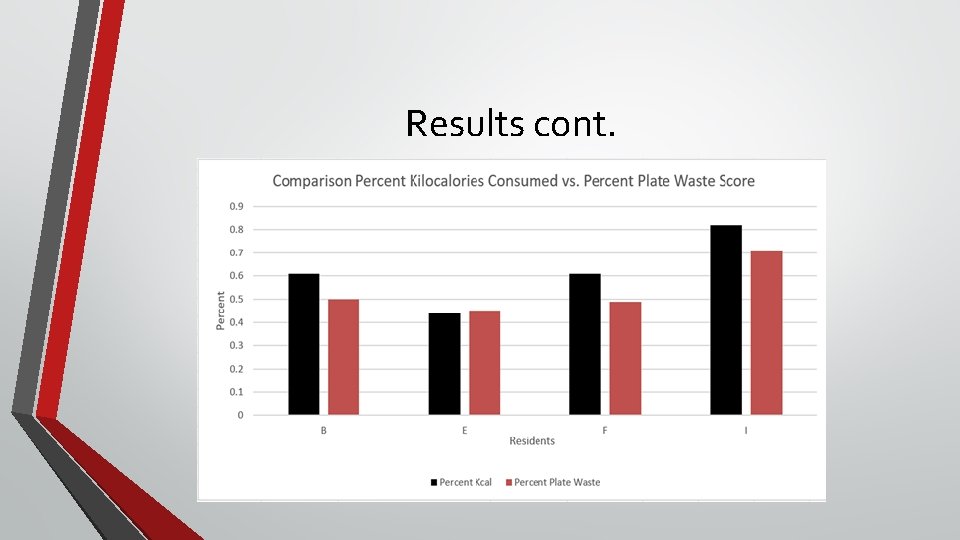
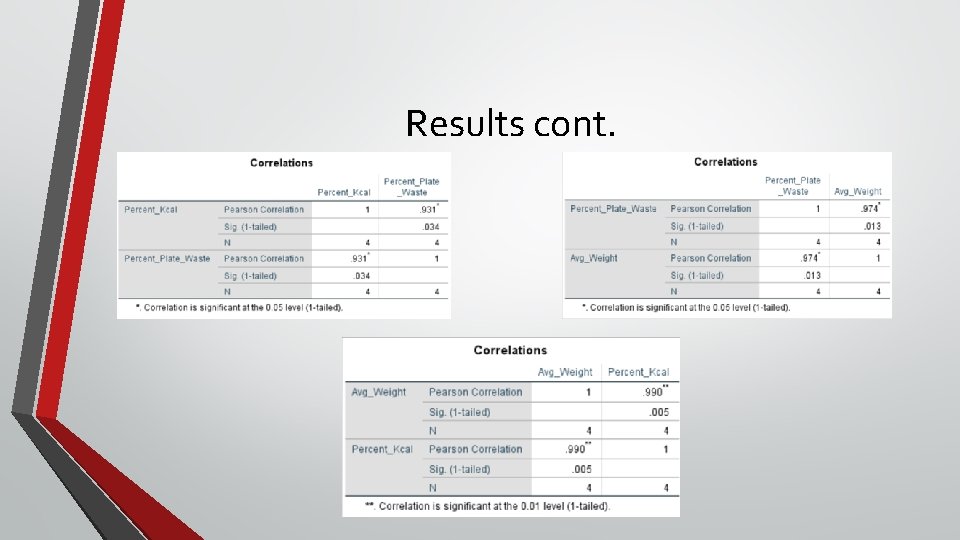
Results • Resident Weight • Percent Kcal Consumed • Percent Plate Waste Score • Percent Kcal vs. Percent Plate Waste • Percent Plate Waste vs. Average Weight • Average Weight vs. Percent Kcal
Results cont.
Results cont.
Results cont.
Results cont.
Future Implications • Larger sample size • Variety in facilities and location • More testing meals and periods per week • Significance of this study
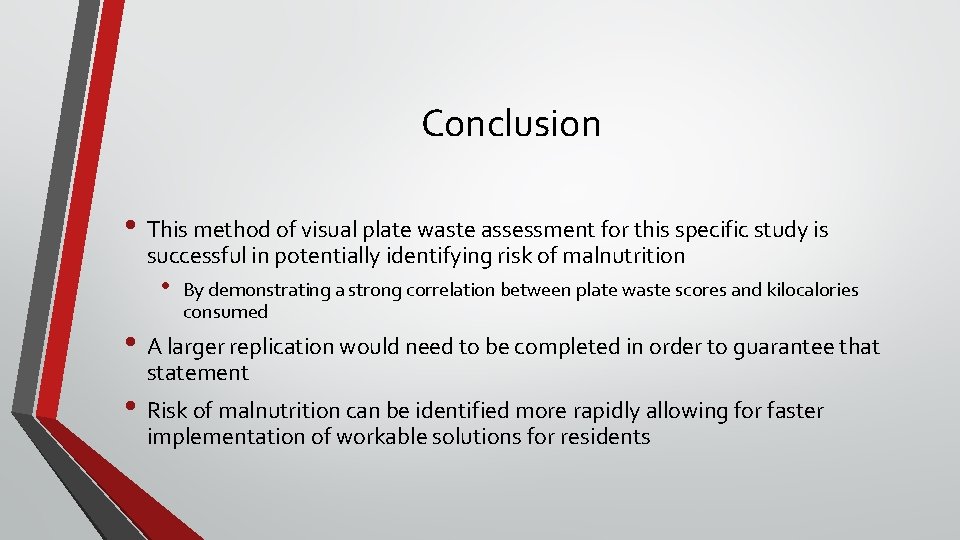
Conclusion • This method of visual plate waste assessment for this specific study is successful in potentially identifying risk of malnutrition • By demonstrating a strong correlation between plate waste scores and kilocalories consumed • A larger replication would need to be completed in order to guarantee that statement • Risk of malnutrition can be identified more rapidly allowing for faster implementation of workable solutions for residents
References • • • (1) National Resource Center on Nutrition, Physical Activity & Aging. Malnutrition and Older Americans. http: //nutrition. fiu. edu/aging_network/malfact 2. asp. Accessed July 14, 2017. (2) Barton A, Beigg C, Macdonald I, Allison S. High food wastage and low nutritional intakes in hospital patients. Clin Nutr. 2000; 19(6): 445 -449. https: //doi. org/10. 1054/clnu. 2000. 0150 (3) Shatenstein B, Ferland G. Absence of nutritional or clinical consequences of decentralized bulk food portioning in elderly nursing home residents with dementia in Montreal. J Am Diet Assoc. 2000; 100(11): 1354 -1360. https: //doi. org/10. 1016/S 0002 -8223(00)00381 -3 (4) Hayes J, Kendrick OW. Plate waste and perception of quality of food prepared in conventional vs commissary systems in the nutrition program for the elderly. J Acad Nutr Diet. 1995; 95(5): 585. https: //doi. org/10. 1016/S 0002 -8223(95)00159 -X (5) Sherwin A, Nowson C, Mc. Phee J, Alexander J, Wark J, Flicker L. Nutrient intake at meals in residential care facilities for the aged: Validated visual estimation of plate waste. Aust J Nutr Diet. 1998.