
Visual Modeling of Immunization Registry Operations Initial Efforts
- Slides: 22
Visual Modeling of Immunization Registry Operations: Initial Efforts The 38 th National Immunization Conference Wednesday, May 12, 2004 Nashville, TN
Contact Information n n n Warren Williams, MPH – Presenter National Immunization Program - CDC wxw 4@cdc. gov (404) 639 -8867 DS Lyalin, Ph. D – Northrop Grumman Co. / David Lyalin Consulting, Inc. F Caniglia, RHIA – Pennsylvania Department of Health DJ Michaud, MEd - Massachusetts Department of Public Health S Levy, MBA - Massachusetts Department of Public Health J Kelly, RN, CPHQ – National Immunization Program – CDC RS Van Duyne - National Immunization Program – CDC 2
Problem or Opportunity? n n n Immunization Registries are getting increasingly complex and advanced, so some new ways need to be explored to address and manage this complexity. Common operational procedures exists in immunization systems. Trends and approaches from other fields are relevant and applicable for Immunization registration. Best practices are emerging in various fields, including Immunization operations. 3
Modeling Research Project The primary purpose of the Immunization Registry Modeling Research Project is to take advantage of modern, formal, visual business modeling techniques and apply them to the immunization registry field.
Expected Benefits n n n Helping us communicate. With a model created using a widely-recognized modeling methodologies and techniques, we can better identify similarities and differences between various immunization registries and between immunization and other disease registries. Helping us re-think and improve our operations. Creating the model will force us to think about every aspect of our operations in a structured way. Are there better ways to do what we are doing? Are there aspects of our operations that may have been historically needed but are no longer optimal? Helping us to improve the scientific validity of immunization practices by using formalized engineering and research methods and techniques to model operations of immunization registries. 5
Project Tasks n n n Assemble team of SMEs (subject matter experts) representing major stakeholders, internal experts, along with business/systems modeling experts. Involve AIRA (American Immunization Registries Association), state registries, and other partners. Establish a process for creating the models, using facilitated face -to-face meetings and other communication techniques. Create models of the key immunization registration processes: u Operational scenarios of immunization processes u Structure of major elements of immunization processes u Process maps for immunization processes Summarize and present results to the immunization registration community. Prepare ground for and initiate long-term modeling efforts. 6
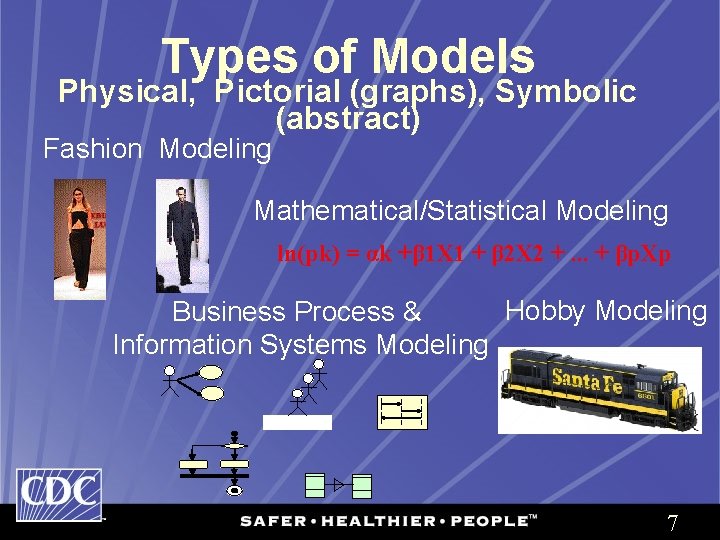
Types of Models Physical, Pictorial (graphs), Symbolic (abstract) Fashion Modeling Mathematical/Statistical Modeling ln(pk) = αk +β 1Χ 1 + β 2Χ 2 +. . . + βpΧp Hobby Modeling Business Process & Information Systems Modeling List of Actors 7
What Models Do n n Reduces complexity of Immunization Registration (simplification) to manageable level (They help manage the madness!) Purges secondary details and focuses on one or more relevant aspects at a time. Each diagram provides a limited specialized view of the business, making it easier to focus on one aspect at a time. Captures facts and provides answers – Who? Where? How? When? What? Why? 8
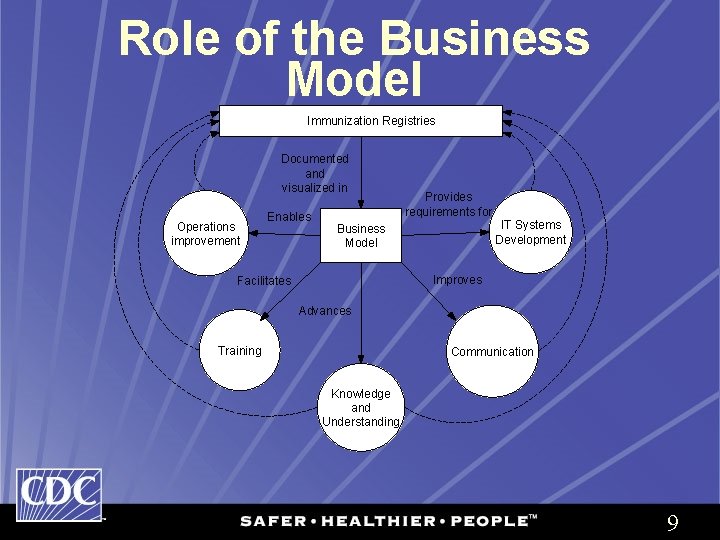
Role of the Business Model Immunization Registries Documented and visualized in Operations improvement Enables Provides requirements for IT Systems Development Business Model Improves Facilitates Advances Training Communication Knowledge and Understanding 9
Business Modeling – IT Systems n n Business model ensures that business needs drive IT architectural and technology solutions. Business model provides “big picture” view, documents “needs”: Business needs –> System features –> Software requirements Business model provides a technology neutral “blueprint” of the business Engineering “blueprint” promotes conventional engineering principles - design before construct, base process on the best practices, …. 10
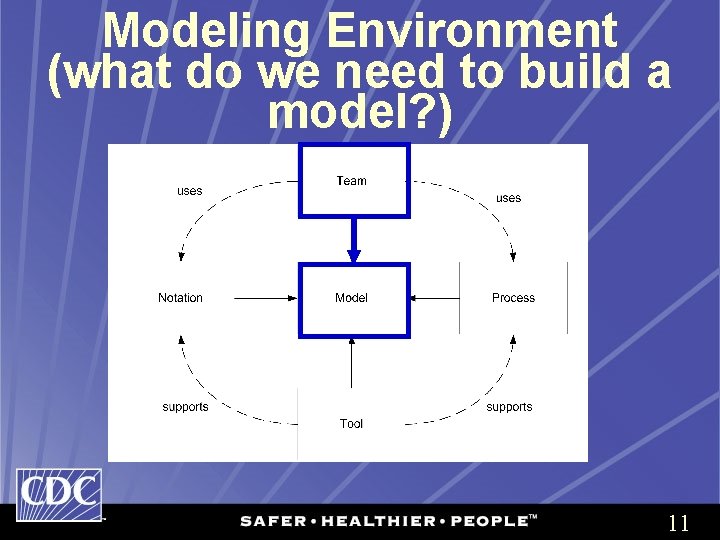
Modeling Environment (what do we need to build a model? ) 11
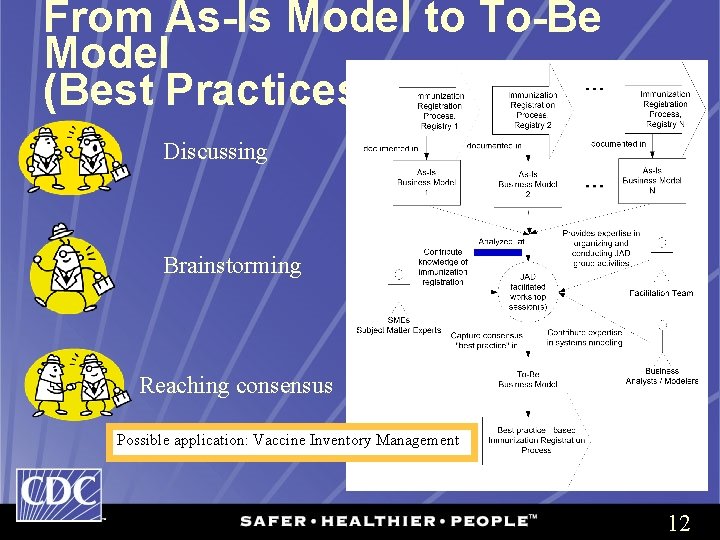
From As-Is Model to To-Be Model (Best Practices) Discussing Brainstorming Reaching consensus Possible application: Vaccine Inventory Management 12
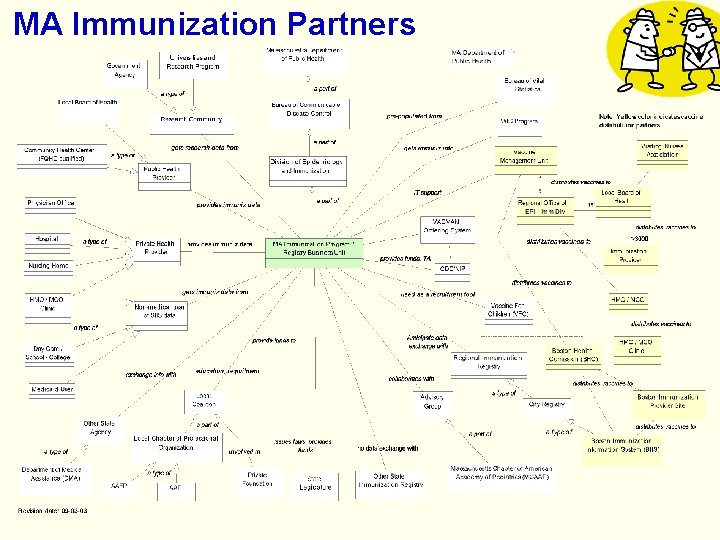
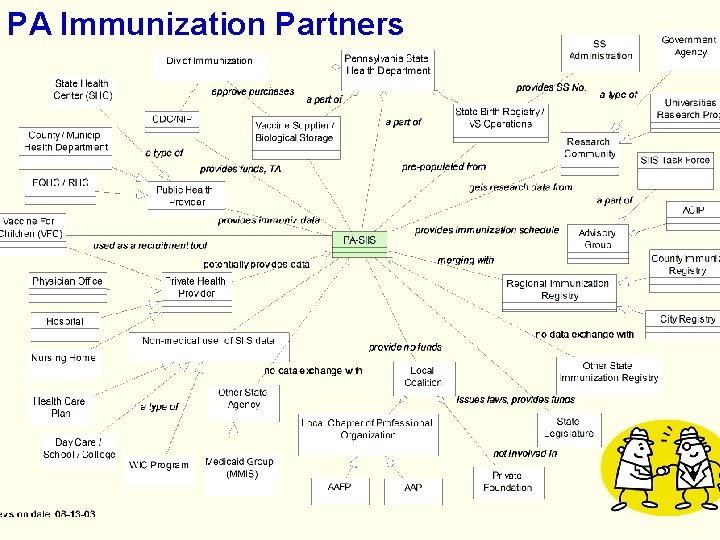
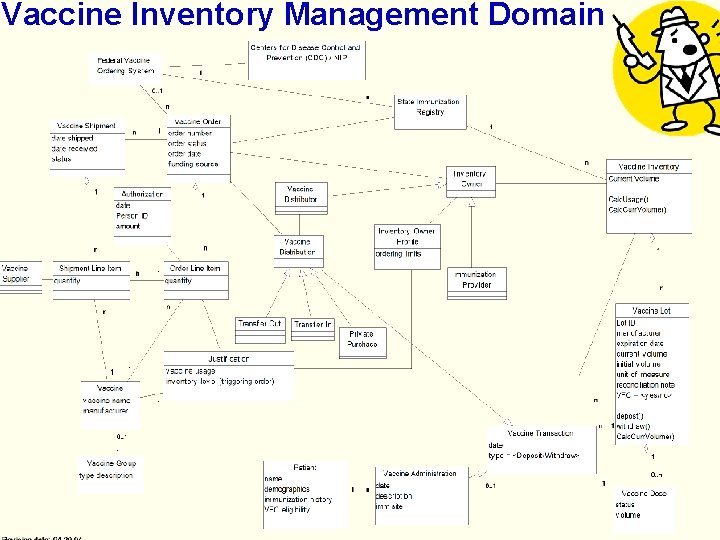
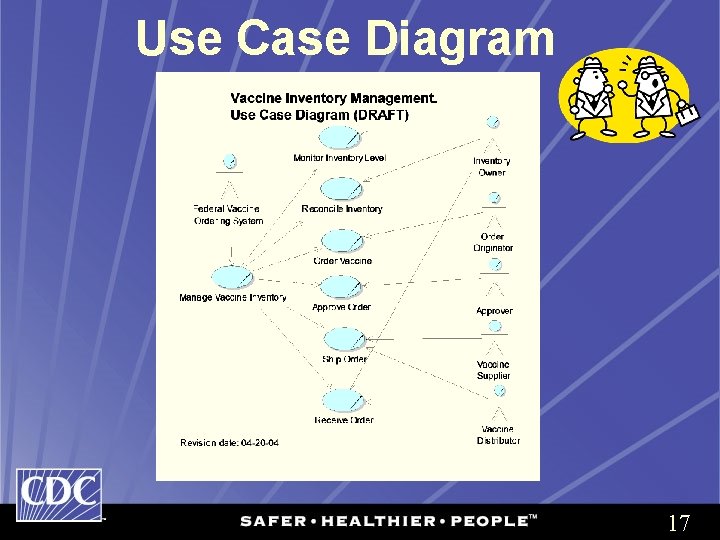
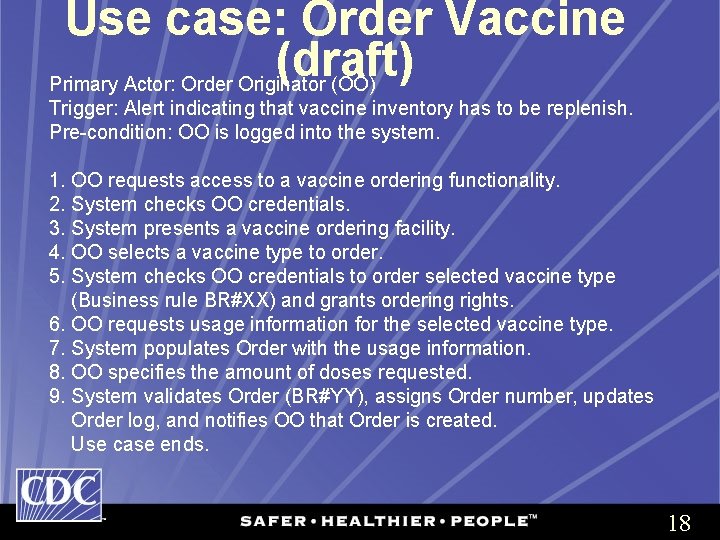
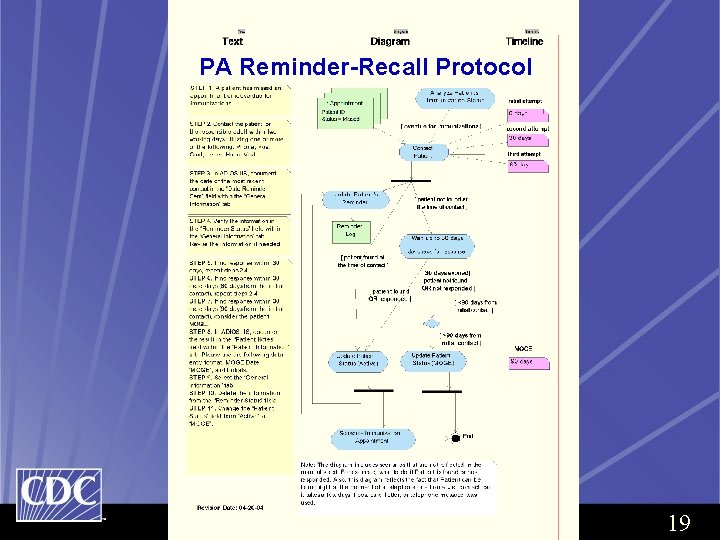
Examples of Diagrams n n n MA immunization partners registry-centric diagram PA immunization partners registry-centric diagram Vaccine Inventory Management domain diagram Vaccine Inventory Management use case diagram Order Vaccine use case text PA- Reminder - Recall Protocol (MOGE) 13
MA Immunization Partners
PA Immunization Partners 15
Vaccine Inventory Management Domain 16
Use Case Diagram 17
Use case: Order Vaccine (draft) Primary Actor: Order Originator (OO) Trigger: Alert indicating that vaccine inventory has to be replenish. Pre-condition: OO is logged into the system. 1. OO requests access to a vaccine ordering functionality. 2. System checks OO credentials. 3. System presents a vaccine ordering facility. 4. OO selects a vaccine type to order. 5. System checks OO credentials to order selected vaccine type (Business rule BR#XX) and grants ordering rights. 6. OO requests usage information for the selected vaccine type. 7. System populates Order with the usage information. 8. OO specifies the amount of doses requested. 9. System validates Order (BR#YY), assigns Order number, updates Order log, and notifies OO that Order is created. Use case ends. 18
PA Reminder-Recall Protocol 19
Results n n n Formal, dynamic, engineering methods of visual modeling were applied and found to be applicable and adequate instruments to depict the Immunization Information Systems (IIS) domain. Facilitated modeling sessions were conducted at the Pennsylvania and Massachusetts Immunization Registries. Initial drafts of diagrams reflecting aspects of IIS centric operations and programmatic requirements are developed. 20
Top 5 Things to Remember About Business Modeling in IIS n n n Documents IIS business. Reduces complexity of projects. Uses visual diagrams and structured text. Captures consensus. Ensures business needs drive technology solutions. 21
Q&A. Discussion. 22