
VISUAL LITERACY Viewing and Visually Representing These are
- Slides: 11
VISUAL LITERACY Viewing and Visually Representing These are an integral part of Reading and Writing and used together to Make Meaning
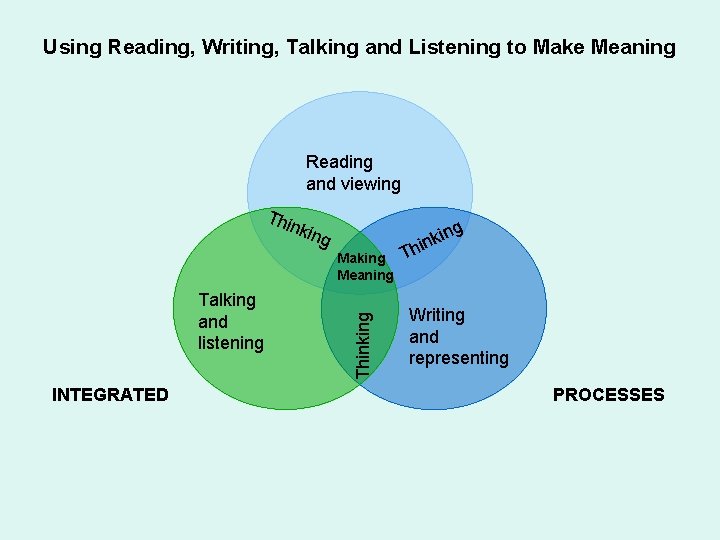
Using Reading, Writing, Talking and Listening to Make Meaning Reading and viewing Thi nkin g g Talking and listening INTEGRATED Thinking Making Meaning kin n i h T Writing and representing PROCESSES
Visual Literacy • Is the ability to see, understand, think, create and communicate graphically. • Visual Literacy is learned, just like reading and writing are learned. • Basic skills involve identification of the subject or elements in the image. • Higher level skills require critical thinking to read visual texts e. g. , graphs, diagrams and maps
Basic Elements of Visual Communication • Dot: pointer or marker of space • Line: Show motion or direction • Shape: outline of objects/negative spaces • Direction: the way the viewer’s eye moves • Texture: the feel of an object’s surface • Hue: colour: warm and cool • Saturation: amount of grey in a particular colour • Value: tone, light and dark in contrast • Scale: relative size of objects • Dimension: use of linear perspective • Motion: implied using blurring, line, shape, texture or direction
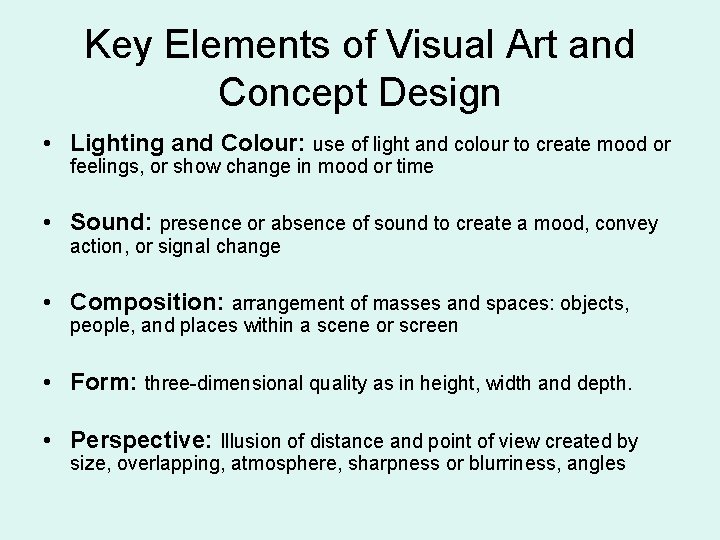
Key Elements of Visual Art and Concept Design • Lighting and Colour: use of light and colour to create mood or feelings, or show change in mood or time • Sound: presence or absence of sound to create a mood, convey action, or signal change • Composition: arrangement of masses and spaces: objects, people, and places within a scene or screen • Form: three-dimensional quality as in height, width and depth. • Perspective: Illusion of distance and point of view created by size, overlapping, atmosphere, sharpness or blurriness, angles
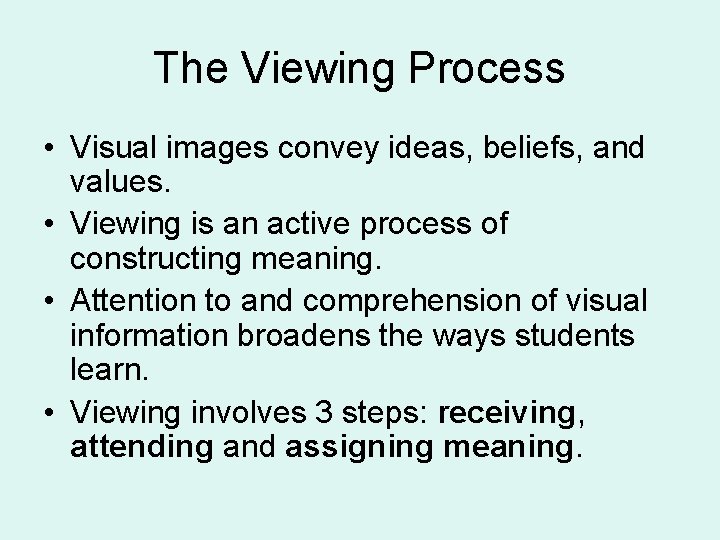
The Viewing Process • Visual images convey ideas, beliefs, and values. • Viewing is an active process of constructing meaning. • Attention to and comprehension of visual information broadens the ways students learn. • Viewing involves 3 steps: receiving, attending and assigning meaning.
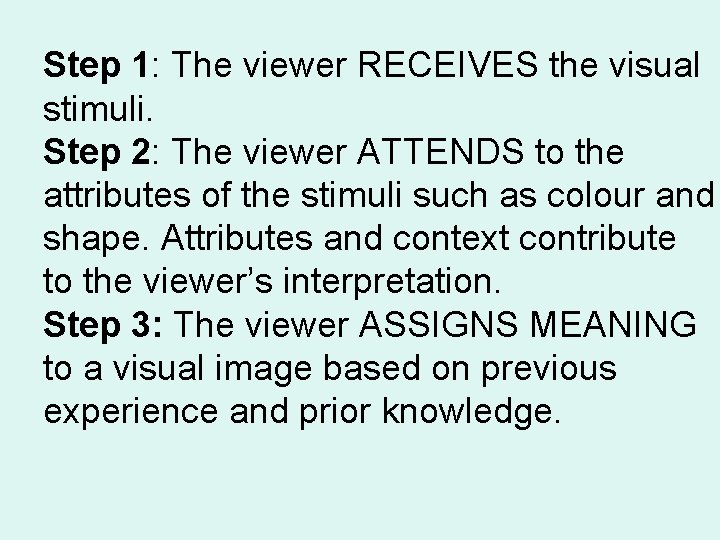
Step 1: The viewer RECEIVES the visual stimuli. Step 2: The viewer ATTENDS to the attributes of the stimuli such as colour and shape. Attributes and context contribute to the viewer’s interpretation. Step 3: The viewer ASSIGNS MEANING to a visual image based on previous experience and prior knowledge.
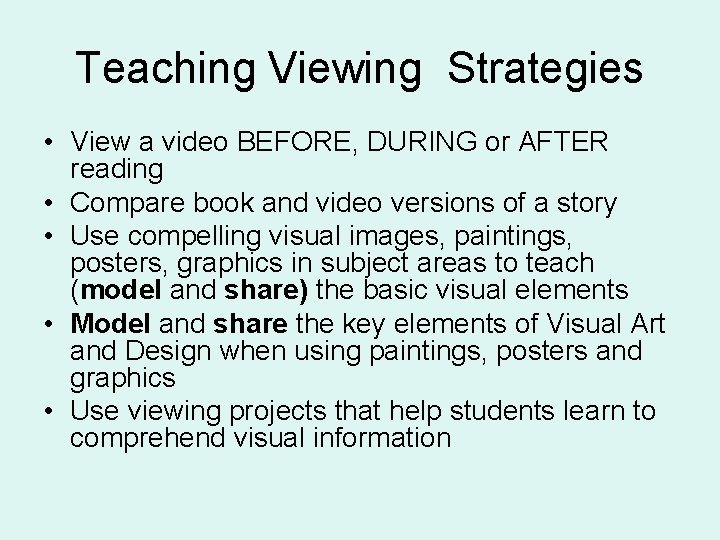
Teaching Viewing Strategies • View a video BEFORE, DURING or AFTER reading • Compare book and video versions of a story • Use compelling visual images, paintings, posters, graphics in subject areas to teach (model and share) the basic visual elements • Model and share the key elements of Visual Art and Design when using paintings, posters and graphics • Use viewing projects that help students learn to comprehend visual information
Viewing Projects • View a television, film, CD-ROM, or video version of a book • Compare illustrations in several versions of the same book • Analyze the illustrator’s craft to discover techniques used. • View primary sources to extract information about a subject topic or theme. • View the work of one illustrator in several books
Guidelines for Using Visual Media 1. 2. 3. 4. 5. 6. 7. 8. Preview Plan how to use Set the purpose Use the pause function Re-view Vary the procedure used Compare the author’s and camera’s view Provide opportunities for response
With a partner: 1. View the poster to identify basic visual elements that are present. 2. Identify the key elements of visual art and design used to communicate messages. 3. Join another group and share your learning using your posters. 4. Discuss how you might use the posters in your class to teach viewing skills as part of a subject area lesson. 5. Share ideas in the large group.