
VISUAL IMPAIRMENT Visual impairment also known as vision


- Slides: 13
VISUAL IMPAIRMENT • Visual impairment, also known as vision impairment or vision loss, is a decreased ability to see to a degree that causes problems not fixable by usual means, such as glasses. Some also include those who have a decreased ability to see because they do not have access to glasses or contact lenses.
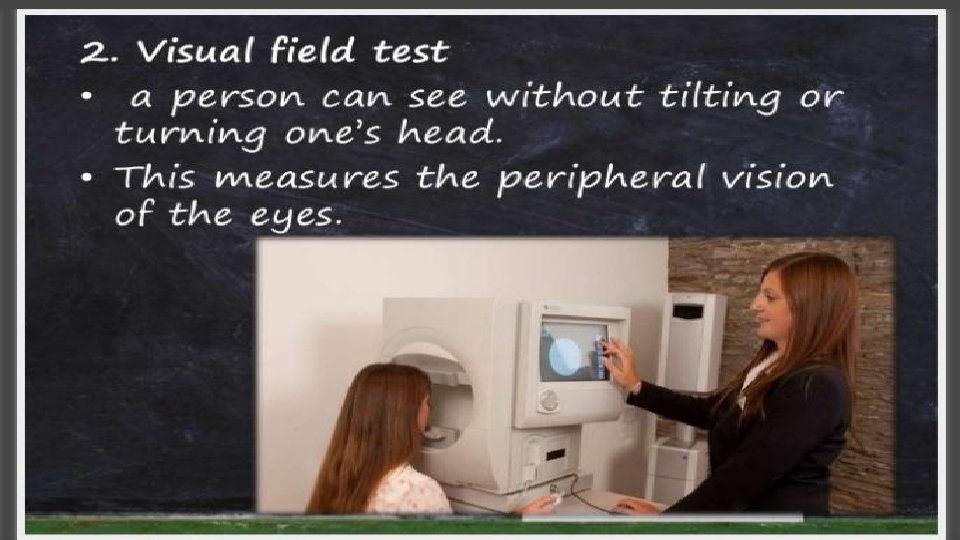
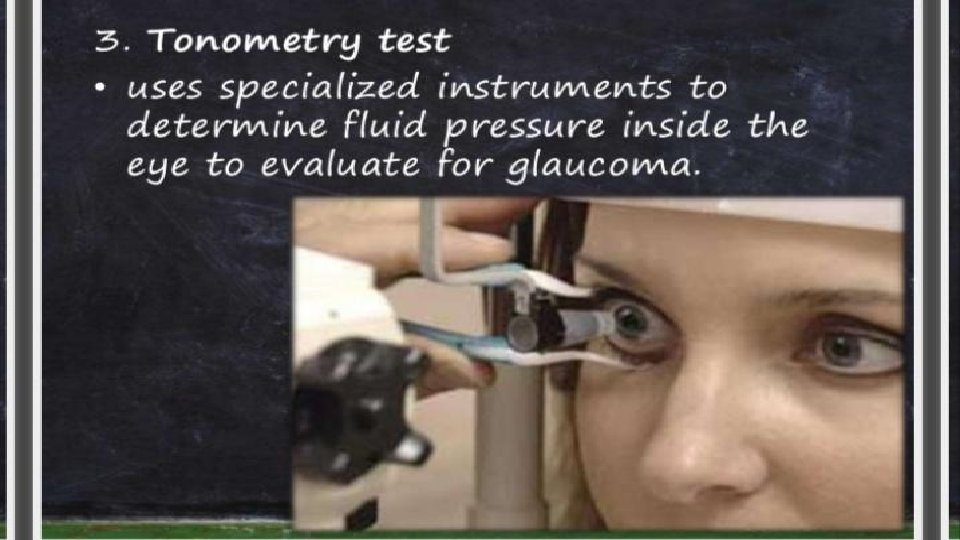
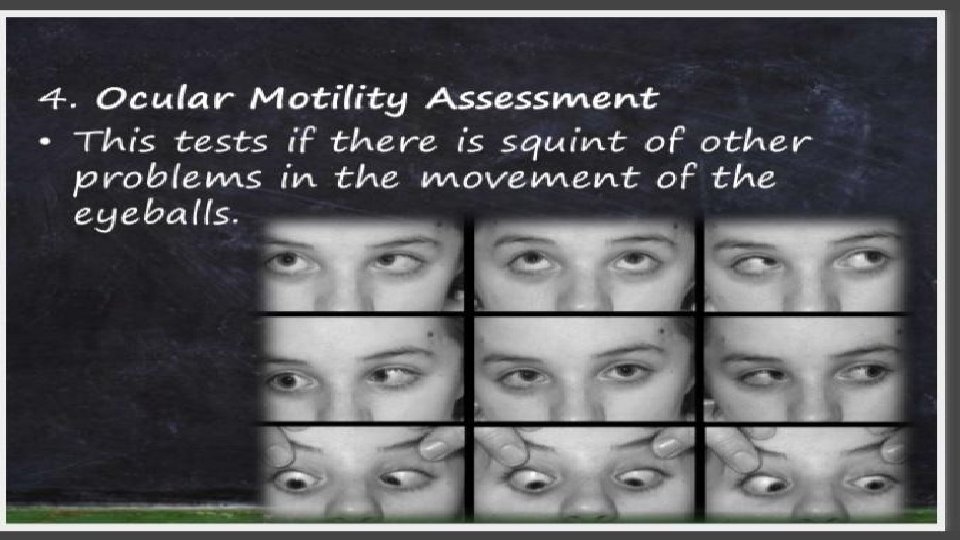
ASSESSMENT ��
NURSING MANAGEMENT • Always identify yourself when entering a room by name and position. Before manipulating or treating the patient, tell them what you are going to do. • Orient a person to their surroundings by showing them where the bathroom, door to hallway, phone and call button are using their bed as the reference point. • If you need to move furniture, water pitcher, personal belongings, always put the object back where it was. If you can’t, be sure the patient knows what you have done.
• Painting the doorframes a dark color would provide good contrast for a person with some vision. • Control glare in the room by adjusting the shades as necessary. • Let the patient know where the food is on the tray either by describing it using a clock system or show them using the silverware in their hands. • Try to use contrast on the tray. If the dishes are a dark color, a white placemat under them may help the person find their plate. Black coffee is more visible in a light colored mug. Coffee with milk is more visible in a dark colored mug.
• Talking books, Audio books or a Maine Airs receiver in a persons’ room may be a welcome change from watching television. • Don’t point when giving directions; instead, use words like “right” or “left. ” Remember that when you are facing a person, your right is his/her left. Always give directions according to their orientation. • Don’t be afraid to use words like “look”, “see” or “watch”. Changing your vocabulary will make the person feel awkward.
• Usually there is no need to speak loudly to people who are blind or visually impaired; in most cases their hearing is just fine! • Use Sighted Guide technique, when walking with people for exercise. • Ask the patient how you can assist them, rather than assuming you know what they need. • When walking with a person in the hallway, refer to points of orientation as we would (ie: walk out of your room and turn left, the nurses station is on your right…).