
Visual Exploration of Spatial and Temporal Variations of
- Slides: 23
Visual Exploration of Spatial and Temporal Variations of Tweet Topic Popularity Jie Li, Siming Chen, Gennady Andrienko, Natalia Andrienko TJU Fraunhofer CITY Tianjin University Intelligent Analysis and Information Systems IAIS University of London
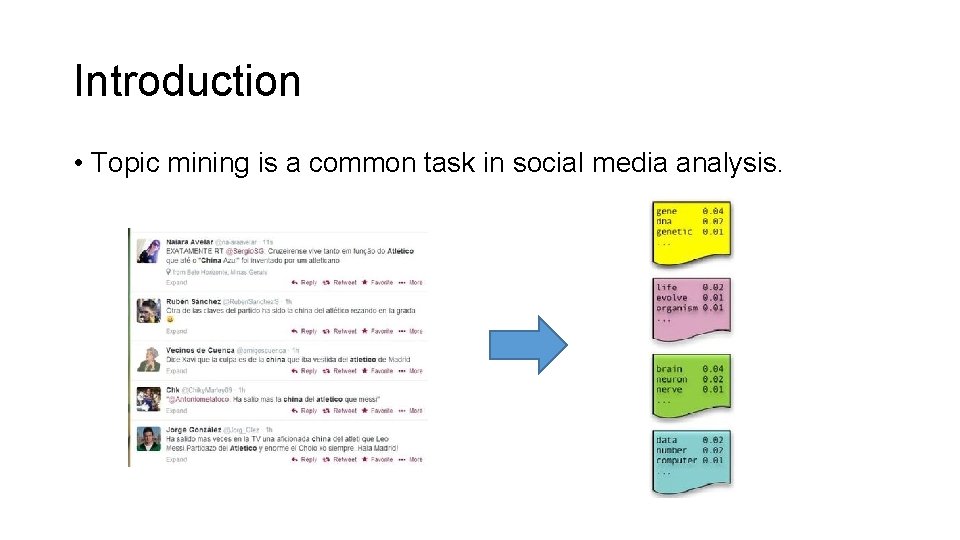
Introduction • Topic mining is a common task in social media analysis.
Introduction • Topic popularity represents how much attention a topic receives, which varies over space and time ― Spatial distribution. Which topics are popular at a given location? Which cities are interested in a given topic much more than others? ― Temporal trend: When does a topic become more (or less) popular? Understanding topic popularity variation over space and time can be useful for observing and understanding event processes going on in the society.
Introduction • Understanding spatiotemporal variation of topic popularity is challenging due to the following three issues : ―Data:huge volume, semi-structured ―Topic extraction: texts too short for topic modelling methods ―Spatiotemporal dynamic: hard to consider both spatial and temporal aspects of the variation
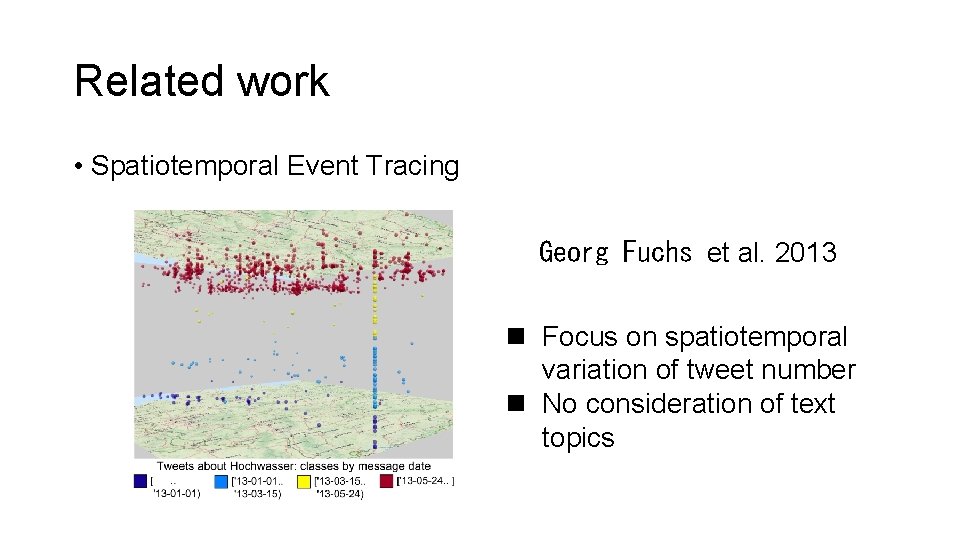
Related work • Spatiotemporal Event Tracing Georg Fuchs et al. 2013 n Focus on spatiotemporal variation of tweet number n No consideration of text topics
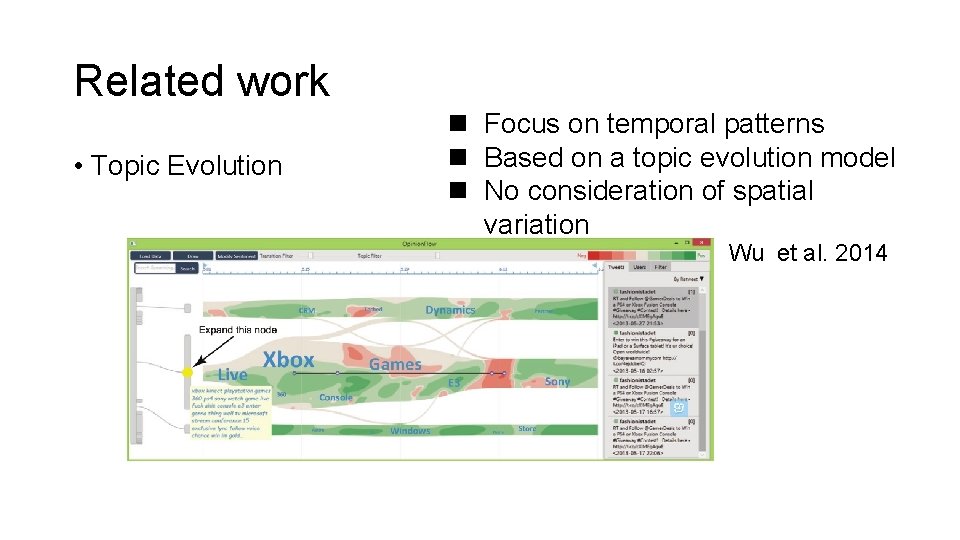
Related work • Topic Evolution n Focus on temporal patterns n Based on a topic evolution model n No consideration of spatial variation Wu et al. 2014
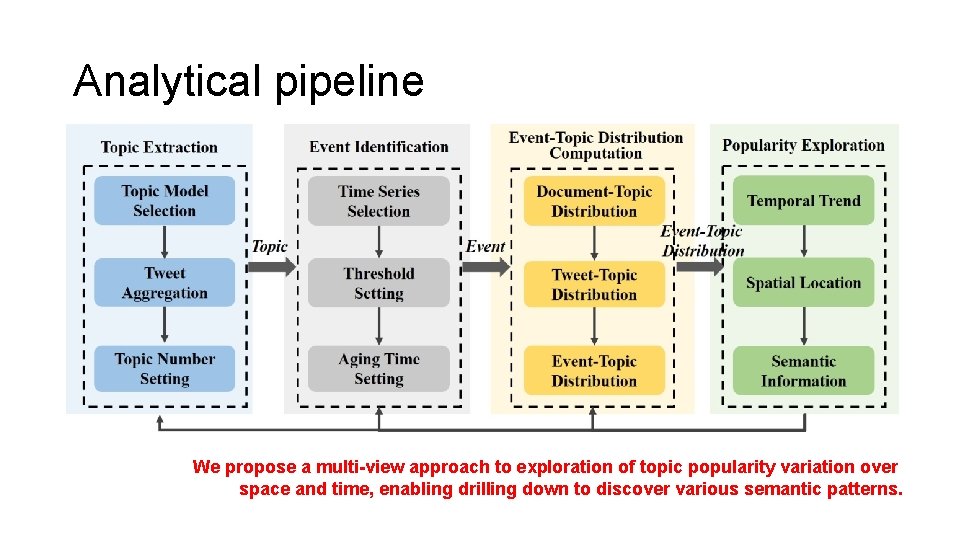
Analytical pipeline We propose a multi-view approach to exploration of topic popularity variation over space and time, enabling drilling down to discover various semantic patterns.
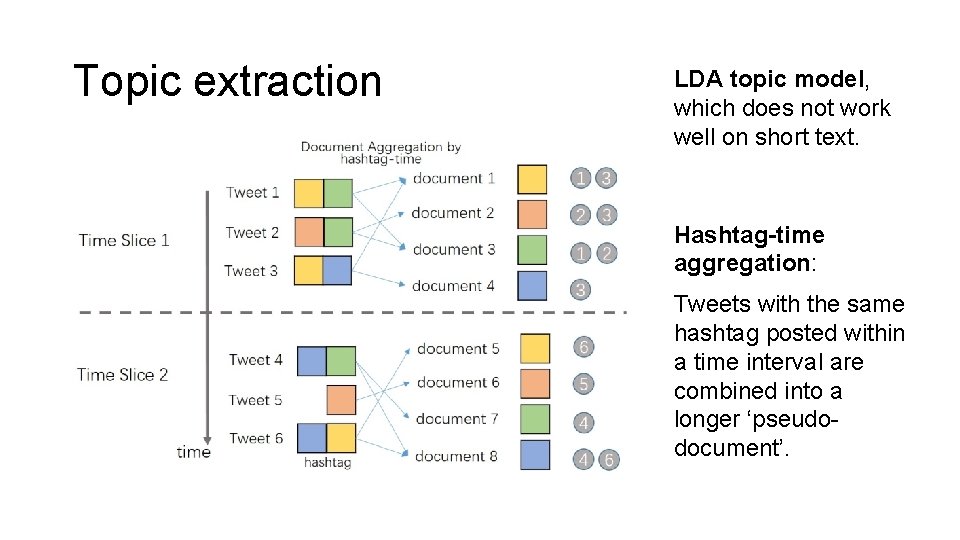
Topic extraction LDA topic model, which does not work well on short text. Hashtag-time aggregation: Tweets with the same hashtag posted within a time interval are combined into a longer ‘pseudodocument’.
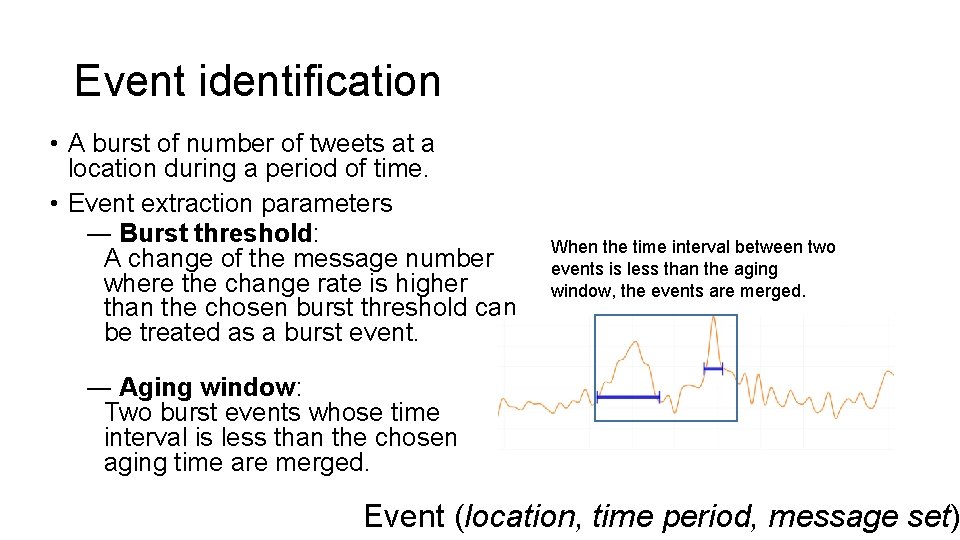
Event identification • A burst of number of tweets at a location during a period of time. • Event extraction parameters ― Burst threshold: A change of the message number where the change rate is higher than the chosen burst threshold can be treated as a burst event. When the time interval between two events is less than the aging window, the events are merged. ― Aging window: Two burst events whose time interval is less than the chosen aging time are merged. Event (location, time period, message set)
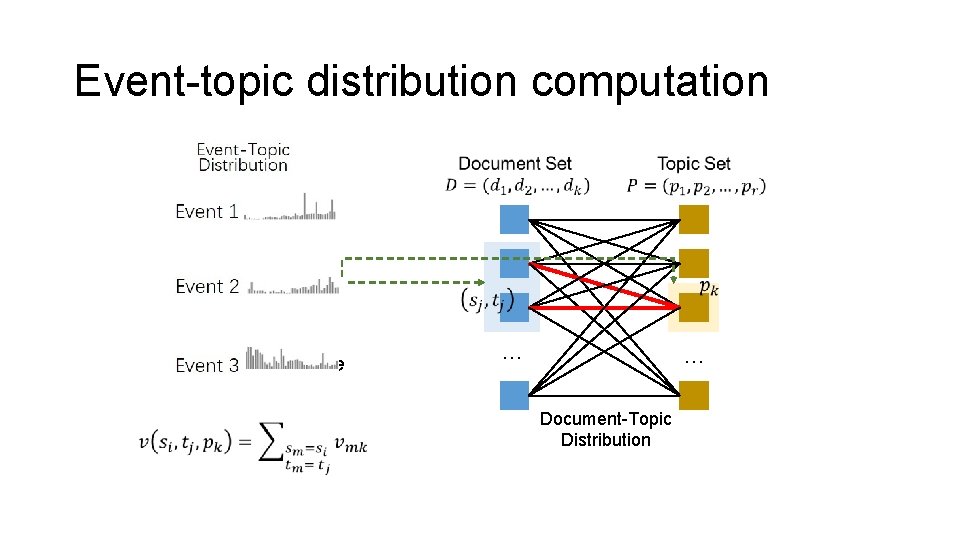
Event-topic distribution computation space … … Document-Topic Distribution
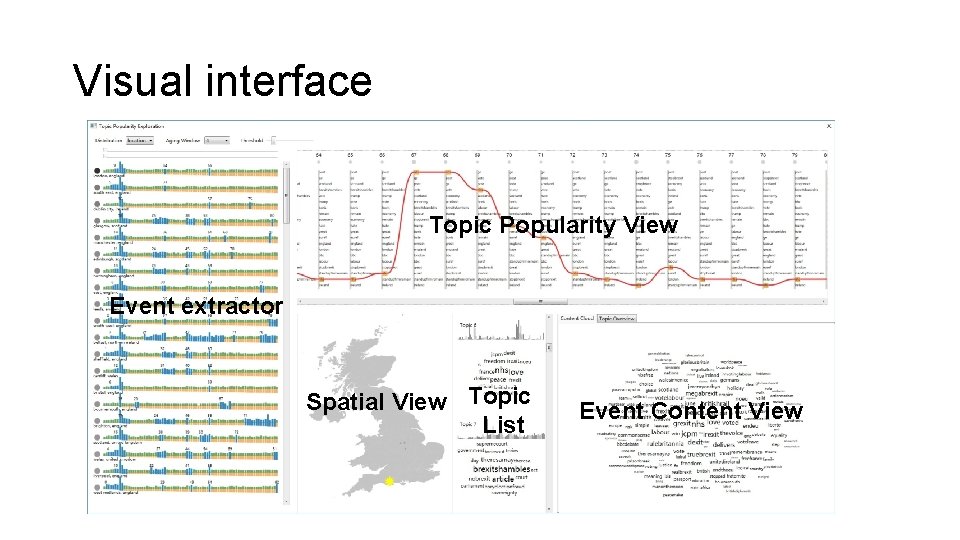
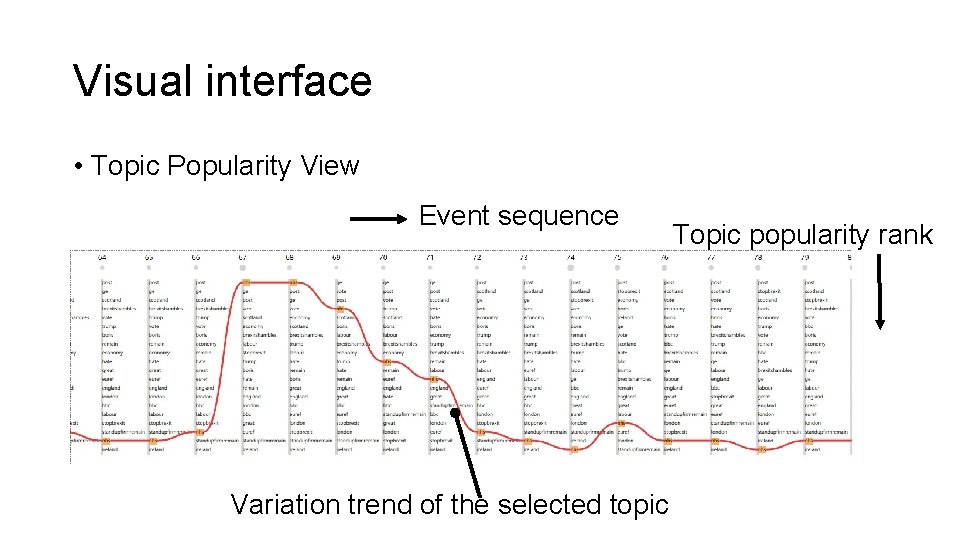
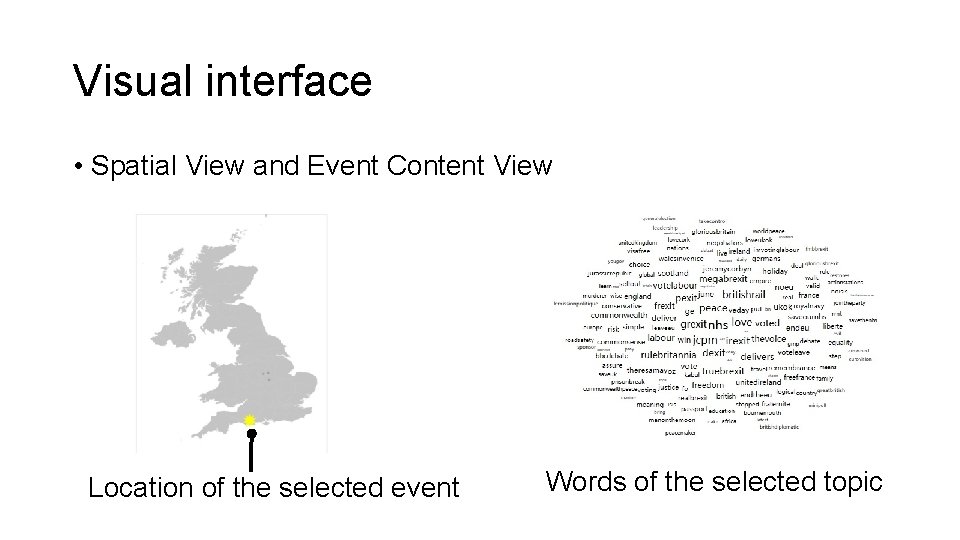
Visual interface Topic Popularity View Event extractor Spatial View Topic List Event Content View
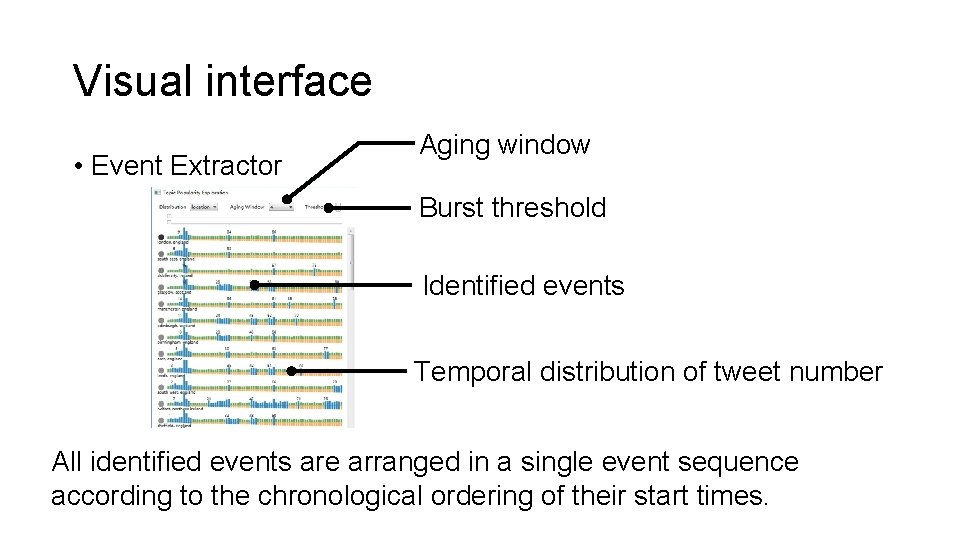
Visual interface • Event Extractor Aging window Burst threshold Identified events Temporal distribution of tweet number All identified events are arranged in a single event sequence according to the chronological ordering of their start times.
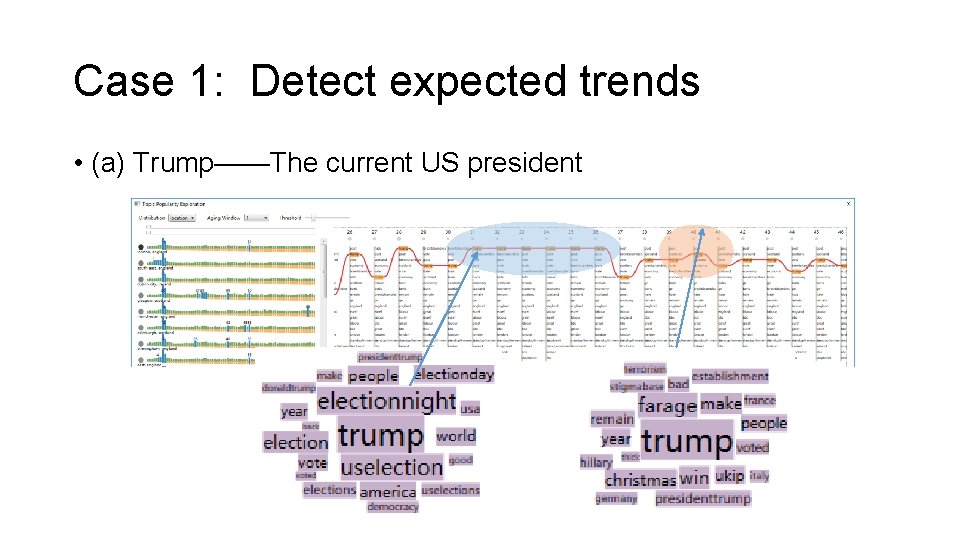
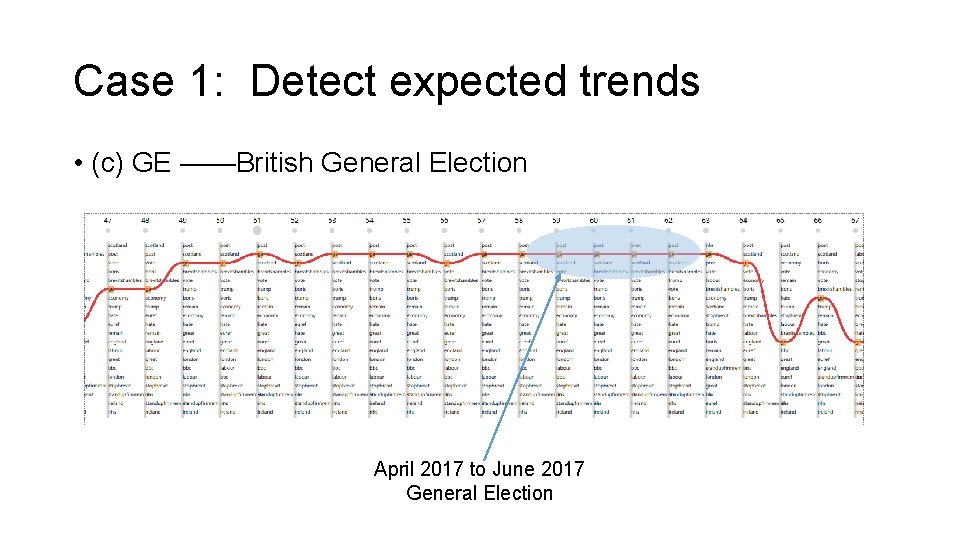
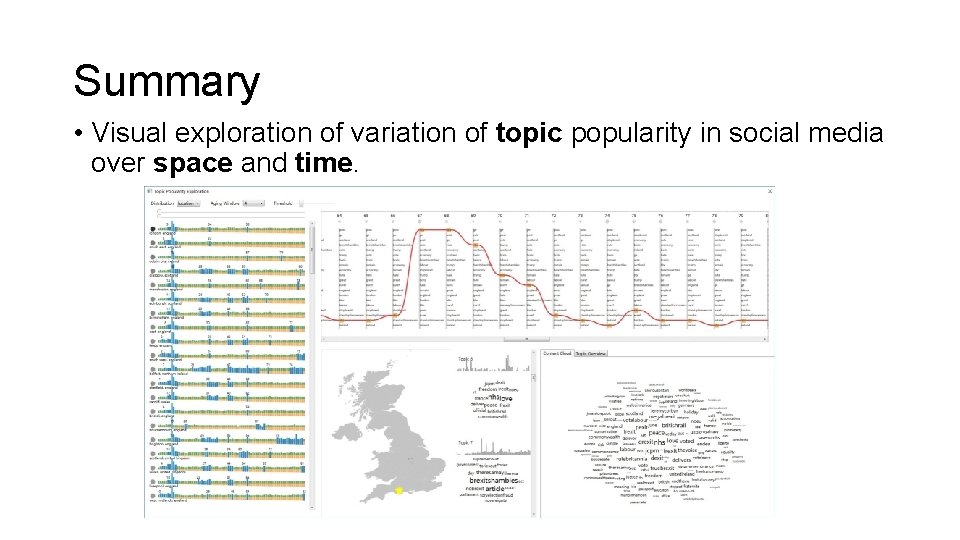
Visual interface • Topic Popularity View Event sequence Variation trend of the selected topic Topic popularity rank
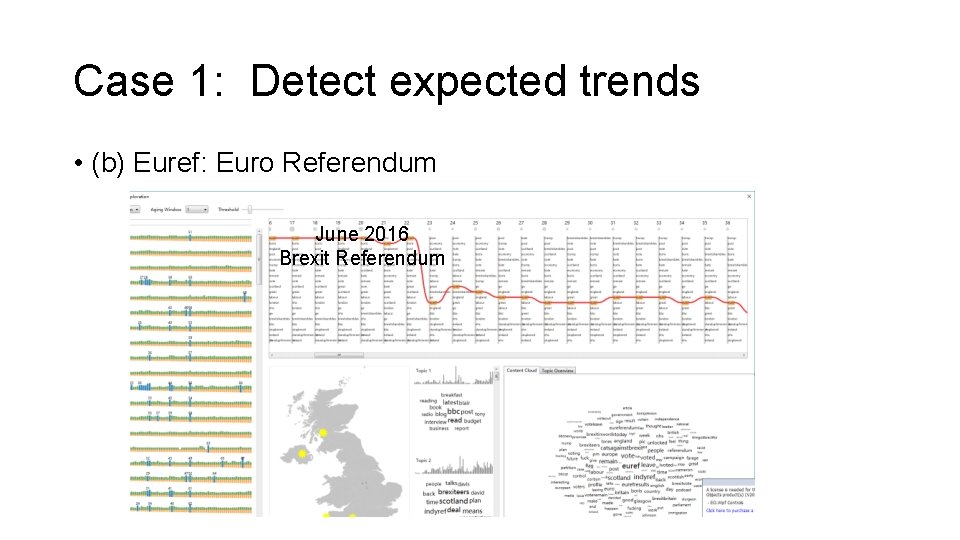
Visual interface • Spatial View and Event Content View Location of the selected event Words of the selected topic
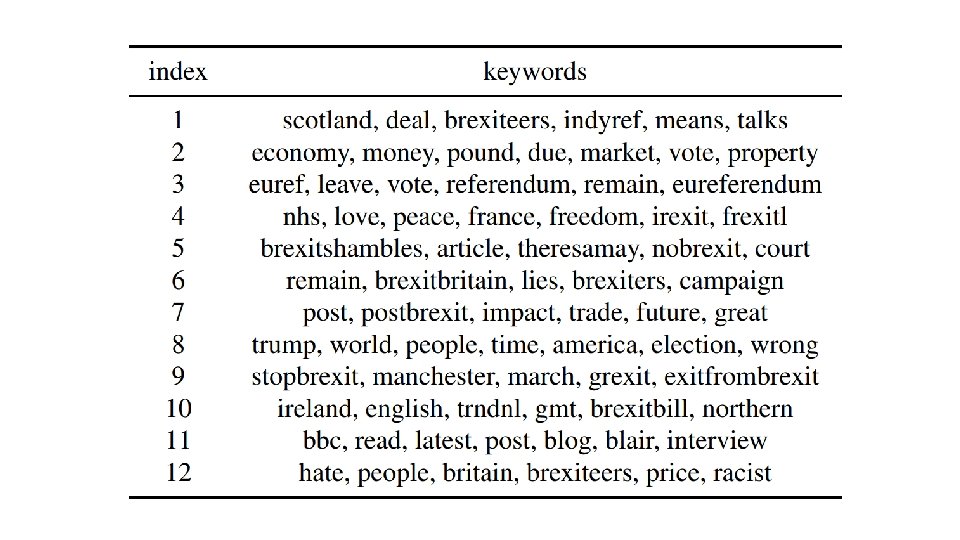
Case Study: Data and Topic Extraction • Data • Tweeter data in Britain • Filtered by ‘Brexit’ in text and hashtags • About 350000 tweets. • Topic • Hashtag-time aggregation • 20 topics.
Case 1: Detect expected trends • (a) Trump——The current US president
Case 1: Detect expected trends • (b) Euref: Euro Referendum June 2016 Brexit Referendum
Case 1: Detect expected trends • (c) GE ——British General Election April 2017 to June 2017 General Election
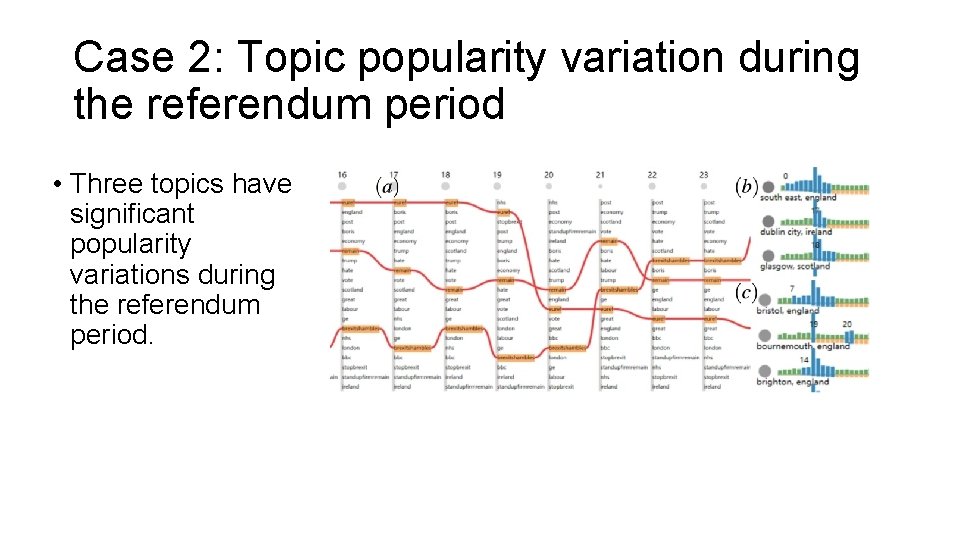
Case 2: Topic popularity variation during the referendum period • Three topics have significant popularity variations during the referendum period.
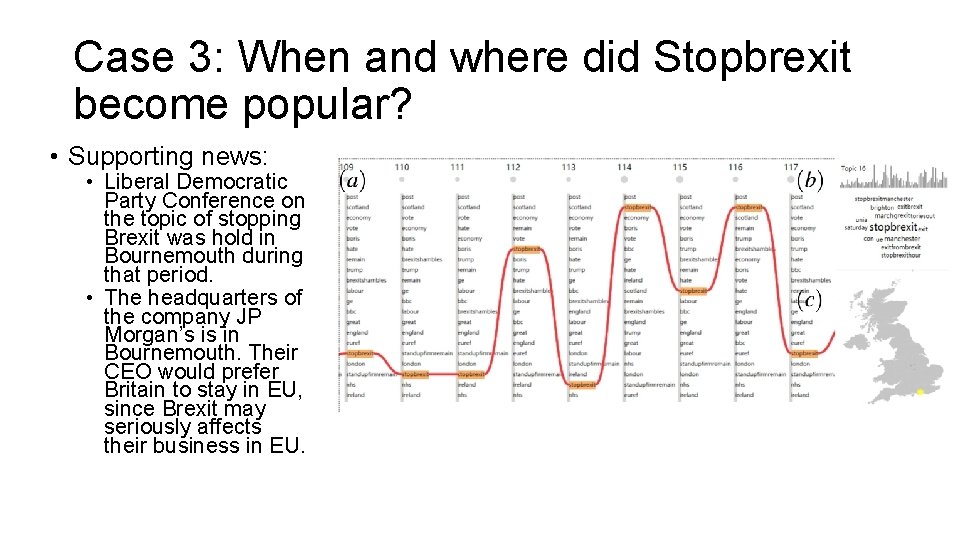
Case 3: When and where did Stopbrexit become popular? • Supporting news: • Liberal Democratic Party Conference on the topic of stopping Brexit was hold in Bournemouth during that period. • The headquarters of the company JP Morgan’s is in Bournemouth. Their CEO would prefer Britain to stay in EU, since Brexit may seriously affects their business in EU.
Summary • Visual exploration of variation of topic popularity in social media over space and time.
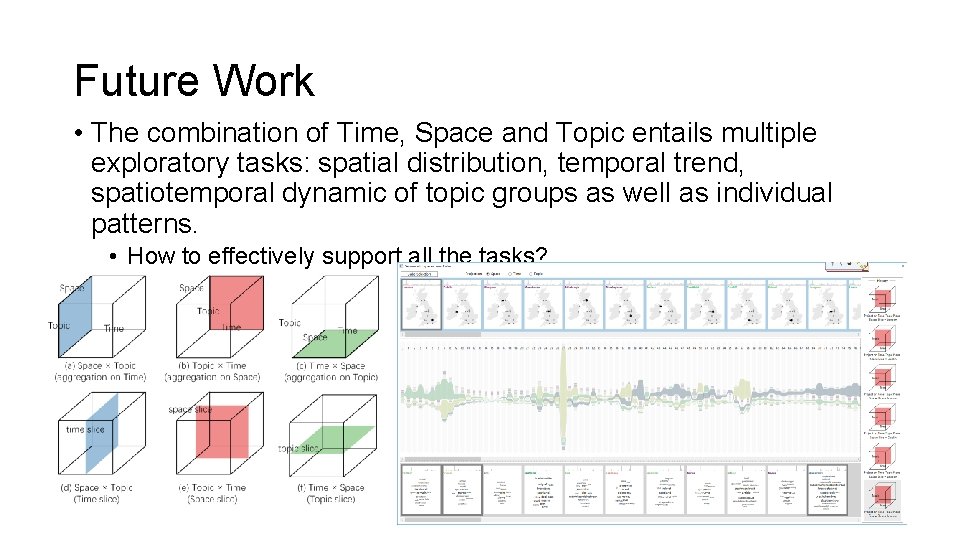
Future Work • The combination of Time, Space and Topic entails multiple exploratory tasks: spatial distribution, temporal trend, spatiotemporal dynamic of topic groups as well as individual patterns. • How to effectively support all the tasks?