
Visual Cinematic Techniques Their Meaning and Literary Connections
- Slides: 19
Visual Cinematic Techniques, Their Meaning, and Literary Connections
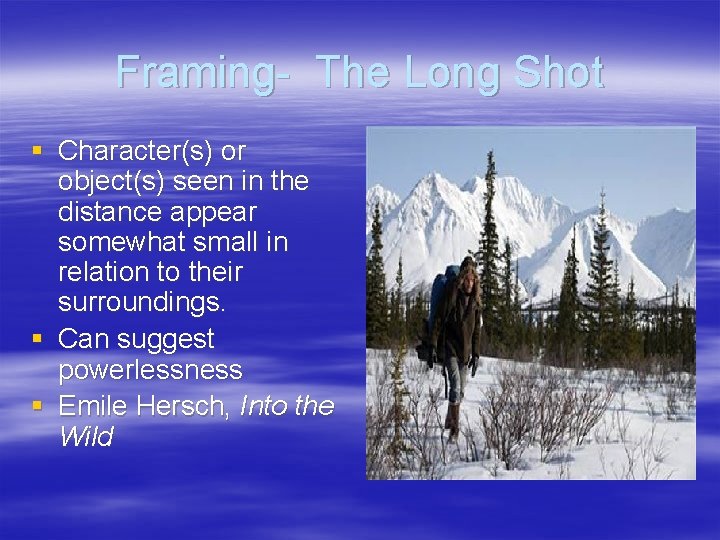
Framing- The Long Shot § Character(s) or object(s) seen in the distance appear somewhat small in relation to their surroundings. § Can suggest powerlessness § Emile Hersch, Into the Wild
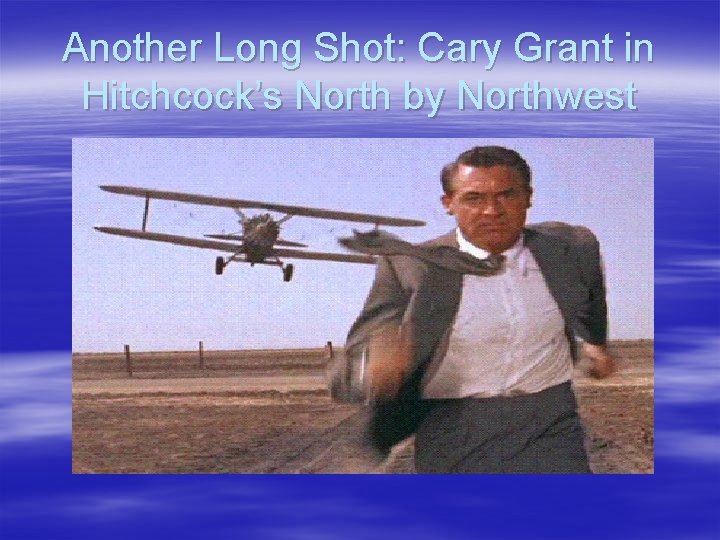
Another Long Shot: Cary Grant in Hitchcock’s North by Northwest
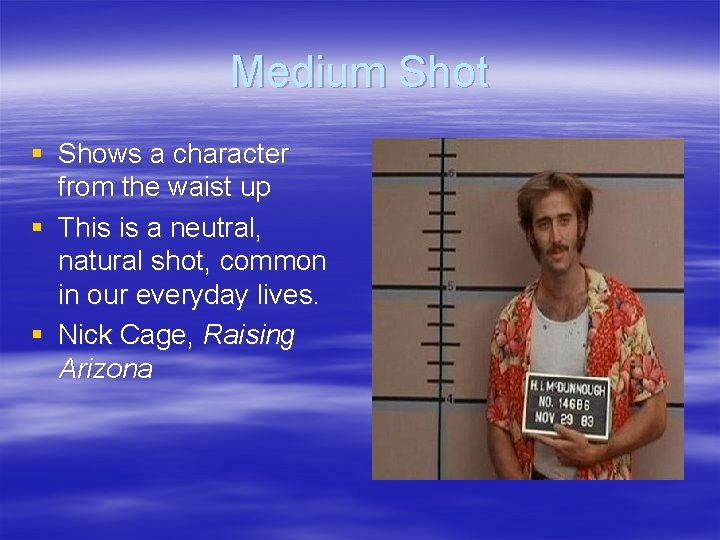
Medium Shot § Shows a character from the waist up § This is a neutral, natural shot, common in our everyday lives. § Nick Cage, Raising Arizona
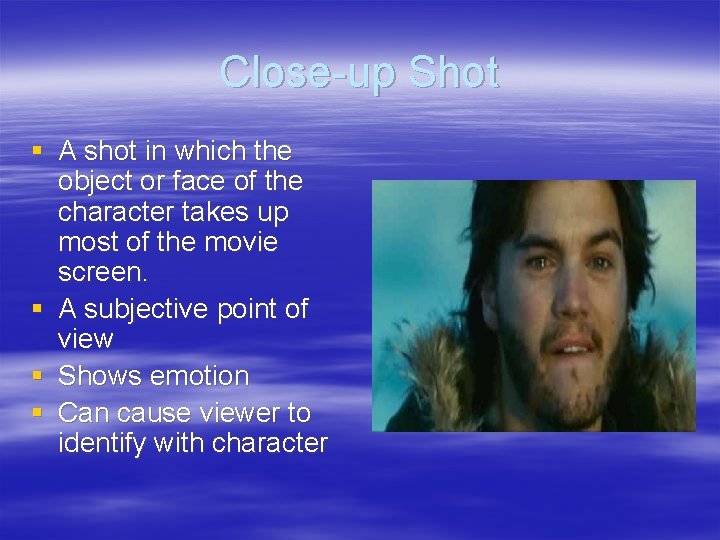
Close-up Shot § A shot in which the object or face of the character takes up most of the movie screen. § A subjective point of view § Shows emotion § Can cause viewer to identify with character
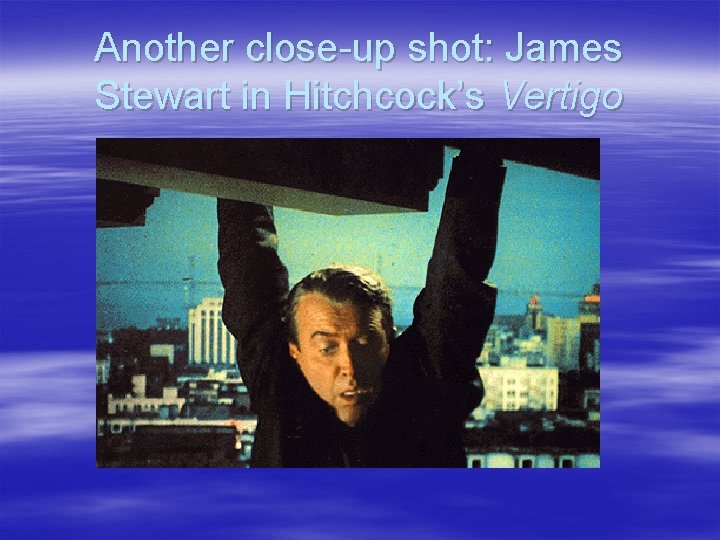
Another close-up shot: James Stewart in Hitchcock’s Vertigo
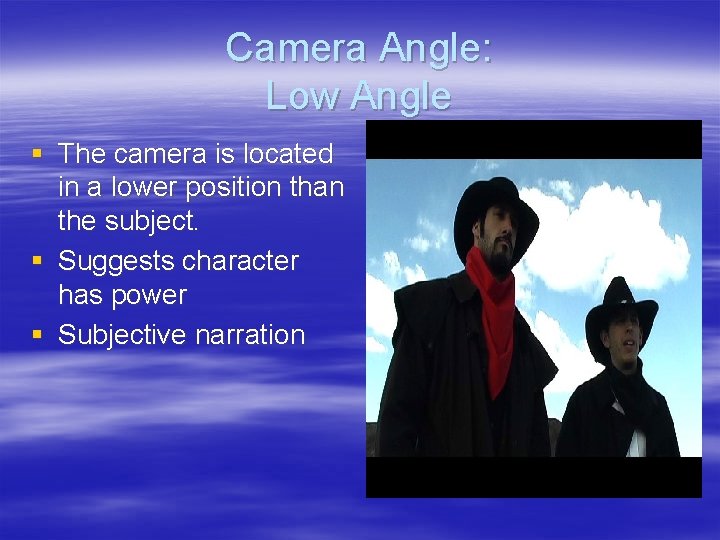
Camera Angle: Low Angle § The camera is located in a lower position than the subject. § Suggests character has power § Subjective narration
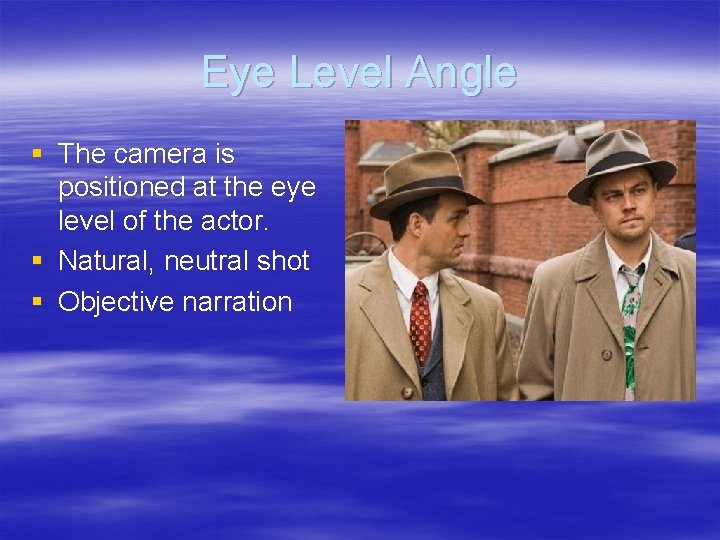
Eye Level Angle § The camera is positioned at the eye level of the actor. § Natural, neutral shot § Objective narration
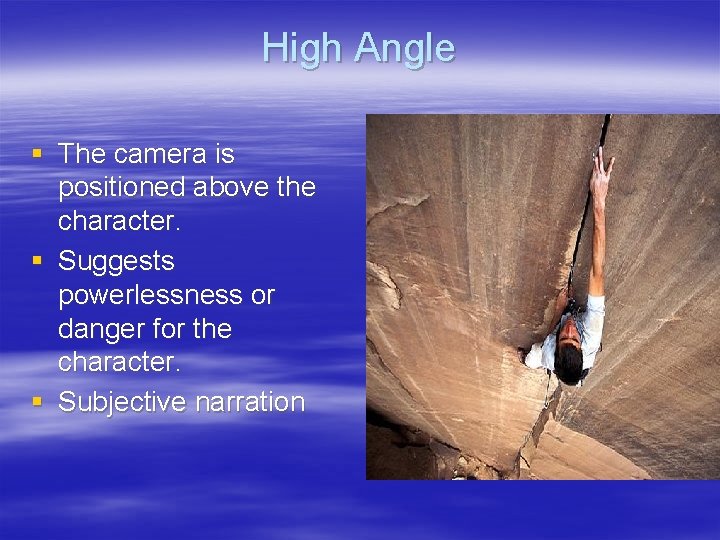
High Angle § The camera is positioned above the character. § Suggests powerlessness or danger for the character. § Subjective narration
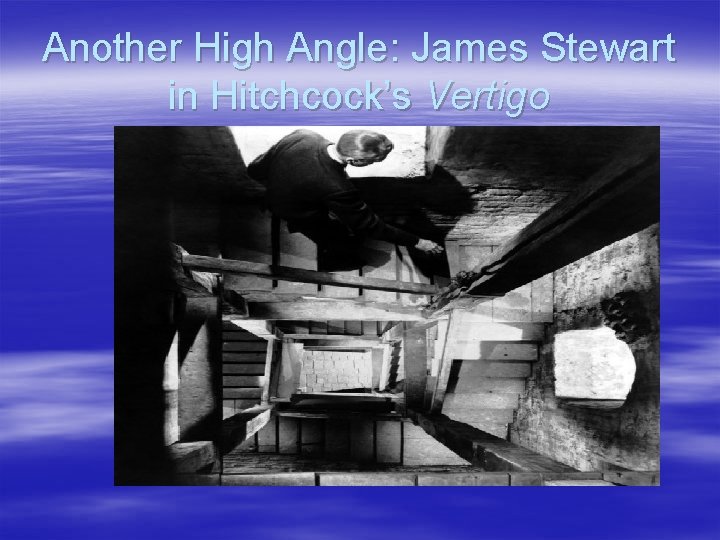
Another High Angle: James Stewart in Hitchcock’s Vertigo
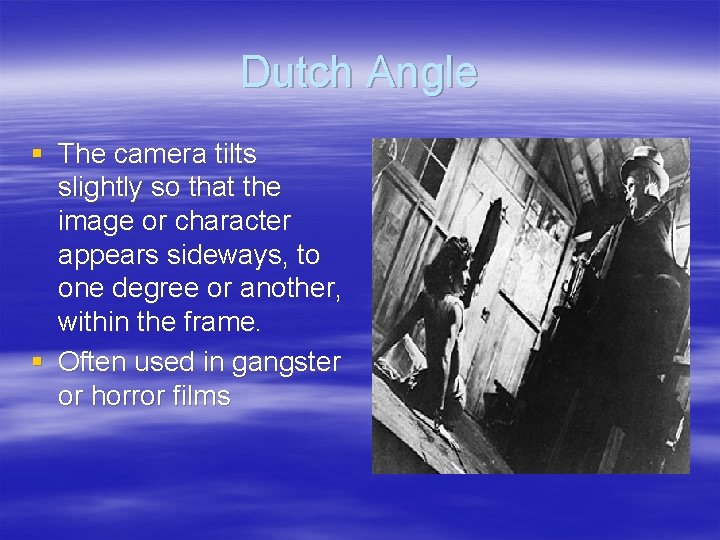
Dutch Angle § The camera tilts slightly so that the image or character appears sideways, to one degree or another, within the frame. § Often used in gangster or horror films
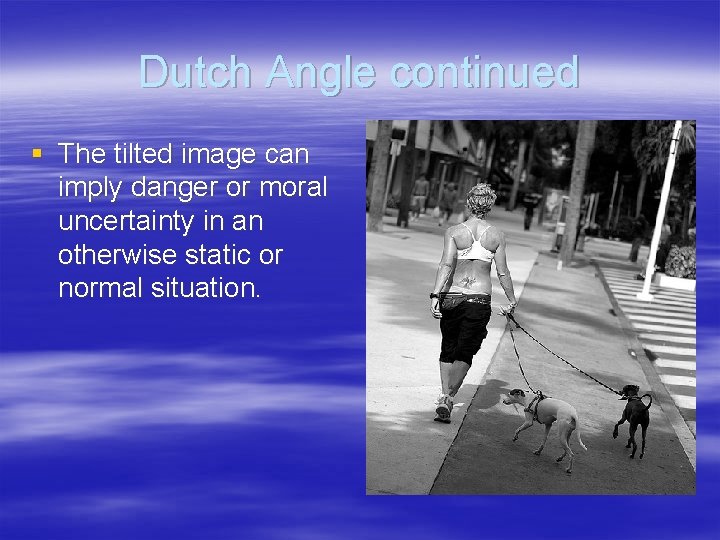
Dutch Angle continued § The tilted image can imply danger or moral uncertainty in an otherwise static or normal situation.
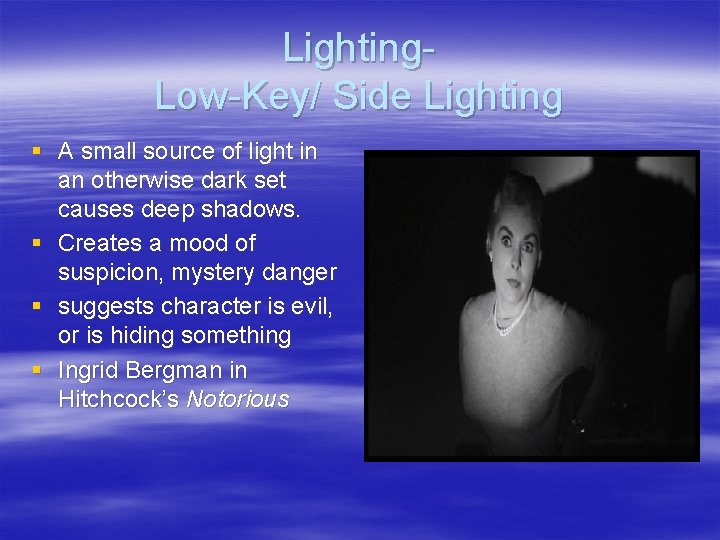
Lighting. Low-Key/ Side Lighting § A small source of light in an otherwise dark set causes deep shadows. § Creates a mood of suspicion, mystery danger § suggests character is evil, or is hiding something § Ingrid Bergman in Hitchcock’s Notorious
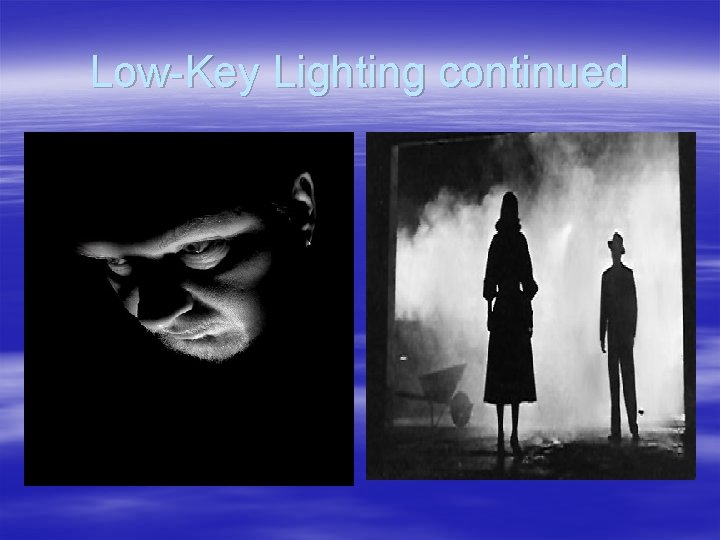
Low-Key Lighting continued
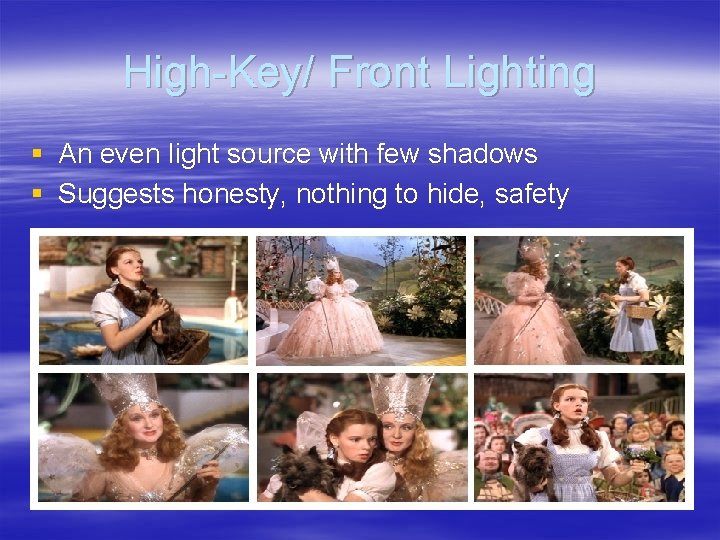
High-Key/ Front Lighting § An even light source with few shadows § Suggests honesty, nothing to hide, safety
Editing: Fade § The image on screen slowly fades away and the screen goes black until the next shot fades in. § Establishes a connection between the two objects or characters § Juxtaposition, analogy, metaphor, or irony
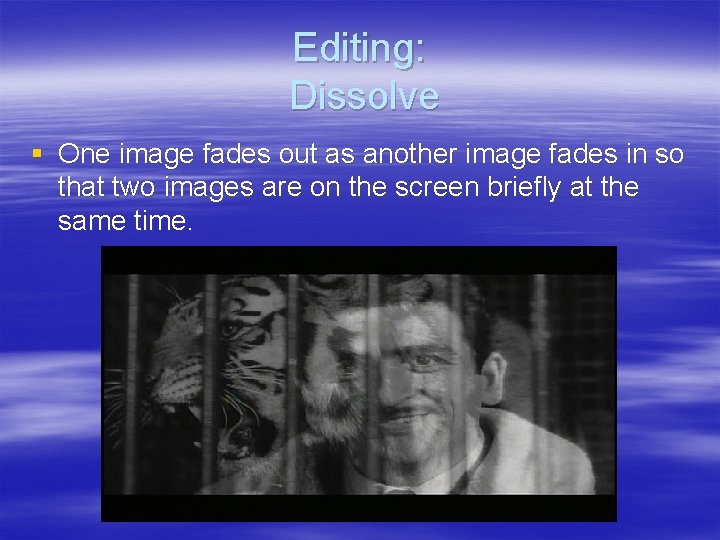
Editing: Dissolve § One image fades out as another image fades in so that two images are on the screen briefly at the same time.
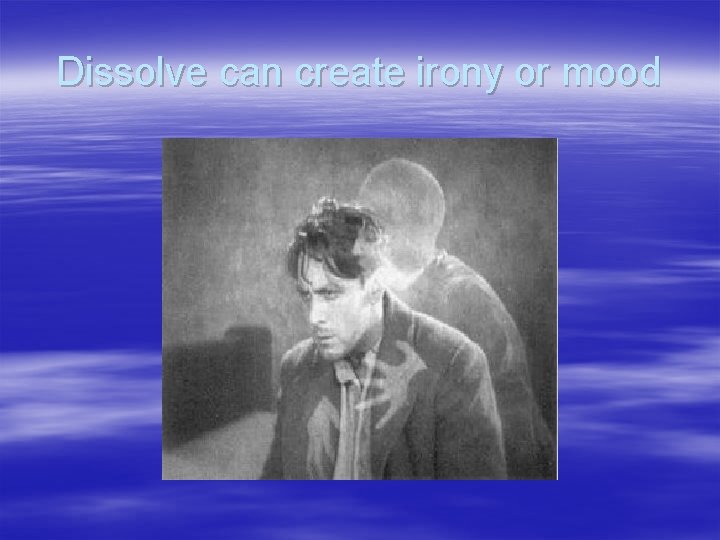
Dissolve can create irony or mood
Cinematic Elements