
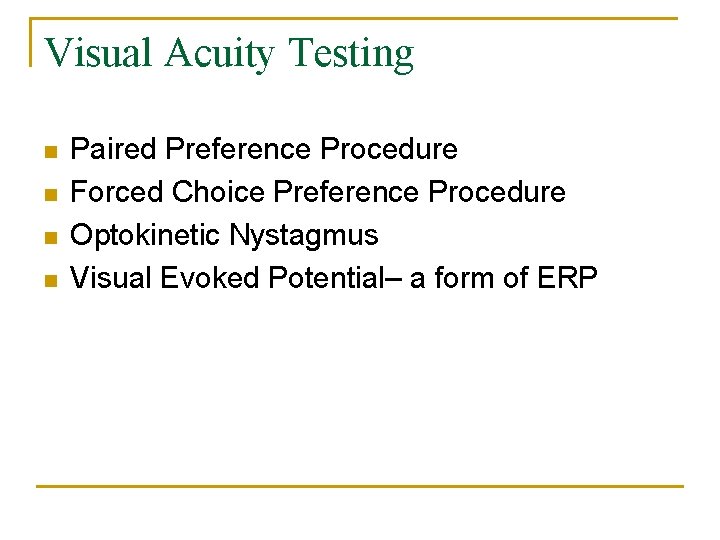
Visual Acuity Testing n n Paired Preference Procedure
- Slides: 40
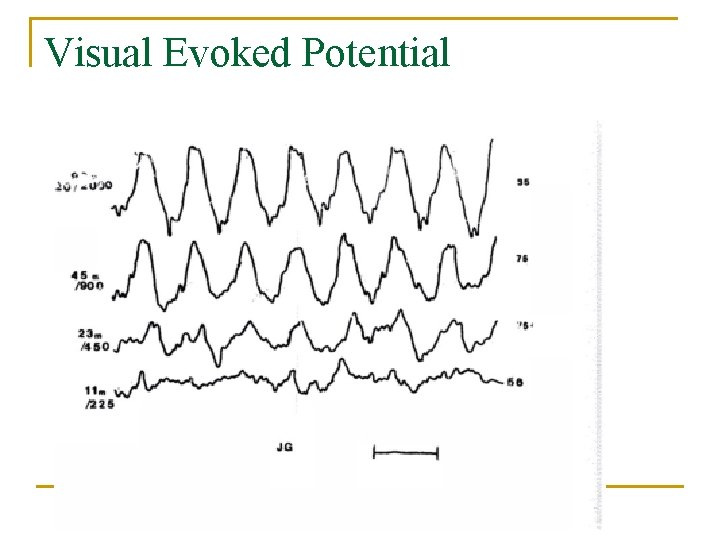
Visual Acuity Testing n n Paired Preference Procedure Forced Choice Preference Procedure Optokinetic Nystagmus Visual Evoked Potential– a form of ERP
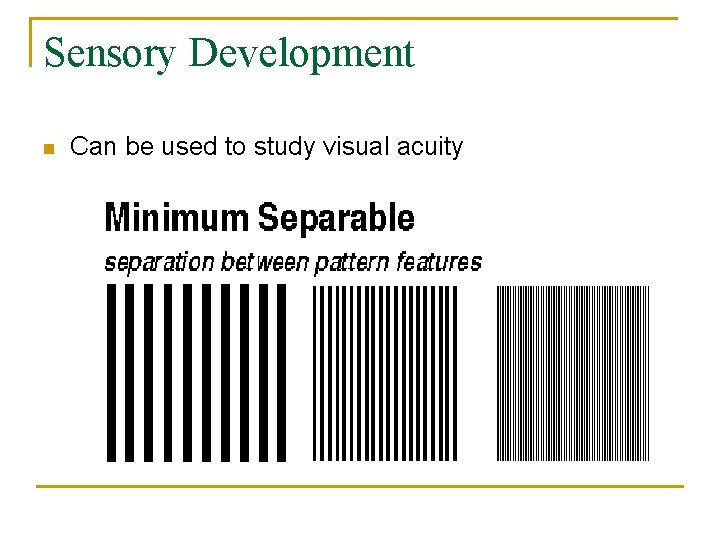
Sensory Development n Can be used to study visual acuity
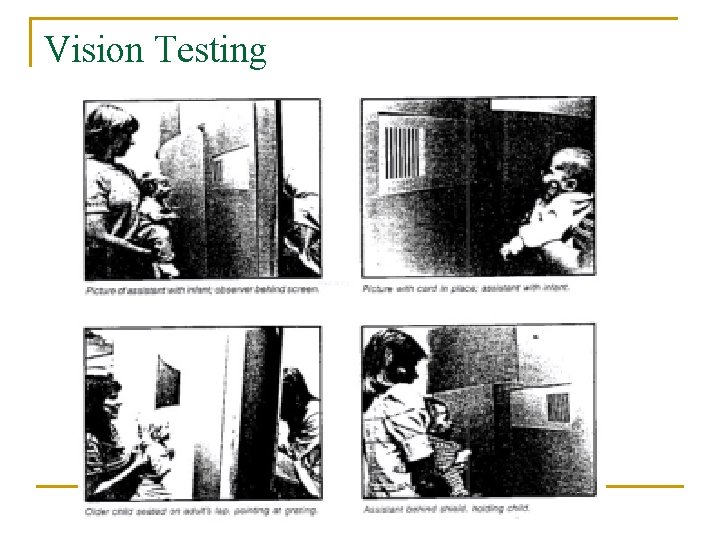
Vision Testing
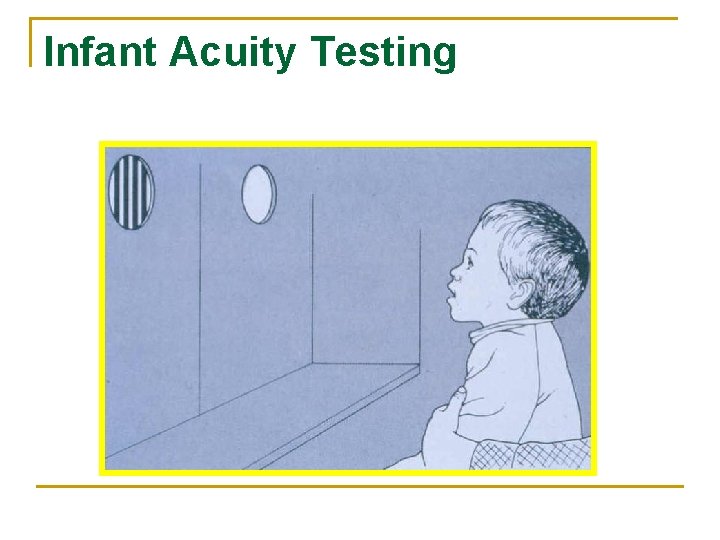
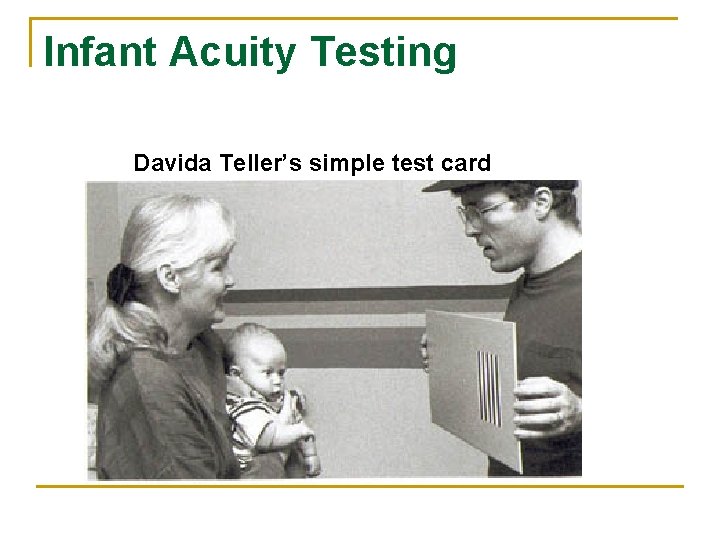
Infant Acuity Testing
Infant Acuity Testing Davida Teller’s simple test card
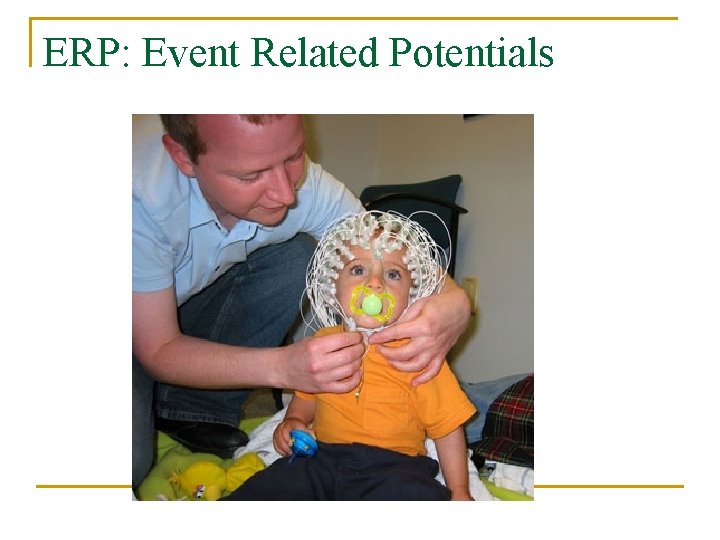
ERP: Event Related Potentials
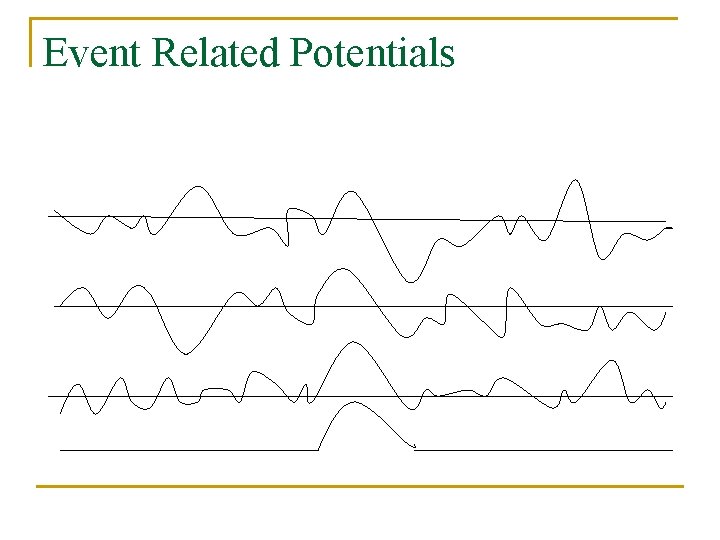
Event Related Potentials
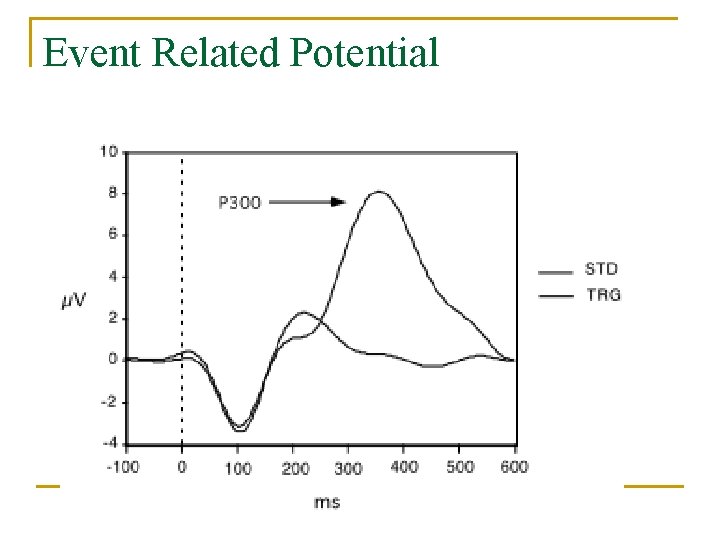
Event Related Potential
Visual Evoked Potential
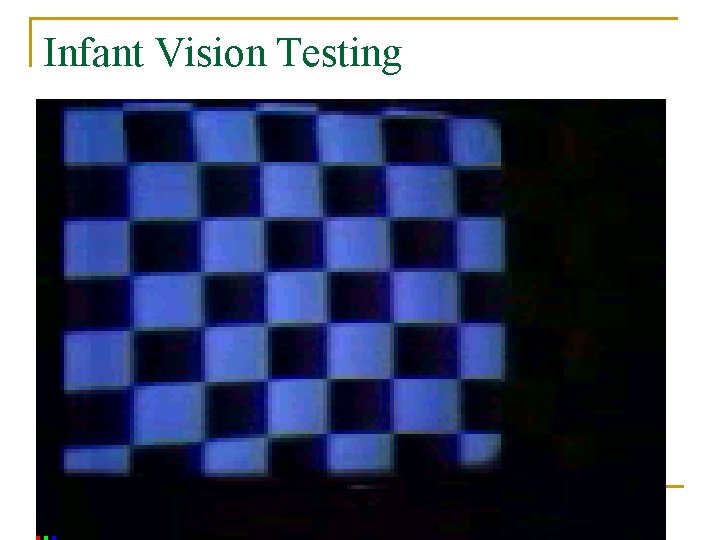
Infant Vision Testing
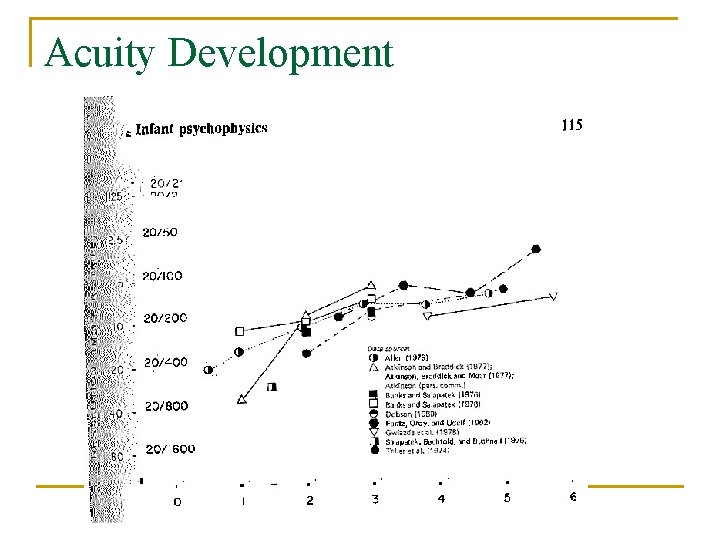
Acuity Development
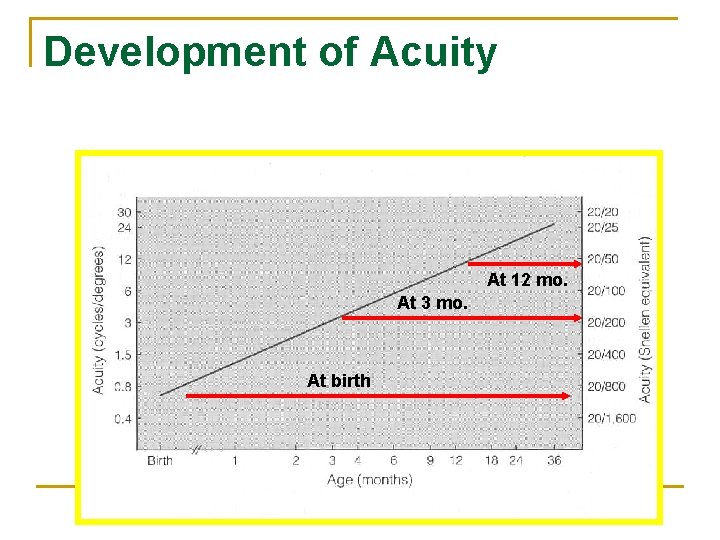
Development of Acuity At 12 mo. At 3 mo. At birth
Visual Acuity n n n At birth, acuity is approximately 20/400 to 20/800 By 4 to 5 months infants are no longer “legally blind” (e. g. , 20/200) Reaches 20/20 between 8 to months q VEP suggests faster development– why?
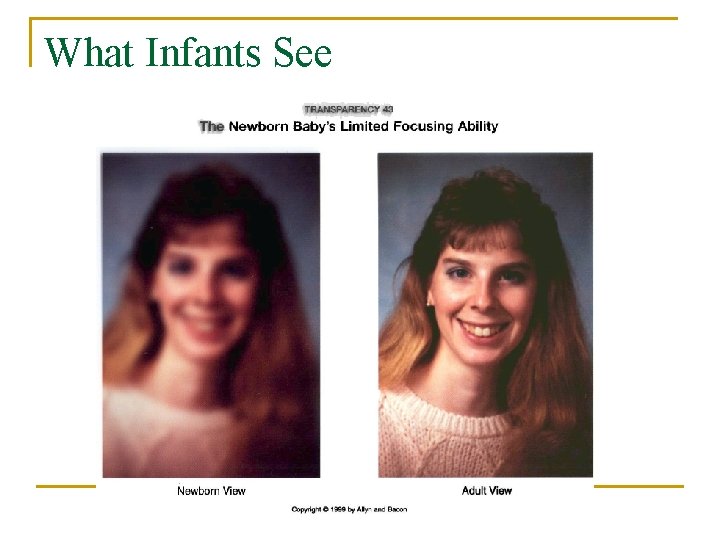
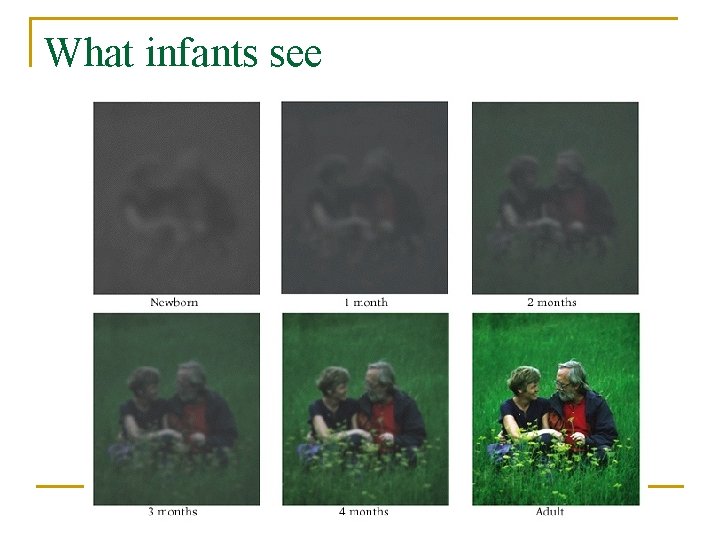
What Infants See
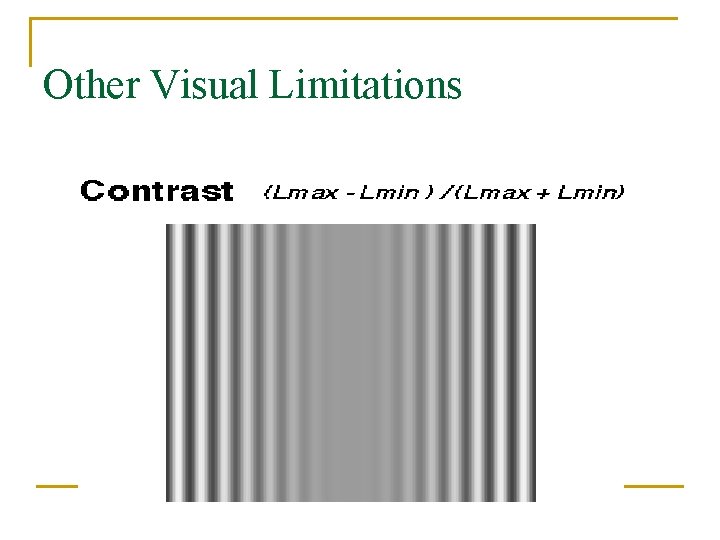
Other Visual Limitations
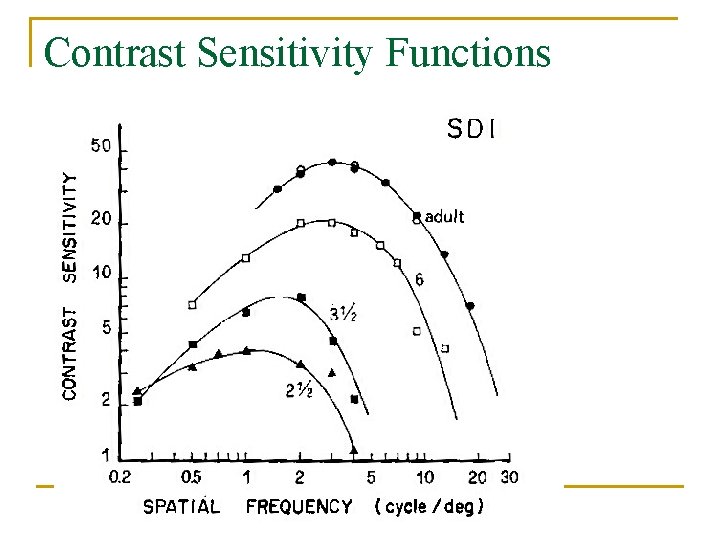
Contrast Sensitivity Functions
What infants see
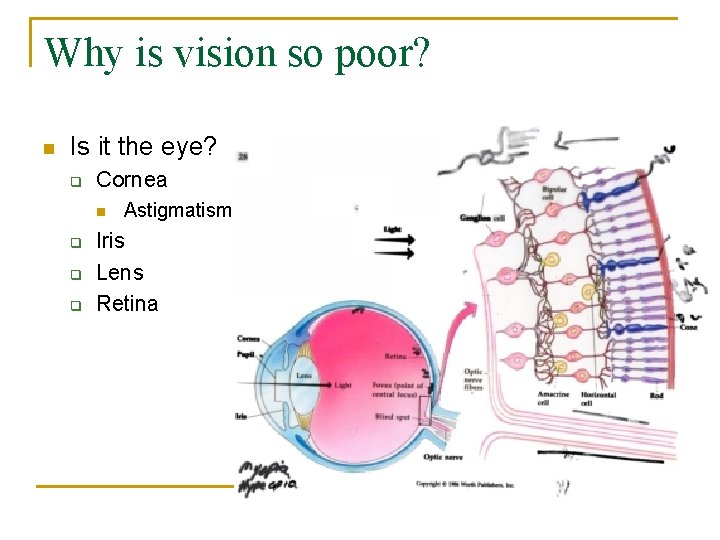
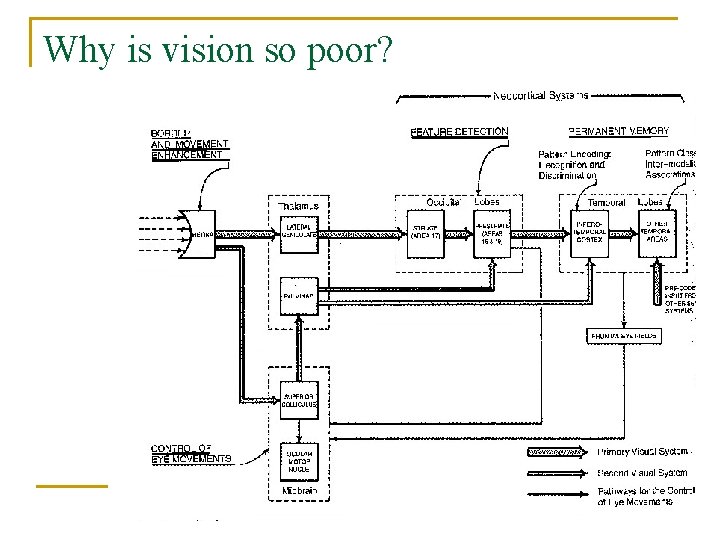
Why is vision so poor? n Is it the eye? q Cornea n q q q Astigmatism Iris Lens Retina
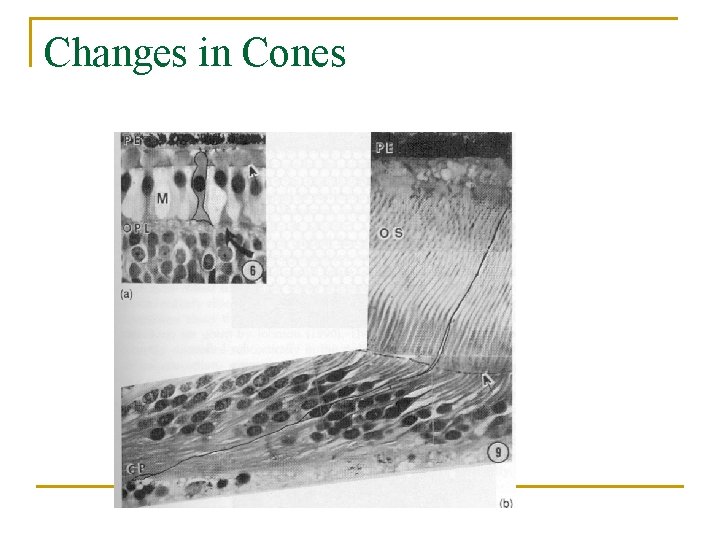
Changes in Cones
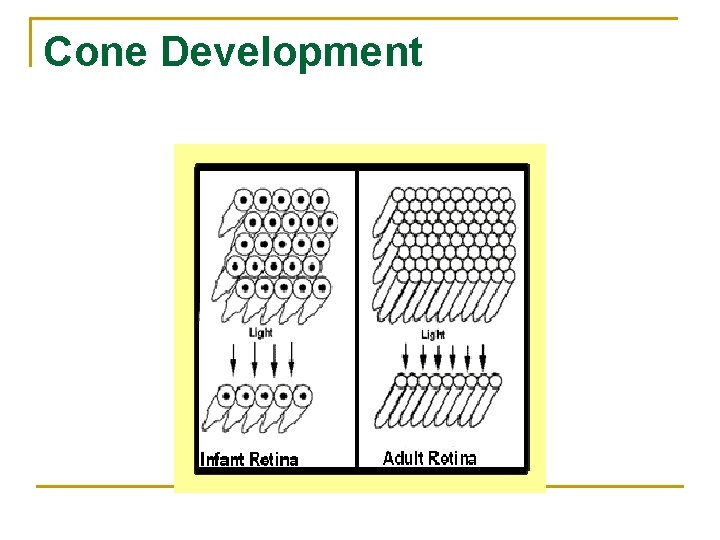
Cone Development
Scanning n Research on externality effect
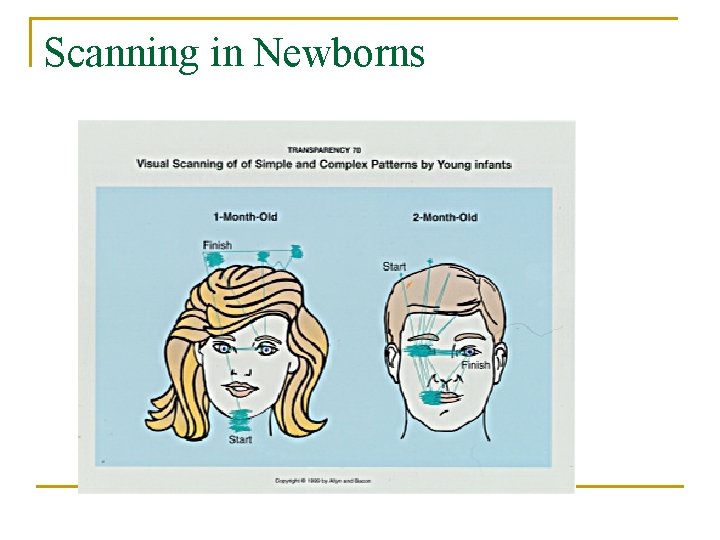
Scanning in Newborns
Why is vision so poor?
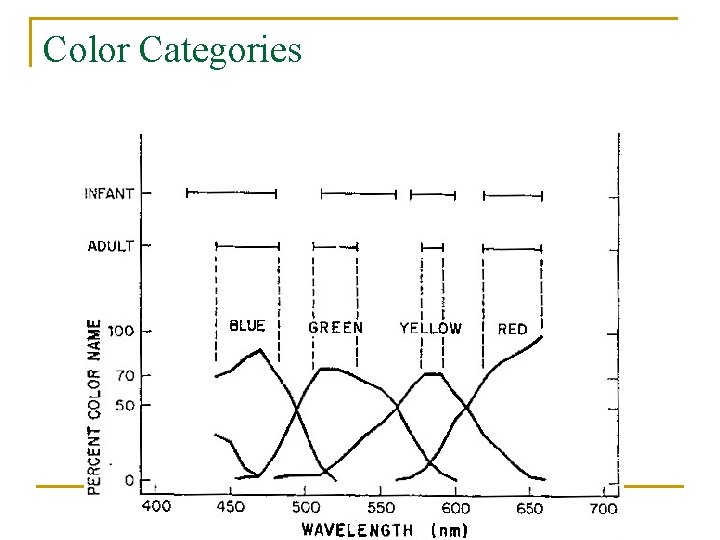
Color Vision n When can babies discriminate color? q n Separating Hue, Brightness & Saturation Categorical Perception of Color q ROYGBIV
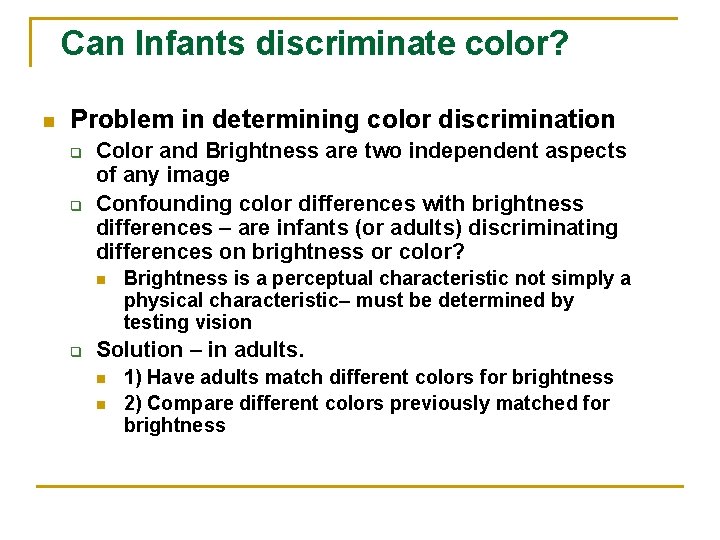
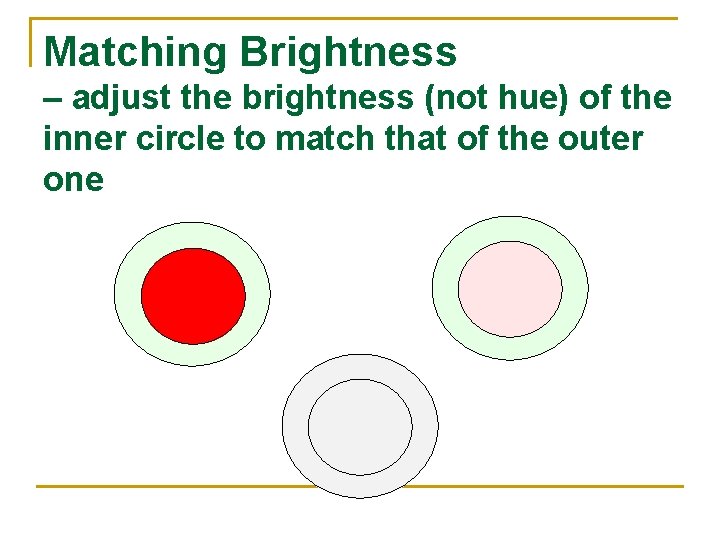
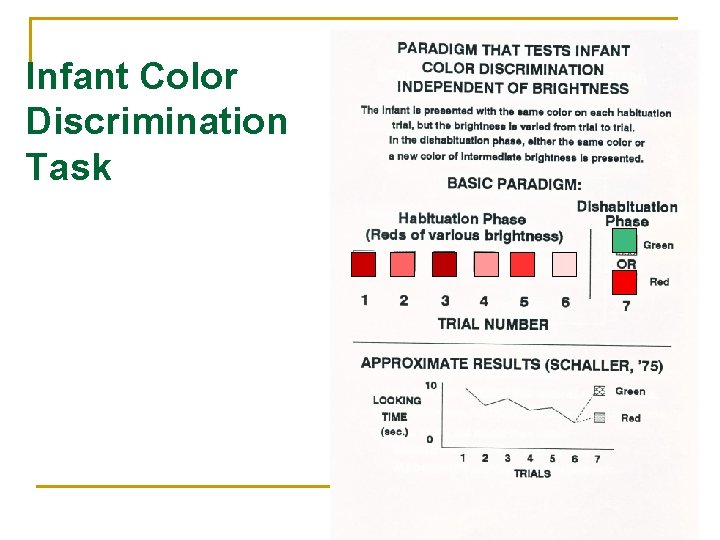
Can Infants discriminate color? n Problem in determining color discrimination q q Color and Brightness are two independent aspects of any image Confounding color differences with brightness differences – are infants (or adults) discriminating differences on brightness or color? n q Brightness is a perceptual characteristic not simply a physical characteristic– must be determined by testing vision Solution – in adults. n n 1) Have adults match different colors for brightness 2) Compare different colors previously matched for brightness
Matching Brightness – adjust the brightness (not hue) of the inner circle to match that of the outer one
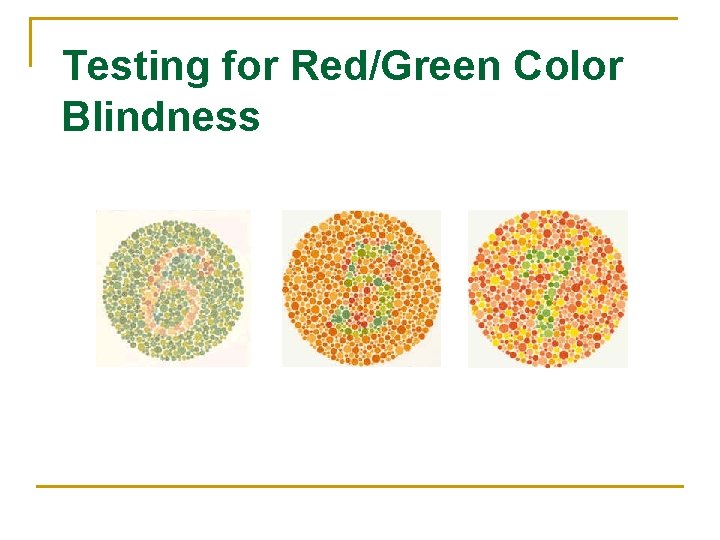
Testing for Red/Green Color Blindness
Can Infants discriminate color? – cont. n Problems with adult solution to brightness/color confound for infant testing q q q n Can’t ask infants to ignore color and compare only brightness Can’t use adult matching data to apply to infants. Brightness likely differ considerably for babies – because of pigmentation in infants’ eyes. Brightness matches even from one adult to another and likely same for babies – must test each individual separately Solution – use a clever habituation task to get babies to IGNORE brightness
Infant Color Discrimination Task
Color Categories
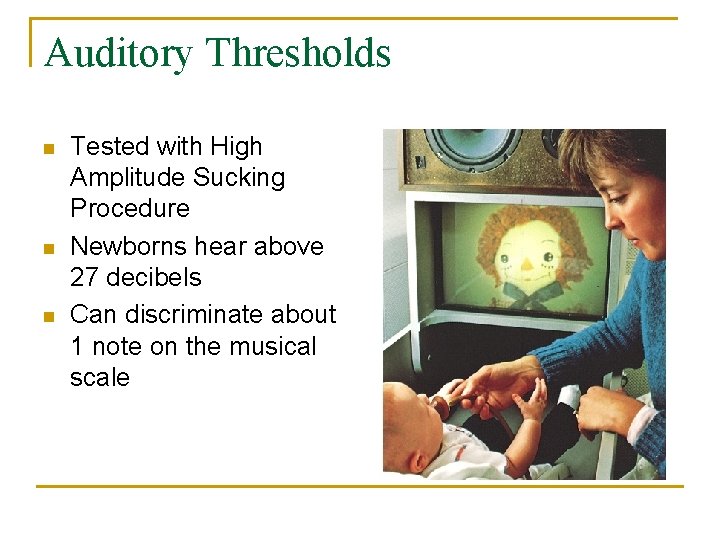
Auditory Thresholds n n n Tested with High Amplitude Sucking Procedure Newborns hear above 27 decibels Can discriminate about 1 note on the musical scale
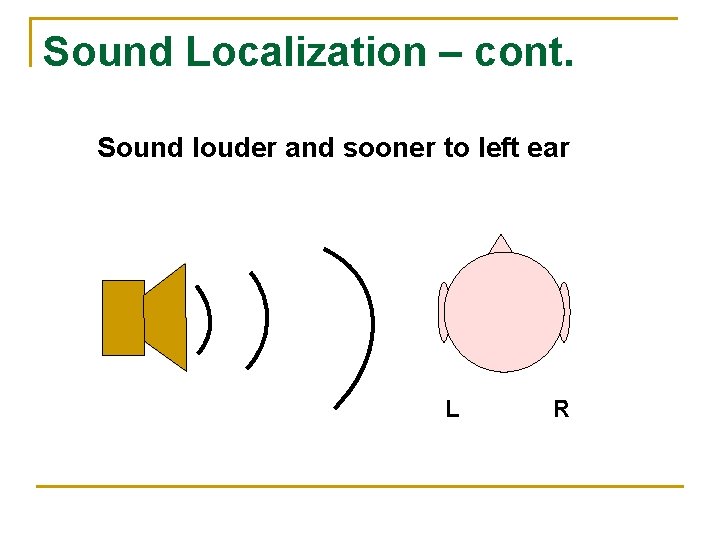
Sound Localization – cont. Sound louder and sooner to left ear L R
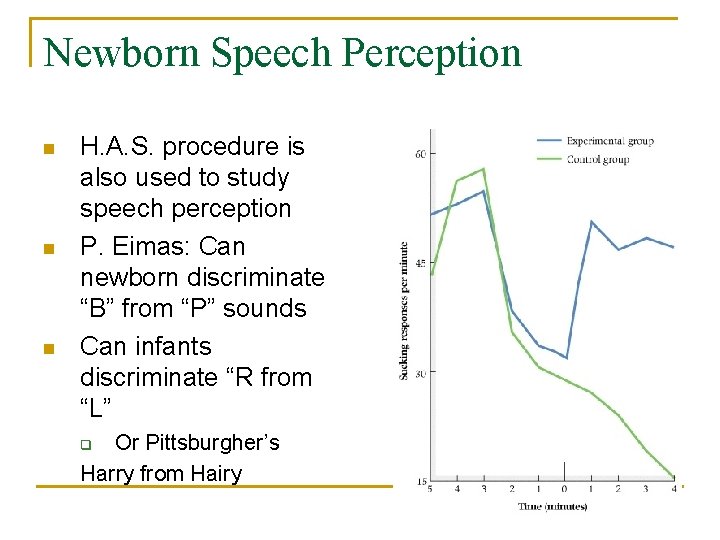
Newborn Speech Perception n H. A. S. procedure is also used to study speech perception P. Eimas: Can newborn discriminate “B” from “P” sounds Can infants discriminate “R from “L” Or Pittsburgher’s Harry from Hairy q
BP THAI
Dialect
PGH
Early Speech Perception n n Is this a innate specialized ability? Abstraction of ongoing speech Invariance over individuals, gender, dialect Dialect Study (At 11 mo but not 4) q q q Pittsburgh babies can’t discriminate Chinese from Taiwanese Can discriminate Pgh from New York Can discriminate 2 novel dialects (Southern from New York)
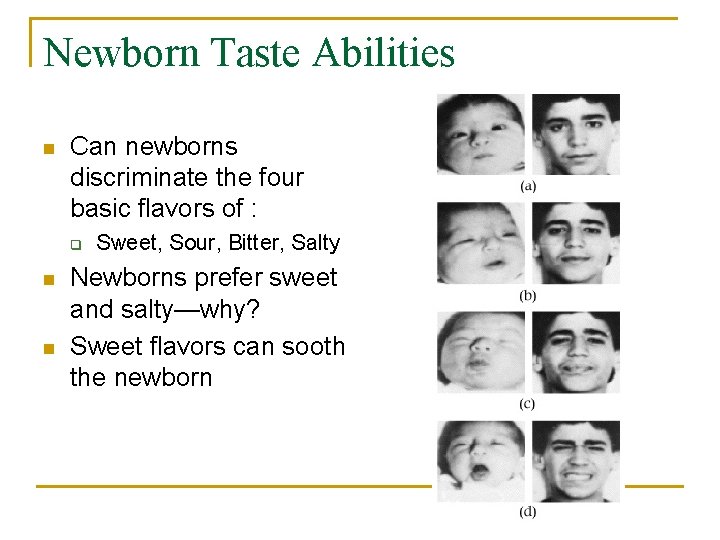
Newborn Taste Abilities n Can newborns discriminate the four basic flavors of : q n n Sweet, Sour, Bitter, Salty Newborns prefer sweet and salty—why? Sweet flavors can sooth the newborn
Newborn Smell n n Newborns react positively and negatively to different smells Can infants detect the smell of their mothers?
World of the Newborn n n What is the world of a newborn like? How does this effect opinion about imitation research?