
Visiting Hour by Norman Mac Caig Norman Mac
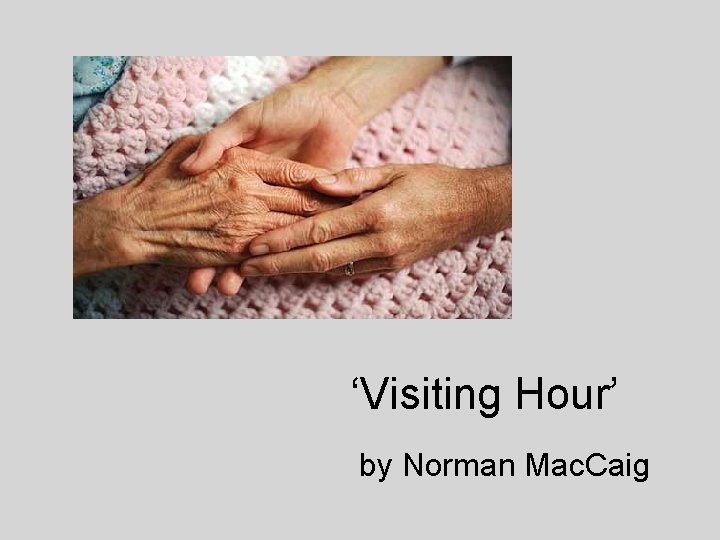
‘Visiting Hour’ by Norman Mac. Caig
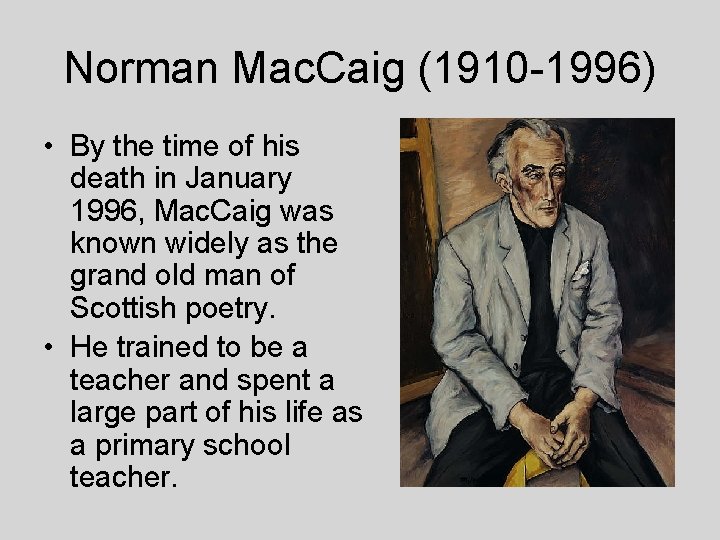
Norman Mac. Caig (1910 -1996) • By the time of his death in January 1996, Mac. Caig was known widely as the grand old man of Scottish poetry. • He trained to be a teacher and spent a large part of his life as a primary school teacher.
• His home city of Edinburgh provided contrast with his holiday home of Assynt, a remote area in the North-West of Scotland where Mac. Caig spent much time. • The landscape and people of Assynt provided inspiration for his poetry as well as bringing Mac. Caig close friendships and a love for the land. • During the war Mac. Caig refused to fight because he did not want to kill people. • He spent time in various prisons and doing landwork because of his pacifist views.
First impressions 1. Write down what you can see in the poem. For example: different poetic techniques, etc. 2. Write down what you think is happening in the poem. For example: what is being described? Who do you think the speaker is? What emotions does this poem describe? 3. Write down any questions you have about the poem. Is there something you don’t understand? What issues does this poem raise?
The situation • The poet is visiting a dying friend or relative in hospital, and tries to avoid his emotions on his way to the ward. • When he arrives, he is overcome by grief and anguish, and leaves the visit feeling it has been pointless.
Main themes What is a theme? • An implicit or recurrent idea; a motif. • An abstract idea that emerges from a literary work's treatment of its subject‐matter; or a topic recurring in a number of literary works. • While the subject of a work is described concretely in terms of its action (e. g. ‘the adventures of a newcomer in the big city’), its theme or themes will be described in more abstract terms (e. g. love, war, revenge, betrayal, fate, etc. ).
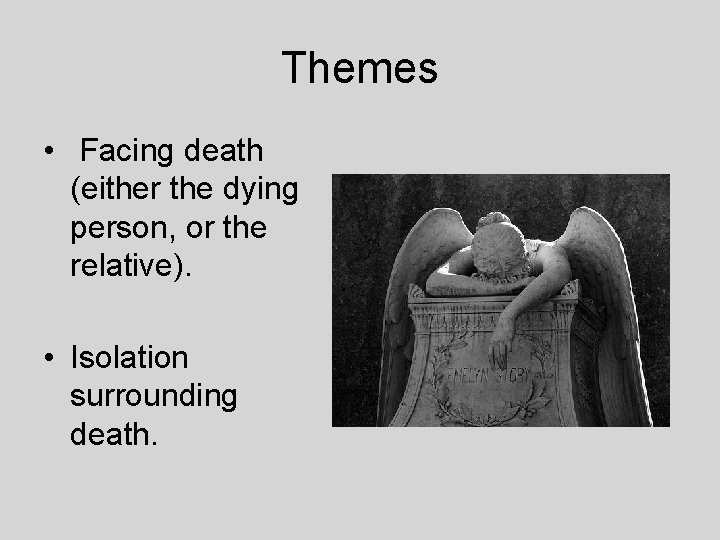
Themes • Facing death (either the dying person, or the relative). • Isolation surrounding death.
Poetic techniques • You must be able to identify and analyse a range of poetic techniques. These may be unfamiliar to you but you will need to know these for the exam. • In groups, try to match the different techniques with examples from the poem.
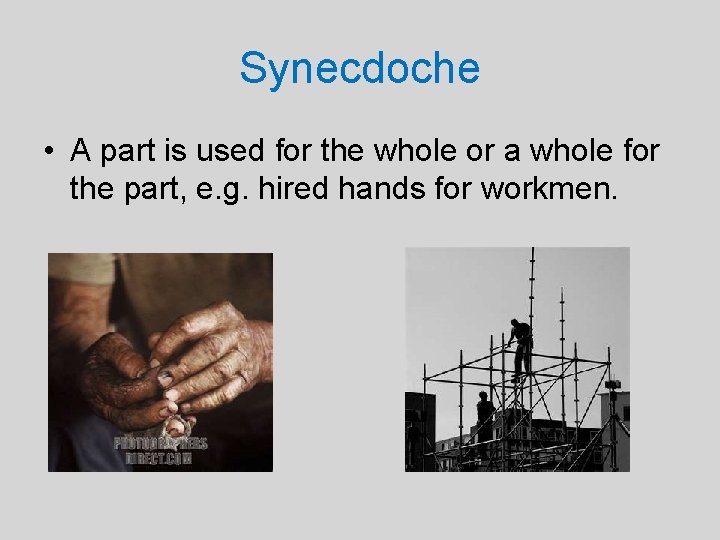
Synecdoche • A part is used for the whole or a whole for the part, e. g. hired hands for workmen.
Metaphor • A type of imagery in which a comparison is made between two unlike things that actually have something in common.
Synaesthesia • The description of one kind of sensation in terms of another condition in which one type of stimulation evokes the sensation of another, as when the hearing of a sound produces the visualization of a colour. • A sensation felt in one part of the body as a result of stimulus applied to another, as in referred pain. • The description of one kind of sense impression by using words that normally describe another.
Enjambment • The running on of the thought from one line, couplet, or stanza to the next without a syntactical break.
Word choice • Emotive words the writer has chosen on purpose due to their connotations.
Repetition • The repetition of a particular word or phrase to add emphasis.
Syntax • Grammatical arrangement of words.
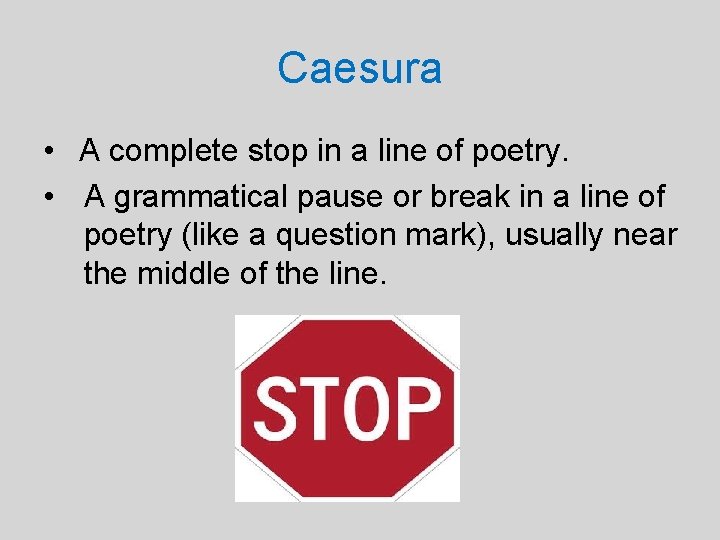
Caesura • A complete stop in a line of poetry. • A grammatical pause or break in a line of poetry (like a question mark), usually near the middle of the line.
Oxymoron • A figure of speech that combines contradictory terms. • E. g. : old news, open secret.
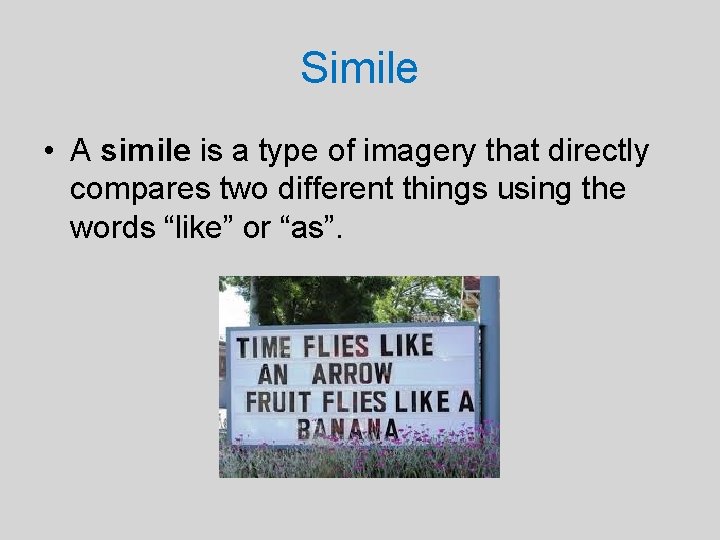
Simile • A simile is a type of imagery that directly compares two different things using the words “like” or “as”.
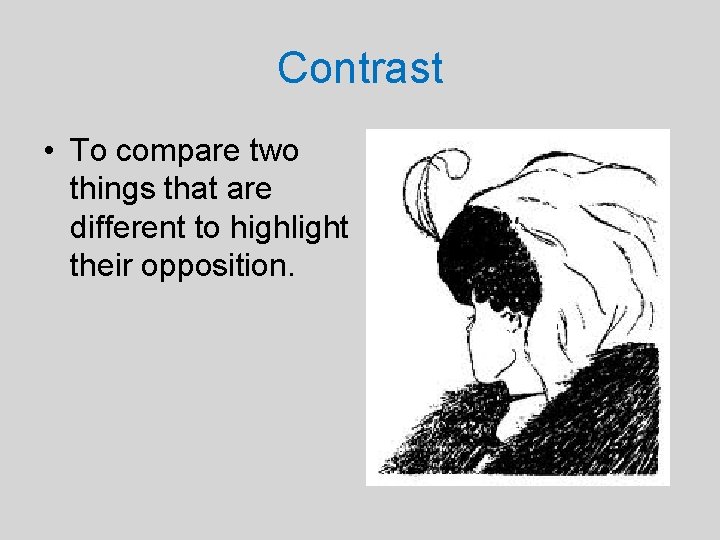
Contrast • To compare two things that are different to highlight their opposition.
Matching techniques • In your groups, try to match the ten poetic techniques with examples in the poem. • Be prepared to report back your ideas and self assess.
Synecdoche • A part is used for the whole or a whole for the part e. g. hired hands for workmen. “… nostrils/ as they go bobbing along” Synecdoche is used, since not just his nostrils are moving along, as the image would suggest. This emphasises the overpowering nature of “the hospital smell”, since it has blocked out his other senses.
Metaphor A figure of speech in which an implied comparison is made between two unlike things that actually have something in common. Lots of examples within the poem! “white cave of forgetfulness”, “withered hand/ trembles on its stalk”, “glass fang”, etc.
Synaesthesia • The description of one kind of sensation in terms of another condition in which one type of stimulation evokes the sensation of another, as when the hearing of a sound produces the visualization of a colour. A sensation felt in one part of the body as a result of stimulus applied to another, as in referred pain. The description of one kind of sense impression by using words that normally describe another. “the round swimming waves of a bell” – Synaesthesia, as a visual image describes a sound (signalling the end of the Visiting Hour? ). “swimming” could suggest the poet’s dizziness (confusion) or tears. This is from the woman’s point of view, so further shows her isolation, and the poet’s isolation from her
Enjambment • The running on of the thought from one line, couplet, or stanza to the next without a syntactical break. “What seems a corpse/ is trundled into a lift and vanishes/ heavenward” – Enjambment is used here to emphasise the last words of the lines, carefully chosen to suggest a finality in death; “corpse” containing very little connotation of life, and “vanishes” further stressing the poet’s view that death is absolute. “heavenward” therefore seems incongruous, although this is simply an example of Mac. Caig trying to avoid the seriousness of the visit by creating whimsical images.
Word choice • Emotive words the writer has chosen on purpose due to their connotations. Again, lots of examples within the poem e. g. “combs my nostrils”, “corpse”, “miraculously” etc.
Repetition • The repetition of a particular word or phrase to add emphasis. “so much pain, so/ many deaths …/ so many farewells” – Repetition of “so” stresses the frequency of the nurses’ unpleasant dealings, which supports the high esteem, perhaps envy, with which he regards the ability of the nurses to cope.
Syntax Grammatical arrangement of words. “here and up and down and there” – the unusual syntax (word order) is another example of the poet trying to lighten the mood, while also emphasising the number of nurses he sees. It suggests Mac. Caig is looking all around to find a distraction from his thoughts.
Caesura • Complete stop in a line of poetry • A grammatical pause or break in a line of poetry (like a question mark), usually near the middle of the line “Ward 7. ” – The abruptness of this non-sentence jolts the reader, just as we can imagine it affected Mac. Caig; this effect is heightened by the caesura it causes. This is the turning point of the poem, as he has now reached his relative and must face his emotions.
Oxymoron • A figure of speech that combines contradictory terms. E. g. old news, open secret. “fruitless fruits” – the final words are an oxymoron: how can a fruit be fruitless? This captures the poet’s despair at the pointlessness of the woman’s death being prolonged, and his inability to help – bringing fruit has been “fruitless”, i. e. pointless.
Contrast • To compare two things that are different to highlight their opposition. “Nurses walk lightly, swiftly/here and up and down and there, /their slender waits miraculously/carrying their burden/of so much pain. ” – Nurses seem delicate/care free in contrast to their “heavy” burden of dealing with emotional weight of grief and death.
Simile • A simile is a figure of speech that directly compares two different things, usually by employing the words "like" or "as ". “What seems like a corpse/is trundled into a life…” – speaker clearly preoccupied with death and interprets patient in a negative way.
Audio / visual links • Seamus Heaney on Maccaig and Mac. Caig reading ‘Visiting Hour’: http: //www. bbc. co. uk/scotland/arts/the_endu ring_appeal_of_norman_maccaig. shtml
Stanza 1 Visiting Hour The hospital smell combs my nostrils as they go bobbing along green and yellow corridors.
Stanza 2 What seems a corpse is trundled into a lift and vanishes heavenward.
Stanza 3 I will not feel, until I have to.
Stanza 4 Nurses walk lightly, swiftly, here and up and down and there, their slender waists miraculously carrying their burden of so much pain, so many deaths, their eyes still clear after so many farewells.
Ward 7. She lies Stanza 5 in a white cave of forgetfulness. A withered hand trembles on its stalk. Eyes move behind eyelids too heavy to raise. Into an arm wasted of colour a glass fang is fixed, not guzzling but giving. And between her and me distance shrinks till there is none left but the distance of pain that neither she nor I can cross.
Stanza 6 She smiles a little at this black figure in her white cave who clumsily rises in the round swimming waves of a bell and dizzily goes off, growing fainter, not smaller, leaving behind only books that will not be read and fruitless fruits.
Structure? • How many stanzas? • Is there a pattern? (E. g. Same number of lines in each. ) • Is there a rhyme scheme? • Does it follow a particular rhythm?
Technical terms • Free verse is an open form of poetry. • It does not use consistent meter patterns (rhythm), rhyme, or any other musical pattern. • It therefore tends to follow the rhythm of natural speech.
What’s it all about? • Here, a seemingly normal event acquires deeper significance by the end of the poem. • The event taking place in the poem is a visit to a hospital, and through the writer’s use of literary techniques the reader is made to understand how he is feeling and appreciate themes of the poem.
• The poem begins with the writer making his way to the ward in which the dying woman, presumably his wife, lies “in a white cave of forgetfulness”. • As well as being taken on the literal journey with the writer, we are made to feel how he is feeling as he reaches an understanding of death’s inevitability, and leaves the ward knowing he is helpless to do anything to prevent this woman from dying.
Themes • The main themes of the poem are: death and its inevitability, love, helplessness, loss and isolation.
Techniques • The themes are skilfully made clear to the reader throughout the course of the poem through the writer’s use of irony, synecdoche, enjambment, word choice, imagery, first person narrative perspective, free verse, present tense and oxymoron.
Narrative style • The use of first person narrative perspective, combined with the use of free verse, help to “personalise” the poem – they make it seem as though the writer is speaking directly to the reader, as by using free verse the poem is read much more naturally due to the fact that it is not confined to a set rhythm or rhyme.
• The use of present tense also assists in making the reader feel how the writer feels, because the reader is made to feel as though they are going through this experience with the writer.
Visiting Hour

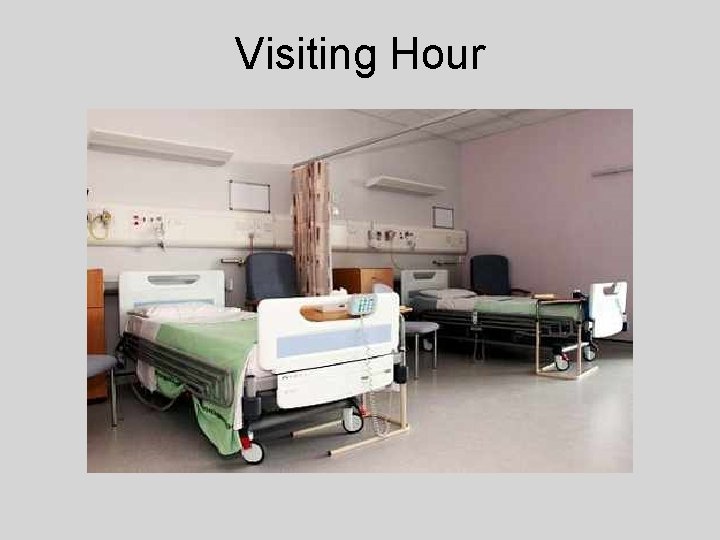
Title The hospital setting of is already beginning to be established. This introduces the subject of the poem – the speaker’s trip to see a seriously ill loved one in hospital. Visiting Hour by Norman Mac. Caig 6 stanzas The poem is written in free verse.
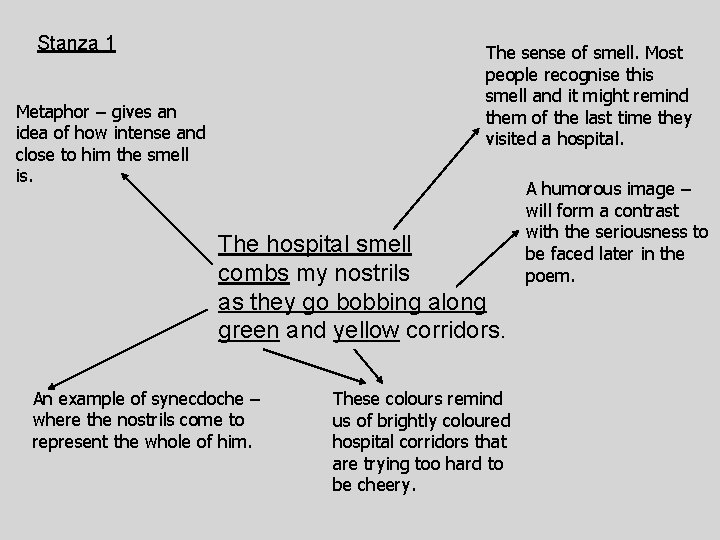
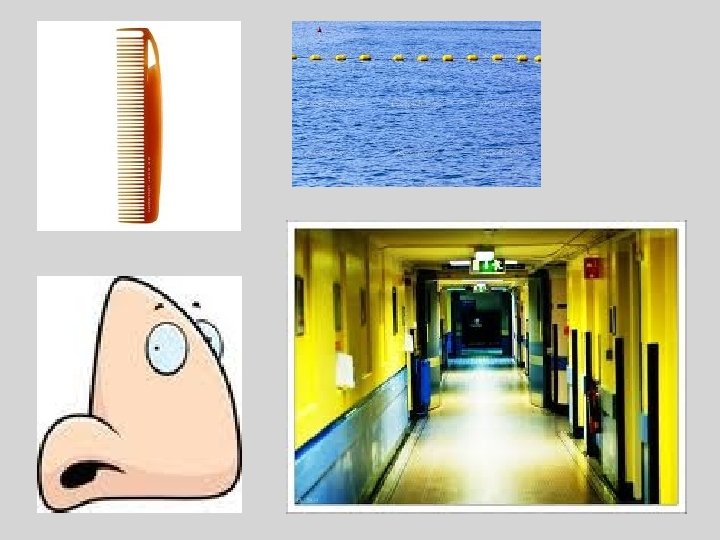
Stanza 1 The sense of smell. Most people recognise this smell and it might remind them of the last time they visited a hospital. Metaphor – gives an idea of how intense and close to him the smell is. The hospital smell combs my nostrils as they go bobbing along green and yellow corridors. An example of synecdoche – where the nostrils come to represent the whole of him. These colours remind us of brightly coloured hospital corridors that are trying too hard to be cheery. A humorous image – will form a contrast with the seriousness to be faced later in the poem.
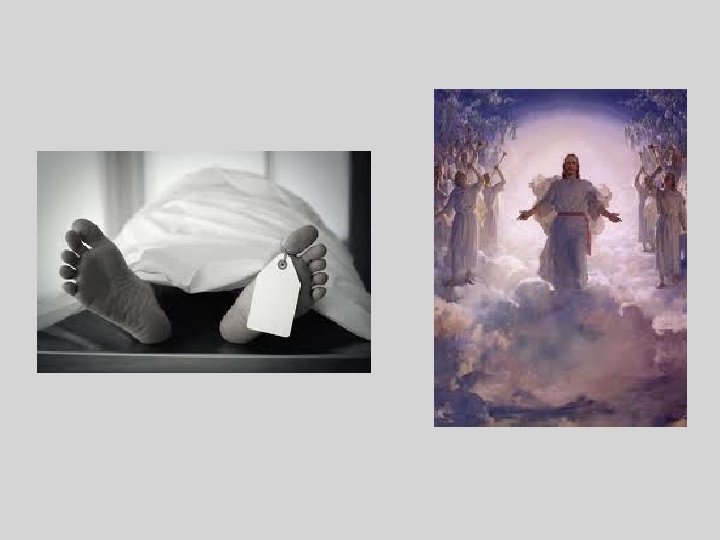
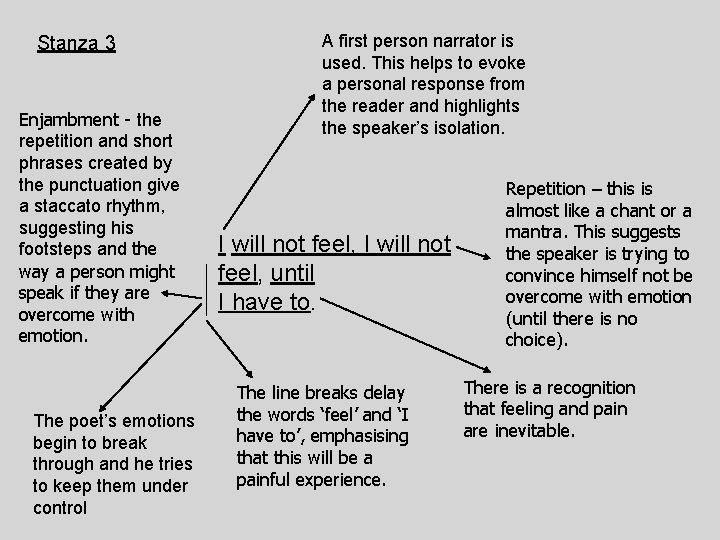
Stanza 2 Word choice – ‘trundled’ conveys the noise of the trolley (onomatopoeia), but also the emotionless way it is handled. Word choice – the connotations are of something disappearing without a trace, permanently. The speaker has his first brush with death. What seems a corpse is trundled into a lift and vanishes heavenward. As well as describing the upward movement of the lift, this also suggests that the person in the lift is heading towards heaven and, therefore, dead or dying. Word choice – corpse is a cold, medical term for a dead body. The person on the trolley is dehumanised. Enjambment – this breaks up the sentence and perhaps represents the different floors the lift stops at.
Stanza 3 Enjambment - the repetition and short phrases created by the punctuation give a staccato rhythm, suggesting his footsteps and the way a person might speak if they are overcome with emotion. The poet’s emotions begin to break through and he tries to keep them under control A first person narrator is used. This helps to evoke a personal response from the reader and highlights the speaker’s isolation. I will not feel, until I have to. The line breaks delay the words ‘feel’ and ‘I have to’, emphasising that this will be a painful experience. Repetition – this is almost like a chant or a mantra. This suggests the speaker is trying to convince himself not be overcome with emotion (until there is no choice). There is a recognition that feeling and pain are inevitable.
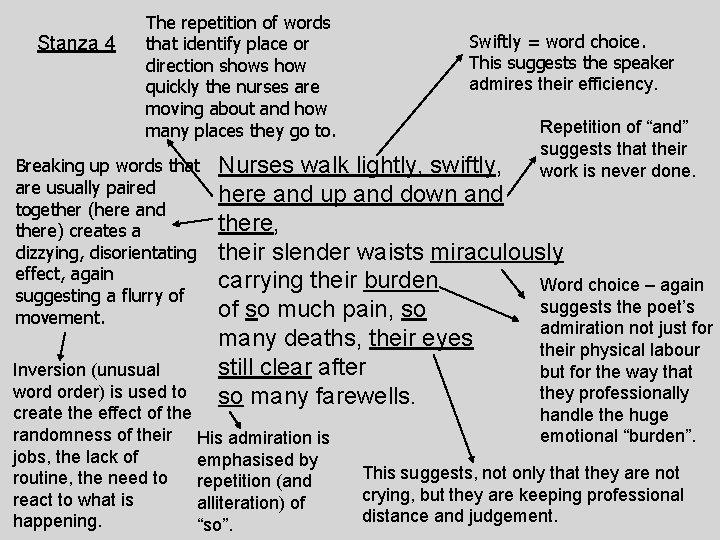
Stanza 4 The repetition of words that identify place or direction shows how quickly the nurses are moving about and how many places they go to. Breaking up words that are usually paired together (here and there) creates a dizzying, disorientating effect, again suggesting a flurry of movement. Swiftly = word choice. This suggests the speaker admires their efficiency. Repetition of “and” suggests that their work is never done. Nurses walk lightly, swiftly, here and up and down and there, their slender waists miraculously carrying their burden Word choice – again suggests the poet’s of so much pain, so admiration not just for many deaths, their eyes their physical labour still clear after but for the way that they professionally so many farewells. Inversion (unusual word order) is used to create the effect of the randomness of their His admiration is jobs, the lack of emphasised by routine, the need to repetition (and react to what is alliteration) of happening. “so”. handle the huge emotional “burden”. This suggests, not only that they are not crying, but they are keeping professional distance and judgement.

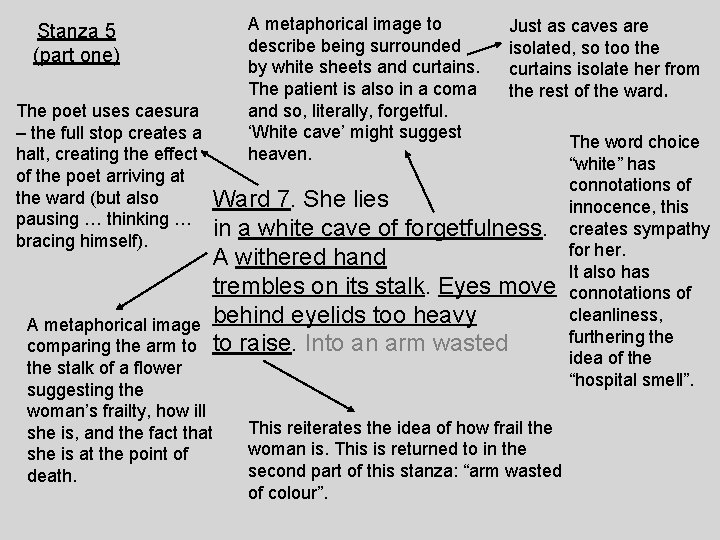
A metaphorical image to describe being surrounded by white sheets and curtains. The patient is also in a coma and so, literally, forgetful. ‘White cave’ might suggest heaven. Stanza 5 (part one) The poet uses caesura – the full stop creates a halt, creating the effect of the poet arriving at the ward (but also pausing … thinking … bracing himself). Just as caves are isolated, so too the curtains isolate her from the rest of the ward. Ward 7. She lies in a white cave of forgetfulness. A withered hand trembles on its stalk. Eyes move behind eyelids too heavy to raise. Into an arm wasted A metaphorical image comparing the arm to the stalk of a flower suggesting the woman’s frailty, how ill she is, and the fact that she is at the point of death. This reiterates the idea of how frail the woman is. This is returned to in the second part of this stanza: “arm wasted of colour”. The word choice “white” has connotations of innocence, this creates sympathy for her. It also has connotations of cleanliness, furthering the idea of the “hospital smell”.
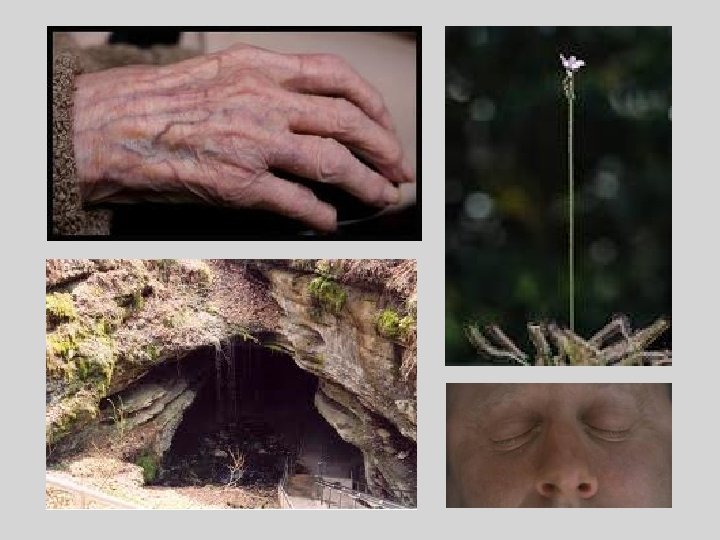
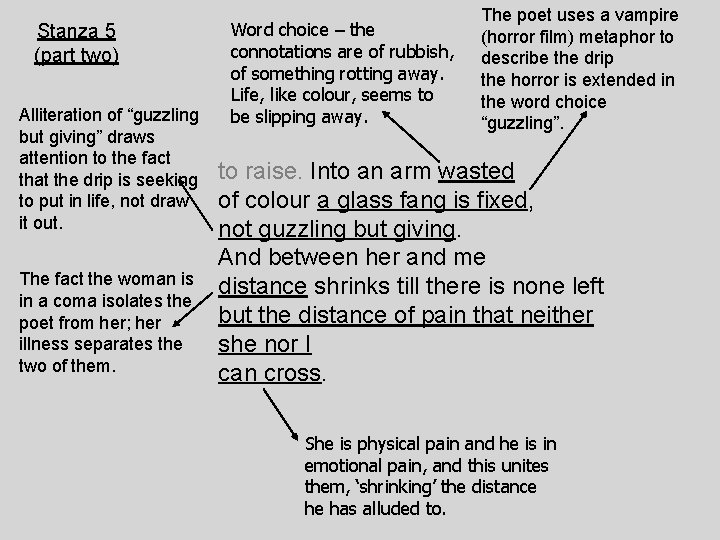
Stanza 5 (part two) Alliteration of “guzzling but giving” draws attention to the fact that the drip is seeking to put in life, not draw it out. The fact the woman is in a coma isolates the poet from her; her illness separates the two of them. Word choice – the connotations are of rubbish, of something rotting away. Life, like colour, seems to be slipping away. The poet uses a vampire (horror film) metaphor to describe the drip the horror is extended in the word choice “guzzling”. to raise. Into an arm wasted of colour a glass fang is fixed, not guzzling but giving. And between her and me distance shrinks till there is none left but the distance of pain that neither she nor I can cross. She is physical pain and he is in emotional pain, and this unites them, ‘shrinking’ the distance he has alluded to.
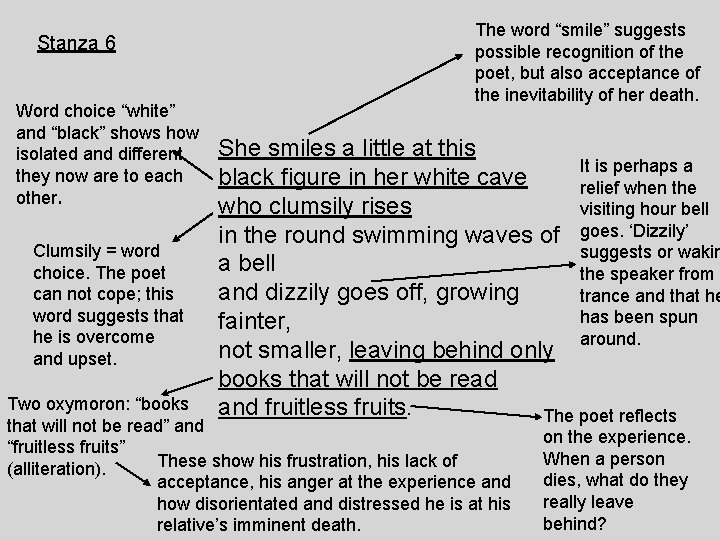
Stanza 6 Word choice “white” and “black” shows how isolated and different they now are to each other. Clumsily = word choice. The poet can not cope; this word suggests that he is overcome and upset. The word “smile” suggests possible recognition of the poet, but also acceptance of the inevitability of her death. She smiles a little at this It is perhaps a black figure in her white cave relief when the who clumsily rises visiting hour bell in the round swimming waves of goes. ‘Dizzily’ suggests or wakin a bell the speaker from a and dizzily goes off, growing trance and that he has been spun fainter, around. not smaller, leaving behind only books that will not be read and fruitless fruits. The poet reflects Two oxymoron: “books that will not be read” and “fruitless fruits” These show his frustration, his lack of (alliteration). acceptance, his anger at the experience and how disorientated and distressed he is at his relative’s imminent death. on the experience. When a person dies, what do they really leave behind?
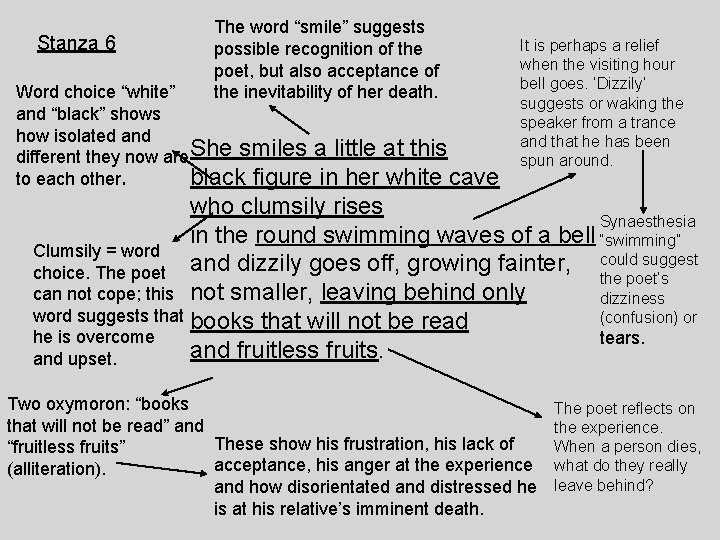
Stanza 6 The word “smile” suggests possible recognition of the poet, but also acceptance of the inevitability of her death. Word choice “white” and “black” shows how isolated and different they now are She smiles a little at this to each other. black figure in her white cave It is perhaps a relief when the visiting hour bell goes. ‘Dizzily’ suggests or waking the speaker from a trance and that he has been spun around. who clumsily rises Synaesthesia in the round swimming waves of a bell “swimming” Clumsily = word could suggest choice. The poet and dizzily goes off, growing fainter, the poet’s can not cope; this not smaller, leaving behind only dizziness word suggests that books that will not be read (confusion) or he is overcome tears. and fruitless fruits. and upset. Two oxymoron: “books that will not be read” and These show his frustration, his lack of “fruitless fruits” acceptance, his anger at the experience (alliteration). and how disorientated and distressed he is at his relative’s imminent death. The poet reflects on the experience. When a person dies, what do they really leave behind?
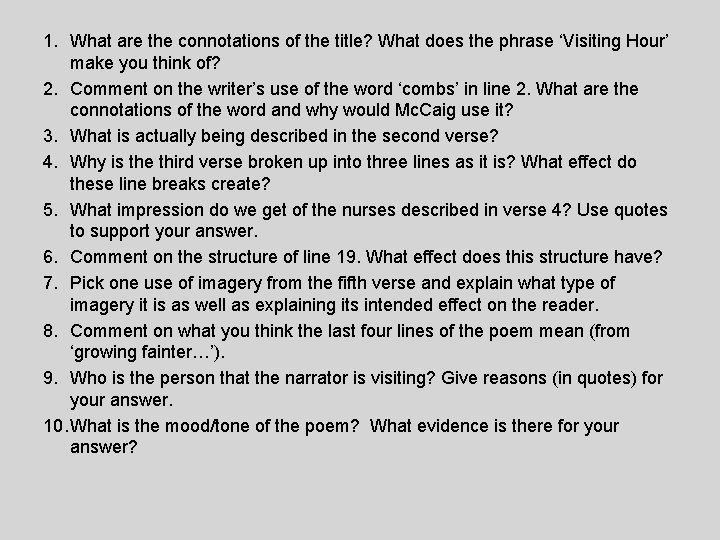
1. What are the connotations of the title? What does the phrase ‘Visiting Hour’ make you think of? 2. Comment on the writer’s use of the word ‘combs’ in line 2. What are the connotations of the word and why would Mc. Caig use it? 3. What is actually being described in the second verse? 4. Why is the third verse broken up into three lines as it is? What effect do these line breaks create? 5. What impression do we get of the nurses described in verse 4? Use quotes to support your answer. 6. Comment on the structure of line 19. What effect does this structure have? 7. Pick one use of imagery from the fifth verse and explain what type of imagery it is as well as explaining its intended effect on the reader. 8. Comment on what you think the last four lines of the poem mean (from ‘growing fainter…’). 9. Who is the person that the narrator is visiting? Give reasons (in quotes) for your answer. 10. What is the mood/tone of the poem? What evidence is there for your answer?
Links with other Mac. Caig poems? • • • Family Regret Death / lamenting lost things Isolation Finding significance in everyday events
Revision • Quick guide to ‘Visiting Hour’ (14 minutes): http: //www. youtube. com/watch? v=Ennqqc Gxl 2 Y • An essay about ‘Visiting Hour’: • http: //www. thestudentroom. co. uk/wiki/Revi sion: Higher_English_Critical_Essay
• Other essays: • http: //www. eyemouthhigh. org. uk/learningzone/english-literacy/s 5/s 6 -normanmaccaig
- Slides: 65