
Visit the Chaparral Pristine Adventures Co WHERE IS

- Slides: 14
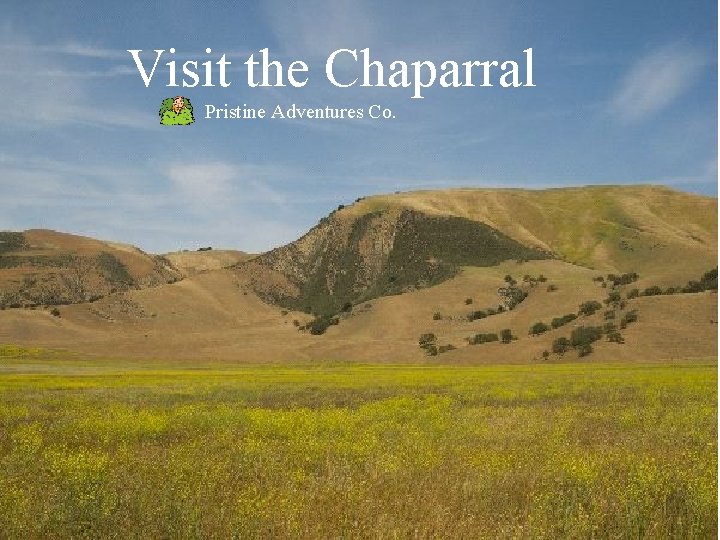
Visit the Chaparral Pristine Adventures Co.
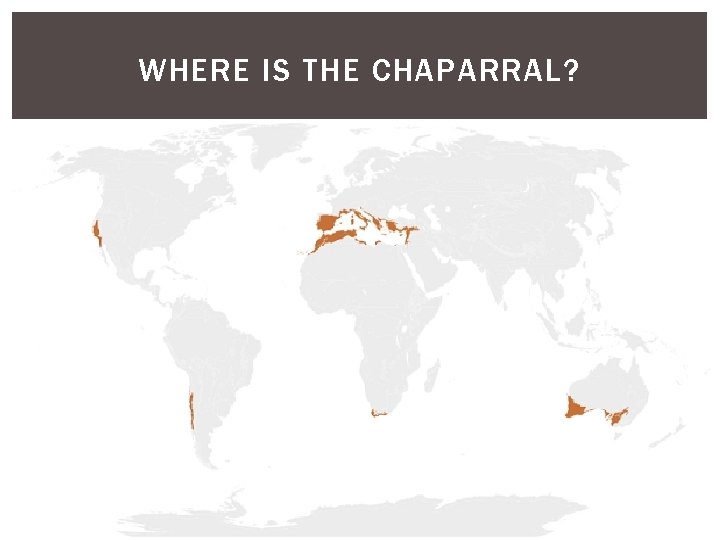
WHERE IS THE CHAPARRAL?
LOCATIONS Northern California Mediterranean coastline Southern Australia Midwest United States Chile, South America South Africa Costal Europe
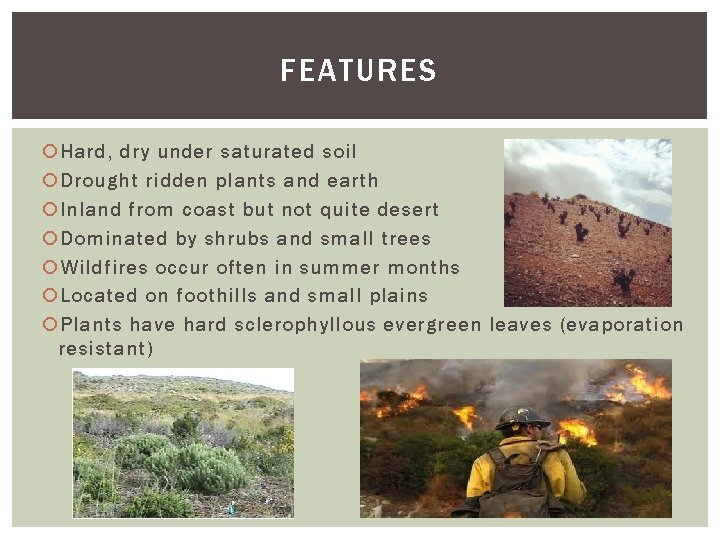
FEATURES Hard, dry under saturated soil Drought ridden plants and earth Inland from coast but not quite desert Dominated by shrubs and small trees Wildfires occur often in summer months Located on foothills and small plains Plants have hard sclerophyllous evergreen leaves (evaporation resistant)
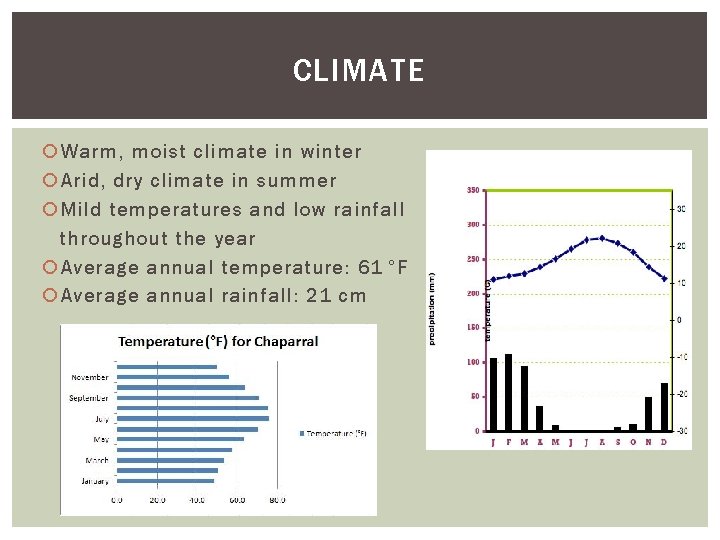
CLIMATE Warm, moist climate in winter Arid, dry climate in summer Mild temperatures and low rainfall throughout the year Average annual temperature: 61°F Average annual rainfall: 21 cm
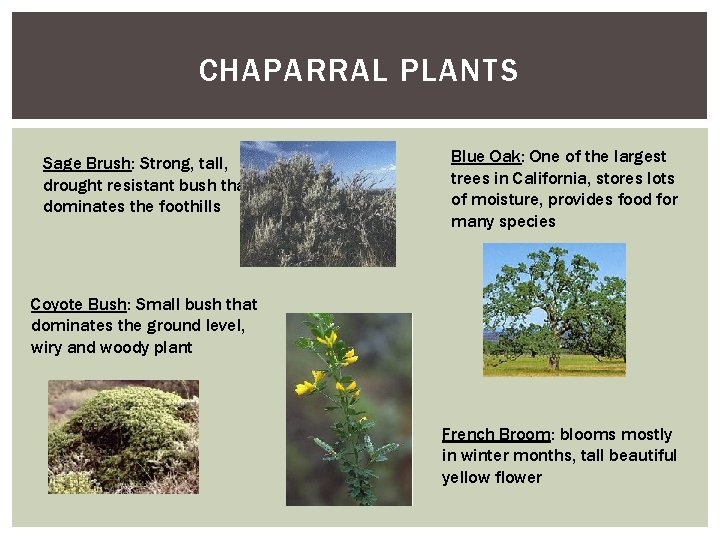
CHAPARRAL PLANTS Sage Brush: Strong, tall, drought resistant bush that dominates the foothills Blue Oak: One of the largest trees in California, stores lots of moisture, provides food for many species Coyote Bush: Small bush that dominates the ground level, wiry and woody plant French Broom: blooms mostly in winter months, tall beautiful yellow flower
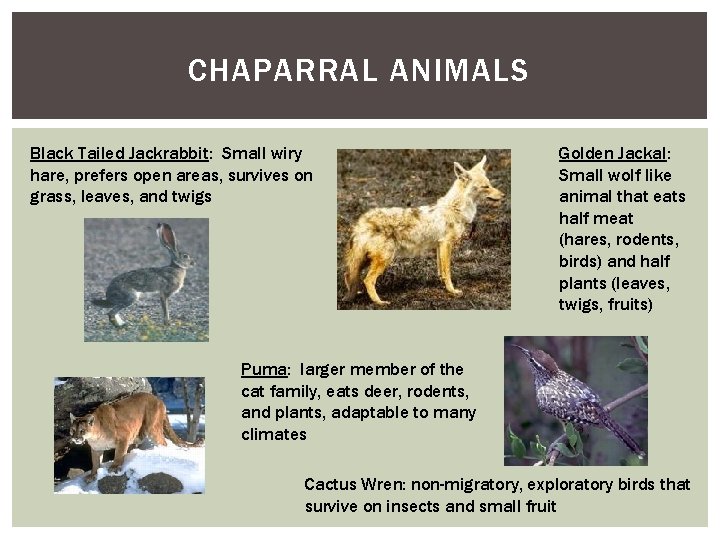
CHAPARRAL ANIMALS Black Tailed Jackrabbit: Small wiry hare, prefers open areas, survives on grass, leaves, and twigs Golden Jackal: Small wolf like animal that eats half meat (hares, rodents, birds) and half plants (leaves, twigs, fruits) Puma: larger member of the cat family, eats deer, rodents, and plants, adaptable to many climates Cactus Wren: non-migratory, exploratory birds that survive on insects and small fruit
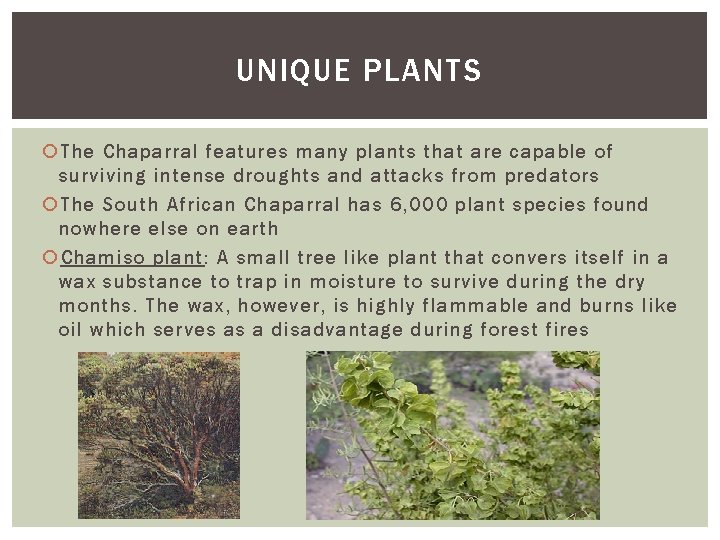
UNIQUE PLANTS The Chaparral features many plants that are capable of surviving intense droughts and attacks from predators The South African Chaparral has 6, 000 plant species found nowhere else on earth Chamiso plant: A small tree like plant that convers itself in a wax substance to trap in moisture to survive during the dry months. The wax, however, is highly flammable and burns like oil which serves as a disadvantage during forest fires
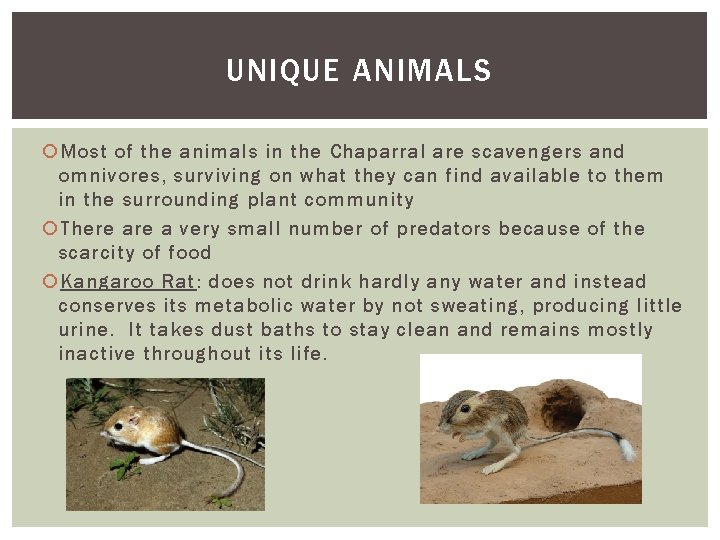
UNIQUE ANIMALS Most of the animals in the Chaparral are scavengers and omnivores, surviving on what they can find available to them in the surrounding plant community There a very small number of predators because of the scarcity of food Kangaroo Rat: does not drink hardly any water and instead conserves its metabolic water by not sweating, producing little urine. It takes dust baths to stay clean and remains mostly inactive throughout its life.
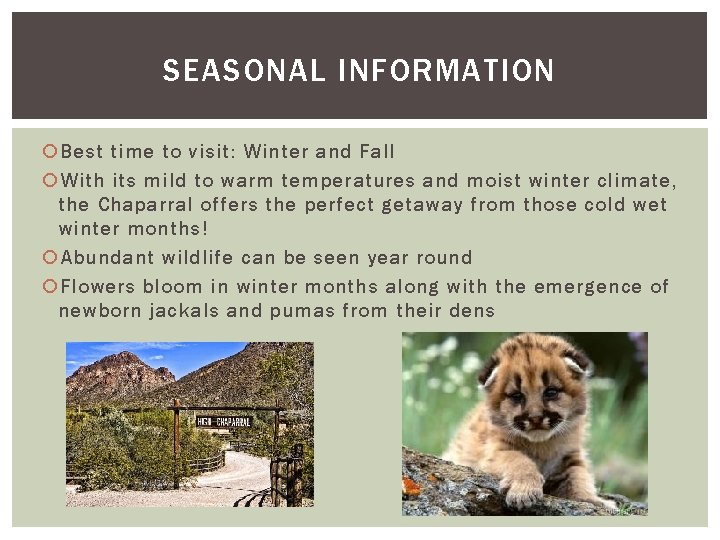
SEASONAL INFORMATION Best time to visit: Winter and Fall With its mild to warm temperatures and moist winter climate, the Chaparral offers the perfect getaway from those cold wet winter months! Abundant wildlife can be seen year round Flowers bloom in winter months along with the emergence of newborn jackals and pumas from their dens
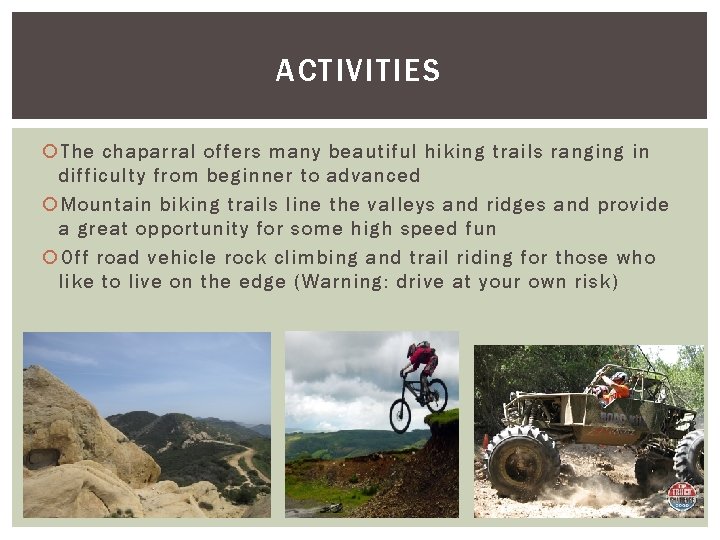
ACTIVITIES The chaparral offers many beautiful hiking trails ranging in difficulty from beginner to advanced Mountain biking trails line the valleys and ridges and provide a great opportunity for some high speed fun Off road vehicle rock climbing and trail riding for those who like to live on the edge (Warning: drive at your own risk)
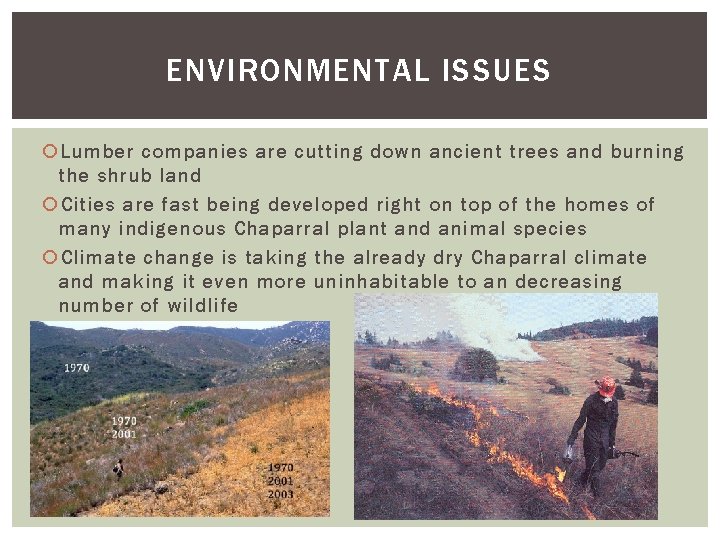
ENVIRONMENTAL ISSUES Lumber companies are cutting down ancient trees and burning the shrub land Cities are fast being developed right on top of the homes of many indigenous Chaparral plant and animal species Climate change is taking the already dry Chaparral climate and making it even more uninhabitable to an decreasing number of wildlife
REFERENCES http: //www. blueplanetbiomes. org/chaparral. htm http: //en. wikipedia. org/wiki/Chaparral http: //www. ehow. com/list_7516571_environmental-problems -chaparral-biomes. html
Jake Rogers