
Vision Transduction Conversion of sights sounds smells into
- Slides: 17
Vision
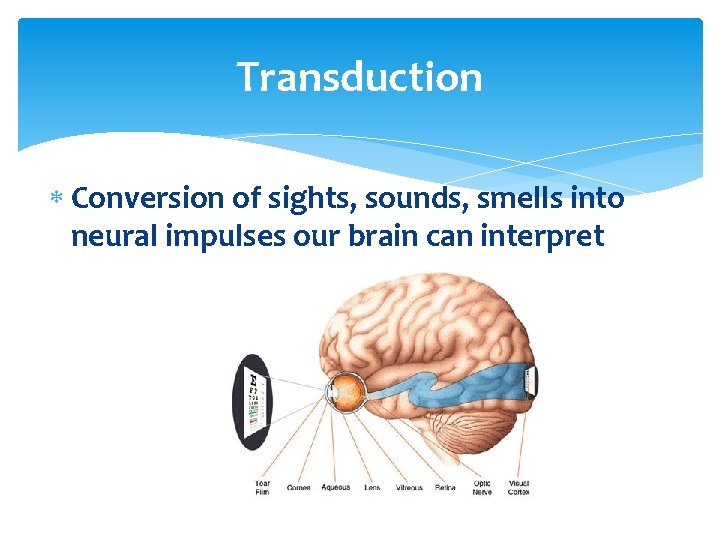
Transduction Conversion of sights, sounds, smells into neural impulses our brain can interpret
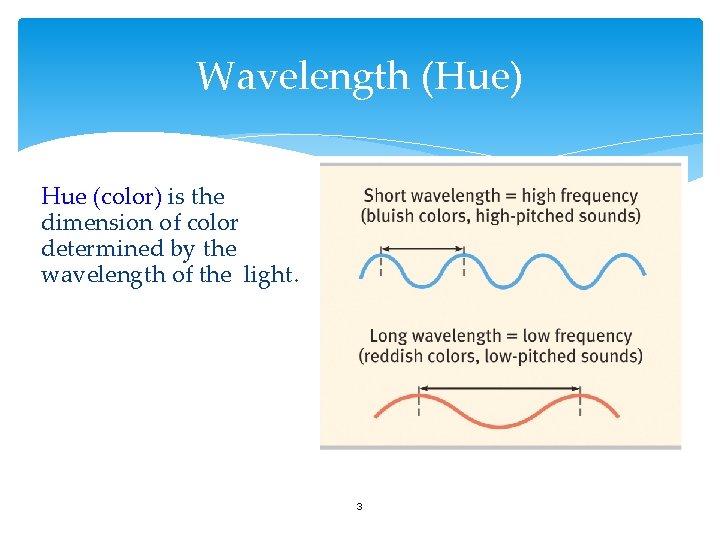
Wavelength (Hue) Hue (color) is the dimension of color determined by the wavelength of the light. 3
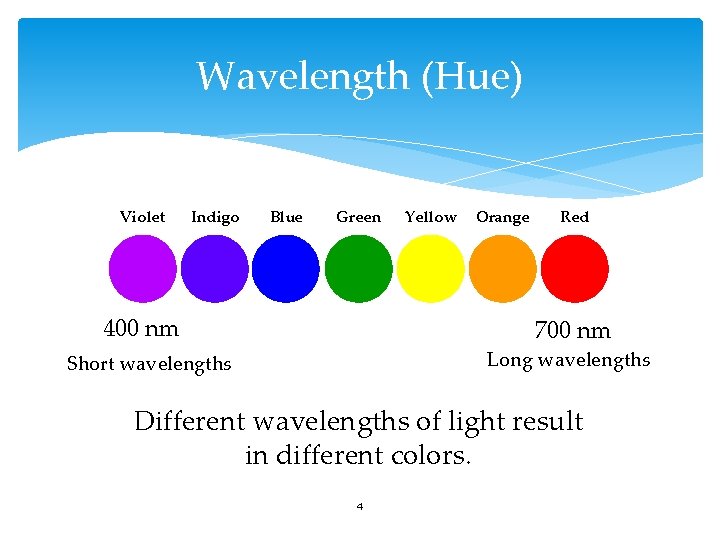
Wavelength (Hue) Violet Indigo Blue Green 400 nm Yellow Orange Red 700 nm Long wavelengths Short wavelengths Different wavelengths of light result in different colors. 4
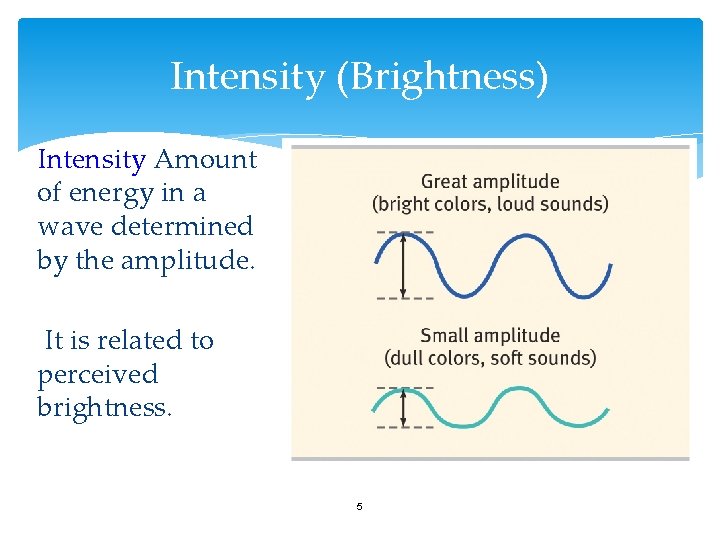
Intensity (Brightness) Intensity Amount of energy in a wave determined by the amplitude. It is related to perceived brightness. 5
6
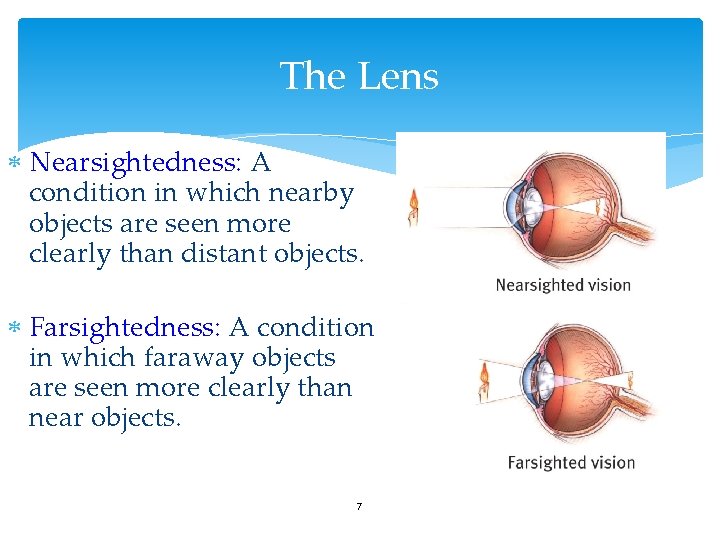
The Lens Nearsightedness: A condition in which nearby objects are seen more clearly than distant objects. Farsightedness: A condition in which faraway objects are seen more clearly than near objects. 7
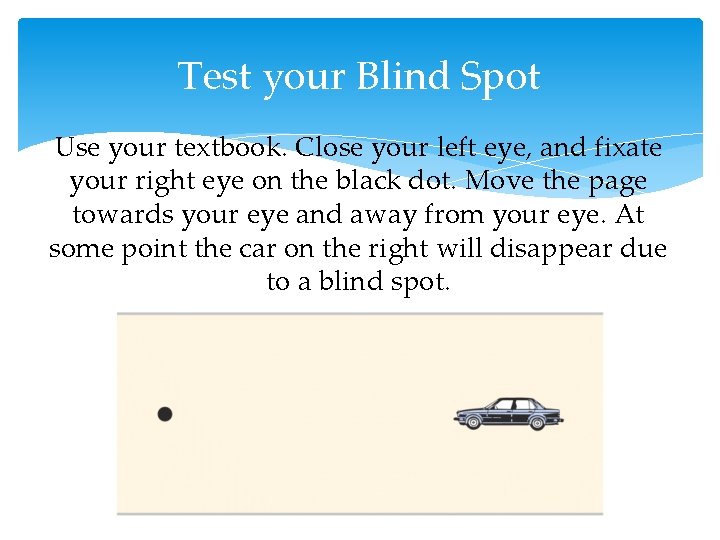
Test your Blind Spot Use your textbook. Close your left eye, and fixate your right eye on the black dot. Move the page towards your eye and away from your eye. At some point the car on the right will disappear due to a blind spot. 8
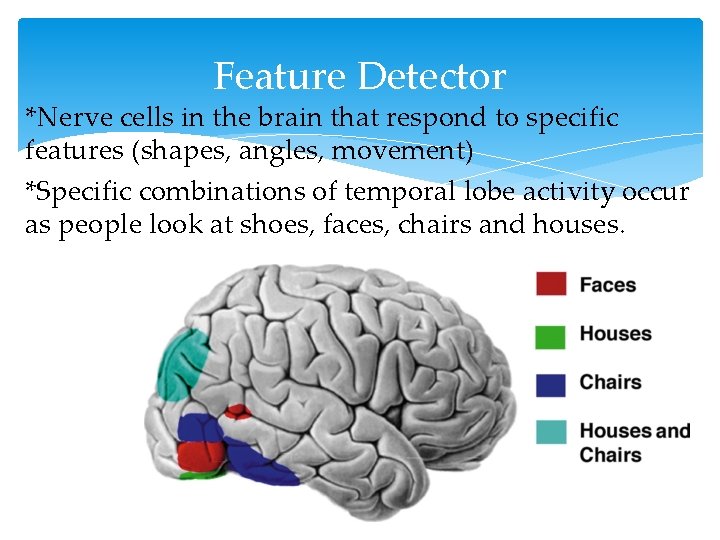
Feature Detector *Nerve cells in the brain that respond to specific features (shapes, angles, movement) *Specific combinations of temporal lobe activity occur as people look at shoes, faces, chairs and houses. 9
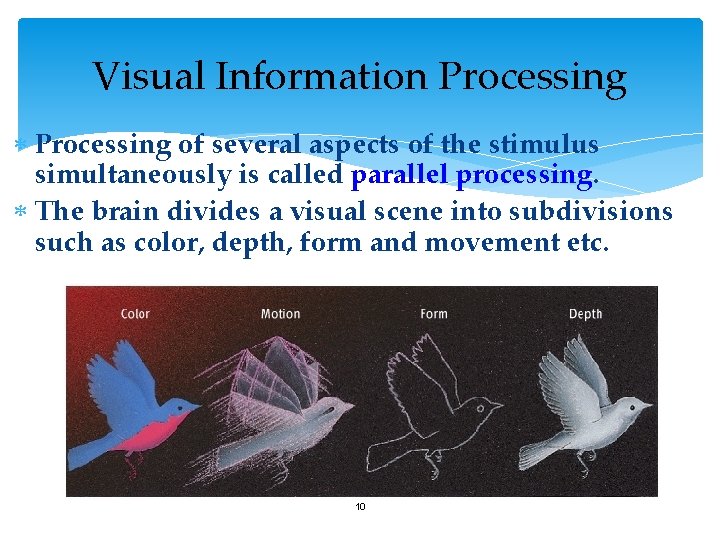
Visual Information Processing of several aspects of the stimulus simultaneously is called parallel processing. The brain divides a visual scene into subdivisions such as color, depth, form and movement etc. 10
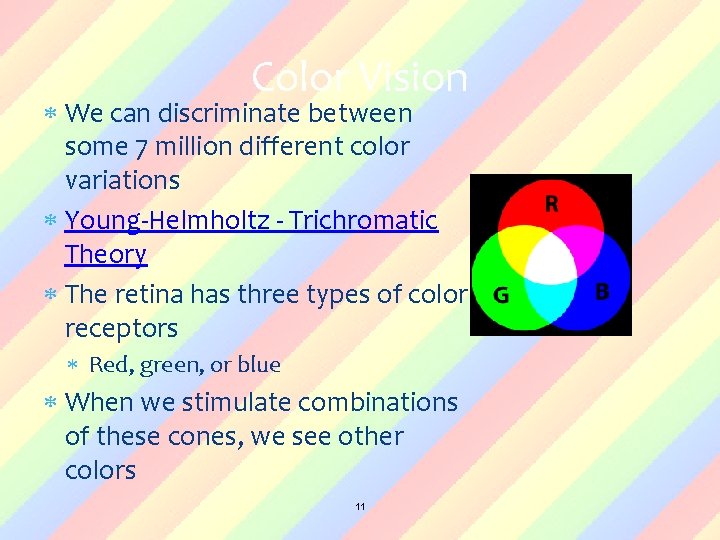
Color Vision We can discriminate between some 7 million different color variations Young-Helmholtz - Trichromatic Theory The retina has three types of color receptors Red, green, or blue When we stimulate combinations of these cones, we see other colors 11
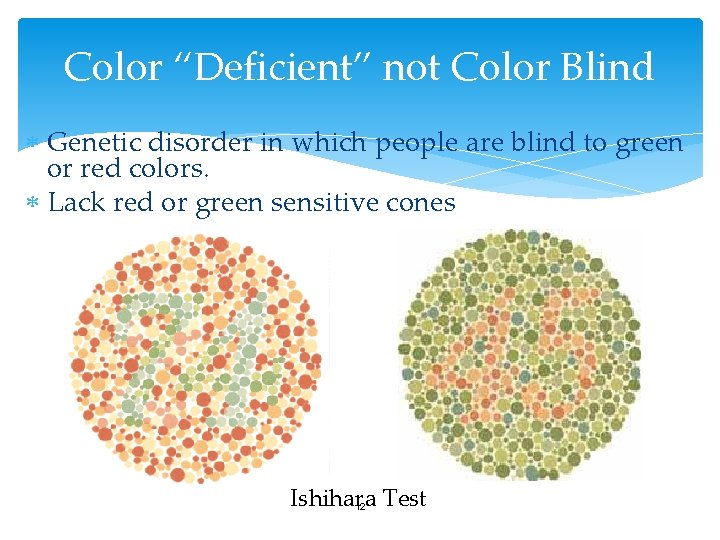
Color “Deficient” not Color Blind Genetic disorder in which people are blind to green or red colors. Lack red or green sensitive cones Ishihara Test 12
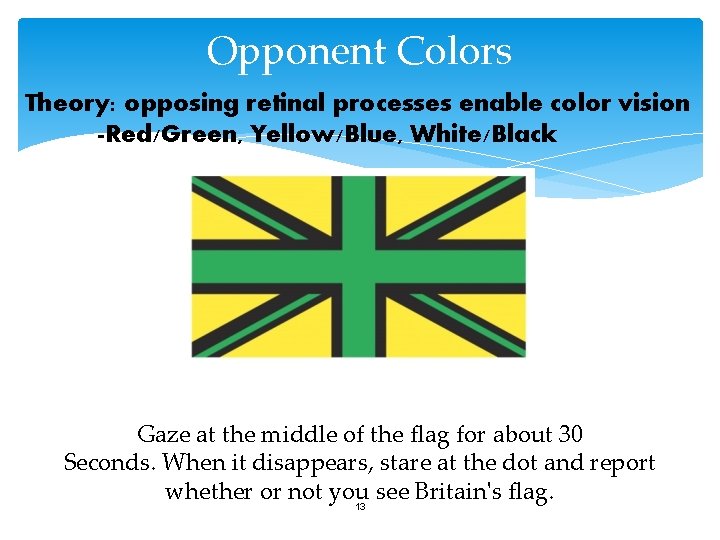
Opponent Colors Theory: opposing retinal processes enable color vision -Red/Green, Yellow/Blue, White/Black Gaze at the middle of the flag for about 30 Seconds. When it disappears, stare at the dot and report whether or not you see Britain's flag. 13
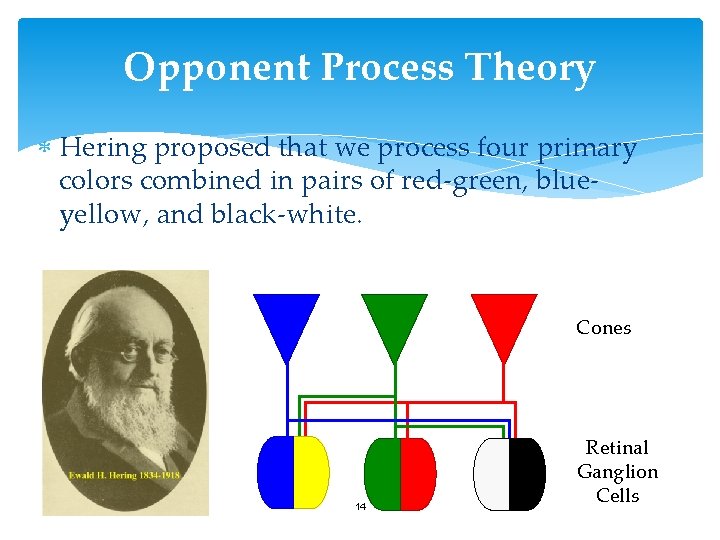
Opponent Process Theory Hering proposed that we process four primary colors combined in pairs of red-green, blueyellow, and black-white. Cones 14 Retinal Ganglion Cells
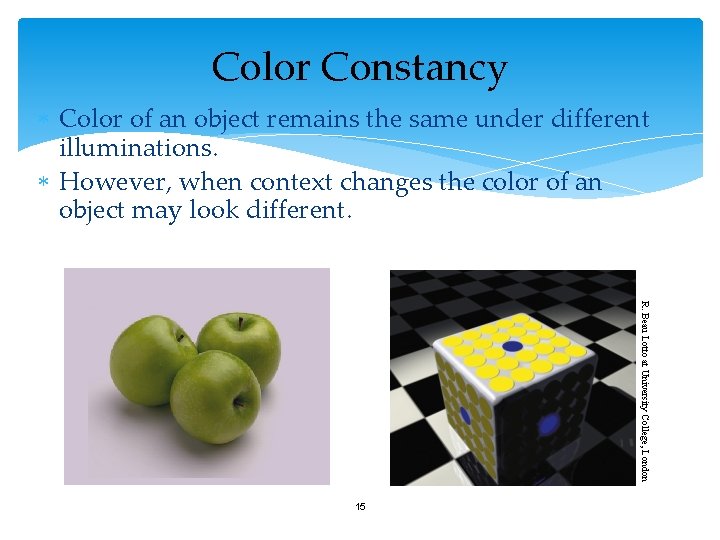
Color Constancy Color of an object remains the same under different illuminations. However, when context changes the color of an object may look different. R. Beau Lotto at University College, London 15
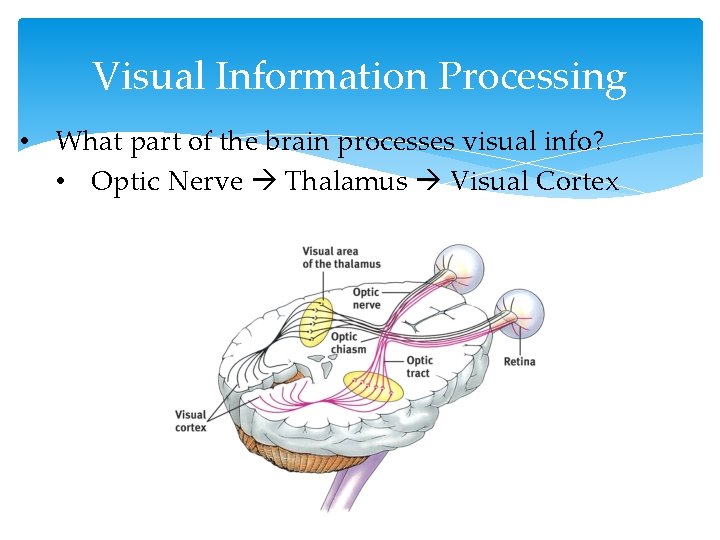
Visual Information Processing • What part of the brain processes visual info? • Optic Nerve Thalamus Visual Cortex 16
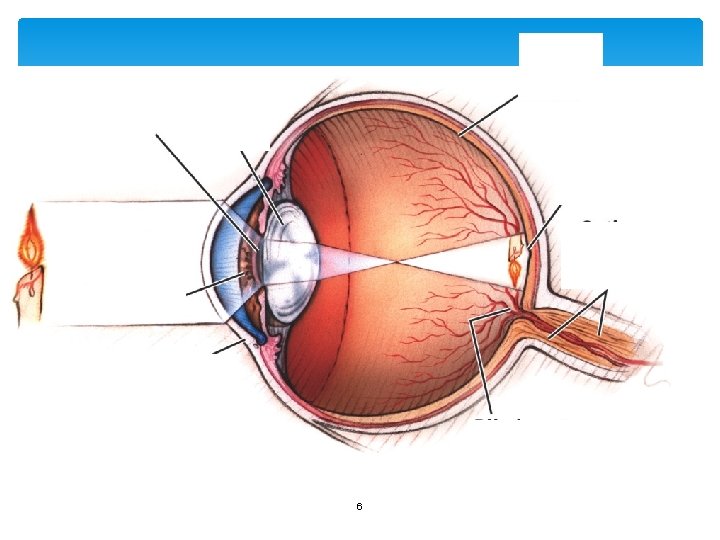
Review 1. What is the process of converting energies into impulses our brains can interpret? 2. What part of the light wave determines color? 3. What part of the light wave determines brightness? 4. What is the muscle in your eye that is colored? 5. What is the opening in your eye called? 6. Where all the rods and cones located? 7. What changes shape to help focus images? 8. What part of the eye allows you to see color? 9. What is it called when we can process various things at once about a visual stimuli?