
Vision Screening Why Tools of the trade Why


- Slides: 19
Vision Screening • Why? • Tools of the trade
Why? 1. Law 1. Vehicles (cars & heavy duty) Regulation 102 of the National Road Traffic Act (93 of 1996) 2. Driven machinery regulations (Feb 2005) of the Occupational Health & Safety Act
Why? 2. Employee productivity – Clear & comfortable vision – Headaches, neck aches
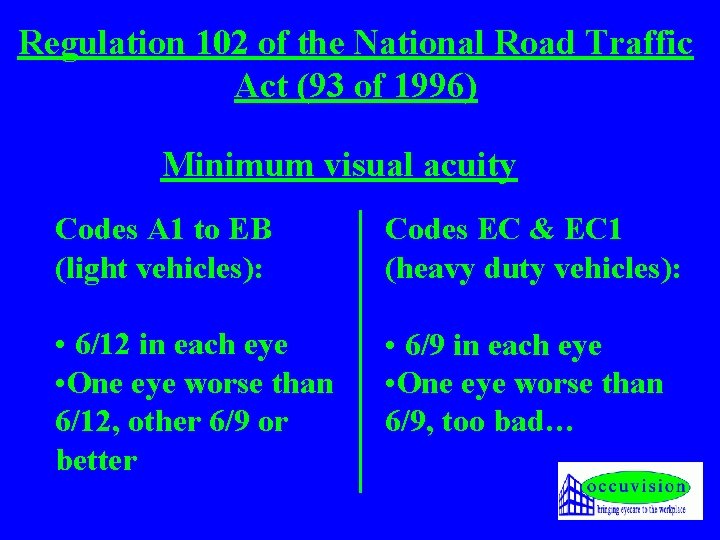
Regulation 102 of the National Road Traffic Act (93 of 1996) Minimum visual acuity Codes A 1 to EB (light vehicles): Codes EC & EC 1 (heavy duty vehicles): • 6/12 in each eye • One eye worse than 6/12, other 6/9 or better • 6/9 in each eye • One eye worse than 6/9, too bad…
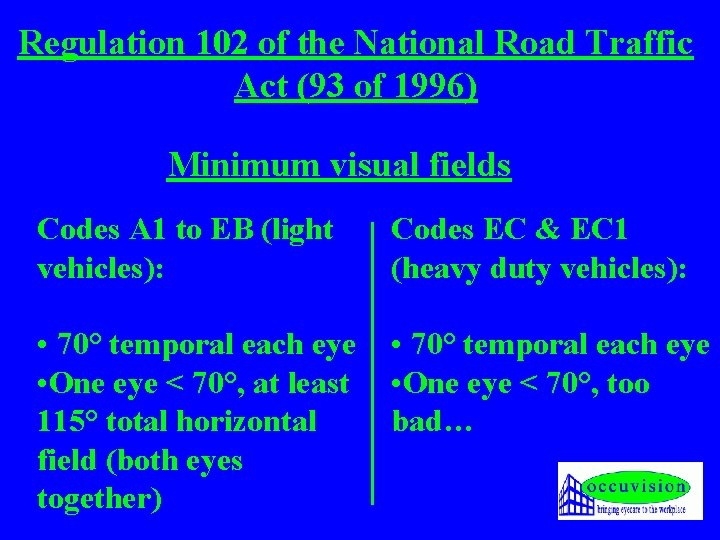
Regulation 102 of the National Road Traffic Act (93 of 1996) Minimum visual fields Codes A 1 to EB (light vehicles): Codes EC & EC 1 (heavy duty vehicles): • 70° temporal each eye • One eye < 70°, at least 115° total horizontal field (both eyes together) • 70° temporal each eye • One eye < 70°, too bad…
Driven machinery regulations • Same as for codes EC & EC 1 (heavy duty) – 6/9 each eye – 70° temporal visual field each eye PLUS Stereopsis (3 -D vision) • Existing PDP – Same as codes EC & EC 1 (no stereopsis required!)
Tools of the Trade
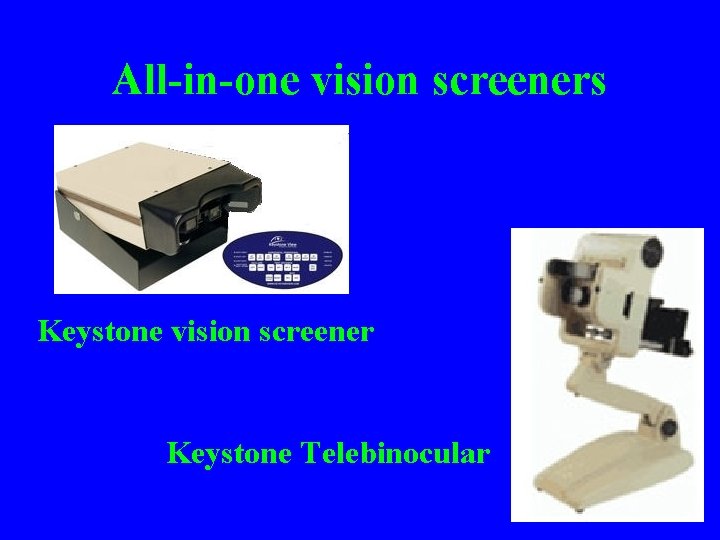
All-in-one vision screeners Keystone vision screener Keystone Telebinocular
All-in-one vision screeners Pro’s • Visual acuity (far & near) • Stereopsis • Colour vision • Muscle balance
All-in-one vision screeners Cons • Patient observation more difficult, eg. squinting or viewing through incorrect part of spectacles • Stereopsis test difficult to explain • Proximal accommodation
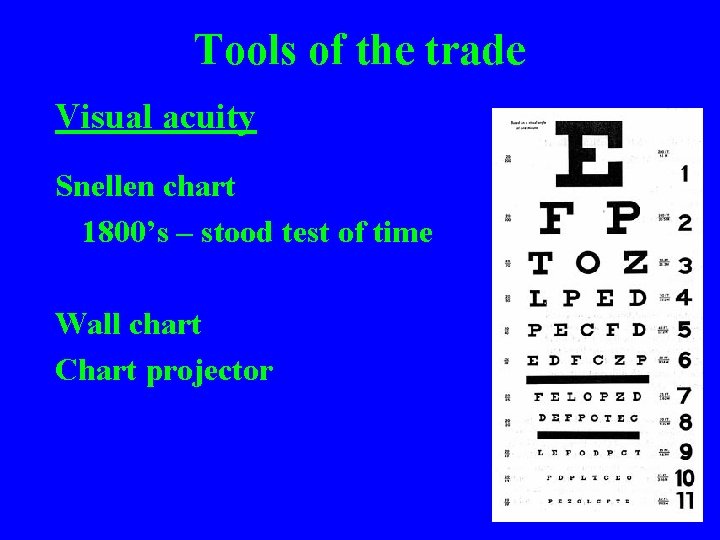
Tools of the trade Visual acuity Snellen chart 1800’s – stood test of time Wall chart Chart projector
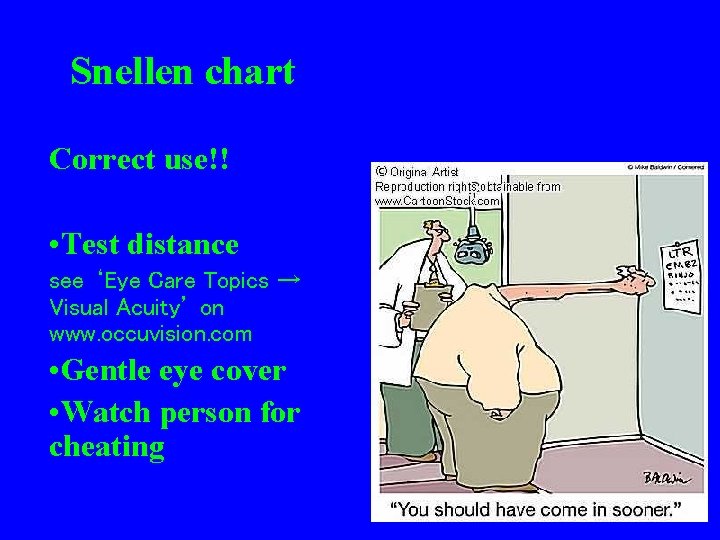
Snellen chart Correct use!! • Test distance see ‘Eye Care Topics → Visual Acuity’ on www. occuvision. com • Gentle eye cover • Watch person for cheating
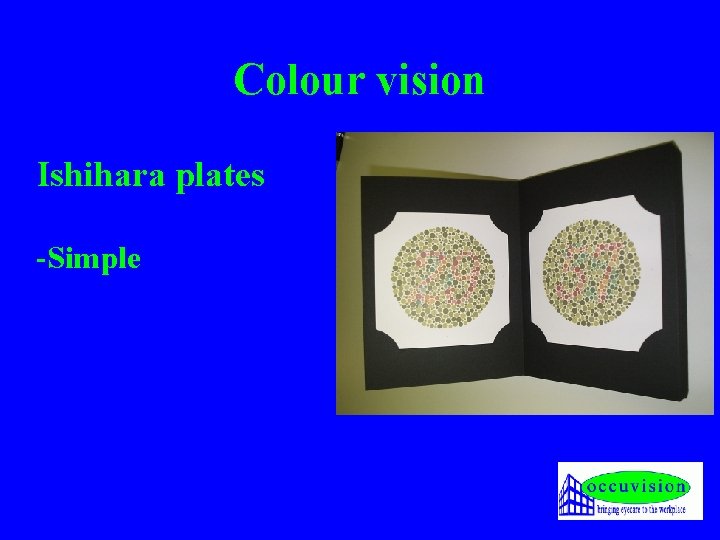
Colour vision Ishihara plates -Simple
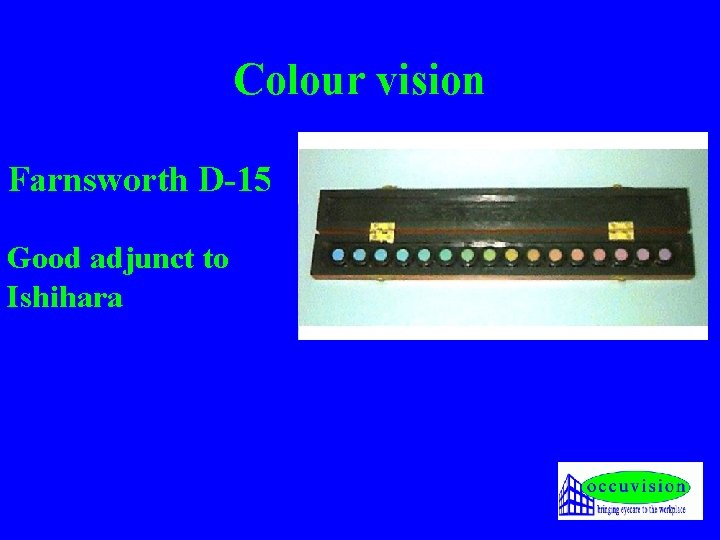
Colour vision Farnsworth D-15 Good adjunct to Ishihara
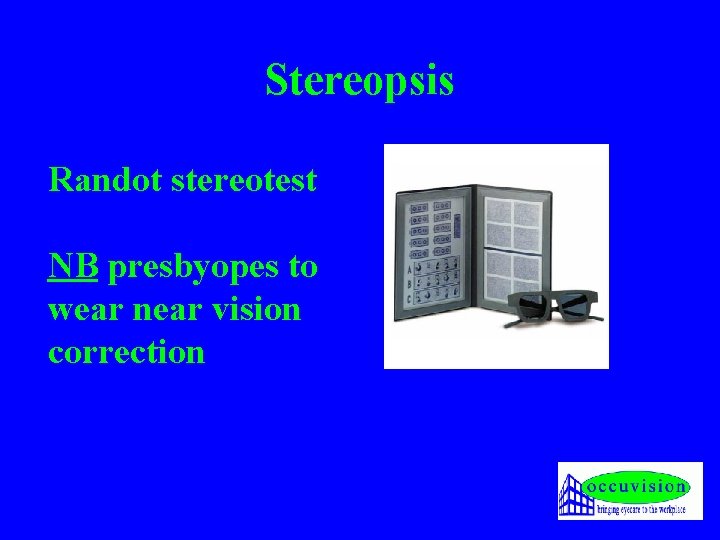
Stereopsis Randot stereotest NB presbyopes to wear near vision correction
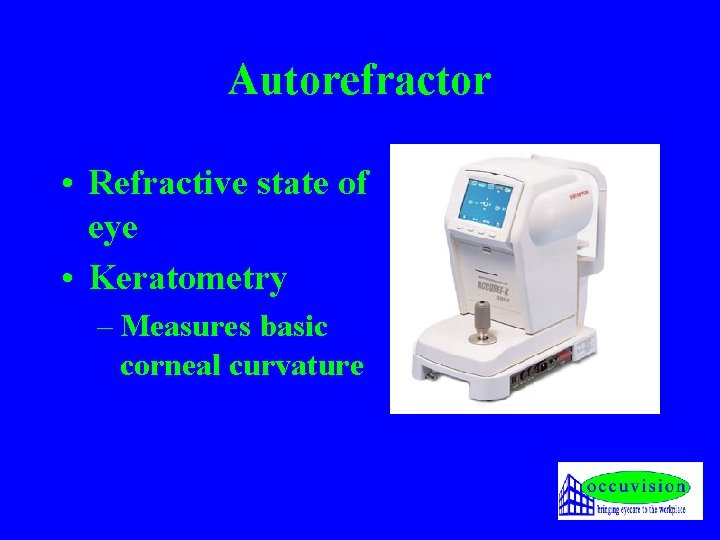
Autorefractor • Refractive state of eye • Keratometry – Measures basic corneal curvature
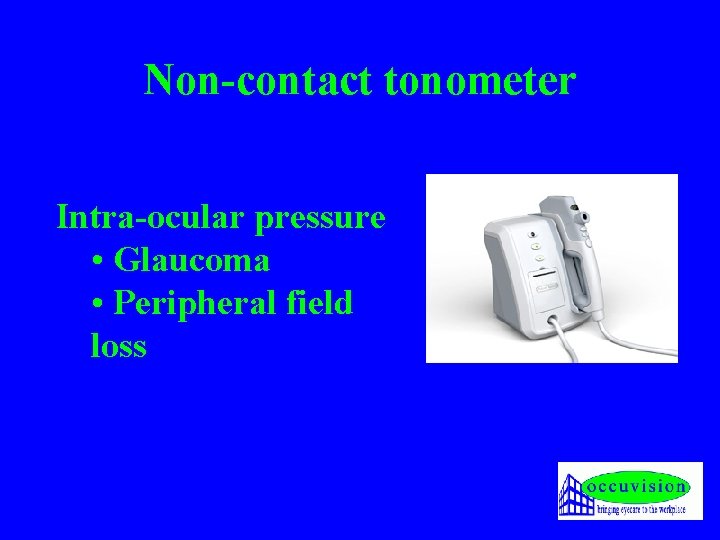
Non-contact tonometer Intra-ocular pressure • Glaucoma • Peripheral field loss
Thank you