
Vision Our most dominating sense Visual Capture Phase




- Slides: 28
Vision • Our most dominating sense. • Visual Capture
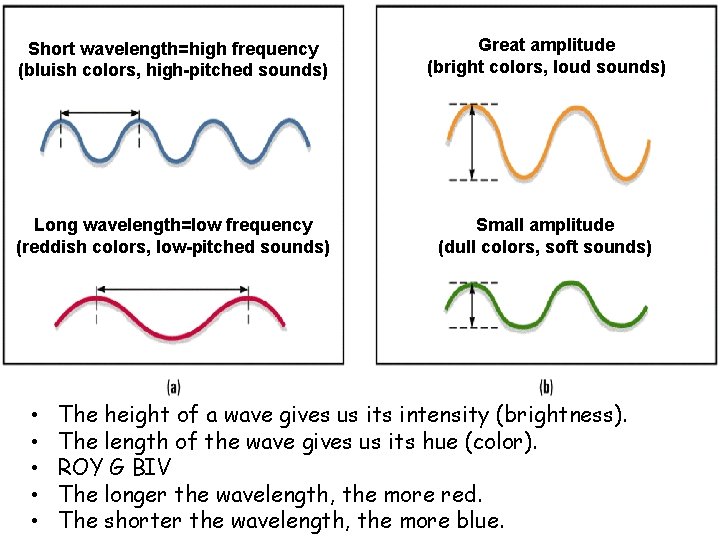
Phase One: Gathering Light Short wavelength=high frequency (bluish colors, high-pitched sounds) Great amplitude (bright colors, loud sounds) Long wavelength=low frequency (reddish colors, low-pitched sounds) Small amplitude (dull colors, soft sounds) • • • The height of a wave gives us its intensity (brightness). The length of the wave gives us its hue (color). ROY G BIV The longer the wavelength, the more red. The shorter the wavelength, the more blue.
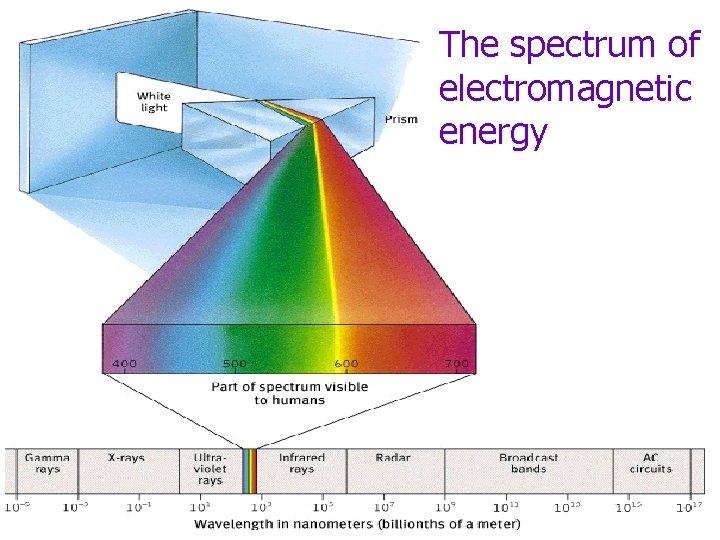
The spectrum of electromagnetic energy
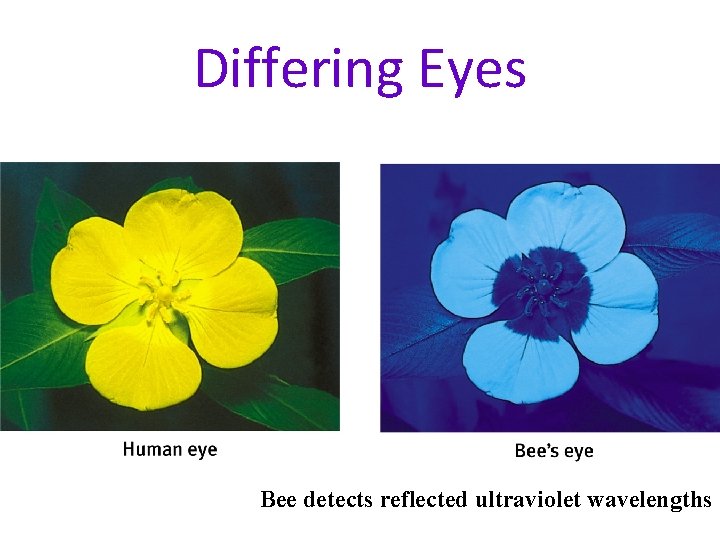
Differing Eyes Bee detects reflected ultraviolet wavelengths
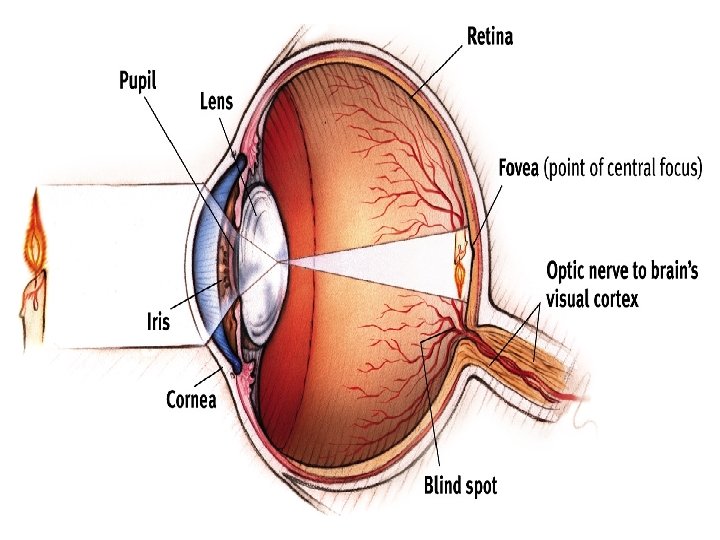
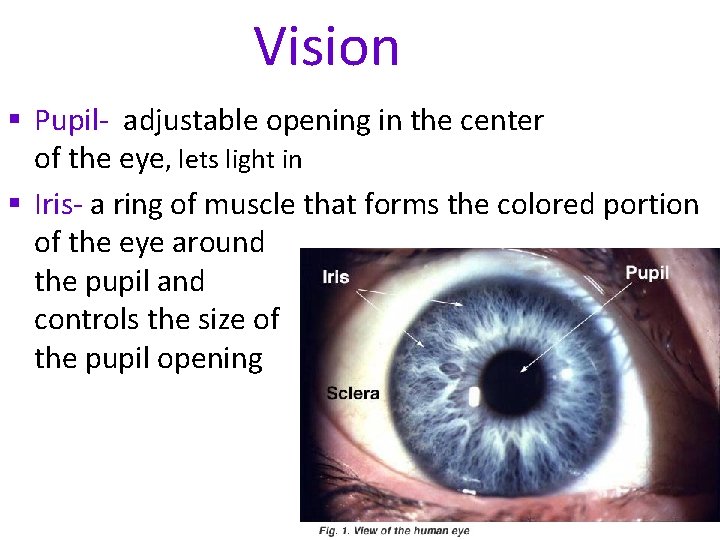
Vision § Pupil- adjustable opening in the center of the eye, lets light in § Iris- a ring of muscle that forms the colored portion of the eye around the pupil and controls the size of the pupil opening
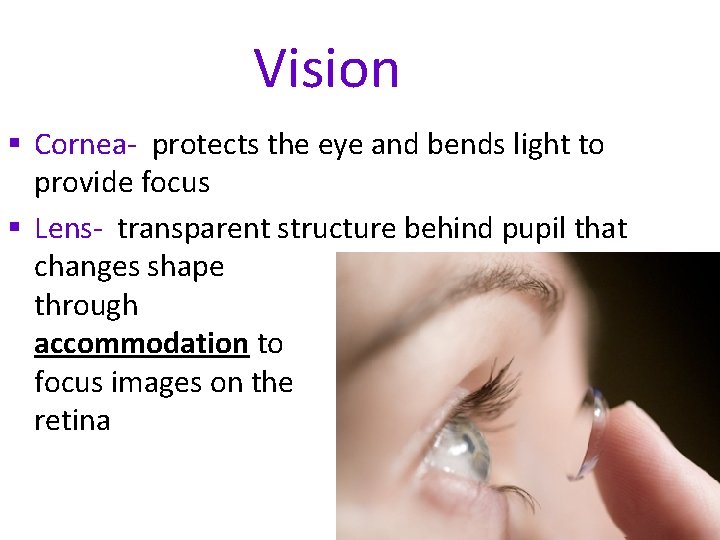
Vision § Cornea- protects the eye and bends light to provide focus § Lens- transparent structure behind pupil that changes shape through accommodation to focus images on the retina
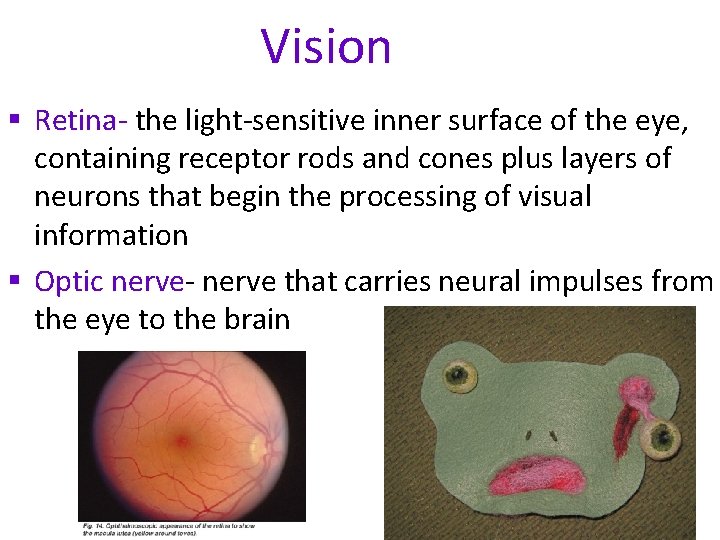
Vision § Retina- the light-sensitive inner surface of the eye, containing receptor rods and cones plus layers of neurons that begin the processing of visual information § Optic nerve- nerve that carries neural impulses from the eye to the brain
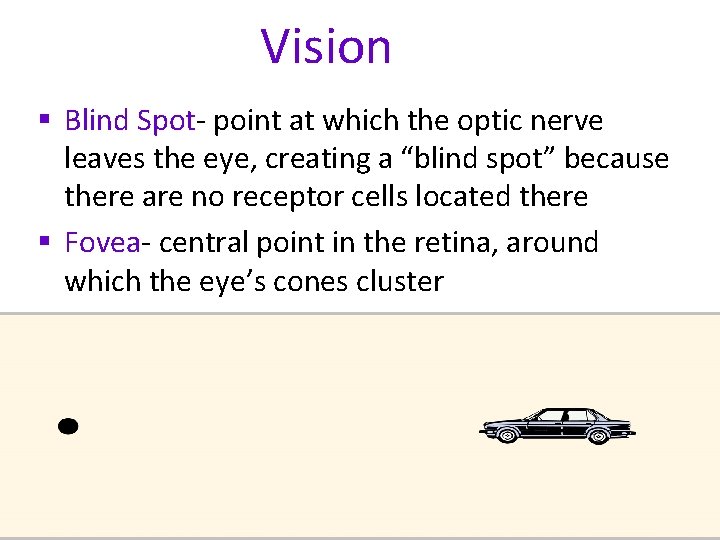
Vision § Blind Spot- point at which the optic nerve leaves the eye, creating a “blind spot” because there are no receptor cells located there § Fovea- central point in the retina, around which the eye’s cones cluster
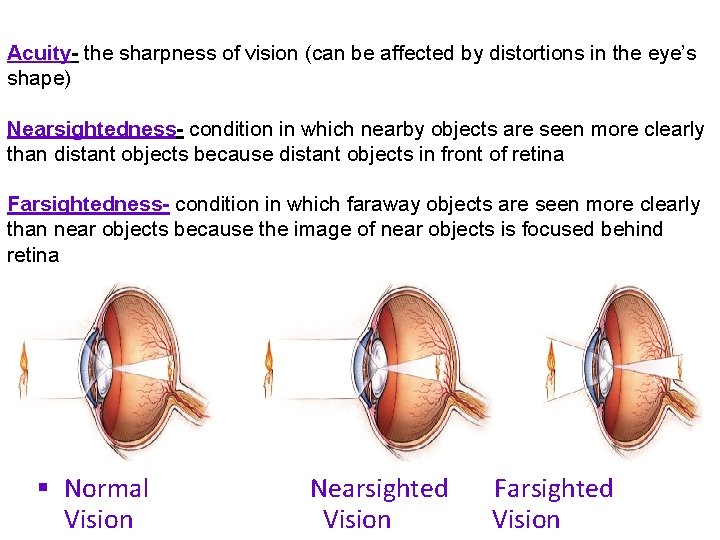
Acuity- the sharpness of vision (can be affected by distortions in the eye’s shape) Nearsightedness- condition in which nearby objects are seen more clearly than distant objects because distant objects in front of retina Farsightedness- condition in which faraway objects are seen more clearly than near objects because the image of near objects is focused behind retina § Normal Vision Nearsighted Vision Farsighted Vision
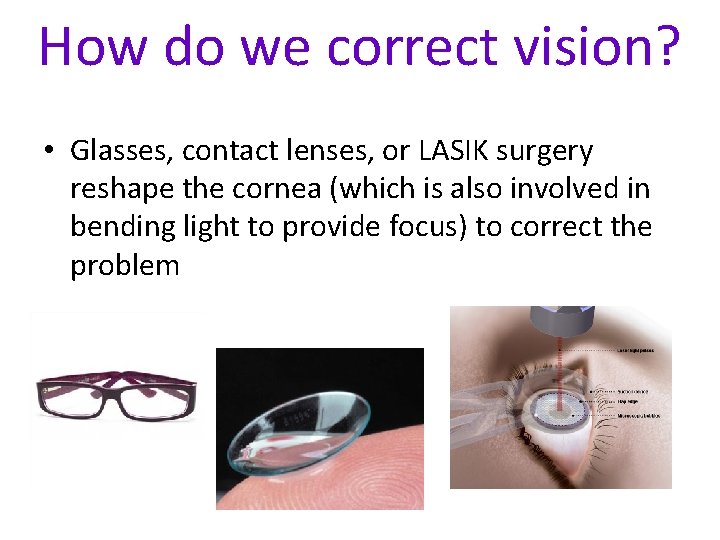
How do we correct vision? • Glasses, contact lenses, or LASIK surgery reshape the cornea (which is also involved in bending light to provide focus) to correct the problem
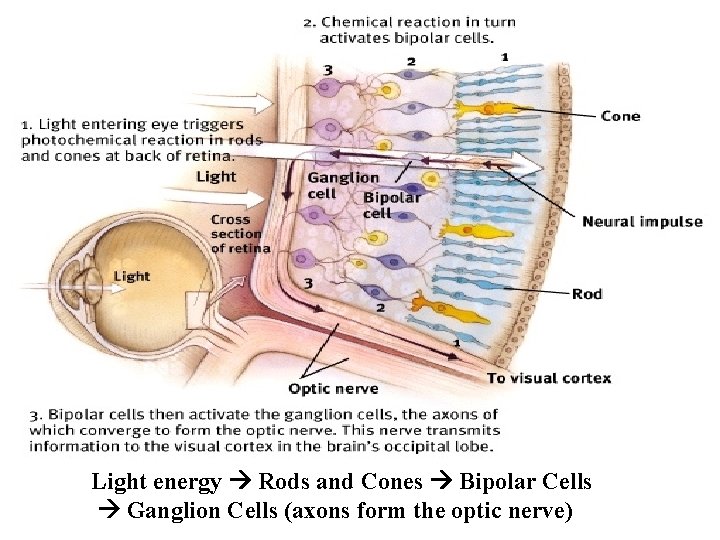
Light energy Rods and Cones Bipolar Cells Ganglion Cells (axons form the optic nerve)
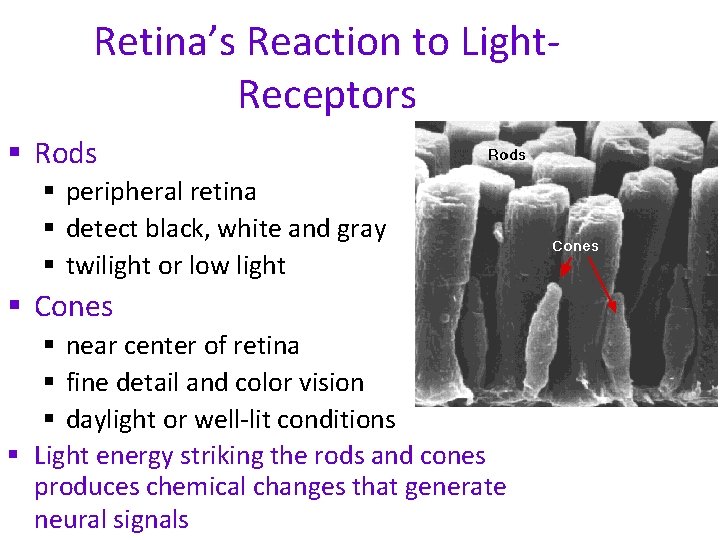
Retina’s Reaction to Light. Receptors § Rods § peripheral retina § detect black, white and gray § twilight or low light § Cones § near center of retina § fine detail and color vision § daylight or well-lit conditions § Light energy striking the rods and cones produces chemical changes that generate neural signals
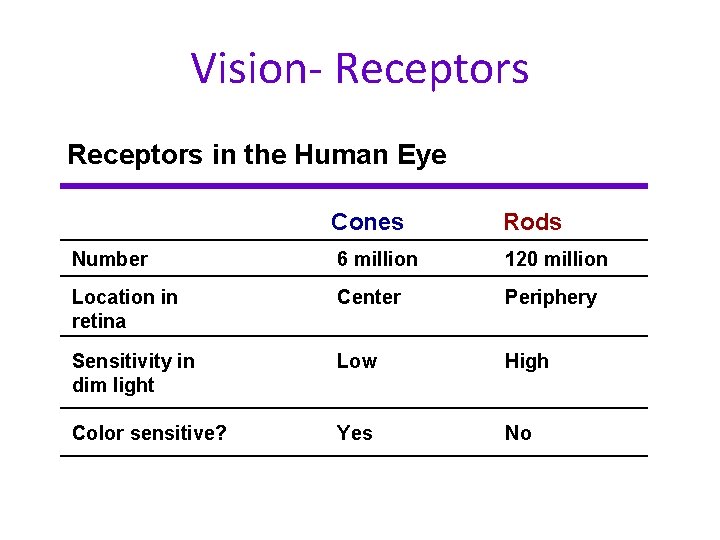
Vision- Receptors in the Human Eye Cones Rods Number 6 million 120 million Location in retina Center Periphery Sensitivity in dim light Low High Color sensitive? Yes No
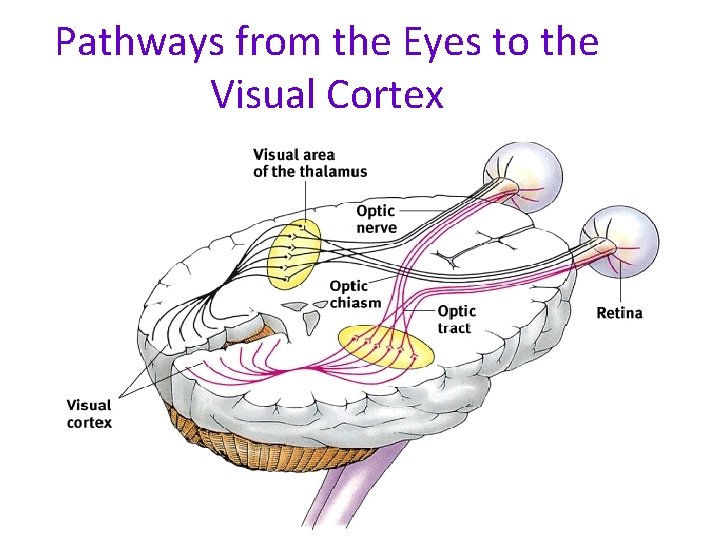
Pathways from the Eyes to the Visual Cortex
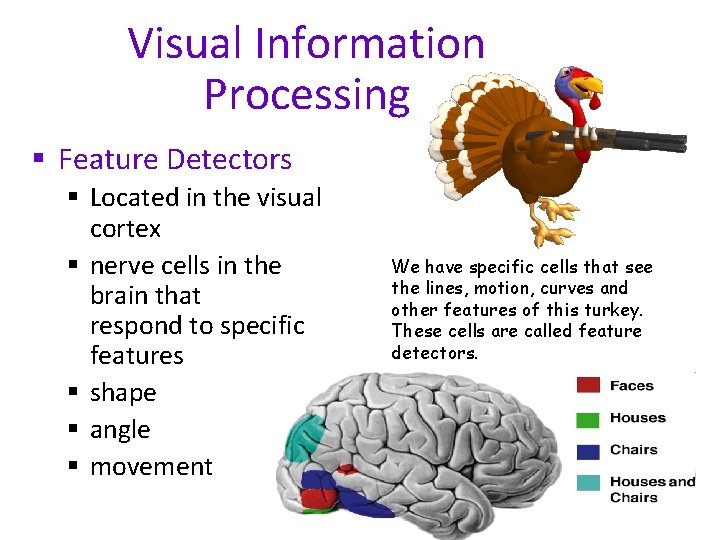
Visual Information Processing § Feature Detectors § Located in the visual cortex § nerve cells in the brain that respond to specific features § shape § angle § movement We have specific cells that see the lines, motion, curves and other features of this turkey. These cells are called feature detectors.
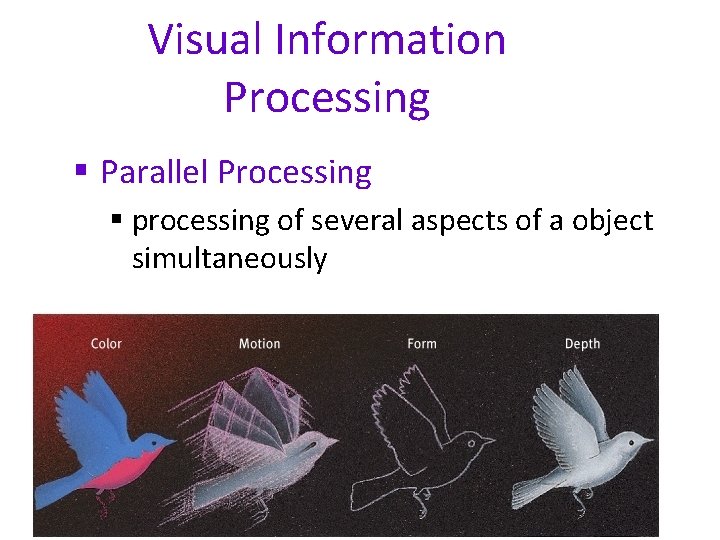
Visual Information Processing § Parallel Processing § processing of several aspects of a object simultaneously
Color Vision Two Major Theories
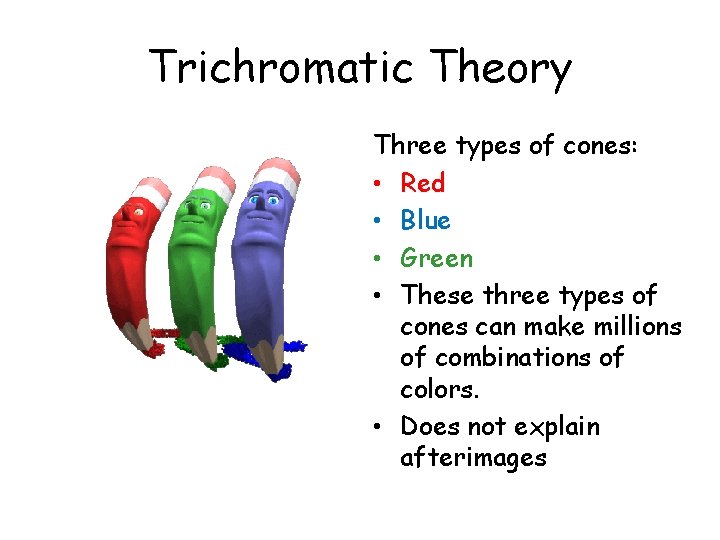
Trichromatic Theory Three types of cones: • Red • Blue • Green • These three types of cones can make millions of combinations of colors. • Does not explain afterimages
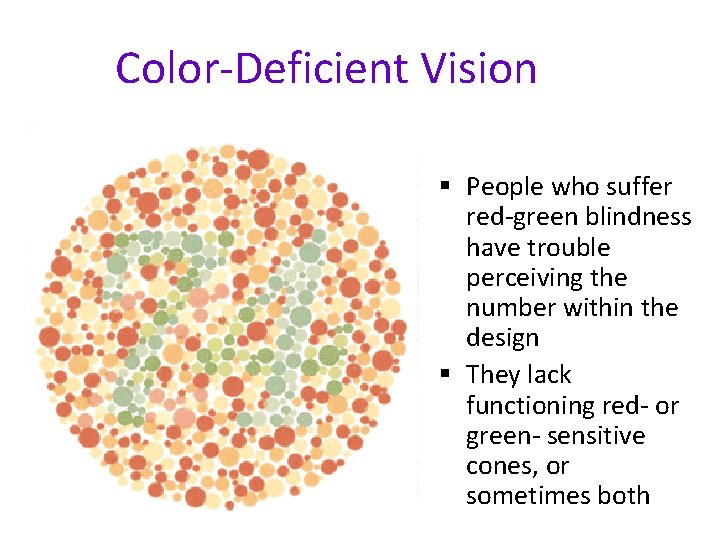
Color-Deficient Vision § People who suffer red-green blindness have trouble perceiving the number within the design § They lack functioning red- or green- sensitive cones, or sometimes both
Opponent-Process theory The sensory receptors come in pairs. • Red/Green • Yellow/Blue • Black/White • If one color is stimulated, the other is inhibited.
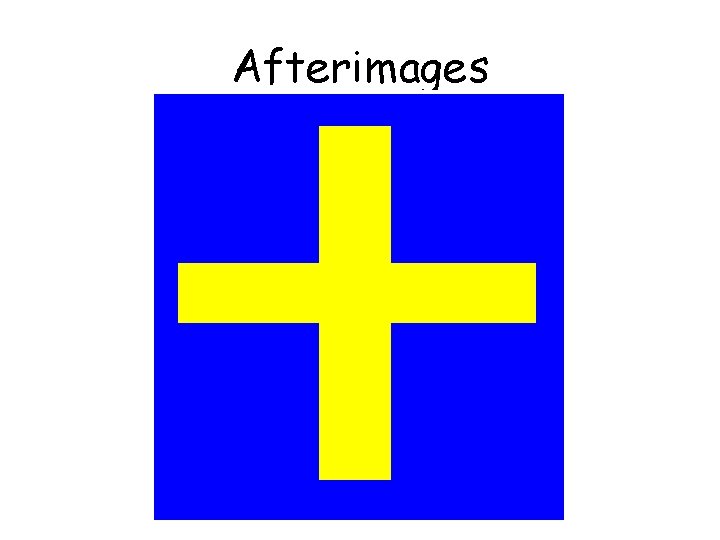
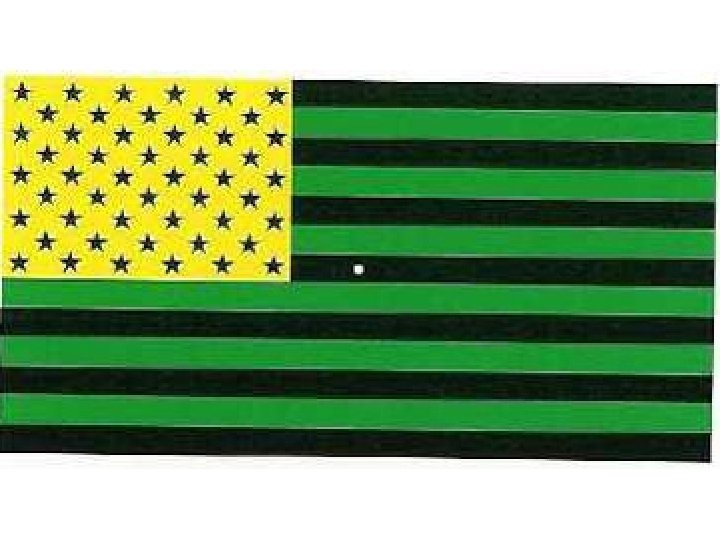
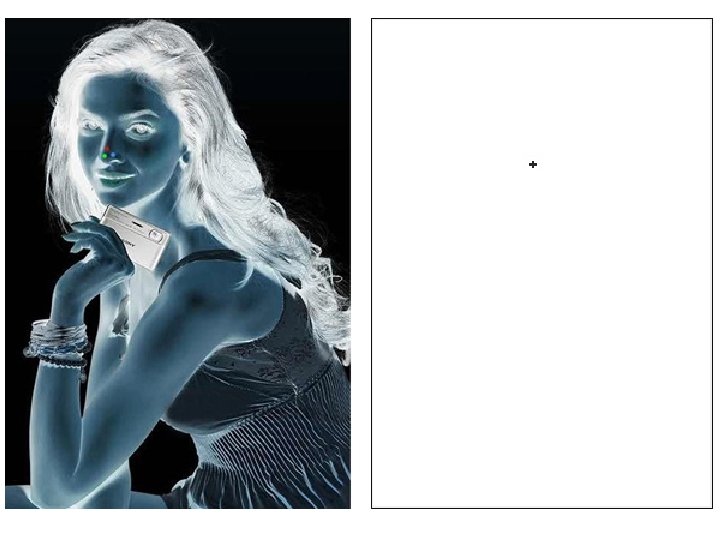
Afterimages