
Vision Every child in every district receives the


- Slides: 36
Vision: Every child in every district receives the instruction that they need and deserve…every day. Math and the SBAC Claims Elevating instruction for All students! Cary Cermak-Rudolf Roseburg Public Schools
Assumptions • CCSS Math Shifts – Focus, Coherence, and Rigor • Standards for Mathematical Practice • Math Content Standards
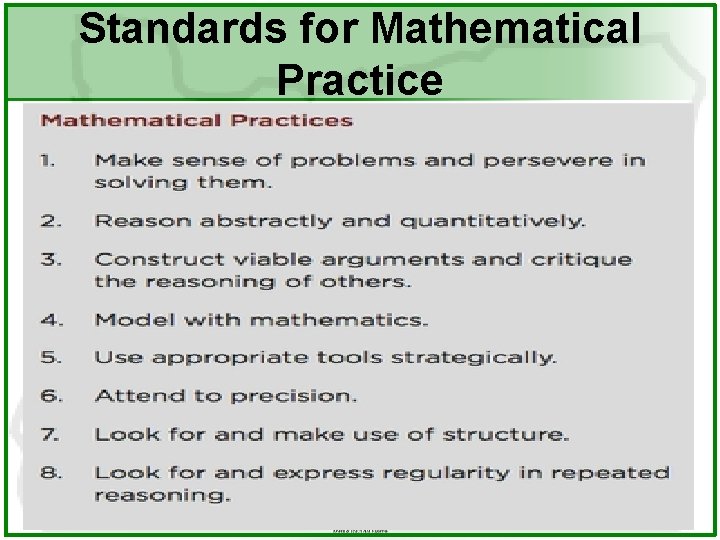
Standards for Mathematical Practice
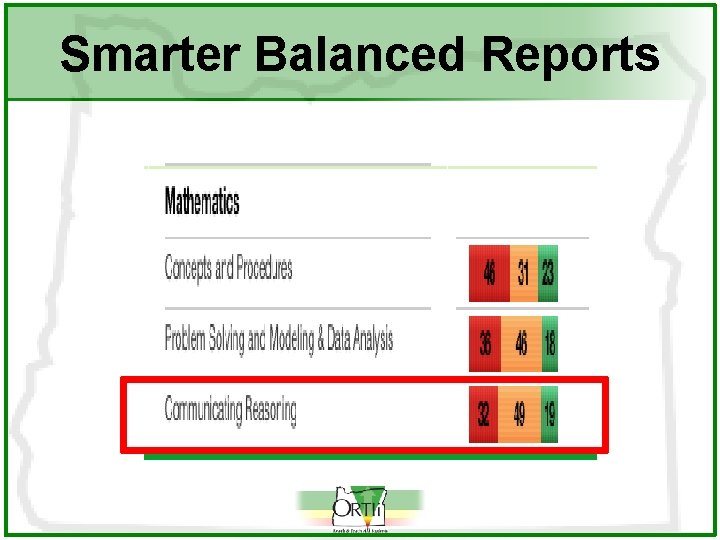
Smarter Balanced Reports
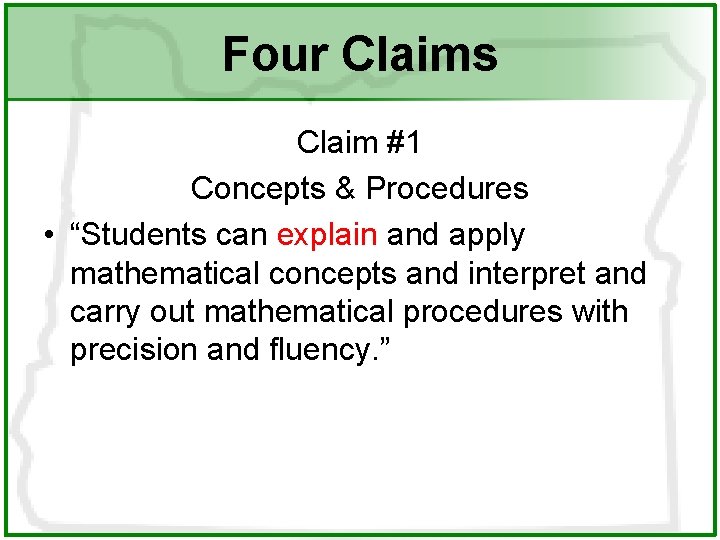
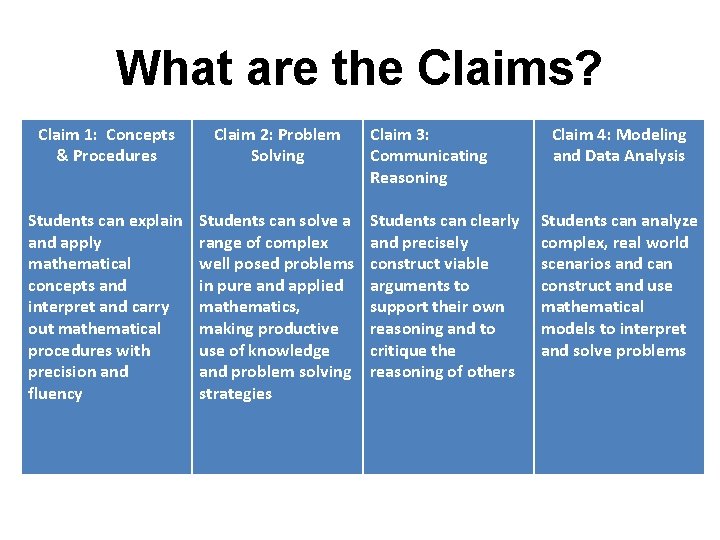
Four Claims Claim #1 Concepts & Procedures • “Students can explain and apply mathematical concepts and interpret and carry out mathematical procedures with precision and fluency. ”
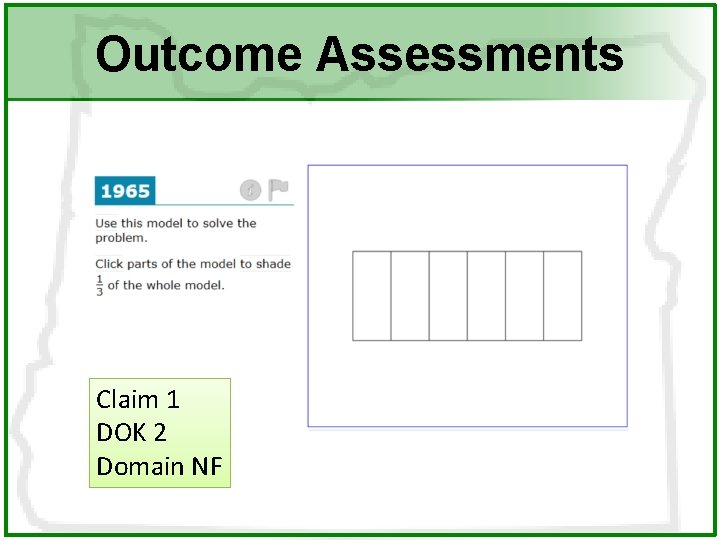
Outcome Assessments Claim 1 DOK 2 Domain NF
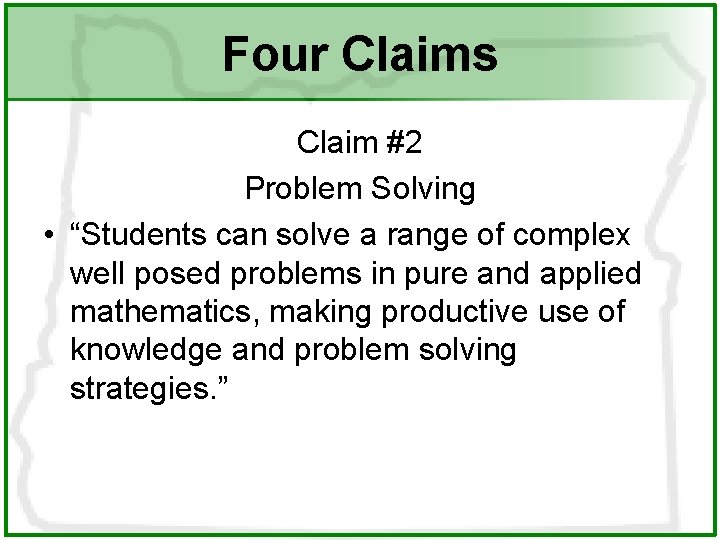
Four Claims Claim #2 Problem Solving • “Students can solve a range of complex well posed problems in pure and applied mathematics, making productive use of knowledge and problem solving strategies. ”
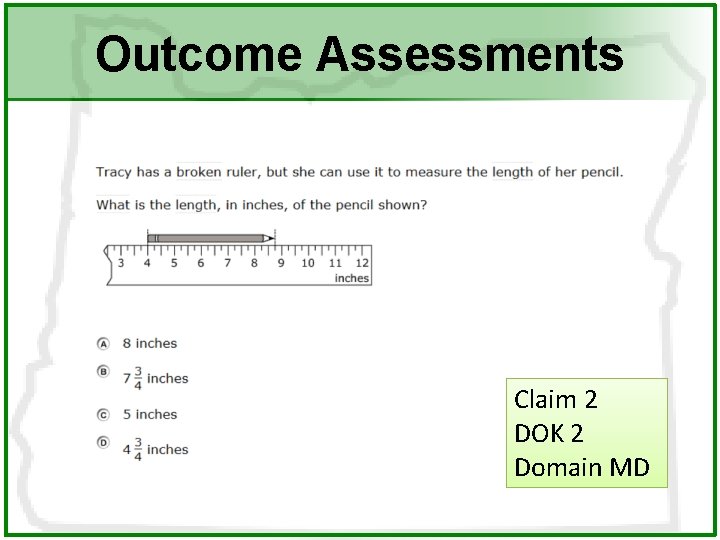
Outcome Assessments Claim 2 DOK 2 Domain MD
Four Claims Claim #4 Modeling and Data Analysis • “Students can analyze complex, real world scenarios and can construct and use mathematical models to interpret and solve problems. ”
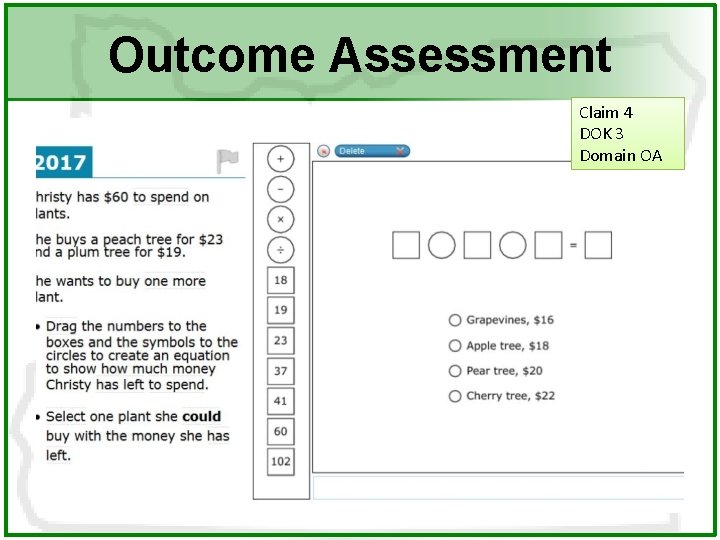
Outcome Assessment Claim 4 DOK 3 Domain OA
Four Claims Claim #3 Communicating Reasoning • “Students can clearly and precisely construct viable arguments to support their own reasoning and to critique the reasoning of others. ”
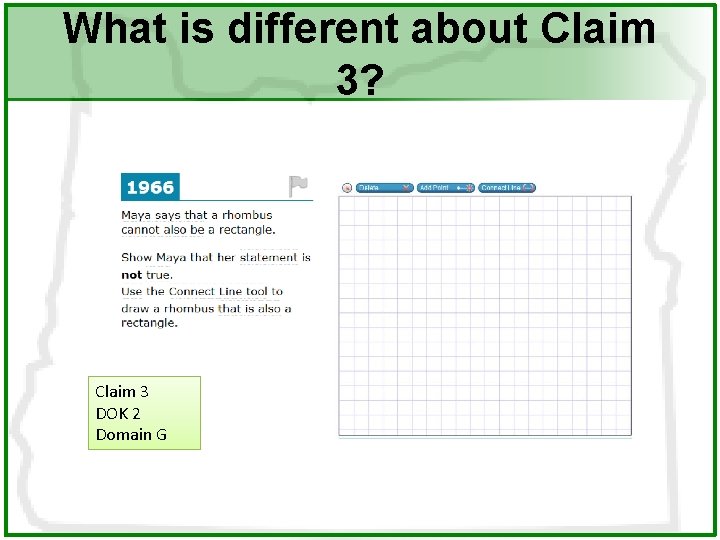
What is different about Claim 3? Claim 3 DOK 2 Domain G
What are the Claims? Claim 1: Concepts & Procedures Claim 2: Problem Solving Students can explain and apply mathematical concepts and interpret and carry out mathematical procedures with precision and fluency Students can solve a range of complex well posed problems in pure and applied mathematics, making productive use of knowledge and problem solving strategies Claim 3: Communicating Reasoning Students can clearly and precisely construct viable arguments to support their own reasoning and to critique the reasoning of others Claim 4: Modeling and Data Analysis Students can analyze complex, real world scenarios and can construct and use mathematical models to interpret and solve problems
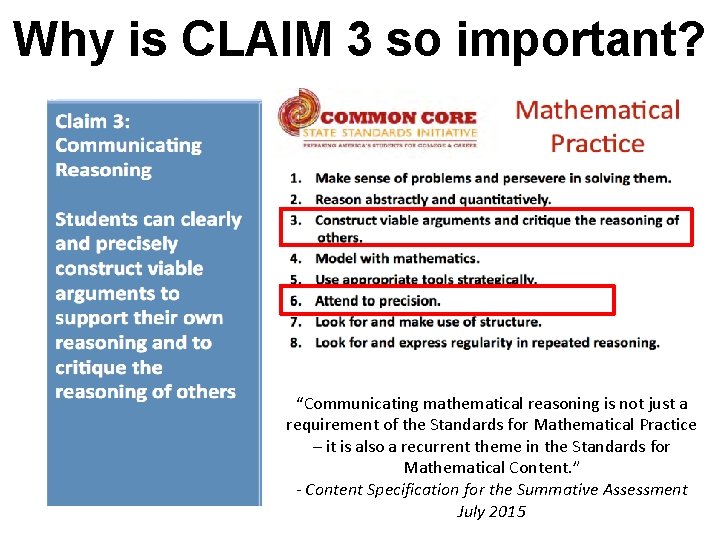
Why is CLAIM 3 so important? “Communicating mathematical reasoning is not just a requirement of the Standards for Mathematical Practice – it is also a recurrent theme in the Standards for Mathematical Content. ” - Content Specification for the Summative Assessment July 2015
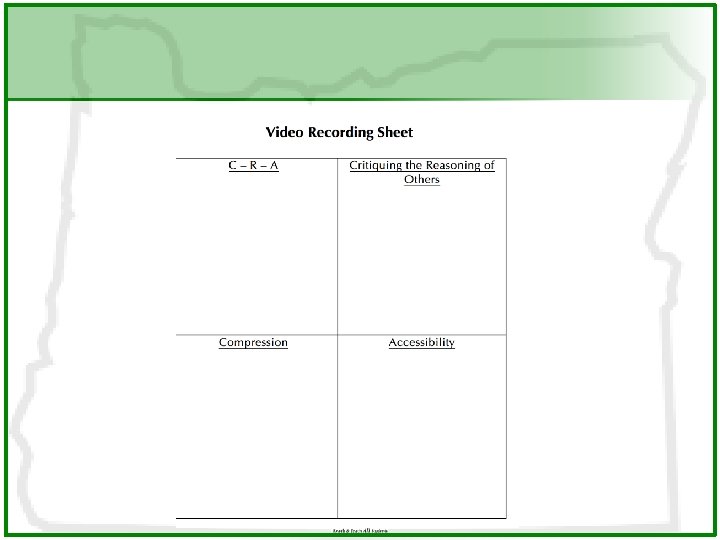
Accessibility • Sped • Ell • Struggling learners Read document (star and arrow) Accessibility in Claim 3 (Student vs. Educator)
Supporting Instructionally • How can we support students’ struggle? – Explicitly Connecting Representations – Compression/Generalizations
Barriers for Struggling Students
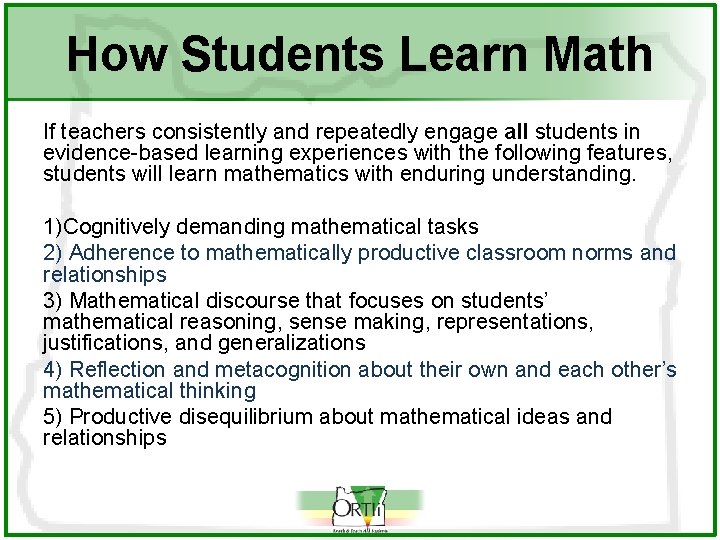
How Students Learn Math If teachers consistently and repeatedly engage all students in evidence-based learning experiences with the following features, students will learn mathematics with enduring understanding. 1)Cognitively demanding mathematical tasks 2) Adherence to mathematically productive classroom norms and relationships 3) Mathematical discourse that focuses on students’ mathematical reasoning, sense making, representations, justifications, and generalizations 4) Reflection and metacognition about their own and each other’s mathematical thinking 5) Productive disequilibrium about mathematical ideas and relationships
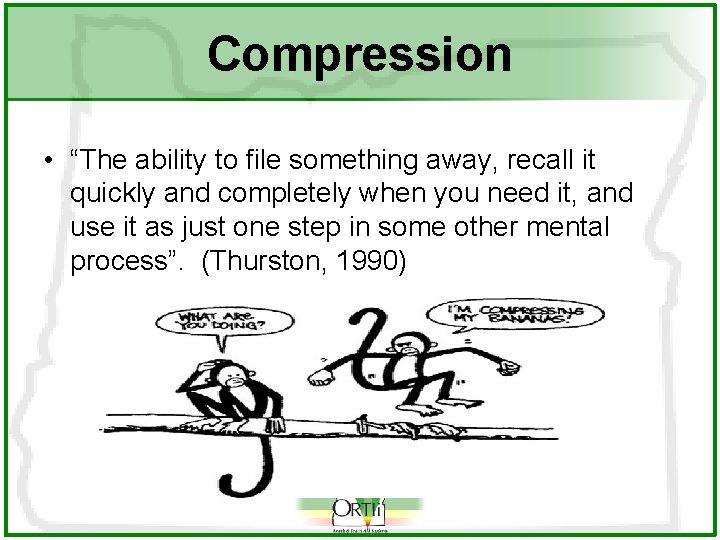
Compression • “The ability to file something away, recall it quickly and completely when you need it, and use it as just one step in some other mental process”. (Thurston, 1990)
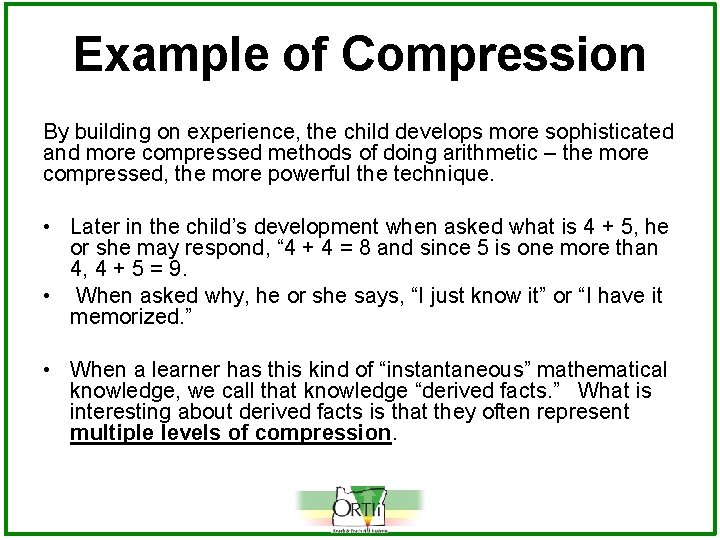
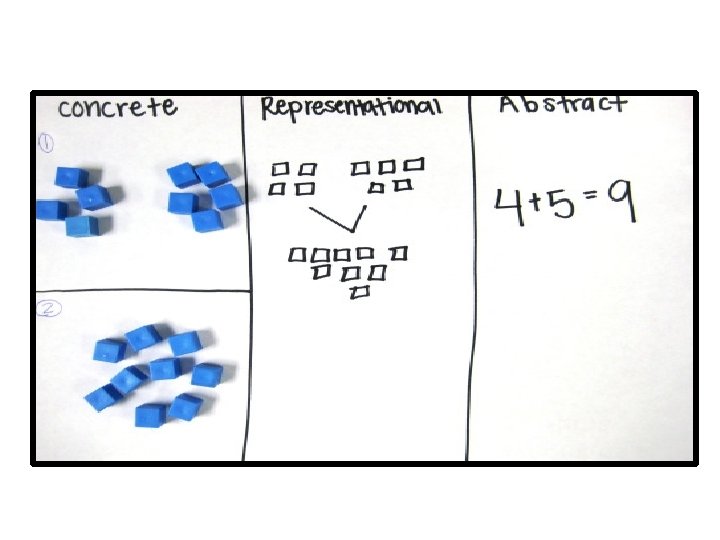
Example of Compression By building on experience, the child develops more sophisticated and more compressed methods of doing arithmetic – the more compressed, the more powerful the technique. • Later in the child’s development when asked what is 4 + 5, he or she may respond, “ 4 + 4 = 8 and since 5 is one more than 4, 4 + 5 = 9. • When asked why, he or she says, “I just know it” or “I have it memorized. ” • When a learner has this kind of “instantaneous” mathematical knowledge, we call that knowledge “derived facts. ” What is interesting about derived facts is that they often represent multiple levels of compression.
What does compression look like?
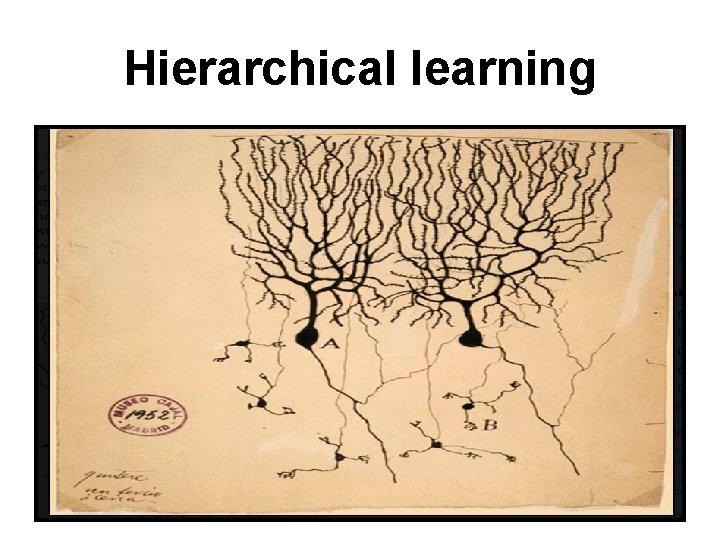
Hierarchical learning
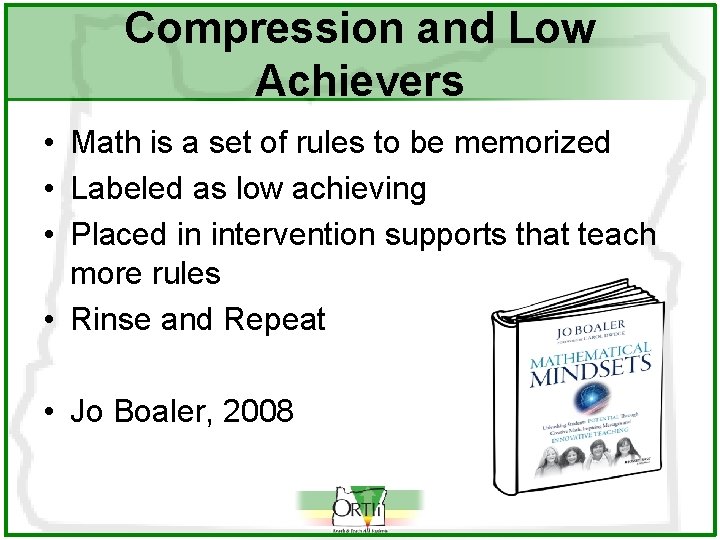
Compression and Low Achievers • Math is a set of rules to be memorized • Labeled as low achieving • Placed in intervention supports that teach more rules • Rinse and Repeat • Jo Boaler, 2008
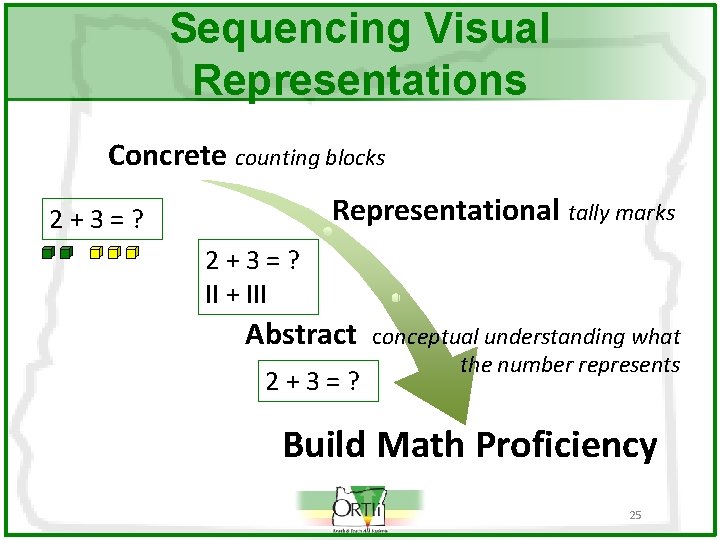
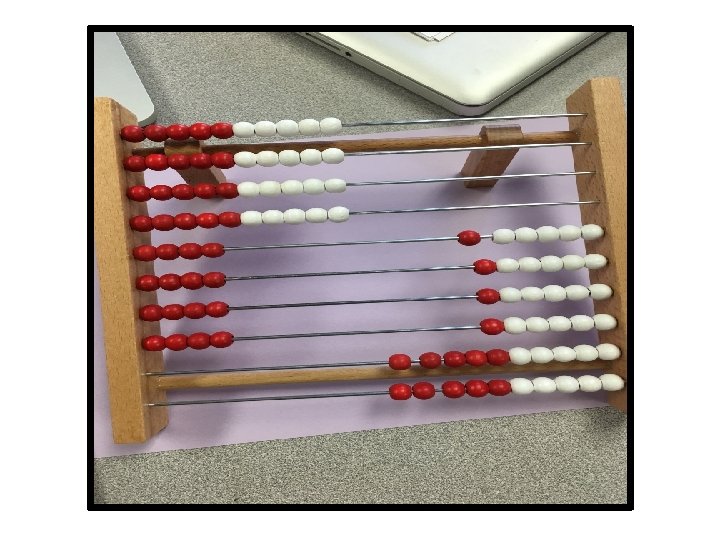
Sequencing Visual Representations Concrete counting blocks Representational tally marks 2+3=? II + III Abstract 2+3=? conceptual understanding what the number represents Build Math Proficiency 25
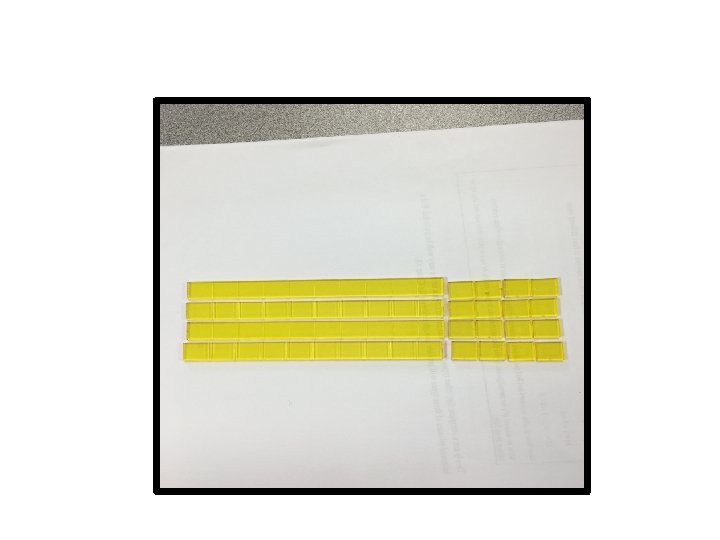
67 ÷ 4
Do the Math 56 ÷ 4
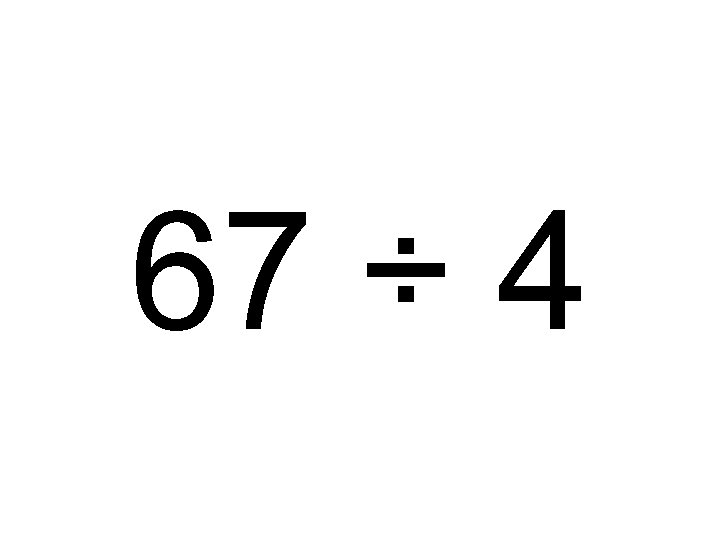
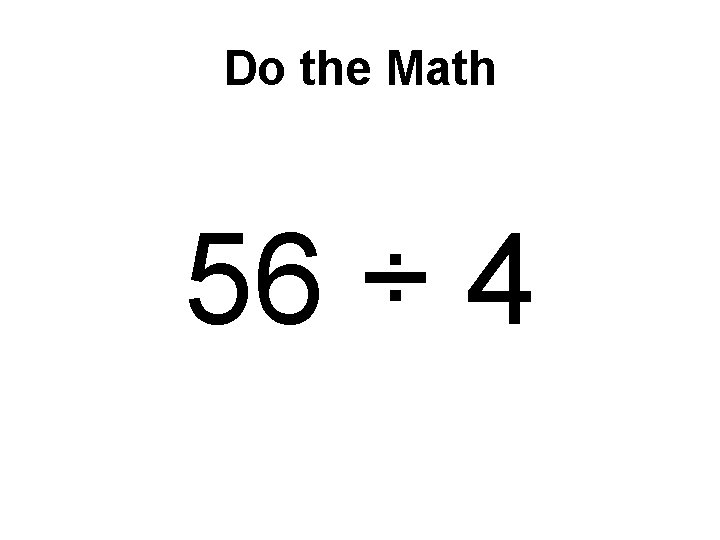
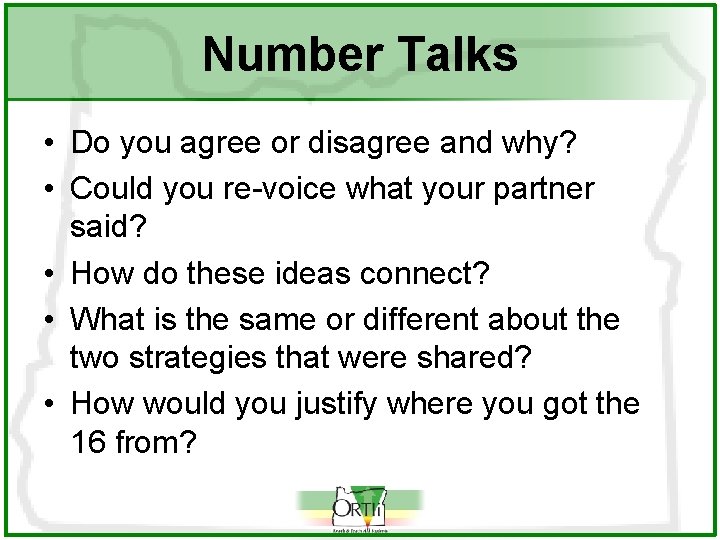
Number Talks • Do you agree or disagree and why? • Could you re-voice what your partner said? • How do these ideas connect? • What is the same or different about the two strategies that were shared? • How would you justify where you got the 16 from?
Go Back to the Math • • 5. NBT. 6 In Claim 1, 2, 3 Compression Leads to grade 6: Compute fluently with multi-digit numbers and find common factors and multiples.
It will take a community.
Action Plan • What supports do your teachers need in order to elevate claim 3 for ALL students? • How will you address professional learning needs to elevate instruction? Record your next steps on the Action Plan form and be prepared to share.