
VISION AND THE ELDERLY VISION IN THE ELDERLY


- Slides: 38
VISION AND THE ELDERLY
VISION IN THE ELDERLY • Major health problem • 1 out of 3 people over age 65 has a vision reducing eye disease –Macular degeneration, glaucoma, cataracts, and diabetes • Vision loss –Decreases your ability to perform activities of daily living
WHAT IS AN EYE DOCTOR? • Optometrist vs ophthalmologist –Differences in training and accreditation • Optometrist –“primary” vision provider –Not a medical doctor • Ophthalmologist –Medical doctor
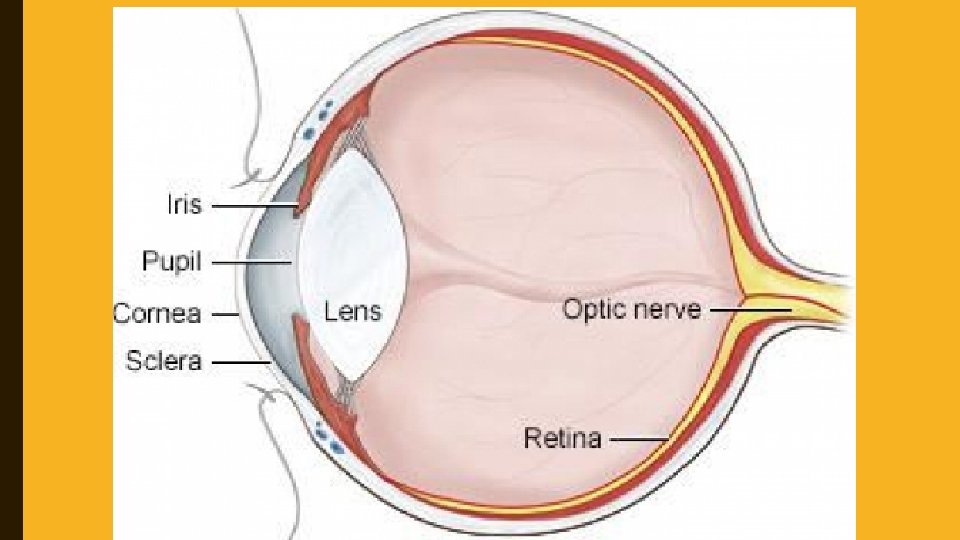
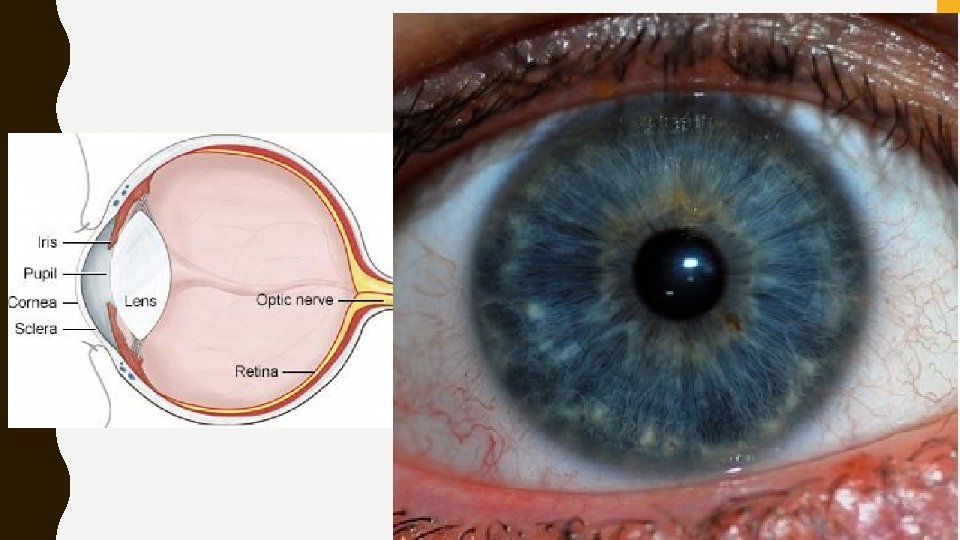
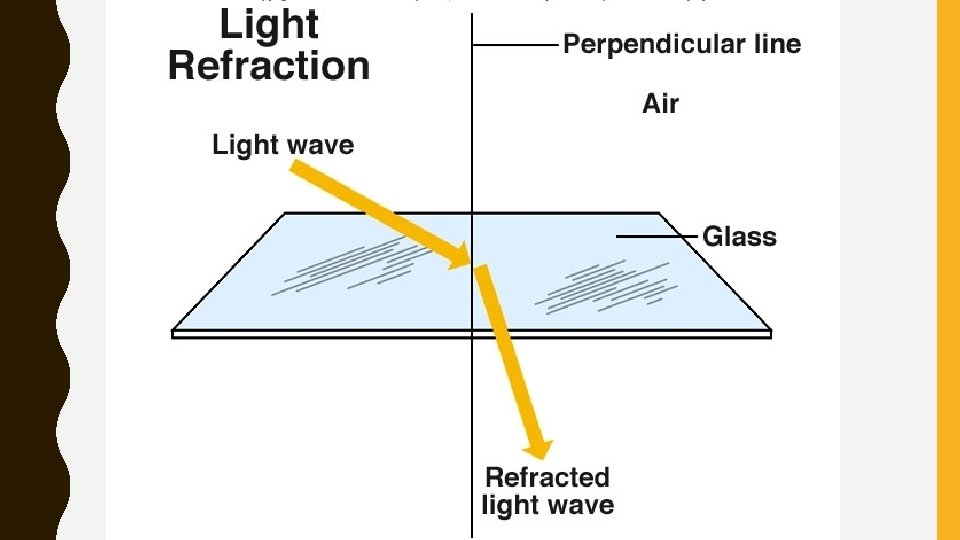
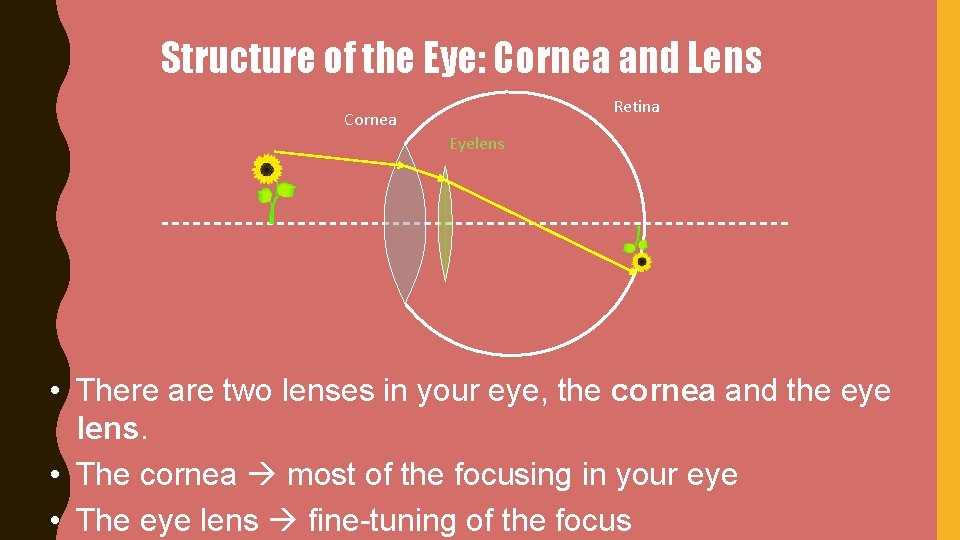
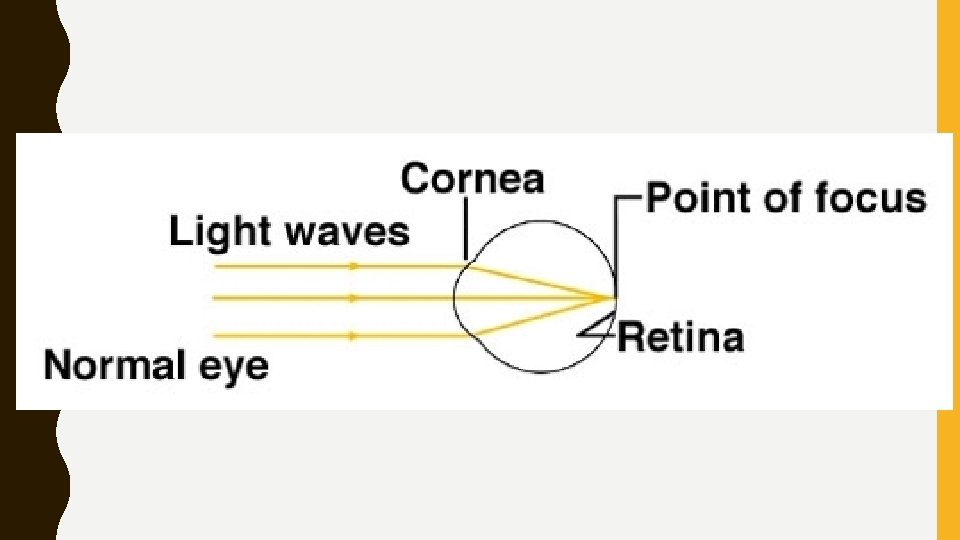
Structure of the Eye: Cornea and Lens Retina Cornea Eyelens • There are two lenses in your eye, the cornea and the eye lens. • The cornea most of the focusing in your eye • The eye lens fine-tuning of the focus
SYMPTOMS THAT MAY BE “SERIOUS” • Double vision • Vision loss that does not improve with “blinking” • Severe eye pain • Foreign body sensation • Floaters or “laser beams”
WHEN CHECKING FOR EYE FUNCTION… • Visual acuity –Can you see small and large letters? • Peripheral vision –Can you recognize an object entering the visual field from the side? • Ocular motility –Can you move your eyes in all directions?
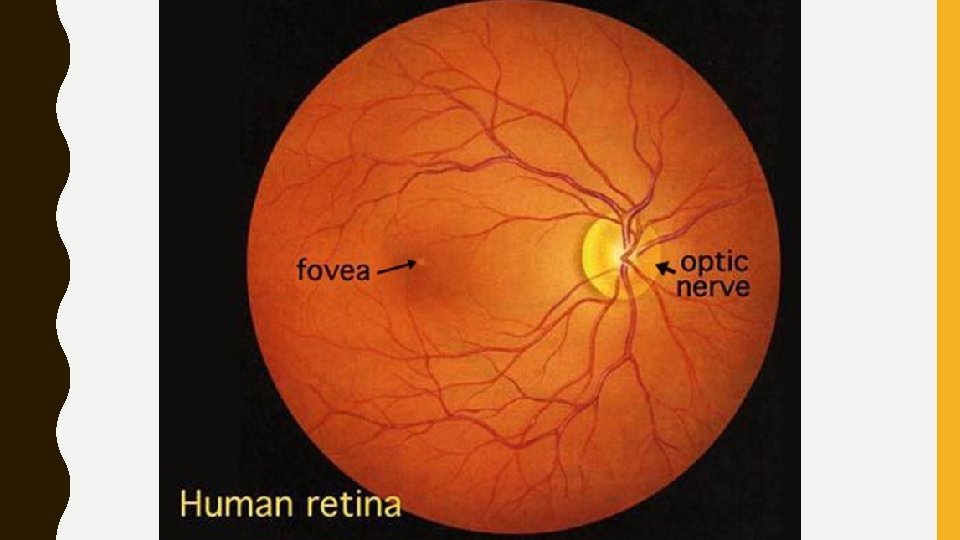
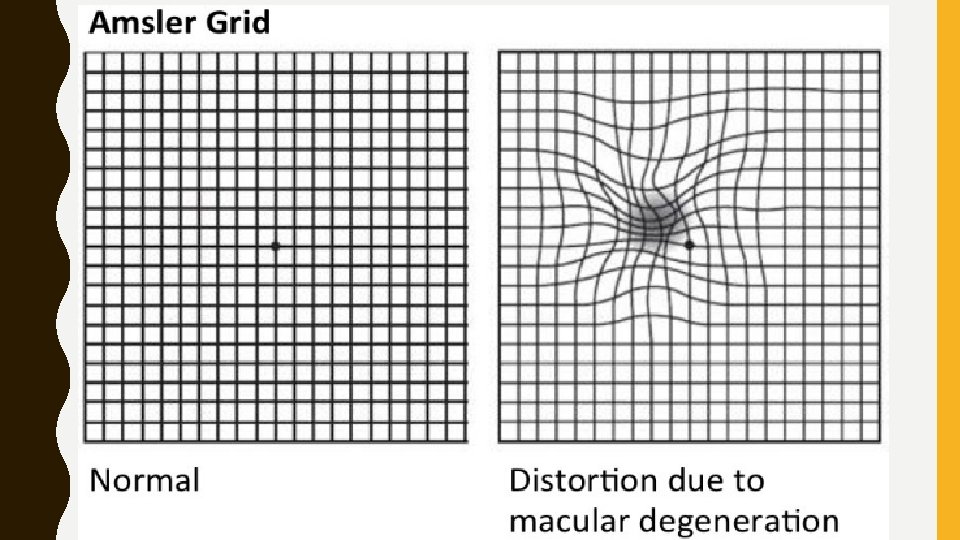
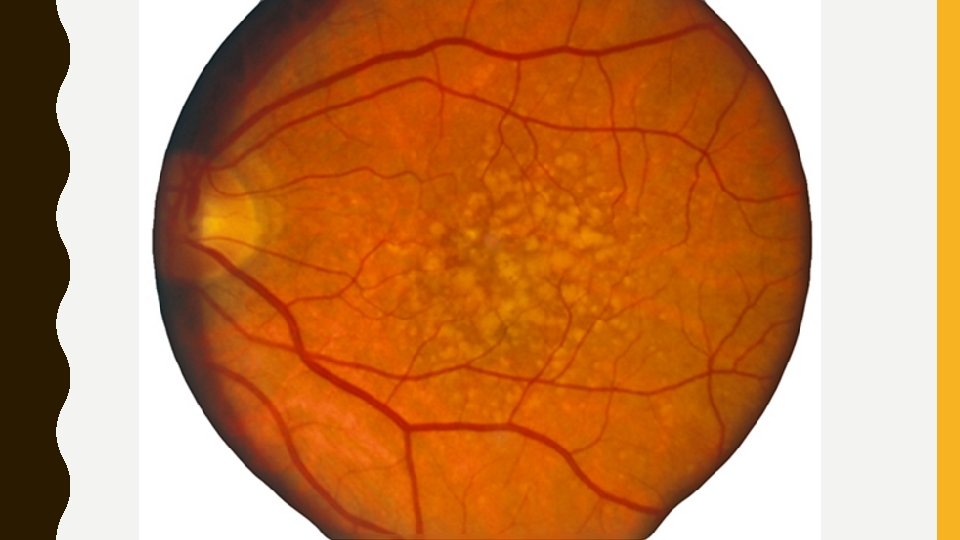
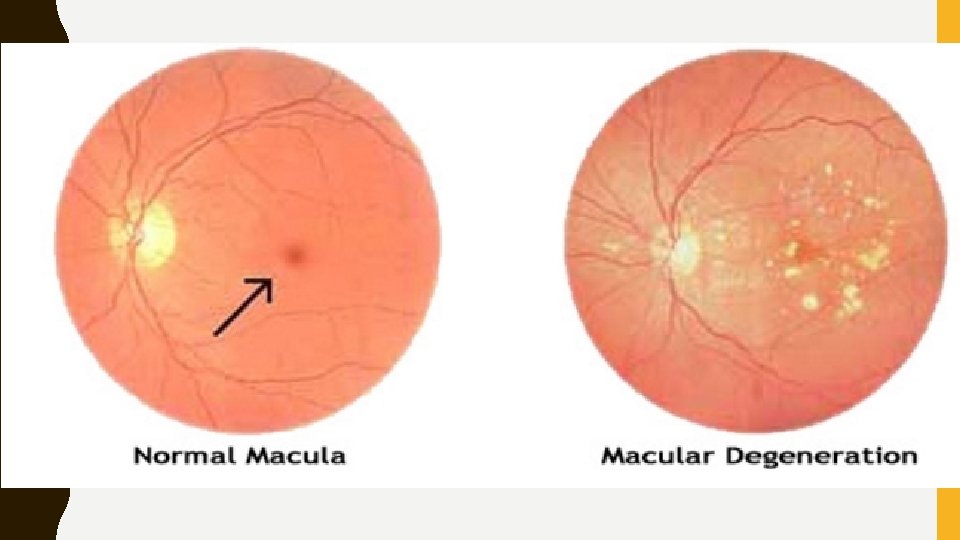
MACULAR DEGENERATION • Is the leading case of vision loss –More than glaucoma and cataracts combined • Caused by the deterioration of the central part of the retina –Responsible for focusing central vision –Controls our ability to read, drive, recognize faces, and see things in fine detail • If you compare your eye to a camera –Macular is the most sensitive part of the “film”
HOW DOES IT PROGRESS? • Early stages –No symptoms • Later –Blurry vision –Wavy vision • Late stage –Loss of central vision –Can lead to blindness
RISK FACTORS FOR MACULAR DEGENERATION • Advancing Age • Family history • Hypertension • Smoking
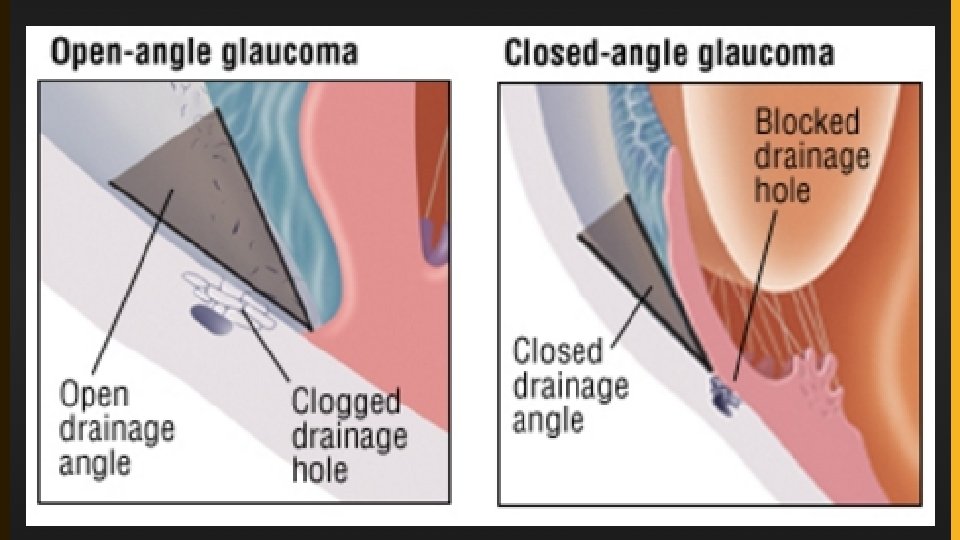
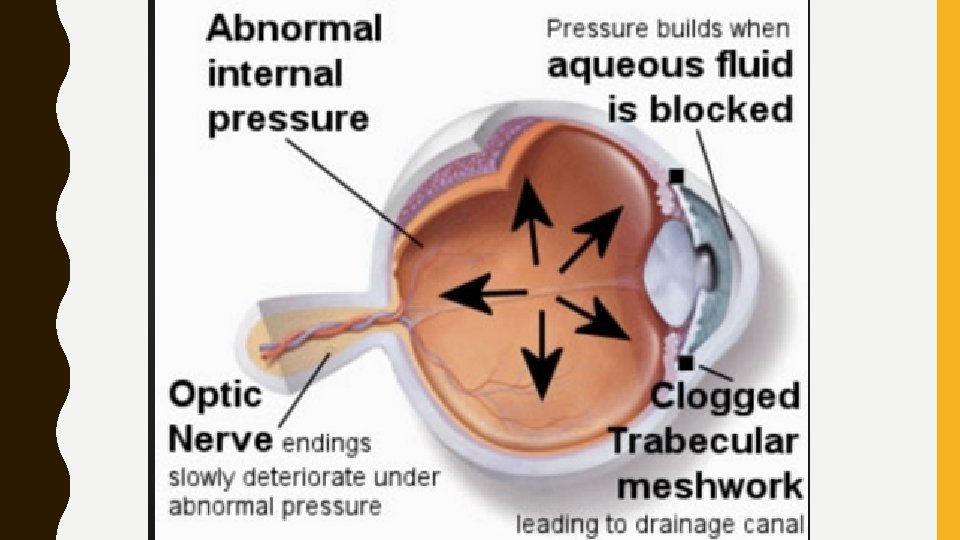
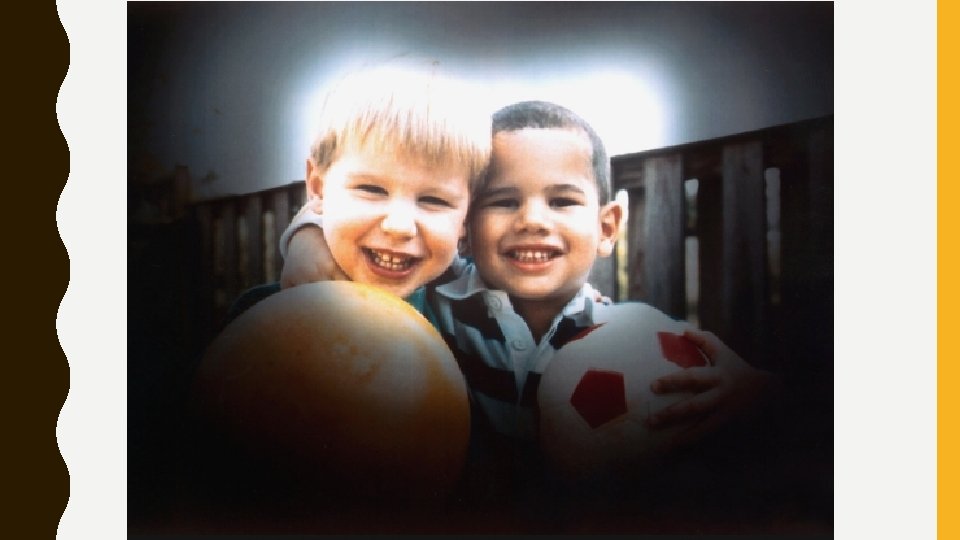
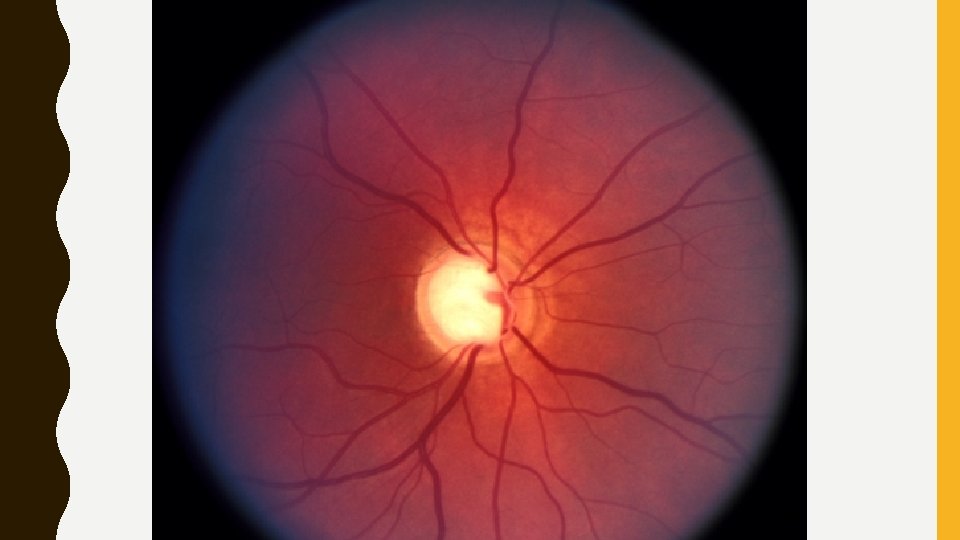
GLAUCOMA • High pressure in the eye • Leads to damage to the optic nerve • Can cause loss of vision / blindness • Occurs very slowly • Most common cause of blindness among African Americans
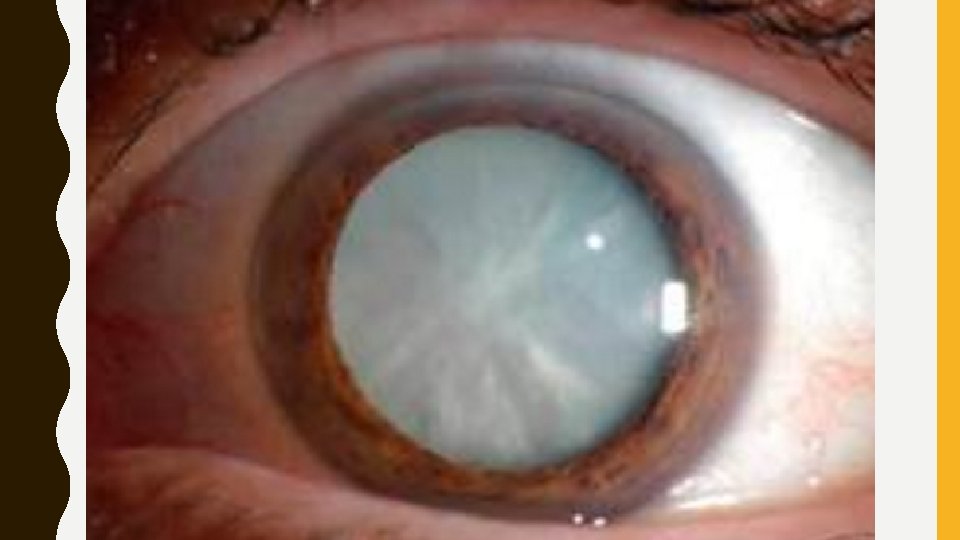
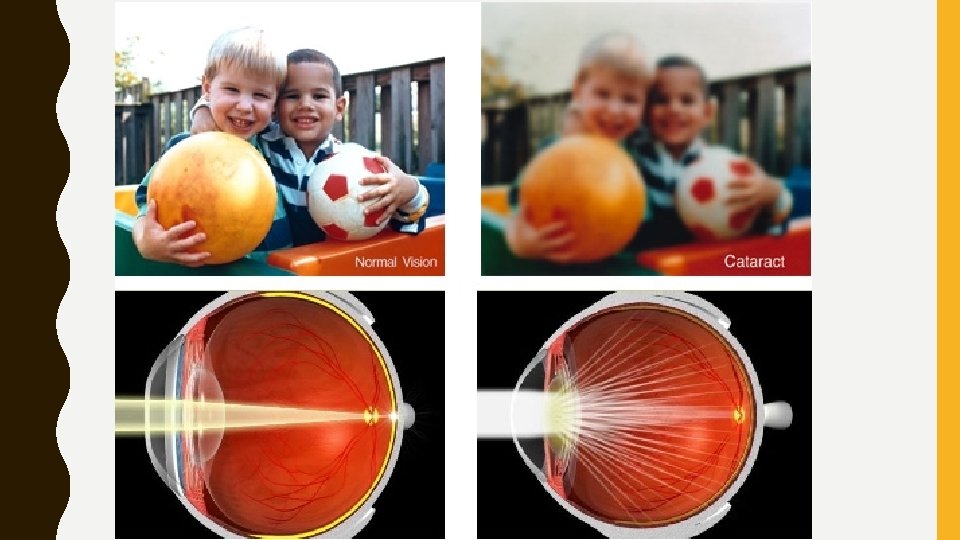
CATARACTS • Most common cause of blindness worldwide • Clouding • Lens should normally be clear to see clear and sharp images • Cataracts foggy window; dirty windshield • Can develop slowly –Will affect your ability to read, drive a car etc
RISK FACTORS • Age • Smoking – doubles your risk • Sun light • Steroids
CATARACT SURGERY • Very common surgery –Most common surgical procedure covered by medicare • Most people have visual improvement • Most people have improved quality of life • Complications are very rare –Glaucoma, bleeding, infection etc
DIABETIC RETINOPATHY • Leading cause of new blindness in middle aged Americans • Risk increases with increasing duration of diabetes
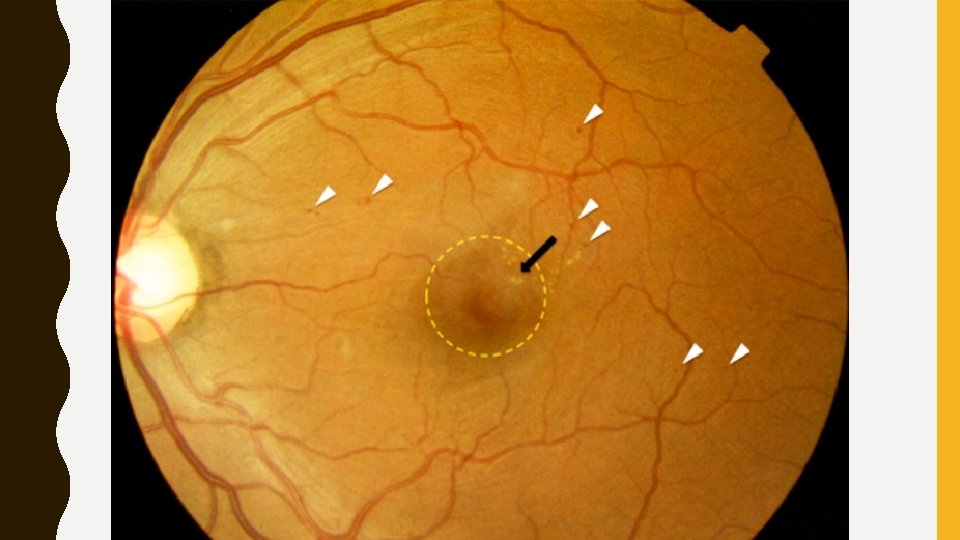
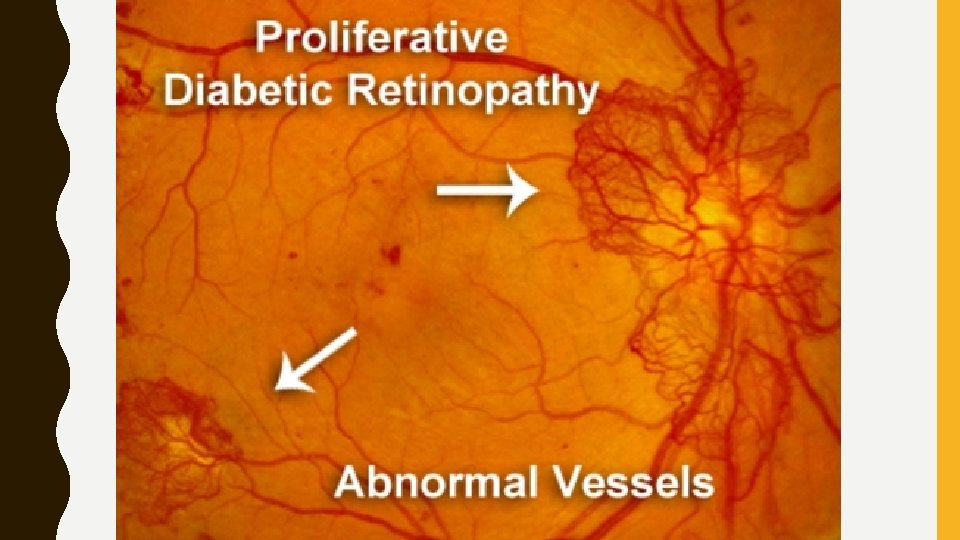
TYPES OF DIABETIC RETINOPATHY • Non proliferative –Abnormalities of the retinal circulation –Leads to macular edema (swelling) • Proliferative –Proliferation of newly formed blood vessels –Can lead to hemorrhage, retinal
SOME TIPS FOR BETTER VISION • Eat for good vision –Green leafy vegetables –Fish (salmon, tuna) • Quit smoking • Wear sunglasses • Look away from the TV and computer screen