
Vision 4 Color Vision Dr Salah Elmalik Objectives
Vision – 4 Color Vision Dr. Salah Elmalik

Objectives Define color vision Identify and describe the mechanism of color vision and the three types of cones, including the range of spectral sensitivity and color blindness Identify color vision theory Describe the items needed for any color perception Compare different types of color blindness
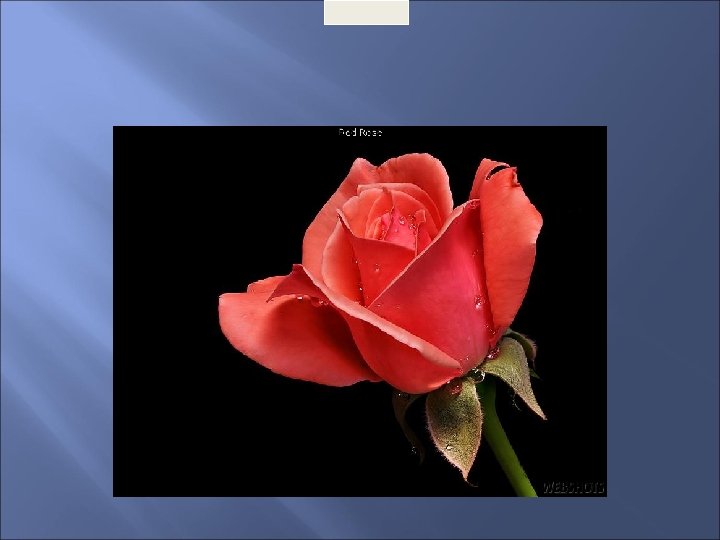
Color Vision It the ability to discriminate between different colors. 1 - there are 3 primary colors( blue- red- green) sensed by cones in fovea & appreciated within photopic vision. 2 - sensation of extraspectral colors as white, yellow, orange, purple, can be produced by mixing properties of the blue &red & green in different combinations. 3 - black means absence of light ( not darkness because in dark we do not see black only)
Color (Photopic) Vision ‘Young - Helmholtz theory’ ‘The Trichromatic theory’
Color vision theory : _( Young. Helmholtz theory ) 1 - we have 3 kinds of cones each has a specific photopigment (iodopsin)& is sensitive to one of the 3 primary colors a- Blue cone system: - has S pigment ( blue sensation pigment) which respond to short wave length ( 440 nm senses the blue color) b- Green cone system: - has M pigment ( green sensation pigment) which respond to middle wave length ( 535 nm senses the green color & less to yellow) & absorb light at the green portion.
Red cone system: - has L pigment ( red sensation pigment) which respond to large wave length at or > 535 nm so senses the red & yellow color & absorb light at the red portion.
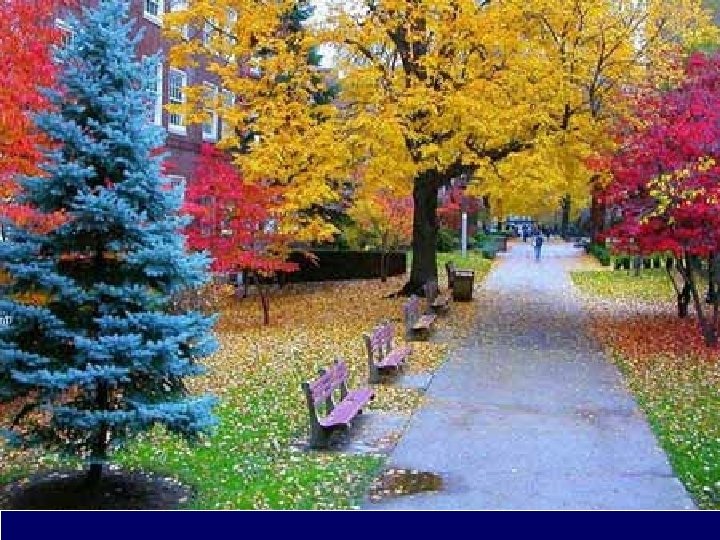
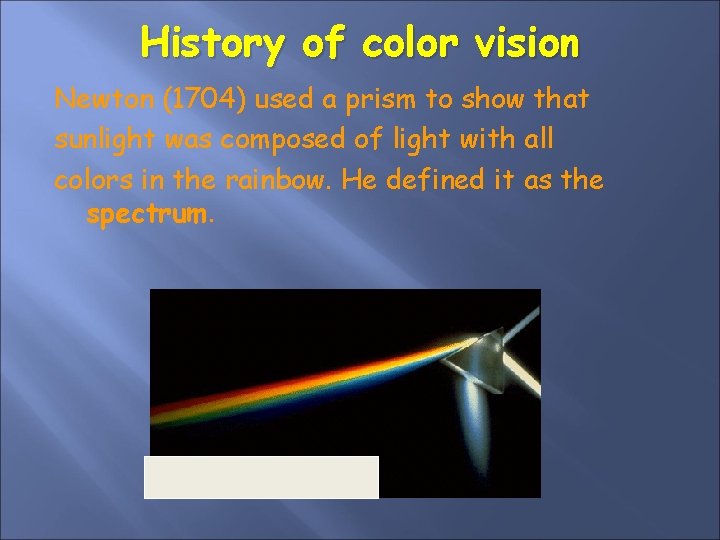
History of color vision Newton (1704) used a prism to show that sunlight was composed of light with all colors in the rainbow. He defined it as the spectrum.

Mixing colors
Photopic vision (CONES) Helmholtz. . 1860: The three primary colors are perceived by three photoreceptor pigments (with broad absorption curves) White light is produced by mixing three colours
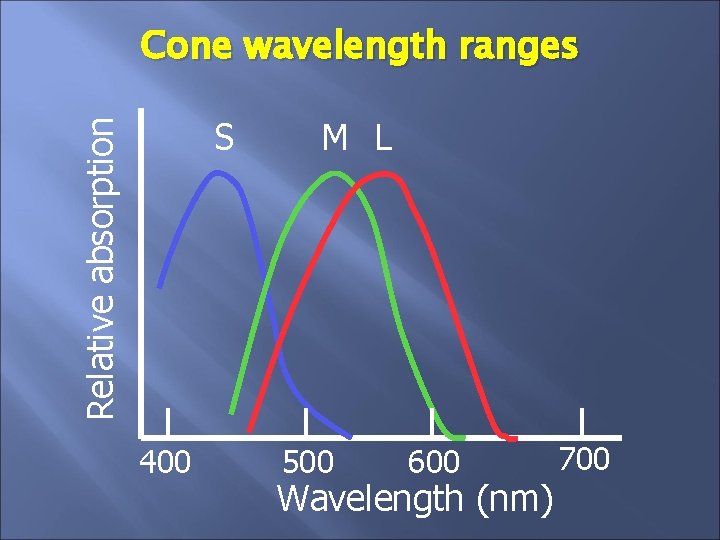
Cone wavelength ranges Relative absorption S 400 M L 500 600 Wavelength (nm) 700
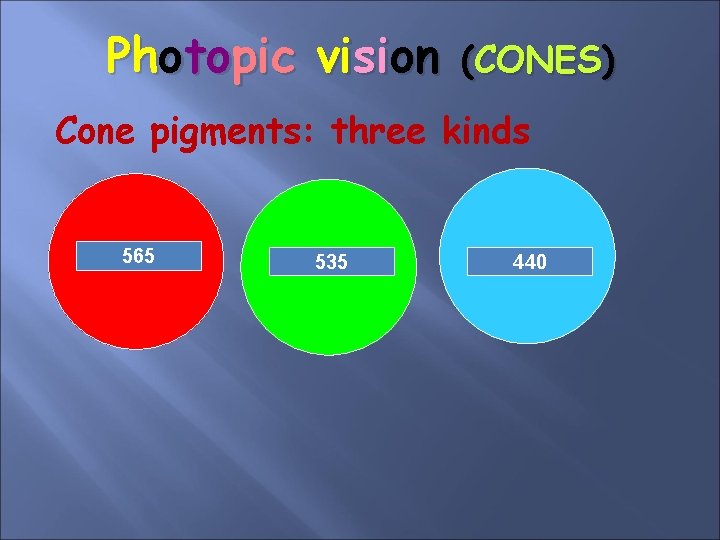
Photopic vision (CONES) Cone pigments: three kinds 565 535 440
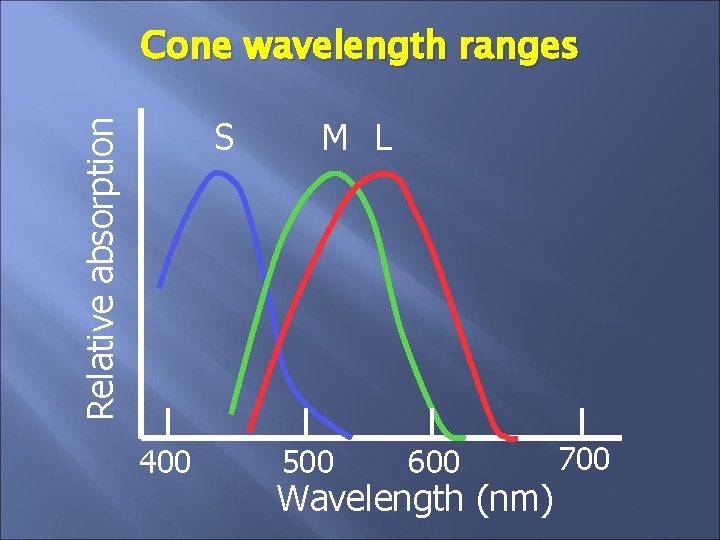
Cone wavelength ranges Relative absorption S 400 M L 500 600 Wavelength (nm) 700
Photopic vision Sensation of any color determined by: a-wavelength of light b-amount of light absorbed by each type of cones c-frequency of impulses from each cone system to ganglion cells which is determined by wave length of light.
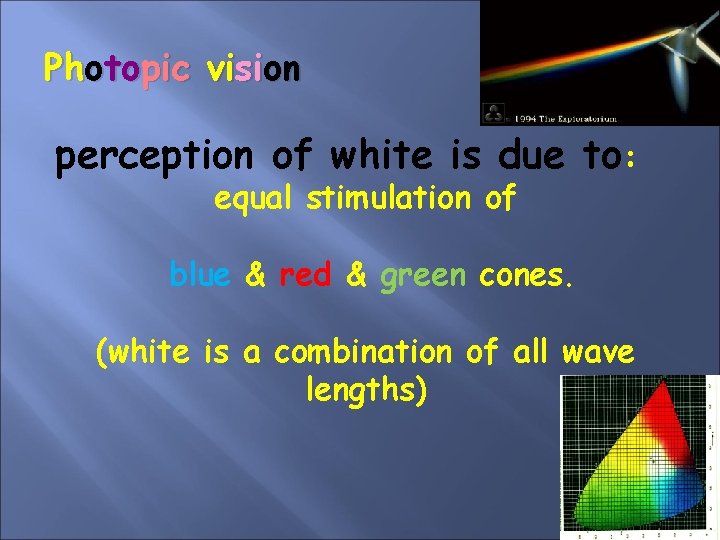
Photopic vision perception of white is due to: equal stimulation of blue & red & green cones. (white is a combination of all wave lengths)
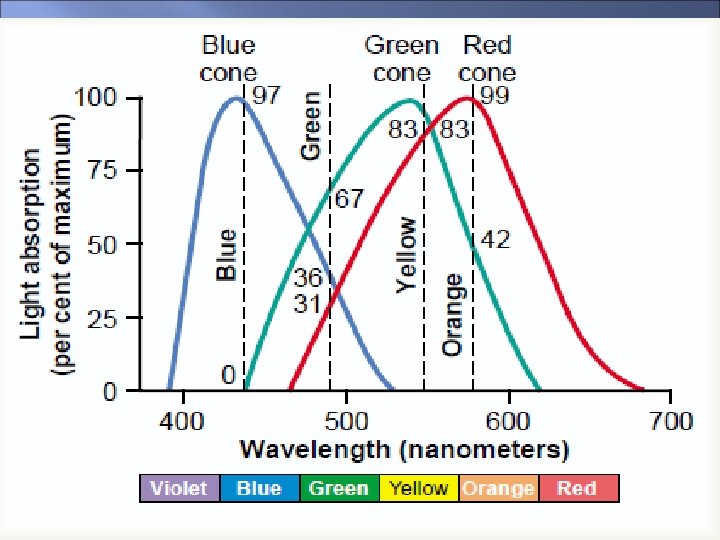
Color vision is coded by : - different responses in ganglion cells that depends upon the wave length of stimulus which determine frequency of impulses in ganglion cells the color perception in the brain depends on the amount of activity in each of the 3 cone systems as mentioned above.
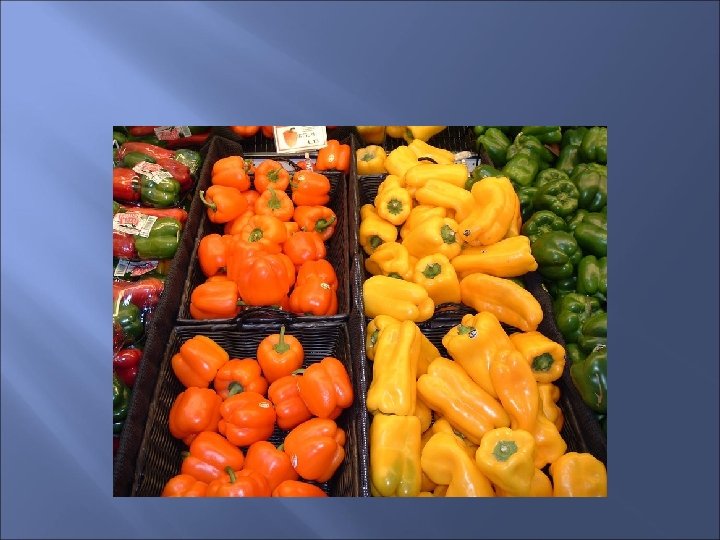
Color Perception of orange is due to stimulation of 99% of red cones & 42% of green cones & 0% of blue cones( so ratio is 99: 42: 0) For perception of yellow the ratio is 83: 0. Perception of blue is due to stimulation of 0% of red cones & 0% of green cones & 97% of blue cones( so ratio is 0: 0: 97 )
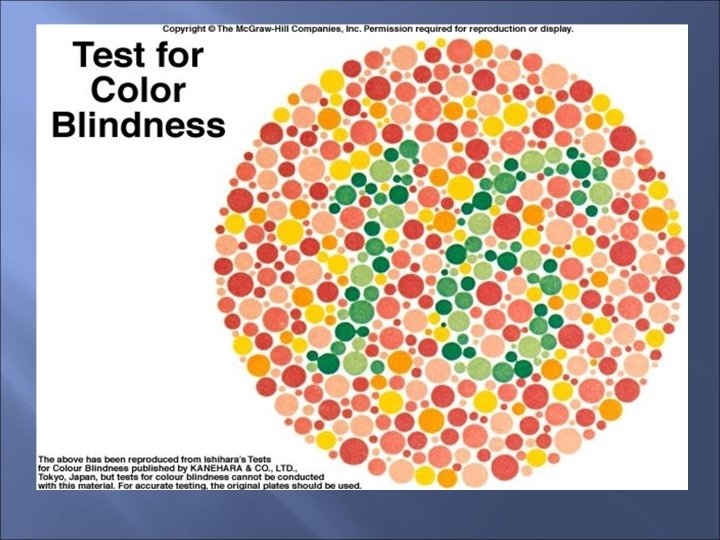

Ishihara Charts
Color Blindness Weakness or total blindness in detecting a primary color: Definitions: 1. Trichromats: see the 3 1 ry colors 2. Dichromats: blind to one 1 ry color 3. Monochromats: have only one color pigment
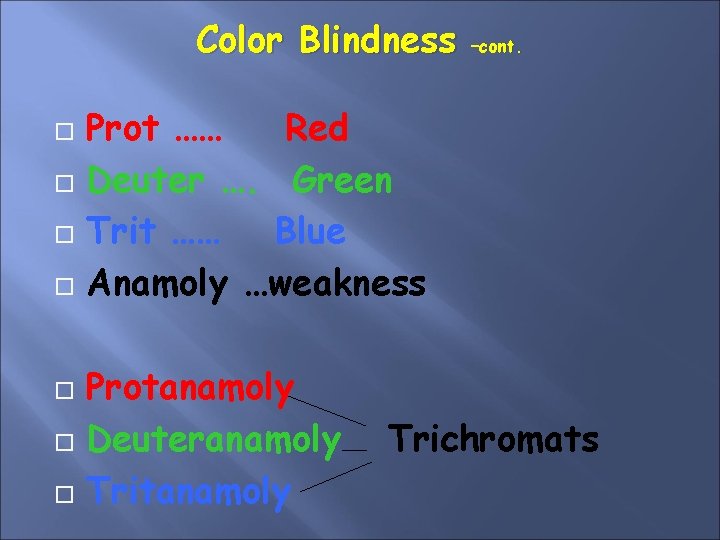
Color Blindness –cont. Prot …… Red Deuter …. Green Trit …… Blue Anamoly …weakness Protanamoly Deuteranamoly Tritanamoly Trichromats
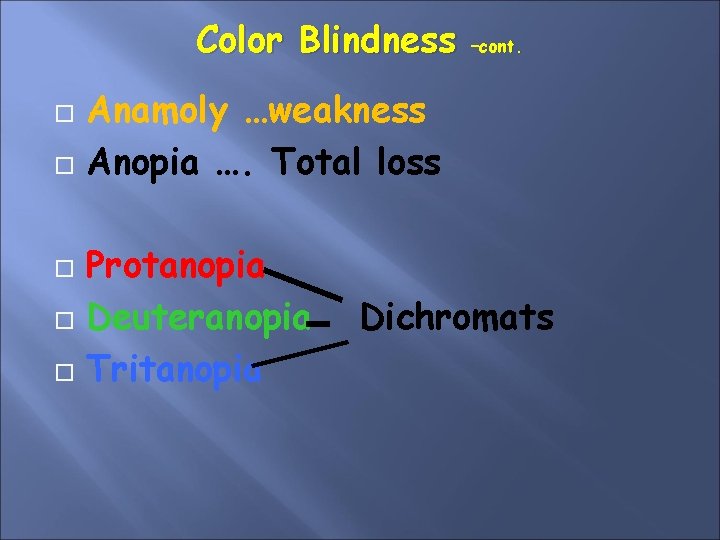
Color Blindness –cont. Anamoly …weakness Anopia …. Total loss Protanopia Deuteranopia Tritanopia Dichromats
COLOR BLINDNESS Red – Green Blindness: Green & red cones see different colors between wave length 525 -675 nm & distinguish them. If either of these cones are absent, the person can not distinguish 4 colors ( red – green- yellow- orange)& he can not distinguish red from green (primary colors) so called ( red – green blindness).
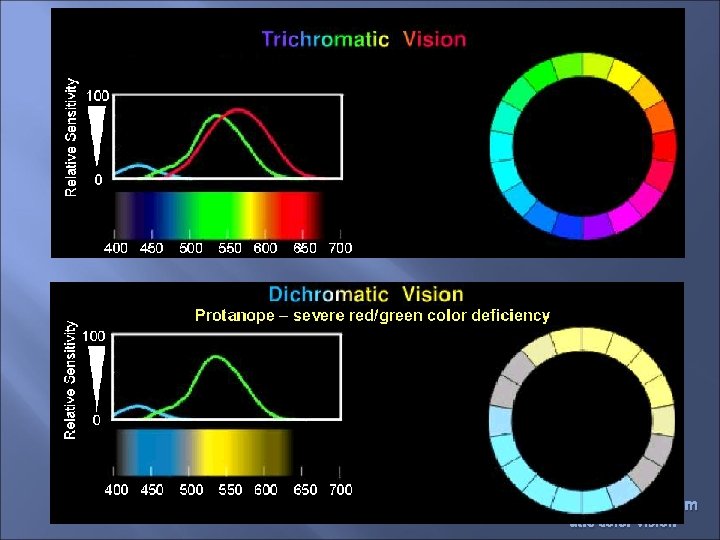
Trichromatic/dichrom atic color vision
Color Blindness –cont. It is x- linked disease transmitted from females to their male sons, never occure in females as they have 2 x chromosomes – Males have one x & one y chromosome so if this one x chromosome miss the gene for color vision , he will get red-green color blindness(their gene is on x chromosome). – Females show the disease only if both x chromosomes lack the gene – Females from color blind fathers are carriers transmit the disease to ½ of their sons.

- Slides: 29