
VISIBLE LIGHT COMMUNICATION WHAT IS VLC Visible Light
VISIBLE LIGHT COMMUNICATION

WHAT IS VLC • Visible Light Communication device capable of sending text, pictures, videos, etc over a binary light channel. • We are currently using an FTDI chip to interface between the USB and receiver/transmitter. • According the FTDI specs, the device is capable of Rx and Tx rates up to 3 Mega. Baud. Assuming we have LEDs and Photodiodes (transmitters and receivers) capable of this frequency response
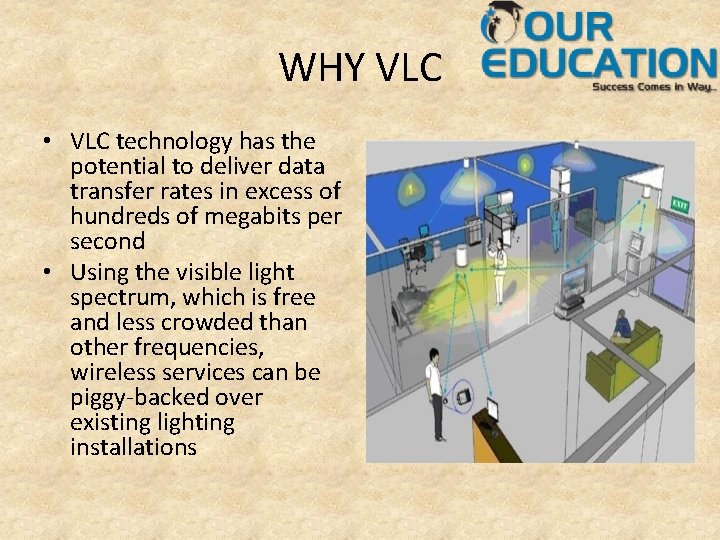
WHY VLC • VLC technology has the potential to deliver data transfer rates in excess of hundreds of megabits per second • Using the visible light spectrum, which is free and less crowded than other frequencies, wireless services can be piggy-backed over existing lighting installations
WHERE IT CAN BE USED • Light radiation neither constitutes nor suffers from electromagnetic interference (EMI) making VLC a very attractive technology in places/environments where electromagnetic interference (EMI) is an issue, such as in hospitals and in aircraft • In addition, where security of local communication is important eg defence and fanance applications, D-Light technology offers a secure medium for communication in an office/building environment.
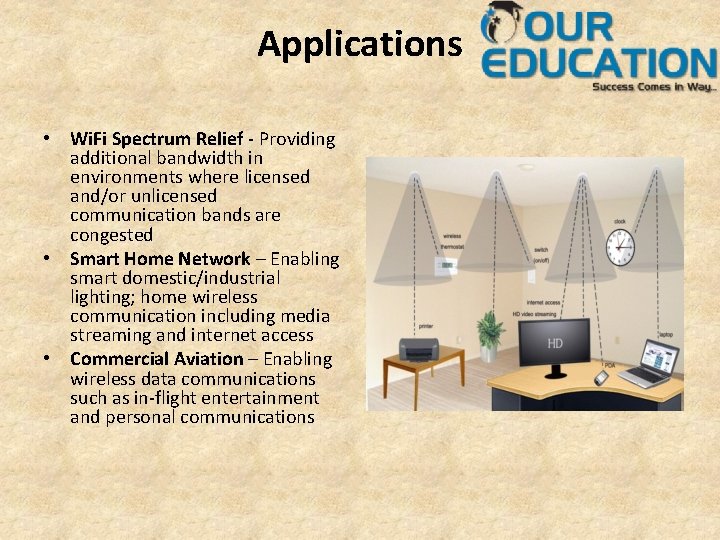
Applications • Wi. Fi Spectrum Relief - Providing additional bandwidth in environments where licensed and/or unlicensed communication bands are congested • Smart Home Network – Enabling smart domestic/industrial lighting; home wireless communication including media streaming and internet access • Commercial Aviation – Enabling wireless data communications such as in-flight entertainment and personal communications
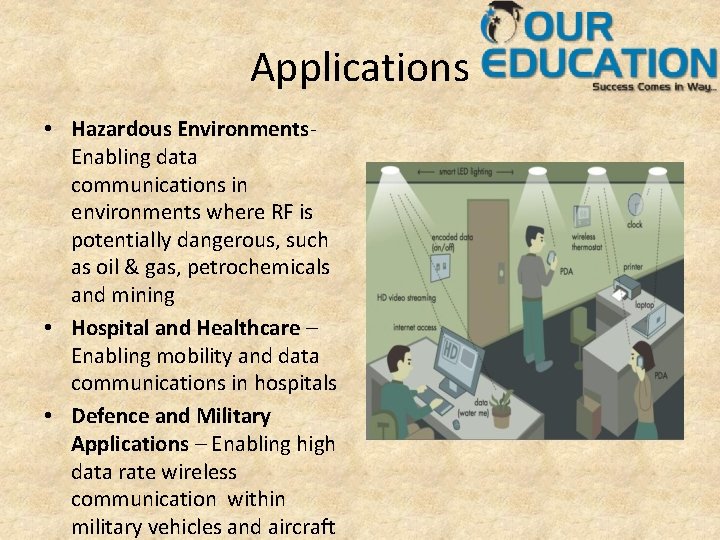
Applications • Hazardous Environments. Enabling data communications in environments where RF is potentially dangerous, such as oil & gas, petrochemicals and mining • Hospital and Healthcare – Enabling mobility and data communications in hospitals • Defence and Military Applications – Enabling high data rate wireless communication within military vehicles and aircraft
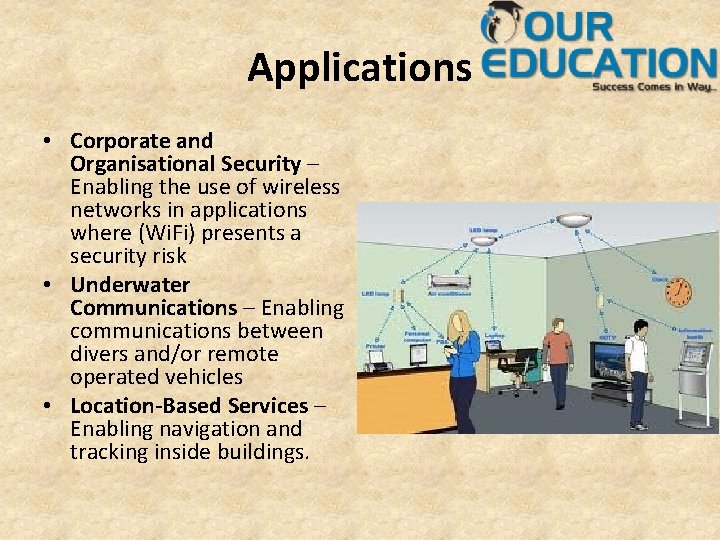
Applications • Corporate and Organisational Security – Enabling the use of wireless networks in applications where (Wi. Fi) presents a security risk • Underwater Communications – Enabling communications between divers and/or remote operated vehicles • Location-Based Services – Enabling navigation and tracking inside buildings.
EFFORTS TAKEN BY • Prof Harald Haas leads the EPSRC-funded DLIGHT project at the School of Electronics and Engineering at the University of Edinburgh. • The two year D-Light project is midway through its funding. The main commercial goal is the formation of a University of Edinburgh spinout company, hopefully starting in 2012.

THANK YOU ….
- Slides: 9