
Visible Light based Activity Sensing using Ceiling Photosensors
Visible Light based Activity Sensing using Ceiling Photosensors Mohamed Ibrahim, Viet Nguyen, Siddharth Rupavatharam, Minitha Jawahar, Marco Gruteser, Richard Howard WINLAB, Rutgers University

If Home Knows What We Are Doing? Smarter Energy Consumption

Activity Sensing using Wearable Devices Continuously wear or carry these devices Usually charge them (Battery issue)
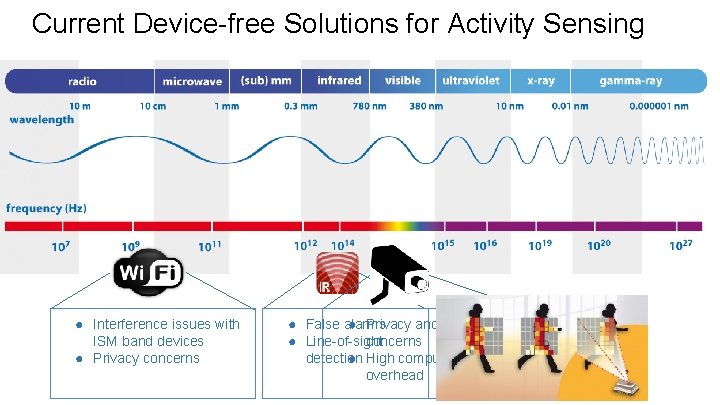
Current Device-free Solutions for Activity Sensing ● Interference issues with ISM band devices ● Privacy concerns ● False alarms ● Privacy and security ● Line-of-sight concerns detection ● High computational overhead
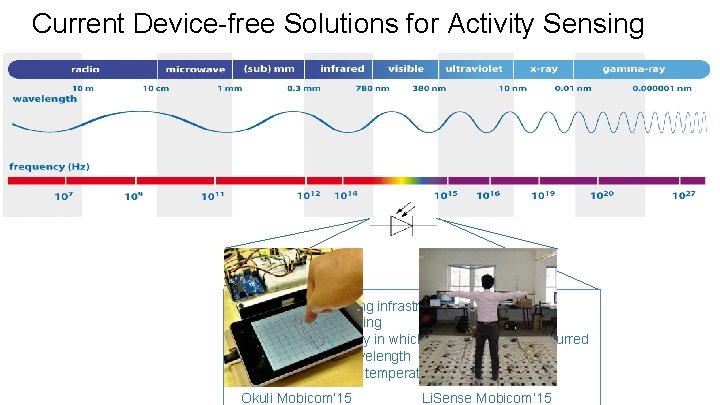
Current Device-free Solutions for Activity Sensing ● ● ● Leverage lighting infrastructure Privacy preserving Easier to identify in which room the activity occurred Nanometer wavelength Not affected by temperature changes Okuli Mobicom’ 15 Li. Sense Mobicom’ 15
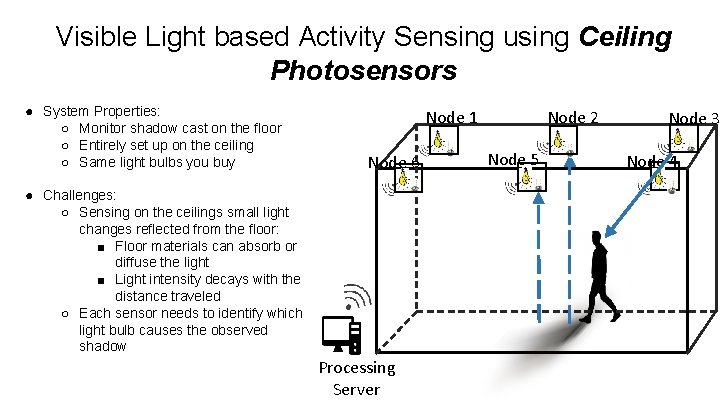
Visible Light based Activity Sensing using Ceiling Photosensors ● System Properties: ○ Monitor shadow cast on the floor ○ Entirely set up on the ceiling ○ Same light bulbs you buy Node 1 Node 6 ● Challenges: ○ Sensing on the ceilings small light changes reflected from the floor: ■ Floor materials can absorb or diffuse the light ■ Light intensity decays with the distance traveled ○ Each sensor needs to identify which light bulb causes the observed shadow Processing Server Node 2 Node 5 Node 3 Node 4

Visible Light based Activity Sensing using Ceiling Photosensors ● System Properties: ○ Monitor shadow cast on the floor ○ Entirely set up on the ceiling ○ Same light bulbs you buy Node 1 Node 6 ● Challenges: ○ Sensing on the ceilings small light changes reflected from the floor: ■ Floor materials can absorb or diffuse the light ■ Light intensity decays with the distance traveled ○ Each sensor needs to identify which light bulb causes the observed shadow Processing Server Node 2 Node 5 Node 3 Node 4
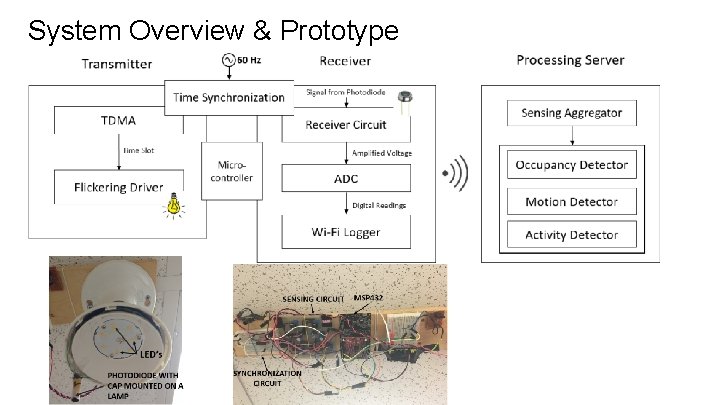
System Overview & Prototype
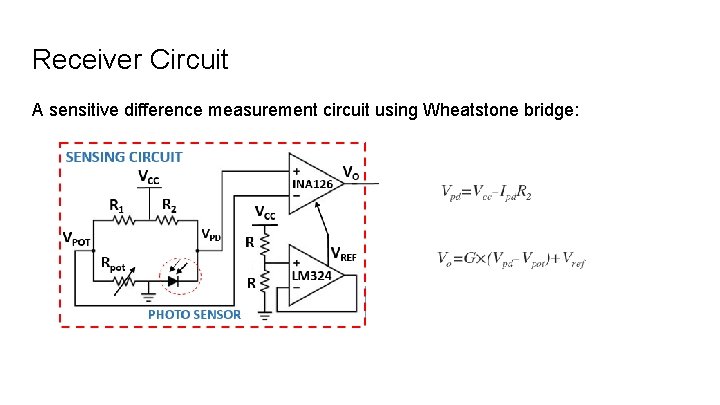
Receiver Circuit A sensitive difference measurement circuit using Wheatstone bridge:
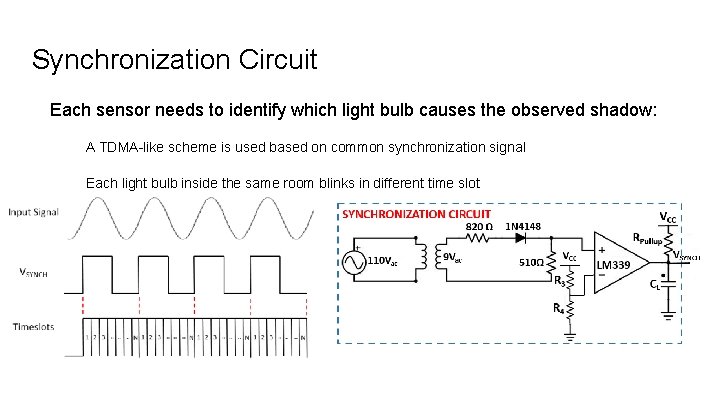
Synchronization Circuit Each sensor needs to identify which light bulb causes the observed shadow: A TDMA-like scheme is used based on common synchronization signal Each light bulb inside the same room blinks in different time slot
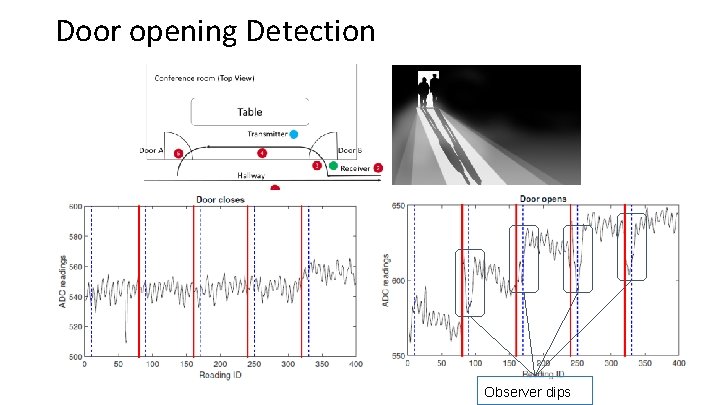
Door opening Detection Observer dips
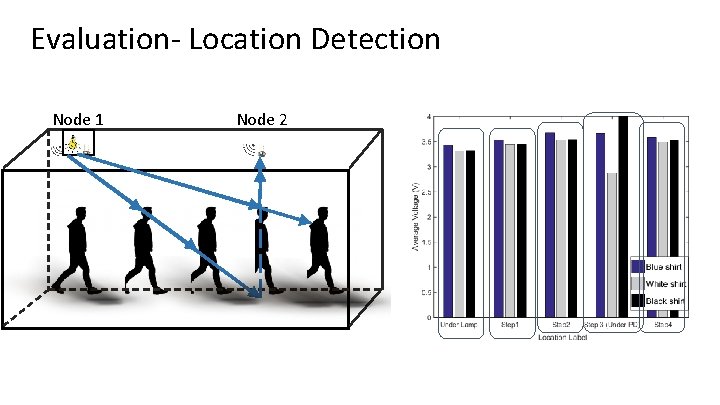
Evaluation- Location Detection Node 1 Node 2
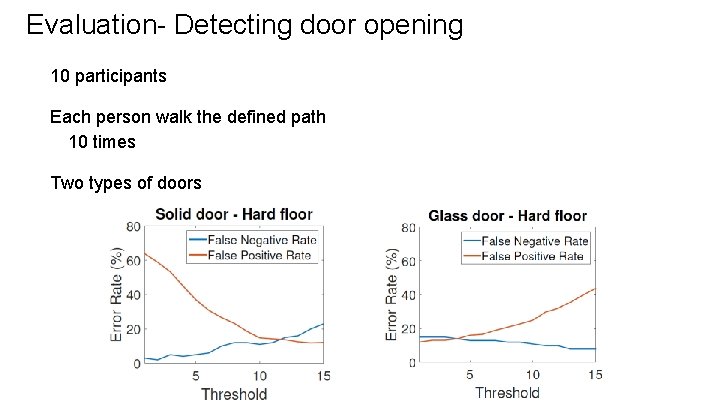
Evaluation- Detecting door opening 10 participants Each person walk the defined path 10 times Two types of doors
Conclusion and Future Work Showed promising results using our prototype for location and doors opening detection Lessons to learn High sensitive sensing circuit is required for sensing from ceilings More concurrent nodes requires accurate synchronization scheme Increasing sensitivity resolution by adding more sensors per node

Thank you!
- Slides: 15