
Viruses What human diseases can you name that
- Slides: 16
Viruses What human diseases can you name that are caused by viruses?
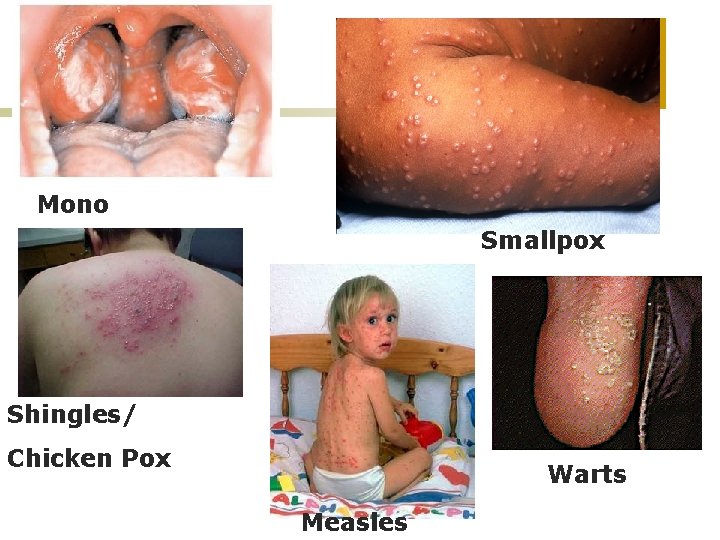
Did you name: n n n n The flu – INFLUENZA! Swine flu! HIV/AIDS? Smallpox? Chicken pox/shingles? Common Colds? Hepatitis? Measles? Warts?
Mono Smallpox Shingles/ Chicken Pox Warts Measles
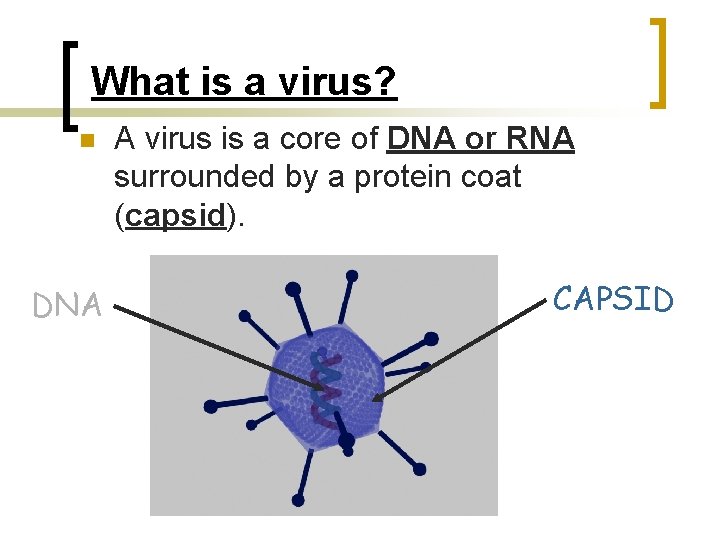
What is a virus? n DNA A virus is a core of DNA or RNA surrounded by a protein coat (capsid). CAPSID
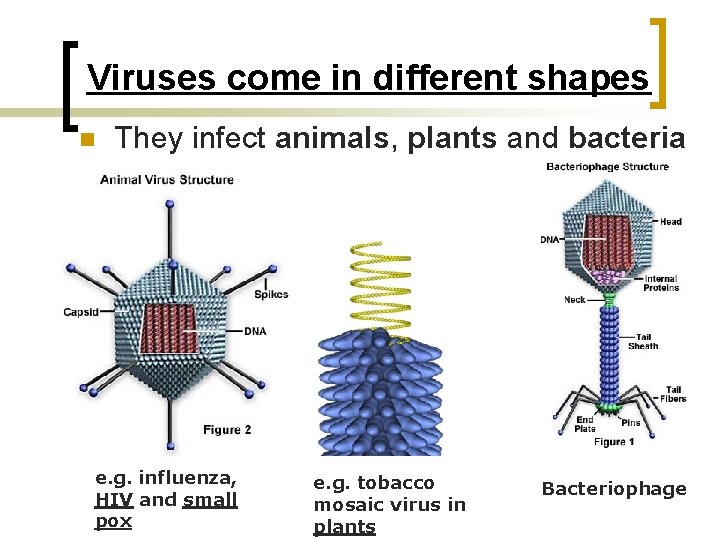
Viruses come in different shapes n They infect animals, plants and bacteria e. g. influenza, HIV and small pox e. g. tobacco mosaic virus in plants Bacteriophage
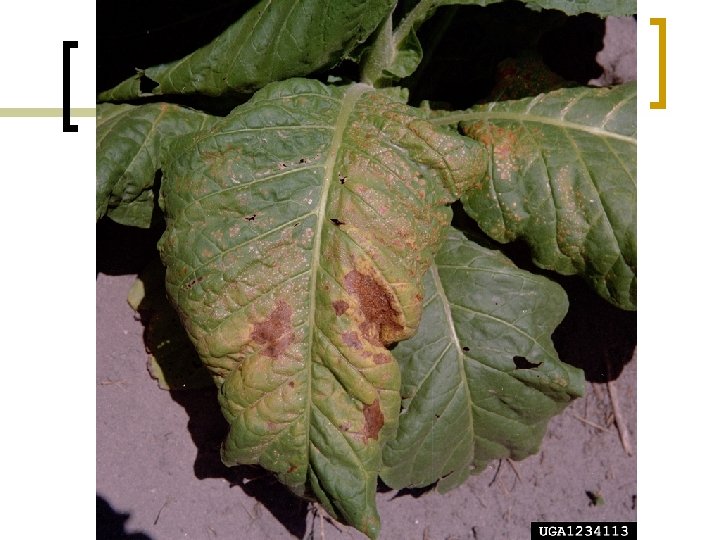
How are viruses named? n Named for the type of cells they infect or the disease they cause. ¡ ¡ ¡ tobacco mosaic virus is found in tobacco; bacteriophages infect bacteria HIV (Human Immunodeficiency Virus) damages the human immune system
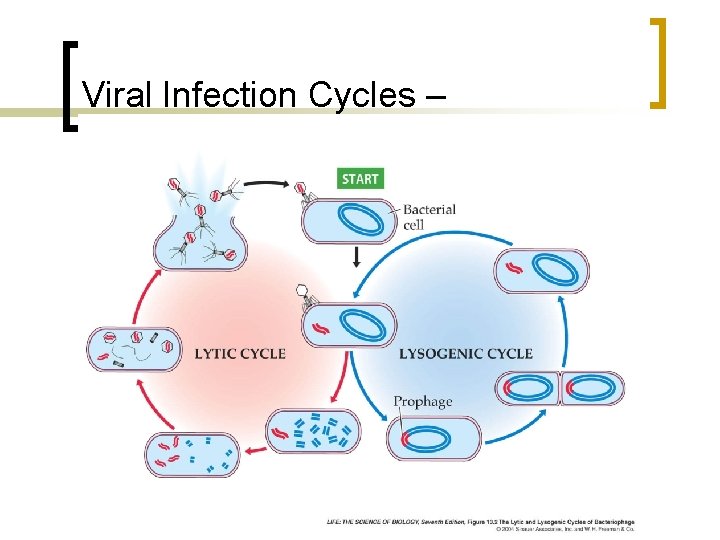
How does a virus infect? 1. Lytic – enters host cell & copies itself. Then causes the host cell to burst & spread the virus. 2. Lysogenic – virus puts its DNA into the host’s DNA (provirus) and it gets copied every time the host cell divides. The infection may show up years later, when infected cells enter the lytic cycle together e. g. HIV Can only reproduce by infecting living things!
Viral Infection Cycles –
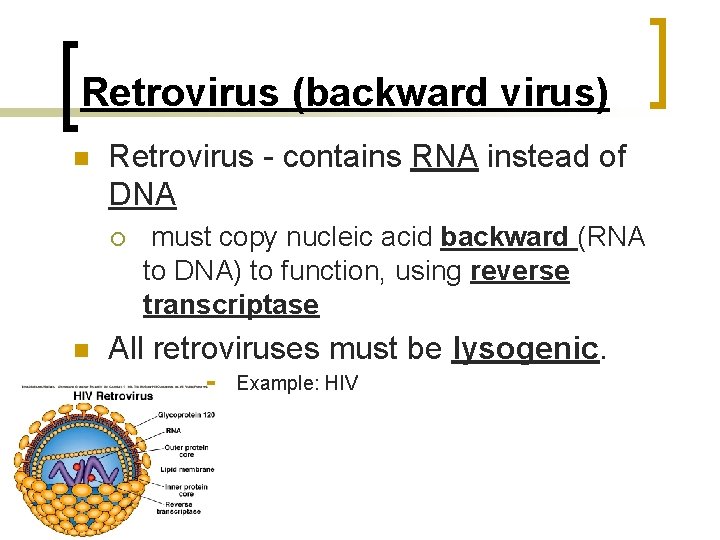
Retrovirus (backward virus) n Retrovirus - contains RNA instead of DNA ¡ n must copy nucleic acid backward (RNA to DNA) to function, using reverse transcriptase All retroviruses must be lysogenic. n Example: HIV
Is a virus alive? n n Made of cells? Can it reproduce without a host? Do they all have DNA? Do they maintain homeostasis? They are NOT alive!
Flu Attack!
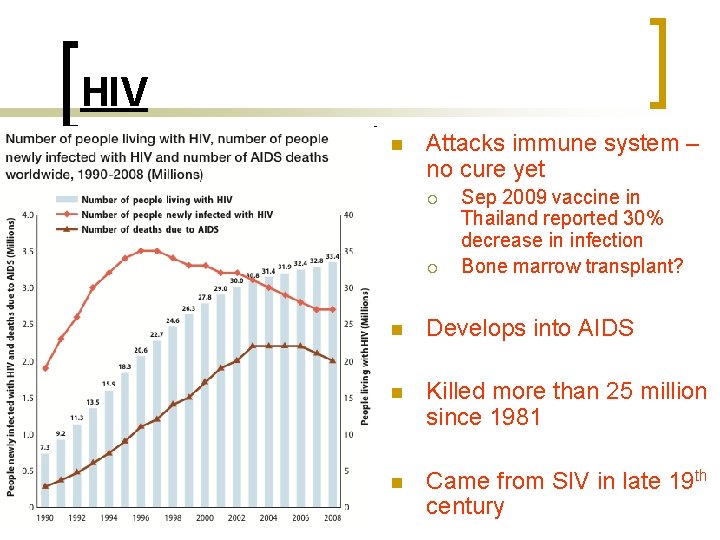
HIV n Attacks immune system – no cure yet ¡ ¡ Sep 2009 vaccine in Thailand reported 30% decrease in infection Bone marrow transplant? n Develops into AIDS n Killed more than 25 million since 1981 n Came from SIV in late 19 th century
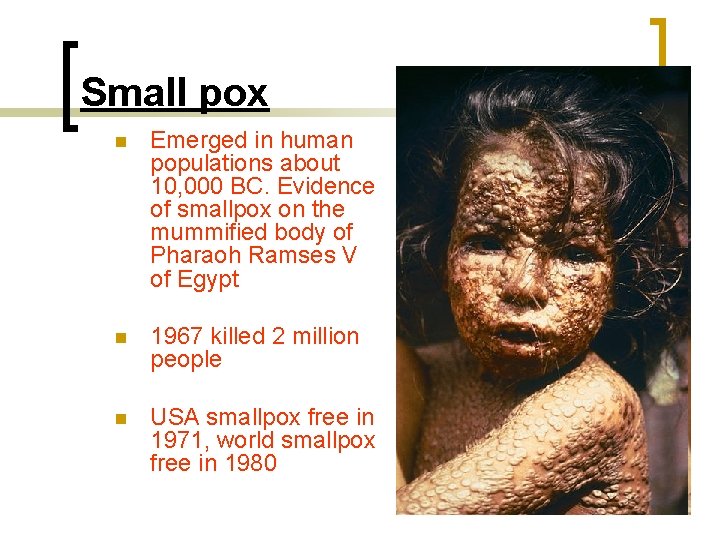
Small pox n Emerged in human populations about 10, 000 BC. Evidence of smallpox on the mummified body of Pharaoh Ramses V of Egypt n 1967 killed 2 million people n USA smallpox free in 1971, world smallpox free in 1980
Ways we defend ourselves n Non-specific defenses—not a one-toone defense; can be physical or chemical ¡ ¡ 1 st line—skin! Prevents pathogens from getting inside. Body secretions (sweat, tears, saliva, mucus, oil) also help chemically and physically 2 nd line—inflammatory response— swelling, fever, non-specific white blood cells (macrophages)
Chemical Assistance n Outside the body: disinfectants and antiseptics—alcohol, iodine, bleach— for PREVENTION n Inside the body—antibiotics (only against living things!) such as penicillin, ampicillin, amoxicillin, cipro, tetracycline, streptomycin, etc. –for TREATMENT