
VIRUSES Viruses are segments of nucleic acids contained
- Slides: 8
VIRUSES Viruses – are segments of nucleic acids contained in a protein coat; they are not cells; they are smaller than prokaryotes and range in size from 20 nm to 250 nm
l Is A Virus Alive? NO, viruses do not have all the properties of life, so biologists do not consider them to be living; viruses do not grow, do not have homeostasis, and do not metabolize l Viruses are pathogens – agents that cause disease; they replicate by infecting cells and using the cell to make more viruses
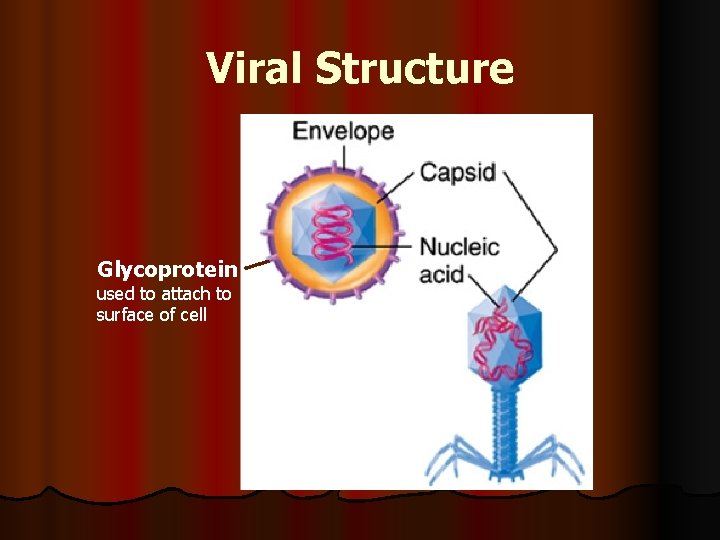
Viral Structure: l capsid– the virus protein coat; may contain either RNA or DNA, but not both l envelope – viral membrane; it helps the virus enter cells; it consists of protein, lipids, and glycoproteins l nucleic acid – DNA or RNA viruses: HIV (Human Immunodeficiency Virus), Influenza, rabies DNA viruses: warts, chickenpox, mononucleosis
Viral Structure Glycoprotein used to attach to surface of cell
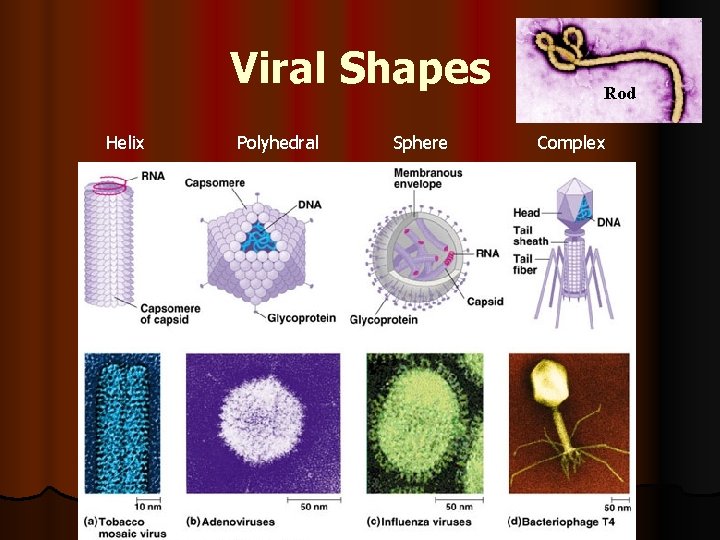
Viral Shapes Helix Polyhedral Sphere Rod Complex
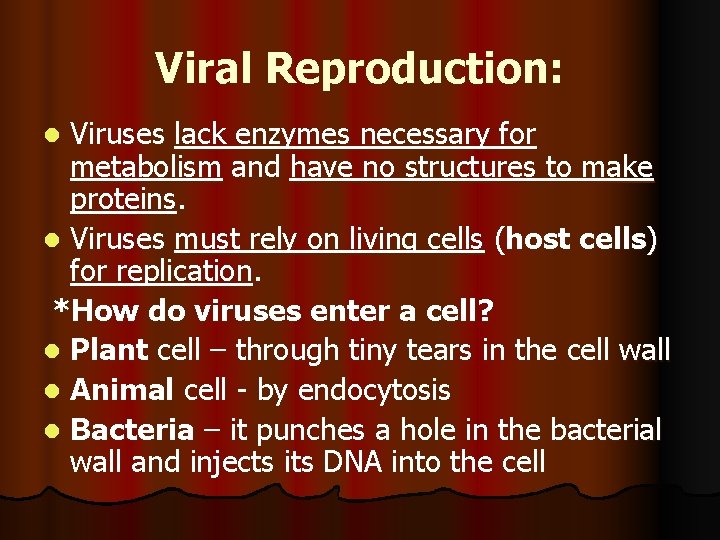
Viral Reproduction: Viruses lack enzymes necessary for metabolism and have no structures to make proteins. l Viruses must rely on living cells (host cells) for replication. *How do viruses enter a cell? l Plant cell – through tiny tears in the cell wall l Animal cell - by endocytosis l Bacteria – it punches a hole in the bacterial wall and injects its DNA into the cell l
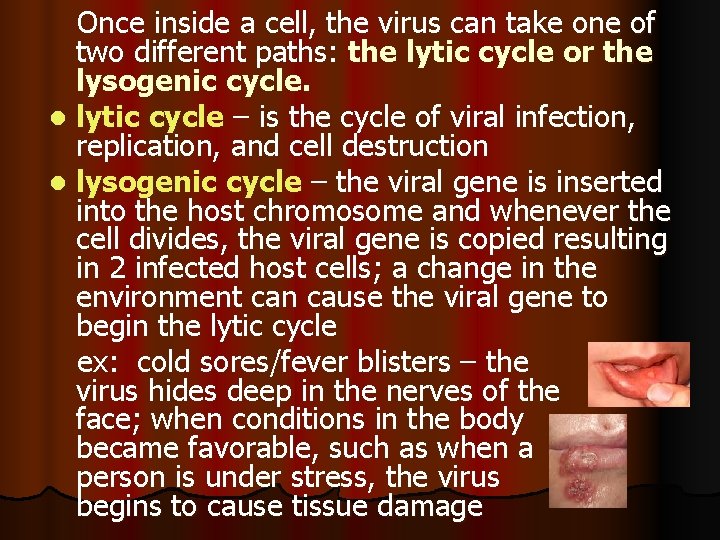
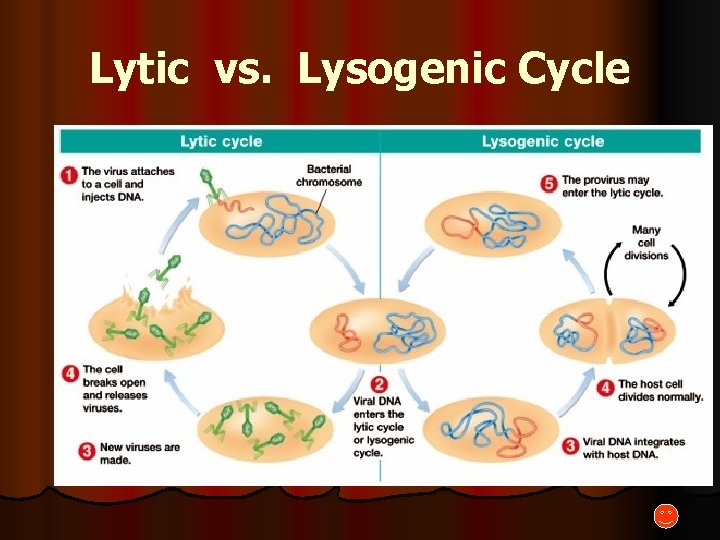
Once inside a cell, the virus can take one of two different paths: the lytic cycle or the lysogenic cycle. l lytic cycle – is the cycle of viral infection, replication, and cell destruction l lysogenic cycle – the viral gene is inserted into the host chromosome and whenever the cell divides, the viral gene is copied resulting in 2 infected host cells; a change in the environment can cause the viral gene to begin the lytic cycle ex: cold sores/fever blisters – the virus hides deep in the nerves of the face; when conditions in the body became favorable, such as when a person is under stress, the virus begins to cause tissue damage
Lytic vs. Lysogenic Cycle