
Viruses The Interface Between Living and Nonliving Viruses
Viruses The Interface Between Living and Nonliving
Viruses: Acellular Infectious Agents • All viruses are obligate intracellular parasites: specific hosts • Carry out no metabolic functions • Replication inside a host cell only • Very small colloidal particles: 25 -350 nm
Virus Structure • Nucleic acid – May be either DNA or RNA – May be either single or double stranded • Capsid – Outer protein coat surrounding nucleic acid – Composed of individual capsomeres • Envelope – Only in some animal viruses (budding viruses) – Derived from host cell
Examples of Virus Structure
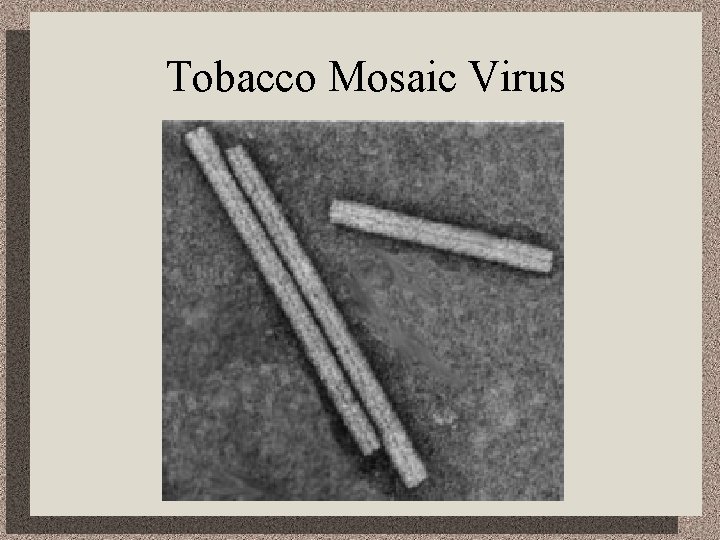
Tobacco Mosaic Virus
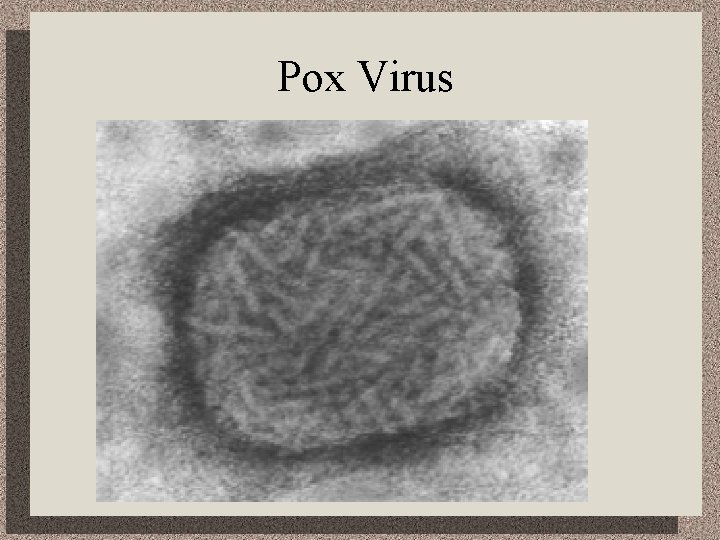
Pox Virus
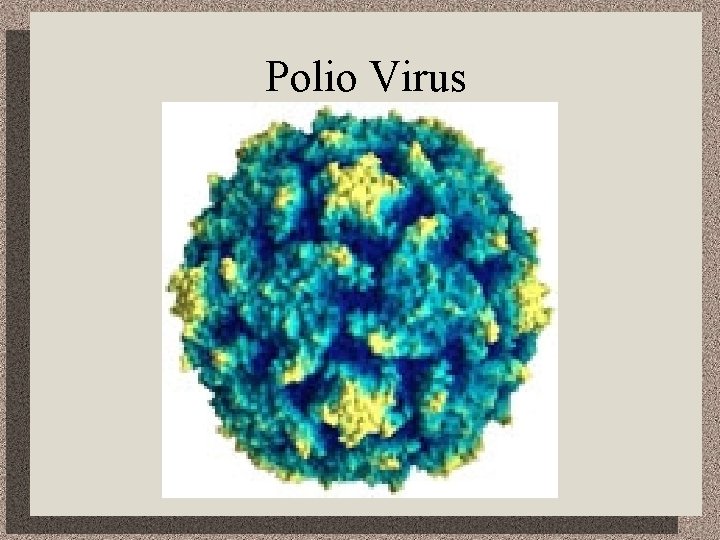
Polio Virus
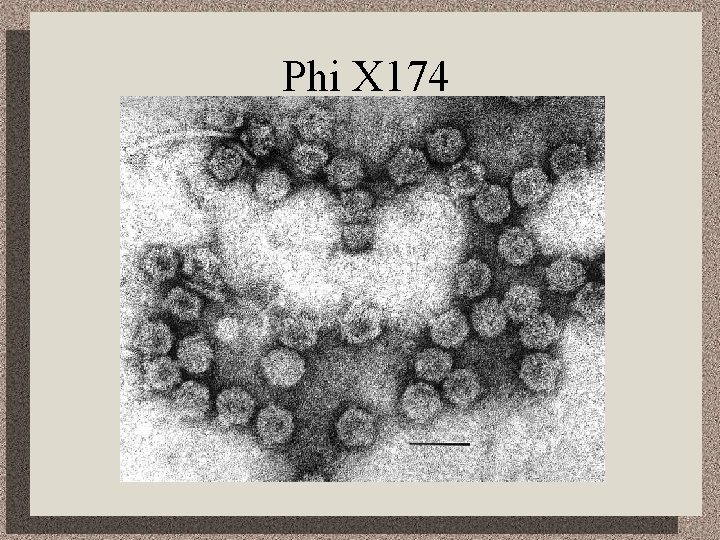
Phi X 174
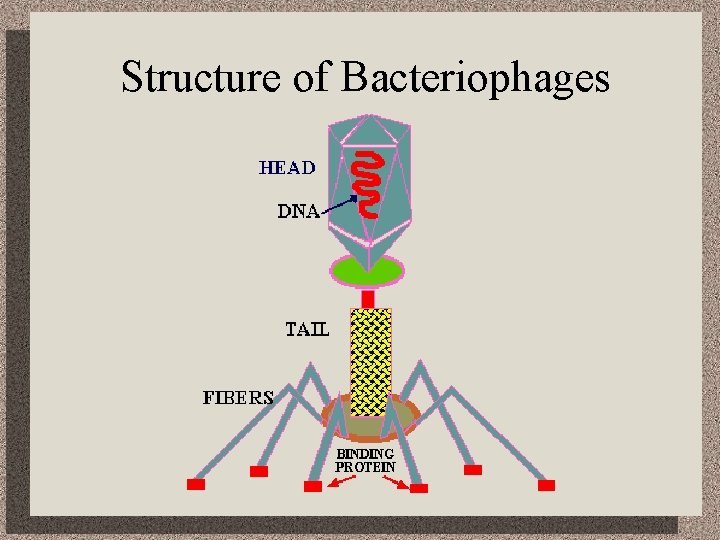
Structure of Bacteriophages
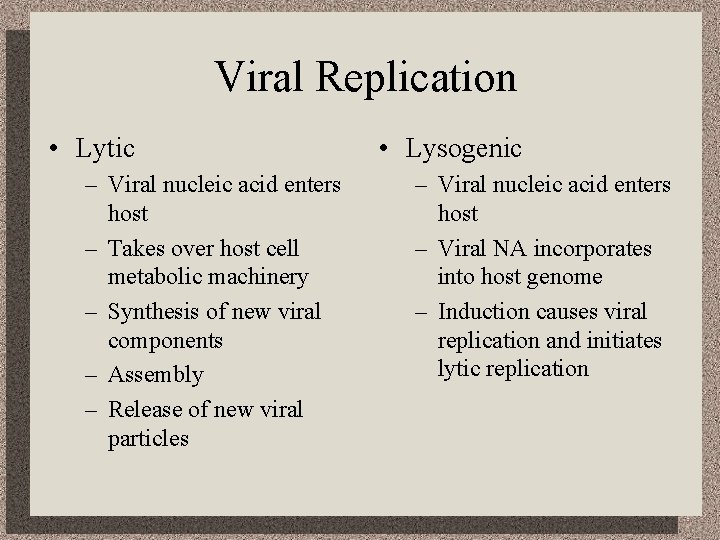
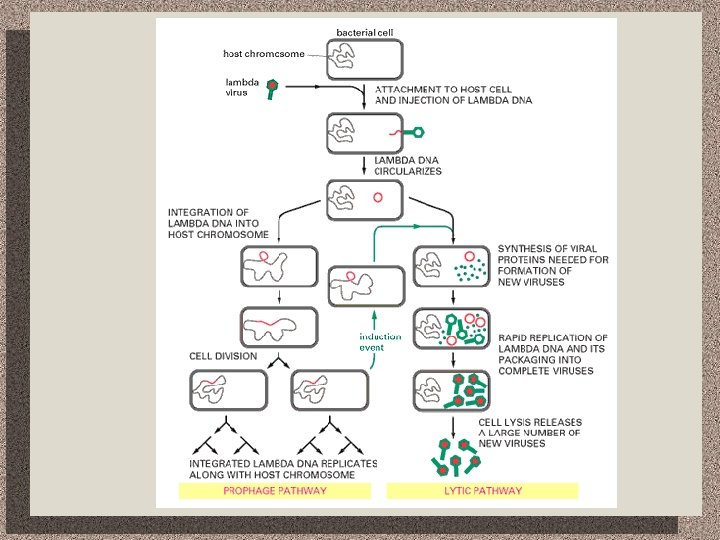
Viral Replication • Lytic – Viral nucleic acid enters host – Takes over host cell metabolic machinery – Synthesis of new viral components – Assembly – Release of new viral particles • Lysogenic – Viral nucleic acid enters host – Viral NA incorporates into host genome – Induction causes viral replication and initiates lytic replication
Viruses in Water and Wastewater
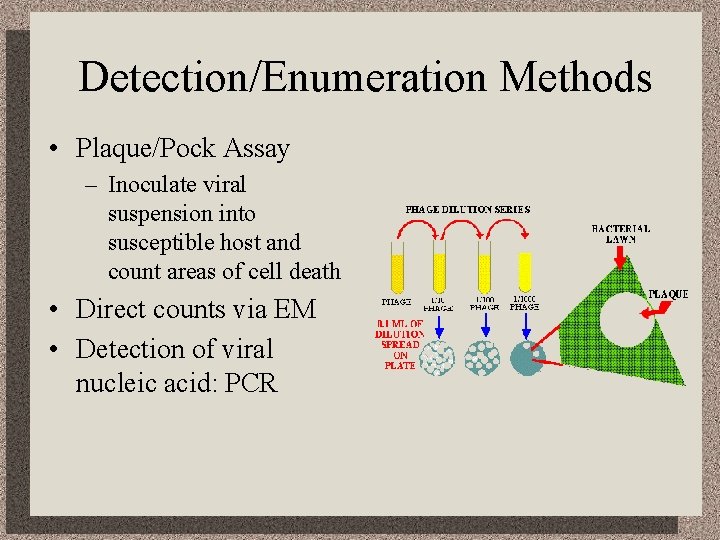
Detection/Enumeration Methods • Plaque/Pock Assay – Inoculate viral suspension into susceptible host and count areas of cell death • Direct counts via EM • Detection of viral nucleic acid: PCR
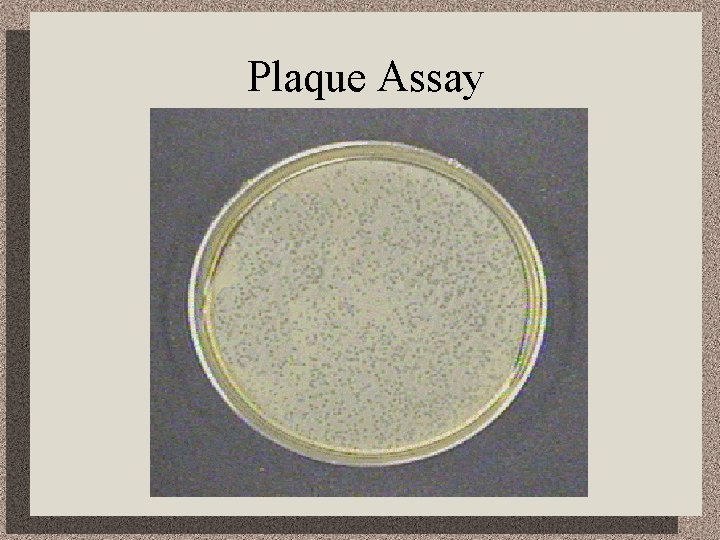
Plaque Assay
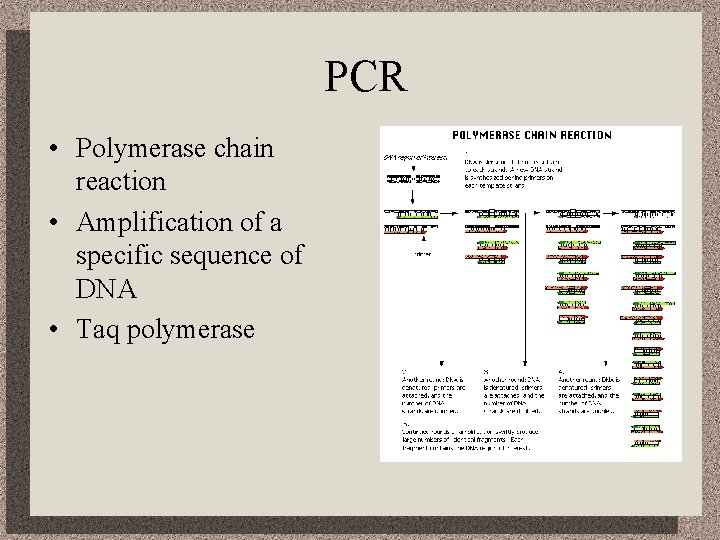
PCR • Polymerase chain reaction • Amplification of a specific sequence of DNA • Taq polymerase
Viruses in Water and Wastewater • Over 140 types of enteric viruses may be found in fecally contaminated water – – – Hepatitis Rotavirus Norwalk type agent Poliovirus Coxsackievirus – – Echovirus Adenoviruses Astroviruses Caliciviruses
Transport of Viruses in the Subsurface
Treatment: Viruses
- Slides: 18