
Viruses Prions n What is a virus n

- Slides: 23
Viruses & Prions
n What is a virus? ? ? n A virus is neither dead nor alive! n What is to be alive? n Characteristics for life. . . n 1. Metabolism 2. Reproduction 3. DNA 4. Growth & Development 5. Response to environment 6. Maintain internal environment 7. Evolves n n n
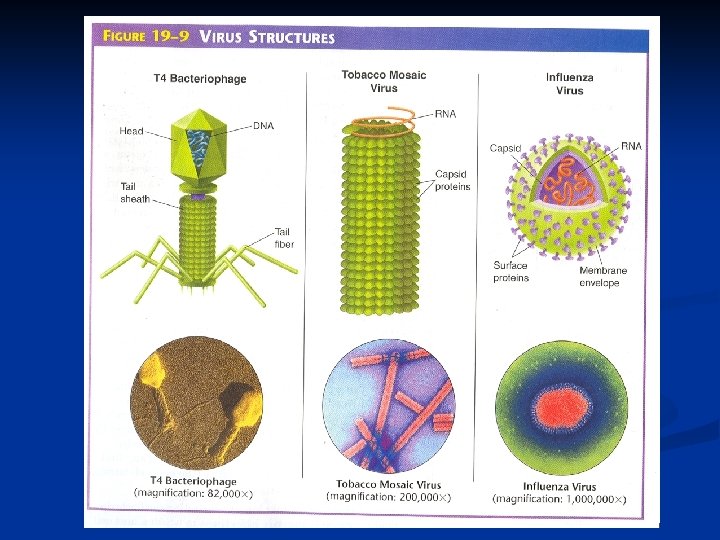
n Living organisms do not crystallize - viruses do. n Viruses are made-up of either DNA (like smallpox) or RNA (flu, HIV) and protein. Some viruses also have lipids. n A virus is basically a protein container (capsid) with nucleic acid inside. The only purpose of viruses is to reproduce.
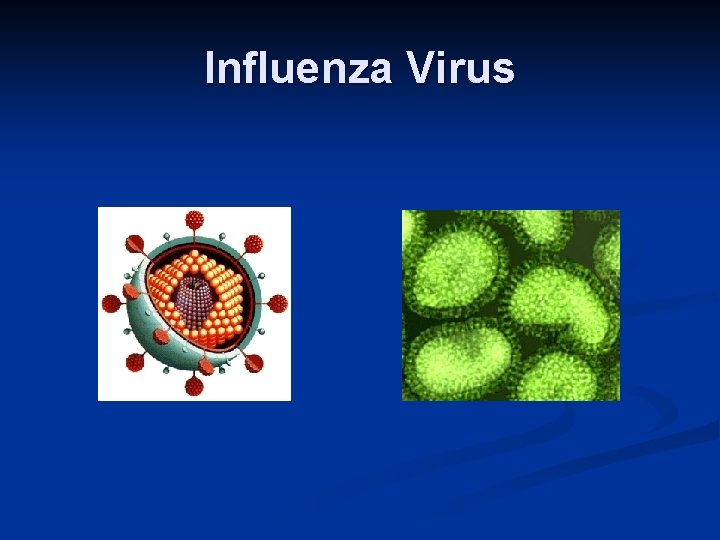
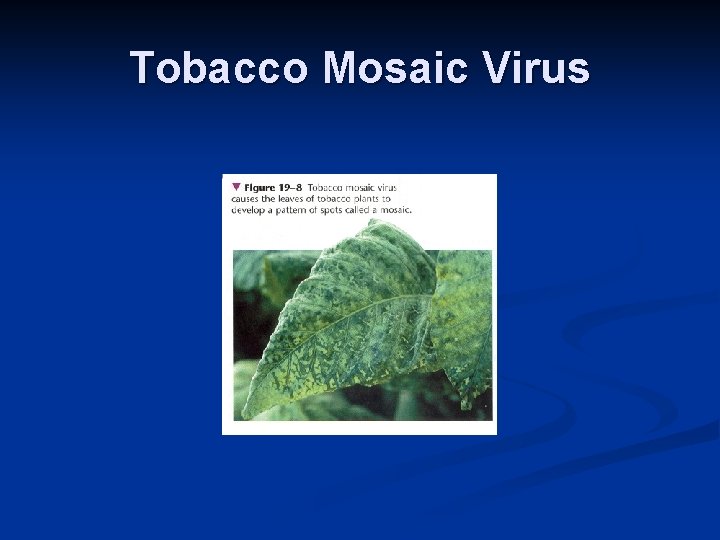
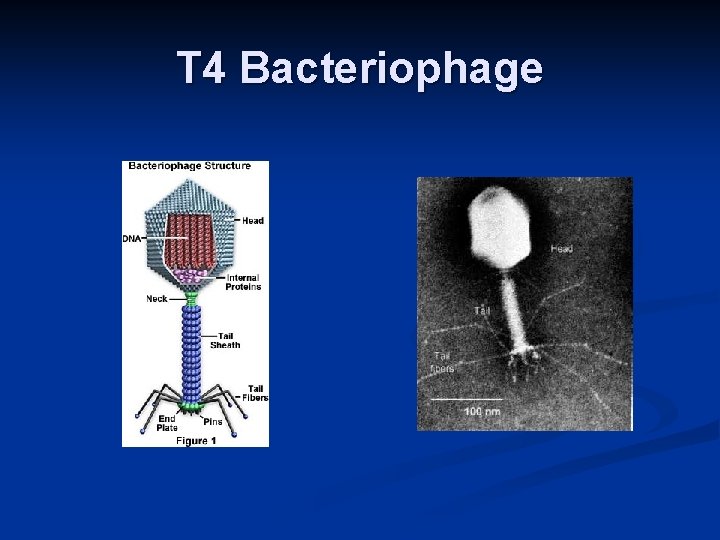
n A virus is not considered alive since it must hijack the machinery of cells to copy itself. n Viruses are generally specific as to what they infect. n Plant viruses like the Tobacco Mosaic Virus, infect tobacco plants n Animal viruses like influenza, infect certain animals (humans, pigs, ducks) n Viruses that infect bacteria are called a bacteriophage.
Influenza Virus
Tobacco Mosaic Virus
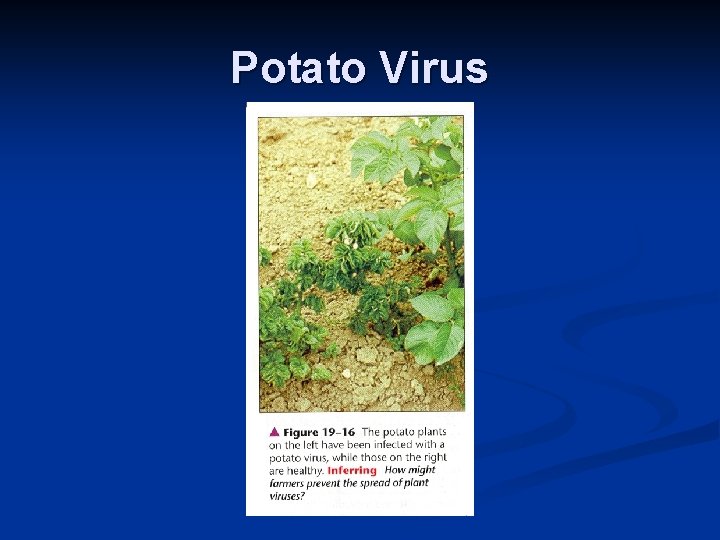
Potato Virus
T 4 Bacteriophage
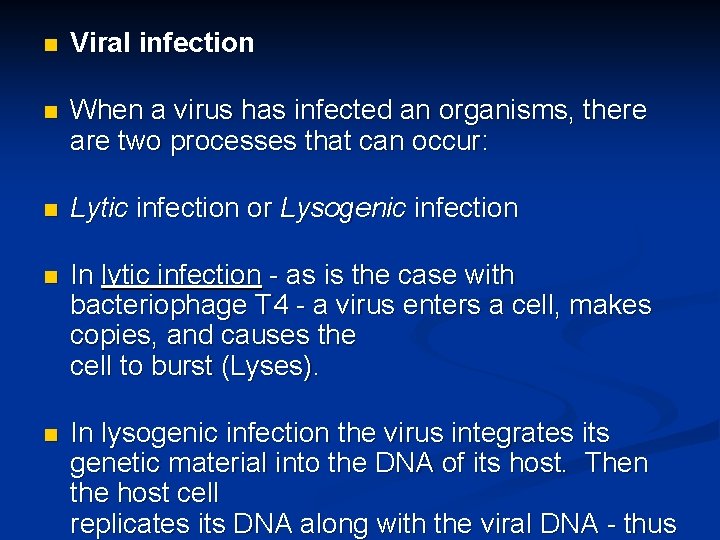
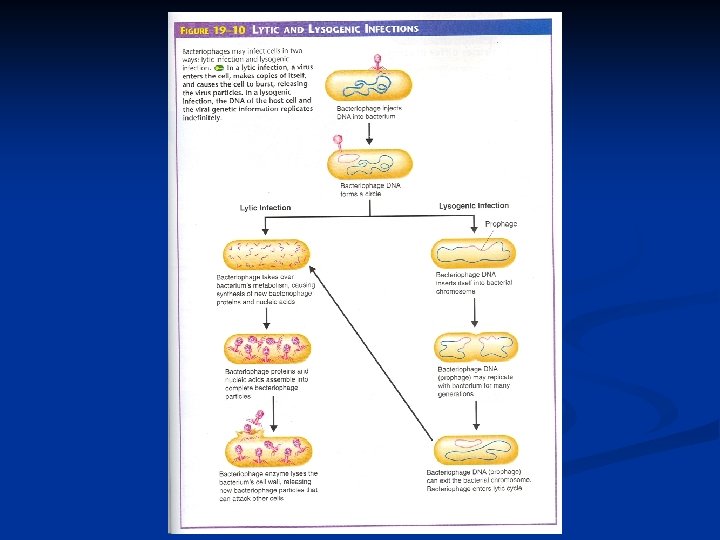
n Viral infection n When a virus has infected an organisms, there are two processes that can occur: n Lytic infection or Lysogenic infection n In lytic infection - as is the case with bacteriophage T 4 - a virus enters a cell, makes copies, and causes the cell to burst (Lyses). n In lysogenic infection the virus integrates its genetic material into the DNA of its host. Then the host cell replicates its DNA along with the viral DNA - thus
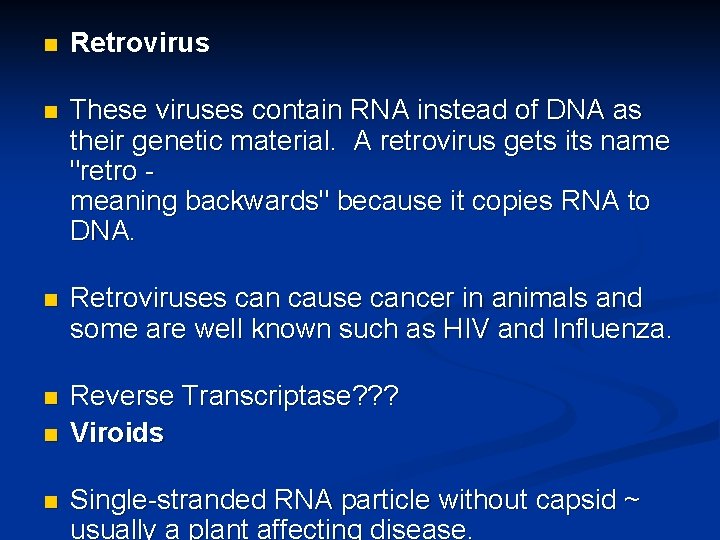
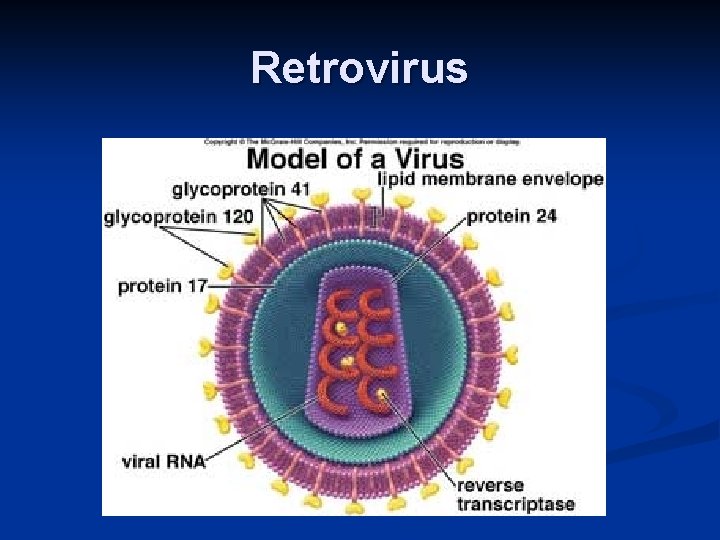
n Retrovirus n These viruses contain RNA instead of DNA as their genetic material. A retrovirus gets its name "retro - meaning backwards" because it copies RNA to DNA. n Retroviruses can cause cancer in animals and some are well known such as HIV and Influenza. n Reverse Transcriptase? ? ? Viroids n n Single-stranded RNA particle without capsid ~ usually a plant affecting disease.
Retrovirus
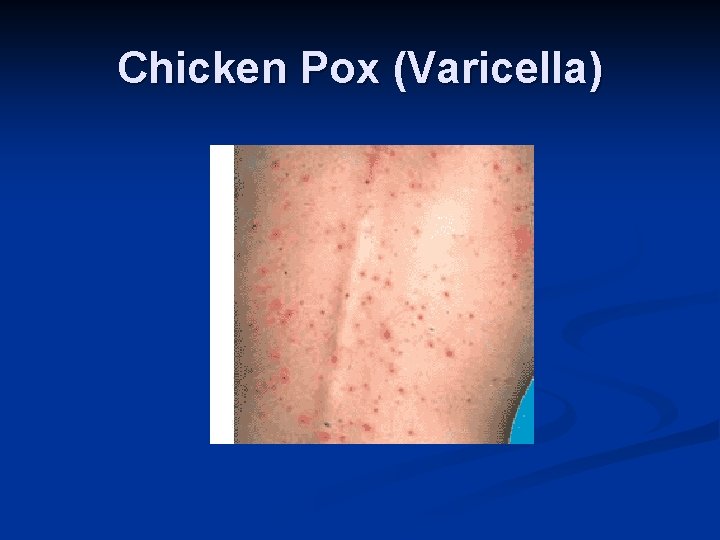
Chicken Pox (Varicella)
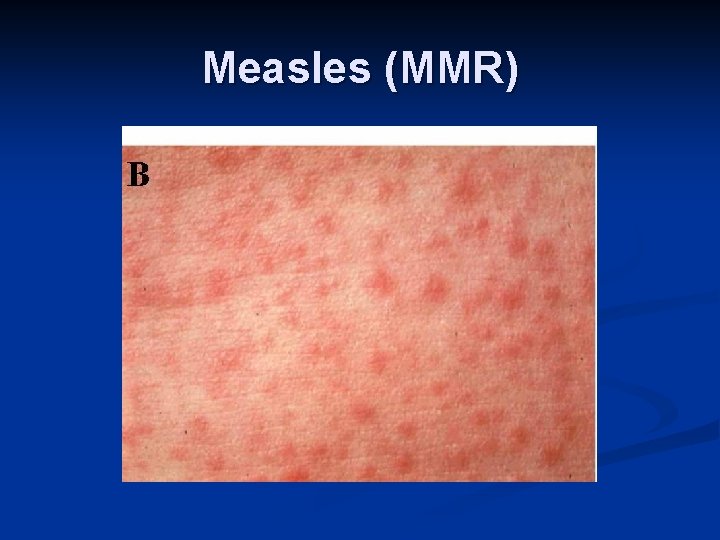
Measles (MMR)
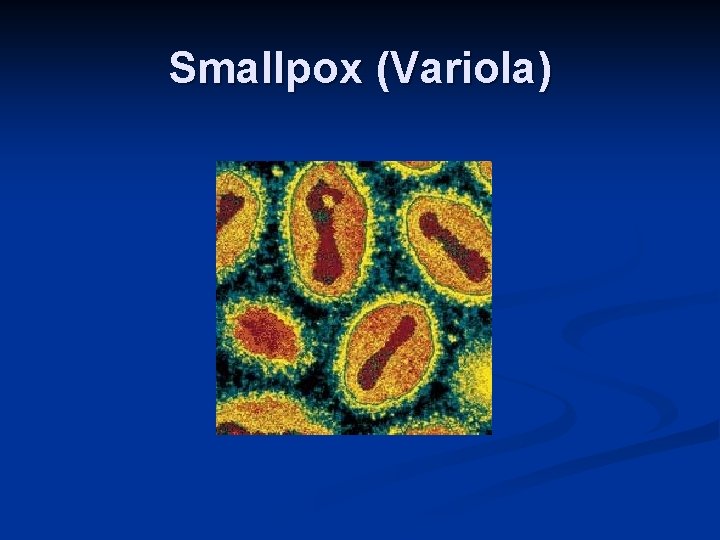
Smallpox (Variola)
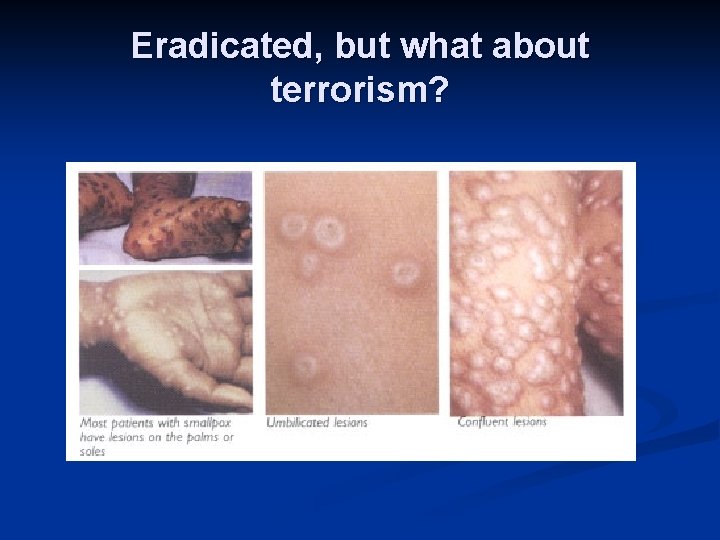
Eradicated, but what about terrorism?
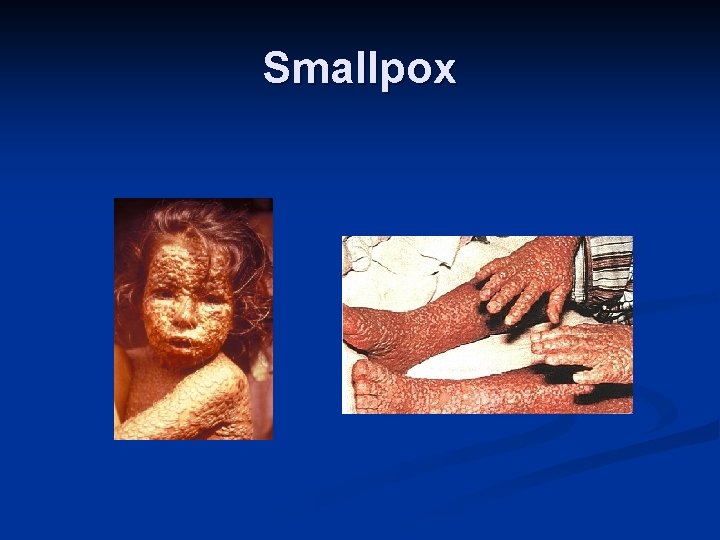
Smallpox
n PRIONS? ? ? n Mad Cow Disease or BSE (Bovine Spongiform Encephalopathy) and varient Creutzfeld-Jacob disease - the human form - are thought to be caused by pathogenic proteins called prions.
MAD COW DISEASE n Mad cow disease is caused by something called a "PRION". A prion is a protein that is mutant (different than the normal kind) and causes normal proteins to change into mutant proteins when they come into contact with them. n
These pathogenic (disease causing) proteins can be obtained by eating tissue that contains it (like cow brains from an infected cow). n It can also be passed down from mother to offspring animal ~ cow (inherited). This is possible because proteins are built from the instructions found in the organism's genes (DNA). If the organism has a bad gene for this disease, it will be passed to the offspring. n
The End