
Viruses Presented by Dr Ankit Kumar Singh Assistant
Viruses Presented by: Dr. Ankit Kumar Singh Assistant Professor Department of Botany Marwari College Lalit Narayan Mithila University Darbhanga ankitbhu 30@gmail. com
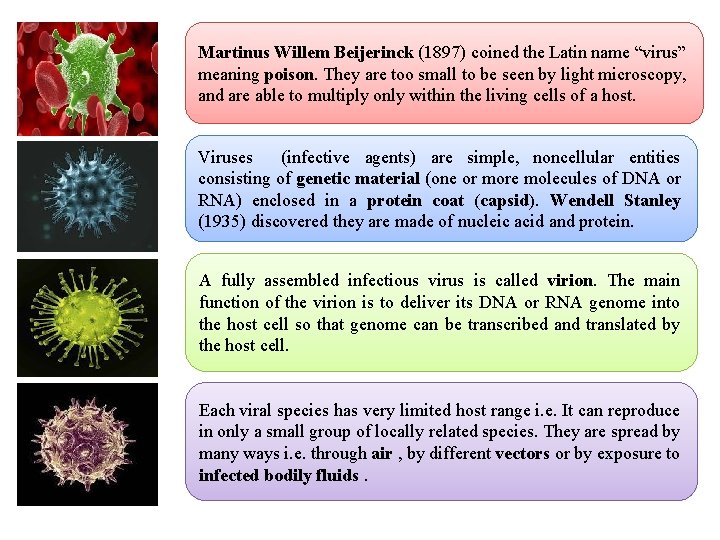
Martinus Willem Beijerinck (1897) coined the Latin name “virus” meaning poison. They are too small to be seen by light microscopy, and are able to multiply only within the living cells of a host. Viruses (infective agents) are simple, noncellular entities consisting of genetic material (one or more molecules of DNA or RNA) enclosed in a protein coat (capsid). Wendell Stanley (1935) discovered they are made of nucleic acid and protein. A fully assembled infectious virus is called virion. The main function of the virion is to deliver its DNA or RNA genome into the host cell so that genome can be transcribed and translated by the host cell. Each viral species has very limited host range i. e. It can reproduce in only a small group of locally related species. They are spread by many ways i. e. through air , by different vectors or by exposure to infected bodily fluids.
Viruses discovery In 1884 C. Chamber Land, in Pasteur’s lab, discovered that if you passed a liquid containing bacteria through an unglazed PORCELAIN tube, the bacteria were completely retained and the solution that passed through (the filtrate) was sterile. In 1892, D. Iwanowski applied this test to a filtrate of plants suffering from tobacco mosaic disease with shocking results; the filtrate was fully capable of producing the original disease in new hosts.
General characteristics of viruses v They are obligate intracellular parasites of bacteria, protozoa, fungi, algae, plants and animals. v They are smaller than bacteria, and range in size between 20 -300 nm. v They contain only one type of nucleic acid (genetic material) either DNA or RNA, but never both. v Nucleic acid can be double-stranded DNA, single-stranded DNA, double-stranded RNA, or single-stranded RNA v They vary in shape from the simple helical and icosahedral to more complex structures. v They lack cellular organelles such as mitochondria, ribosomes etc. v They multiply by taking control of host cell’s genetic material and regulating the synthesis and assembly of new viruses.

Generalized structure Envelope Capsid Nucleic acid Spikes
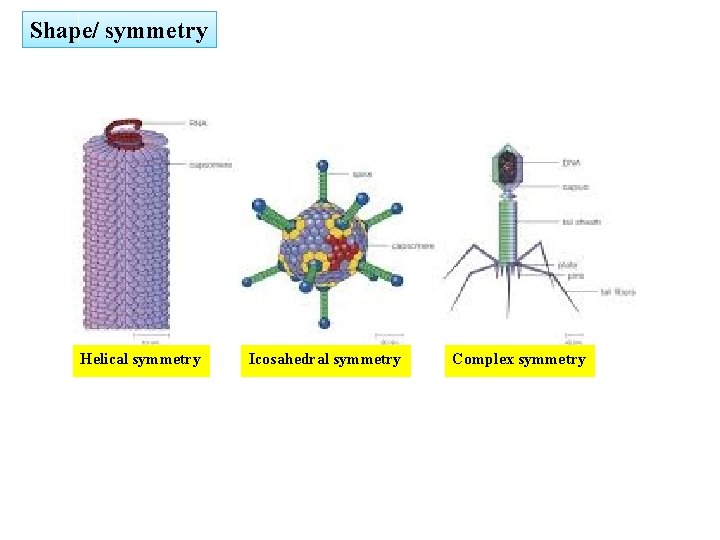
Shape/ symmetry Helical symmetry Icosahedral symmetry Complex symmetry
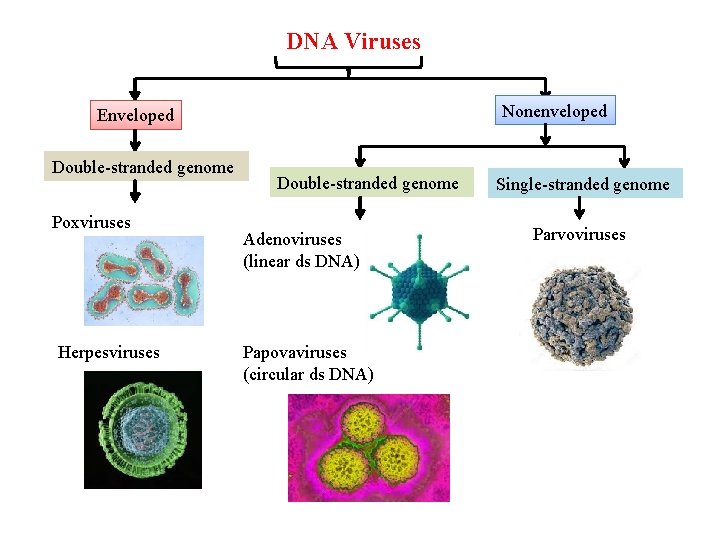
DNA Viruses Nonenveloped Enveloped Double-stranded genome Poxviruses Herpesviruses Double-stranded genome Adenoviruses (linear ds DNA) Papovaviruses (circular ds DNA) Single-stranded genome Parvoviruses
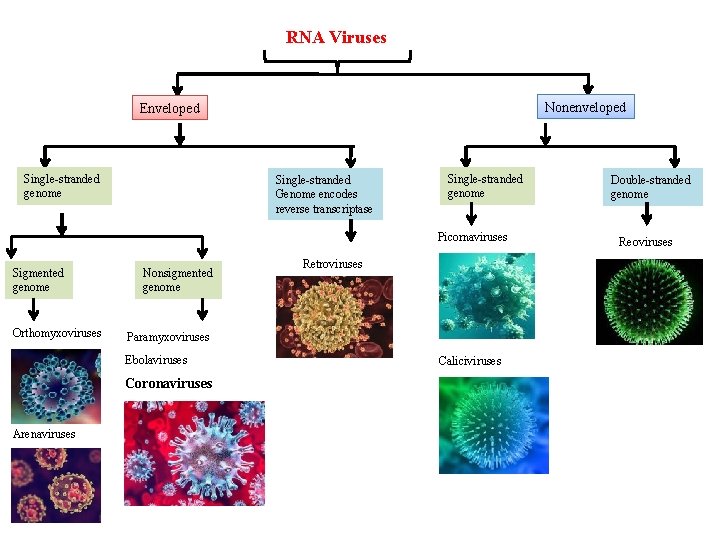
RNA Viruses Nonenveloped Enveloped Single-stranded genome Single-stranded Genome encodes reverse transcriptase Single-stranded genome Picornaviruses Sigmented genome Orthomyxoviruses Nonsigmented genome Paramyxoviruses Ebolaviruses Coronaviruses Arenaviruses Retroviruses Caliciviruses Double-stranded genome Reoviruses
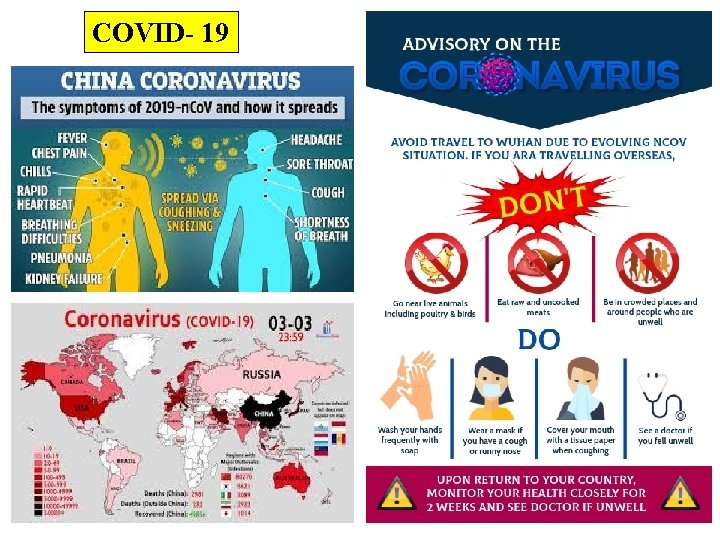
COVID- 19
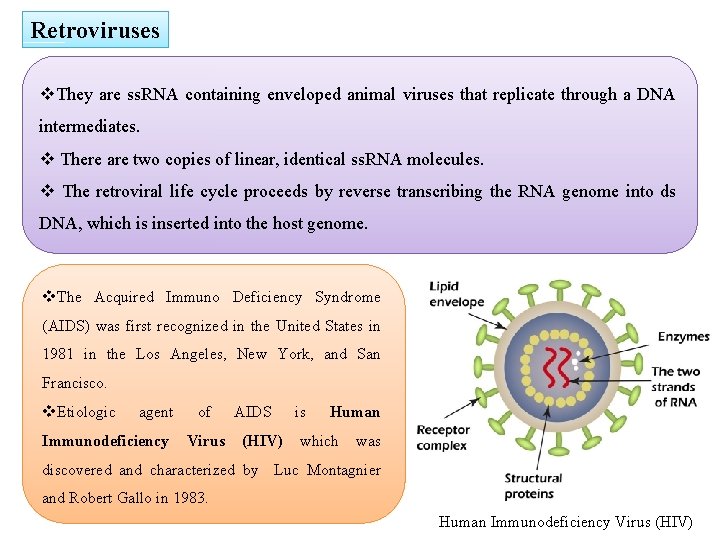
Retroviruses v. They are ss. RNA containing enveloped animal viruses that replicate through a DNA intermediates. v There are two copies of linear, identical ss. RNA molecules. v The retroviral life cycle proceeds by reverse transcribing the RNA genome into ds DNA, which is inserted into the host genome. v. The Acquired Immuno Deficiency Syndrome (AIDS) was first recognized in the United States in 1981 in the Los Angeles, New York, and San Francisco. v. Etiologic agent Immunodeficiency of Virus AIDS (HIV) is Human which was discovered and characterized by Luc Montagnier and Robert Gallo in 1983. Human Immunodeficiency Virus (HIV)
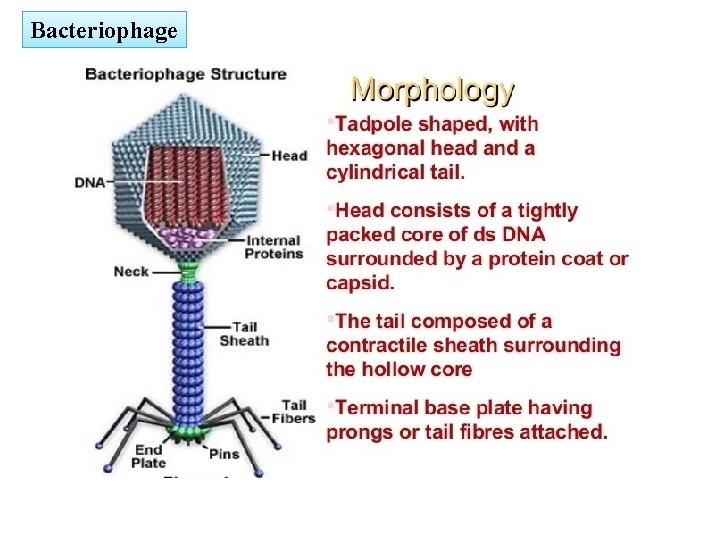
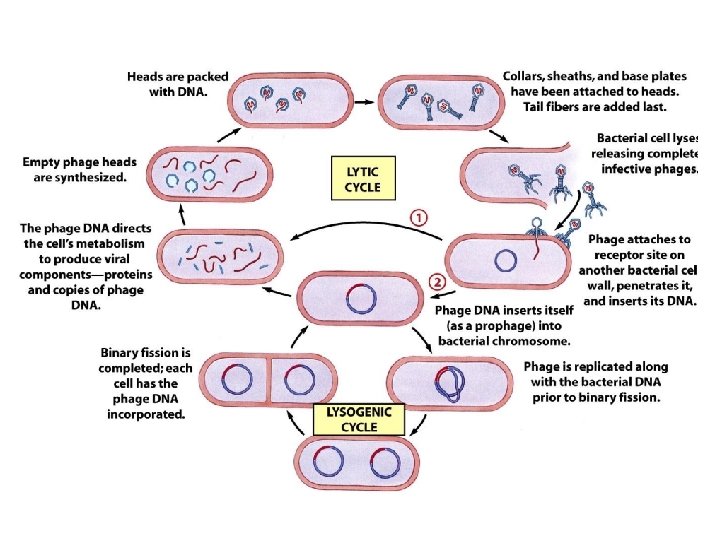
Bacteriophage
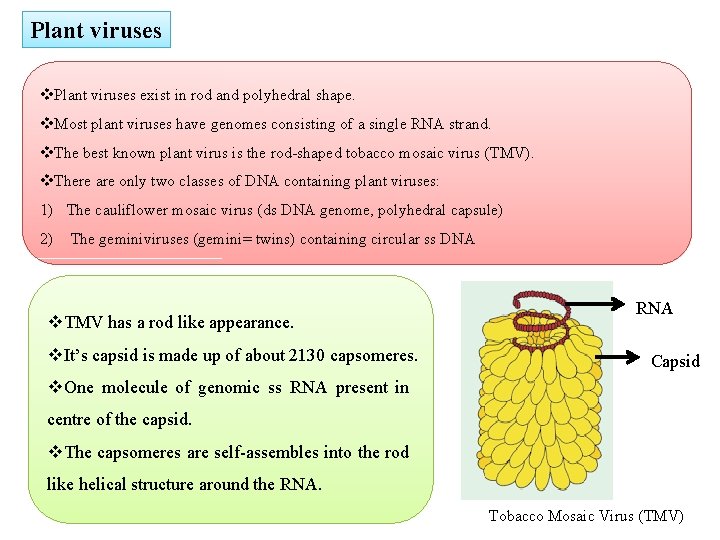
Plant viruses v. Plant viruses exist in rod and polyhedral shape. v. Most plant viruses have genomes consisting of a single RNA strand. v. The best known plant virus is the rod-shaped tobacco mosaic virus (TMV). v. There are only two classes of DNA containing plant viruses: 1) The cauliflower mosaic virus (ds DNA genome, polyhedral capsule) 2) The geminiviruses (gemini= twins) containing circular ss DNA v. TMV has a rod like appearance. v. It’s capsid is made up of about 2130 capsomeres. RNA Capsid v. One molecule of genomic ss RNA present in centre of the capsid. v. The capsomeres are self-assembles into the rod like helical structure around the RNA. Tobacco Mosaic Virus (TMV)
Prions and Viroid v. Prions are proteins. v. The word prion, coined in 1982 by Stanley B. Prusiner, is derived from the words proteins and infection. v. The infections by prions are responsible for neurodegenerative diseases in animals including human. v. Prion diseases are described as spongiform encephalopathies. v. No prion diseases of plants are known. v Kuru was the first naturally occurring spongiform encephalopathy of humans shown to be caused by prions. v. Viroids are the smallest infectious agents of plants that are single stranded, covalently closed circular RNA molecule not associated with any protein. v. It was discovered and named by Otto Diener. v Viroids have so far been shown to infect plants only. v No viroid diseases of animals are known.

Thank You !!
- Slides: 16