
Viruses particle made up of nucleic acid DNA
- Slides: 12
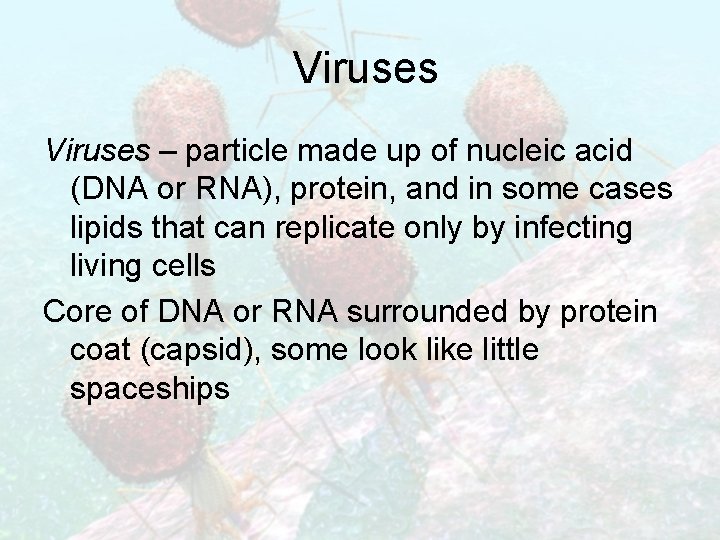
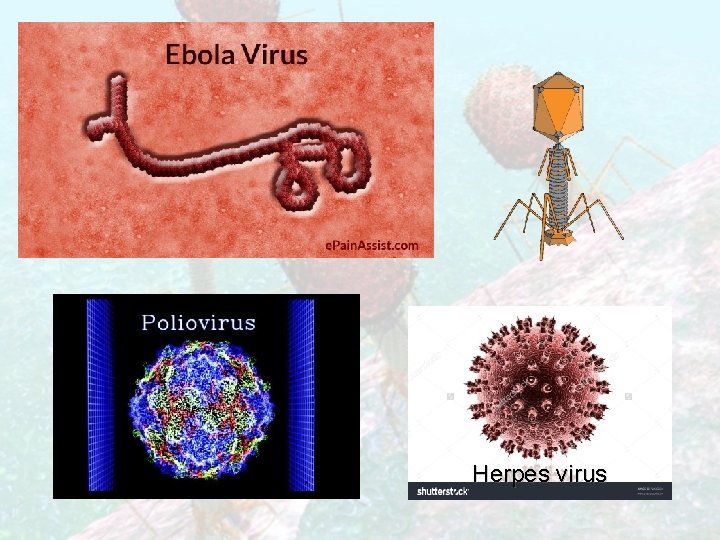
Viruses – particle made up of nucleic acid (DNA or RNA), protein, and in some cases lipids that can replicate only by infecting living cells Core of DNA or RNA surrounded by protein coat (capsid), some look like little spaceships
Herpes virus
Viruses are not alive • • • 1) They do not maintain homeostasis 3) They do not grow. 4) They do utilize energy on their own. 5) They do not reproduce on their own. 6) They are not made of cells. Although they DO have DNA and RNA
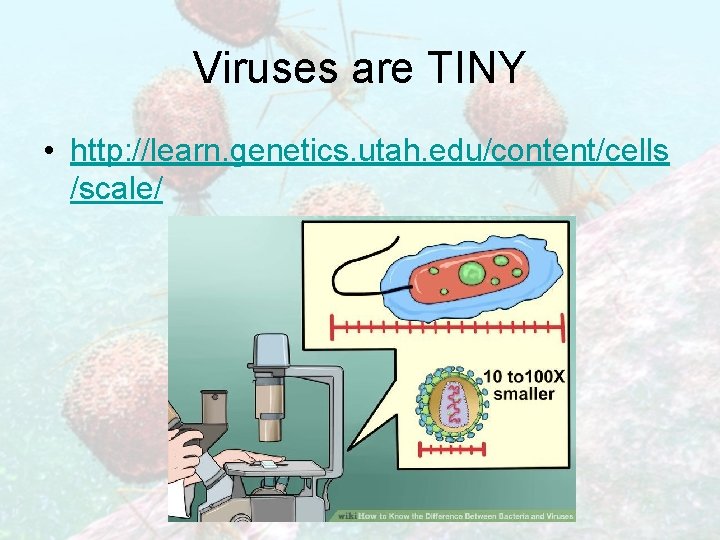
Viruses are TINY • http: //learn. genetics. utah. edu/content/cells /scale/
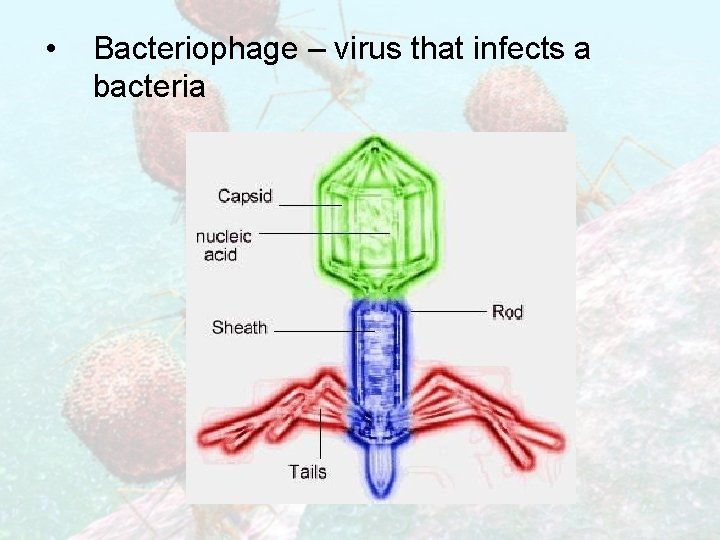
• Bacteriophage – virus that infects a bacteria
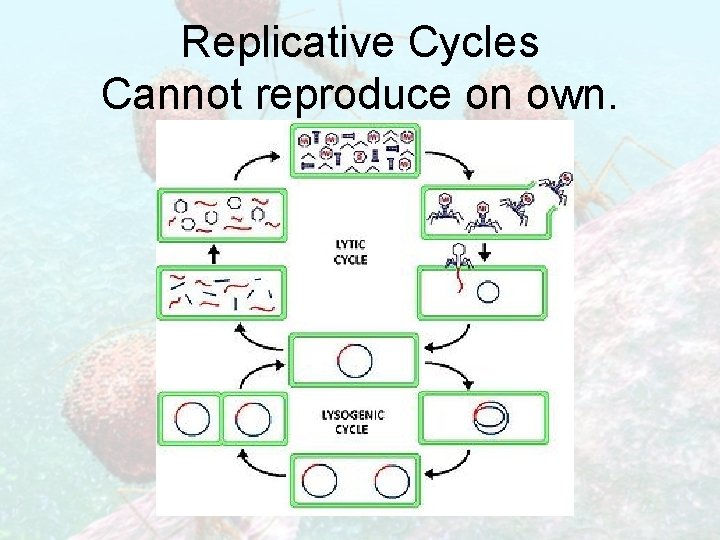
Replicative Cycles Cannot reproduce on own.
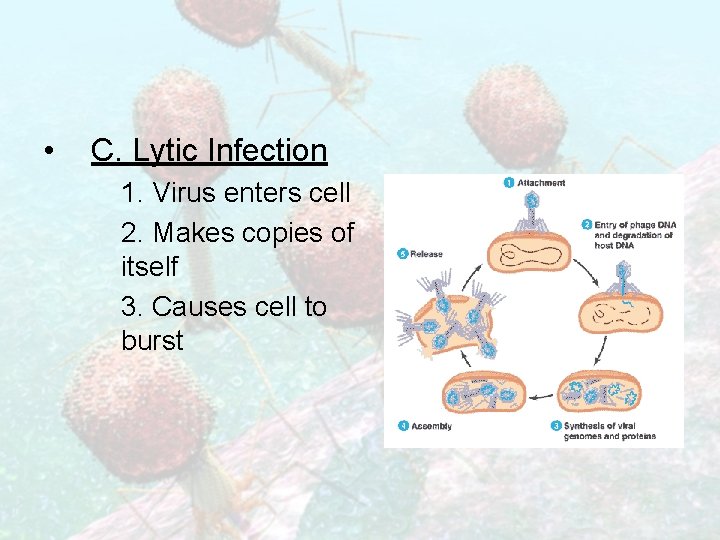
• C. Lytic Infection 1. Virus enters cell 2. Makes copies of itself 3. Causes cell to burst
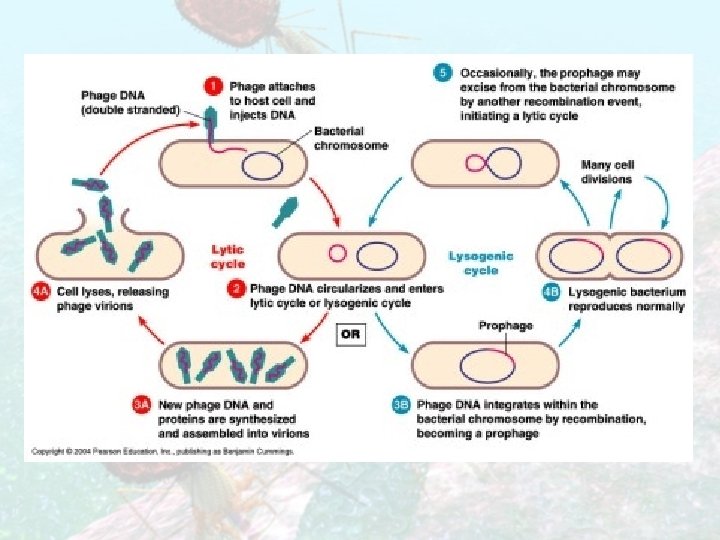
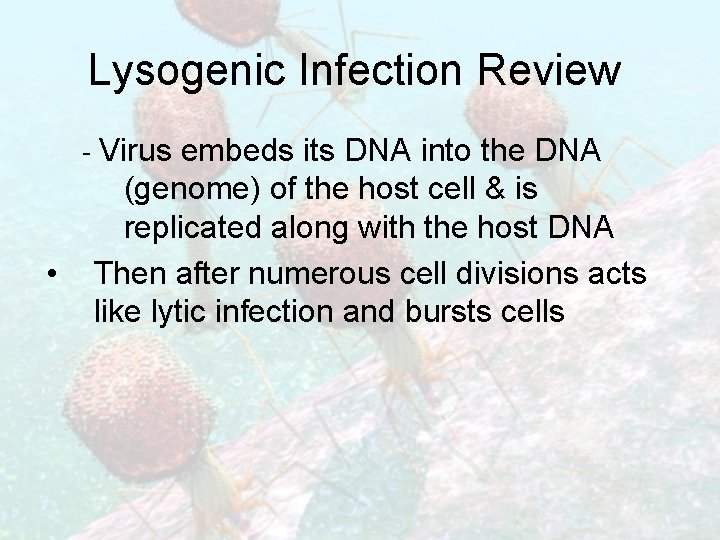
Lysogenic Infection Review - Virus embeds its DNA into the DNA • (genome) of the host cell & is replicated along with the host DNA Then after numerous cell divisions acts like lytic infection and bursts cells
Viruses and Disease • Examples: polio, rabies, measles, AIDS, mumps, influenza, yellow fever, & common cold
Viruses and Disease • Best human protection: vaccines: injection with weakened virus that triggers human immune system to make antibodies.
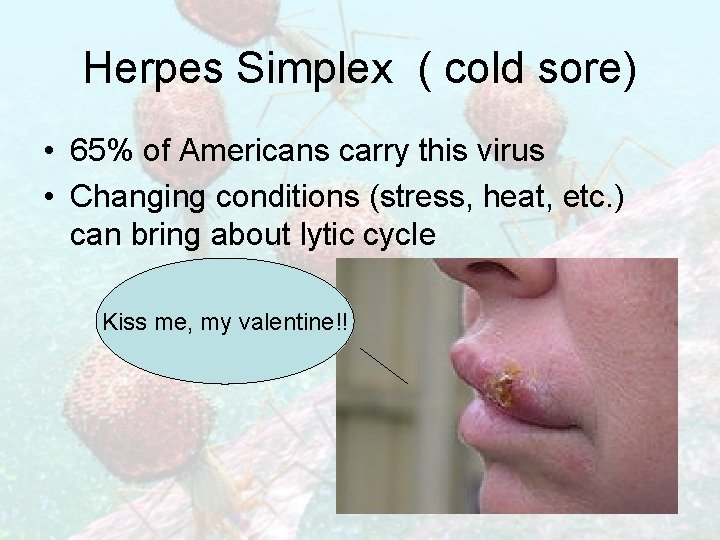
Herpes Simplex ( cold sore) • 65% of Americans carry this virus • Changing conditions (stress, heat, etc. ) can bring about lytic cycle Kiss me, my valentine!!