
Viruses Objectives Understand why acellular Know basic viral
Viruses Objectives: §Understand why acellular §Know basic viral anatomy §Know stages of 2 life cycles §Harmful and beneficial effects §Know several examples
I. General info: A. Pathogens (cause diseases) that affect organisms in all 6 kingdoms B. Doesn’t belong to any kingdom because they are not considered to be a living organism

II. Why Acellular (nonliving)? Viruses: • Don’t grow or carry on metabolism • Do not come directly from other viruses • Lack cytoplasm and organelles • Have only 1 type of nucleic acid (DNA or RNA), cells have both • Have only a few enzymes • Can survive crystallization
III. Viral Characteristics A. All viruses are small; only visible through electron microscope B. Consists of two parts: 1. Nucleic acid core a) Can be either DNA or RNA, but never both. 2. Outer protein coat called a capsid

IV. Capsid A. Determines the shape of the virus. B. Allows the virus to recognize, bind to and enter specific cells C. Highly specific D. 3 Basic Capsid Shapes:

1. Geometric shape (e. g. polyhedral) Ex. Adenovirus (respiratory virus) or HIV Adenovirus
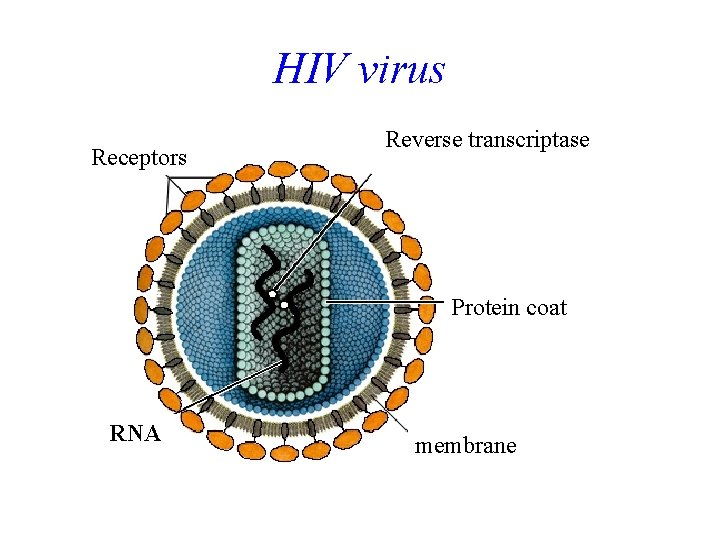
HIV virus Receptors Reverse transcriptase Protein coat RNA membrane
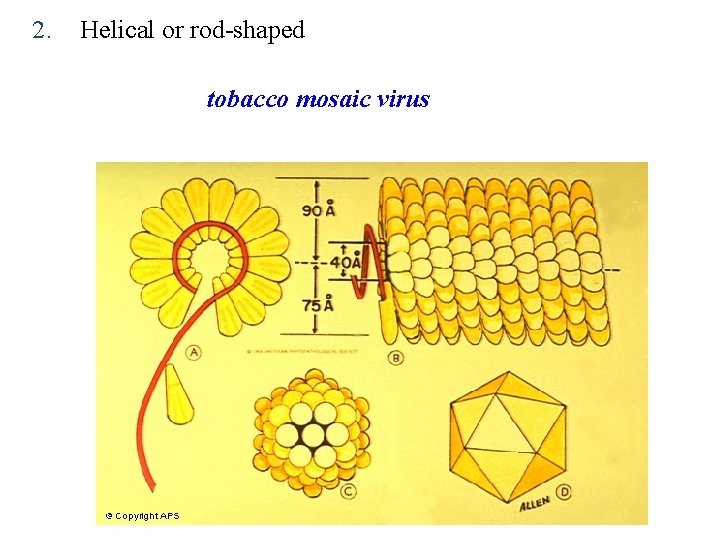
2. Helical or rod-shaped tobacco mosaic virus
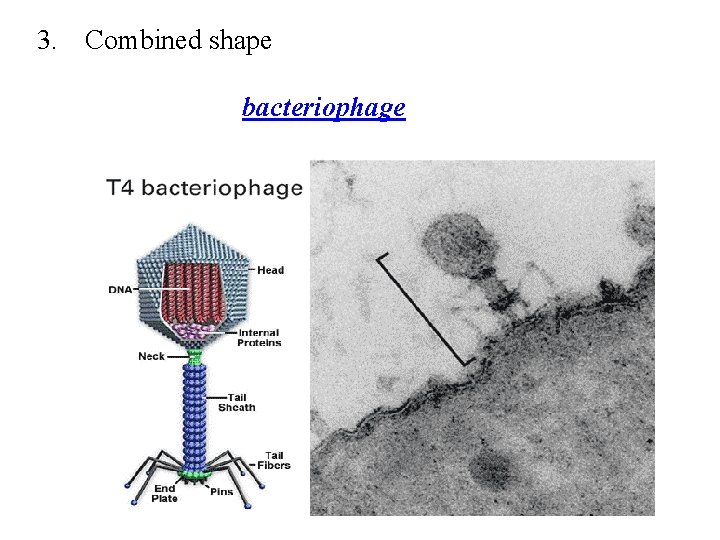
3. Combined shape bacteriophage
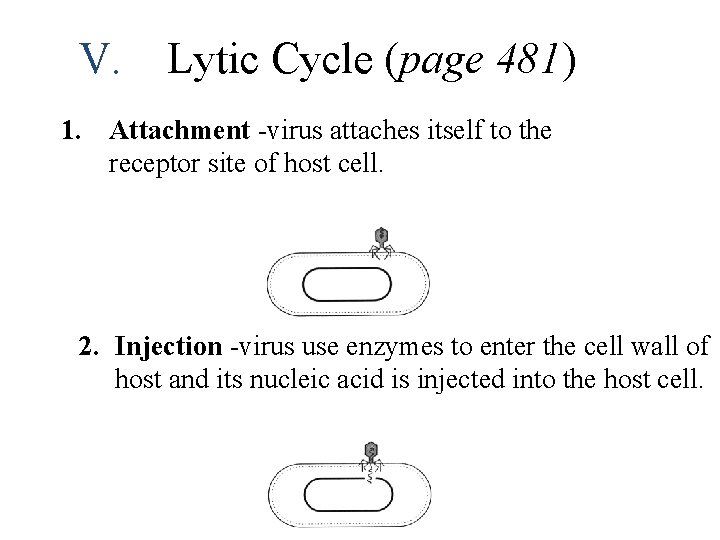
V. Lytic Cycle (page 481) 1. Attachment -virus attaches itself to the receptor site of host cell. 2. Injection -virus use enzymes to enter the cell wall of host and its nucleic acid is injected into the host cell.
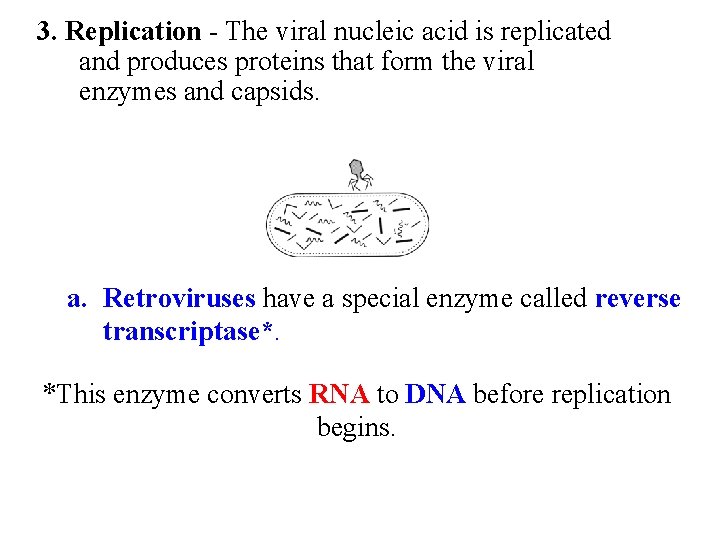
3. Replication - The viral nucleic acid is replicated and produces proteins that form the viral enzymes and capsids. a. Retroviruses have a special enzyme called reverse transcriptase*. *This enzyme converts RNA to DNA before replication begins.
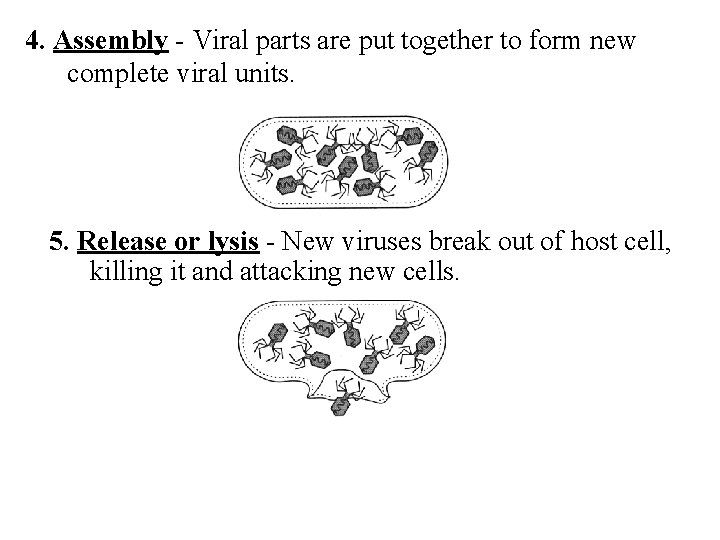
4. Assembly - Viral parts are put together to form new complete viral units. 5. Release or lysis - New viruses break out of host cell, killing it and attacking new cells.
Lytic Cycle Movie
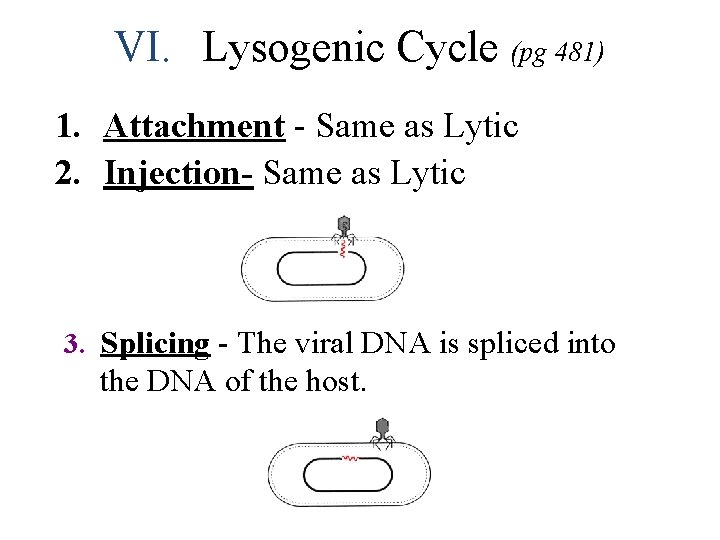
VI. Lysogenic Cycle (pg 481) 1. Attachment - Same as Lytic 2. Injection- Same as Lytic 3. Splicing - The viral DNA is spliced into the DNA of the host.
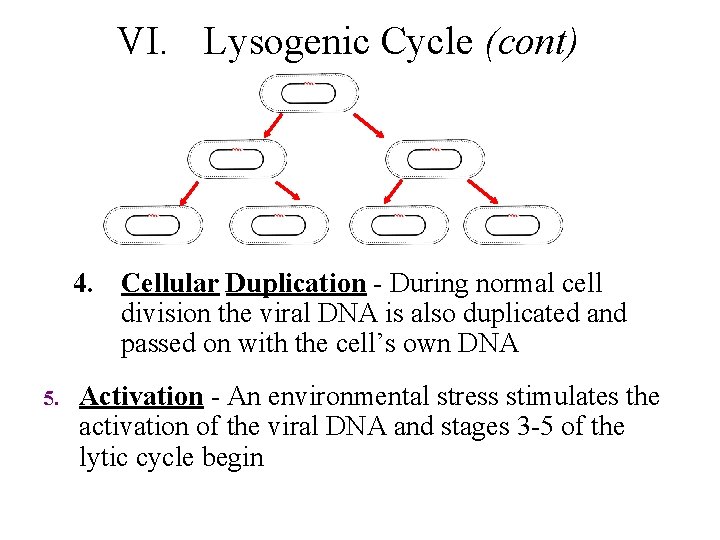
VI. Lysogenic Cycle (cont) 4. Cellular Duplication - During normal cell division the viral DNA is also duplicated and passed on with the cell’s own DNA 5. Activation - An environmental stress stimulates the activation of the viral DNA and stages 3 -5 of the lytic cycle begin
Lysogenic Cycle Movie
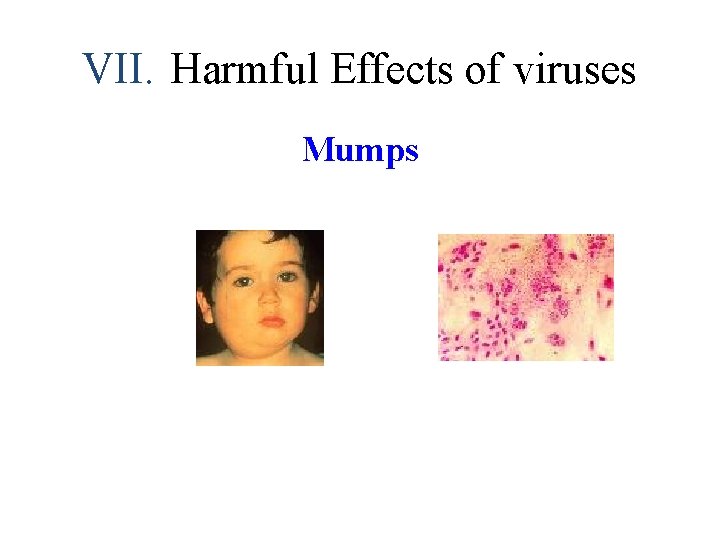
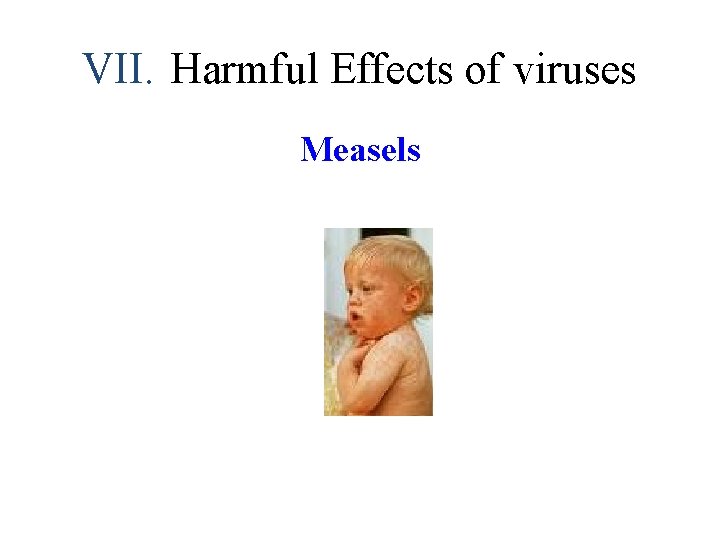
VII. Harmful Effects of viruses A. Cause diseases and disorders 1. Rabies, mumps, measles, AIDS, chickenpox, shingles, influenza (some), polio, common cold, conjuctivitis (pink eye), warts, hepatitis A, B, & C, mononucleosis, cancer & many more
VII. Harmful Effects of viruses Mumps
VII. Harmful Effects of viruses Measels
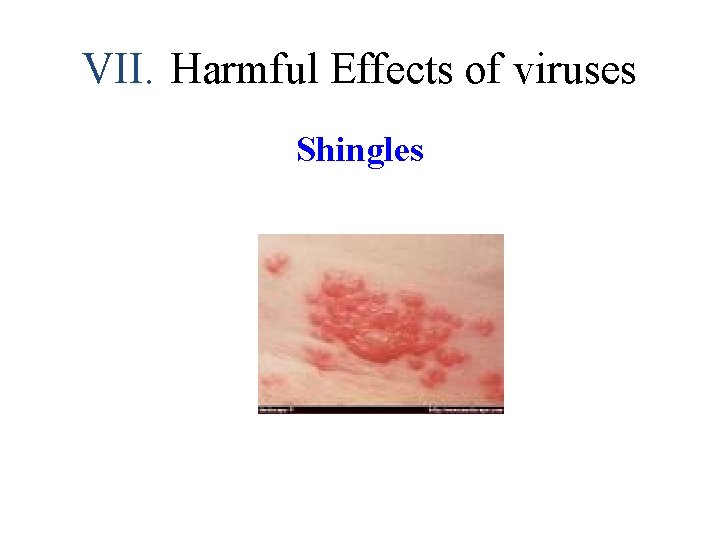
VII. Harmful Effects of viruses Shingles
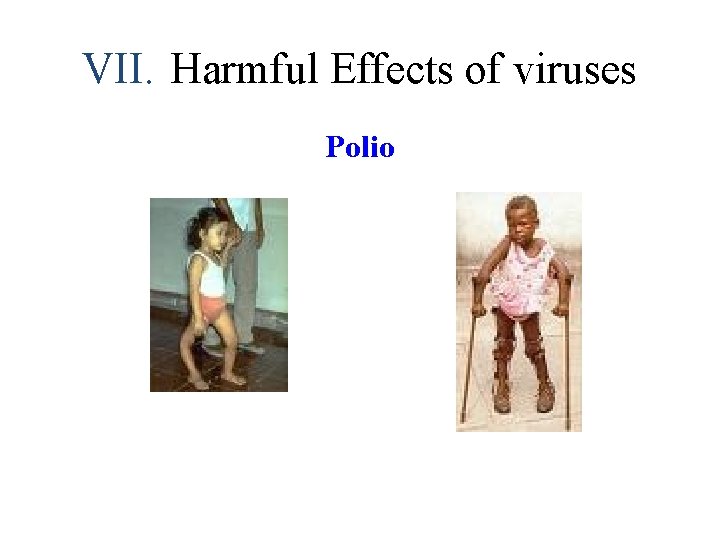
VII. Harmful Effects of viruses Polio
VIII. Beneficial Effects of viruses A. Can be used to insert desirable genetic information into cells. 1. Genetically engineered organisms like tulip coloration 2. Deliver correct genes into human cells. B. Possible antibiotic (kills bacteria)
IX. Combating Viral Infections? A. Antiviral Drugs: 1. AZT (HIV), Acyclovir (herpes), or Vidarabine (encephalitis) treat the immediate symptoms, but these are not cures B. Our immune system
- Slides: 23