
Viruses Morphology and Bacteriophage Life Cycle What is
Viruses: Morphology and Bacteriophage Life Cycle What is a Virus and How is it Built? • Obligate intracellular parasites • Morphology of a Virion • Size (1/1000 to 1/4 size of bacterium) • Composition • RNA vs DNA • Capsid, envelope, spikes • Shapes • helical, polyhedral (isometric) , complex • Host ranges and grouping of viruses • Bacterial, plant, animal viruses • Propagation and study of viruses • Bacteriophage plaques on a lawn • Animal virus propagation • Identifying viruses Bacterial Virus Life Cycles (DNA viruses) • Lytic Cycle (e. g. T 4 bacteriophage) • Attachment • Penetration/Entry • Biosynthesis • Assembly • Lysis/Release • Lysogenic Life Cycle Viruses cannot reproduce outside of a cell. They are extremely small and come in three different shapes. They are very specific for their hosts. In the lytic cycle of bacteriophages, they enter, reproduce, and leave. Figure 13. 1
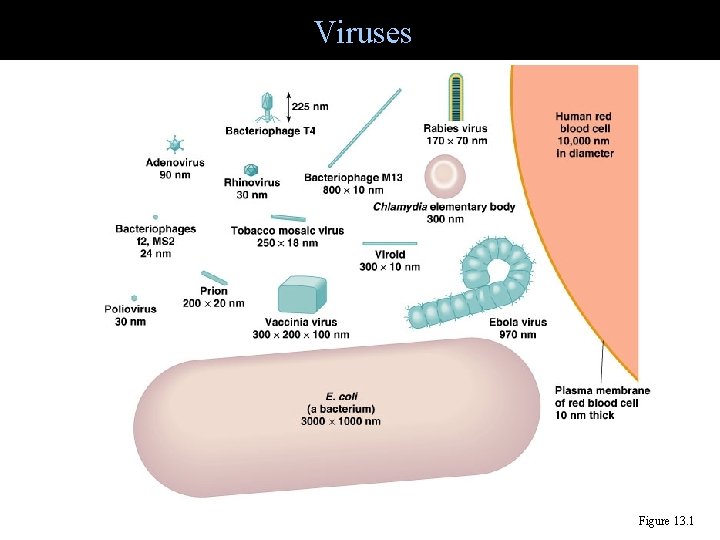
Viruses Figure 13. 1

Helical Viruses Figure 13. 4 a, b

Polyhedral (Isometric) Viruses Figure 13. 2 a, b
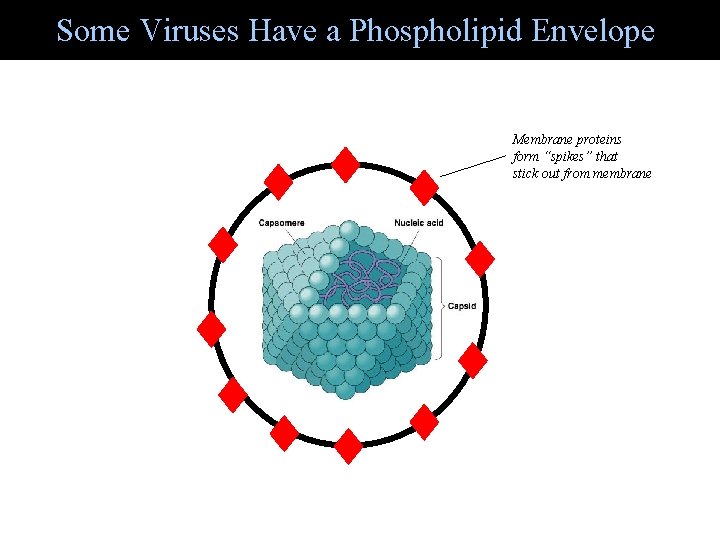
Some Viruses Have a Phospholipid Envelope Membrane proteins form “spikes” that stick out from membrane

Complex Viruses Figure 13. 5 a

Viral Taxonomy • “Family” names end in -viridae • “Genus” names end in -virus • Viral species: A group of viruses sharing the same genetic information and ecological niche (host). Common names are used for species • Subspecies are designated by a number • Herpesviridae • Retroviridae • Herpesvirus • Lentivirus • Human herpes virus 1, HHV 2, HHV 3 • Human Immunodeficiency Virus 1, HIV 2
Viruses: Morphology and Bacteriophage Life Cycle What is a Virus and How is it Built? • Obligate intracellular parasites • Morphology of a Virion • Size (1/1000 to 1/4 size of bacterium) • Composition • RNA vs DNA • Capsid, envelope, spikes • Shapes • helical, polyhedral, complex • Host ranges and grouping of viruses • Bacterial, plant, animal viruses • Propagation and study of viruses • Bacteriophage plaques on a lawn • Animal virus propagation • Identifying viruses Bacterial Virus Life Cycles (DNA viruses) • Lytic Cycle (e. g. T 4 bacteriophage) • Attachment • Penetration/Entry • Biosynthesis • Assembly • Lysis/Release Viruses cannot reproduce outside of a cell. They are extremely small and come in three different shapes. They are very specific for their hosts. In the lytic cycle of bacteriophages, they enter, reproduce, and leave. Figure 13. 1
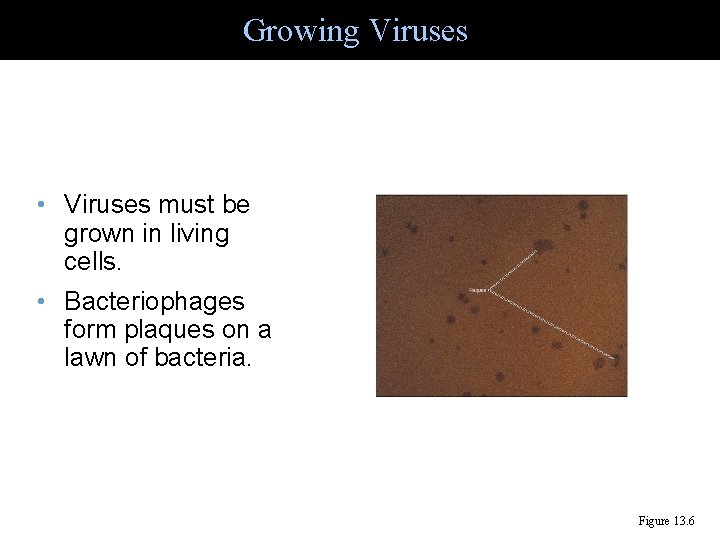
Growing Viruses • Viruses must be grown in living cells. • Bacteriophages form plaques on a lawn of bacteria. Figure 13. 6
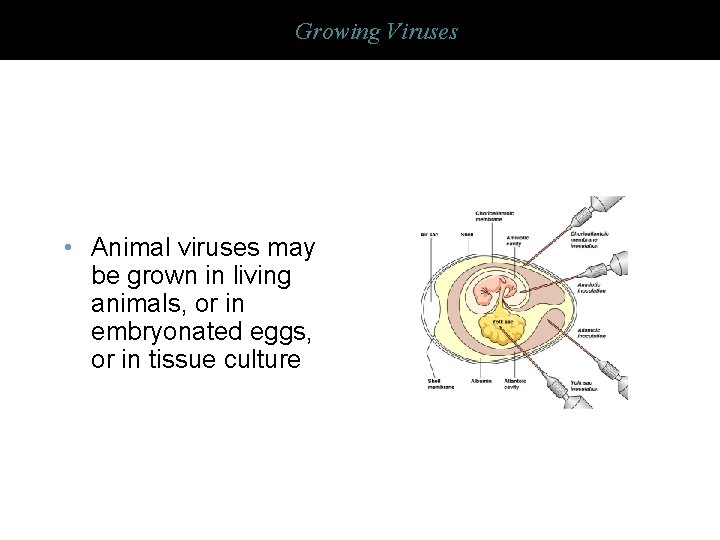
Growing Viruses • Animal viruses may be grown in living animals, or in embryonated eggs, or in tissue culture
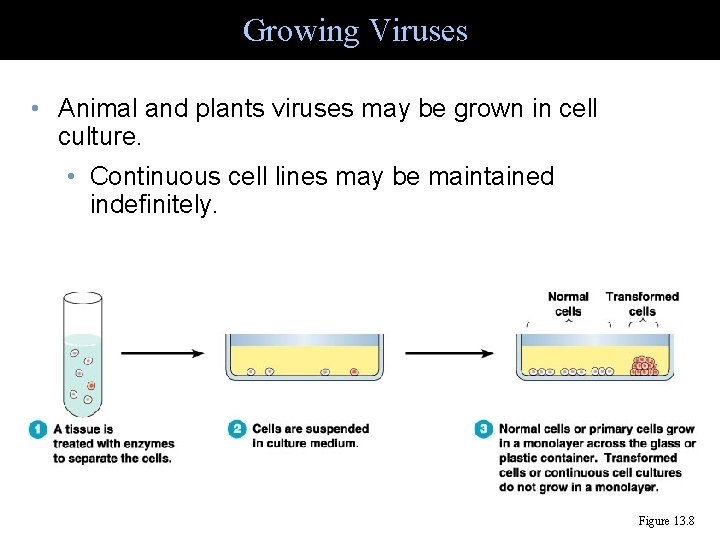
Growing Viruses • Animal and plants viruses may be grown in cell culture. • Continuous cell lines may be maintained indefinitely. Figure 13. 8
Virus Identification • Cytopathic effects • Serological tests • Detect antibodies against viruses in a patient • Use antibodies to identify viruses in neutralization tests, viral hemagglutination, and Western blot • Nucleic acids • RFLPs (DNA fingerprint) • PCR (selectively amplifying and detecting key sequences)
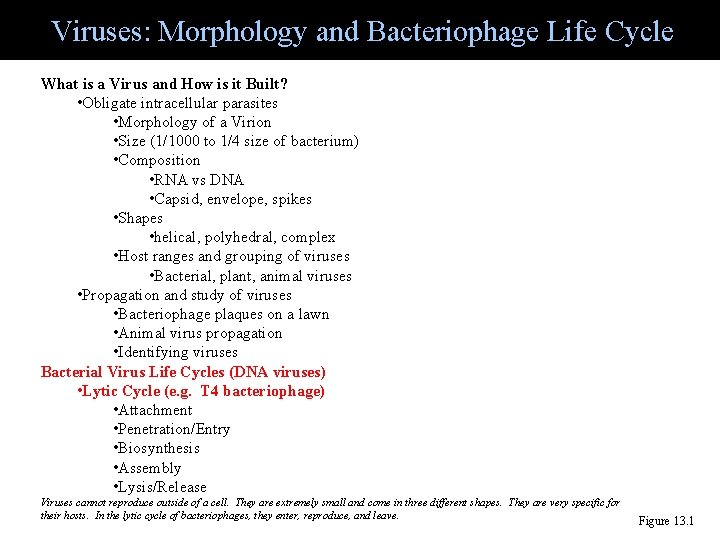
Viruses: Morphology and Bacteriophage Life Cycle What is a Virus and How is it Built? • Obligate intracellular parasites • Morphology of a Virion • Size (1/1000 to 1/4 size of bacterium) • Composition • RNA vs DNA • Capsid, envelope, spikes • Shapes • helical, polyhedral, complex • Host ranges and grouping of viruses • Bacterial, plant, animal viruses • Propagation and study of viruses • Bacteriophage plaques on a lawn • Animal virus propagation • Identifying viruses Bacterial Virus Life Cycles (DNA viruses) • Lytic Cycle (e. g. T 4 bacteriophage) • Attachment • Penetration/Entry • Biosynthesis • Assembly • Lysis/Release Viruses cannot reproduce outside of a cell. They are extremely small and come in three different shapes. They are very specific for their hosts. In the lytic cycle of bacteriophages, they enter, reproduce, and leave. Figure 13. 1

Lytic Lifecycle of a Bacteriophage I Bacterial cell wall Bacterial chromosome Capsid DNA Capsid Sheath 1 Attachment: Phage attaches to host cell. Tail fiber Base plate Pin Cell wall Tail Plasma membrane 2 Penetration: Phage pnetrates host cell and injects its DNA. Sheath contracted Tail core 3 Biosynthesis: Transcription/ Translation and Viral chromosome replication Figure 13. 10. 1
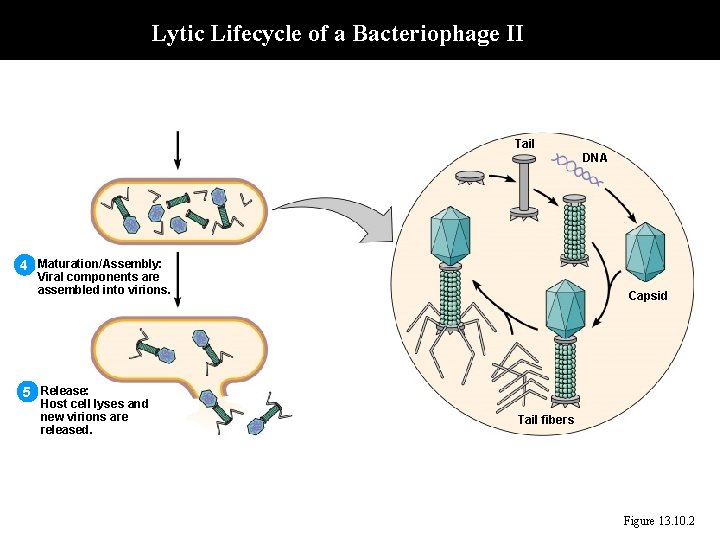
Lytic Lifecycle of a Bacteriophage II Tail DNA 4 Maturation/Assembly: Viral components are assembled into virions. Capsid 5 Release: Host cell lyses and new virions are released. Tail fibers Figure 13. 10. 2
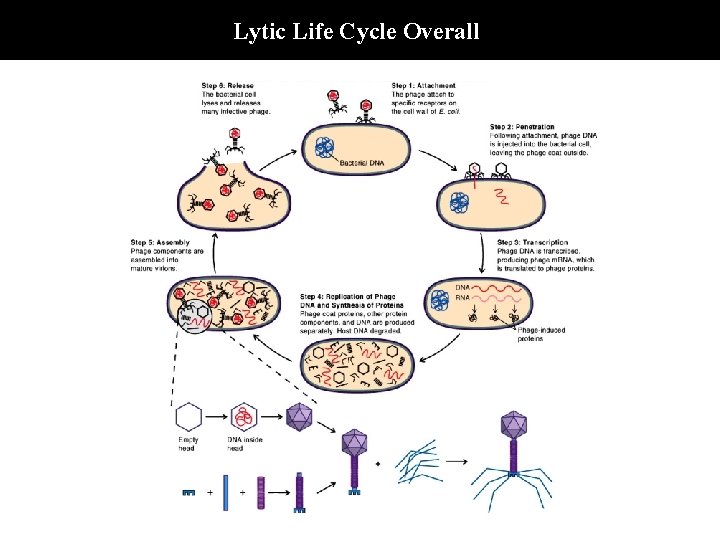
Lytic Life Cycle Overall
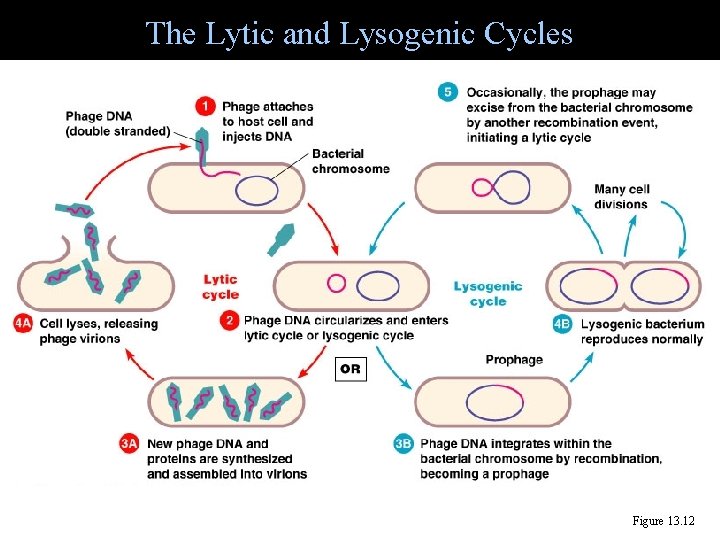
The Lytic and Lysogenic Cycles Figure 13. 12
Viruses: Morphology and Bacteriophage Life Cycle What is a Virus and How is it Built? • Obligate intracellular parasites • Morphology of a Virion • Size (1/1000 to 1/4 size of bacterium) • Composition • RNA vs DNA • Capsid, envelope, spikes • Shapes • helical, polyhedral, complex • Host ranges and grouping of viruses • Bacterial, plant, animal viruses • Propagation and study of viruses • Bacteriophage plaques on a lawn • Animal virus propagation • Identifying viruses Bacterial Virus Life Cycles (DNA viruses) • Lytic Cycle (e. g. T 4 bacteriophage) • Attachment • Penetration/Entry • Biosynthesis • Assembly • Lysis/Release • Lysogenic Life Cycle Viruses cannot reproduce outside of a cell. They are extremely small and come in three different shapes. They are very specific for their hosts. In the lytic cycle of bacteriophages, they enter, reproduce, and leave. Figure 13. 1
- Slides: 18