
Viruses Bacteria Protists and Fungi Key Questions What
Viruses, Bacteria, Protists, and Fungi
Key Questions What are the characteristics of viruses, bacteria, protists, and fungi? How do viruses, bacteria, protists, and fungi interact with nature and people?
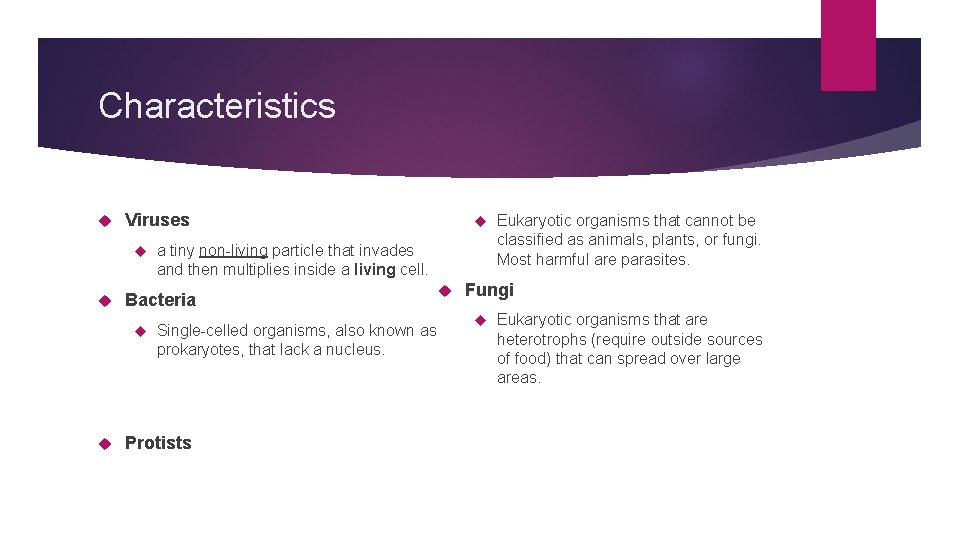
Characteristics Viruses a tiny non-living particle that invades and then multiplies inside a living cell. Bacteria Single-celled organisms, also known as prokaryotes, that lack a nucleus. Protists Eukaryotic organisms that cannot be classified as animals, plants, or fungi. Most harmful are parasites. Fungi Eukaryotic organisms that are heterotrophs (require outside sources of food) that can spread over large areas.
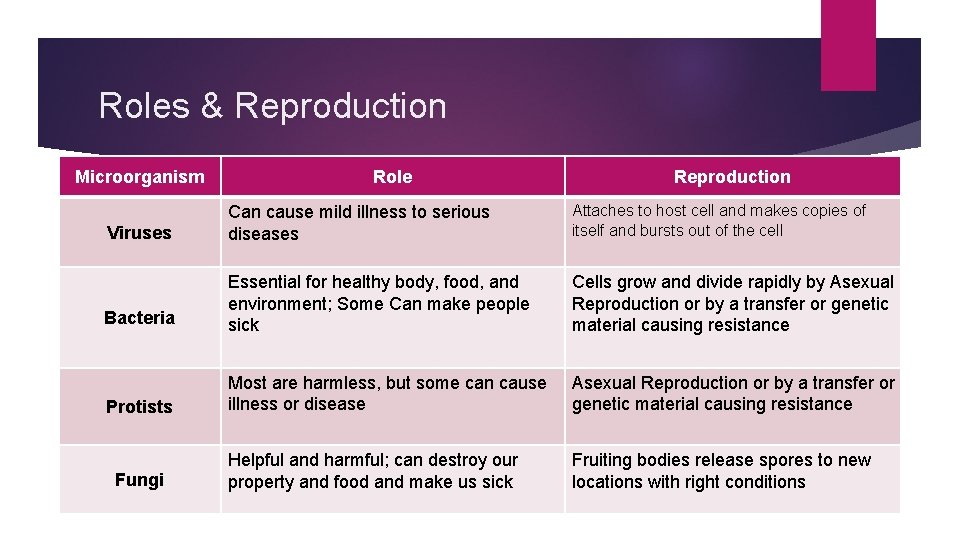
Roles & Reproduction Microorganism Role Reproduction Viruses Can cause mild illness to serious diseases Attaches to host cell and makes copies of itself and bursts out of the cell Bacteria Essential for healthy body, food, and environment; Some Can make people sick Cells grow and divide rapidly by Asexual Reproduction or by a transfer or genetic material causing resistance Protists Most are harmless, but some can cause illness or disease Asexual Reproduction or by a transfer or genetic material causing resistance Helpful and harmful; can destroy our property and food and make us sick Fruiting bodies release spores to new locations with right conditions Fungi
- Slides: 4