
Viruses Bacteria A guide to understanding the similarities
Viruses & Bacteria A guide to understanding the similarities and differences of viruses and bacteria
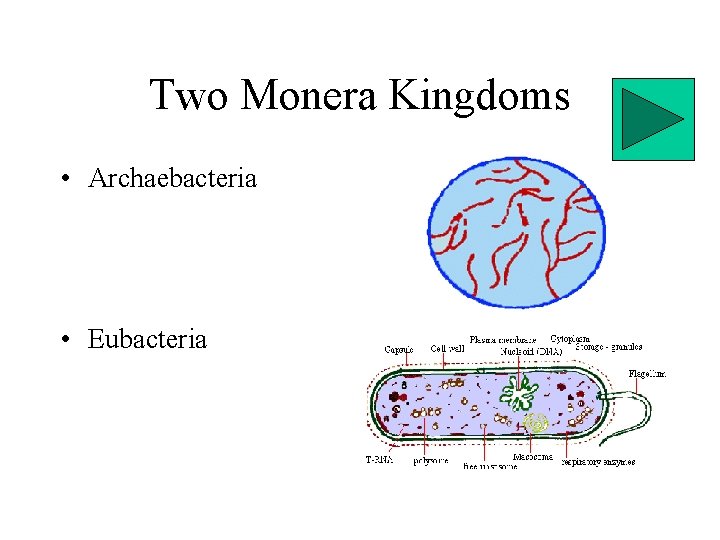
Two Monera Kingdoms • Archaebacteria • Eubacteria
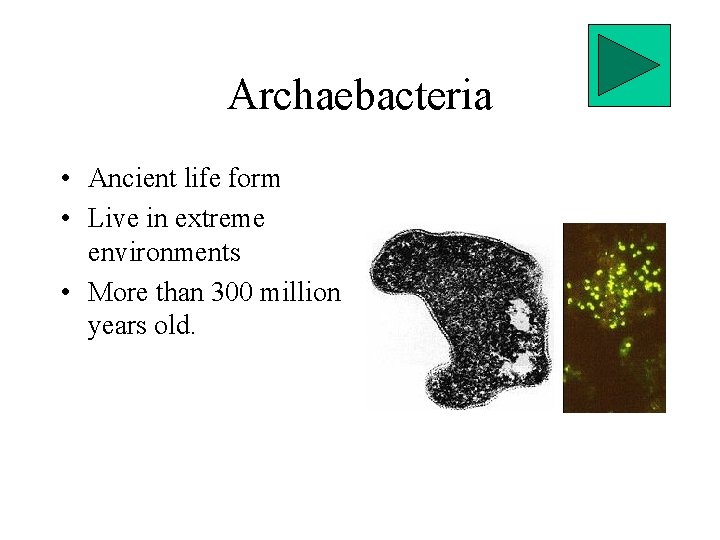
Archaebacteria • Ancient life form • Live in extreme environments • More than 300 million years old.
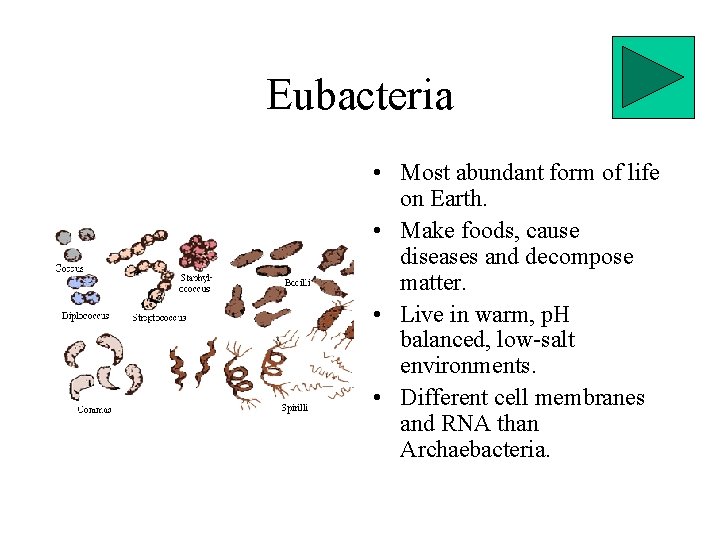
Eubacteria • Most abundant form of life on Earth. • Make foods, cause diseases and decompose matter. • Live in warm, p. H balanced, low-salt environments. • Different cell membranes and RNA than Archaebacteria.
Viruses • • Greek word meaning “to poison”. Measured in nanometers (nm). A nanometer is = to 1 billionth of a meter. Viruses have 2 parts: a core of hereditary material and an outer coat of protection. • A bacteriophage is a type of virus that infects a bacteria.

Bacteriophage • It is a virus. • It attaches to bacteria with it’s tail. • It sends it’s genetic material from it’s head to it’s tail. • More of the virus reproduces in the host bacteria.
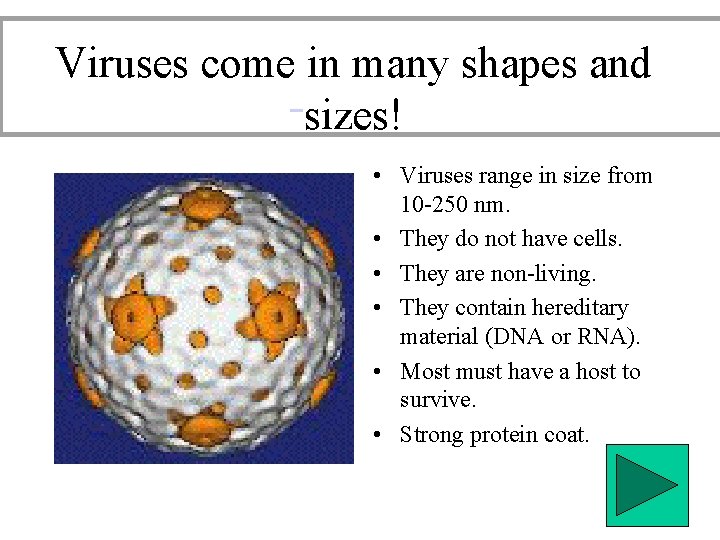
Viruses come in many shapes and sizes! • Viruses range in size from 10 -250 nm. • They do not have cells. • They are non-living. • They contain hereditary material (DNA or RNA). • Most must have a host to survive. • Strong protein coat.
Bacteria • Kingdom: Moneran has been split into the Acheabacteria Kingdom and the Eubacteria Kingdom. • One celled organisms. • No nucleus • Oldest form of life on Earth. • Most live in colonies.
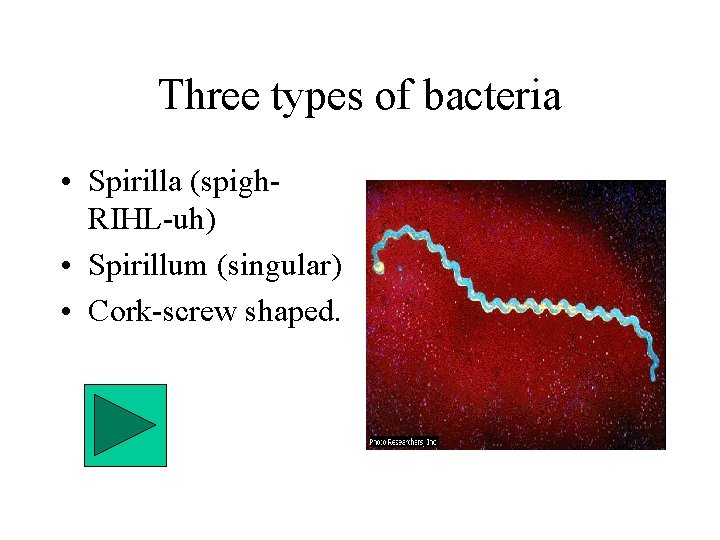
Three types of bacteria • Spirilla (spigh. RIHL-uh) • Spirillum (singular) • Cork-screw shaped.
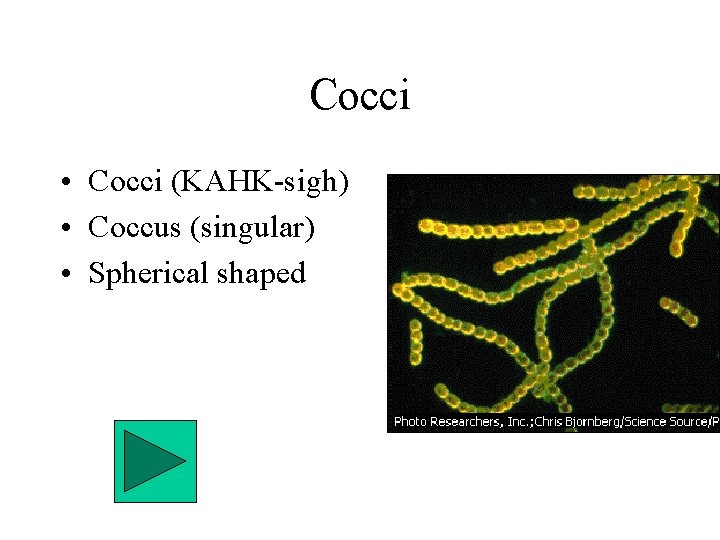
Cocci • Cocci (KAHK-sigh) • Coccus (singular) • Spherical shaped
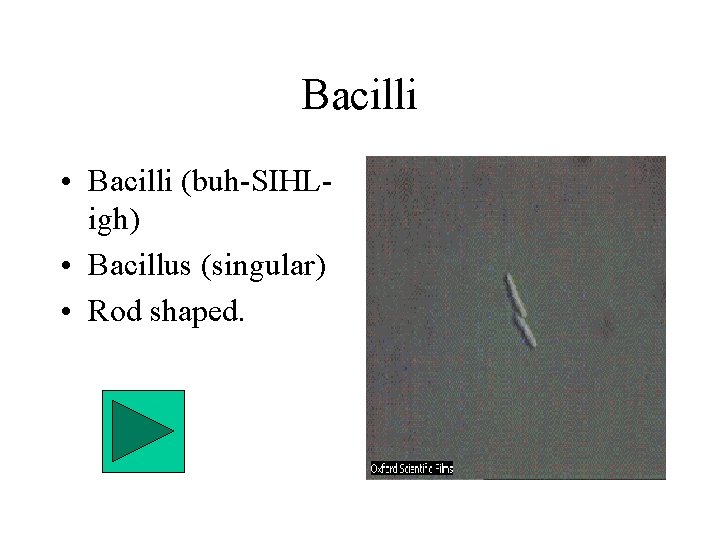
Bacilli • Bacilli (buh-SIHLigh) • Bacillus (singular) • Rod shaped.
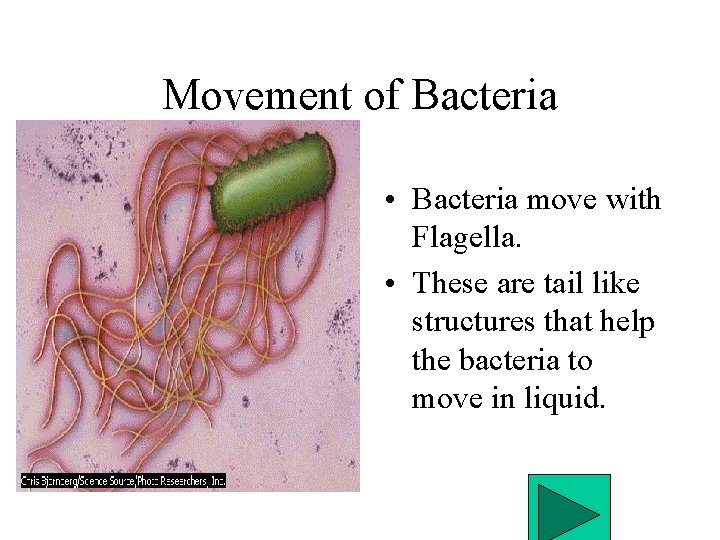
Movement of Bacteria • Bacteria move with Flagella. • These are tail like structures that help the bacteria to move in liquid.
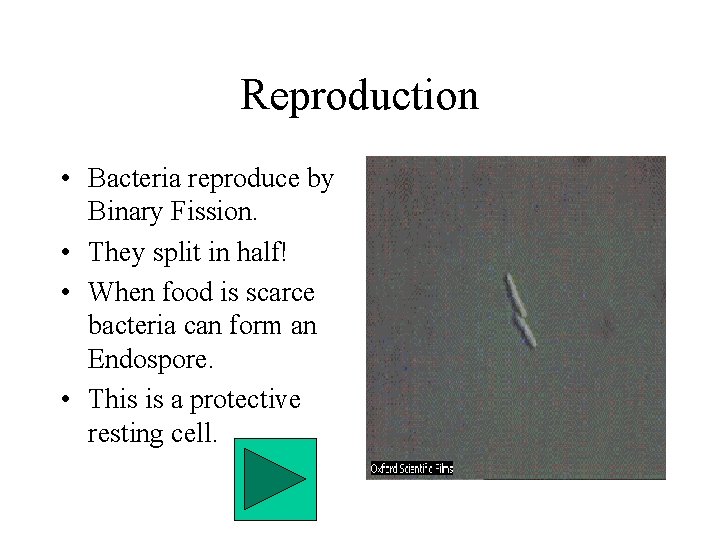
Reproduction • Bacteria reproduce by Binary Fission. • They split in half! • When food is scarce bacteria can form an Endospore. • This is a protective resting cell.
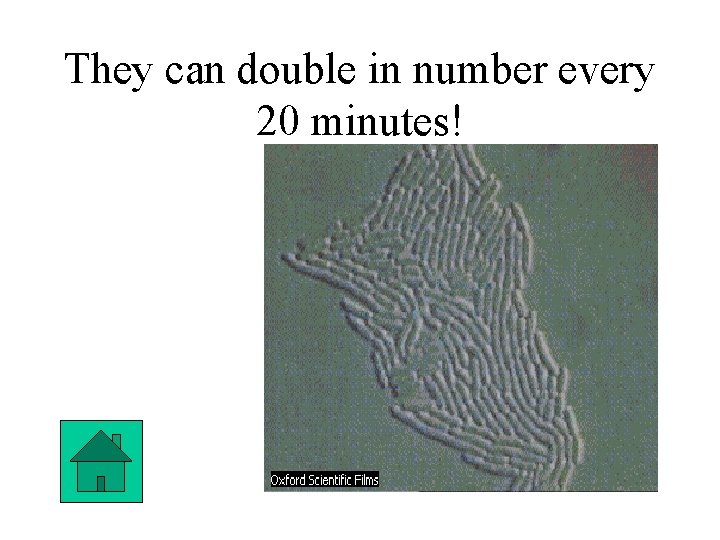
They can double in number every 20 minutes!
- Slides: 14