
Viruses Are Viruses Living or Nonliving Viruses are
- Slides: 67
Viruses:
Are Viruses Living or Non-living? Viruses are both and neither They have some properties of life but not others For example, viruses can be killed, even crystallized like table salt However, they can’t maintain a constant internal state (homeostasis). copyright cmassengale 2
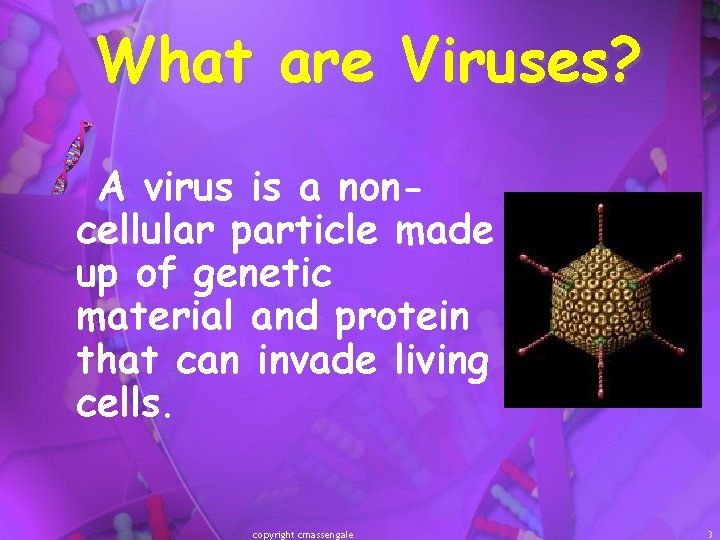
What are Viruses? A virus is a noncellular particle made up of genetic material and protein that can invade living cells. copyright cmassengale 3
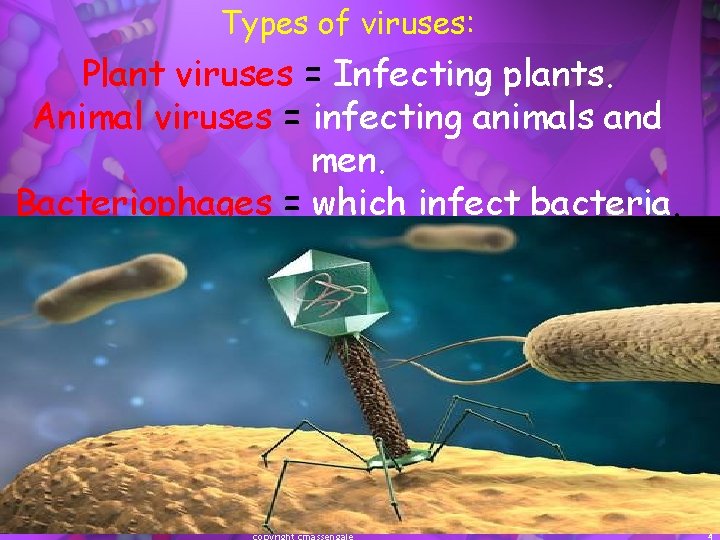
Types of viruses: Plant viruses = Infecting plants. Animal viruses = infecting animals and men. Bacteriophages = which infect bacteria.
VIRAL HISTORY copyright cmassengale 5
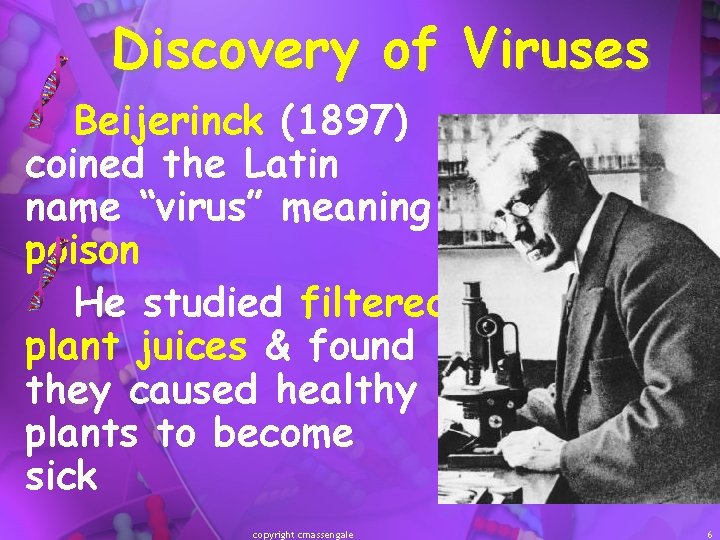
Discovery of Viruses Beijerinck (1897) coined the Latin name “virus” meaning poison He studied filtered plant juices & found they caused healthy plants to become sick copyright cmassengale 6
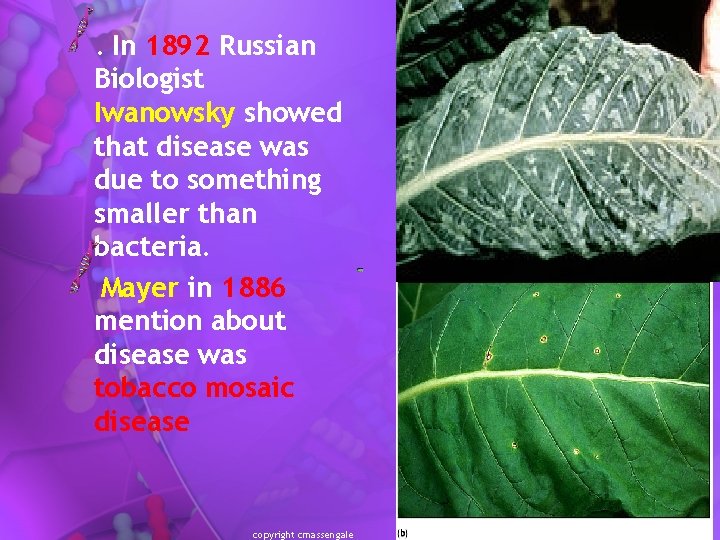
. In 1892 Russian Biologist Iwanowsky showed that disease was due to something smaller than bacteria. Mayer in 1886 mention about disease was tobacco mosaic disease copyright cmassengale 7
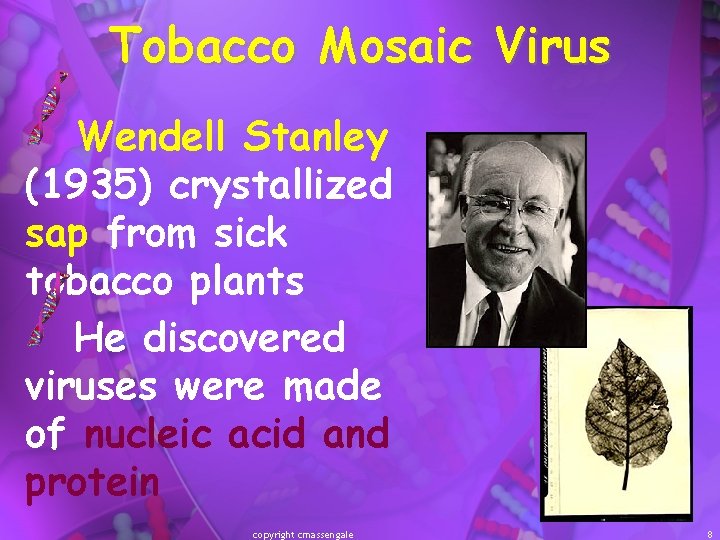
Tobacco Mosaic Virus Wendell Stanley (1935) crystallized sap from sick tobacco plants He discovered viruses were made of nucleic acid and protein copyright cmassengale 8
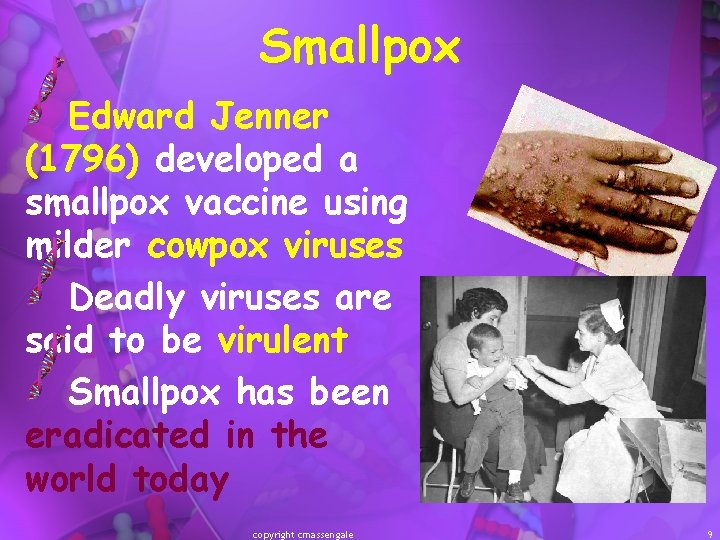
Smallpox Edward Jenner (1796) developed a smallpox vaccine using milder cowpox viruses Deadly viruses are said to be virulent Smallpox has been eradicated in the world today copyright cmassengale 9
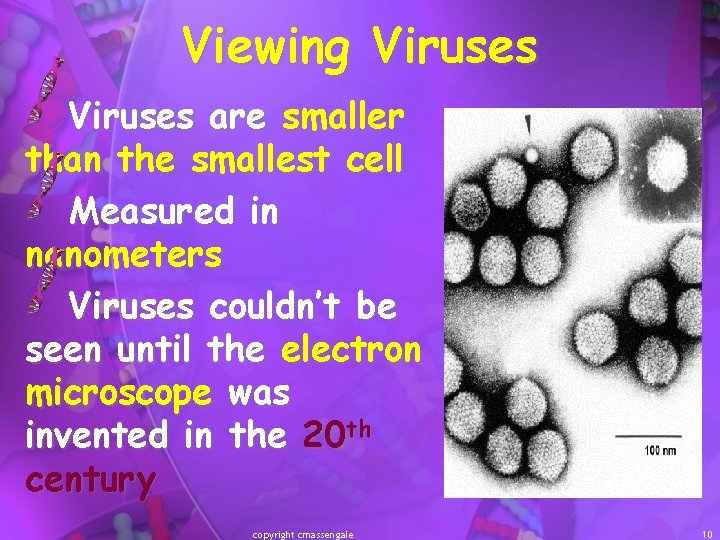
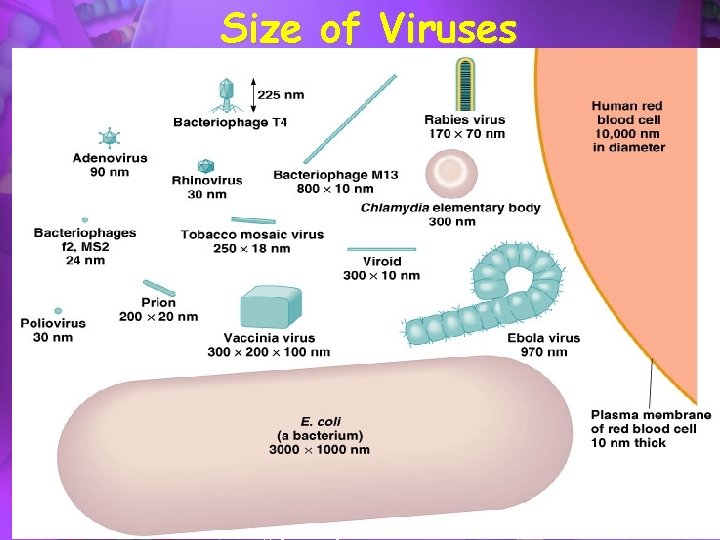
Viewing Viruses are smaller than the smallest cell Measured in nanometers Viruses couldn’t be seen until the electron microscope was invented in the 20 th century copyright cmassengale 10
Size of Viruses copyright cmassengale 11
Viral Structure
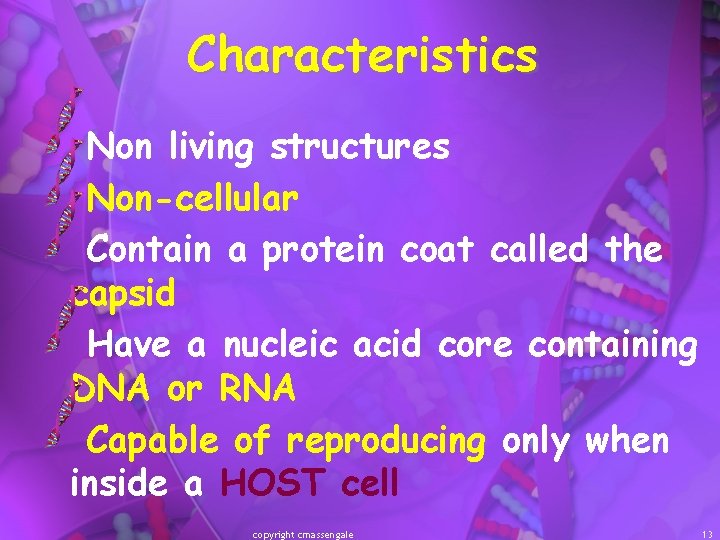
Characteristics Non living structures Non-cellular Contain a protein coat called the capsid Have a nucleic acid core containing DNA or RNA Capable of reproducing only when inside a HOST cell copyright cmassengale 13
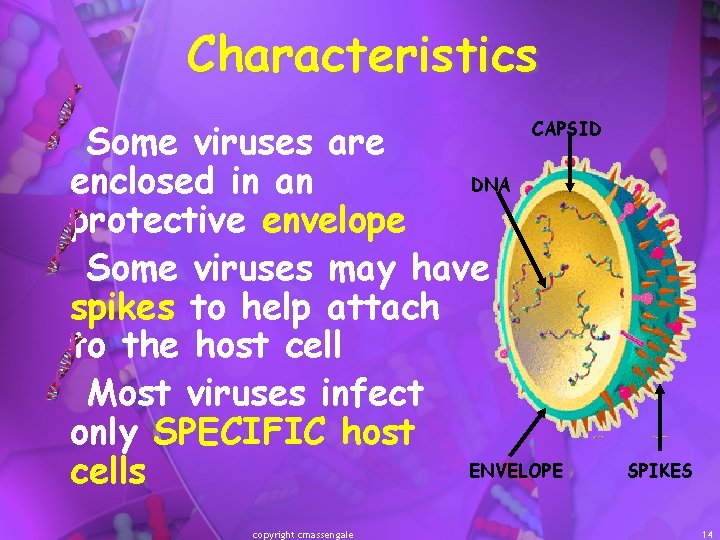
Characteristics Some viruses are DNA enclosed in an protective envelope Some viruses may have spikes to help attach to the host cell Most viruses infect only SPECIFIC host ENVELOPE cells CAPSID copyright cmassengale SPIKES 14
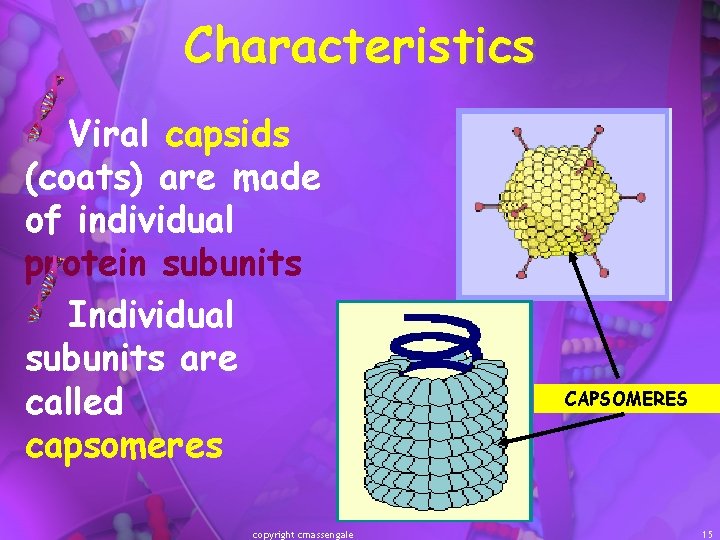
Characteristics Viral capsids (coats) are made of individual protein subunits Individual subunits are called capsomeres copyright cmassengale CAPSOMERES 15
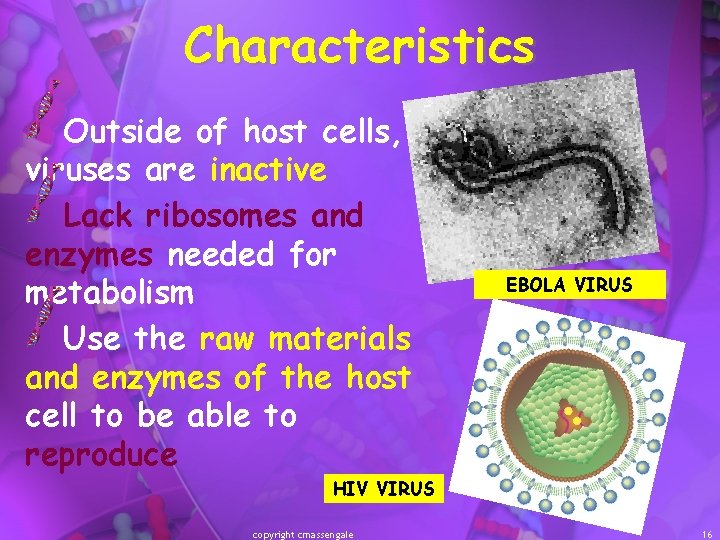
Characteristics Outside of host cells, viruses are inactive Lack ribosomes and enzymes needed for metabolism Use the raw materials and enzymes of the host cell to be able to reproduce EBOLA VIRUS HIV VIRUS copyright cmassengale 16
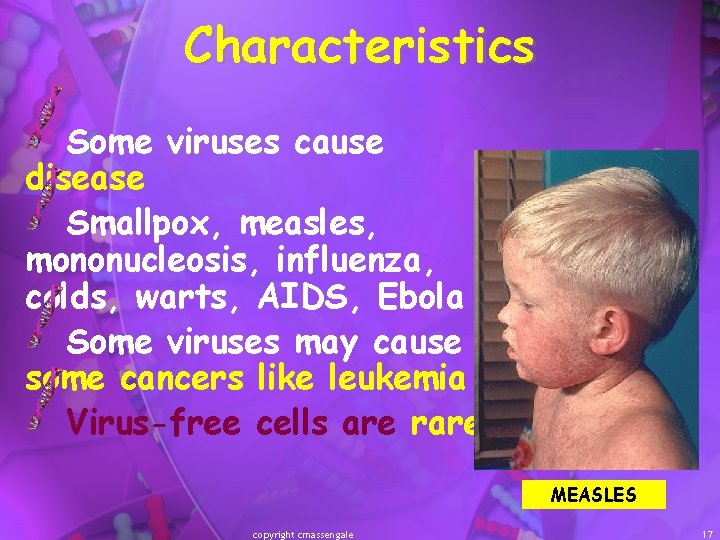
Characteristics Some viruses cause disease Smallpox, measles, mononucleosis, influenza, colds, warts, AIDS, Ebola Some viruses may cause some cancers like leukemia Virus-free cells are rare MEASLES copyright cmassengale 17
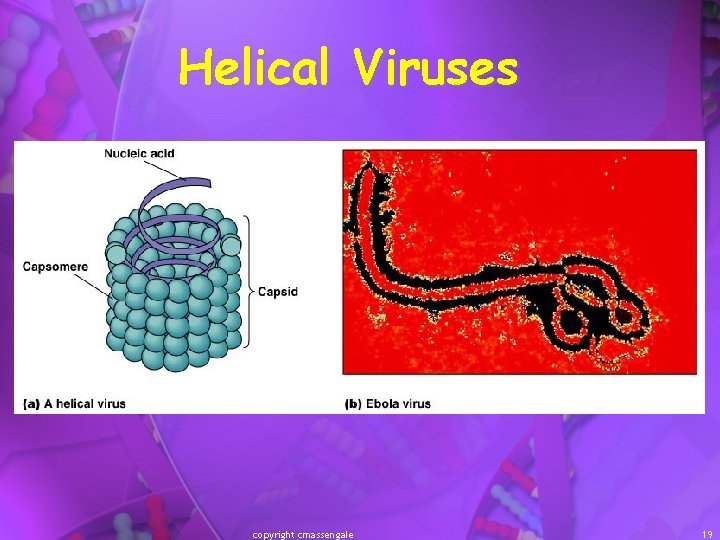
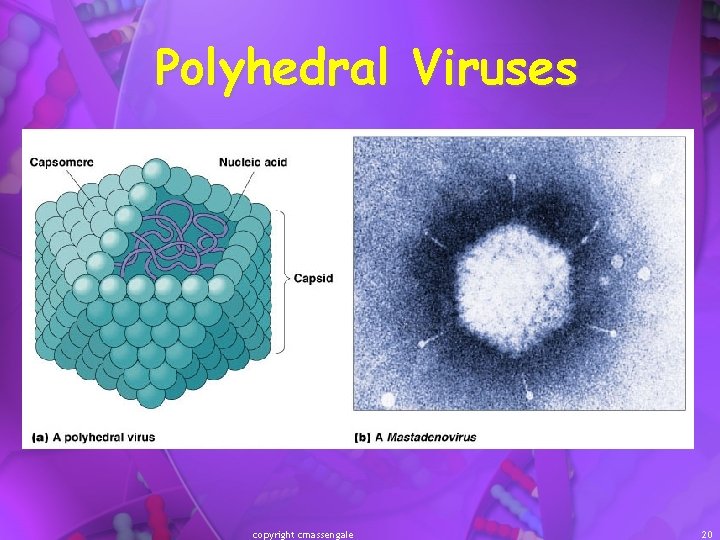
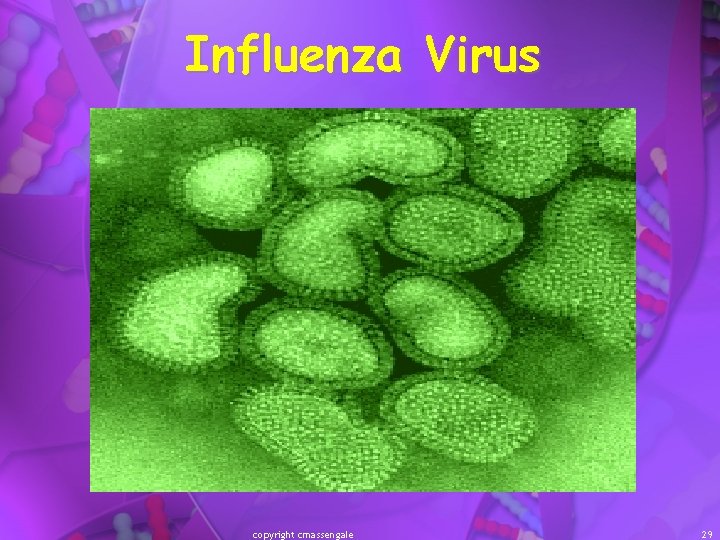
Viral Shapes Viruses come in a variety of shapes Some may be helical shape like the Ebola virus Some may be polyhedral shapes like the influenza virus Others have more complex shapes like bacteriophages copyright cmassengale 18
Helical Viruses copyright cmassengale 19
Polyhedral Viruses copyright cmassengale 20
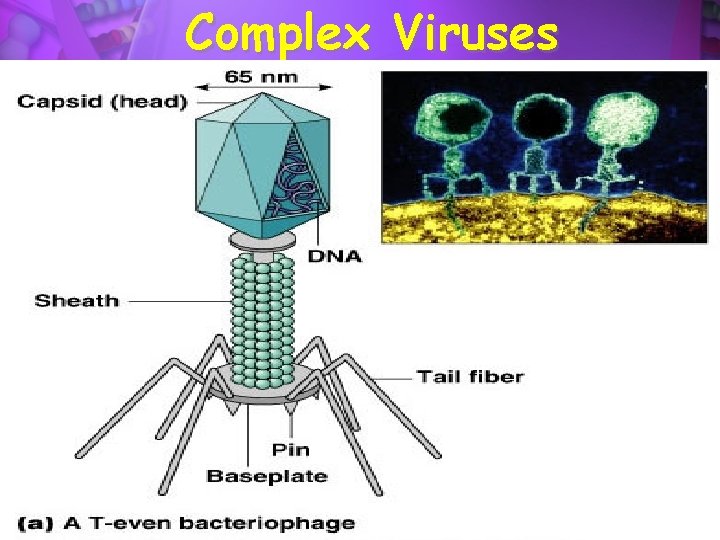
Complex Viruses copyright cmassengale 21
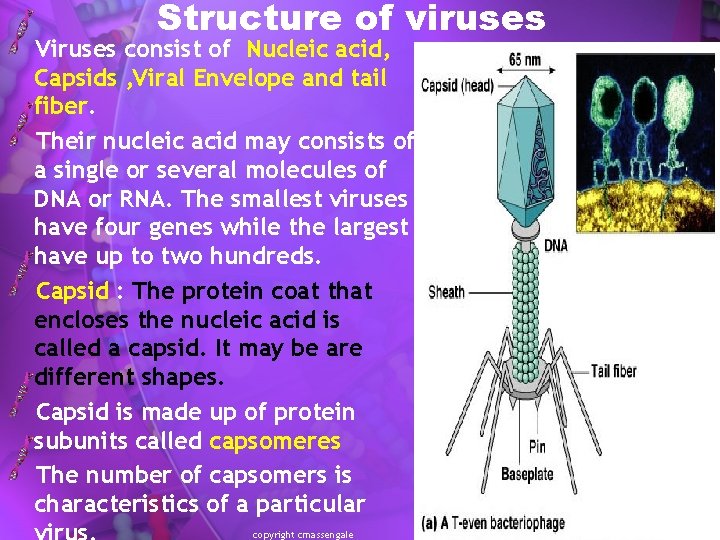
Structure of viruses Viruses consist of Nucleic acid, Capsids , Viral Envelope and tail fiber. Their nucleic acid may consists of a single or several molecules of DNA or RNA. The smallest viruses have four genes while the largest have up to two hundreds. Capsid : The protein coat that encloses the nucleic acid is called a capsid. It may be are different shapes. Capsid is made up of protein subunits called capsomeres The number of capsomers is characteristics of a particular copyright cmassengale 22
Viral envelopes: These are membranous covering around the capsid. It is found some viruses. This covering helps them to infect their hosts. Tail fibers: In bacteriophage virus lower part is tail like. At the posterior end of tail some fiber like structures are present called tail fiber. These fibers take part in the attachment of virus with host cell. copyright cmassengale 23
Taxonomy of Viruses
Viral Taxonomy Family names end in -viridae Genus names end in -virus Viral species: A group of viruses sharing the same genetic information and ecological niche (host). Common names are used for species Subspecies are designated by a number copyright cmassengale 25
Viral Taxonomy Examples Herpesviridae Herpesvirus Human herpes virus 1, HHV 2, HHV 3 Retroviridae Lentivirus Human Immunodeficiency Virus 1, HIV 2 copyright cmassengale 26
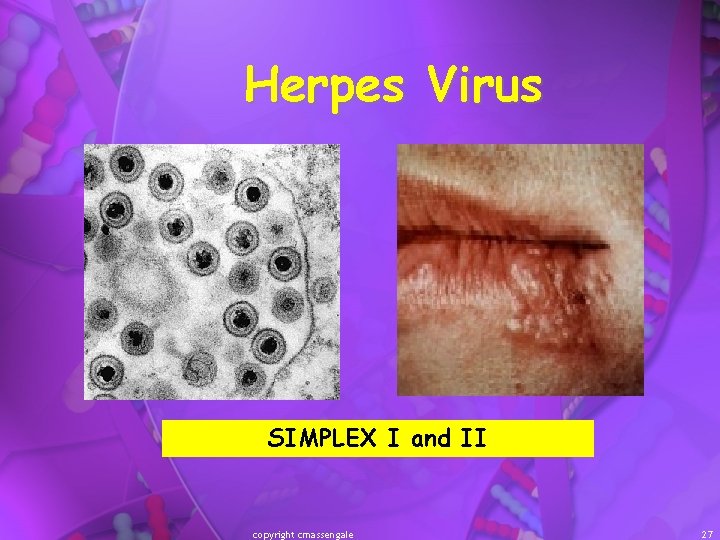
Herpes Virus SIMPLEX I and II copyright cmassengale 27
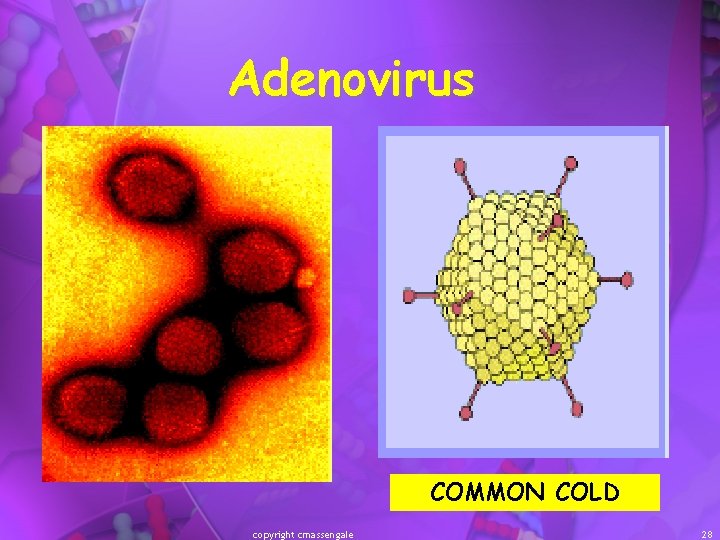
Adenovirus COMMON COLD copyright cmassengale 28
Influenza Virus copyright cmassengale 29
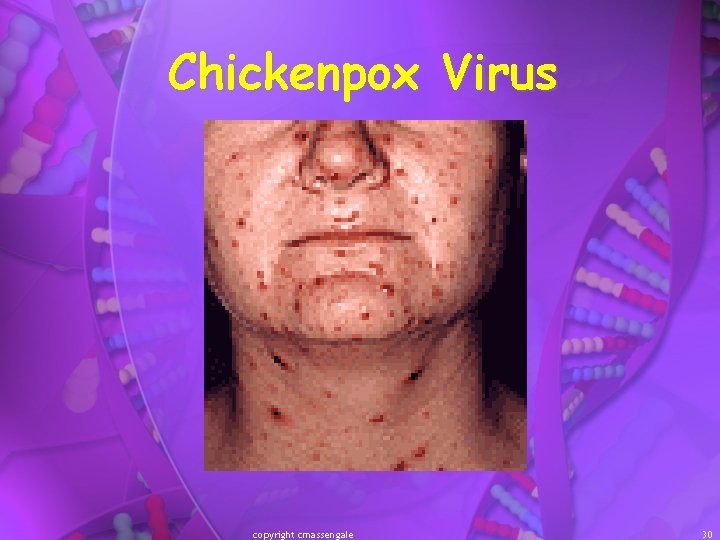
Chickenpox Virus copyright cmassengale 30
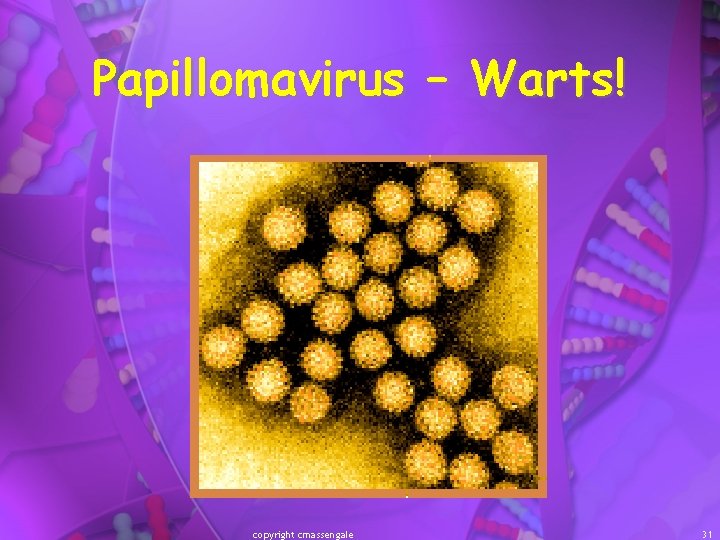
Papillomavirus – Warts! copyright cmassengale 31
Used for Virus Identification RNA or DNA Virus Do or do NOT have an envelope Capsid shape HOST they infect copyright cmassengale 32
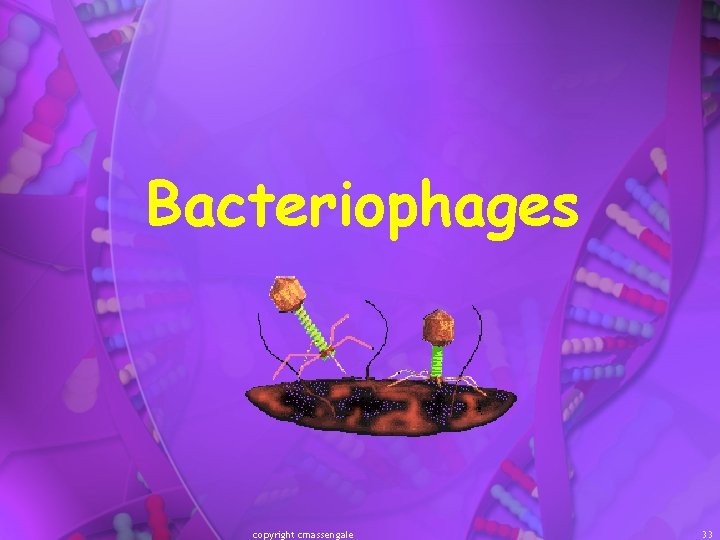
Bacteriophages copyright cmassengale 33
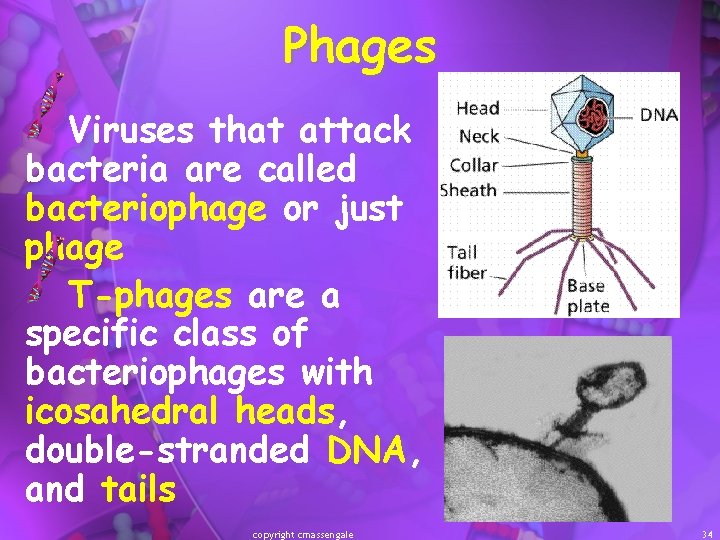
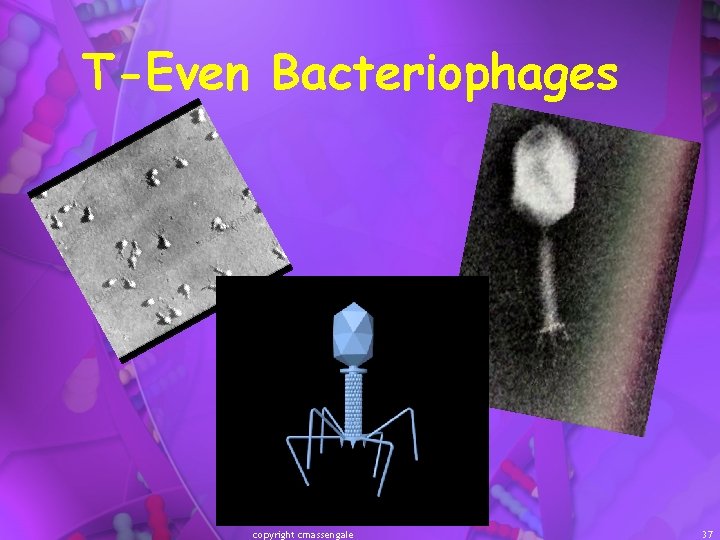
Phages Viruses that attack bacteria are called bacteriophage or just phage T-phages are a specific class of bacteriophages with icosahedral heads, double-stranded DNA, and tails copyright cmassengale 34
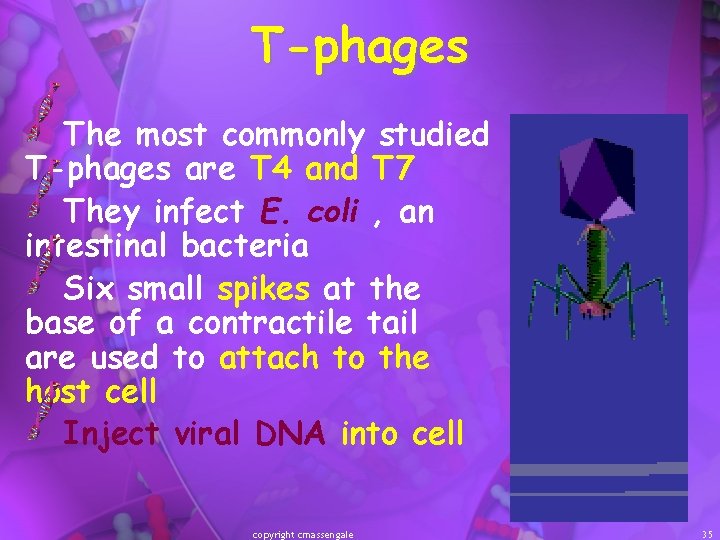
T-phages The most commonly studied T-phages are T 4 and T 7 They infect E. coli , an intestinal bacteria Six small spikes at the base of a contractile tail are used to attach to the host cell Inject viral DNA into cell copyright cmassengale 35
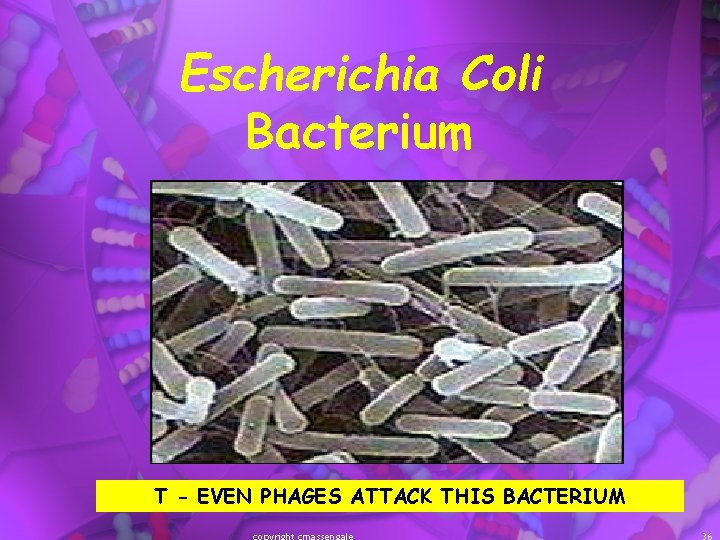
Escherichia Coli Bacterium T - EVEN PHAGES ATTACK THIS BACTERIUM
T-Even Bacteriophages copyright cmassengale 37
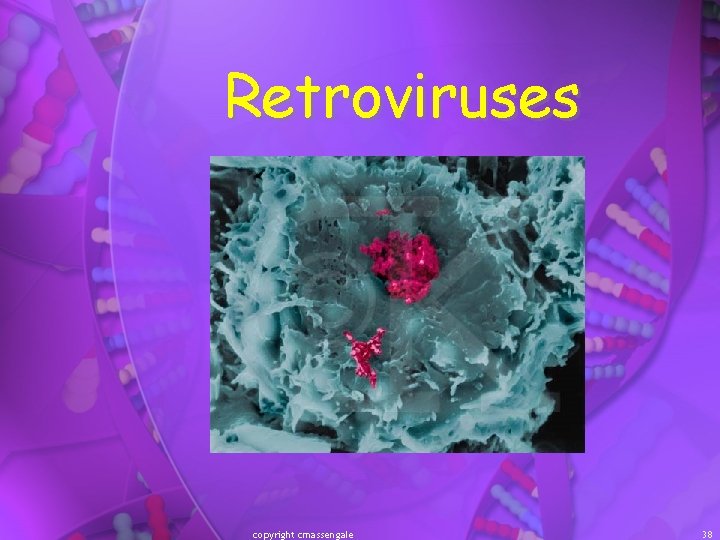
Retroviruses copyright cmassengale 38
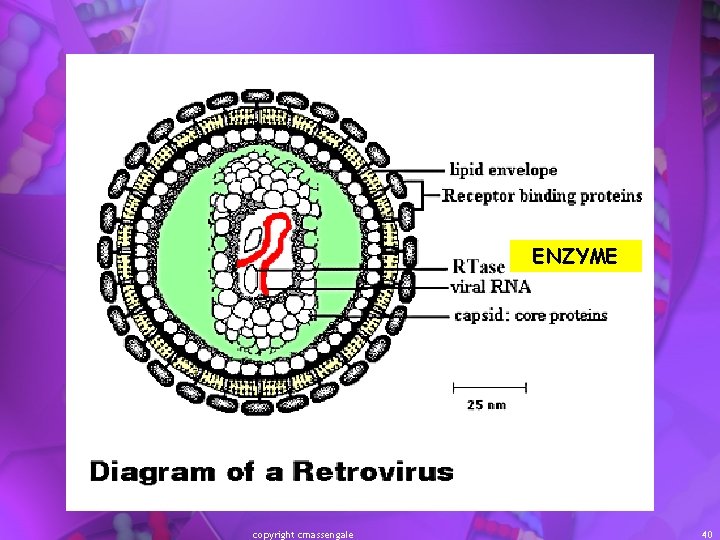
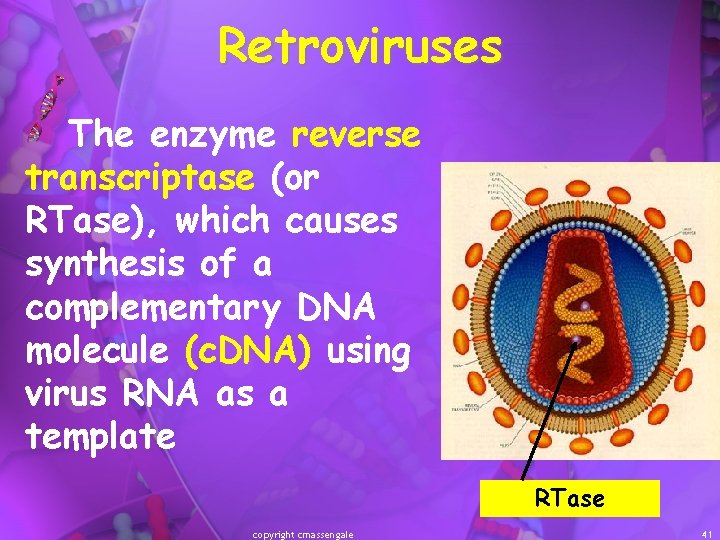
Characteristics of Retroviruses Contain RNA, not DNA Family Retroviridae Contain enzyme called Reverse Transcriptase When a retrovirus infects a cell, it injects its RNA and reverse transcriptase enzyme into the cytoplasm of that cell copyright cmassengale 39
ENZYME copyright cmassengale 40
Retroviruses The enzyme reverse transcriptase (or RTase), which causes synthesis of a complementary DNA molecule (c. DNA) using virus RNA as a template RTase copyright cmassengale 41
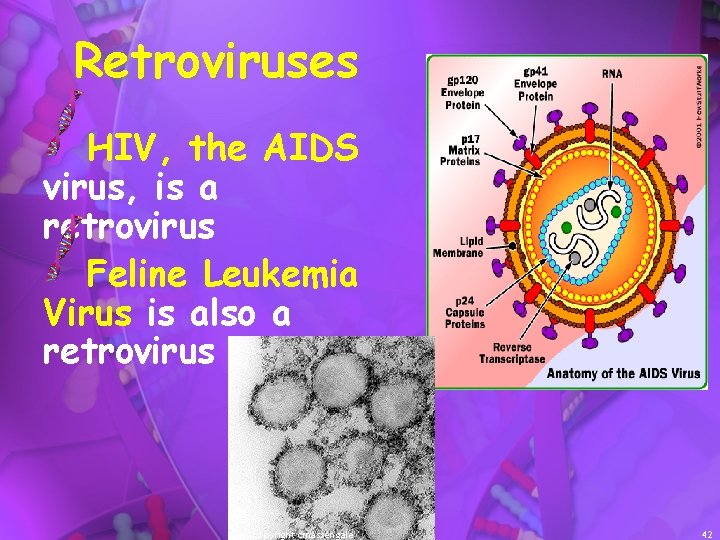
Retroviruses HIV, the AIDS virus, is a retrovirus Feline Leukemia Virus is also a retrovirus copyright cmassengale 42
Viroids & Prions copyright cmassengale 43
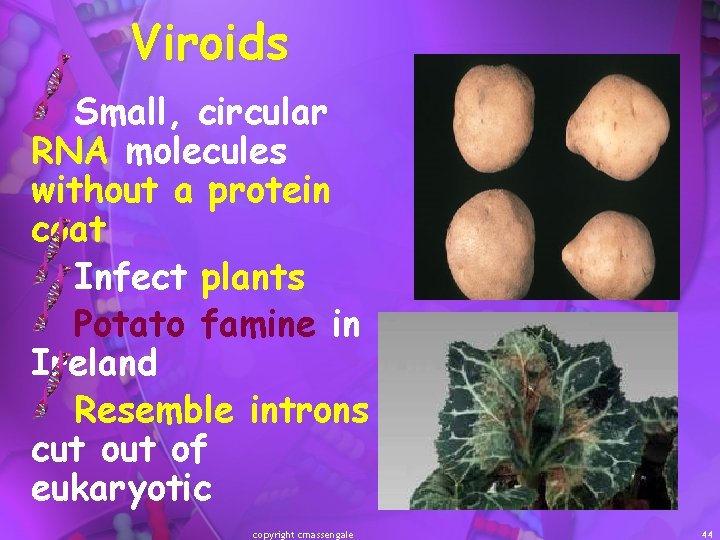
Viroids Small, circular RNA molecules without a protein coat Infect plants Potato famine in Ireland Resemble introns cut of eukaryotic copyright cmassengale 44
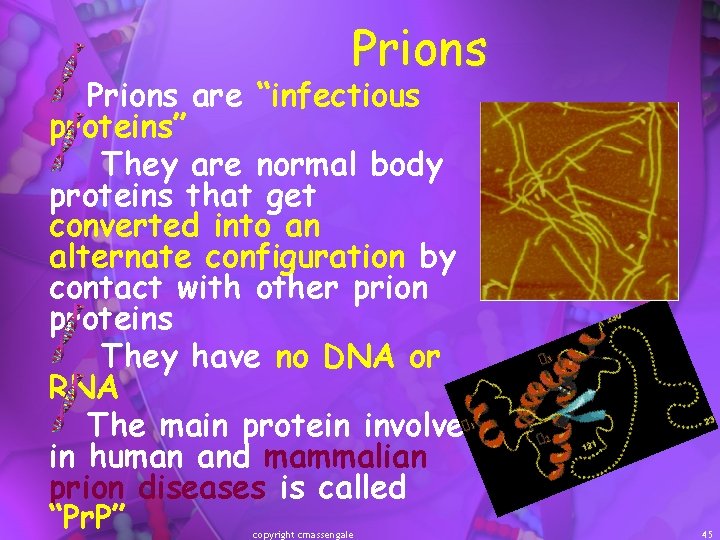
Prions are “infectious proteins” They are normal body proteins that get converted into an alternate configuration by contact with other prion proteins They have no DNA or RNA The main protein involved in human and mammalian prion diseases is called “Pr. P” copyright cmassengale 45
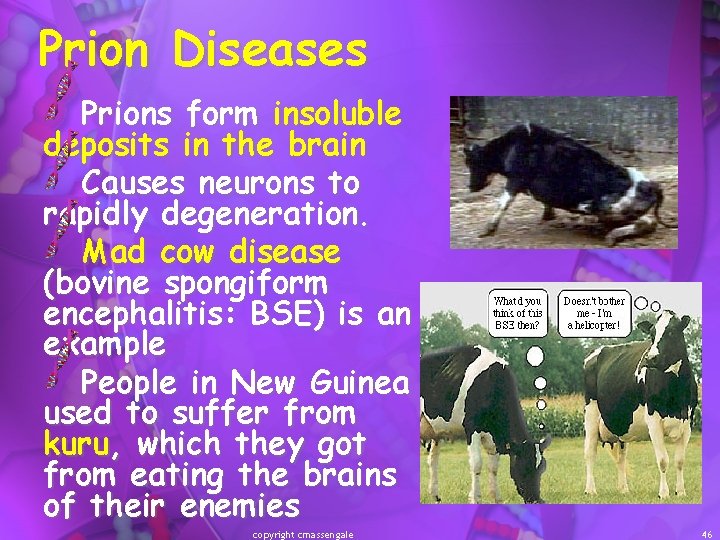
Prion Diseases Prions form insoluble deposits in the brain Causes neurons to rapidly degeneration. Mad cow disease (bovine spongiform encephalitis: BSE) is an example People in New Guinea used to suffer from kuru, which they got from eating the brains of their enemies copyright cmassengale 46
Viral Replication copyright cmassengale 47
Viral Attack Viruses are very specific as to which species they attack HOST specific Humans rarely share viral diseases with other animals Eukaryotic viruses usually have protective envelopes made from the host cell membrane copyright cmassengale 48
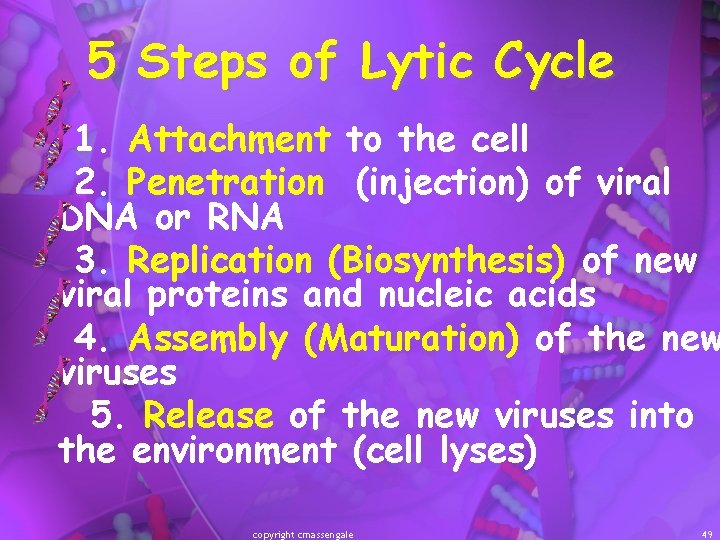
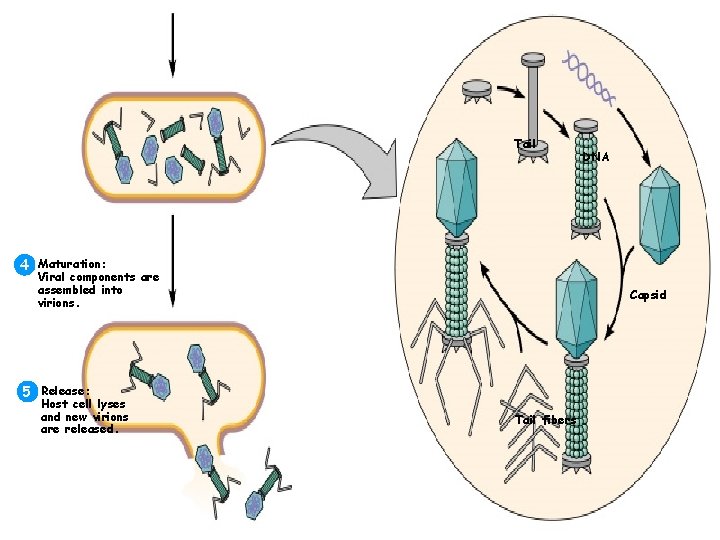
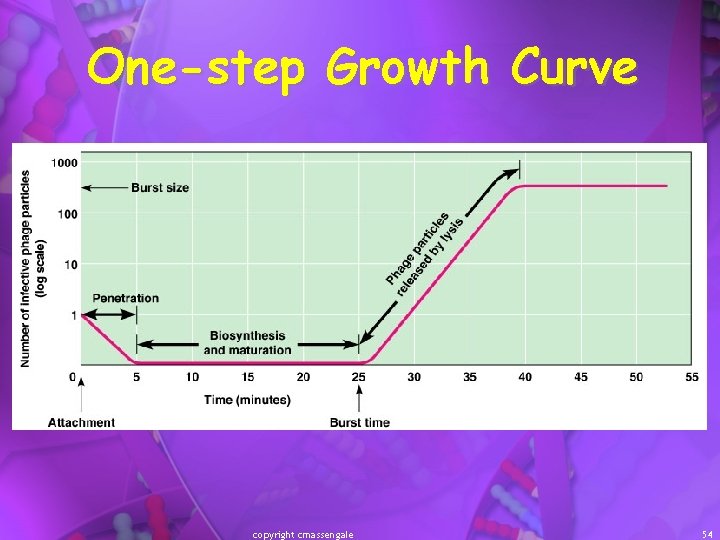
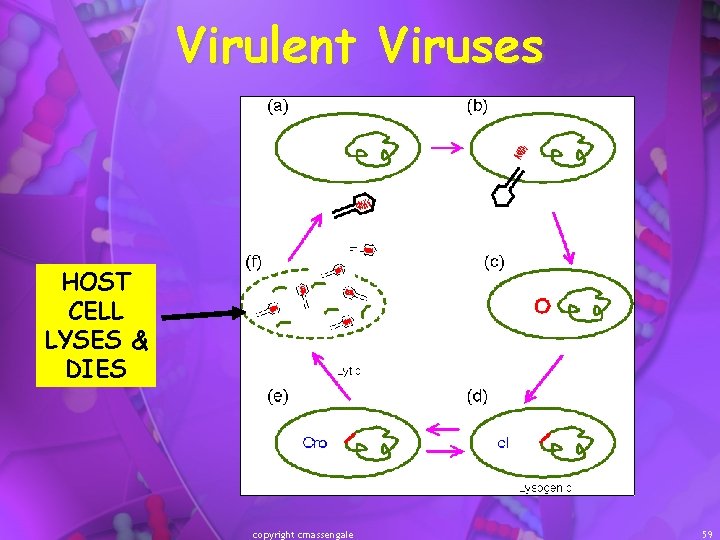
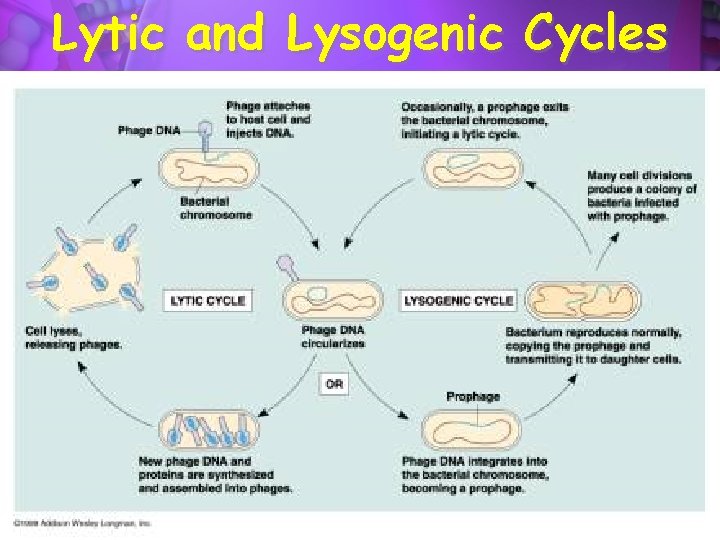
5 Steps of Lytic Cycle 1. Attachment to the cell 2. Penetration (injection) of viral DNA or RNA 3. Replication (Biosynthesis) of new viral proteins and nucleic acids 4. Assembly (Maturation) of the new viruses 5. Release of the new viruses into the environment (cell lyses) copyright cmassengale 49
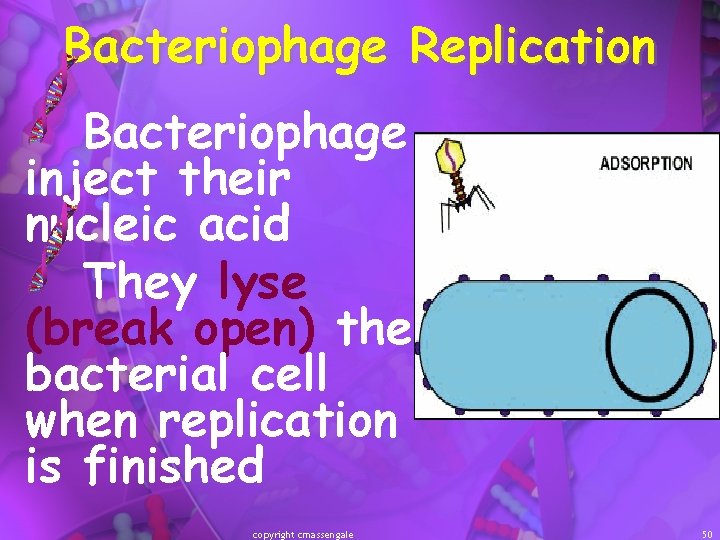
Bacteriophage Replication Bacteriophage inject their nucleic acid They lyse (break open) the bacterial cell when replication is finished copyright cmassengale 50
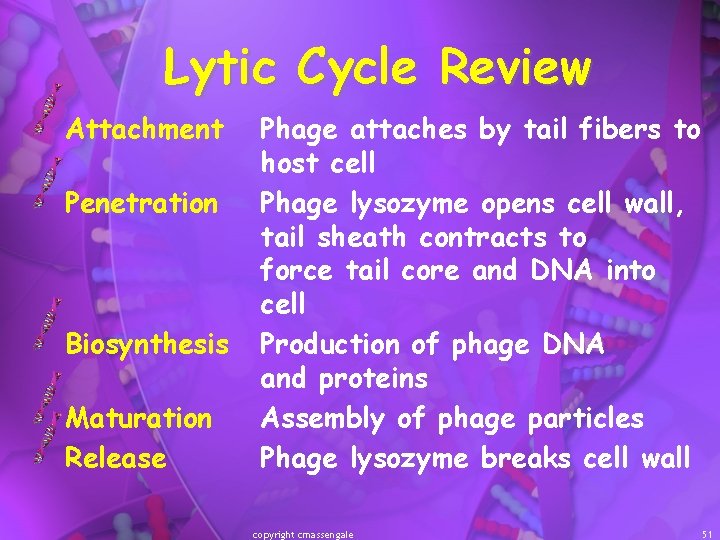
Lytic Cycle Review Attachment Penetration Biosynthesis Maturation Release Phage attaches by tail fibers to host cell Phage lysozyme opens cell wall, tail sheath contracts to force tail core and DNA into cell Production of phage DNA and proteins Assembly of phage particles Phage lysozyme breaks cell wall copyright cmassengale 51
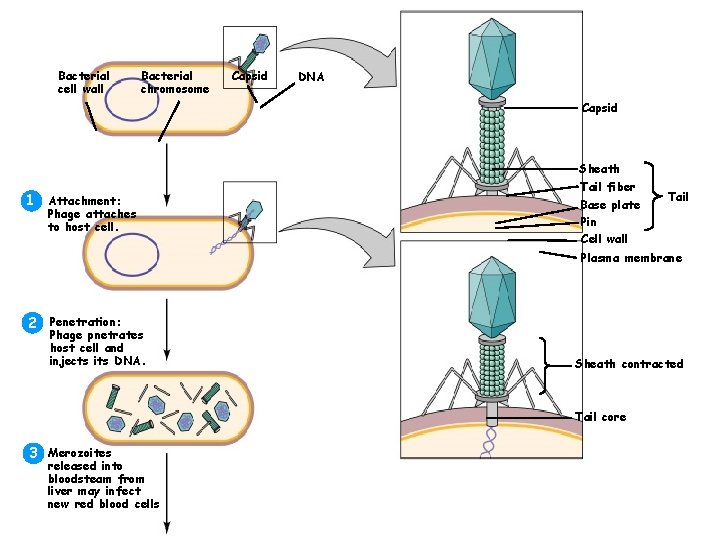
Bacterial cell wall Bacterial chromosome Capsid DNA Capsid Sheath Tail fiber 1 Attachment: Base plate Pin Cell wall Phage attaches to host cell. Tail Plasma membrane 2 Penetration: Phage pnetrates host cell and injects its DNA. Sheath contracted Tail core 3 Merozoites released into bloodsteam from liver may infect new red blood cells copyright cmassengale 52
Tail DNA 4 Maturation: Viral components are assembled into virions. Capsid 5 Release: Host cell lyses and new virions are released. Tail fibers copyright cmassengale 53
One-step Growth Curve copyright cmassengale 54
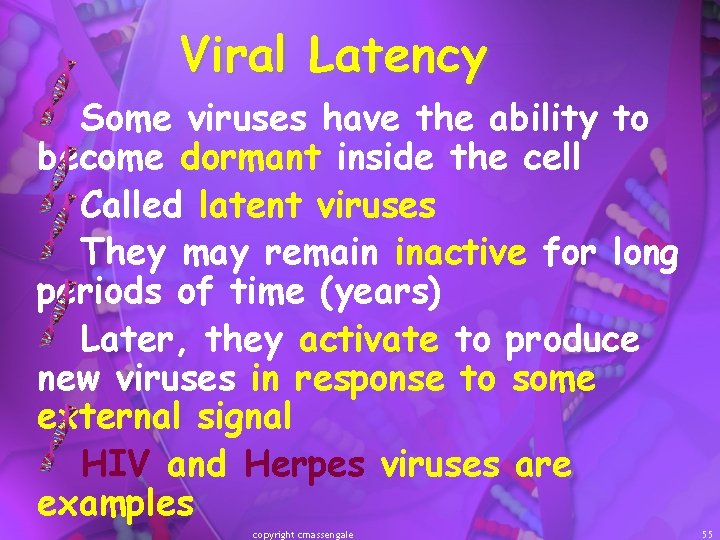
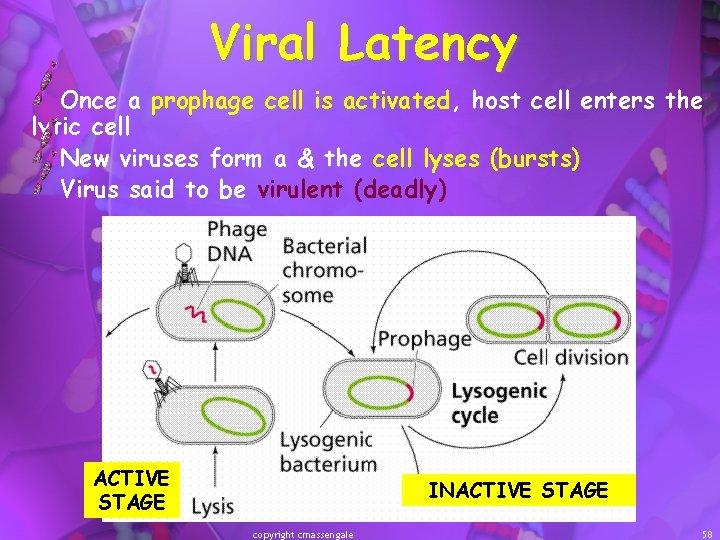
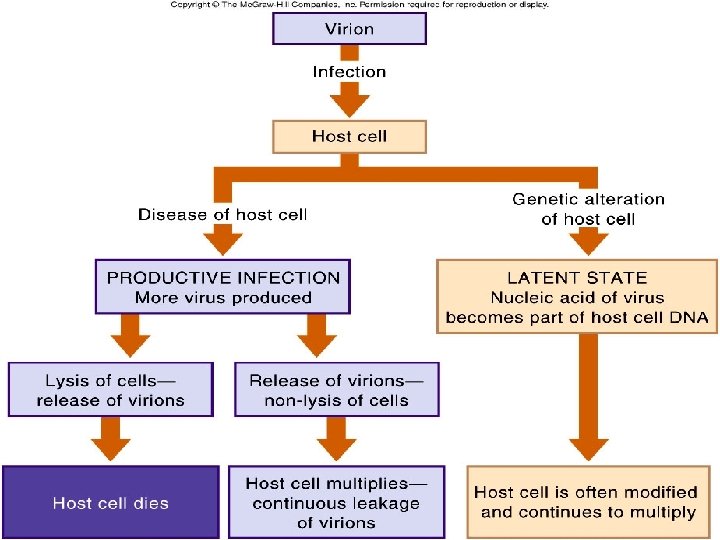
Viral Latency Some viruses have the ability to become dormant inside the cell Called latent viruses They may remain inactive for long periods of time (years) Later, they activate to produce new viruses in response to some external signal HIV and Herpes viruses are examples copyright cmassengale 55
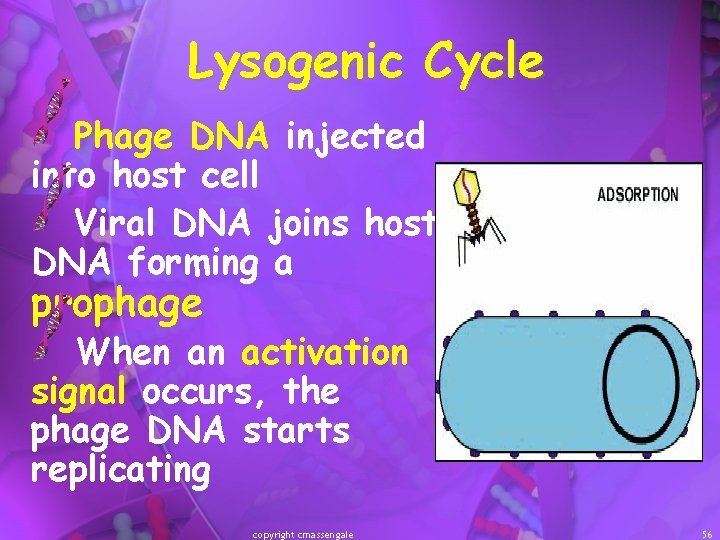
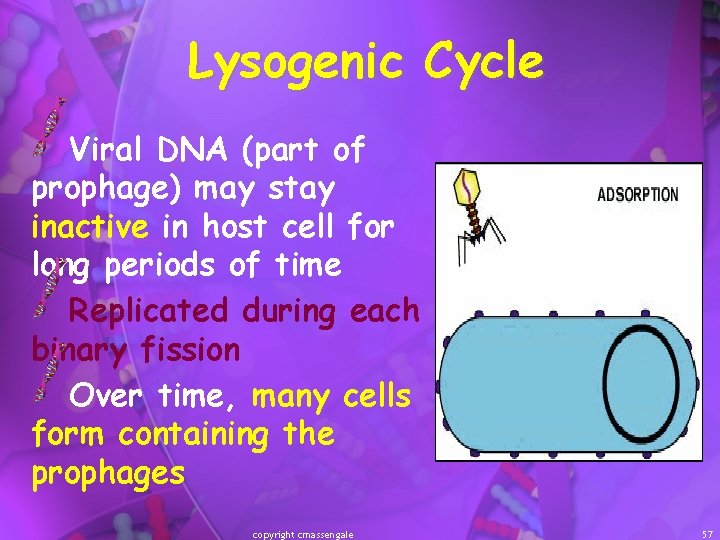
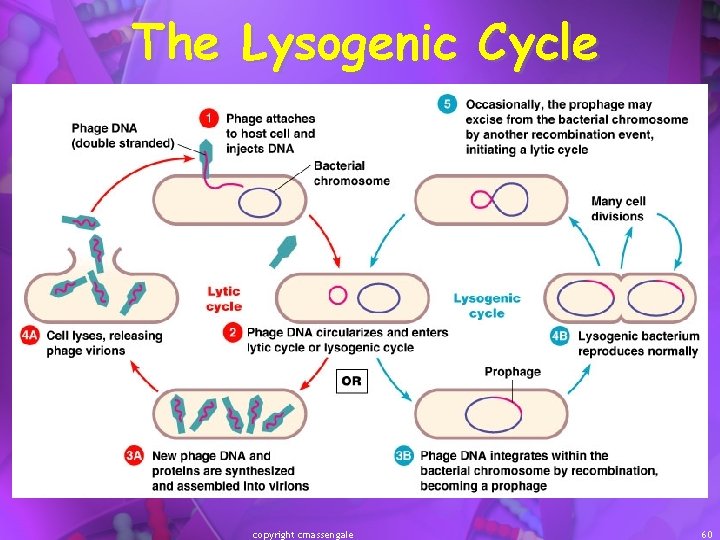
Lysogenic Cycle Phage DNA injected into host cell Viral DNA joins host DNA forming a prophage When an activation signal occurs, the phage DNA starts replicating copyright cmassengale 56
Lysogenic Cycle Viral DNA (part of prophage) may stay inactive in host cell for long periods of time Replicated during each binary fission Over time, many cells form containing the prophages copyright cmassengale 57
Viral Latency Once a prophage cell is activated, host cell enters the lytic cell New viruses form a & the cell lyses (bursts) Virus said to be virulent (deadly) ACTIVE STAGE INACTIVE STAGE copyright cmassengale 58
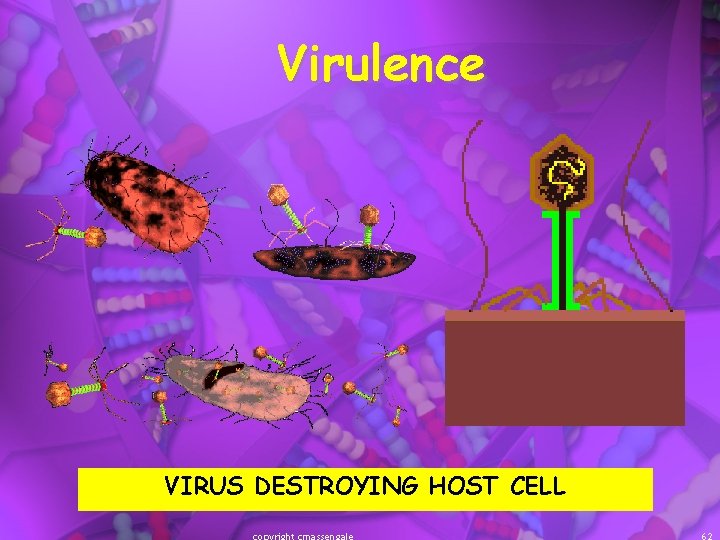
Virulent Viruses HOST CELL LYSES & DIES copyright cmassengale 59
The Lysogenic Cycle copyright cmassengale 60
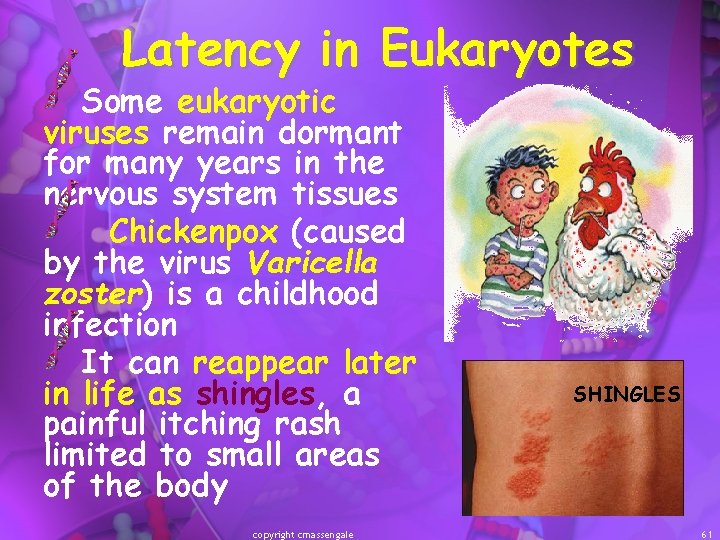
Latency in Eukaryotes Some eukaryotic viruses remain dormant for many years in the nervous system tissues Chickenpox (caused by the virus Varicella zoster) is a childhood infection It can reappear later in life as shingles, a painful itching rash limited to small areas of the body copyright cmassengale SHINGLES 61
Virulence VIRUS DESTROYING HOST CELL
Lytic and Lysogenic Cycles copyright cmassengale 63
Treatment for Viral Disease copyright cmassengale 64
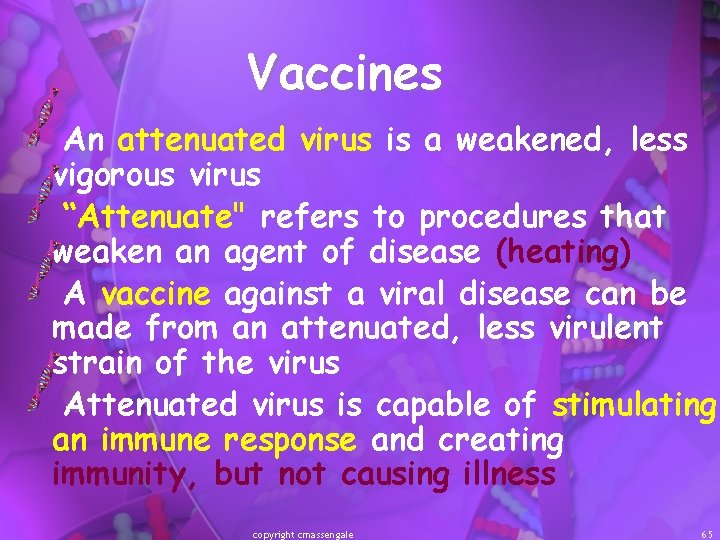
Vaccines An attenuated virus is a weakened, less vigorous virus “Attenuate" refers to procedures that weaken an agent of disease (heating) A vaccine against a viral disease can be made from an attenuated, less virulent strain of the virus Attenuated virus is capable of stimulating an immune response and creating immunity, but not causing illness copyright cmassengale 65
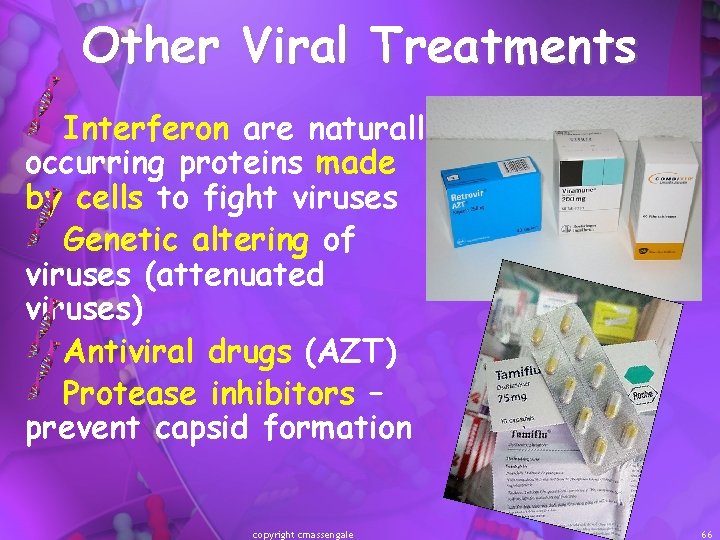
Other Viral Treatments Interferon are naturally occurring proteins made by cells to fight viruses Genetic altering of viruses (attenuated viruses) Antiviral drugs (AZT) Protease inhibitors – prevent capsid formation copyright cmassengale 66