
Viruses are segments of nucleic acids DNA or
- Slides: 10
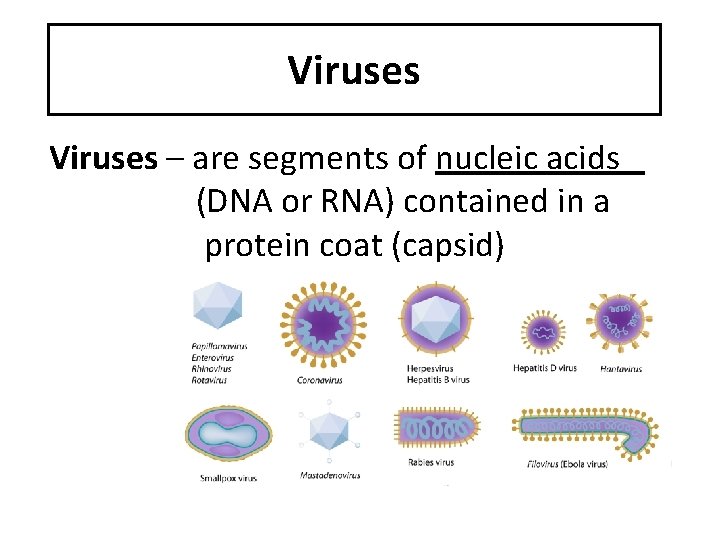
Viruses – are segments of nucleic acids (DNA or RNA) contained in a protein coat (capsid)
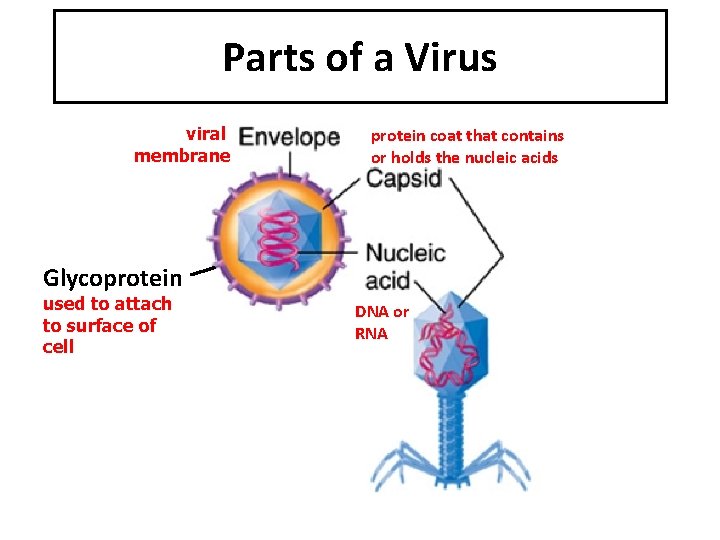
Parts of a Virus viral membrane protein coat that contains or holds the nucleic acids Glycoprotein used to attach to surface of cell DNA or RNA
Vocabulary q capsid – protein coat; contains or holds DNA/RNA q envelope – viral membrane q glycoprotein – projections used to attach to surface of cell q nucleic acid – DNA or RNA; contains genetic information for making proteins q pathogen – an agent that causes disease; viruses are considered pathogens because they replicate by infecting cells and use the cell to make more viruses thereby causing disease
• Is A Virus Alive? NO, viruses do not have all the properties of life, so biologists do not consider them to be living; viruses do not grow, do not have homeostasis, and do not metabolize • Viruses are pathogens – agents that cause disease; they replicate by infecting cells and using the cell to make more viruses
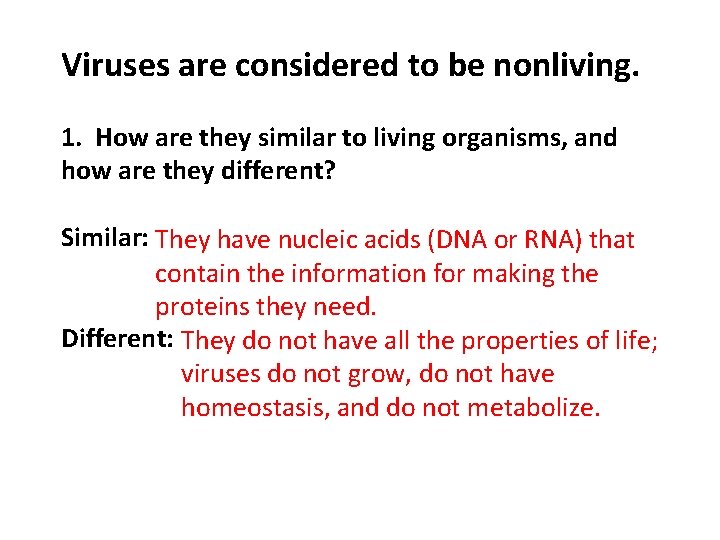
Viruses are considered to be nonliving. 1. How are they similar to living organisms, and how are they different? Similar: They have nucleic acids (DNA or RNA) that contain the information for making the proteins they need. Different: They do not have all the properties of life; viruses do not grow, do not have homeostasis, and do not metabolize.
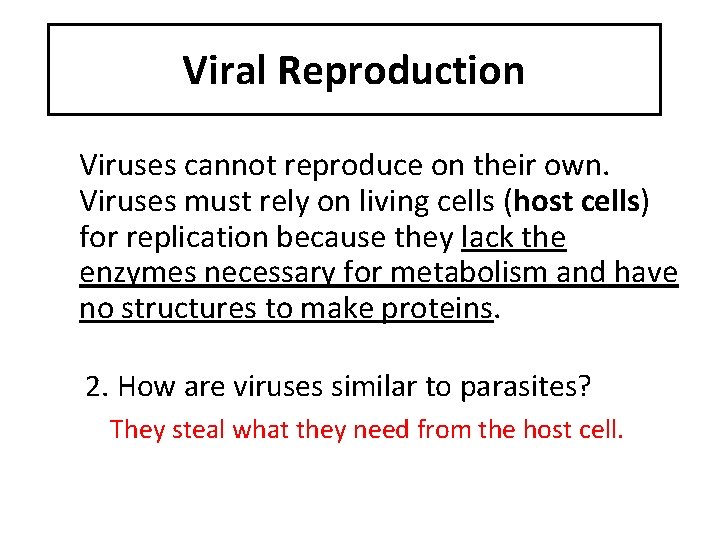
Viral Reproduction Viruses cannot reproduce on their own. Viruses must rely on living cells (host cells) for replication because they lack the enzymes necessary for metabolism and have no structures to make proteins. 2. How are viruses similar to parasites? They steal what they need from the host cell.
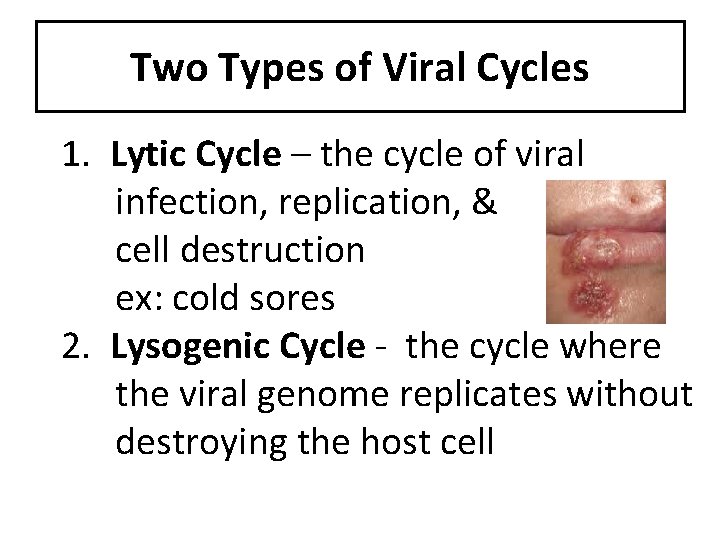
Two Types of Viral Cycles 1. Lytic Cycle – the cycle of viral infection, replication, & cell destruction ex: cold sores 2. Lysogenic Cycle - the cycle where the viral genome replicates without destroying the host cell
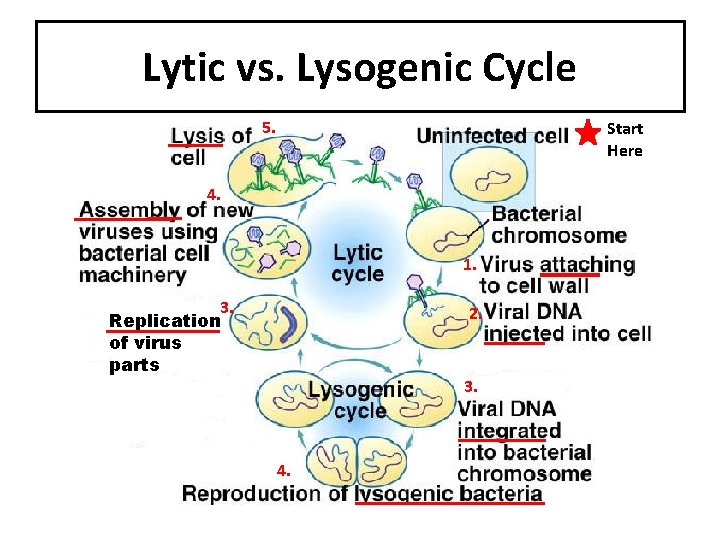
Lytic vs. Lysogenic Cycle 5. Start Here 4. 1. 3. Replication of virus parts 2. 3. 4.
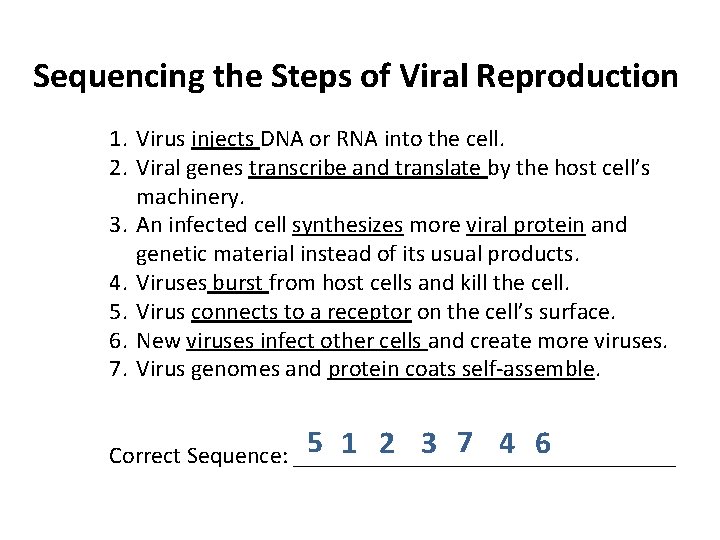
Sequencing the Steps of Viral Reproduction 1. Virus injects DNA or RNA into the cell. 2. Viral genes transcribe and translate by the host cell’s machinery. 3. An infected cell synthesizes more viral protein and genetic material instead of its usual products. 4. Viruses burst from host cells and kill the cell. 5. Virus connects to a receptor on the cell’s surface. 6. New viruses infect other cells and create more viruses. 7. Virus genomes and protein coats self-assemble. 5 1 2 3 7 4 6 Correct Sequence: ________________
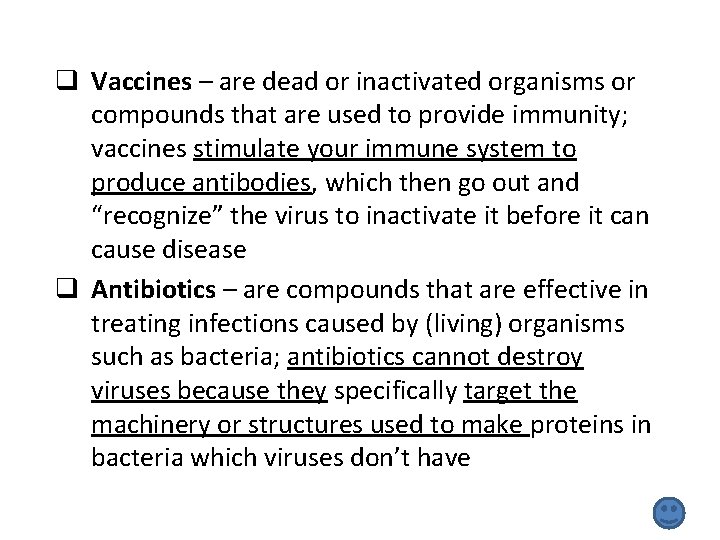
q Vaccines – are dead or inactivated organisms or compounds that are used to provide immunity; vaccines stimulate your immune system to produce antibodies, which then go out and “recognize” the virus to inactivate it before it can cause disease q Antibiotics – are compounds that are effective in treating infections caused by (living) organisms such as bacteria; antibiotics cannot destroy viruses because they specifically target the machinery or structures used to make proteins in bacteria which viruses don’t have