
Viruses Alive Or Not What is a virus



- Slides: 26
Viruses Alive? Or Not?
What is a virus? • Pathogen: any living organism or particle that causes disease • Viruses are particles that cause disease made only of a stand of DNA or RNA enclosed in a protein coat
Other particles that cause disease: • Retrovirus: viruses that contain RNA and produce their own DNA (some times of cancer & HIV) • Viroid: particle that causes disease in plants • Prion: particle that causes disease by causing proteins in the infected organism to fold incorrectly; only made of protein (mad cow disease)
Eukaryotic cell viruses bacteria viroid prion
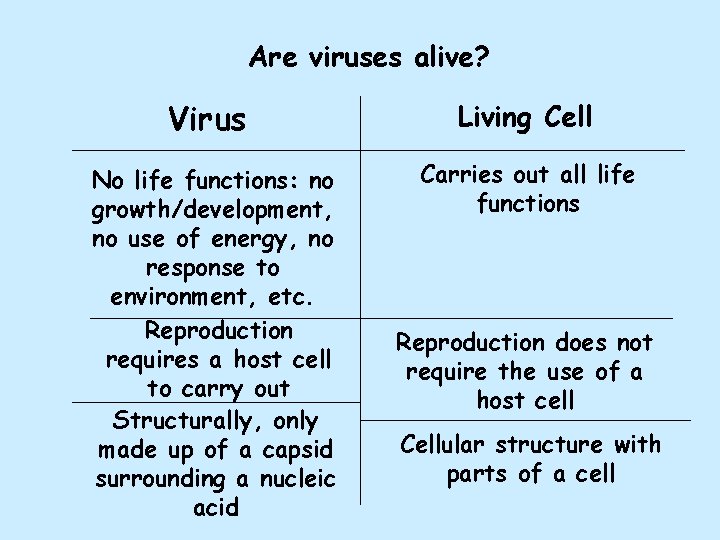
Are viruses alive? Virus No life functions: no growth/development, no use of energy, no response to environment, etc. Reproduction requires a host cell to carry out Structurally, only made up of a capsid surrounding a nucleic acid Living Cell Carries out all life functions Reproduction does not require the use of a host cell Cellular structure with parts of a cell
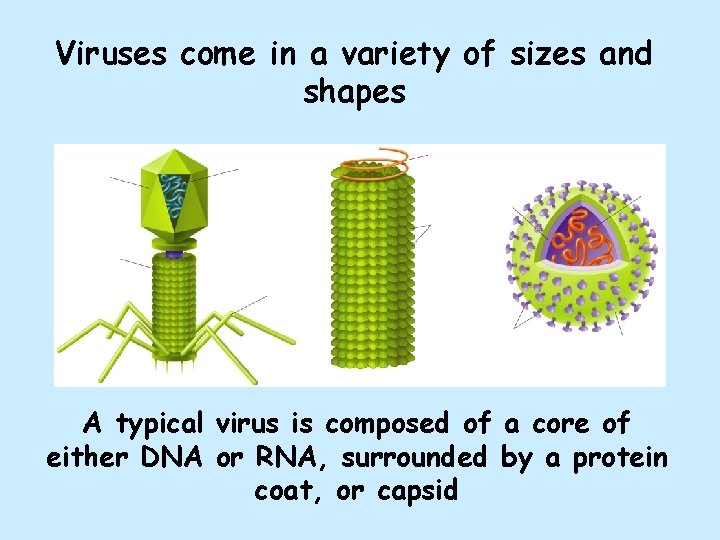
Viruses come in a variety of sizes and shapes A typical virus is composed of a core of either DNA or RNA, surrounded by a protein coat, or capsid
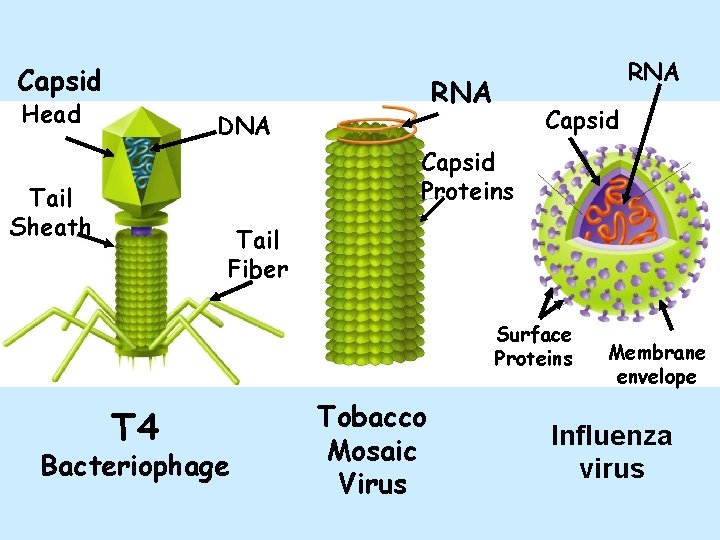
What do different viruses have in common? 1. Viruses are very, very small 2. Structurally, viruses are made up of a protein covering called a CAPSID, surrounding a NUCLEIC ACID of DNA or RNA *The structure & shape of a virus determines what kind of host it infects and how it infects that host. (host = cell that is infected)
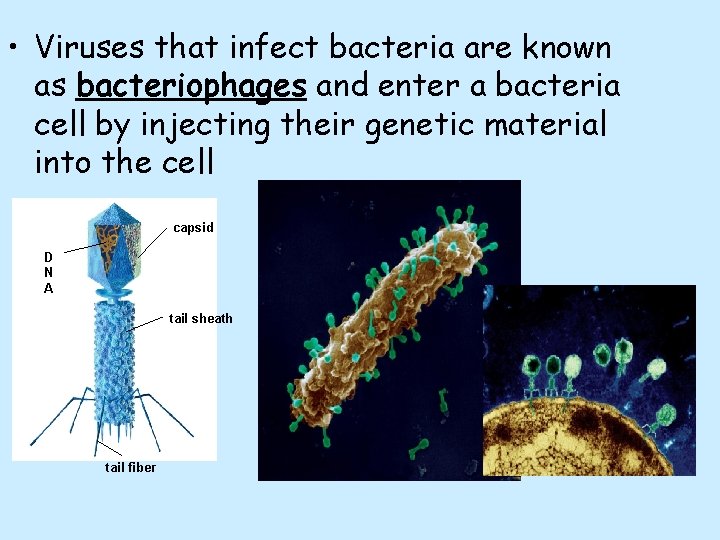
• Viruses that infect bacteria are known as bacteriophages and enter a bacteria cell by injecting their genetic material into the cell capsid D N A tail sheath tail fiber
Capsid Head RNA DNA Capsid Proteins Tail Sheath Tail Fiber Surface Proteins T 4 Bacteriophage Tobacco Mosaic Virus Membrane envelope Influenza virus
How do viruses enter our bodies? • Cuts/scrapes • Mouth, nose, genital area, eyes, ears Some viral diseases can spread quickly causing an epidemic: rapid outbreak of infection that affects many people
How are virus-caused illnesses prevented? Vaccines A preparation of weakened or killed virus or viral proteins that stimulate the immune system to recognize and destroy viruses
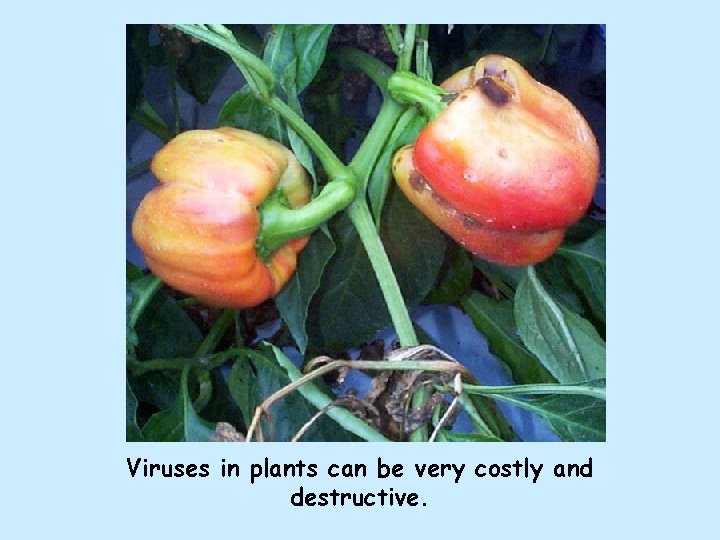
Viruses in plants can be very costly and destructive.
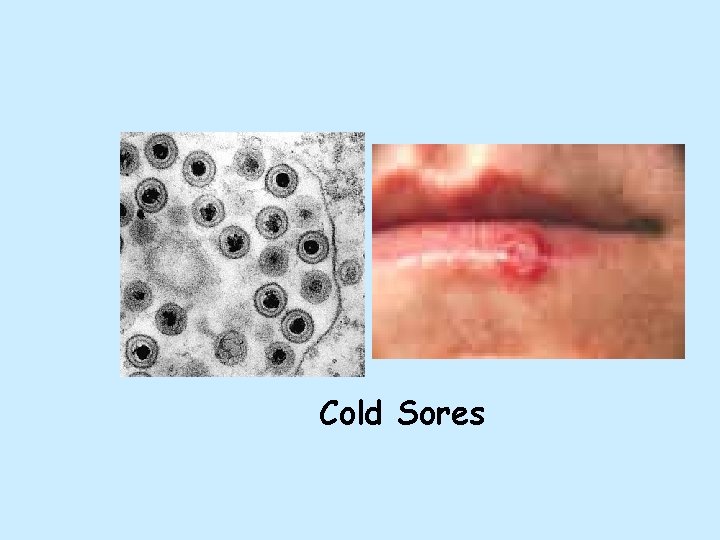
Cold Sores
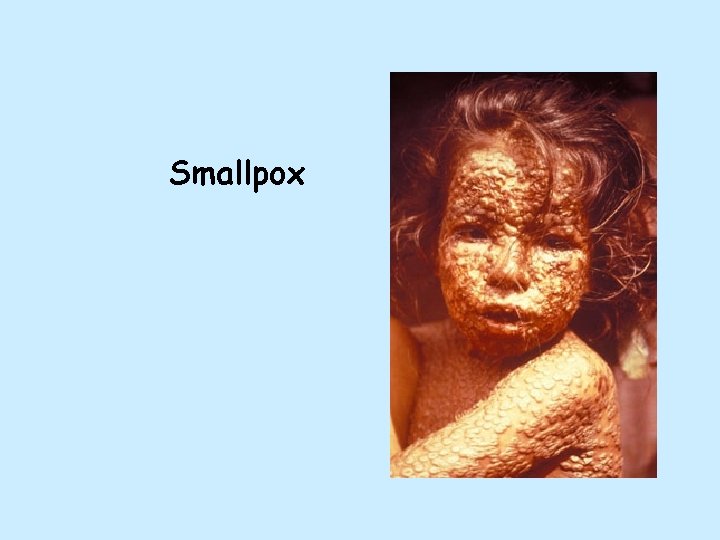
Smallpox
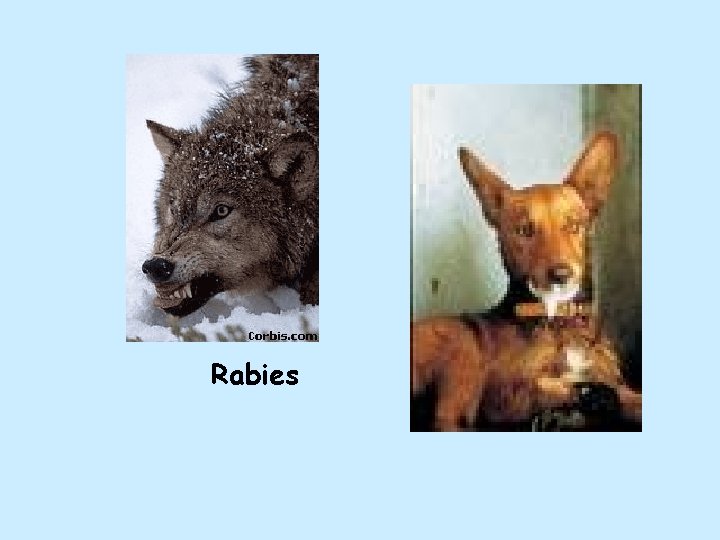
Rabies
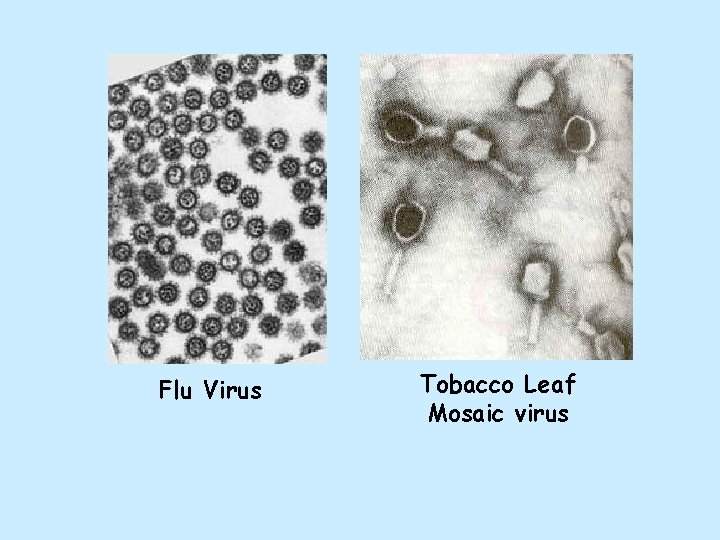
Flu Virus Tobacco Leaf Mosaic virus
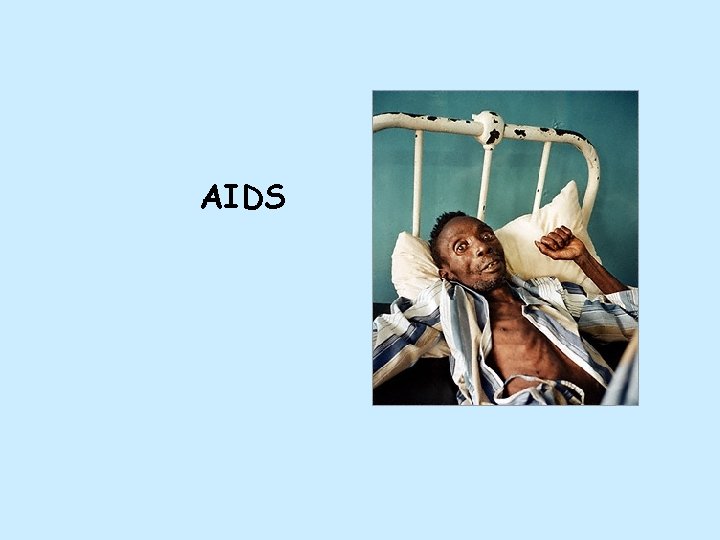
AIDS
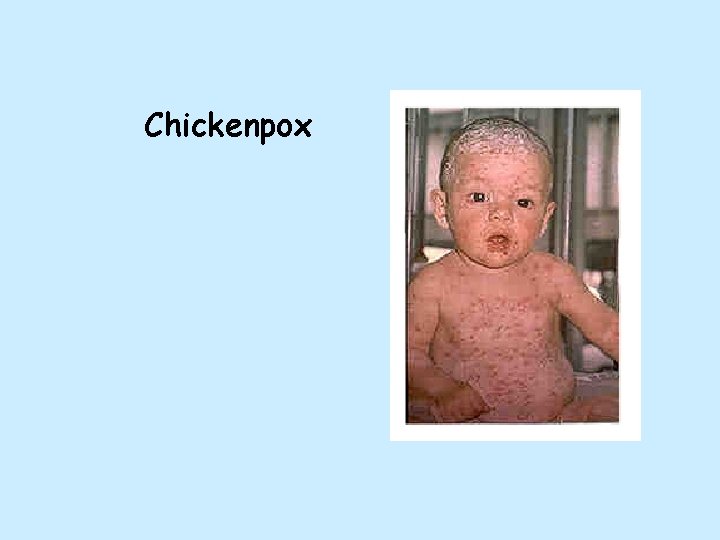
Chickenpox
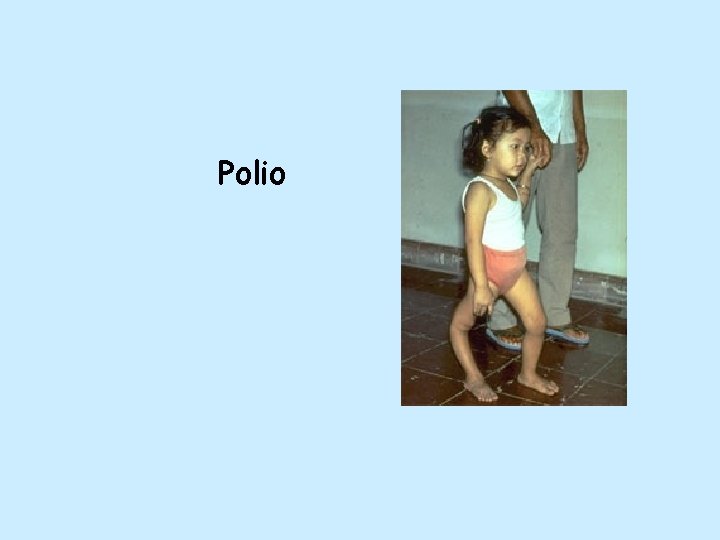
Polio
How do viruses infect a cell? 1. LYTIC infection cycle 2. LYSOGENIC infection cycle
In a LYTIC infection what 3 things happen? 1. A virus enters a cell 2. Makes copies of itself 3. Causes the cell to burst
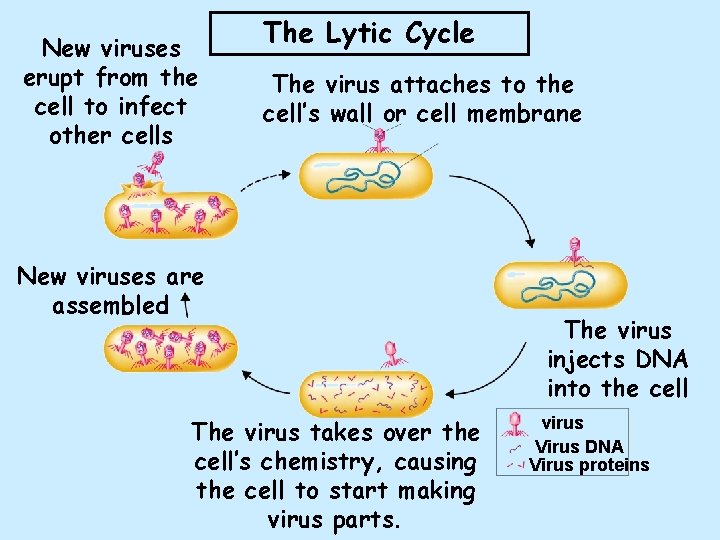
New viruses erupt from the cell to infect other cells The Lytic Cycle The virus attaches to the cell’s wall or cell membrane New viruses are assembled The virus takes over the cell’s chemistry, causing the cell to start making virus parts. The virus injects DNA into the cell virus Virus DNA Virus proteins
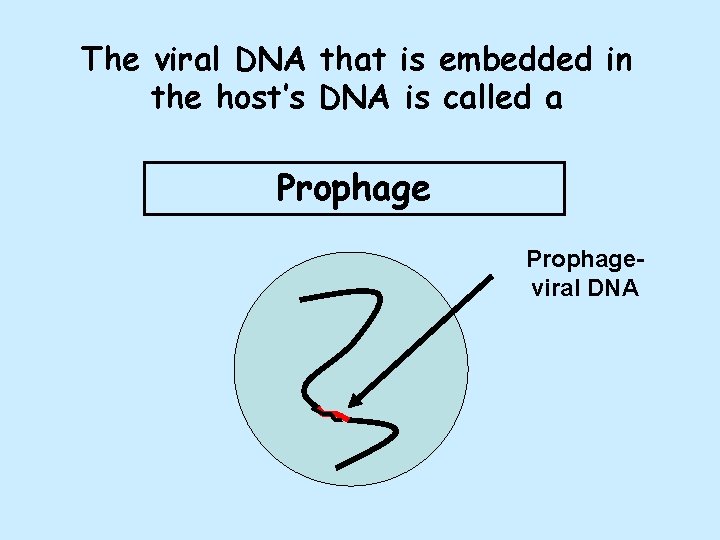
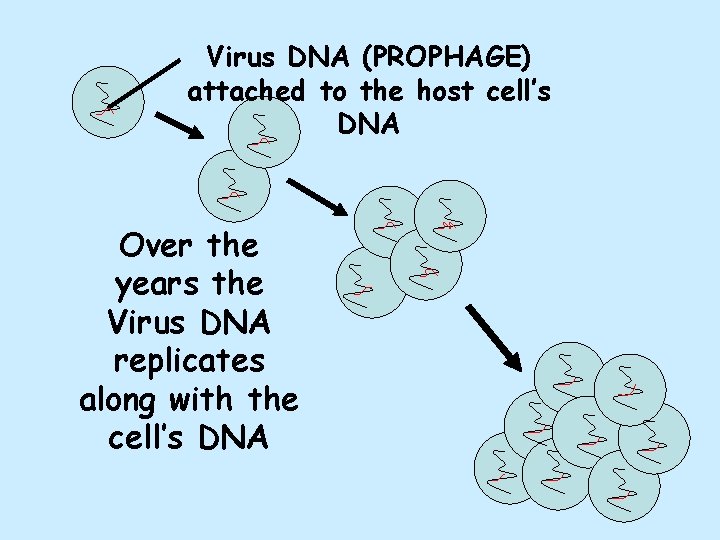
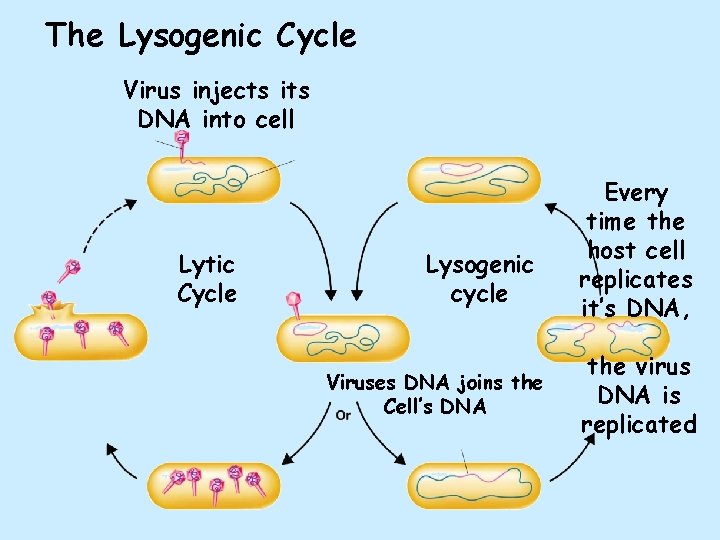
In a Lysogenic infection cycle, what happens? In a lysogenic infection, the viral DNA enters a host cell and inserts itself into the host’s DNA AND Just sits there until a “trigger” makes it go into the lytic cycle. This may take years So, every time the cell divides, the virus DNA divides.
The viral DNA that is embedded in the host’s DNA is called a Prophageviral DNA
Virus DNA (PROPHAGE) attached to the host cell’s DNA Over the years the Virus DNA replicates along with the cell’s DNA
The Lysogenic Cycle Virus injects its DNA into cell Lytic Cycle Lysogenic cycle Viruses DNA joins the Cell’s DNA Every time the host cell replicates it’s DNA, the virus DNA is replicated