
Virus Virus biological particle pathogen virus comes from
Virus
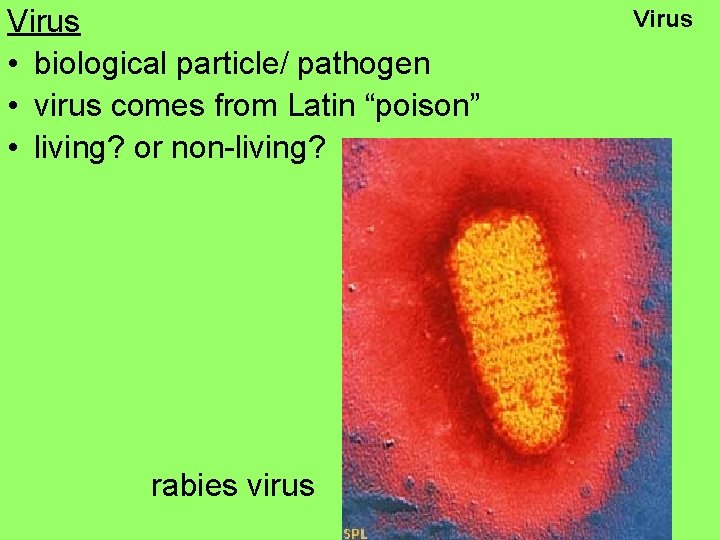
Virus • biological particle/ pathogen • virus comes from Latin “poison” • living? or non-living? rabies virus Virus
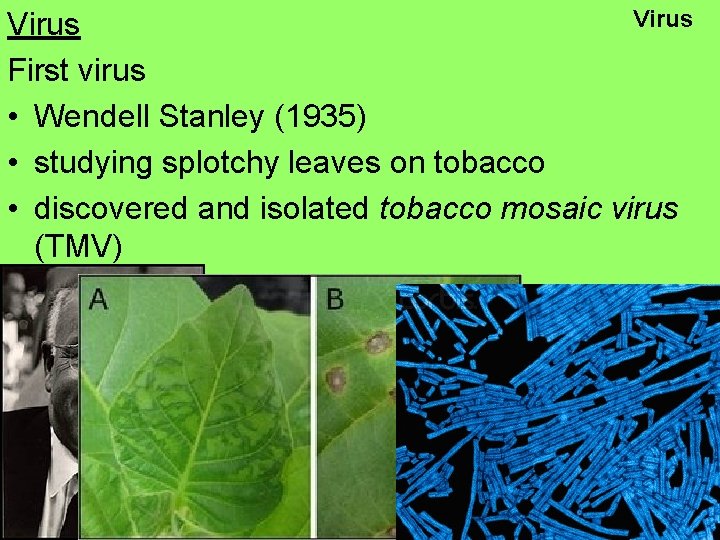
Virus First virus • Wendell Stanley (1935) • studying splotchy leaves on tobacco • discovered and isolated tobacco mosaic virus (TMV)
Virus Structure of a Virus • nucleic acid core (DNA or RNA), surrounded by outer protein coat called a capsid • different shapes: hellical (rod), sperical, polyhedral, different sizes 17 nm – 100 nm • some have an envelope with spikes that surrounds the capsid • contain no cell organelles, carry out no metabolic reactions • reproduce only inside a host cell • many are host specific • classified by type of nucleic acid and shape
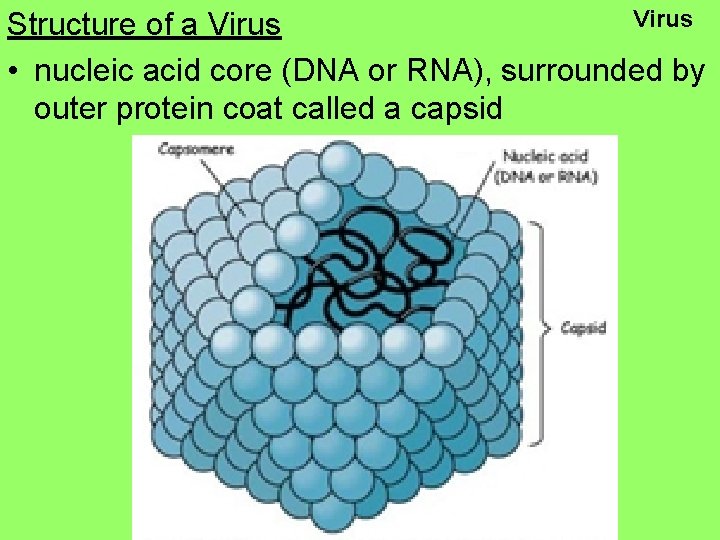
Virus Structure of a Virus • nucleic acid core (DNA or RNA), surrounded by outer protein coat called a capsid
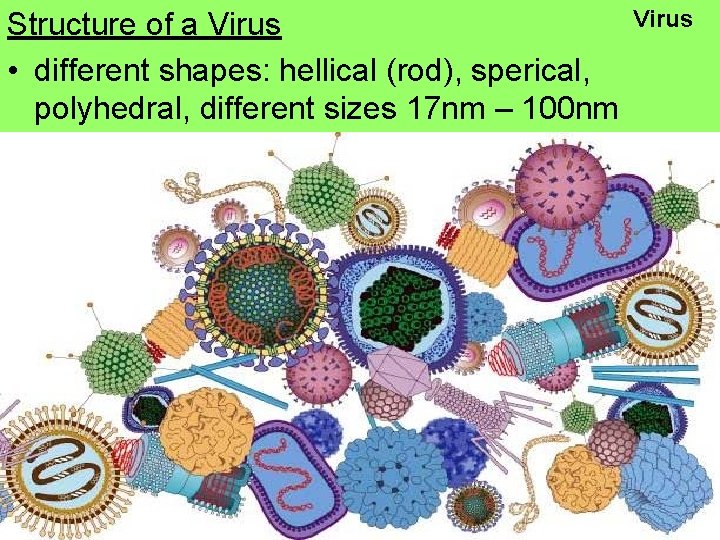
Structure of a Virus • different shapes: hellical (rod), sperical, polyhedral, different sizes 17 nm – 100 nm Virus
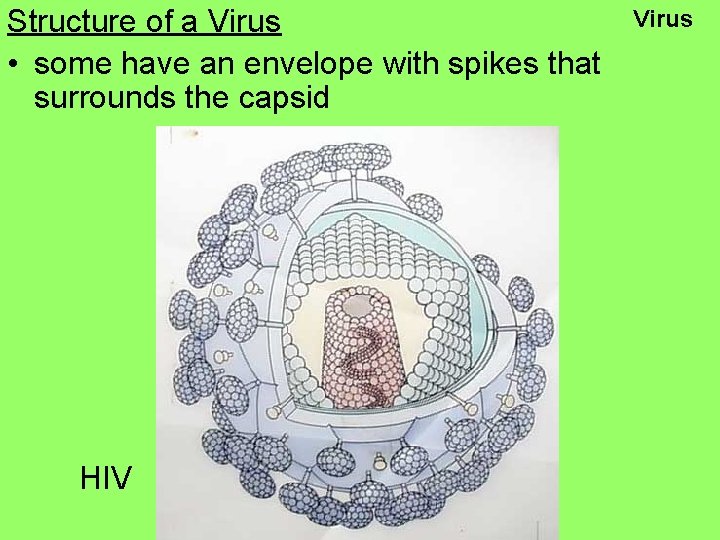
Structure of a Virus • some have an envelope with spikes that surrounds the capsid HIV Virus
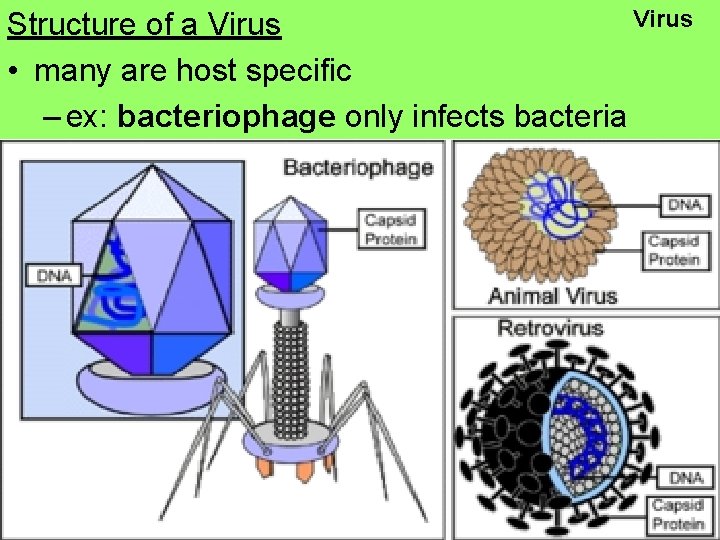
Virus Structure of a Virus • many are host specific – ex: bacteriophage only infects bacteria
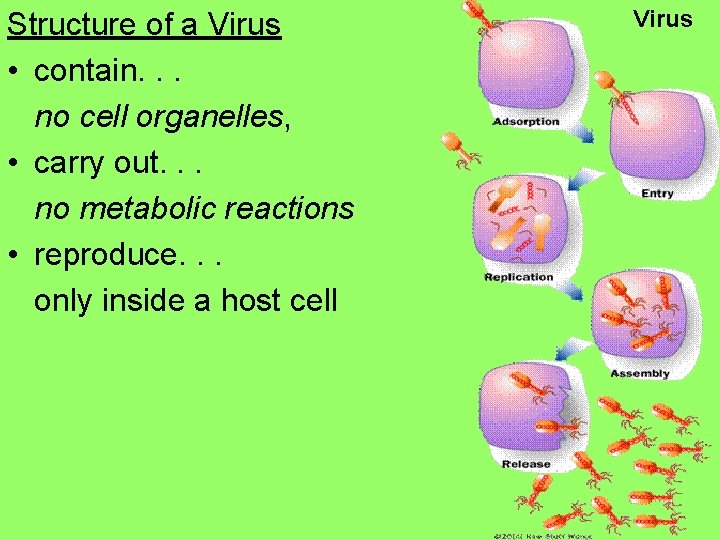
Structure of a Virus • contain. . . no cell organelles, • carry out. . . no metabolic reactions • reproduce. . . only inside a host cell Virus
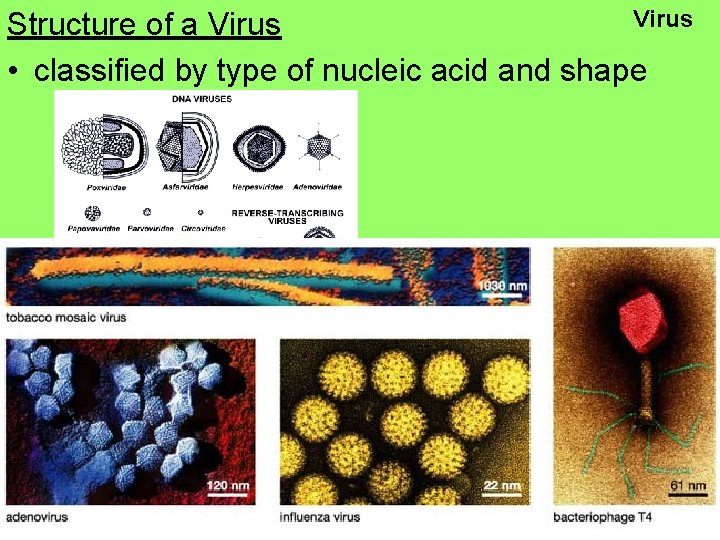
Virus Structure of a Virus • classified by type of nucleic acid and shape
Virus Viral Reproduction Lytic Cycle (DNA virus) – virus takes over host cell, replicates, and destroys host cell • Steps – attachment – entry – replication – formation & assembly – lysis & release
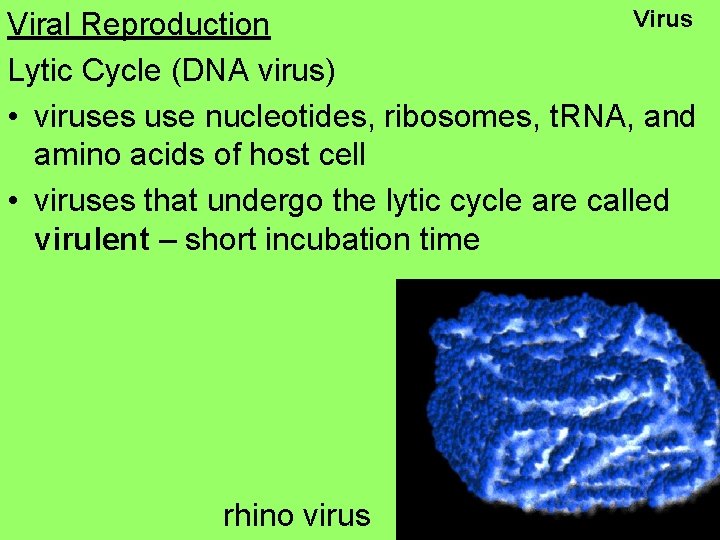
Virus Viral Reproduction Lytic Cycle (DNA virus) • viruses use nucleotides, ribosomes, t. RNA, and amino acids of host cell • viruses that undergo the lytic cycle are called virulent – short incubation time rhino virus
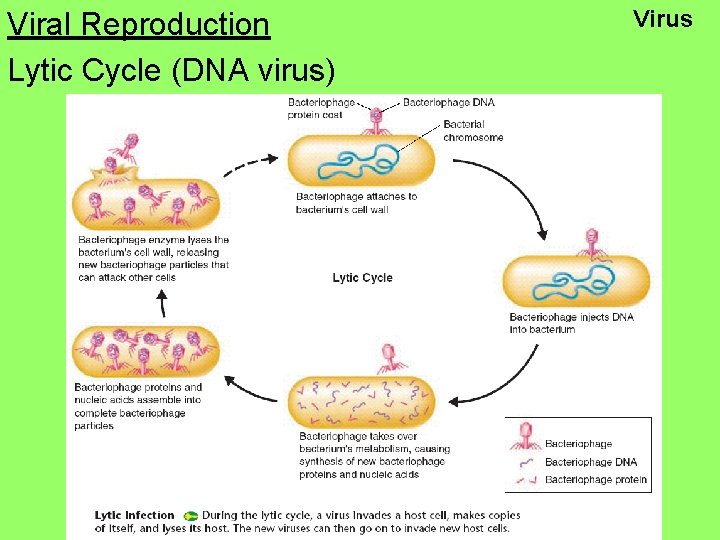
Viral Reproduction Lytic Cycle (DNA virus) Virus
Virus Viral Reproduction Lysogenic Cycle (DNA virus) – virus invades cell and becomes part of its DNA for a time • Steps – attachment – entry – integration • viral DNA breaks open host cell DNA and joins with it forming a provirus – cell division • host cell divides, produces 2 new host cells with the provirus inside
Virus Viral Reproduction Lysogenic Cycle (DNA virus) • provirus may: – change phenotype of host – prevent other viruses from entering host – pull out of host DNA & enter lytic cycle
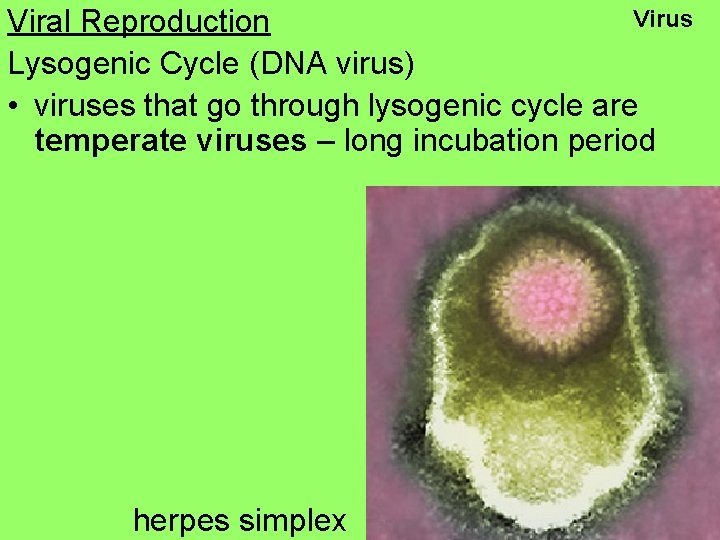
Virus Viral Reproduction Lysogenic Cycle (DNA virus) • viruses that go through lysogenic cycle are temperate viruses – long incubation period herpes simplex
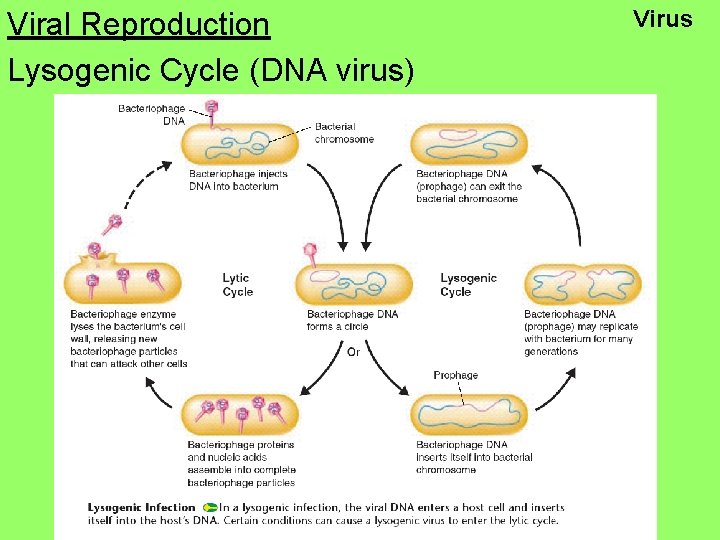
Viral Reproduction Lysogenic Cycle (DNA virus) Virus
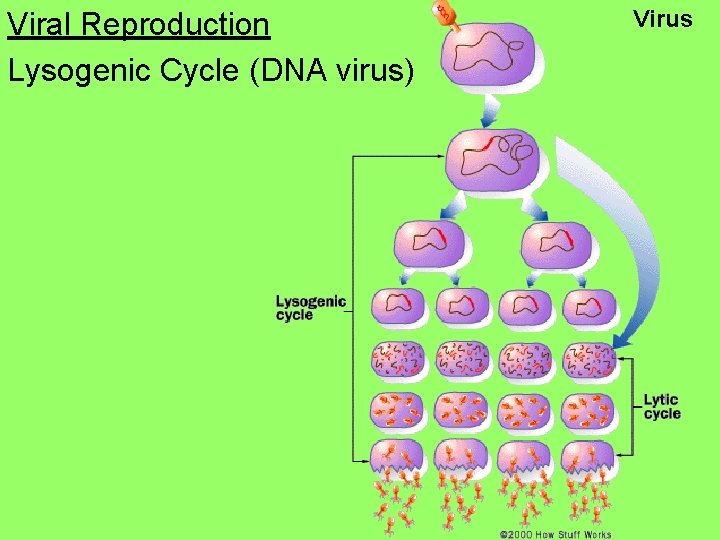
Viral Reproduction Lysogenic Cycle (DNA virus) Virus
Viral Reproduction RNA virus Lytic cycle Steps • (almost the same as DNA virus) – attachment – entry – replication • replication of viral RNA – formation & assembly – lysis & release Virus
Virus Viral Reproduction RNA virus Lysogenic cycle Steps • inject viral RNA into host • viral RNA makes a DNA copy using reverse transcriptase • DNA strand replicates and enters host DNA to become a provirus
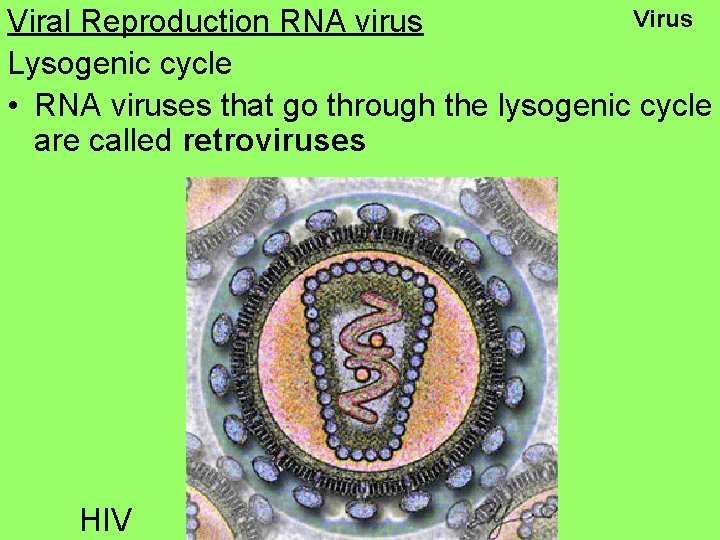
Virus Viral Reproduction RNA virus Lysogenic cycle • RNA viruses that go through the lysogenic cycle are called retroviruses HIV
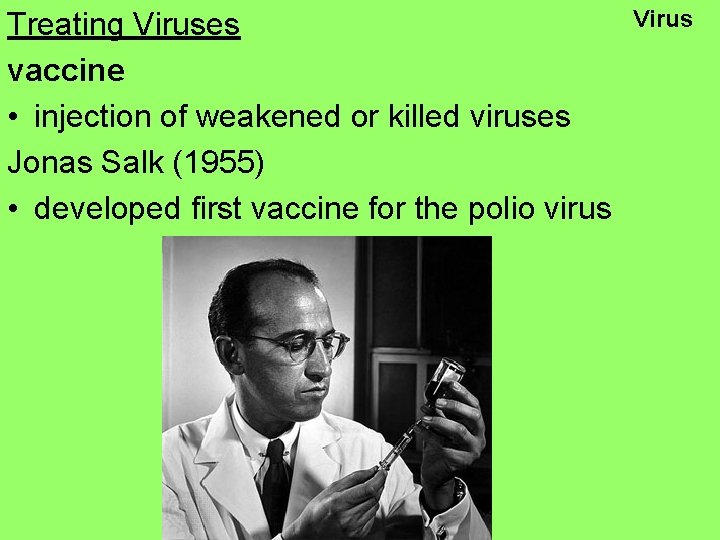
Treating Viruses vaccine • injection of weakened or killed viruses Jonas Salk (1955) • developed first vaccine for the polio virus Virus
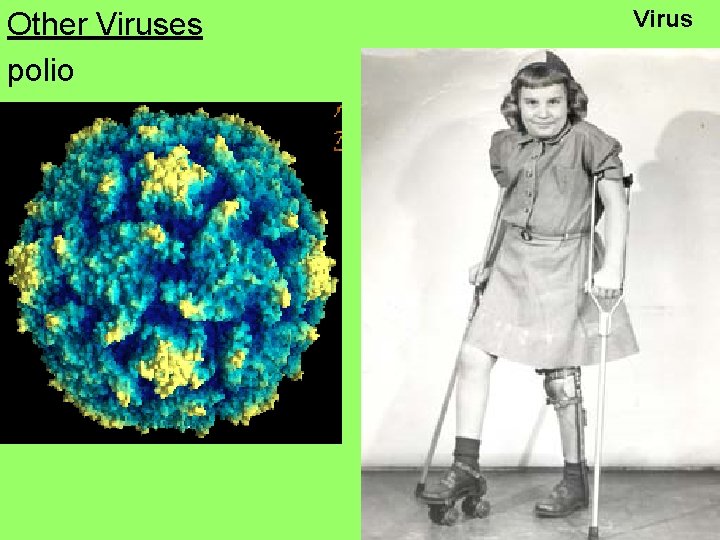
Other Viruses polio Virus
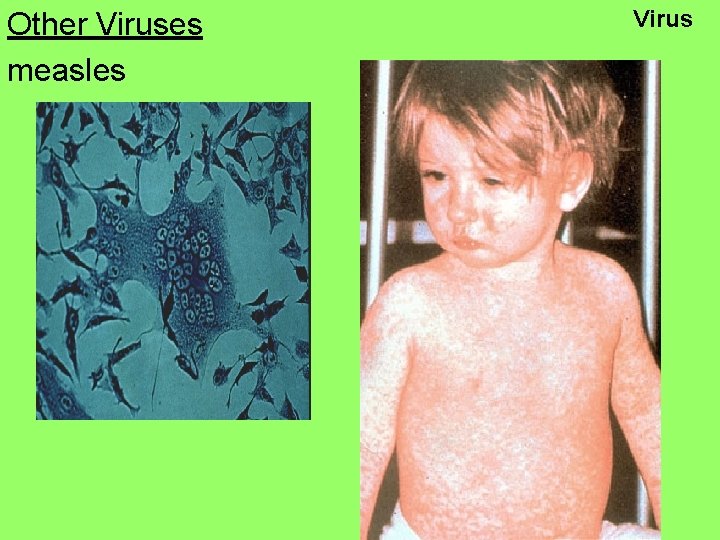
Other Viruses measles Virus
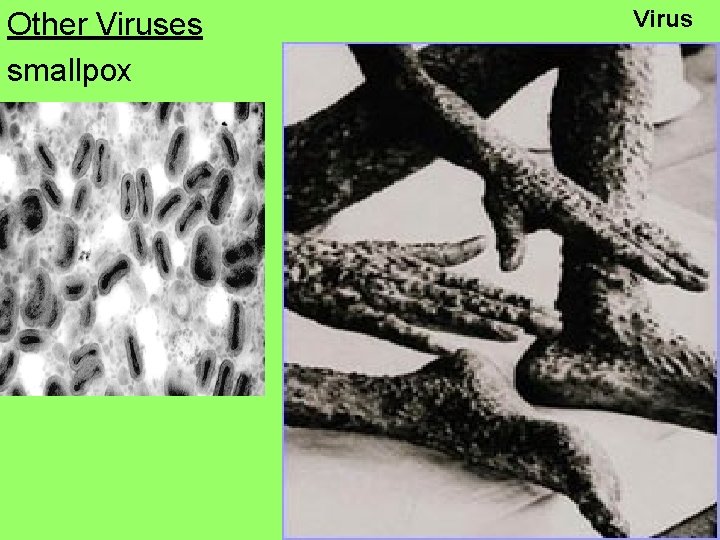
Other Viruses smallpox Virus
- Slides: 25