
VIRUS STRUCTURE CLASSIFICATION AND CYCLES OF INFECTION BY

VIRUS STRUCTURE, CLASSIFICATION, AND CYCLES OF INFECTION BY: SOPHIA NARDO, EVE HUYNH, JASON VERNA, CONNOR DILISSIO
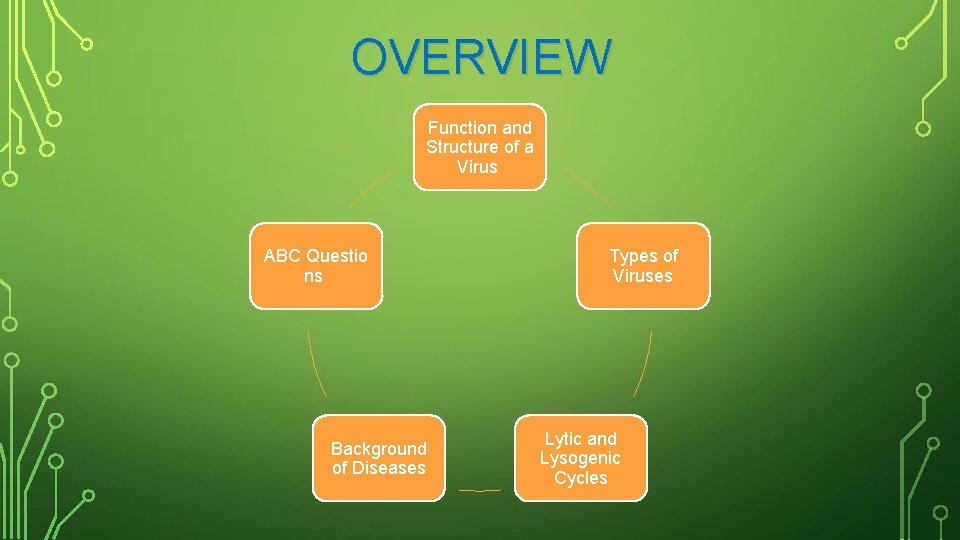
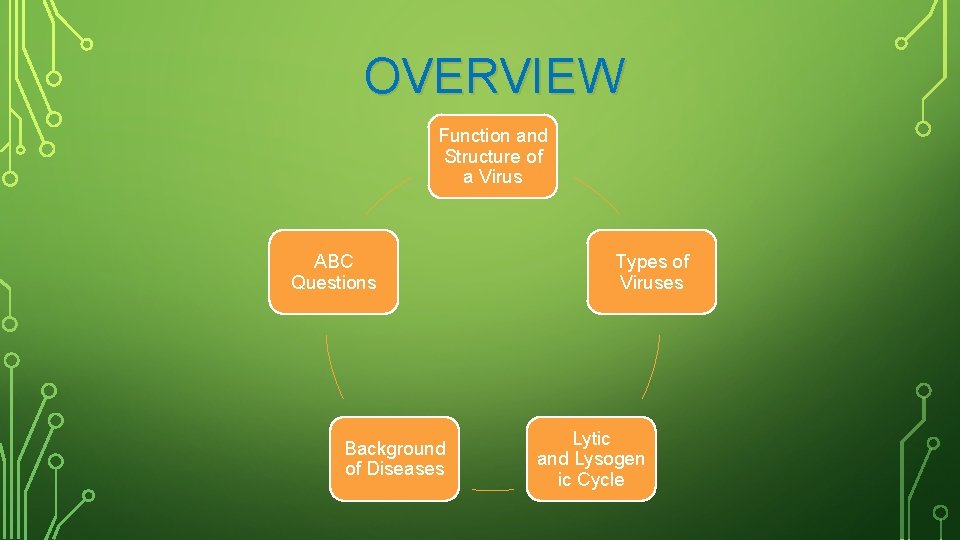
OVERVIEW Function and Structure of a Virus ABC Questio ns Background of Diseases Types of Viruses Lytic and Lysogenic Cycles
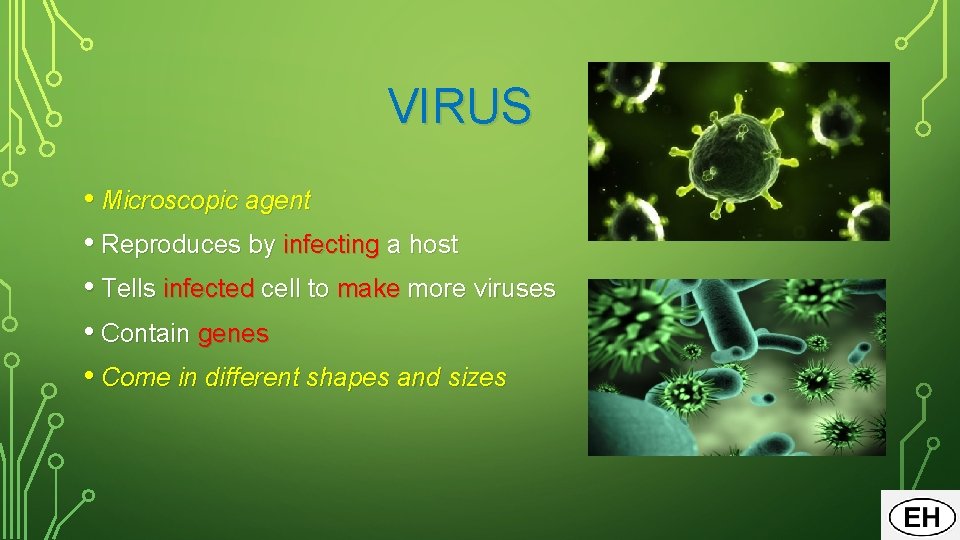
VIRUS • Microscopic agent • Reproduces by infecting a host • Tells infected cell to make more viruses • Contain genes • Come in different shapes and sizes
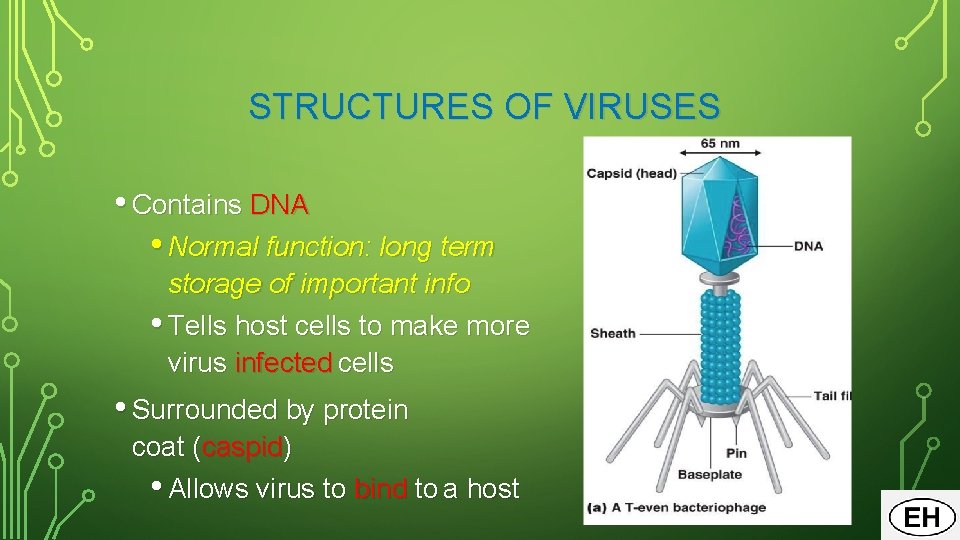
STRUCTURES OF VIRUSES • Contains DNA • Normal function: long term storage of important info • Tells host cells to make more virus infected cells • Surrounded by protein coat (caspid) • Allows virus to bind to a host
ABIOTIC • Classified as nonliving • Unable to do anything until they come into contact with a cell • Wouldn't be able to multiply without a cell • Don't have organelles, nuclei, cytoplasm • Impossible for viruses to have homeostasis
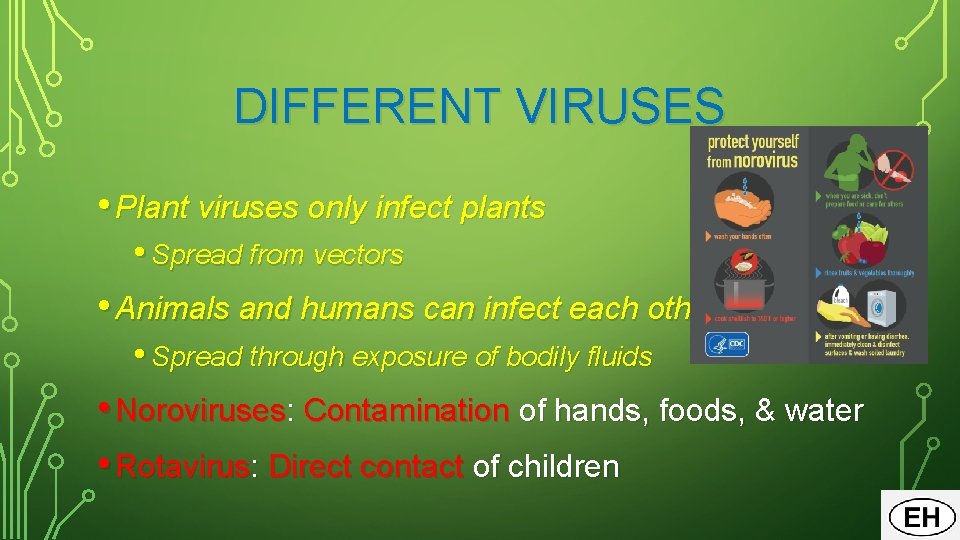
DIFFERENT VIRUSES • Plant viruses only infect plants • Spread from vectors • Animals and humans can infect each other • Spread through exposure of bodily fluids • Noroviruses: Contamination of hands, foods, & water • Rotavirus: Direct contact of children
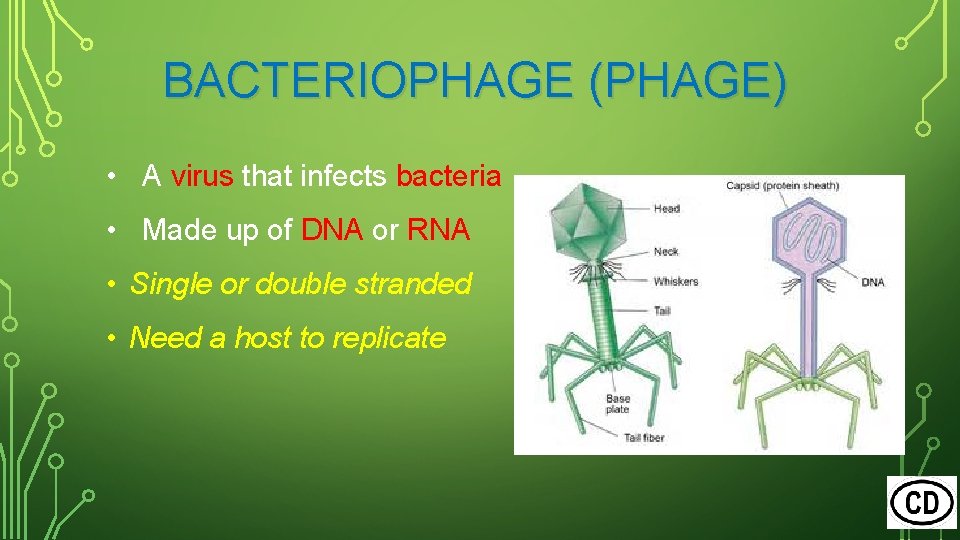
BACTERIOPHAGE (PHAGE) • A virus that infects bacteria • Made up of DNA or RNA • Single or double stranded • Need a host to replicate
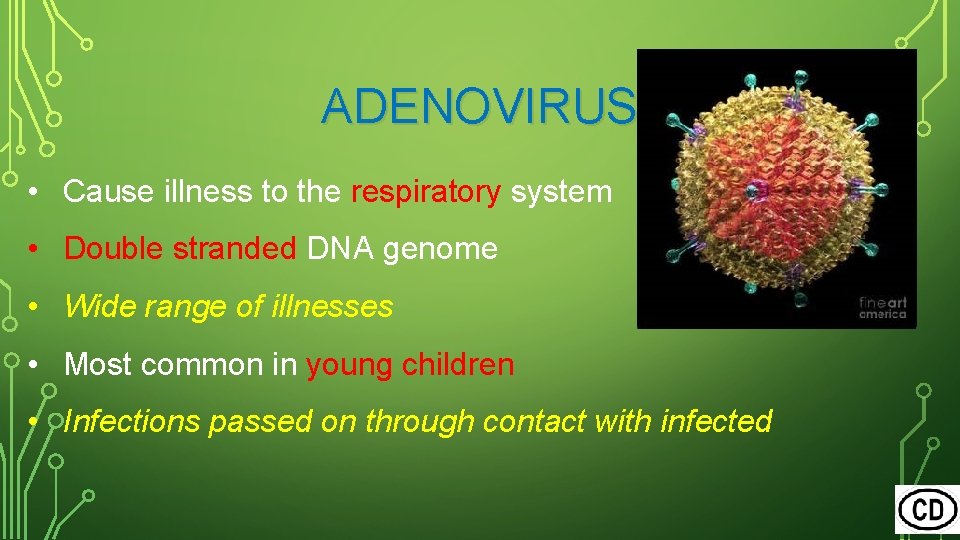
ADENOVIRUS • Cause illness to the respiratory system • Double stranded DNA genome • Wide range of illnesses • Most common in young children • Infections passed on through contact with infected
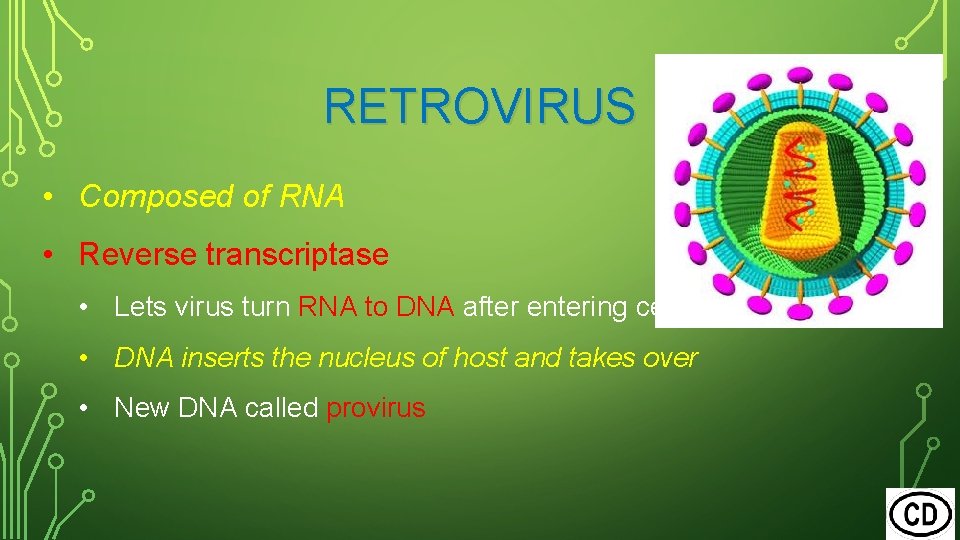
RETROVIRUS • Composed of RNA • Reverse transcriptase • Lets virus turn RNA to DNA after entering cell • DNA inserts the nucleus of host and takes over • New DNA called provirus
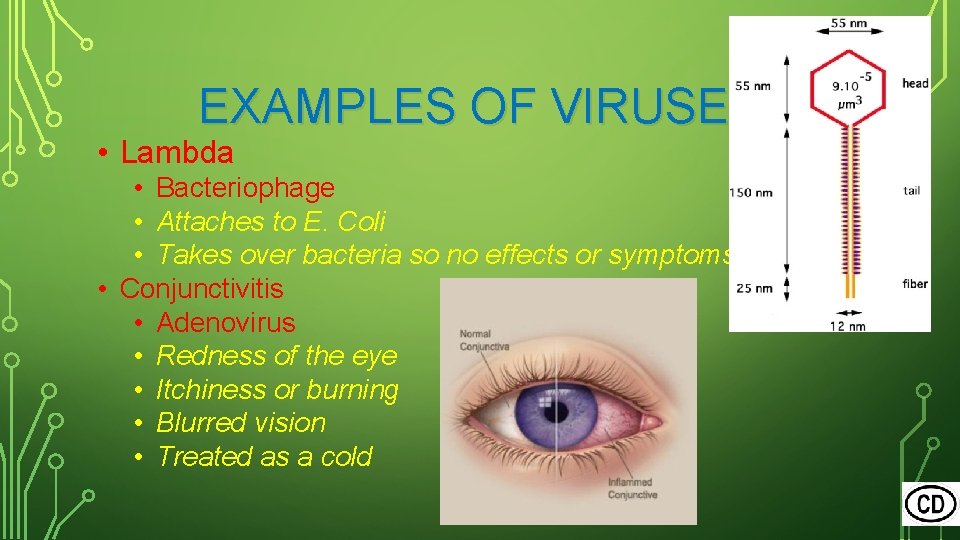
EXAMPLES OF VIRUSES • Lambda • Bacteriophage • Attaches to E. Coli • Takes over bacteria so no effects or symptoms • Conjunctivitis • Adenovirus • Redness of the eye • Itchiness or burning • Blurred vision • Treated as a cold
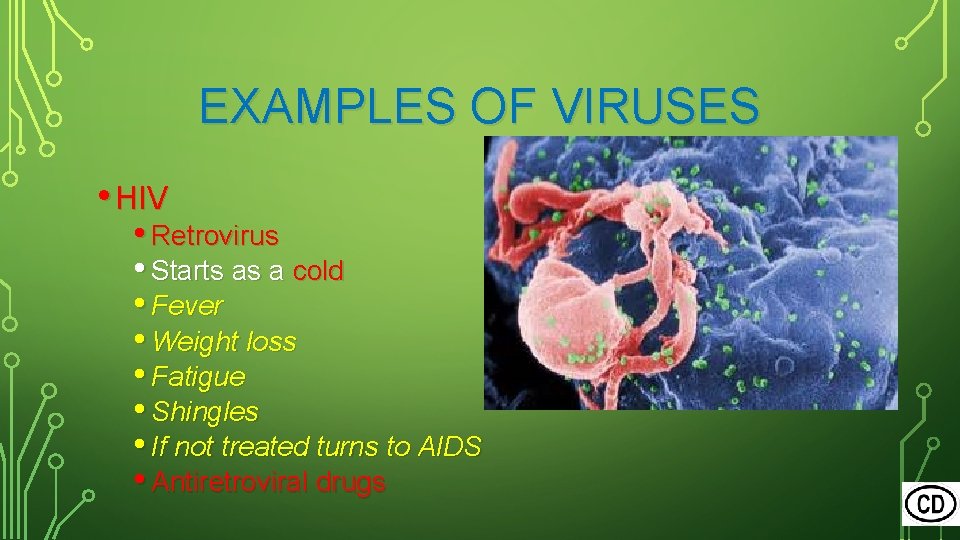
EXAMPLES OF VIRUSES • HIV • Retrovirus • Starts as a cold • Fever • Weight loss • Fatigue • Shingles • If not treated turns to AIDS • Antiretroviral drugs
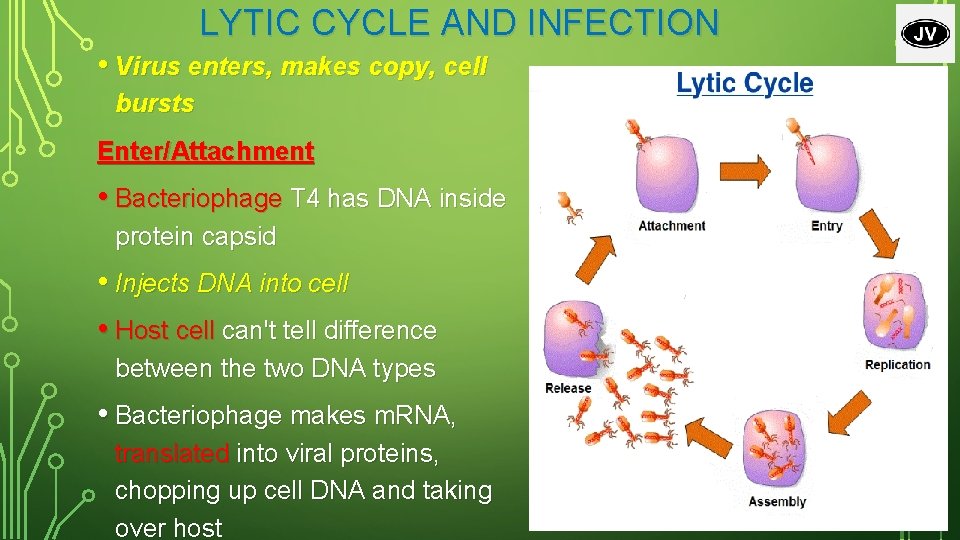
LYTIC CYCLE AND INFECTION • Virus enters, makes copy, cell bursts Enter/Attachment • Bacteriophage T 4 has DNA inside protein capsid • Injects DNA into cell • Host cell can't tell difference between the two DNA types • Bacteriophage makes m. RNA, translated into viral proteins, chopping up cell DNA and taking over host
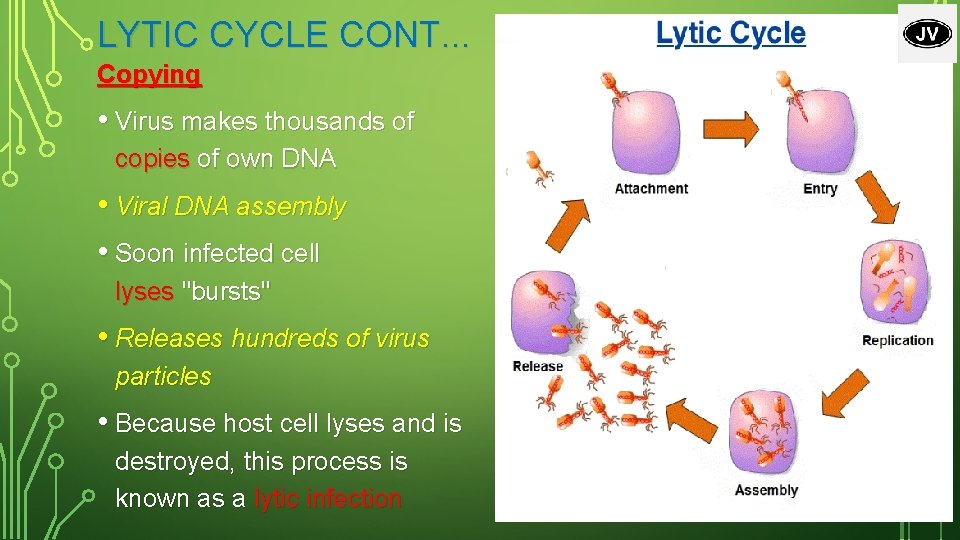
LYTIC CYCLE CONT. . . Copying • Virus makes thousands of copies of own DNA • Viral DNA assembly • Soon infected cell lyses "bursts" • Releases hundreds of virus particles • Because host cell lyses and is destroyed, this process is known as a lytic infection
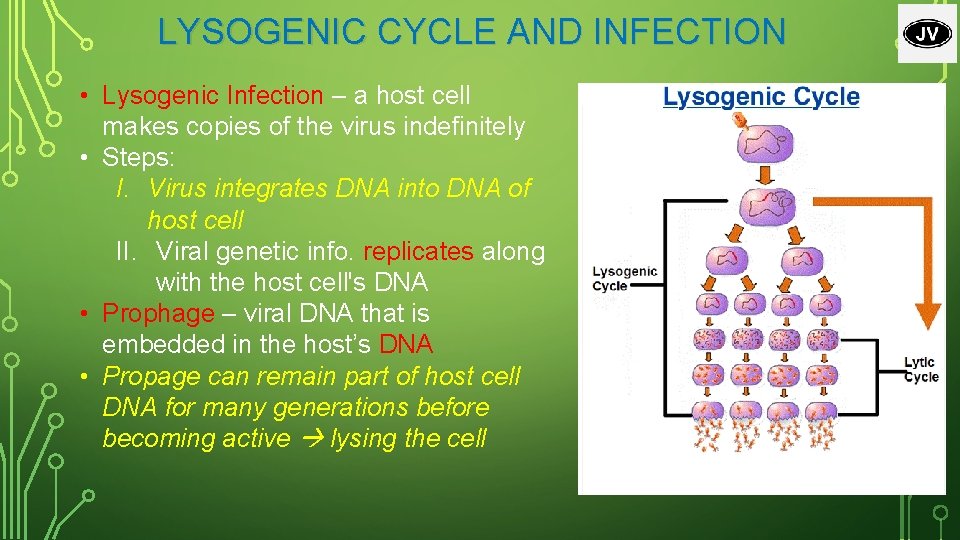
LYSOGENIC CYCLE AND INFECTION • Lysogenic Infection – a host cell makes copies of the virus indefinitely • Steps: I. Virus integrates DNA into DNA of host cell II. Viral genetic info. replicates along with the host cell's DNA • Prophage – viral DNA that is embedded in the host’s DNA • Propage can remain part of host cell DNA for many generations before becoming active lysing the cell
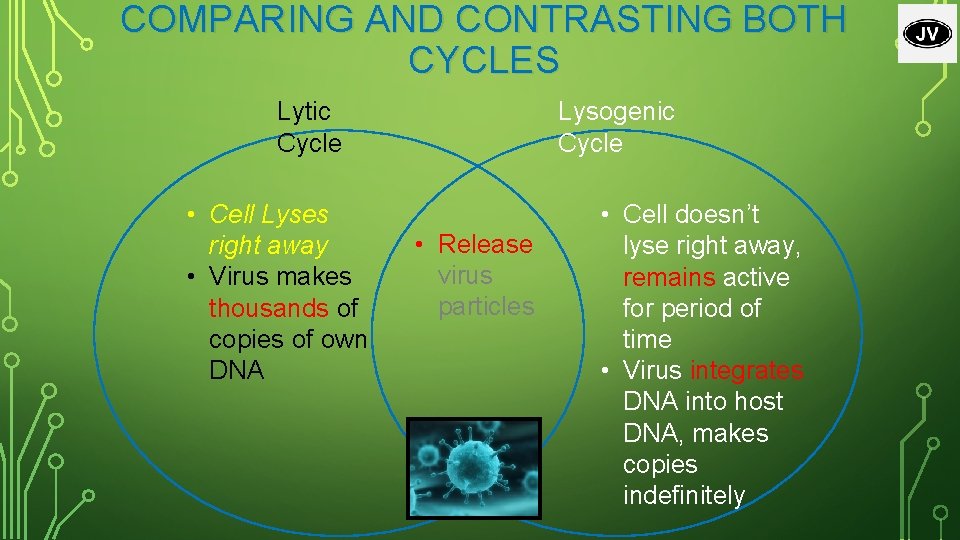
COMPARING AND CONTRASTING BOTH CYCLES Lytic Cycle • Cell Lyses right away • Virus makes thousands of copies of own DNA Lysogenic Cycle • Release virus particles • Cell doesn’t lyse right away, remains active for period of time • Virus integrates DNA into host DNA, makes copies indefinitely
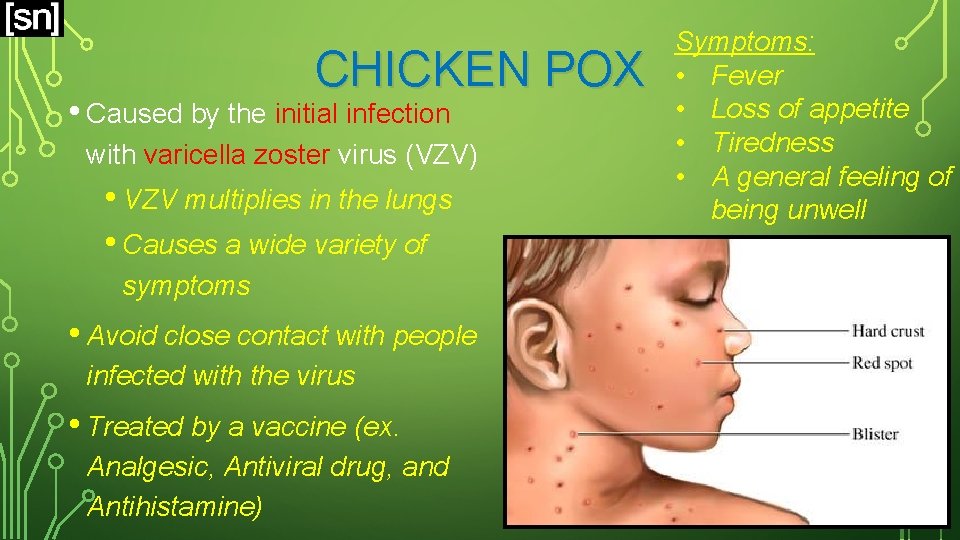
CHICKEN POX • Caused by the initial infection with varicella zoster virus (VZV) • VZV multiplies in the lungs • Causes a wide variety of symptoms • Avoid close contact with people infected with the virus • Treated by a vaccine (ex. Analgesic, Antiviral drug, and Antihistamine) Symptoms: • Fever • Loss of appetite • Tiredness • A general feeling of being unwell
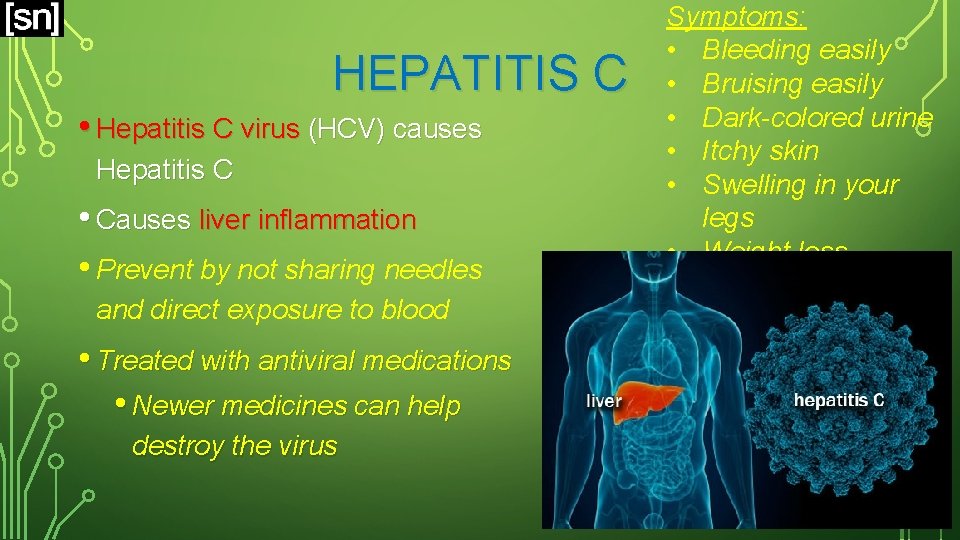
HEPATITIS C • Hepatitis C virus (HCV) causes Hepatitis C • Causes liver inflammation • Prevent by not sharing needles and direct exposure to blood • Treated with antiviral medications • Newer medicines can help destroy the virus Symptoms: • Bleeding easily • Bruising easily • Dark-colored urine • Itchy skin • Swelling in your legs • Weight loss
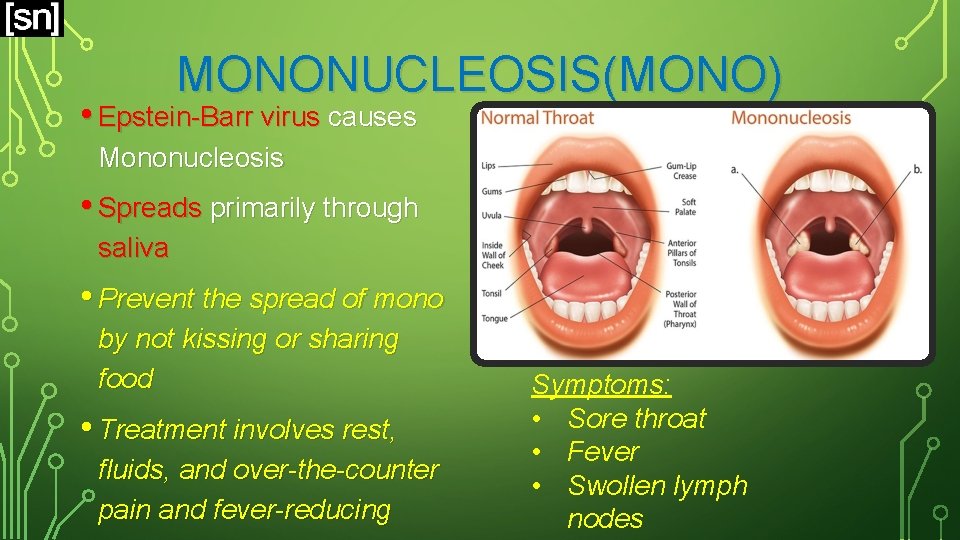
MONONUCLEOSIS(MONO) • Epstein-Barr virus causes Mononucleosis • Spreads primarily through saliva • Prevent the spread of mono by not kissing or sharing food • Treatment involves rest, fluids, and over-the-counter pain and fever-reducing Symptoms: • Sore throat • Fever • Swollen lymph nodes
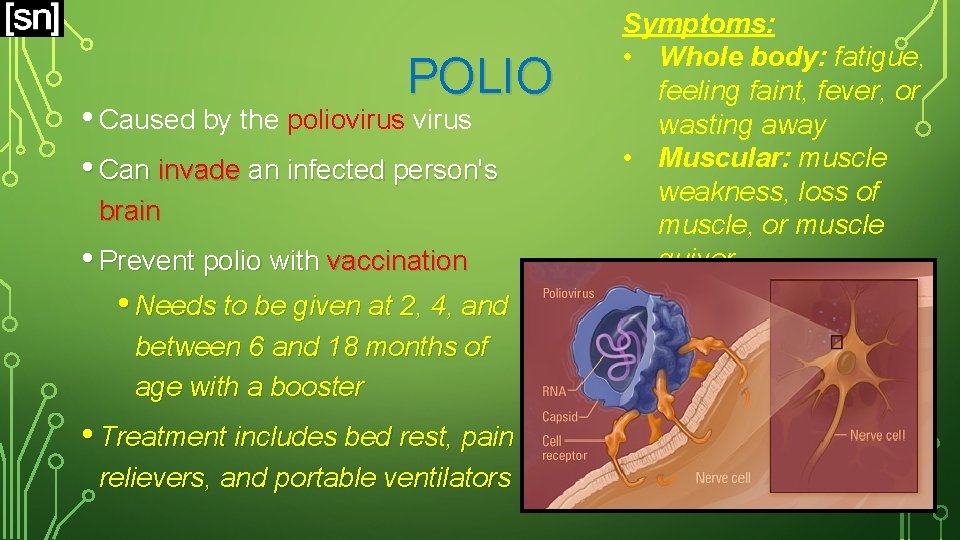
POLIO • Caused by the poliovirus • Can invade an infected person's brain • Prevent polio with vaccination • Needs to be given at 2, 4, and between 6 and 18 months of age with a booster • Treatment includes bed rest, pain relievers, and portable ventilators Symptoms: • Whole body: fatigue, feeling faint, fever, or wasting away • Muscular: muscle weakness, loss of muscle, or muscle quiver
EVE ABC The protein coat that surrounds a virus is called a capsid A. True B. False
EVE ABC What kind of host can be infected by vectors? A. Plants B. Animals C. Humans D. Both B and C
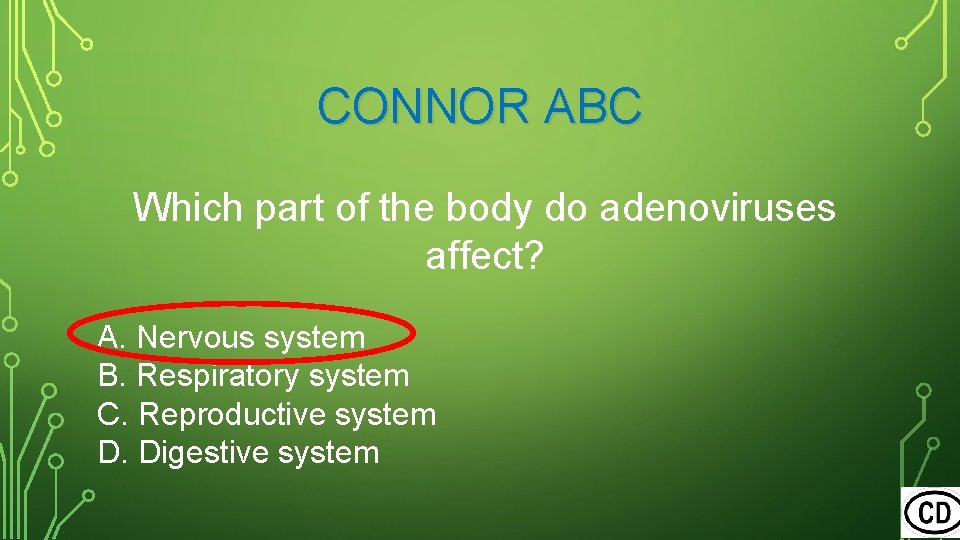
CONNOR ABC Which part of the body do adenoviruses affect? A. Nervous system B. Respiratory system C. Reproductive system D. Digestive system
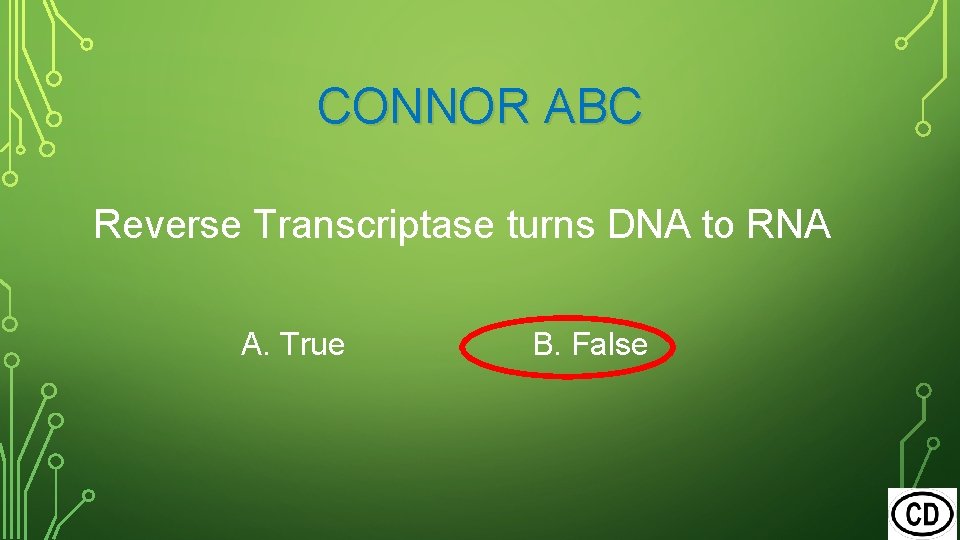
CONNOR ABC Reverse Transcriptase turns DNA to RNA A. True B. False
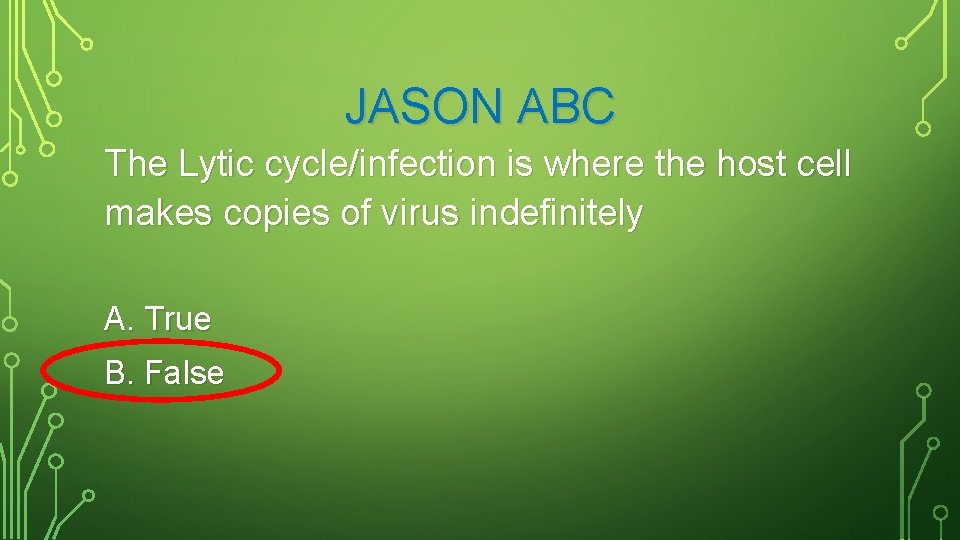
JASON ABC The Lytic cycle/infection is where the host cell makes copies of virus indefinitely A. True B. False
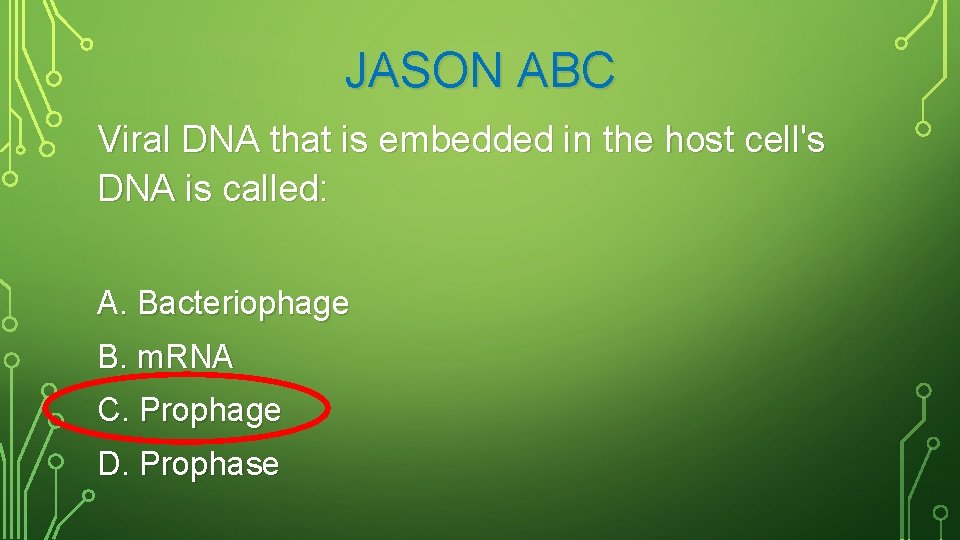
JASON ABC Viral DNA that is embedded in the host cell's DNA is called: A. Bacteriophage B. m. RNA C. Prophage D. Prophase
SOPHIA ABC Which disease can be prevented by NOT sharing Needles? A. Chicken Pox B. Polio C. Mononucleosis D. Hepatitis C
SOPHIA ABC Epstein-Barr virus causes what disease? A. Hepatitis C B. Mononucleosis C. Chicken Pox D. Polio
OVERVIEW Function and Structure of a Virus ABC Questions Background of Diseases Types of Viruses Lytic and Lysogen ic Cycle
- Slides: 28