
VIRUS STRUCTURE CLASSIFICATION AND CYCLE OF INFECTIONS NICOLE
- Slides: 22
VIRUS STRUCTURE, CLASSIFICATION, AND CYCLE OF INFECTIONS NICOLE TOBEY, NICOLE PILLA, MACKENZIE FRUSCO
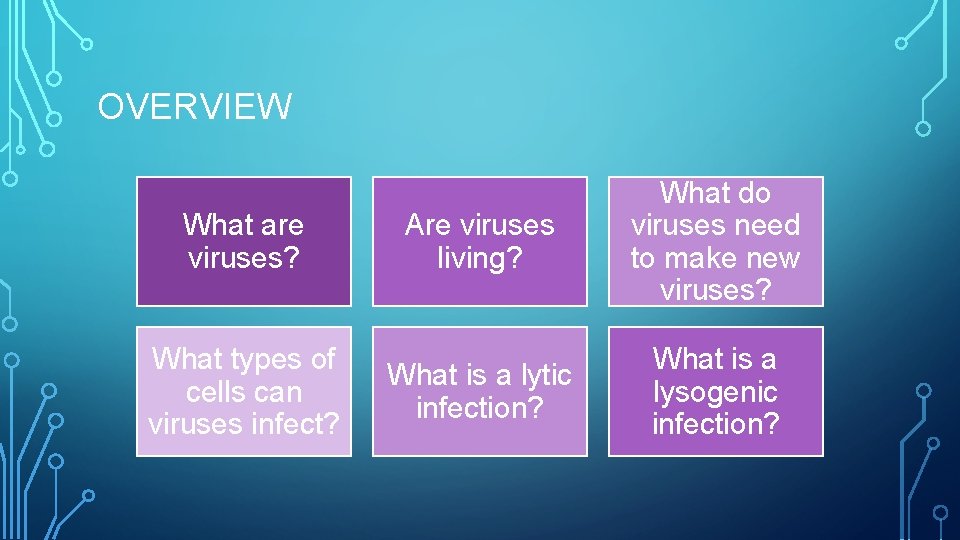
OVERVIEW What are viruses? What types of cells can viruses infect? Are viruses living? What do viruses need to make new viruses? What is a lytic infection? What is a lysogenic infection?
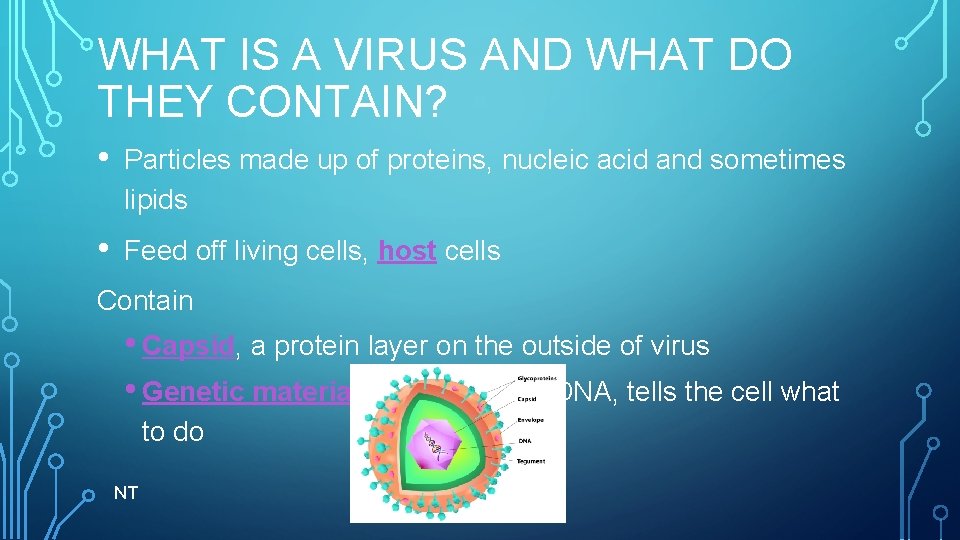
WHAT IS A VIRUS AND WHAT DO THEY CONTAIN? • Particles made up of proteins, nucleic acid and sometimes lipids • Feed off living cells, host cells Contain • Capsid, a protein layer on the outside of virus • Genetic material, either RNA or DNA, tells the cell what to do NT
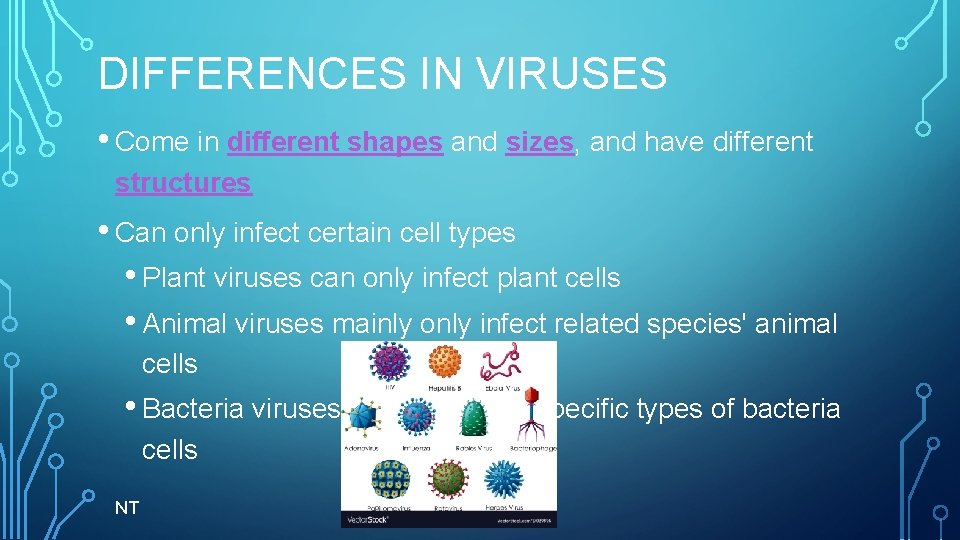
DIFFERENCES IN VIRUSES • Come in different shapes and sizes, and have different structures • Can only infect certain cell types • Plant viruses can only infect plant cells • Animal viruses mainly only infect related species' animal cells • Bacteria viruses can only infect specific types of bacteria cells NT
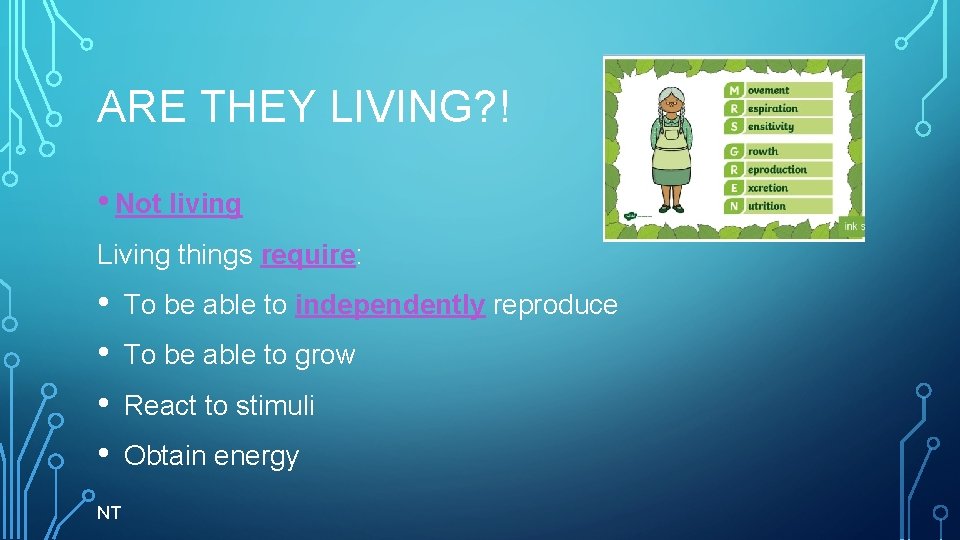
ARE THEY LIVING? ! • Not living Living things require: • • NT To be able to independently reproduce To be able to grow React to stimuli Obtain energy
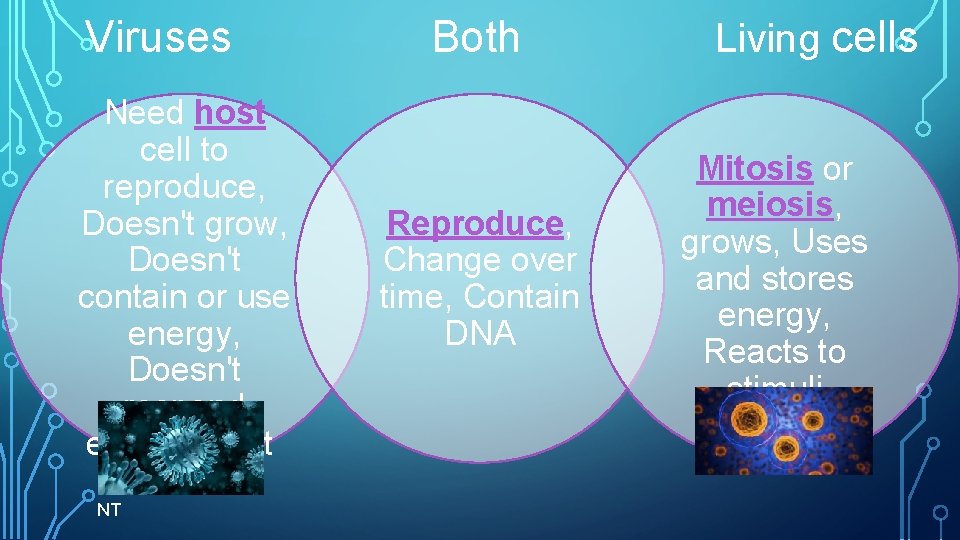
Viruses Need host cell to reproduce, Doesn't grow, Doesn't contain or use energy, Doesn't respond environment NT Both Reproduce, Change over time, Contain DNA Living cells Mitosis or meiosis, grows, Uses and stores energy, Reacts to stimuli
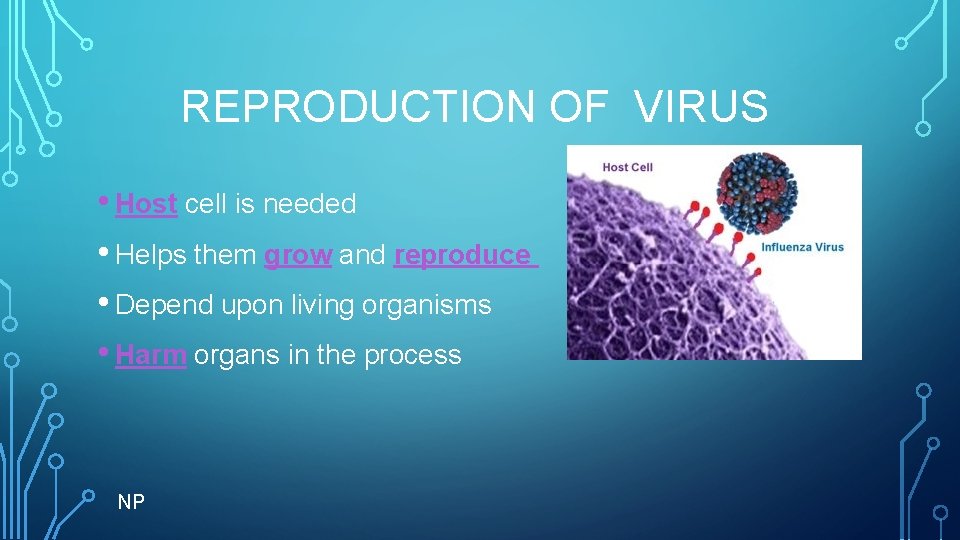
REPRODUCTION OF VIRUS • Host cell is needed • Helps them grow and reproduce • Depend upon living organisms • Harm organs in the process NP
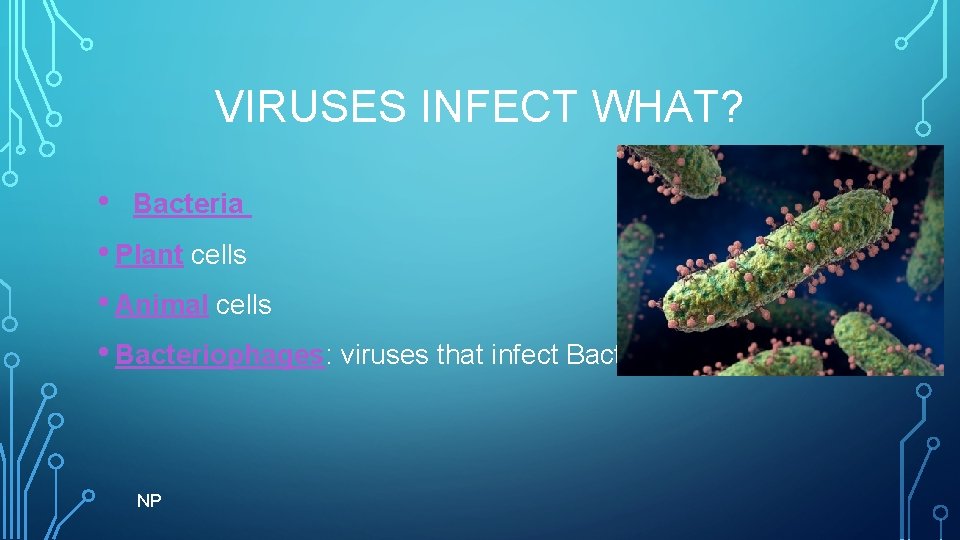
VIRUSES INFECT WHAT? • Bacteria • Plant cells • Animal cells • Bacteriophages: viruses that infect Bacteria NP
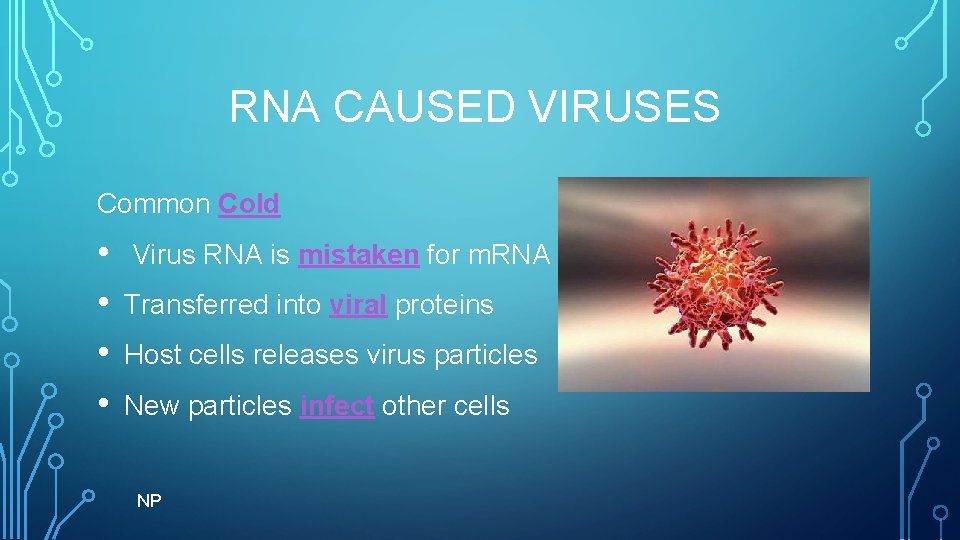
RNA CAUSED VIRUSES Common Cold • • Virus RNA is mistaken for m. RNA Transferred into viral proteins Host cells releases virus particles New particles infect other cells NP
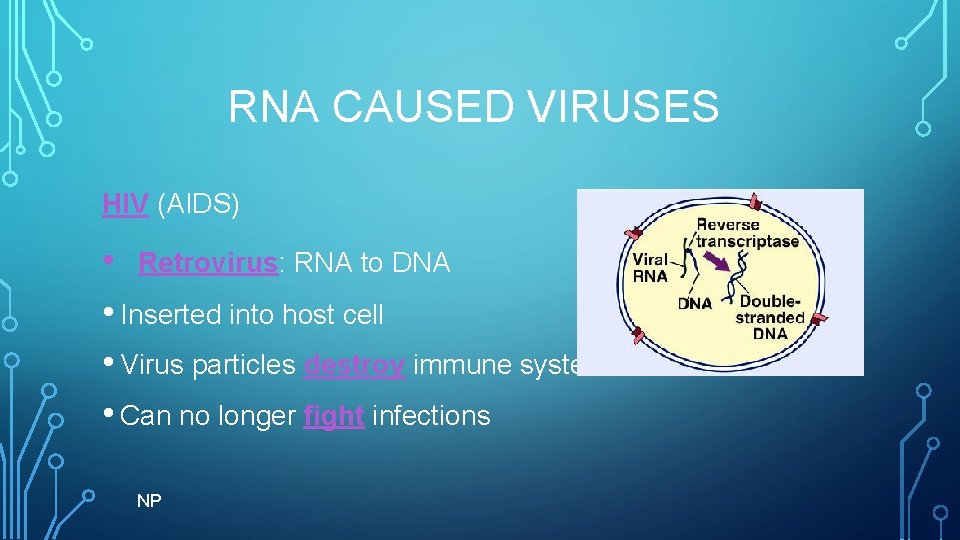
RNA CAUSED VIRUSES HIV (AIDS) • Retrovirus: RNA to DNA • Inserted into host cell • Virus particles destroy immune system • Can no longer fight infections NP
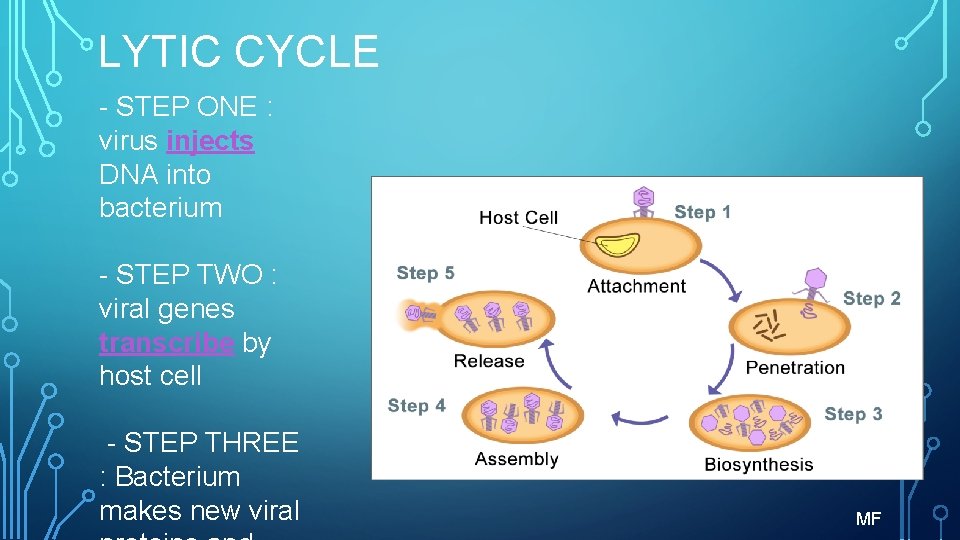
LYTIC CYCLE - STEP ONE : virus injects DNA into bacterium - STEP TWO : viral genes transcribe by host cell - STEP THREE : Bacterium makes new viral MF
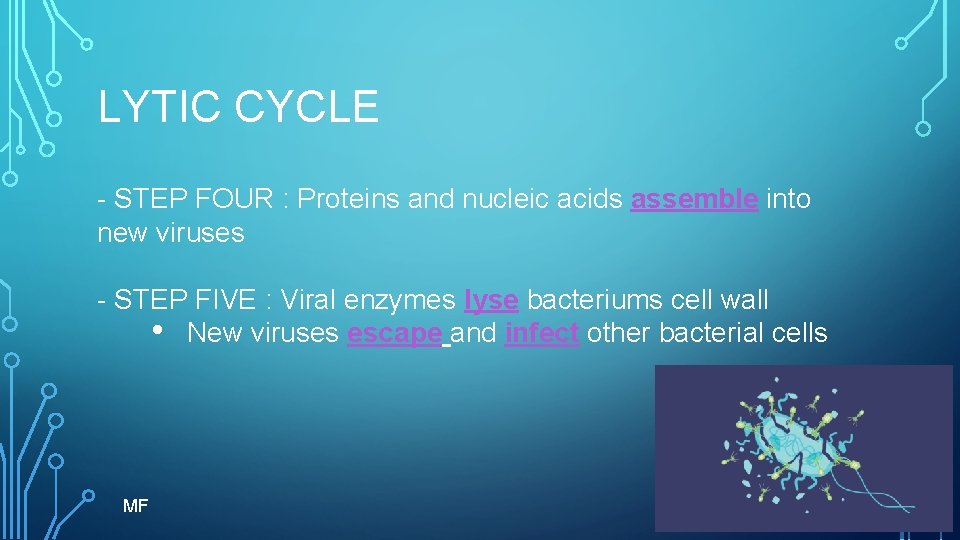
LYTIC CYCLE - STEP FOUR : Proteins and nucleic acids assemble into new viruses - STEP FIVE : Viral enzymes lyse bacteriums cell wall • New viruses escape and infect other bacterial cells MF
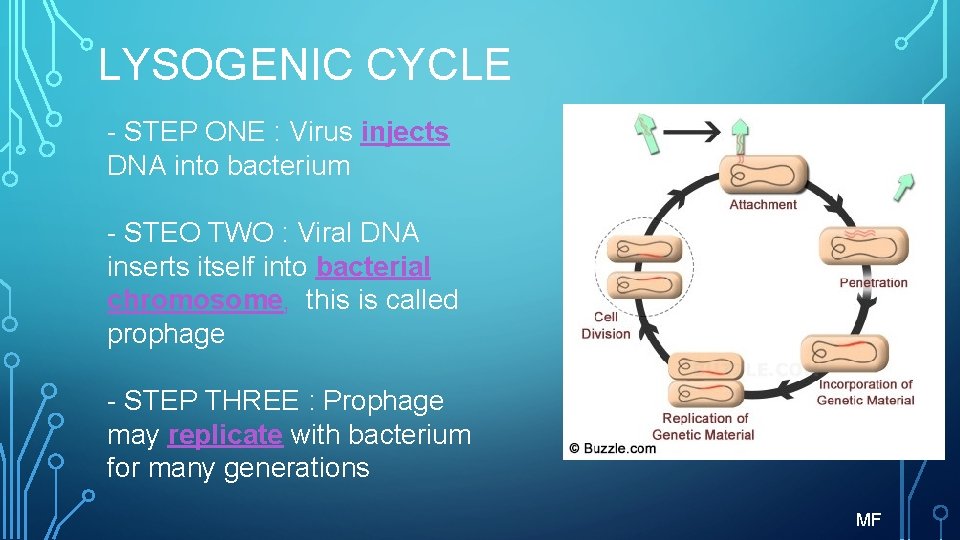
LYSOGENIC CYCLE - STEP ONE : Virus injects DNA into bacterium - STEO TWO : Viral DNA inserts itself into bacterial chromosome, this is called prophage - STEP THREE : Prophage may replicate with bacterium for many generations MF
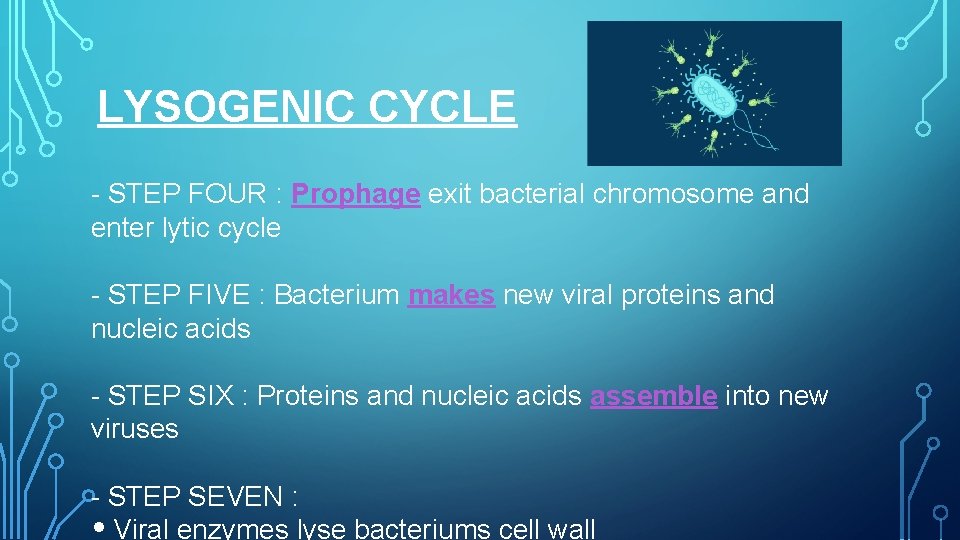
LYSOGENIC CYCLE - STEP FOUR : Prophage exit bacterial chromosome and enter lytic cycle - STEP FIVE : Bacterium makes new viral proteins and nucleic acids - STEP SIX : Proteins and nucleic acids assemble into new viruses - STEP SEVEN : • Viral enzymes lyse bacteriums cell wall
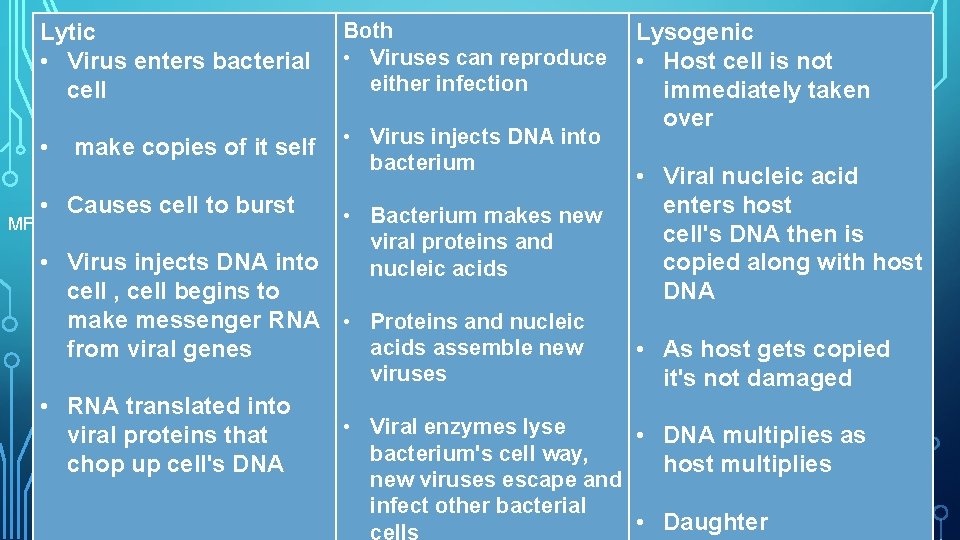
MF Lytic • Virus enters bacterial cell Both • Viruses can reproduce either infection • • Virus injects DNA into bacterium make copies of it self • Causes cell to burst • Bacterium makes new viral proteins and nucleic acids • Virus injects DNA into cell , cell begins to make messenger RNA • Proteins and nucleic acids assemble new from viral genes viruses • RNA translated into viral proteins that chop up cell's DNA Lysogenic • Host cell is not immediately taken over • Viral nucleic acid enters host cell's DNA then is copied along with host DNA • As host gets copied it's not damaged • Viral enzymes lyse • DNA multiplies as bacterium's cell way, host multiplies new viruses escape and infect other bacterial • Daughter cells
ABC'S: WHICH IS A PART OF A VIRUS? A. Membrane B. Nucleus C. Capsid D. Golgi Apparatus C NT
ABC'S: WHICH DO CELLS AND VIRUSES HAVE IN COMMON? A. Reacts to stimuli B. Needs host cell to reproduce C. Needs parent cell to reproduce D. Contains DNA D NT
ABC'S: A VIRUS CAN ONLY REPRODUCE. . . A. asexually B. Within a host cell C. They don’t need anything, their independent D. sexually NP B
ABC'S: VIRUSES CAN INFECT? A. Plant cells B. Animal cells C. Bacteria D. All of above NP D
ABC'S : WHAT DOES LYSOGENIC HAVE THAT LYTIC DOES NOT? • A. Viruses can reproduce either infection • B. Host cell is not immediately taken over • C. Bacteriophage DNA that became imbedded in bacterial DNA • D. Proteins and nucleic acids assemble into new viruses MF A
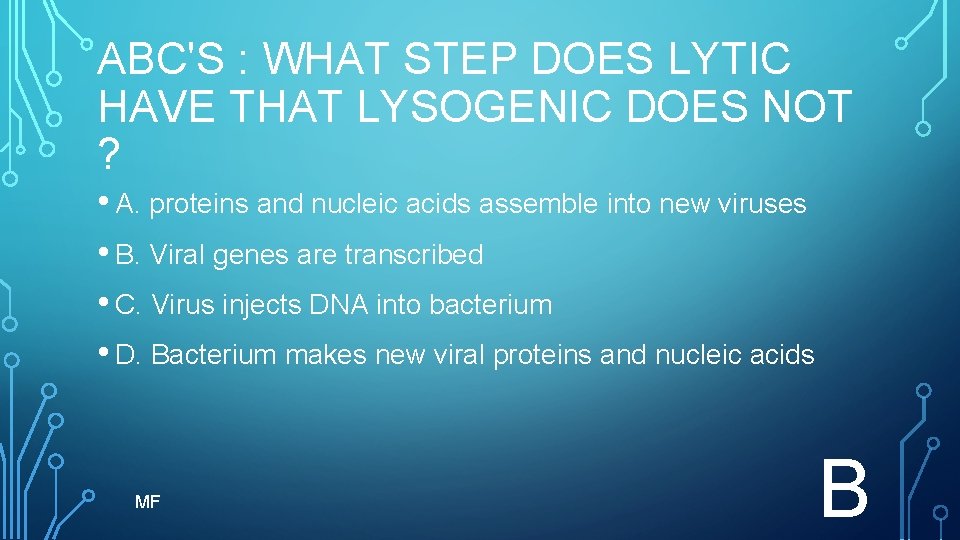
ABC'S : WHAT STEP DOES LYTIC HAVE THAT LYSOGENIC DOES NOT ? • A. proteins and nucleic acids assemble into new viruses • B. Viral genes are transcribed • C. Virus injects DNA into bacterium • D. Bacterium makes new viral proteins and nucleic acids MF B
OVERVIEW What are viruses? What types of cells can viruses infect? Are viruses living? What do viruses need to make new viruses? What is a lytic infection? What is a lysogenic infection?