
Virus Notes T 4 Bacteriophage Tobacco Mosaic Virus
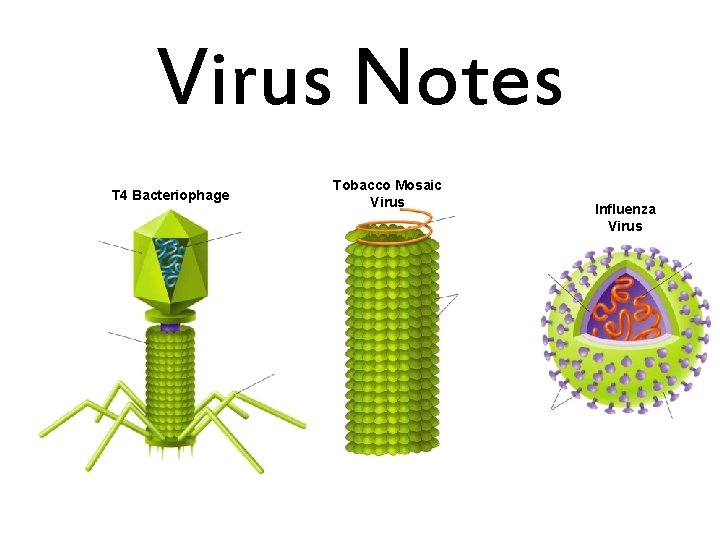
Virus Notes T 4 Bacteriophage Tobacco Mosaic Virus Influenza Virus
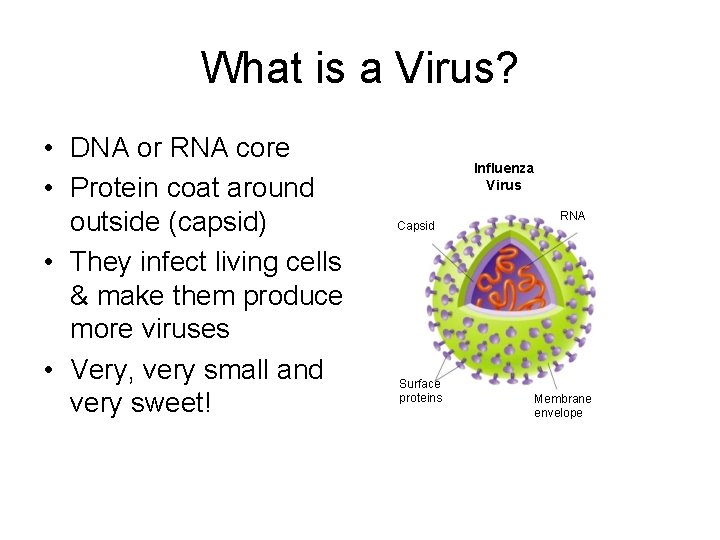
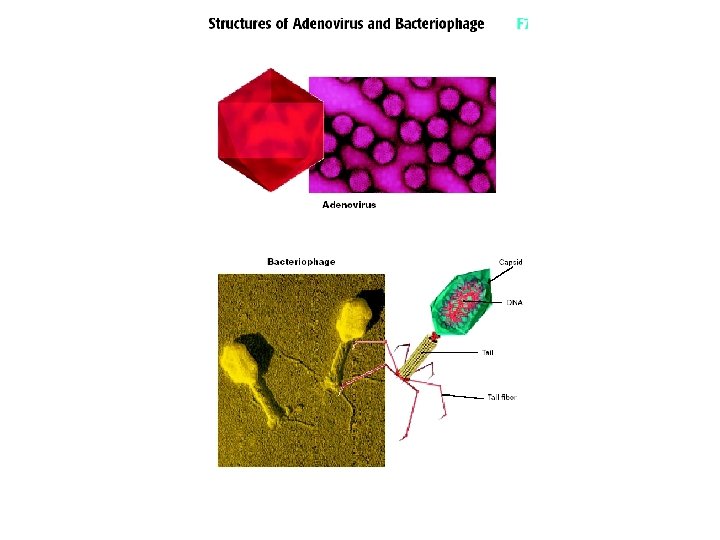
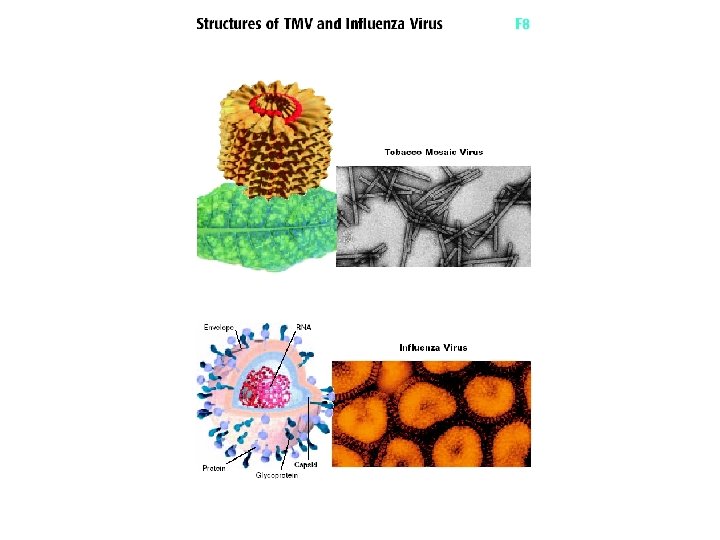
What is a Virus? • DNA or RNA core • Protein coat around outside (capsid) • They infect living cells & make them produce more viruses • Very, very small and very sweet! Influenza Virus Capsid Surface proteins RNA Membrane envelope
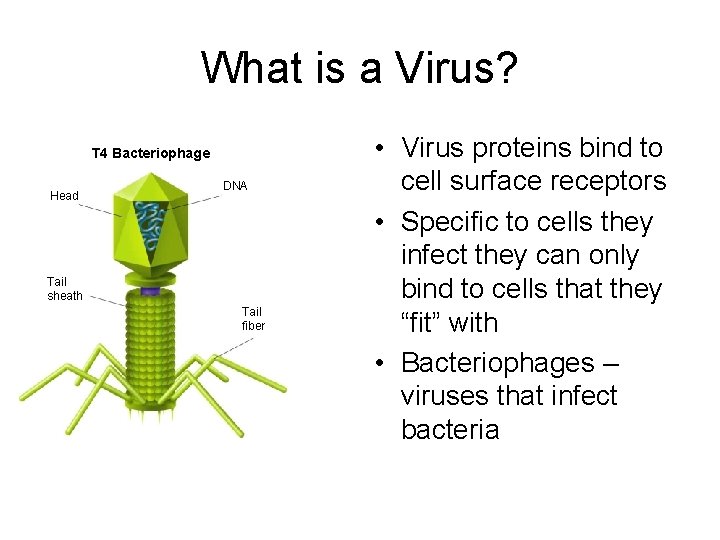
What is a Virus? T 4 Bacteriophage Head DNA Tail sheath Tail fiber • Virus proteins bind to cell surface receptors • Specific to cells they infect they can only bind to cells that they “fit” with • Bacteriophages – viruses that infect bacteria
How big is a virus? • Here is how you can imagine the size of viruses: – If a virus was the size of a basketball: • A bacterium would be as large as a city block • A grain of sand would be two miles long • A person would be 4, 000 miles tall

Lytic Infection • Virus enters cell • Uses the cells machinery to make copies of itself • Causes the host cell to be lysed (burst open) • Example – Bacteriophage T 4 • http: //www. youtube. com/watch? v=w. Vk. Cy. U 5 aee. U
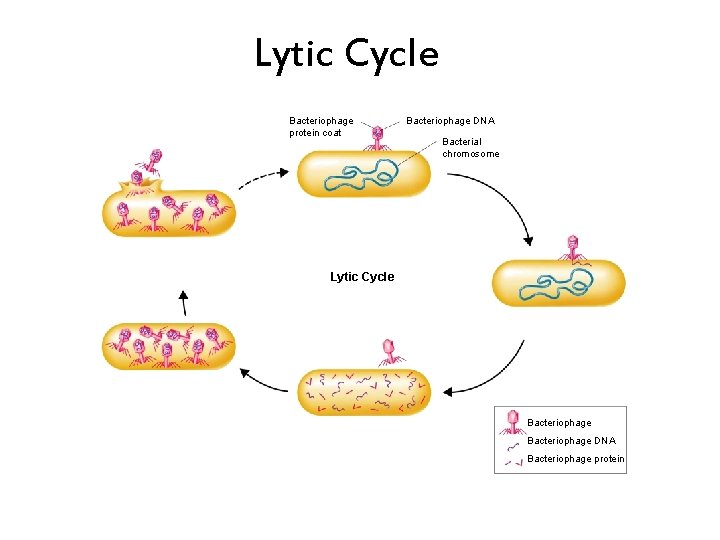
Lytic Cycle Bacteriophage protein coat Bacteriophage DNA Bacterial chromosome Lytic Cycle Bacteriophage DNA Bacteriophage protein
Lysogenic Infection • Virus enters cell • Viral DNA (prophage) integrates w/ host DNA meaning the DNA enters into the host DNA by splicing • Viral DNA replicated w/ host DNA • Does not lyse (kill) host cell initially • Example – Bacteriophage lambda • http: //www. youtube. com/watch? v=_J 9 -x. Kitsd 0
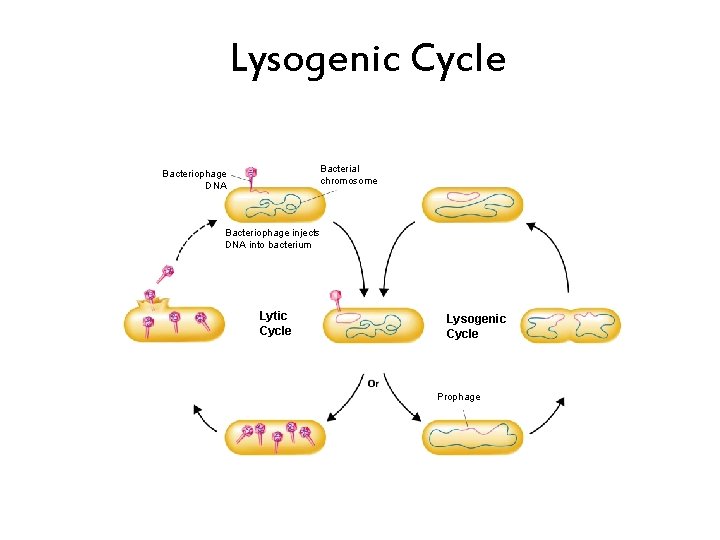
Lysogenic Cycle Bacterial chromosome Bacteriophage DNA Bacteriophage injects DNA into bacterium Lytic Cycle Lysogenic Cycle Prophage
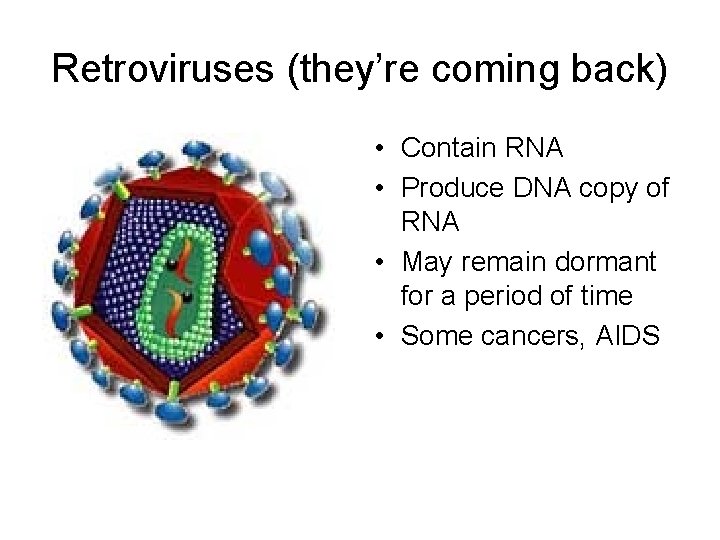
Retroviruses (they’re coming back) • Contain RNA • Produce DNA copy of RNA • May remain dormant for a period of time • Some cancers, AIDS
Are they Living or Nonliving? • Take 3 minutes and create a chart comparing viruses & cells on these points – – Structure (what is it made of? ) Reproduction (how? ) Genetic code (DNA or RNA? ) Growth & Development (can it grow and change? ) – Obtain and use energy (yes or no) – Respond to Environment (yes or no) – Change over time (yes or no)
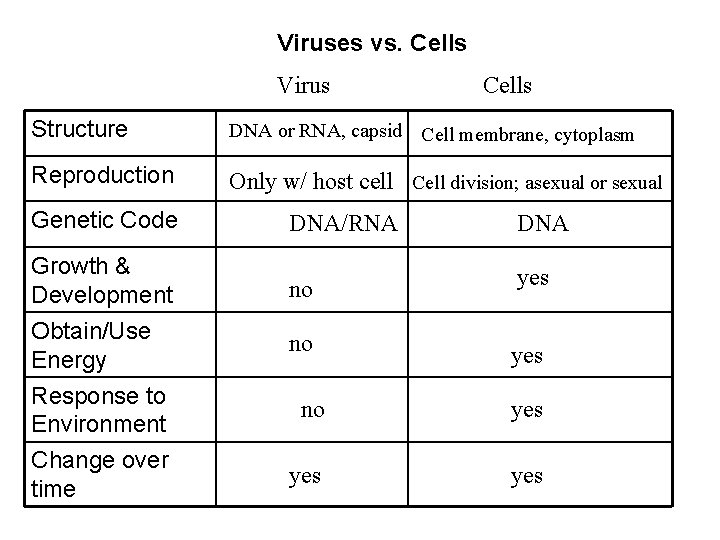
Viruses vs. Cells Virus Cells Structure DNA or RNA, capsid Cell membrane, cytoplasm Reproduction Only w/ host cell Cell division; asexual or sexual Genetic Code Growth & Development Obtain/Use Energy Response to Environment Change over time DNA/RNA DNA no yes yes
- Slides: 13