
VIRUS BACTERIOPHAGE PRION VIROID VIRAL CHARACTERISTICS AND REPLICATION

VIRUS , BACTERIOPHAGE , PRION , VIROID, VIRAL CHARACTERISTICS AND REPLICATION BY Dr. Hesnaa Saeed Al-Mossawi
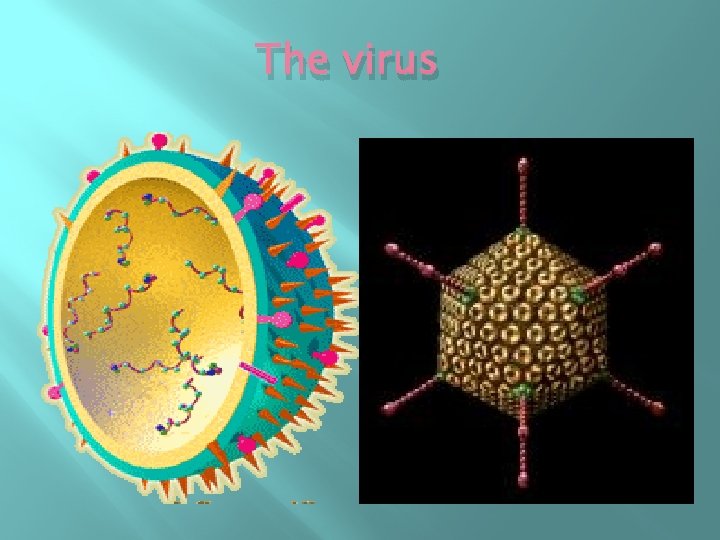
The virus
Virus • • A virus is a non-cellular particle made up of genetic material and protein that can invade living cells. Capsid: The protein shell, or coat, that encloses the nucleic acid genome. Capsomeres: Morphologic units represent clusters of polypeptides, Envelope: A lipid-containing membrane that surrounds some virus particles. It is acquired during viral maturation by a budding process through a cellular membrane Virus-encoded glycoproteins are exposed on the surface of the envelope. These projections are called peplomers. Nucleocapsid: The protein–nucleic acid complex representing the packaged form of the viral genome. Structural units: The basic protein building blocks of the coat. Is referred to as a protomer.
Viral characteristics • • Non living structures Non cellular Contain a protein coat called the capsid Have a nucleic acid core containing DNA or RNA Capable of reproducing only when inside a HOST cell Some viruses are enclosed in an protective envelope Some viruses may have spikes to help attach to the host cell Most viruses infect only SPECIFIC host cells
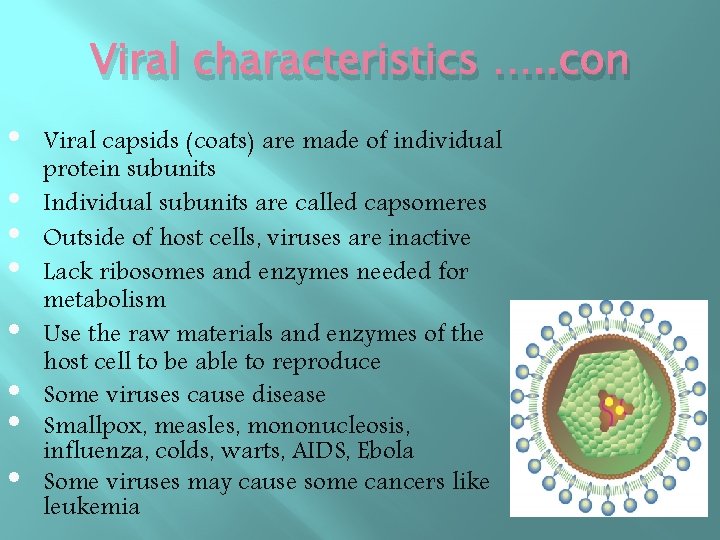
Viral characteristics …. . con • • Viral capsids (coats) are made of individual protein subunits Individual subunits are called capsomeres Outside of host cells, viruses are inactive Lack ribosomes and enzymes needed for metabolism Use the raw materials and enzymes of the host cell to be able to reproduce Some viruses cause disease Smallpox, measles, mononucleosis, influenza, colds, warts, AIDS, Ebola Some viruses may cause some cancers like leukemia
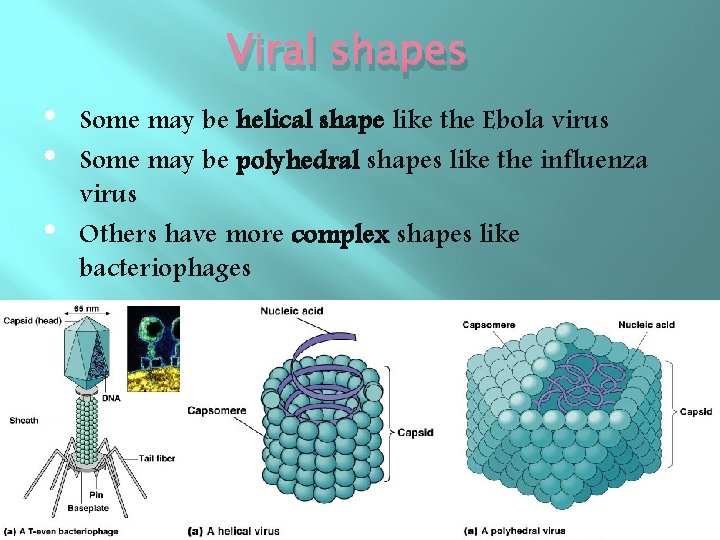
Viral shapes • • • Some may be helical shape like the Ebola virus Some may be polyhedral shapes like the influenza virus Others have more complex shapes like bacteriophages
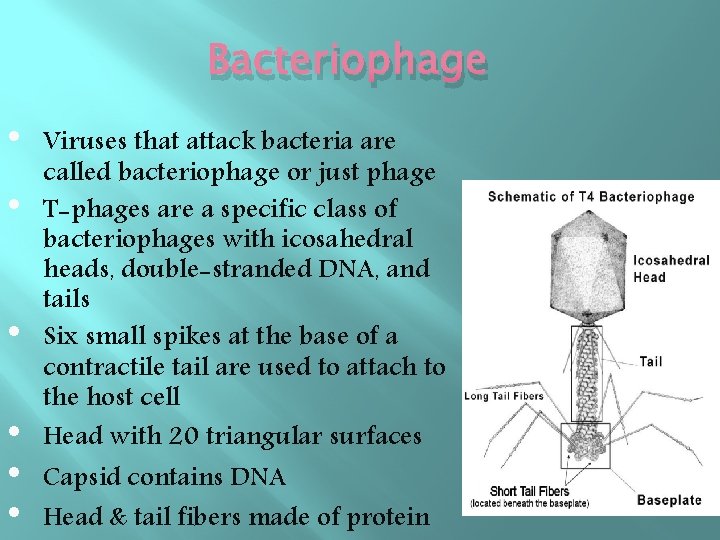
Bacteriophage • • • Viruses that attack bacteria are called bacteriophage or just phage T-phages are a specific class of bacteriophages with icosahedral heads, double-stranded DNA, and tails Six small spikes at the base of a contractile tail are used to attach to the host cell Head with 20 triangular surfaces Capsid contains DNA Head & tail fibers made of protein
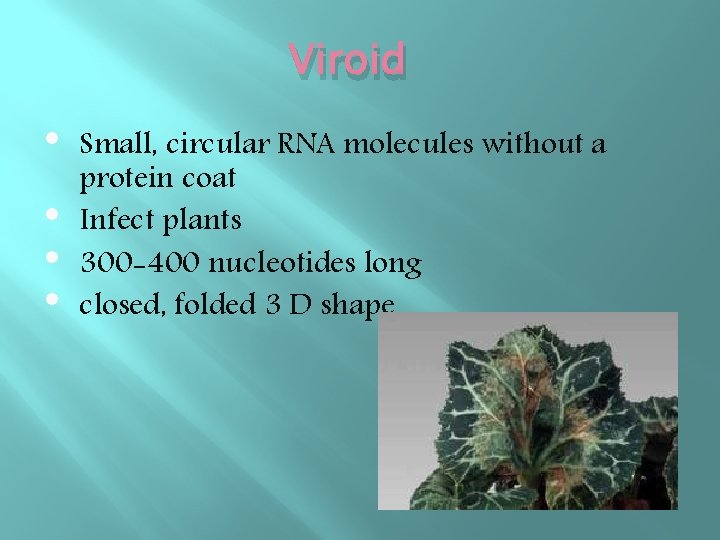
Viroid • • Small, circular RNA molecules without a protein coat Infect plants 300 -400 nucleotides long closed, folded 3 D shape
• • Prion are Small proteinaceous infectious particles “infectious proteins” They are normal body proteins that get converted into an alternate configuration by contact with other prion proteins They have no DNA or RNA The main protein involved in human and mammalian prion diseases is called “Pr. P” Prions form insoluble deposits in the brain Causes neurons to rapidly degeneration. Mad cow disease (bovine spongiform encephalitis: BSE) is an example
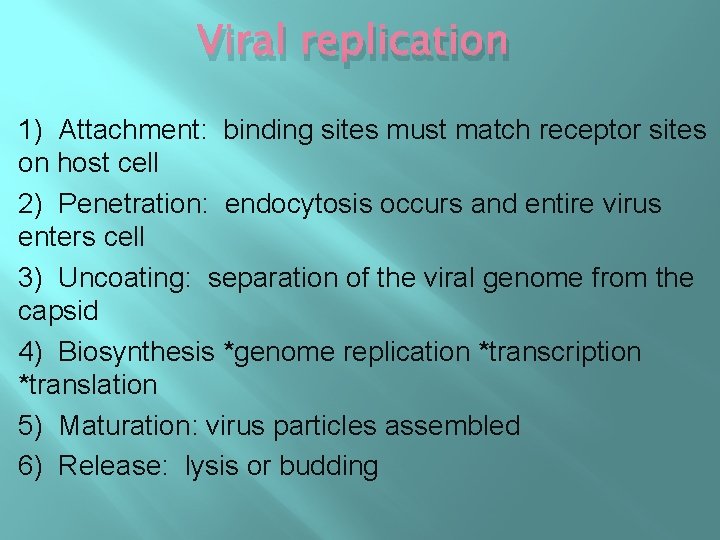
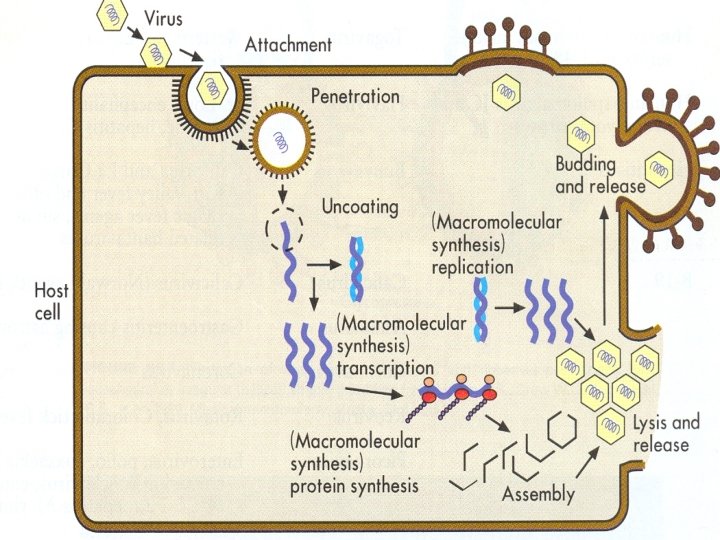
Viral replication 1) Attachment: binding sites must match receptor sites on host cell 2) Penetration: endocytosis occurs and entire virus enters cell 3) Uncoating: separation of the viral genome from the capsid 4) Biosynthesis *genome replication *transcription *translation 5) Maturation: virus particles assembled 6) Release: lysis or budding
- Slides: 11