
VIRTUE George Herbert George Herbert was born into

VIRTUE George Herbert: George Herbert was born into a wealthy and titled family at Montgomery Castle, in Wales, on April 3, 1593, as one of nine children. His father, Sir Richard Herbert, died in 1596, when George was three years old. His mother, Lady Magdalen Newport Herbert, was a patron of the poet and clergyman John Donne, who presided at her funeral when she died in 1627. ﻋﻤﺎﺩﺓ ﺍﻟﺘﻌﻠﻢ ﺍﻹﻟﻜﺘﺮﻭﻧﻲ ﻭﺍﻟﺘﻌﻠﻴﻢ ﻋﻦ ﺑﻌﺪ Deanship of E-Learning and Distance Education [ ] © ﺟﻤﻴﻊ ﺍﻟﺤﻘﻮﻕ ﻣﺤﻔﻮﻇﺔ ﻟﺠﺎﻣﻌﺔ ﺍﻟﻤﻠﻚ ﻓﻴﺼﻞ All Rights Reserved for KFU ©
VIRTUE Herbert's first poems were Latin sonnets that he wrote for his mother. In them, he argued that a more fitting subject for poetry than love for a woman was love for God. His first published verses appeared in 1612. They were two poems, also in Latin, written in memory of King James's son Prince Henry, who had died that year. ﻋﻤﺎﺩﺓ ﺍﻟﺘﻌﻠﻢ ﺍﻹﻟﻜﺘﺮﻭﻧﻲ ﻭﺍﻟﺘﻌﻠﻴﻢ ﻋﻦ ﺑﻌﺪ Deanship of E-Learning and Distance Education [ ] © ﺟﻤﻴﻊ ﺍﻟﺤﻘﻮﻕ ﻣﺤﻔﻮﻇﺔ ﻟﺠﺎﻣﻌﺔ ﺍﻟﻤﻠﻚ ﻓﻴﺼﻞ All Rights Reserved for KFU ©
On March 1, 1633, Herbert died of tuberculosis. By all accounts, Herbert was a gentle and pious person with a sweet and generous nature. He helped rebuild the decaying church at Bemerton with his own money and was loved and esteemed by his parishioners, whom he cared for spiritually and, when necessary, by sharing in their labor or giving them money. ﻋﻤﺎﺩﺓ ﺍﻟﺘﻌﻠﻢ ﺍﻹﻟﻜﺘﺮﻭﻧﻲ ﻭﺍﻟﺘﻌﻠﻴﻢ ﻋﻦ ﺑﻌﺪ Deanship of E-Learning and Distance Education [ ] © ﺟﻤﻴﻊ ﺍﻟﺤﻘﻮﻕ ﻣﺤﻔﻮﻇﺔ ﻟﺠﺎﻣﻌﺔ ﺍﻟﻤﻠﻚ ﻓﻴﺼﻞ All Rights Reserved for KFU ©
Introduction "Virtue" is one of the poems in a collection of verse called The Temple (1633), which George Herbert wrote during the last three years of his life. He appreciates the beauty of creation not only for its own sake but also because he sees it as a mirror of the goodness of the Creator. ﻋﻤﺎﺩﺓ ﺍﻟﺘﻌﻠﻢ ﺍﻹﻟﻜﺘﺮﻭﻧﻲ ﻭﺍﻟﺘﻌﻠﻴﻢ ﻋﻦ ﺑﻌﺪ Deanship of E-Learning and Distance Education [ ] © ﺟﻤﻴﻊ ﺍﻟﺤﻘﻮﻕ ﻣﺤﻔﻮﻇﺔ ﻟﺠﺎﻣﻌﺔ ﺍﻟﻤﻠﻚ ﻓﻴﺼﻞ All Rights Reserved for KFU ©
Yet, despite Herbert's sense of the world's loveliness, his poems often reflect the transience of that beauty and the folly of investing it with any real value. In "Virtue, " he presents a vision of an eternal world beyond the one available to sense ﻋﻤﺎﺩﺓ ﺍﻟﺘﻌﻠﻢ ﺍﻹﻟﻜﺘﺮﻭﻧﻲ ﻭﺍﻟﺘﻌﻠﻴﻢ ﻋﻦ ﺑﻌﺪ Deanship of E-Learning and Distance Education [ ] © ﺟﻤﻴﻊ ﺍﻟﺤﻘﻮﻕ ﻣﺤﻔﻮﻇﺔ ﻟﺠﺎﻣﻌﺔ ﺍﻟﻤﻠﻚ ﻓﻴﺼﻞ All Rights Reserved for KFU ©
Herbert's poetry displays a conjunction of intellect and emotion In "Virtue, " an example of this combination of the intellectual and the sensuous can be seen in the second line of the third quatrain, when the spring is compared to a box of compressed sweets. In "Virtue, " which comprises four quatrains altogether, Herbert reflects on the loveliness of the living world but also on the reality of death. ﻋﻤﺎﺩﺓ ﺍﻟﺘﻌﻠﻢ ﺍﻹﻟﻜﺘﺮﻭﻧﻲ ﻭﺍﻟﺘﻌﻠﻴﻢ ﻋﻦ ﺑﻌﺪ Deanship of E-Learning and Distance Education [ ] © ﺟﻤﻴﻊ ﺍﻟﺤﻘﻮﻕ ﻣﺤﻔﻮﻇﺔ ﻟﺠﺎﻣﻌﺔ ﺍﻟﻤﻠﻚ ﻓﻴﺼﻞ All Rights Reserved for KFU ©
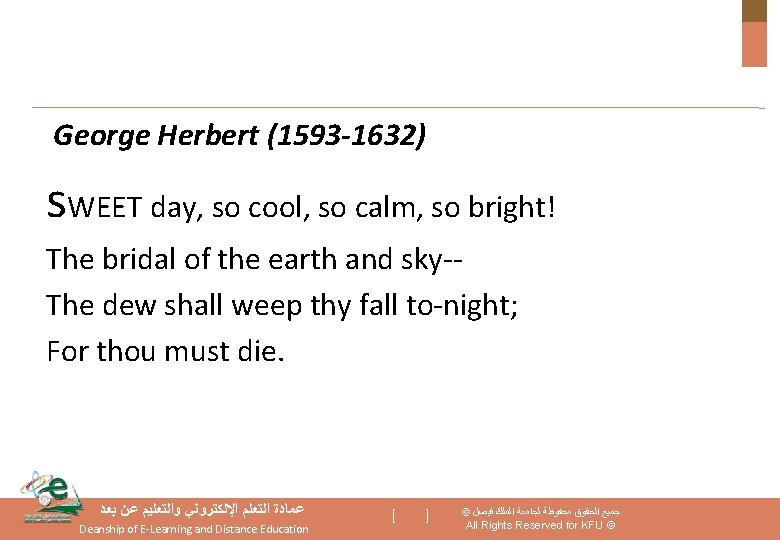
George Herbert (1593 -1632) s. WEET day, so cool, so calm, so bright! The bridal of the earth and sky-The dew shall weep thy fall to-night; For thou must die. ﻋﻤﺎﺩﺓ ﺍﻟﺘﻌﻠﻢ ﺍﻹﻟﻜﺘﺮﻭﻧﻲ ﻭﺍﻟﺘﻌﻠﻴﻢ ﻋﻦ ﺑﻌﺪ Deanship of E-Learning and Distance Education [ ] © ﺟﻤﻴﻊ ﺍﻟﺤﻘﻮﻕ ﻣﺤﻔﻮﻇﺔ ﻟﺠﺎﻣﻌﺔ ﺍﻟﻤﻠﻚ ﻓﻴﺼﻞ All Rights Reserved for KFU ©
Sweet rose, whose hue angry and brave Bids the rash gazer wipe his eye, Thy root is ever in its grave, And thou must die. ﻋﻤﺎﺩﺓ ﺍﻟﺘﻌﻠﻢ ﺍﻹﻟﻜﺘﺮﻭﻧﻲ ﻭﺍﻟﺘﻌﻠﻴﻢ ﻋﻦ ﺑﻌﺪ Deanship of E-Learning and Distance Education [ ] © ﺟﻤﻴﻊ ﺍﻟﺤﻘﻮﻕ ﻣﺤﻔﻮﻇﺔ ﻟﺠﺎﻣﻌﺔ ﺍﻟﻤﻠﻚ ﻓﻴﺼﻞ All Rights Reserved for KFU ©
Sweet spring, full of sweet days and roses, A box where sweets compacted lie, My music shows ye have your closes, And all must die. Only a sweet and virtuous soul, Like season'd timber, never gives; But though the whole world turn to coal, Then chiefly lives. ﻋﻤﺎﺩﺓ ﺍﻟﺘﻌﻠﻢ ﺍﻹﻟﻜﺘﺮﻭﻧﻲ ﻭﺍﻟﺘﻌﻠﻴﻢ ﻋﻦ ﺑﻌﺪ Deanship of E-Learning and Distance Education [ ] © ﺟﻤﻴﻊ ﺍﻟﺤﻘﻮﻕ ﻣﺤﻔﻮﻇﺔ ﻟﺠﺎﻣﻌﺔ ﺍﻟﻤﻠﻚ ﻓﻴﺼﻞ All Rights Reserved for KFU ©
Lines 1 -4 Herbert begins "Virtue" with an apostrophe, or invocation. That is, here, he starts with a direct rhetorical address to a personified thing: as if speaking to the day, the narrator says, "Sweet day" and then characterizes the day as "cool, " "calm, " and "bright. " ﻋﻤﺎﺩﺓ ﺍﻟﺘﻌﻠﻢ ﺍﻹﻟﻜﺘﺮﻭﻧﻲ ﻭﺍﻟﺘﻌﻠﻴﻢ ﻋﻦ ﺑﻌﺪ Deanship of E-Learning and Distance Education [ ] © ﺟﻤﻴﻊ ﺍﻟﺤﻘﻮﻕ ﻣﺤﻔﻮﻇﺔ ﻟﺠﺎﻣﻌﺔ ﺍﻟﻤﻠﻚ ﻓﻴﺼﻞ All Rights Reserved for KFU ©
Thus, for one noun, "day, " he provides four adjectives. The rest of the line is made up of the adverbial "so, " signifying intensity, repeated three times. The "sweet day" is the bridal — the marriage, conjunction, or union — of the earth and the sky. ﻋﻤﺎﺩﺓ ﺍﻟﺘﻌﻠﻢ ﺍﻹﻟﻜﺘﺮﻭﻧﻲ ﻭﺍﻟﺘﻌﻠﻴﻢ ﻋﻦ ﺑﻌﺪ Deanship of E-Learning and Distance Education [ ] © ﺟﻤﻴﻊ ﺍﻟﺤﻘﻮﻕ ﻣﺤﻔﻮﻇﺔ ﻟﺠﺎﻣﻌﺔ ﺍﻟﻤﻠﻚ ﻓﻴﺼﻞ All Rights Reserved for KFU ©
Day, however, gives way to night, just as life gives way to death: "The dew shall weep thy fall tonight, " the narrator asserts, turning a daily natural event, nightfall, into a metaphor. Beyond death, the line also suggests grief at the loss of paradise on Earth, the Fall, which is the original cause of death in the Judeo-Christian story of the Creation. ﻋﻤﺎﺩﺓ ﺍﻟﺘﻌﻠﻢ ﺍﻹﻟﻜﺘﺮﻭﻧﻲ ﻭﺍﻟﺘﻌﻠﻴﻢ ﻋﻦ ﺑﻌﺪ Deanship of E-Learning and Distance Education [ ] © ﺟﻤﻴﻊ ﺍﻟﺤﻘﻮﻕ ﻣﺤﻔﻮﻇﺔ ﻟﺠﺎﻣﻌﺔ ﺍﻟﻤﻠﻚ ﻓﻴﺼﻞ All Rights Reserved for KFU ©
The evening dew, invested with emotion and made to represent grief, is equated with tears, which are shed at nightfall over the Fall, the sin that brought death into the world ﻋﻤﺎﺩﺓ ﺍﻟﺘﻌﻠﻢ ﺍﻹﻟﻜﺘﺮﻭﻧﻲ ﻭﺍﻟﺘﻌﻠﻴﻢ ﻋﻦ ﺑﻌﺪ Deanship of E-Learning and Distance Education [ ] © ﺟﻤﻴﻊ ﺍﻟﺤﻘﻮﻕ ﻣﺤﻔﻮﻇﺔ ﻟﺠﺎﻣﻌﺔ ﺍﻟﻤﻠﻚ ﻓﻴﺼﻞ All Rights Reserved for KFU ©
Lines 5 -8 In beginning the second quatrain with the word "sweet, " Herbert continues to connect the beauty of nature with impermanence, as any "sweet" thing must, over time, lose its sweetness. Like the day, the rose is an emblem of earthly splendor. It is "sweet" like the day, saturated with color, and graced with magnificence. (Angry and brave are complex words in Herbert's usage, as aspects of their meanings have all but passed from English. ﻋﻤﺎﺩﺓ ﺍﻟﺘﻌﻠﻢ ﺍﻹﻟﻜﺘﺮﻭﻧﻲ ﻭﺍﻟﺘﻌﻠﻴﻢ ﻋﻦ ﺑﻌﺪ Deanship of E-Learning and Distance Education [ ] © ﺟﻤﻴﻊ ﺍﻟﺤﻘﻮﻕ ﻣﺤﻔﻮﻇﺔ ﻟﺠﺎﻣﻌﺔ ﺍﻟﻤﻠﻚ ﻓﻴﺼﻞ All Rights Reserved for KFU ©
As with the day, so with the rose: despite its living splendor, death awaits. "Thy root, " buried in the earth, as it must be if the rose is to flourish, "is ever in its grave. " Thus, life and death are entwined, and death is an ever-present aspect of life. Indeed, by emphasizing the common ground shared by the root, the source of life, and the grave, the receptacle for death, Herbert evokes two Christian lessons: ﻋﻤﺎﺩﺓ ﺍﻟﺘﻌﻠﻢ ﺍﻹﻟﻜﺘﺮﻭﻧﻲ ﻭﺍﻟﺘﻌﻠﻴﻢ ﻋﻦ ﺑﻌﺪ Deanship of E-Learning and Distance Education [ ] © ﺟﻤﻴﻊ ﺍﻟﺤﻘﻮﻕ ﻣﺤﻔﻮﻇﺔ ﻟﺠﺎﻣﻌﺔ ﺍﻟﻤﻠﻚ ﻓﻴﺼﻞ All Rights Reserved for KFU ©
first, that life contains elements of death and must inevitably give way to death and, second, that death is not finality but part of the continuum of existence. In awareness of death, one realizes the true meaning and purpose of life and will thus prepare his or her soul, through the exercise of virtue, for eternity. ﻋﻤﺎﺩﺓ ﺍﻟﺘﻌﻠﻢ ﺍﻹﻟﻜﺘﺮﻭﻧﻲ ﻭﺍﻟﺘﻌﻠﻴﻢ ﻋﻦ ﺑﻌﺪ Deanship of E-Learning and Distance Education [ ] © ﺟﻤﻴﻊ ﺍﻟﺤﻘﻮﻕ ﻣﺤﻔﻮﻇﺔ ﻟﺠﺎﻣﻌﺔ ﺍﻟﻤﻠﻚ ﻓﻴﺼﻞ All Rights Reserved for KFU ©
Lines 9 -12 The word "sweet" begins the third quatrain as well, now describing the spring, which is subsequently characterized as "full of sweet days and roses. " As such, the delights presented in the first two quatrains are contained in the third, and the narrator solidifies his suggestion of the earth's rich bounty. In the second line of the quatrain, spring is likened to "a box where sweets compacted lie. " ﻋﻤﺎﺩﺓ ﺍﻟﺘﻌﻠﻢ ﺍﻹﻟﻜﺘﺮﻭﻧﻲ ﻭﺍﻟﺘﻌﻠﻴﻢ ﻋﻦ ﺑﻌﺪ Deanship of E-Learning and Distance Education [ ] © ﺟﻤﻴﻊ ﺍﻟﺤﻘﻮﻕ ﻣﺤﻔﻮﻇﺔ ﻟﺠﺎﻣﻌﺔ ﺍﻟﻤﻠﻚ ﻓﻴﺼﻞ All Rights Reserved for KFU ©
Then, as in the previous quatrains, the third line iterates the transience of earthly delights: "My music shows ye have your closes. " Through this line, the narrator offers the poem itself as proof of his argument regarding the impermanence of things. ﻋﻤﺎﺩﺓ ﺍﻟﺘﻌﻠﻢ ﺍﻹﻟﻜﺘﺮﻭﻧﻲ ﻭﺍﻟﺘﻌﻠﻴﻢ ﻋﻦ ﺑﻌﺪ Deanship of E-Learning and Distance Education [ ] © ﺟﻤﻴﻊ ﺍﻟﺤﻘﻮﻕ ﻣﺤﻔﻮﻇﺔ ﻟﺠﺎﻣﻌﺔ ﺍﻟﻤﻠﻚ ﻓﻴﺼﻞ All Rights Reserved for KFU ©

- Slides: 21