
Virtualized one M 2 M System Architecture In





- Slides: 19
Virtualized one. M 2 M System Architecture In Smart Factory Environments Changyong Um, Jaehyeong Lee, and Jongpil Jeong Symposium Series on Computational Intelligence 2018 (SSCI 2018) Presenter: Changyong Um
Contents 1 Introduction 2 System Architecture 3 Implementation 4 Conclusion
Section 1 Introduction
Introduction Internet of Things in the 4 th industrial revolution. essential factor change our lives
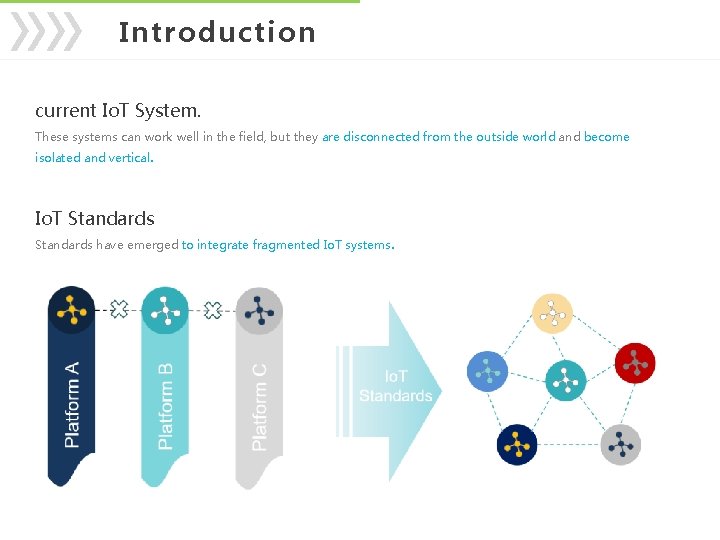
Introduction current Io. T System. These systems can work well in the field, but they are disconnected from the outside world and become isolated and vertical. Io. T Standards have emerged to integrate fragmented Io. T systems.
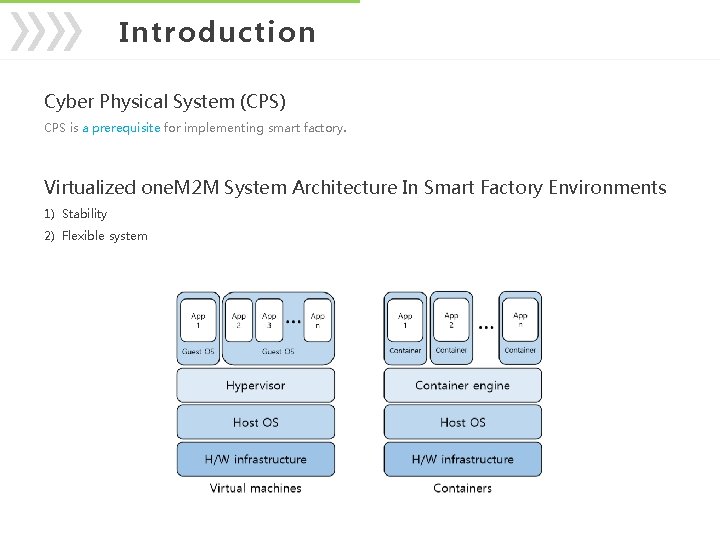
Introduction Cyber Physical System (CPS) CPS is a prerequisite for implementing smart factory. Virtualized one. M 2 M System Architecture In Smart Factory Environments 1) Stability 2) Flexible system
Section 2 Proposed Architecture
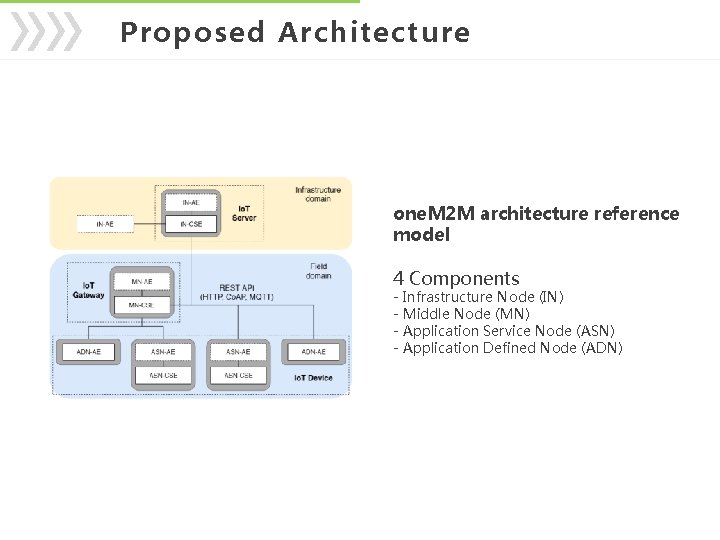
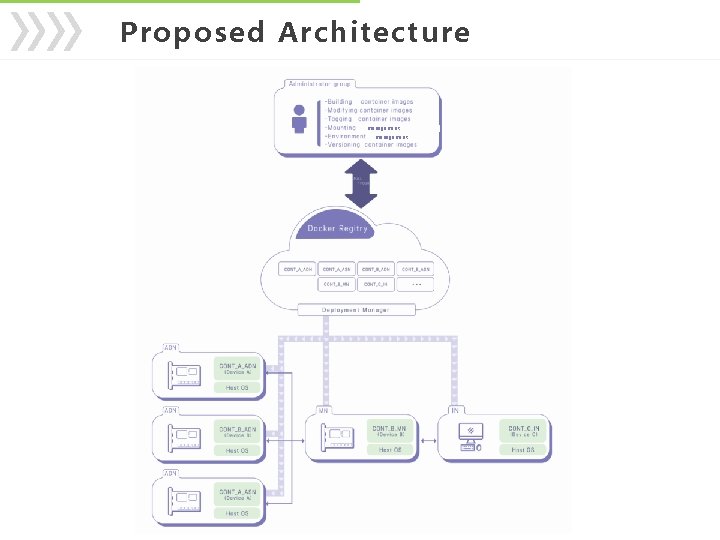
Proposed Architecture one. M 2 M architecture reference model 4 Components - Infrastructure Node (IN) - Middle Node (MN) - Application Service Node (ASN) - Application Defined Node (ADN)
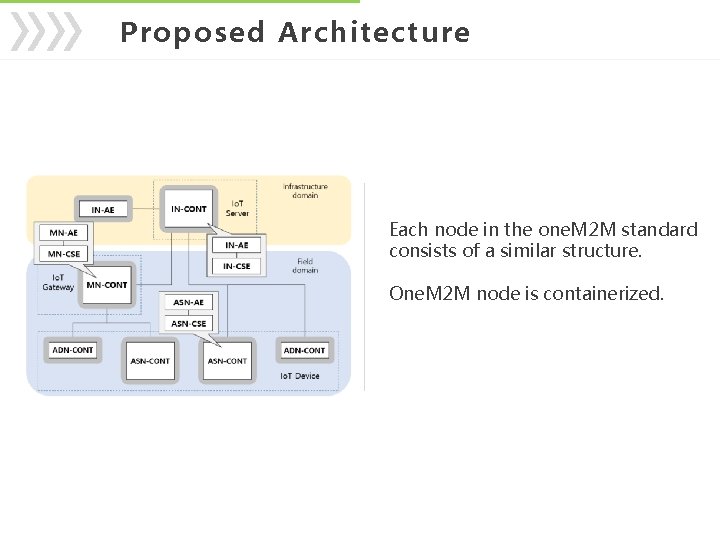
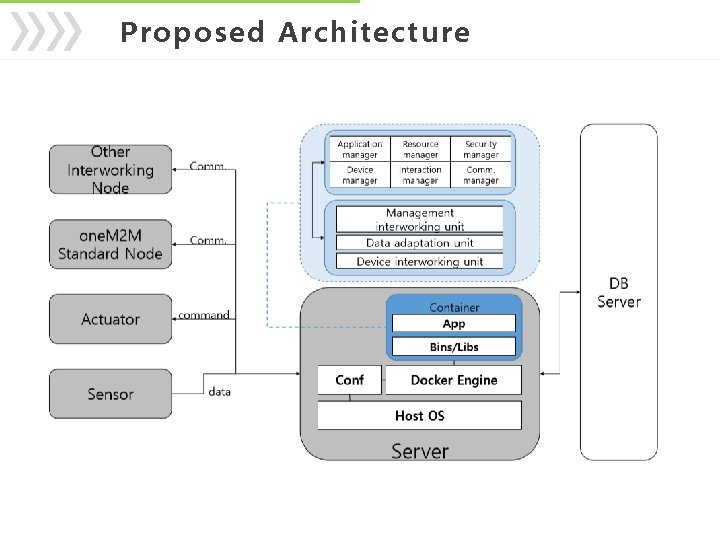
Proposed Architecture Each node in the one. M 2 M standard consists of a similar structure. One. M 2 M node is containerized.
Proposed Architecture
Proposed Architecture management
Section 3 Implementation
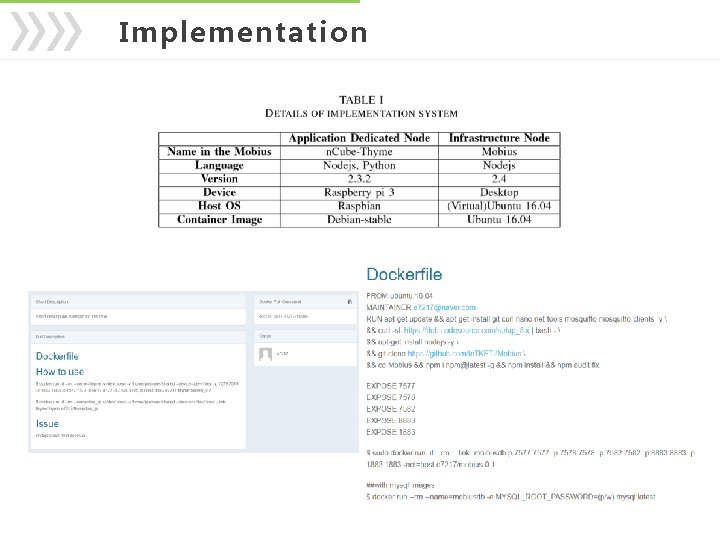
Implementation
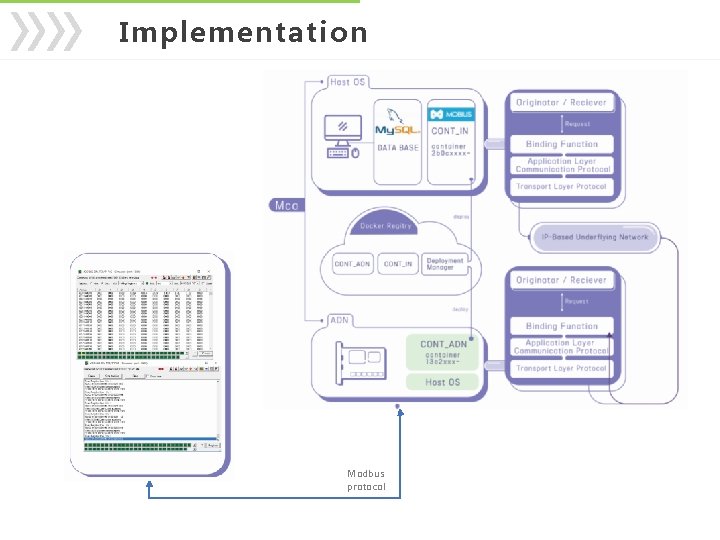
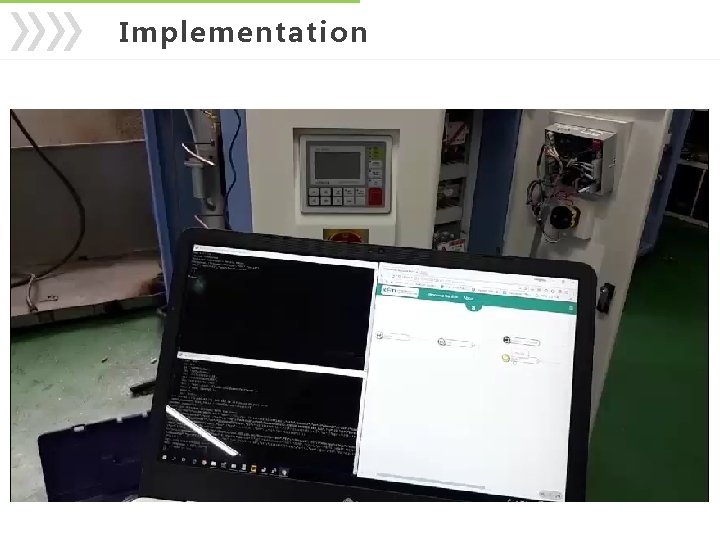
Implementation Modbus protocol
Implementation
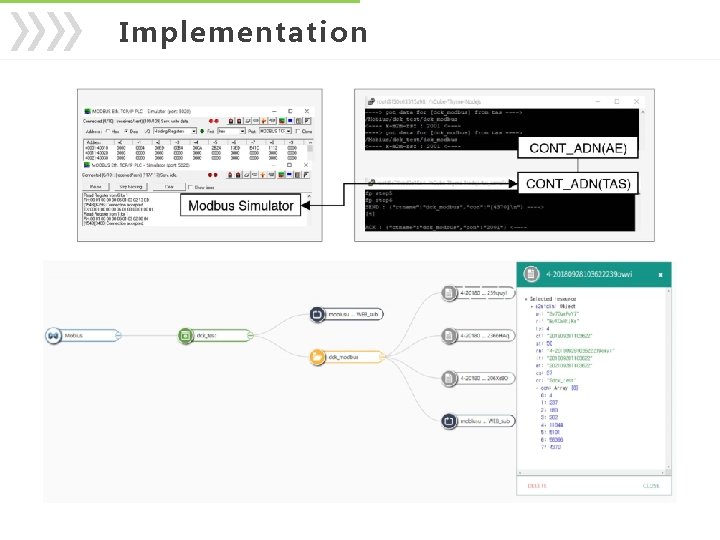
Implementation
Section 4 Conclusion
Conclusion The need for standards-based system design. Virtualization applicability to one. M 2 M standards Benefits of Virtualized Io. T Systems Stability Flexible System Our Future Research Challenges virtualization plans for other standards conduct research on efficient management through container orchestration.
Thank you