
Virtual Water Trade to Japan and in the
- Slides: 16
Virtual Water Trade to Japan and in the World
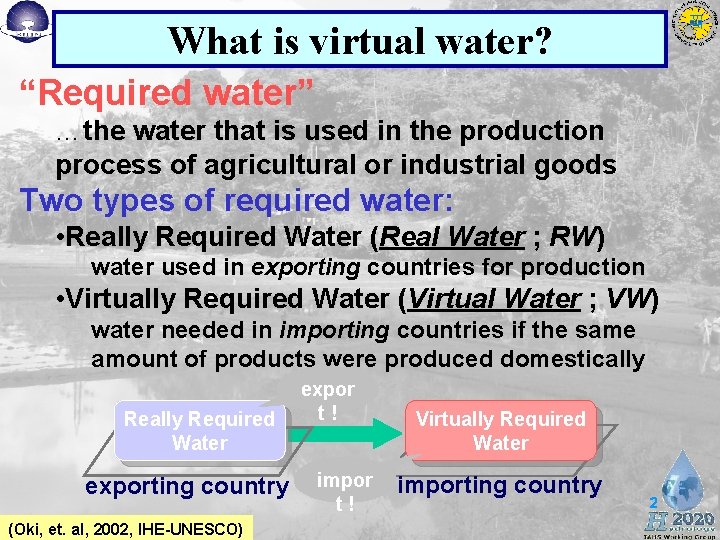
What is virtual water? “Required water” …the water that is used in the production process of agricultural or industrial goods Two types of required water: • Really Required Water (Real Water ; RW) water used in exporting countries for production • Virtually Required Water (Virtual Water ; VW) water needed in importing countries if the same amount of products were produced domestically Required Water exporting country (Oki, et. al, 2002, IHE-UNESCO) expor t! impor t! Virtually Required Water importing country 2
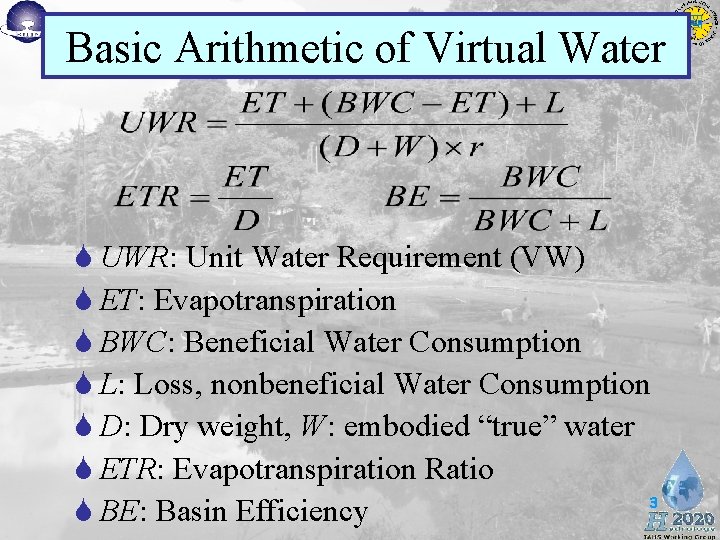
Basic Arithmetic of Virtual Water S UWR: Unit Water Requirement (VW) S ET: Evapotranspiration S BWC: Beneficial Water Consumption S L: Loss, nonbeneficial Water Consumption S D: Dry weight, W: embodied “true” water S ETR: Evapotranspiration Ratio 3 S BE: Basin Efficiency
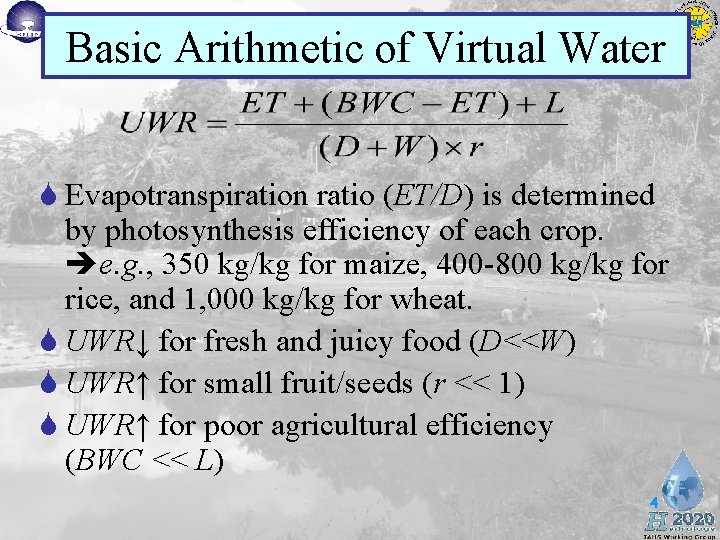
Basic Arithmetic of Virtual Water S Evapotranspiration ratio (ET/D) is determined by photosynthesis efficiency of each crop. e. g. , 350 kg/kg for maize, 400 -800 kg/kg for rice, and 1, 000 kg/kg for wheat. S UWR↓ for fresh and juicy food (D<<W) S UWR↑ for small fruit/seeds (r << 1) S UWR↑ for poor agricultural efficiency (BWC << L) 4
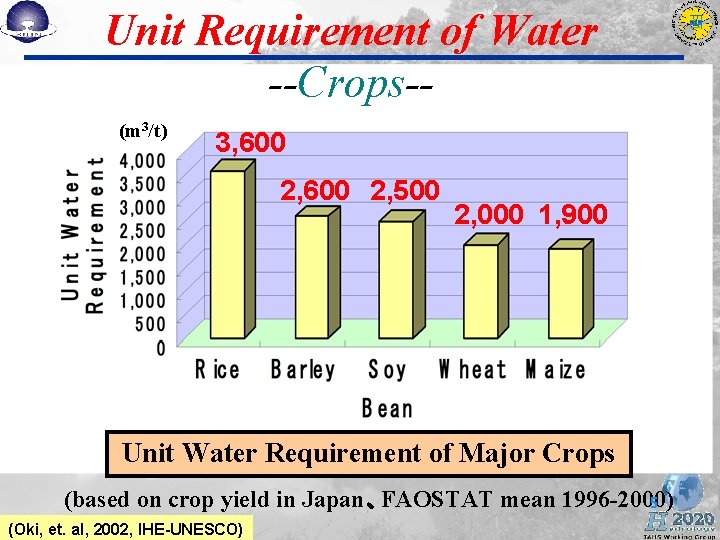
Unit Requirement of Water --Crops-(m 3/t) 3, 600 2, 500 2, 000 1, 900 Unit Water Requirement of Major Crops (based on crop yield in Japan、FAOSTAT mean 1996 -2000) 5 (Oki, et. al, 2002, IHE-UNESCO)
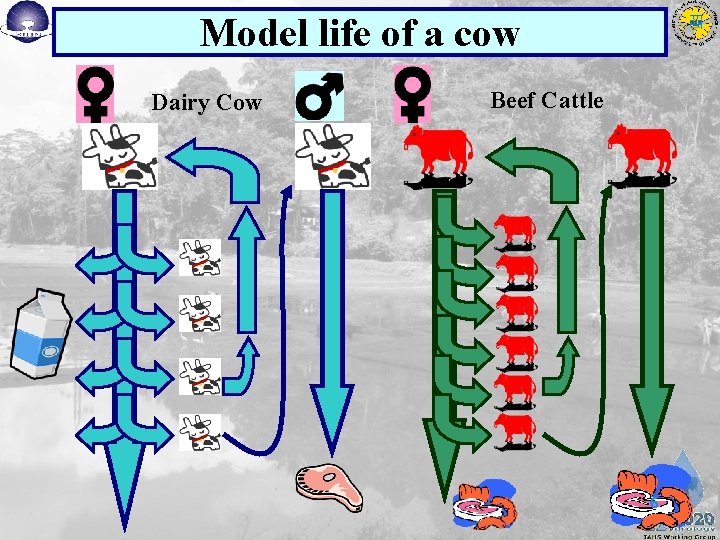
Model life of a cow Dairy Cow Beef Cattle 6
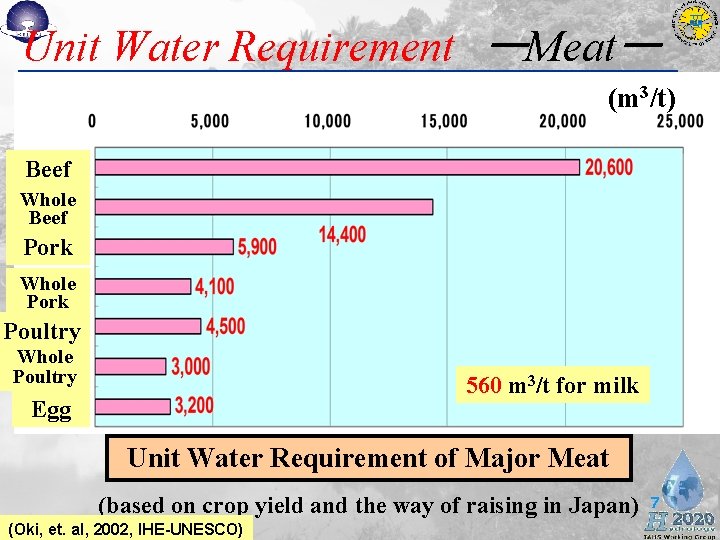
Unit Water Requirement ーMeatー (m 3/t) Beef Whole Beef Pork Whole Pork Poultry Whole Poultry 560 m 3/t for milk Egg Unit Water Requirement of Major Meat (based on crop yield and the way of raising in Japan) (Oki, et. al, 2002, IHE-UNESCO) 7
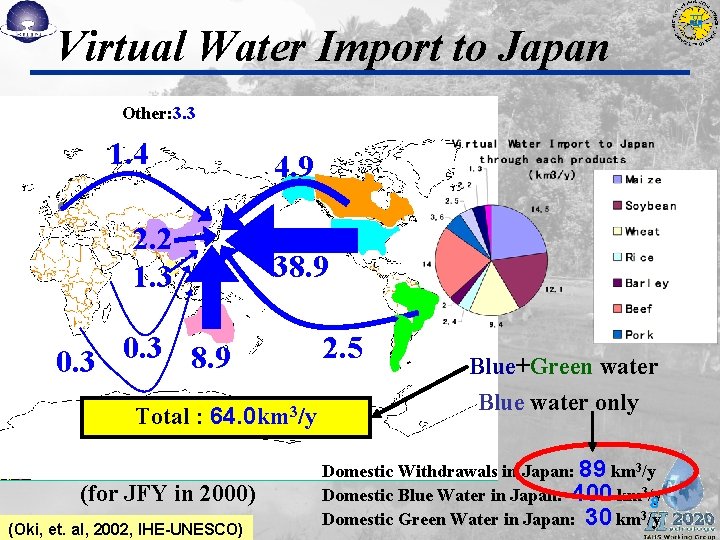
Virtual Water Import to Japan Other: 3. 3 1. 4 2. 2 1. 3 4. 9 38. 9 0. 3 8. 9 Total : 64. 0 km 3/y (for JFY in 2000) (Oki, et. al, 2002, IHE-UNESCO) 2. 5 Blue+Green water Blue water only Domestic Withdrawals in Japan: 89 km 3/y Domestic Blue Water in Japan: 400 km 3/y 8 3 Domestic Green Water in Japan: 30 km /y
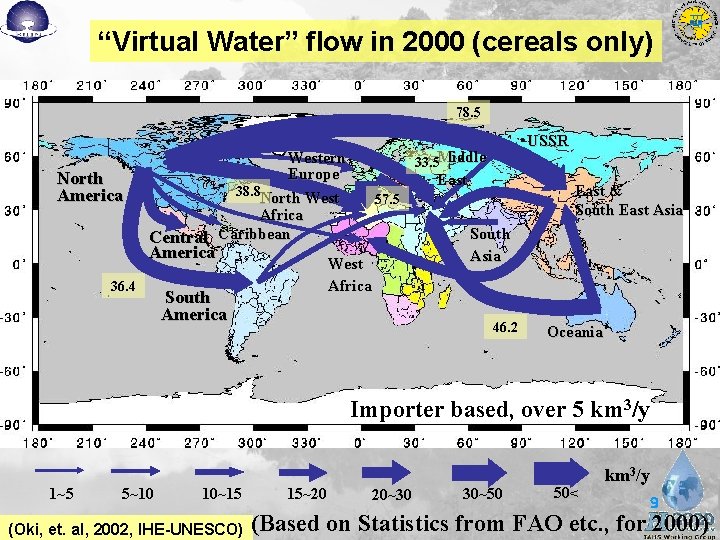
“Virtual Water” flow in 2000 (cereals only) 78. 5 North America 33. 5 Middle Western Europe 38. 8 North West Africa Central Caribbean America 36. 4 East & South East Asia 57. 5 West Africa South America USSR South Asia 46. 2 Oceania Importer based, over 5 km 3/y 1~5 5~10 10~15 (Oki, et. al, 2002, IHE-UNESCO) 15~20 20~30 30~50 50< km 3/y 9 (Based on Statistics from FAO etc. , for 2000)
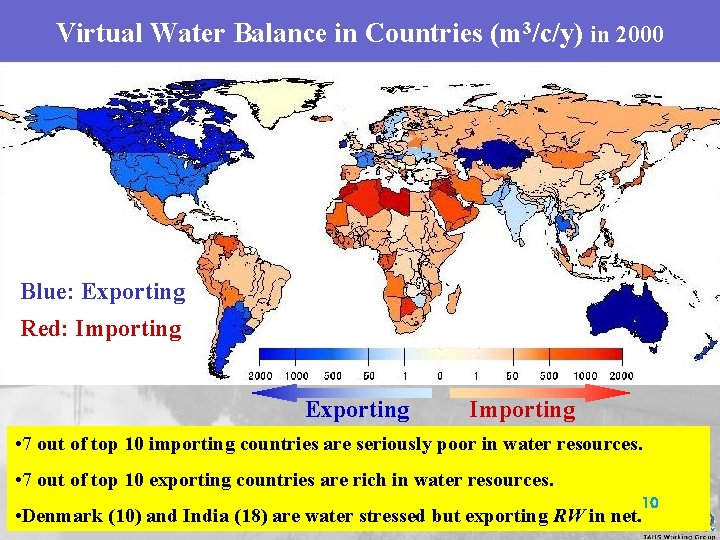
Virtual Water Balance in Countries (m 3/c/y) in 2000 Blue: Exporting Red: Importing Exporting Importing • 7 out of top 10 importing countries are seriously poor in water resources. • 7 out of top 10 exporting countries are rich in water resources. 10 • Denmark (10) and India (18) are water stressed but exporting RW in net.
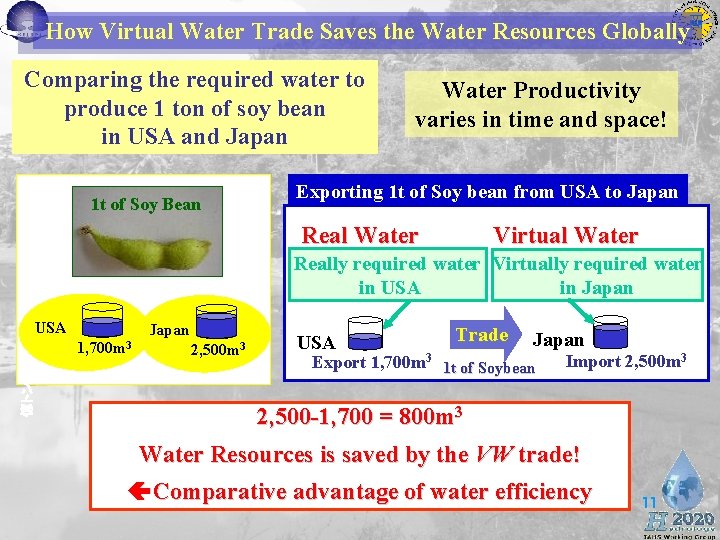
How Virtual Water Trade Saves the Water Resources Globally Comparing the required water to produce 1 ton of soy bean in USA and Japan 1 t of Soy Bean Water Productivity varies in time and space! Exporting 1 t of Soy bean from USA to Japan Real Water Virtual Water Really required water Virtually required water in USA in Japan USA Japan 億トン/年 1, 700 m 3 2, 500 m 3 USA Trade Japan Export 1, 700 m 3 1 t of Soybean Import 2, 500 m 3 2, 500 -1, 700 = 800 m 3 Water Resources is saved by the VW trade! Comparative advantage of water efficiency 11
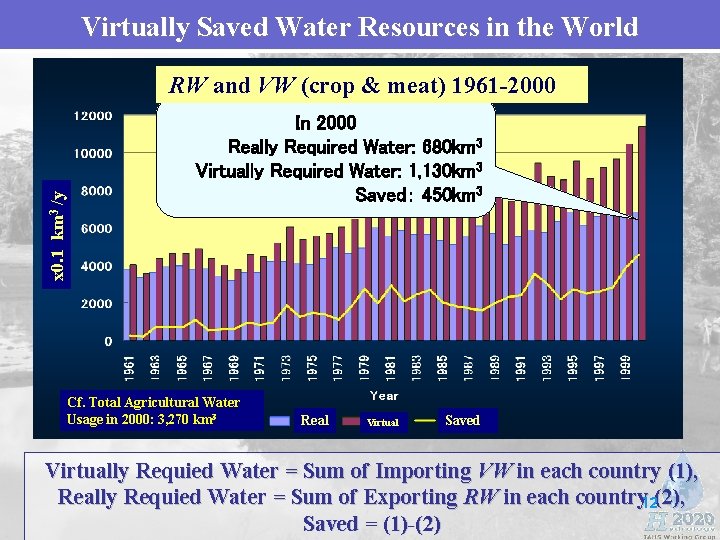
Virtually Saved Water Resources in the World x 0. 1 km 3 /y RW and VW (crop & meat) 1961 -2000 In 2000 Really Required Water: 680 km 3 Virtually Required Water: 1, 130 km 3 Saved: 450 km 3 Cf. Total Agricultural Water Usage in 2000: 3, 270 km 3 Real Virtual Saved Virtually Requied Water = Sum of Importing VW in each country (1), Really Requied Water = Sum of Exporting RW in each country 12(2), Saved = (1)-(2)
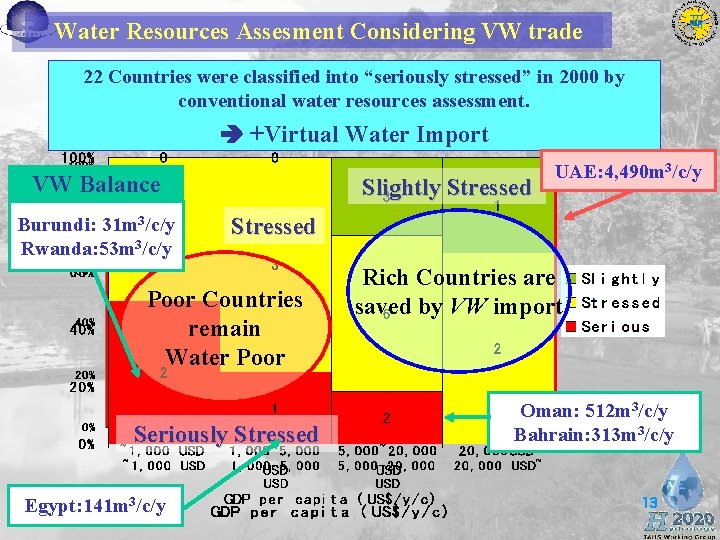
Water Resources Assesment Considering VW trade 22 Countries were classified into “seriously stressed” in 2000 by conventional water resources assessment. +Virtual Water Import VW Balance Burundi: 31 m 3/c/y Rwanda: 53 m 3/c/y Slightly Stressed Poor Countries remain Water Poor Seriously Stressed Egypt: 141 m 3/c/y UAE: 4, 490 m 3/c/y Rich Countries are saved by VW import Oman: 512 m 3/c/y Bahrain: 313 m 3/c/y 13
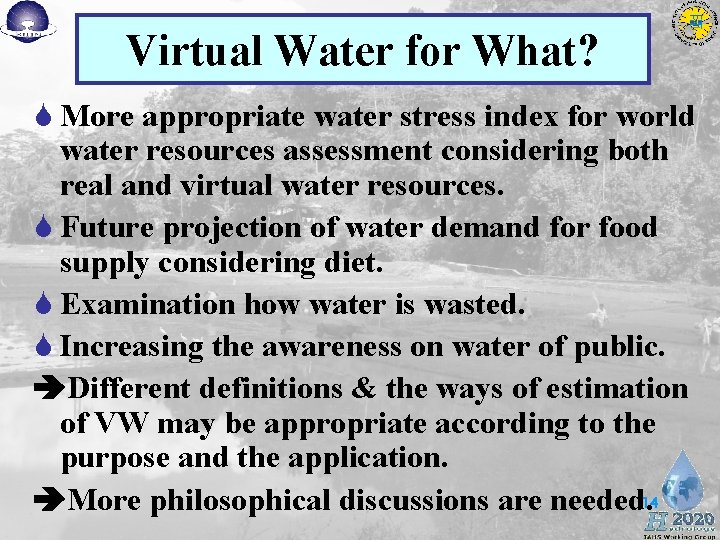
Virtual Water for What? S More appropriate water stress index for world water resources assessment considering both real and virtual water resources. S Future projection of water demand for food supply considering diet. S Examination how water is wasted. S Increasing the awareness on water of public. Different definitions & the ways of estimation of VW may be appropriate according to the purpose and the application. More philosophical discussions are needed. 14
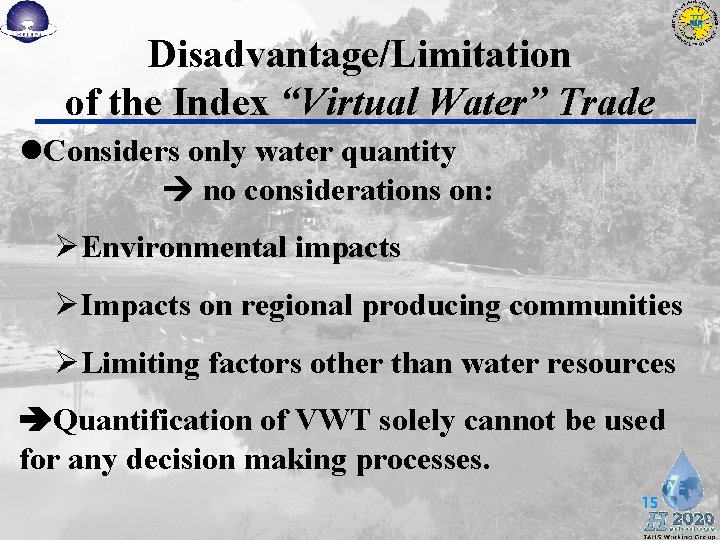
Disadvantage/Limitation of the Index “Virtual Water” Trade l. Considers only water quantity no considerations on: ØEnvironmental impacts ØImpacts on regional producing communities ØLimiting factors other than water resources Quantification of VWT solely cannot be used for any decision making processes. 15
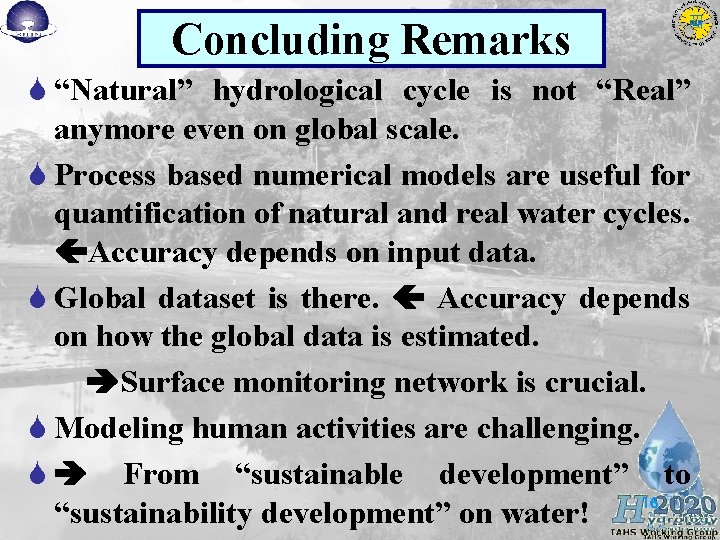
Concluding Remarks S “Natural” hydrological cycle is not “Real” anymore even on global scale. S Process based numerical models are useful for quantification of natural and real water cycles. Accuracy depends on input data. S Global dataset is there. Accuracy depends on how the global data is estimated. Surface monitoring network is crucial. S Modeling human activities are challenging. S From “sustainable development” to 16 “sustainability development” on water!