
Virtual University HumanComputer Interaction Lecture 18 GoalDirected Design
- Slides: 25
Virtual University Human-Computer Interaction Lecture 18 Goal-Directed Design Methodology Imran Hussain University of Management and Technology (UMT) 1 Virtual University - Human Computer Interaction © Imran Hussain | UMT
In the Last Lecture • Software Lifecycle Models • HCI Lifecycle Models • Goal-Directed Design Model 2 Virtual University - Human Computer Interaction © Imran Hussain | UMT
In Today’s Lecture • Goal-Directed Design Methodology 3 Virtual University - Human Computer Interaction © Imran Hussain | UMT
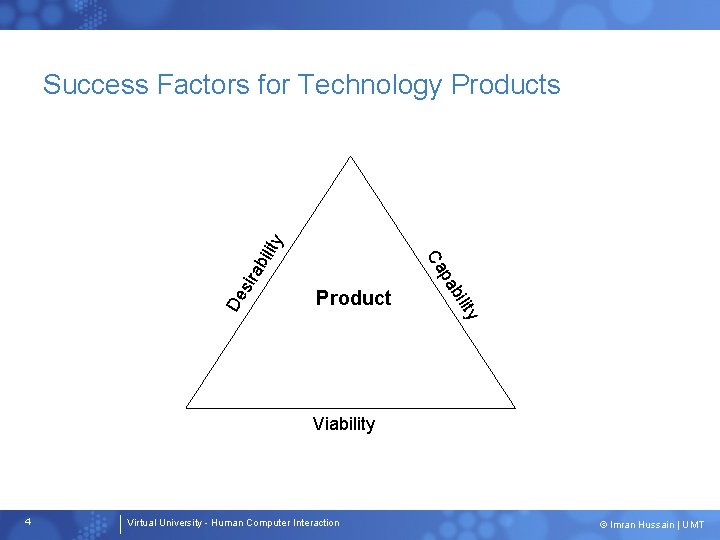
sir De ity Product bil pa Ca ab ilit y Success Factors for Technology Products Viability 4 Virtual University - Human Computer Interaction © Imran Hussain | UMT
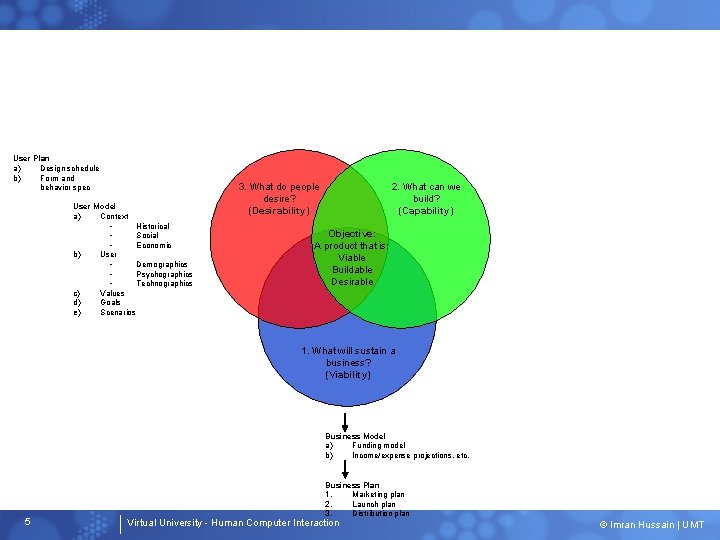
User Plan a) Design schedule b) Form and behavior spec 3. What do people desire? (Desirability) User Model a) Context • • • b) Historical Social Economic User • • • c) d) e) Demographics Psychographics Technographics 2. What can we build? (Capability) Objective: A product that is: Viable Buildable Desirable Values Goals Scenarios 1. What will sustain a business? (Viability) Business Model a) Funding model b) Income/expense projections, etc. 5 Business Plan 1. Marketing plan 2. Launch plan 3. Distribution plan Virtual University - Human Computer Interaction © Imran Hussain | UMT
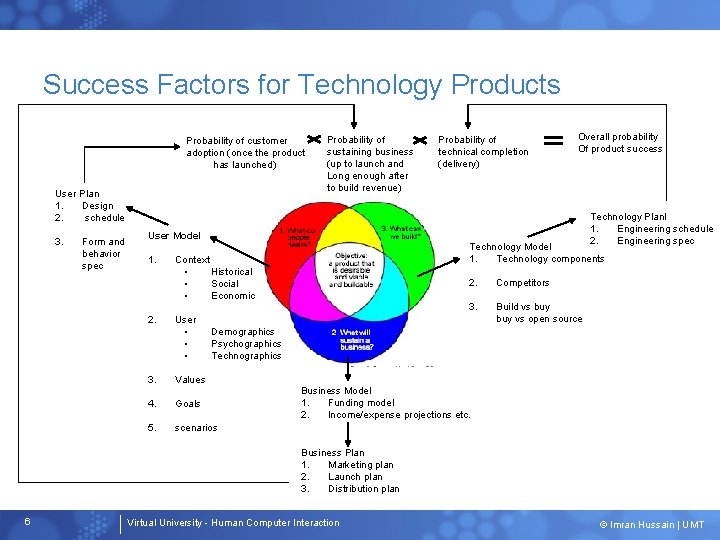
Success Factors for Technology Products Probability of customer adoption (once the product has launched) User Plan 1. Design 2. schedule 3. Form and behavior spec Probability of sustaining business (up to launch and Long enough after to build revenue) Probability of technical completion (delivery) Overall probability Of product success Technology Planl 1. Engineering schedule 2. Engineering spec User Model 1. • • • 2. Technology Model 1. Technology components Context Historical Social Economic 2. Competitors 3. Build vs buy vs open source User • • • Demographics Psychographics Technographics 3. Values 4. Goals 5. scenarios Business Model 1. Funding model 2. Income/expense projections etc. Business Plan 1. Marketing plan 2. Launch plan 3. Distribution plan 6 Virtual University - Human Computer Interaction © Imran Hussain | UMT
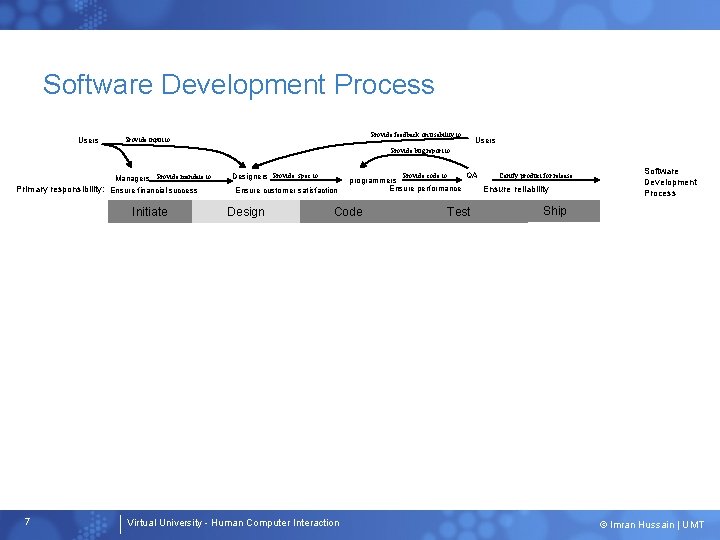
Software Development Process Users Provide feedback on usability to Provide input to Users Provide bug report to Managers Provide mandate to Primary responsibility: Ensure financial success Initiate 7 Designers Provide spec to Provide code to Ensure customer satisfaction Design programmers Ensure performance Code Virtual University - Human Computer Interaction QA Test Certify product for release Ensure reliability Software Development Process Ship © Imran Hussain | UMT
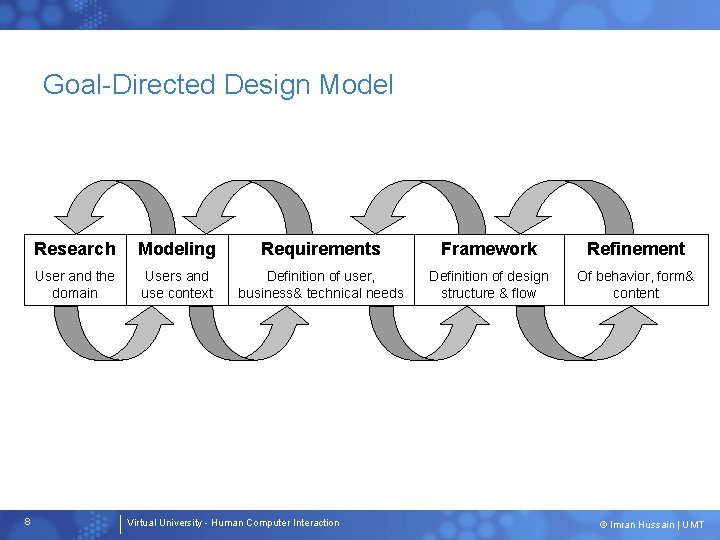
Goal-Directed Design Model 8 Research Modeling Requirements Framework Refinement User and the domain Users and use context Definition of user, business& technical needs Definition of design structure & flow Of behavior, form& content Virtual University - Human Computer Interaction © Imran Hussain | UMT
What is Methodology? 9 Virtual University - Human Computer Interaction © Imran Hussain | UMT
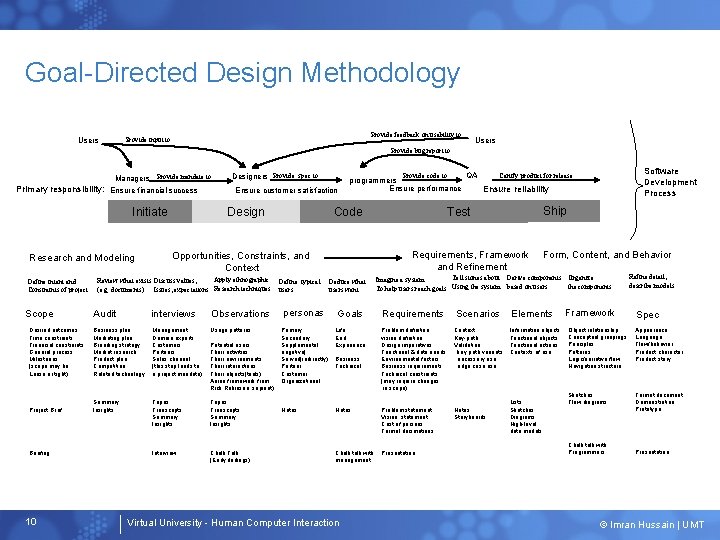
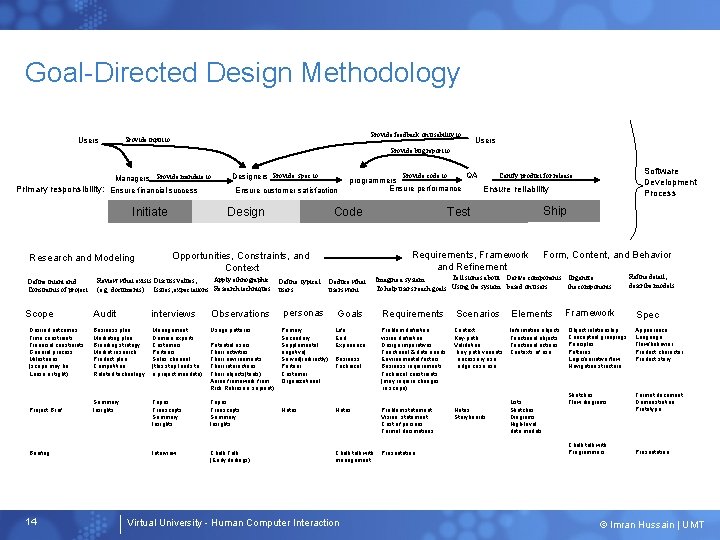
Goal-Directed Design Methodology Users Provide feedback on usability to Provide input to Users Provide bug report to Managers Provide mandate to Primary responsibility: Ensure financial success Initiate Research and Modeling Define intent and Constraints of project Scope Designers Provide spec to Ensure customer satisfaction Design interviews Observations Desired outcomes Time constraints Financial constraints General process Milestones (scope may be Loose or tight) Business plan Marketing plan Branding strategy Market research Product plan Competition Related technology Management Domain experts Customers Partners Sales channel (this step leads to a project mandate) Usage patterns Project Brief Summary Insights Tapes Transcripts Summary Insights Interview Chalk Talk (Early findings) Briefing 10 Code Potential users Their activities Their environments Their interactions Their objects(tools) Aeiou framework from Rick Robinson, sapient) Define typical users personas QA Deduce what users want Goals Ensure reliability Ship Test Requirements Scenarios Context Key-path Validation key path variants necessary use edge case use Notes Problem statement Vision statement Cost of persons Formal decimations Notes Storyboards Chalk talk with management Presentation Life End Experience Notes Business Technical Virtual University - Human Computer Interaction Form, Content, and Behavior Tell stones about Derive components Organize Imagine a system the components To help users reach goals Using the system based on users Problem definition vision definition Design imperatives Functional & data needs Environmental factors Business requirements Technical constraints (may require changes in scope) Primary Secondary Supplemental negative] Served(indirectly) Partner Customer Organizational Software Development Process Certify product for release Requirements, Framework and Refinement Opportunities, Constraints, and Context Apply ethnographic Review what exists Discuss values, (e. g. documents) Issues, expectations Research techniques Audit Provide code to programmers Ensure performance Elements Information objects Functional actions Contexts of use Lists Sketches Diagrams High-level data models Framework Refine detail, describe models Spec Object relationship Conceptual groupings Principles Patterns Logic/narrative flow Navigation structure Appearance Language Flow/behavior Product character Product story Sketches Flow diagrams Format document Demonstration Prototype Chalk talk with Programmers Presentation © Imran Hussain | UMT
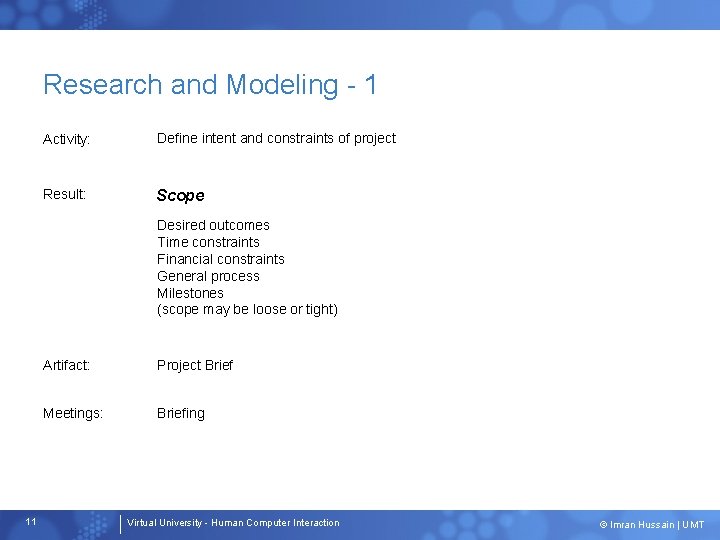
Research and Modeling - 1 Activity: Define intent and constraints of project Result: Scope Desired outcomes Time constraints Financial constraints General process Milestones (scope may be loose or tight) 11 Artifact: Project Brief Meetings: Briefing Virtual University - Human Computer Interaction © Imran Hussain | UMT
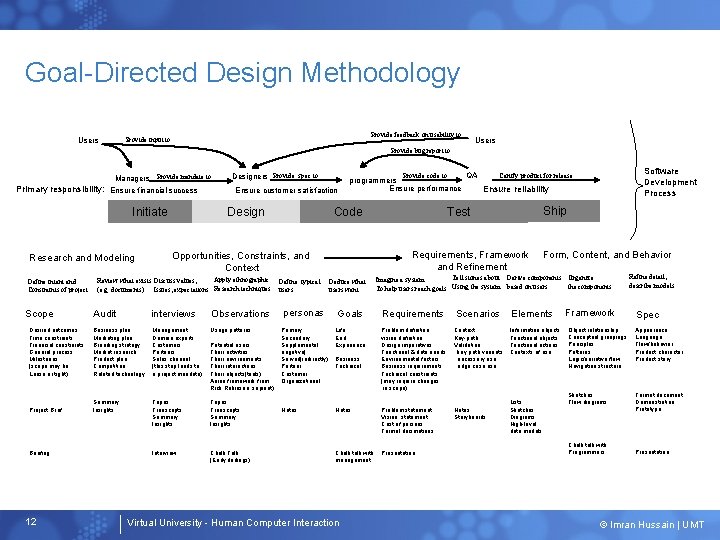
Goal-Directed Design Methodology Users Provide feedback on usability to Provide input to Users Provide bug report to Managers Provide mandate to Primary responsibility: Ensure financial success Initiate Research and Modeling Define intent and Constraints of project Scope Designers Provide spec to Ensure customer satisfaction Design interviews Observations Desired outcomes Time constraints Financial constraints General process Milestones (scope may be Loose or tight) Business plan Marketing plan Branding strategy Market research Product plan Competition Related technology Management Domain experts Customers Partners Sales channel (this step leads to a project mandate) Usage patterns Project Brief Summary Insights Tapes Transcripts Summary Insights Interview Chalk Talk (Early findings) Briefing 12 Code Potential users Their activities Their environments Their interactions Their objects(tools) Aeiou framework from Rick Robinson, sapient) Define typical users personas QA Deduce what users want Goals Ensure reliability Ship Test Requirements Scenarios Context Key-path Validation key path variants necessary use edge case use Notes Problem statement Vision statement Cost of persons Formal decimations Notes Storyboards Chalk talk with management Presentation Life End Experience Notes Business Technical Virtual University - Human Computer Interaction Form, Content, and Behavior Tell stones about Derive components Organize Imagine a system the components To help users reach goals Using the system based on users Problem definition vision definition Design imperatives Functional & data needs Environmental factors Business requirements Technical constraints (may require changes in scope) Primary Secondary Supplemental negative] Served(indirectly) Partner Customer Organizational Software Development Process Certify product for release Requirements, Framework and Refinement Opportunities, Constraints, and Context Apply ethnographic Review what exists Discuss values, (e. g. documents) Issues, expectations Research techniques Audit Provide code to programmers Ensure performance Elements Information objects Functional actions Contexts of use Lists Sketches Diagrams High-level data models Framework Refine detail, describe models Spec Object relationship Conceptual groupings Principles Patterns Logic/narrative flow Navigation structure Appearance Language Flow/behavior Product character Product story Sketches Flow diagrams Format document Demonstration Prototype Chalk talk with Programmers Presentation © Imran Hussain | UMT
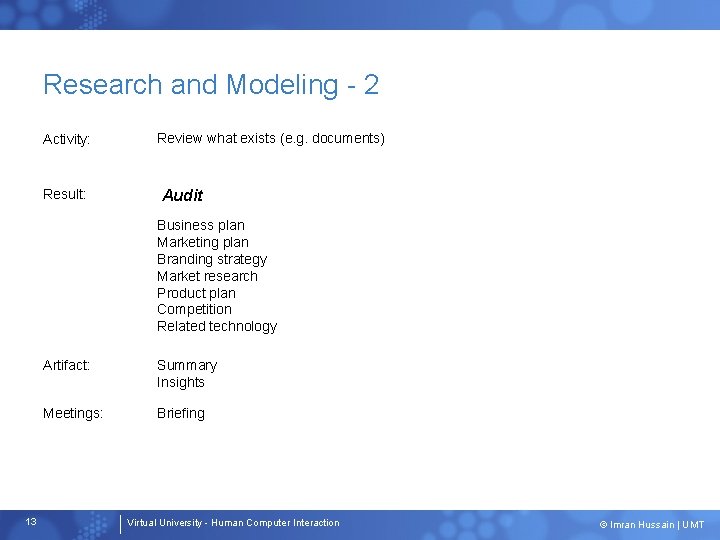
Research and Modeling - 2 Activity: Result: Review what exists (e. g. documents) Audit Business plan Marketing plan Branding strategy Market research Product plan Competition Related technology 13 Artifact: Summary Insights Meetings: Briefing Virtual University - Human Computer Interaction © Imran Hussain | UMT
Goal-Directed Design Methodology Users Provide feedback on usability to Provide input to Users Provide bug report to Managers Provide mandate to Primary responsibility: Ensure financial success Initiate Research and Modeling Define intent and Constraints of project Scope Designers Provide spec to Ensure customer satisfaction Design interviews Observations Desired outcomes Time constraints Financial constraints General process Milestones (scope may be Loose or tight) Business plan Marketing plan Branding strategy Market research Product plan Competition Related technology Management Domain experts Customers Partners Sales channel (this step leads to a project mandate) Usage patterns Project Brief Summary Insights Tapes Transcripts Summary Insights Interview Chalk Talk (Early findings) Briefing 14 Code Potential users Their activities Their environments Their interactions Their objects(tools) Aeiou framework from Rick Robinson, sapient) Define typical users personas QA Deduce what users want Goals Ensure reliability Ship Test Requirements Scenarios Context Key-path Validation key path variants necessary use edge case use Notes Problem statement Vision statement Cost of persons Formal decimations Notes Storyboards Chalk talk with management Presentation Life End Experience Notes Business Technical Virtual University - Human Computer Interaction Form, Content, and Behavior Tell stones about Derive components Organize Imagine a system the components To help users reach goals Using the system based on users Problem definition vision definition Design imperatives Functional & data needs Environmental factors Business requirements Technical constraints (may require changes in scope) Primary Secondary Supplemental negative] Served(indirectly) Partner Customer Organizational Software Development Process Certify product for release Requirements, Framework and Refinement Opportunities, Constraints, and Context Apply ethnographic Review what exists Discuss values, (e. g. documents) Issues, expectations Research techniques Audit Provide code to programmers Ensure performance Elements Information objects Functional actions Contexts of use Lists Sketches Diagrams High-level data models Framework Refine detail, describe models Spec Object relationship Conceptual groupings Principles Patterns Logic/narrative flow Navigation structure Appearance Language Flow/behavior Product character Product story Sketches Flow diagrams Format document Demonstration Prototype Chalk talk with Programmers Presentation © Imran Hussain | UMT
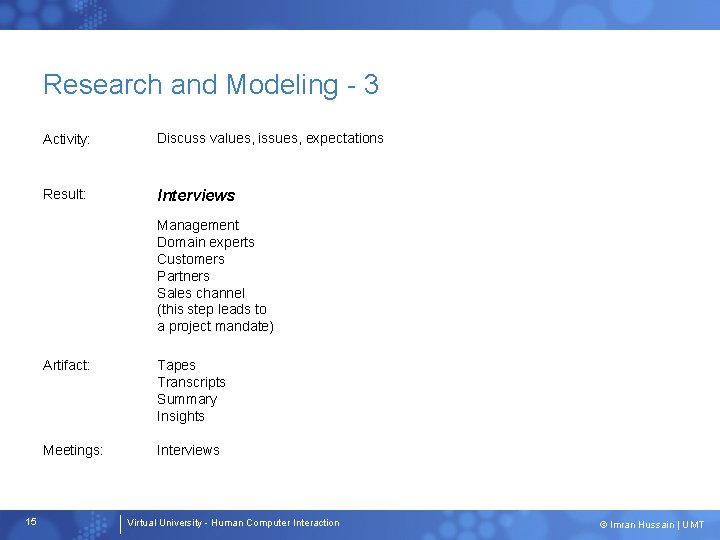
Research and Modeling - 3 Activity: Discuss values, issues, expectations Result: Interviews Management Domain experts Customers Partners Sales channel (this step leads to a project mandate) 15 Artifact: Tapes Transcripts Summary Insights Meetings: Interviews Virtual University - Human Computer Interaction © Imran Hussain | UMT
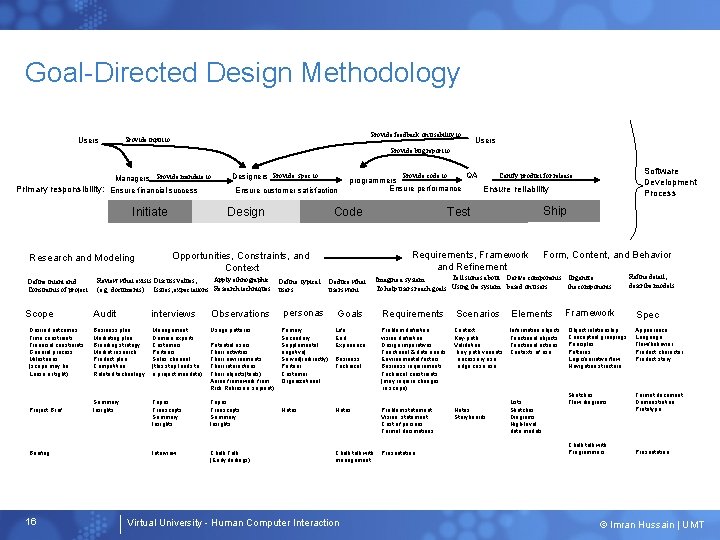
Goal-Directed Design Methodology Users Provide feedback on usability to Provide input to Users Provide bug report to Managers Provide mandate to Primary responsibility: Ensure financial success Initiate Research and Modeling Define intent and Constraints of project Scope Designers Provide spec to Ensure customer satisfaction Design interviews Observations Desired outcomes Time constraints Financial constraints General process Milestones (scope may be Loose or tight) Business plan Marketing plan Branding strategy Market research Product plan Competition Related technology Management Domain experts Customers Partners Sales channel (this step leads to a project mandate) Usage patterns Project Brief Summary Insights Tapes Transcripts Summary Insights Interview Chalk Talk (Early findings) Briefing 16 Code Potential users Their activities Their environments Their interactions Their objects(tools) Aeiou framework from Rick Robinson, sapient) Define typical users personas QA Deduce what users want Goals Ensure reliability Ship Test Requirements Scenarios Context Key-path Validation key path variants necessary use edge case use Notes Problem statement Vision statement Cost of persons Formal decimations Notes Storyboards Chalk talk with management Presentation Life End Experience Notes Business Technical Virtual University - Human Computer Interaction Form, Content, and Behavior Tell stones about Derive components Organize Imagine a system the components To help users reach goals Using the system based on users Problem definition vision definition Design imperatives Functional & data needs Environmental factors Business requirements Technical constraints (may require changes in scope) Primary Secondary Supplemental negative] Served(indirectly) Partner Customer Organizational Software Development Process Certify product for release Requirements, Framework and Refinement Opportunities, Constraints, and Context Apply ethnographic Review what exists Discuss values, (e. g. documents) Issues, expectations Research techniques Audit Provide code to programmers Ensure performance Elements Information objects Functional actions Contexts of use Lists Sketches Diagrams High-level data models Framework Refine detail, describe models Spec Object relationship Conceptual groupings Principles Patterns Logic/narrative flow Navigation structure Appearance Language Flow/behavior Product character Product story Sketches Flow diagrams Format document Demonstration Prototype Chalk talk with Programmers Presentation © Imran Hussain | UMT
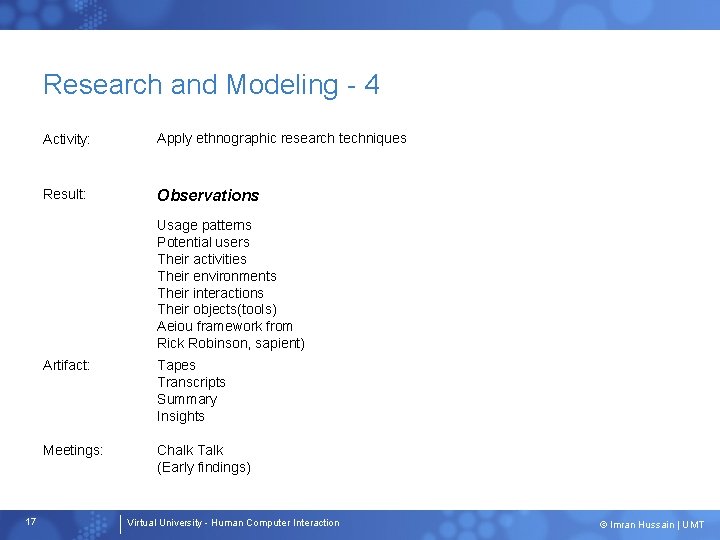
Research and Modeling - 4 Activity: Apply ethnographic research techniques Result: Observations Usage patterns Potential users Their activities Their environments Their interactions Their objects(tools) Aeiou framework from Rick Robinson, sapient) 17 Artifact: Tapes Transcripts Summary Insights Meetings: Chalk Talk (Early findings) Virtual University - Human Computer Interaction © Imran Hussain | UMT
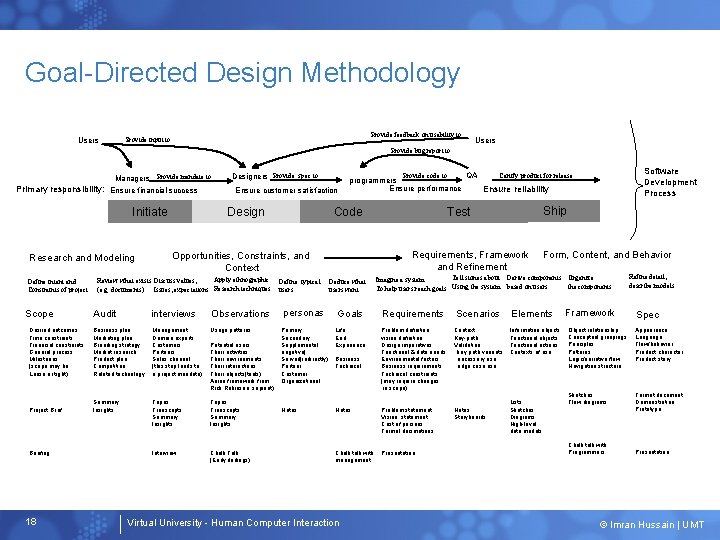
Goal-Directed Design Methodology Users Provide feedback on usability to Provide input to Users Provide bug report to Managers Provide mandate to Primary responsibility: Ensure financial success Initiate Research and Modeling Define intent and Constraints of project Scope Designers Provide spec to Ensure customer satisfaction Design interviews Observations Desired outcomes Time constraints Financial constraints General process Milestones (scope may be Loose or tight) Business plan Marketing plan Branding strategy Market research Product plan Competition Related technology Management Domain experts Customers Partners Sales channel (this step leads to a project mandate) Usage patterns Project Brief Summary Insights Tapes Transcripts Summary Insights Interview Chalk Talk (Early findings) Briefing 18 Code Potential users Their activities Their environments Their interactions Their objects(tools) Aeiou framework from Rick Robinson, sapient) Define typical users personas QA Deduce what users want Goals Ensure reliability Ship Test Requirements Scenarios Context Key-path Validation key path variants necessary use edge case use Notes Problem statement Vision statement Cost of persons Formal decimations Notes Storyboards Chalk talk with management Presentation Life End Experience Notes Business Technical Virtual University - Human Computer Interaction Form, Content, and Behavior Tell stones about Derive components Organize Imagine a system the components To help users reach goals Using the system based on users Problem definition vision definition Design imperatives Functional & data needs Environmental factors Business requirements Technical constraints (may require changes in scope) Primary Secondary Supplemental negative] Served(indirectly) Partner Customer Organizational Software Development Process Certify product for release Requirements, Framework and Refinement Opportunities, Constraints, and Context Apply ethnographic Review what exists Discuss values, (e. g. documents) Issues, expectations Research techniques Audit Provide code to programmers Ensure performance Elements Information objects Functional actions Contexts of use Lists Sketches Diagrams High-level data models Framework Refine detail, describe models Spec Object relationship Conceptual groupings Principles Patterns Logic/narrative flow Navigation structure Appearance Language Flow/behavior Product character Product story Sketches Flow diagrams Format document Demonstration Prototype Chalk talk with Programmers Presentation © Imran Hussain | UMT
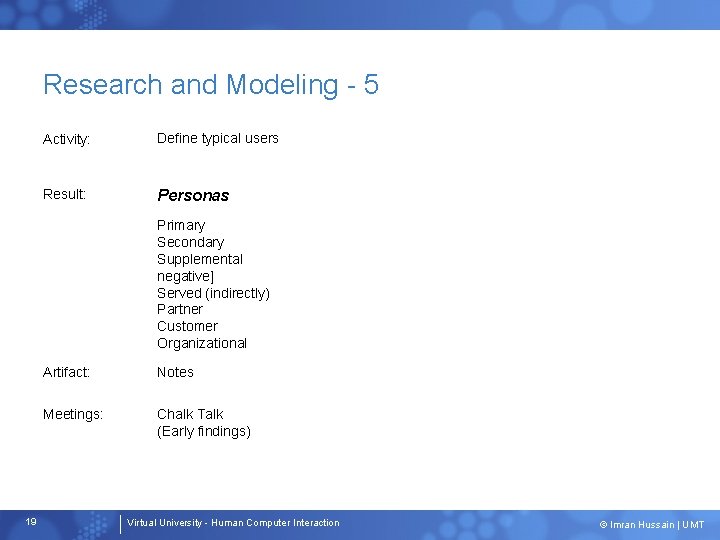
Research and Modeling - 5 Activity: Define typical users Result: Personas Primary Secondary Supplemental negative] Served (indirectly) Partner Customer Organizational 19 Artifact: Notes Meetings: Chalk Talk (Early findings) Virtual University - Human Computer Interaction © Imran Hussain | UMT
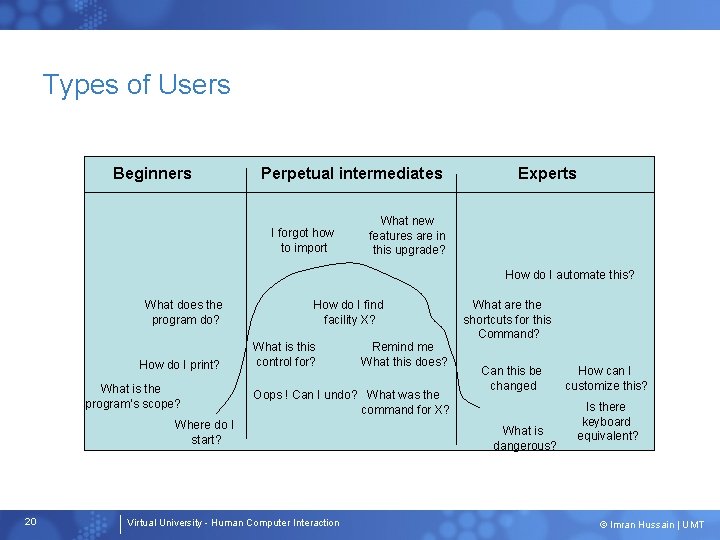
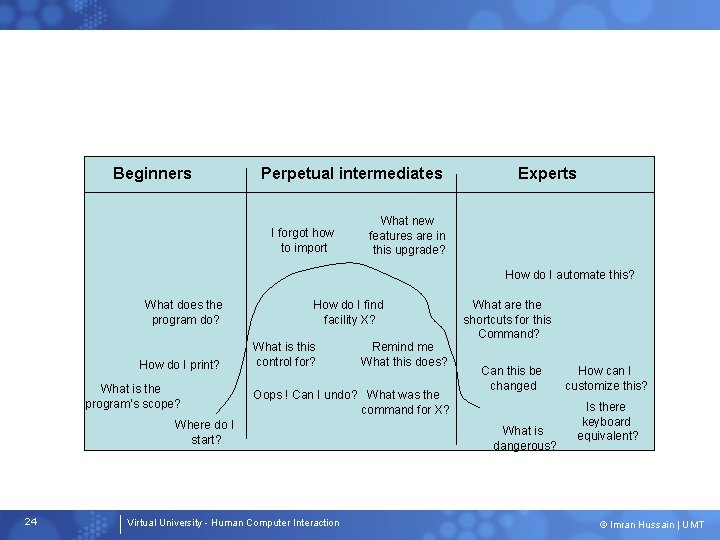
Types of Users Beginners Perpetual intermediates I forgot how to import Experts What new features are in this upgrade? How do I automate this? What does the program do? How do I print? What is the program’s scope? How do I find facility X? What is this control for? Oops ! Can I undo? What was the command for X? Where do I start? 20 Remind me What this does? Virtual University - Human Computer Interaction What are the shortcuts for this Command? Can this be changed What is dangerous? How can I customize this? Is there keyboard equivalent? © Imran Hussain | UMT
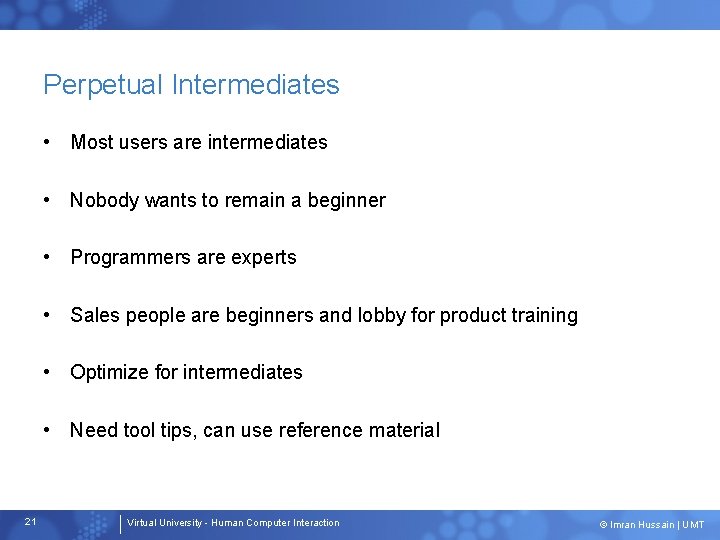
Perpetual Intermediates • Most users are intermediates • Nobody wants to remain a beginner • Programmers are experts • Sales people are beginners and lobby for product training • Optimize for intermediates • Need tool tips, can use reference material 21 Virtual University - Human Computer Interaction © Imran Hussain | UMT
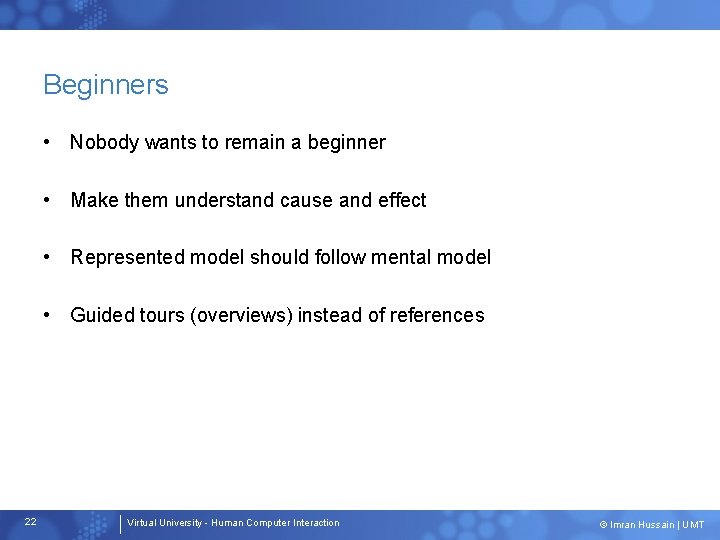
Beginners • Nobody wants to remain a beginner • Make them understand cause and effect • Represented model should follow mental model • Guided tours (overviews) instead of references 22 Virtual University - Human Computer Interaction © Imran Hussain | UMT
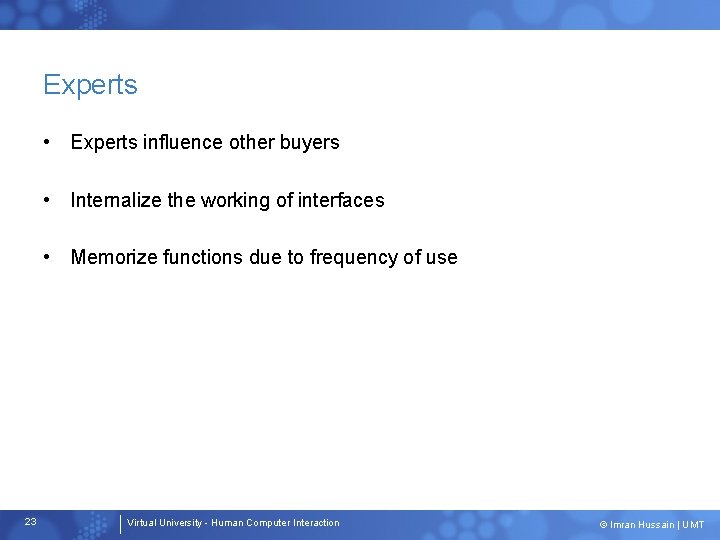
Experts • Experts influence other buyers • Internalize the working of interfaces • Memorize functions due to frequency of use 23 Virtual University - Human Computer Interaction © Imran Hussain | UMT
Beginners Perpetual intermediates I forgot how to import Experts What new features are in this upgrade? How do I automate this? What does the program do? How do I print? What is the program’s scope? How do I find facility X? What is this control for? Oops ! Can I undo? What was the command for X? Where do I start? 24 Remind me What this does? Virtual University - Human Computer Interaction What are the shortcuts for this Command? Can this be changed What is dangerous? How can I customize this? Is there keyboard equivalent? © Imran Hussain | UMT
References • Interaction Design 25 Virtual University - Human Computer Interaction © Imran Hussain | UMT