
Virtual Shear Source a new method for shearwave

- Slides: 26
Virtual Shear Source: a new method for shear-wave seismic surveys File Title Copyright: Shell Exploration & Production Ltd. Andrey Bakulin Rodney Calvert Shell Int E & P Presented at SEG 2005, VSP 1. 7
Why shear waves (SS) did not fly? • Excitation of shear waves is costly • Abundant shear anisotropy even in near surface • Shear-wave source always excites substantial P -wave energy that acts as ''noise'' on shear records • Shear velocities are extremely low and vary greatly in the nearsurface (both on land on sea bed). Thus 2 near-surface is a bigger problem in
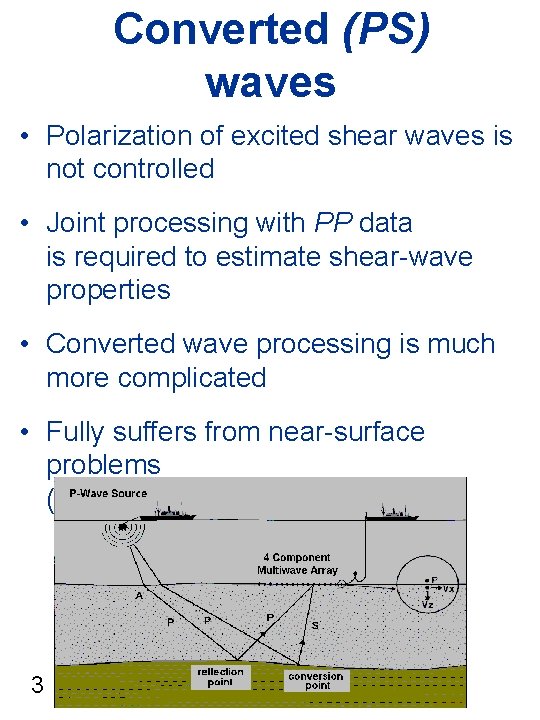
Converted (PS) waves • Polarization of excited shear waves is not controlled • Joint processing with PP data is required to estimate shear-wave properties • Converted wave processing is much more complicated • Fully suffers from near-surface problems (P and S) 3
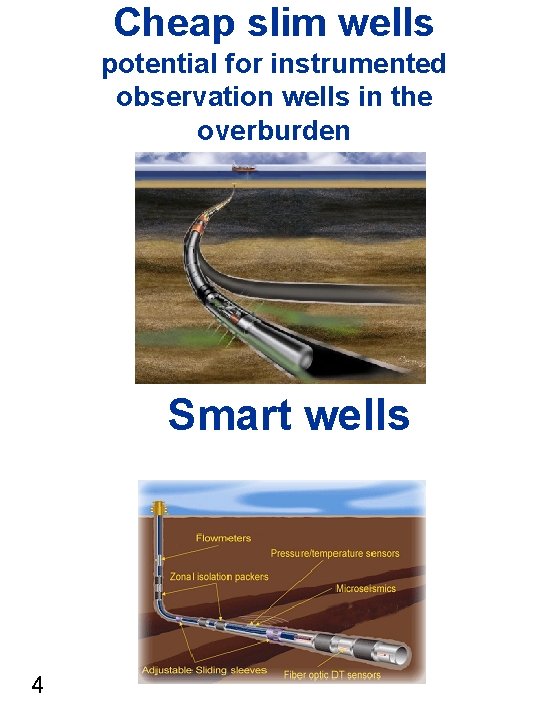
Cheap slim wells potential for instrumented observation wells in the overburden Smart wells 4
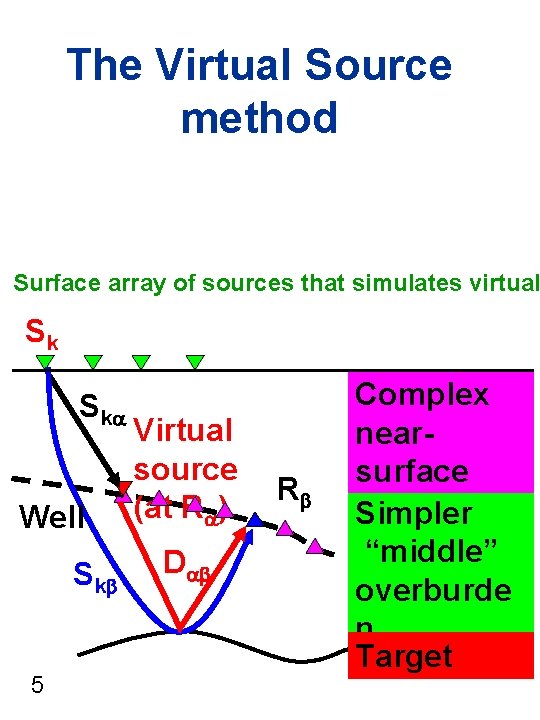
The Virtual Source method Surface array of sources that simulates virtual Sk Sk Well Sk 5 Virtual source (at R ) D R Complex nearsurface Simpler “middle” overburde n Target
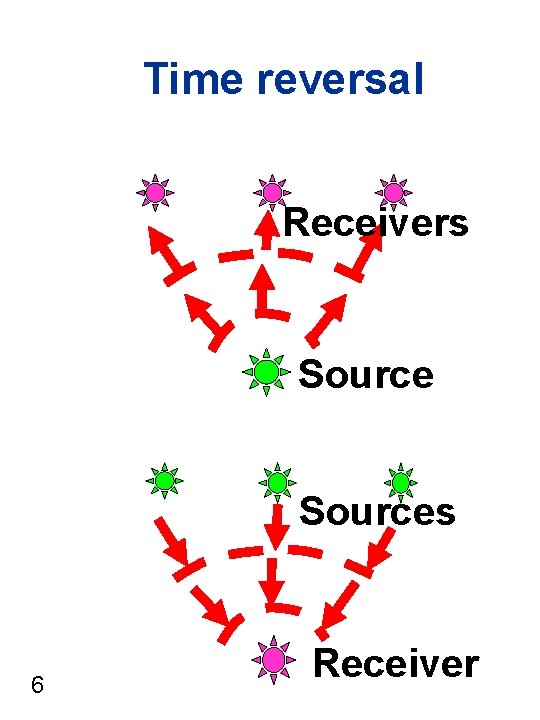
Time reversal Receivers Sources 6 Receiver
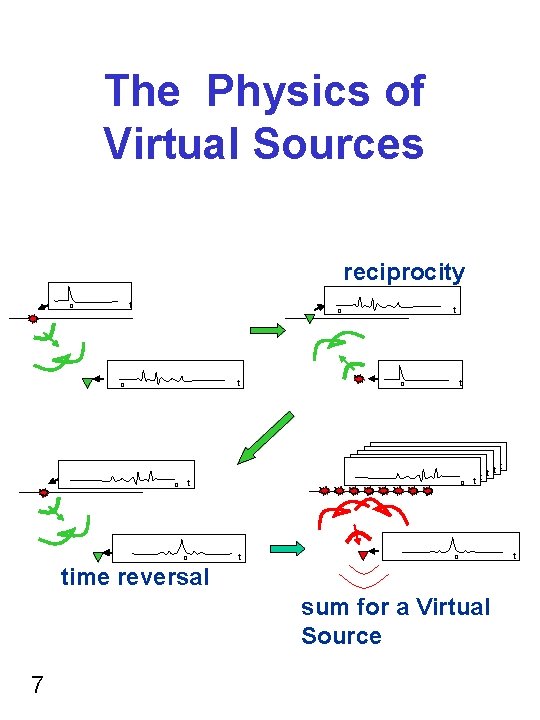
The Physics of Virtual Sources reciprocity t o t ot o to t o t o time reversal sum for a Virtual Source 7 t t
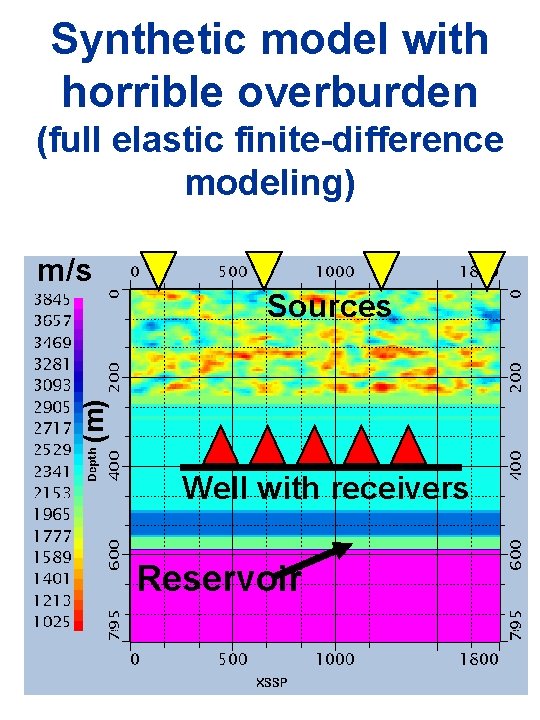
Synthetic model with horrible overburden (full elastic finite-difference modeling) m/s (m) Sources Well with receivers Reservoir 8
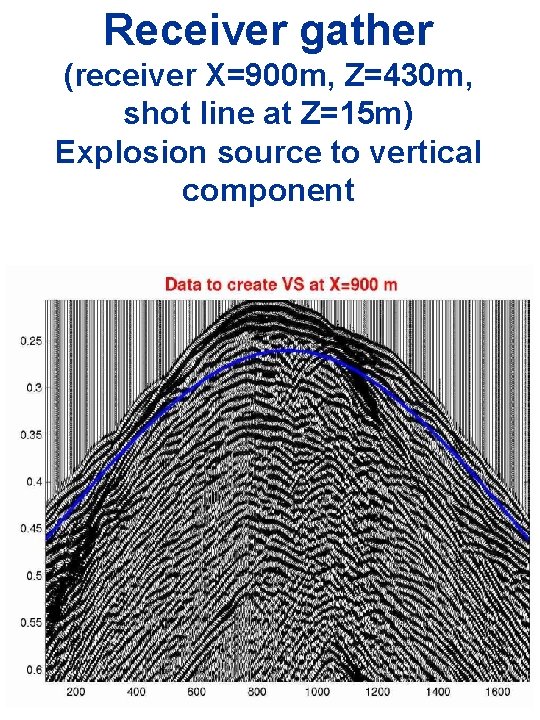
Receiver gather (receiver X=900 m, Z=430 m, shot line at Z=15 m) Explosion source to vertical component 9
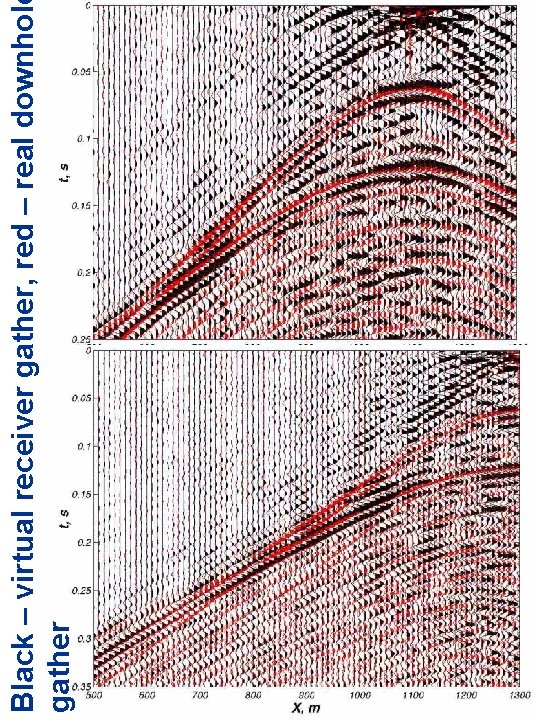
Black – virtual receiver gather, red – real downhol gather 10
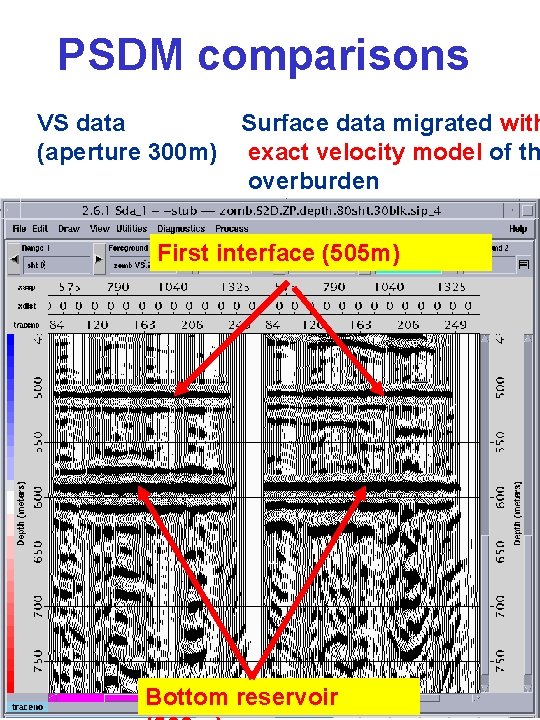
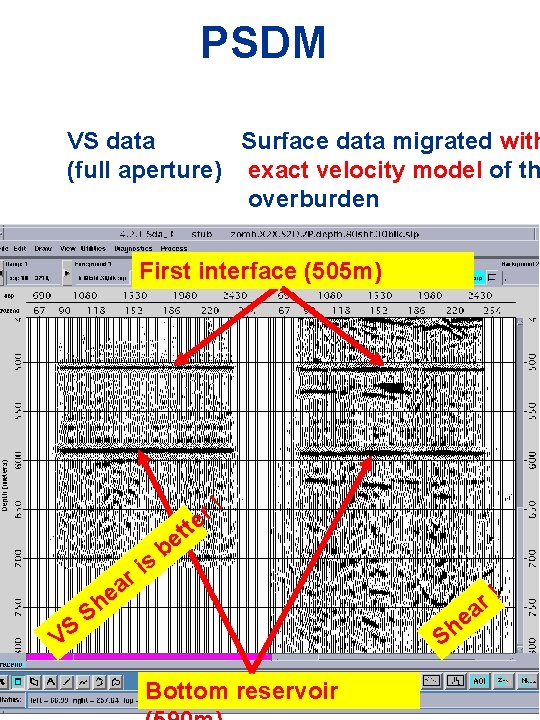
PSDM comparisons VS data (aperture 300 m) Surface data migrated with exact velocity model of th overburden First interface (505 m) 11 Bottom reservoir
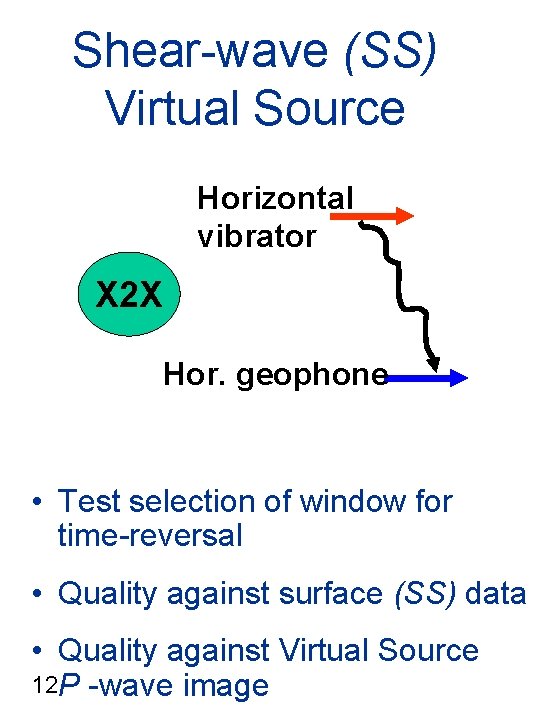
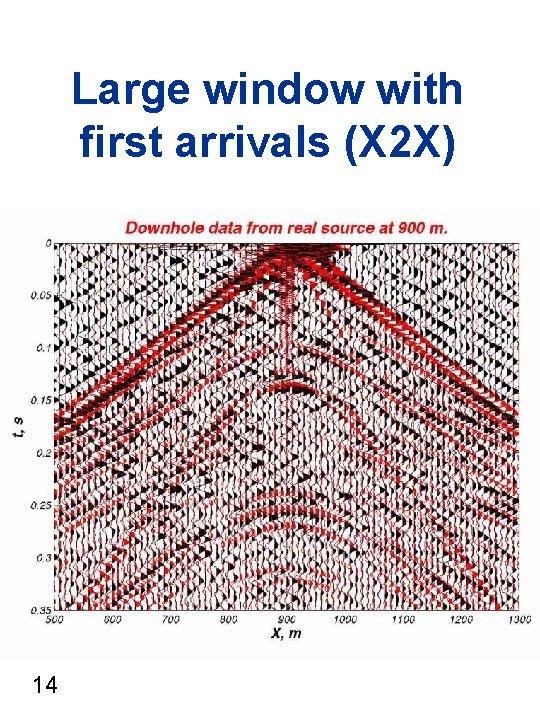
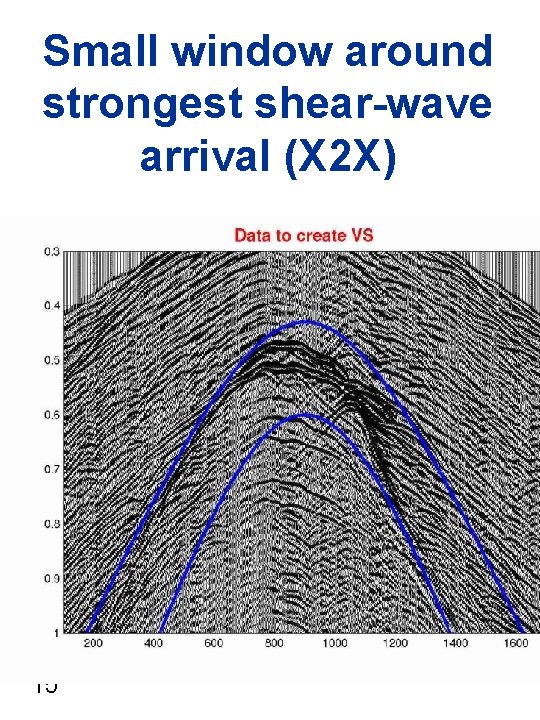
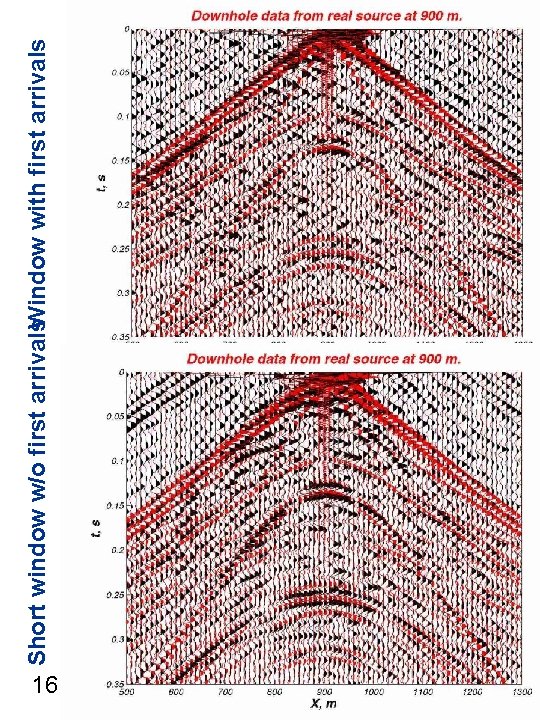
Shear-wave (SS) Virtual Source Horizontal vibrator X 2 X Hor. geophone • Test selection of window for time-reversal • Quality against surface (SS) data • Quality against Virtual Source 12 P -wave image
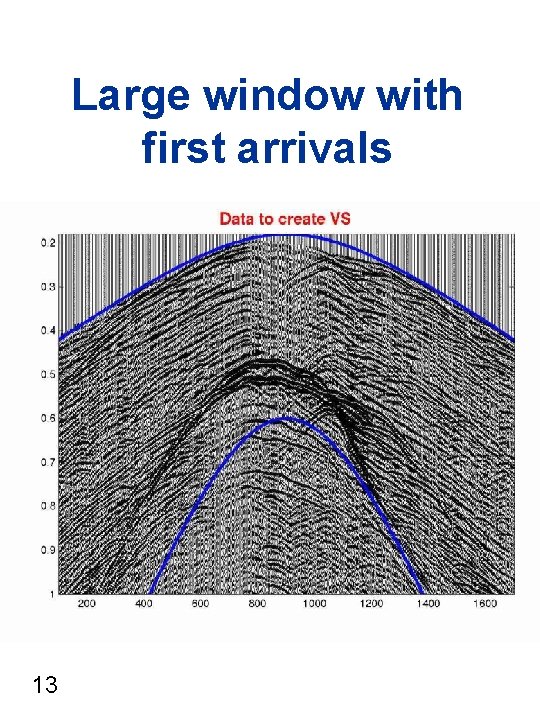
Large window with first arrivals 13
Large window with first arrivals (X 2 X) 14
Small window around strongest shear-wave arrival (X 2 X) 15
16 Short window w/o first arrivals. Window with first arrivals
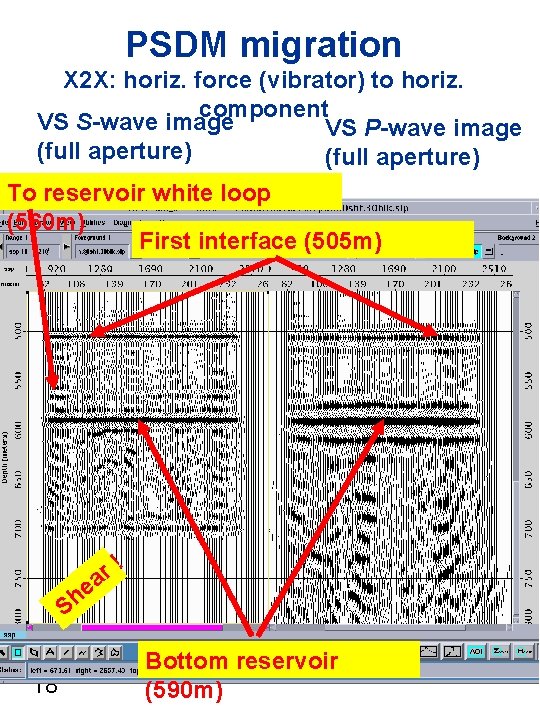
PSDM VS data Surface data migrated with (full aperture) exact velocity model of th overburden First interface (505 m) ! r tte s i r VS 17 be a e Sh e h S ! r a Bottom reservoir
PSDM migration X 2 X: horiz. force (vibrator) to horiz. component VS S-wave image VS P-wave image (full aperture) To reservoir white loop (560 m) First interface (505 m) ! r ea Sh 18 Bottom reservoir (590 m)
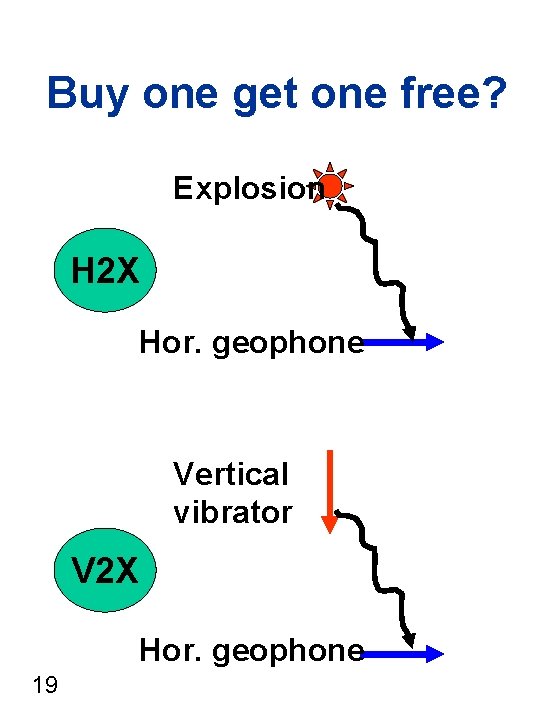
Buy one get one free? Explosion H 2 X Hor. geophone Vertical vibrator V 2 X Hor. geophone 19
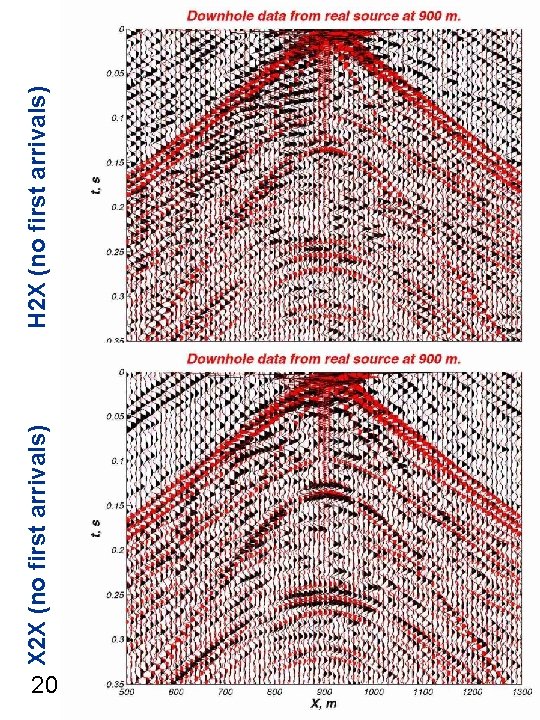
20 X 2 X (no first arrivals) H 2 X (no first arrivals)
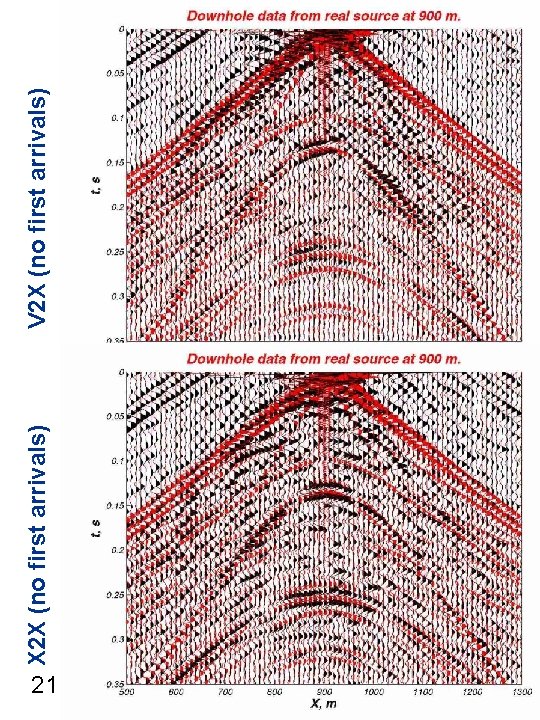
21 X 2 X (no first arrivals) V 2 X (no first arrivals)
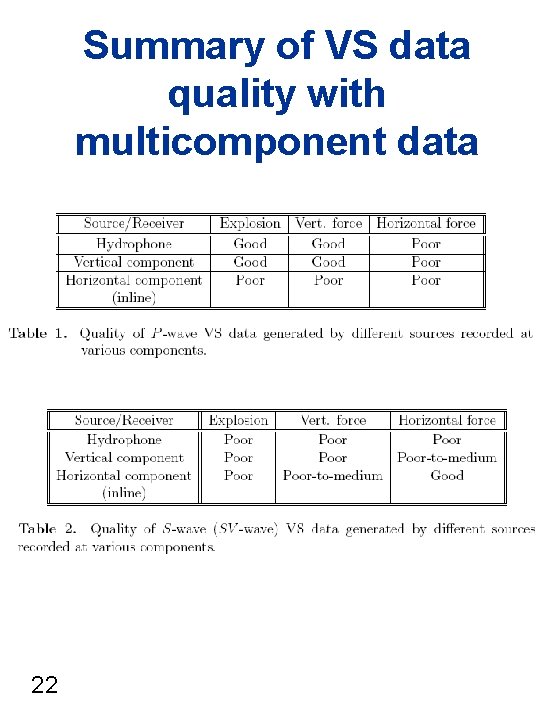
Summary of VS data quality with multicomponent data 22
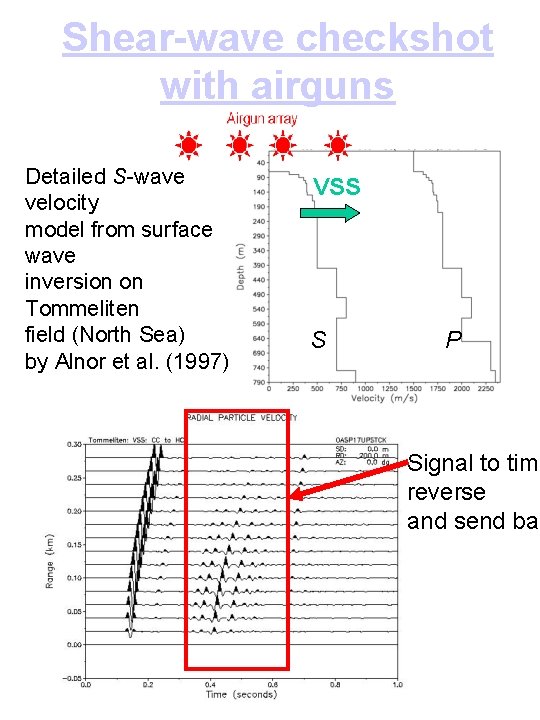
Shear-wave checkshot with airguns Detailed S-wave velocity model from surface wave inversion on Tommeliten field (North Sea) by Alnor et al. (1997) VSS S P Signal to time reverse and send bac 23
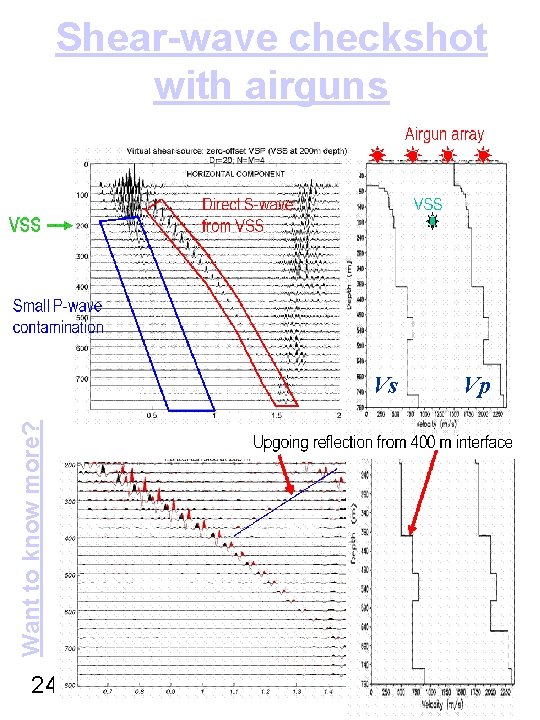
Shear-wave checkshot with airguns Want to know more? Vs 24 Vp
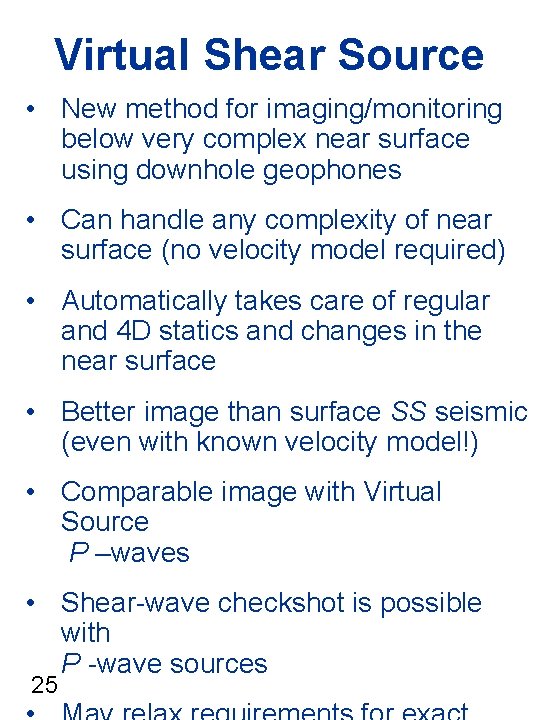
Virtual Shear Source • New method for imaging/monitoring below very complex near surface using downhole geophones • Can handle any complexity of near surface (no velocity model required) • Automatically takes care of regular and 4 D statics and changes in the near surface • Better image than surface SS seismic (even with known velocity model!) • Comparable image with Virtual Source P –waves • Shear-wave checkshot is possible with P -wave sources 25
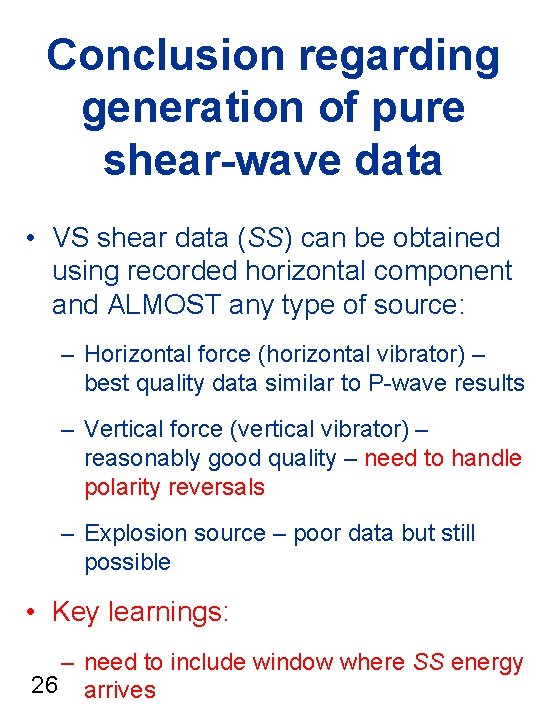
Conclusion regarding generation of pure shear-wave data • VS shear data (SS) can be obtained using recorded horizontal component and ALMOST any type of source: – Horizontal force (horizontal vibrator) – best quality data similar to P-wave results – Vertical force (vertical vibrator) – reasonably good quality – need to handle polarity reversals – Explosion source – poor data but still possible • Key learnings: – need to include window where SS energy 26 arrives