
Virtual Point in Time Access Assaf Natanzon EMC



- Slides: 24
Virtual Point in Time Access Assaf Natanzon EMC, Ben Gurion University Prof. Eitan Bachmat, Ben Gurion University
Outline Motivation Background on Recover. Point replication Virtual Image access algorithm Performance analysis Q&A
Motivation
Motivation for any point in time recovery Fine granular restore of single object Binary search for a good version of an object DR testing of point in time of the storage.
Recover. Point Architecture
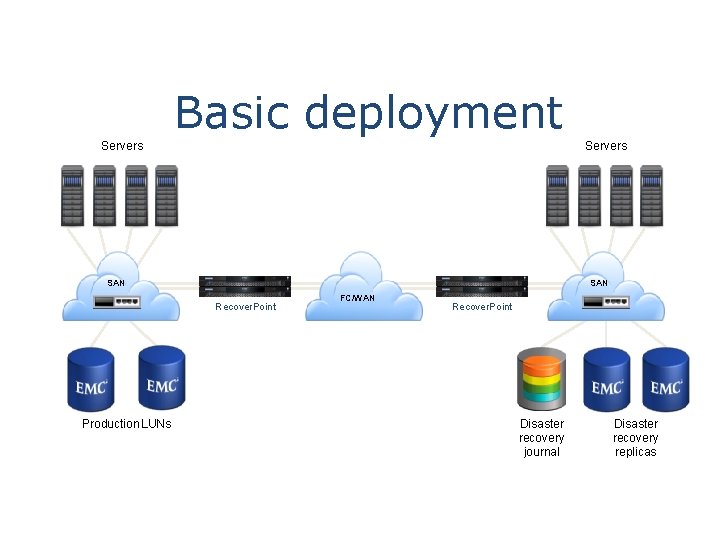
Basic deployment Servers SAN Recover. Point FC/WAN Recover. Point LUN Production LUNs LUN Disaster recovery journal LUN Disaster recovery replicas
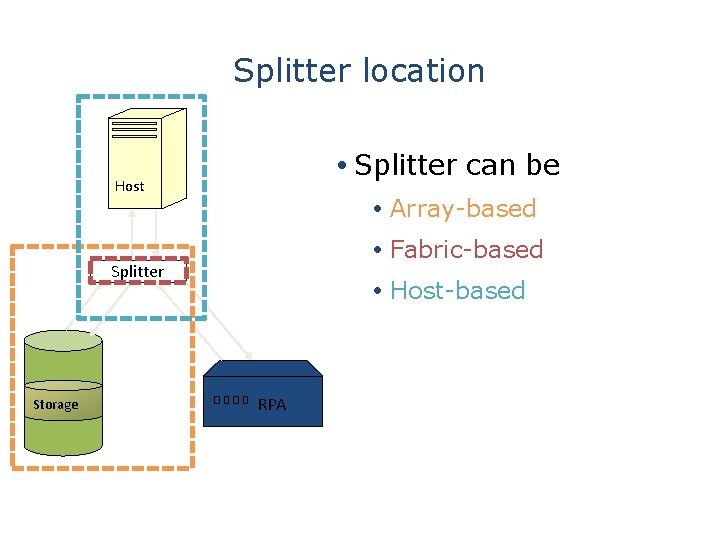
Splitter location Splitter can be Host Array-based Fabric-based Splitter Storage Host-based RPA
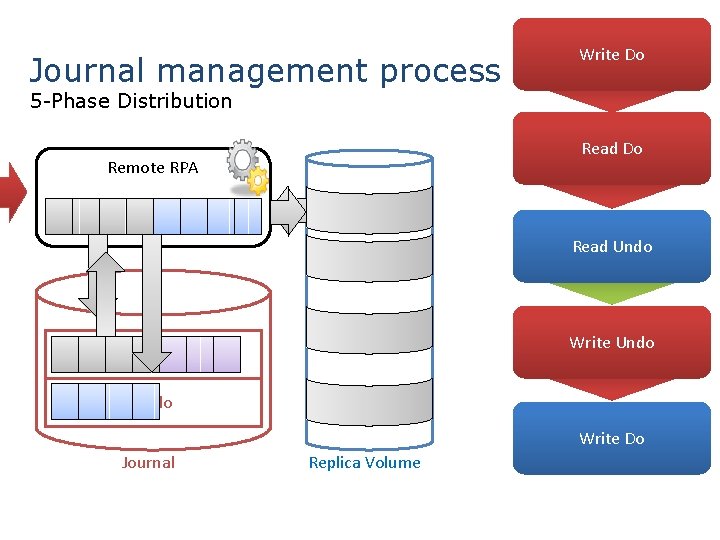
Journal management process Write Do 5 -Phase Distribution Read Do Remote RPA Read Undo Write Undo Do Undo Write Do Journal Replica Volume
Building Virtual Image
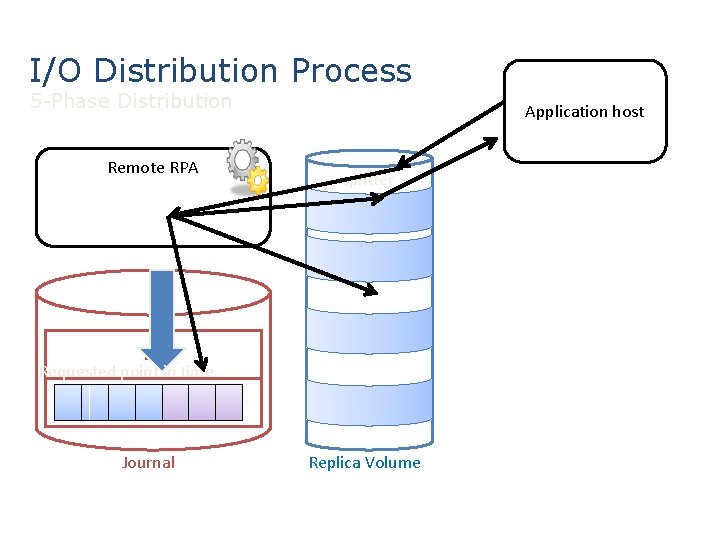
Point in time virtual image of the storage The system creates a virtual image of the volume at the point in time the user requested. The storage exposes the data at the same LU as the replica volume. IOs arriving at the replica volume are redirected at the RPA and data is fetched from the correct location (either the journal or the replica).
I/O Distribution Process 5 -Phase Distribution Remote RPA Application host splitter Do Requested point in time Undo Journal Replica Volume
Data structure Requirements The system creates a data structure which contains the meta data describing the volume The structure must answer the following query: Given an offset and a length, where are the relevant blocks located?
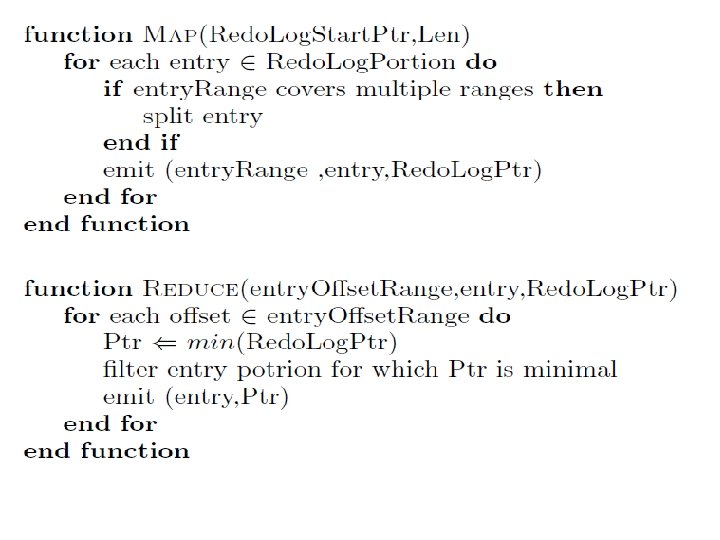
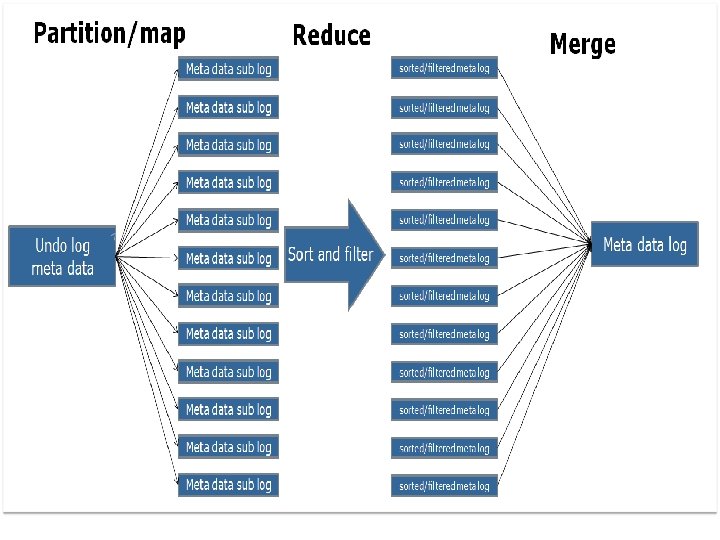
Building the data structure We formalize the building of the data structure in a Map/Reduce formulation. The data structure needs to produce a pointer to the earliest location in the relevant portion of the journal covering the required point in time.
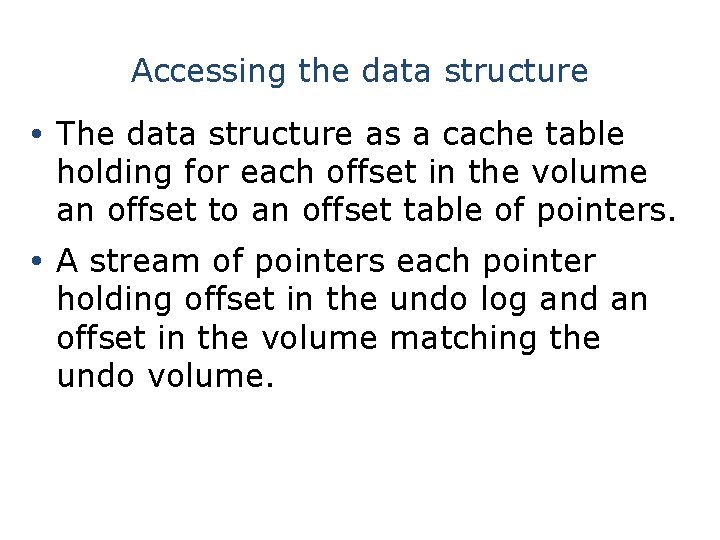
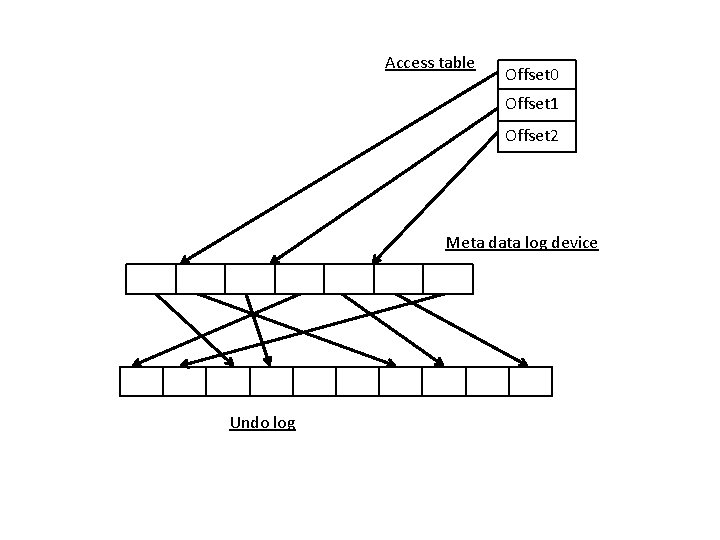
Accessing the data structure The data structure as a cache table holding for each offset in the volume an offset to an offset table of pointers. A stream of pointers each pointer holding offset in the undo log and an offset in the volume matching the undo volume.
Access table Offset 0 Offset 1 Offset 2 Meta data log device Undo log
Performance analysis
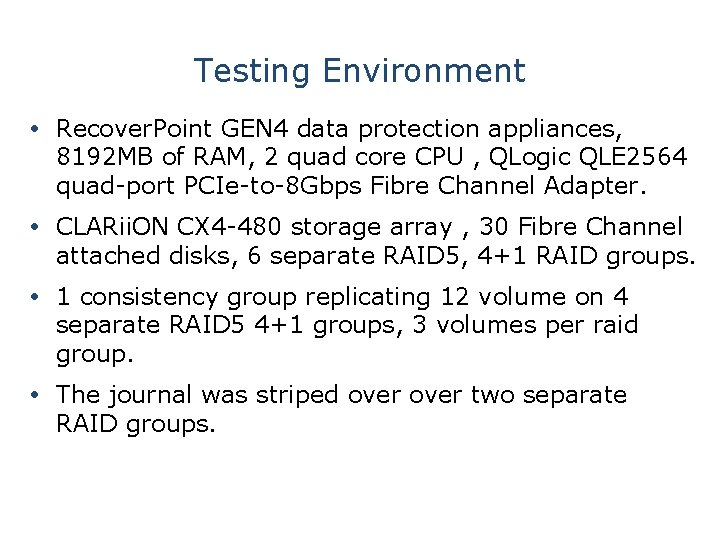
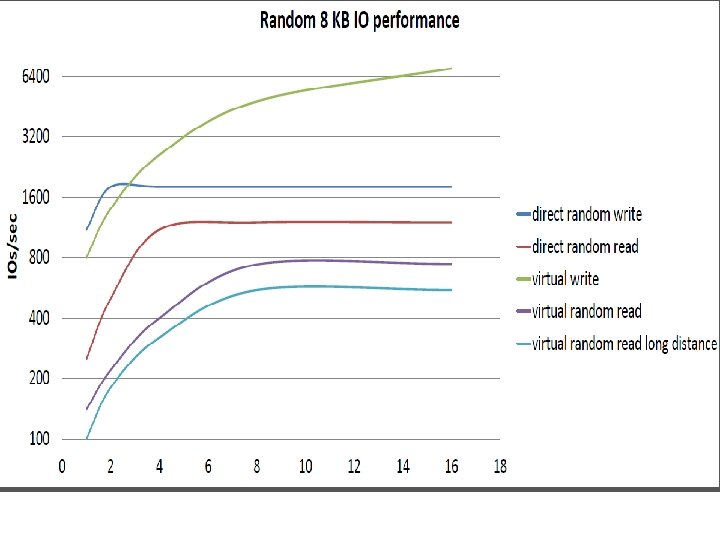
Testing Environment Recover. Point GEN 4 data protection appliances, 8192 MB of RAM, 2 quad core CPU , QLogic QLE 2564 quad-port PCIe-to-8 Gbps Fibre Channel Adapter. CLARii. ON CX 4 -480 storage array , 30 Fibre Channel attached disks, 6 separate RAID 5, 4+1 RAID groups. 1 consistency group replicating 12 volume on 4 separate RAID 5 4+1 groups, 3 volumes per raid group. The journal was striped over two separate RAID groups.
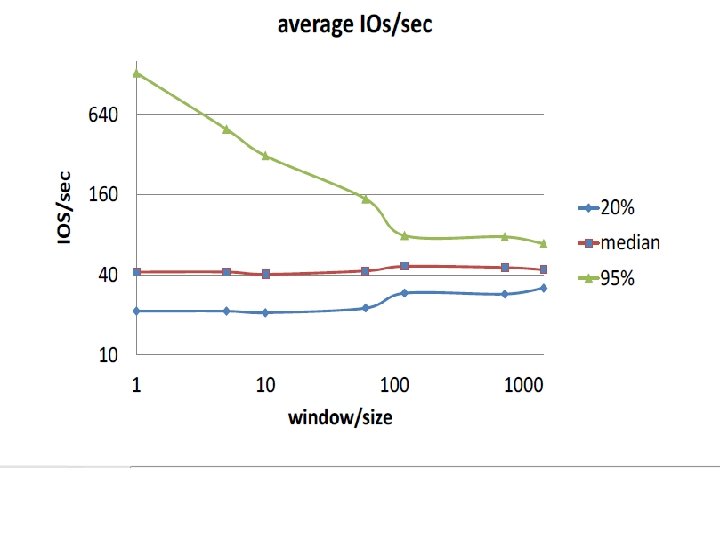
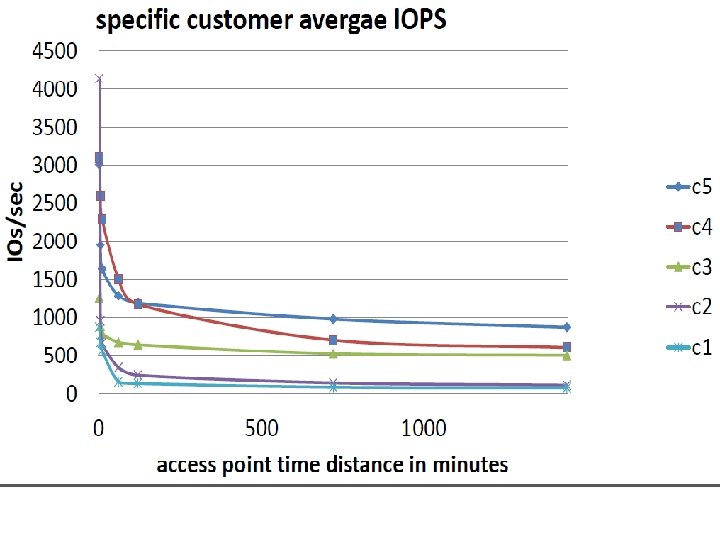
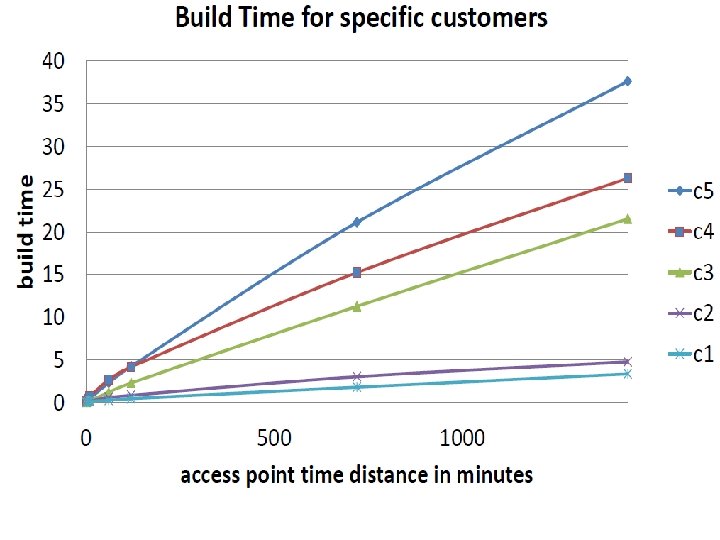
Customer Data We collected data from over 500 customer applications from 20 different customers from multiple industries. The data was collected only for replicated applications, and includes write statistics at per second granularity. We also included special graphs for the 5 top performance applications.