
Virtual Heart Dissection Response Name Mammals have fourchambered
Virtual Heart Dissection Response Name
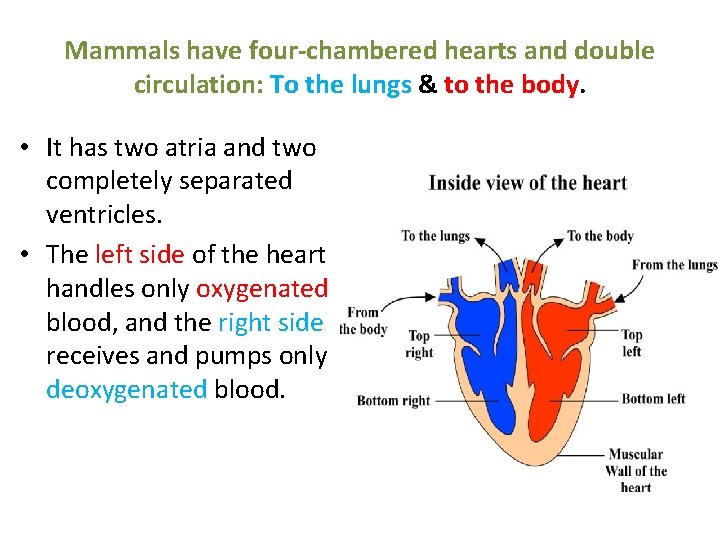
Mammals have four-chambered hearts and double circulation: To the lungs & to the body. • It has two atria and two completely separated ventricles. • The left side of the heart handles only oxygenated blood, and the right side receives and pumps only deoxygenated blood.
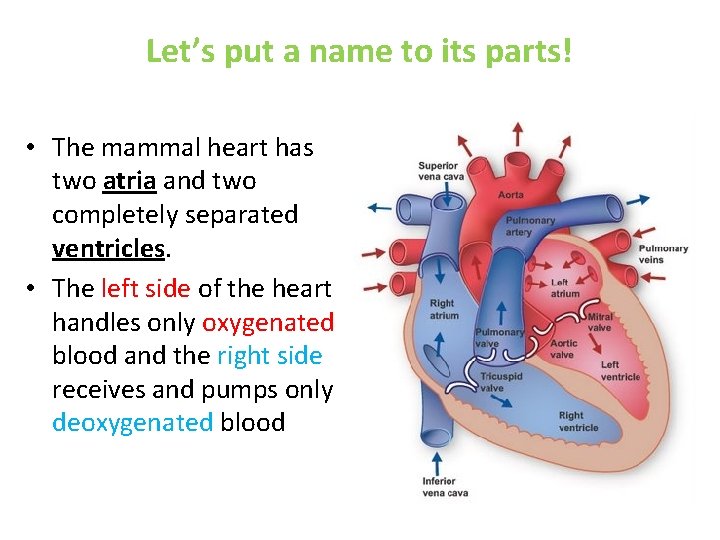
Let’s put a name to its parts! • The mammal heart has two atria and two completely separated ventricles. • The left side of the heart handles only oxygenated blood and the right side receives and pumps only deoxygenated blood
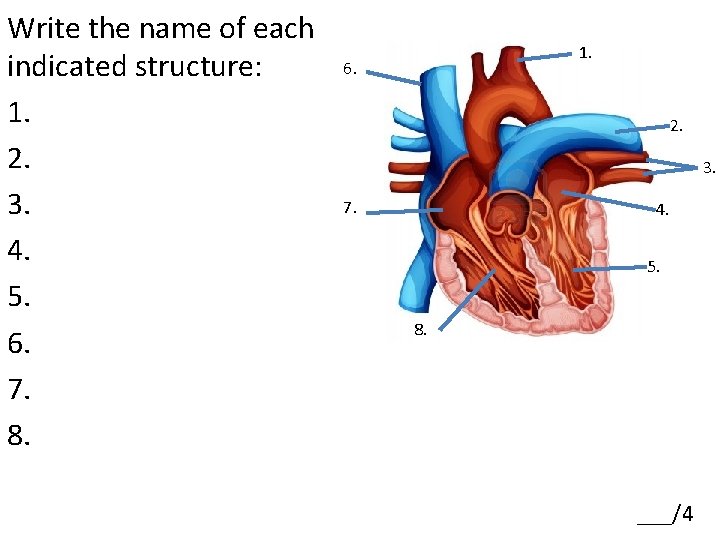
Write the name of each indicated structure: 1. 2. 3. 4. 5. 6. 7. 8. 1. 6. 2. 3. 7. 4. 5. 8. ___/4
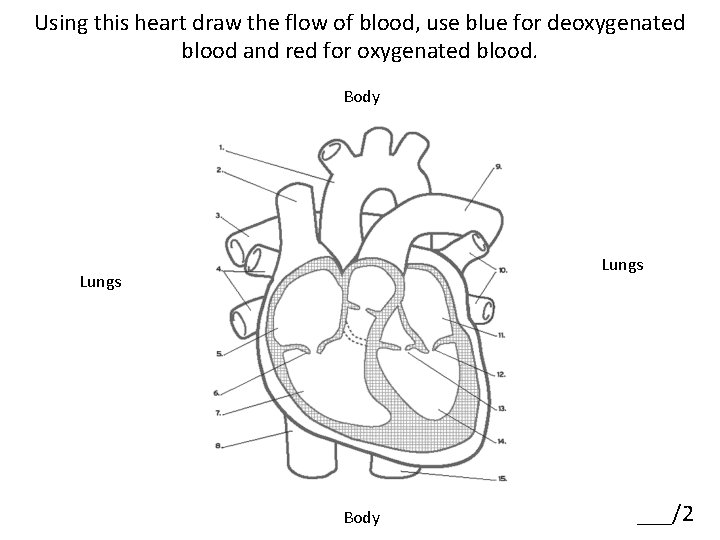
Using this heart draw the flow of blood, use blue for deoxygenated blood and red for oxygenated blood. Body Lungs Body ___/2

Let’s start the dissection: External Structure The heart is now in the pan in the position it would be in a body as you face the body. Remember that the apex of the heart is part of the Left Ventricle, you should see the interventricular septum (labeled as the coronary blood vessels in the picture) The atria are very small and brown and found on the top of the heart – you may also want to try to identify the pulmonary artery which will leave the right ventricle on the anterior surface of the heart Right Left Front or Ventral Side of the Heart
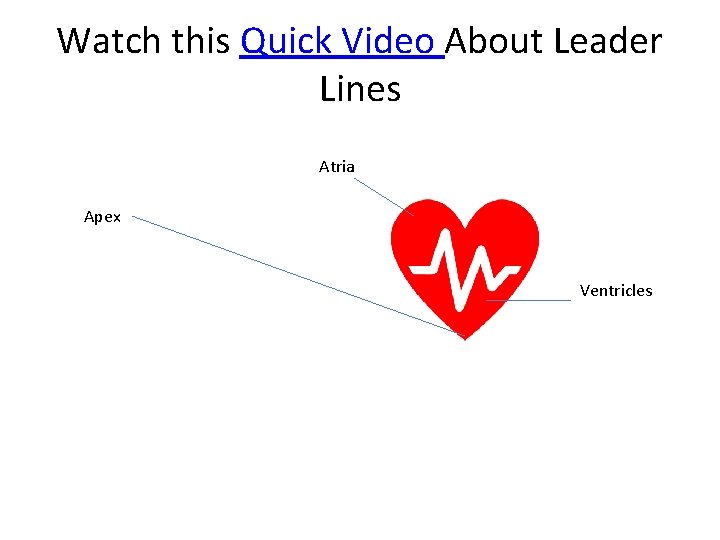
Watch this Quick Video About Leader Lines Atria Apex Ventricles

EXTERNAL STRUCTURE VENTRAL VIEW FIRST: Watch the Video SECOND: move the text boxes and DRAW LEADER LINES to label the picture. Left atria Left ventricle Right atria ___/4
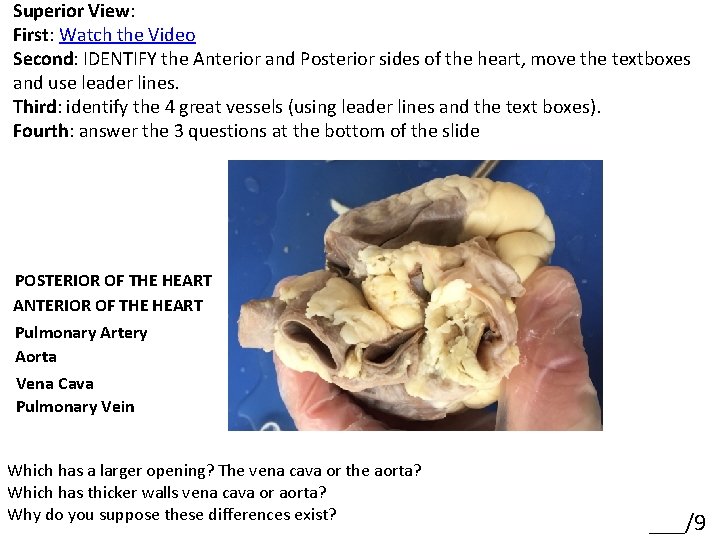
Superior View: First: Watch the Video Second: IDENTIFY the Anterior and Posterior sides of the heart, move the textboxes and use leader lines. Third: identify the 4 great vessels (using leader lines and the text boxes). Fourth: answer the 3 questions at the bottom of the slide POSTERIOR OF THE HEART ANTERIOR OF THE HEART Pulmonary Artery Aorta Vena Cava Pulmonary Vein Which has a larger opening? The vena cava or the aorta? Which has thicker walls vena cava or aorta? Why do you suppose these differences exist? ___/9
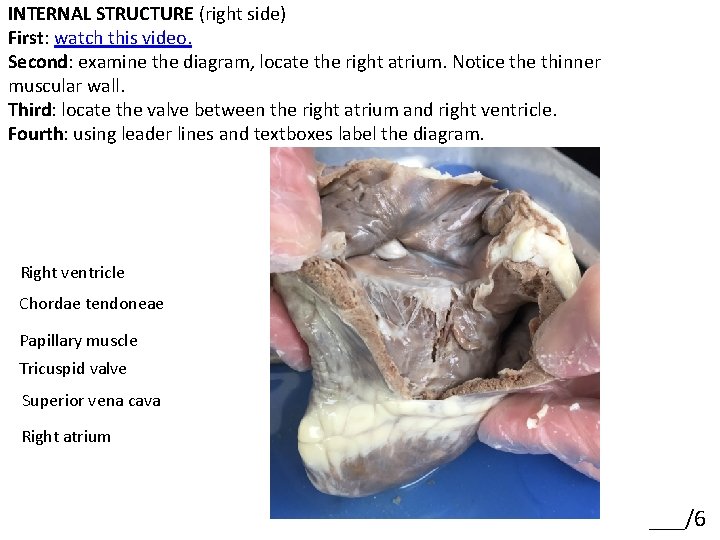
INTERNAL STRUCTURE (right side) First: watch this video. Second: examine the diagram, locate the right atrium. Notice thinner muscular wall. Third: locate the valve between the right atrium and right ventricle. Fourth: using leader lines and textboxes label the diagram. Right ventricle Chordae tendoneae Papillary muscle Tricuspid valve Superior vena cava Right atrium ___/6
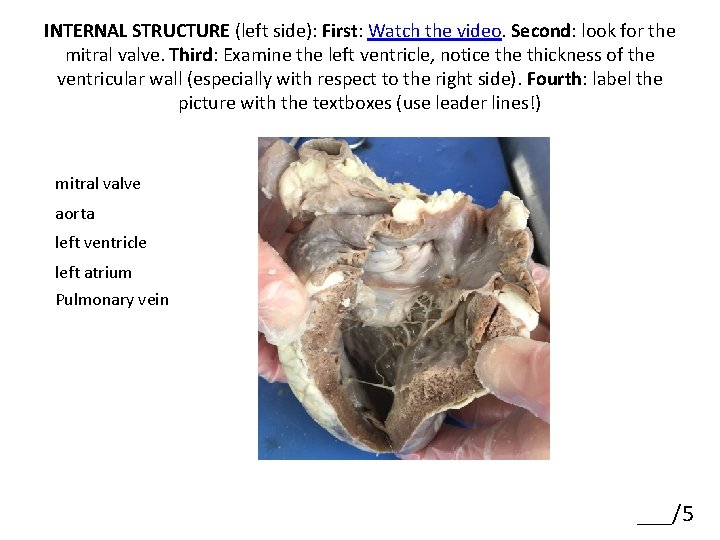
INTERNAL STRUCTURE (left side): First: Watch the video. Second: look for the mitral valve. Third: Examine the left ventricle, notice thickness of the ventricular wall (especially with respect to the right side). Fourth: label the picture with the textboxes (use leader lines!) mitral valve aorta left ventricle left atrium Pulmonary vein ___/5
Conclusion Questions: • Blood that moves from the heart to the lungs and back to the heart again is in the _______ circuit. Blood moving throughout the body is in the _______ circuit. • Name and give the function of all four valves of the heart. • What is the apex of the heart and where is it located? • What divides the left and right side of the heart? • Which side is more muscular? ___/8
Now Save this File and drop it to Canvas. Hope you had Fun!
Rubric • Slide 4: ___/2 • Slide 5: ___/1 • Slide 7: ___/2 • Slide 8: ___/4. 5 • Slide 9: ___/3 • Slide 10: ___/2. 5 • Slide 11: ___/4 Total ___/19
- Slides: 14