
Virtual Disaster Viewer Understanding Disasters through Shared Knowledge
- Slides: 20
Virtual Disaster Viewer: Understanding Disasters through Shared Knowledge DHS – S&T Workshop on Emergency Management: Incident, Resource, and Supply Chain Management 5 -6, November 2009, UCI, Irvine, CA Ronald T. Eguchi Paul Amyx Charles K. Huyck Image. Cat, Inc. www. virtualdisasterviewer. com
Presentation Outline • • • The Problem VDV interface for damage assessment Outreach Future activities Summary
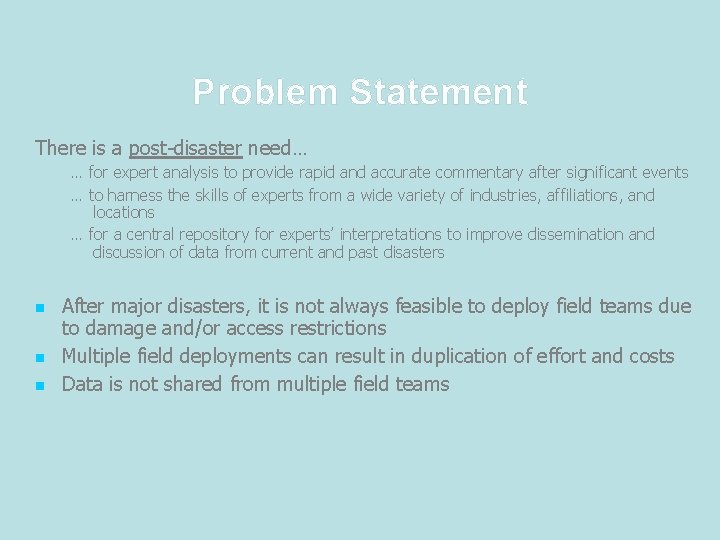
Problem Statement There is a post-disaster need… … for expert analysis to provide rapid and accurate commentary after significant events … to harness the skills of experts from a wide variety of industries, affiliations, and locations … for a central repository for experts’ interpretations to improve dissemination and discussion of data from current and past disasters After major disasters, it is not always feasible to deploy field teams due to damage and/or access restrictions Multiple field deployments can result in duplication of effort and costs Data is not shared from multiple field teams
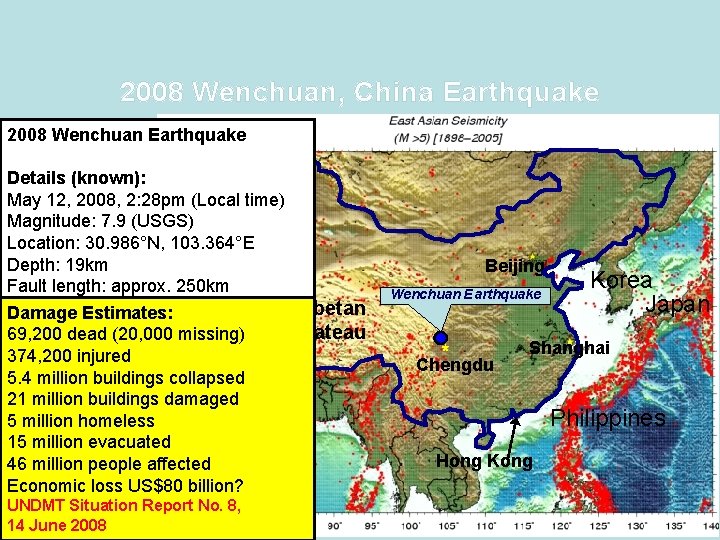
2008 Wenchuan, China Earthquake 2008 Wenchuan Earthquake Details (known): May 12, 2008, 2: 28 pm (Local time) Magnitude: 7. 9 (USGS) Location: 30. 986°N, 103. 364°E Depth: 19 km Fault length: approx. 250 km Tibetan Damage Estimates: Details (unknown): Plateau 69, 200 dead (20, 000 missing) Number ? dead (missing) 374, 200 of injured ? injured 5. 4 million buildings collapsed ? buildings collapsed 21 million buildings damaged ? buildings damaged 5 million homeless ? homeless 15 million evacuated ? evacuated 46 million people affected ? US$80 people affected Economic loss billion? ? Economic loss UNDMT Situation Report No. 8, 14 June 2008 Beijing Wenchuan Earthquake Chengdu Korea Japan Shanghai Philippines Hong Kong
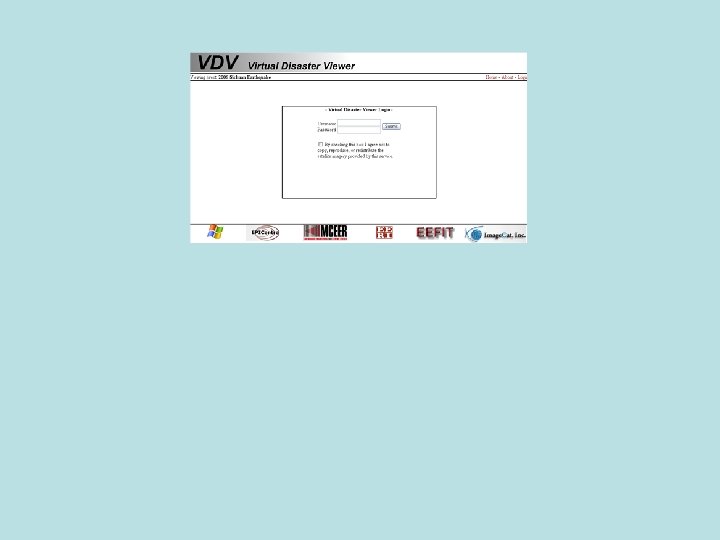
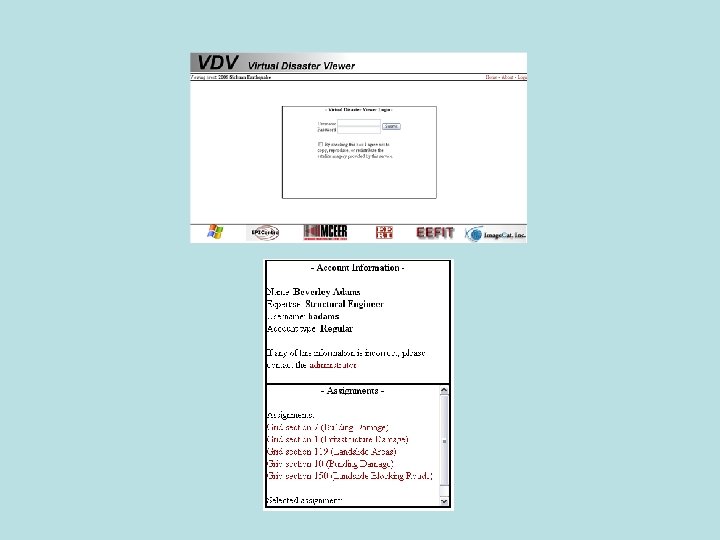
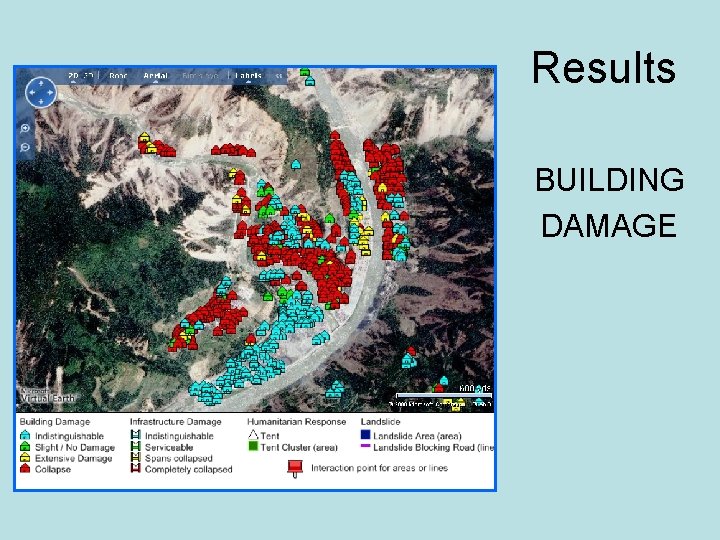
VDV Interface for Damage Assessment • • The login procedure Accepting an assignment Scope of evaluation The notion of a damage scale based on remote-sensed images • Damage assessment procedure • Results from 2008 Sichuan, China earthquake
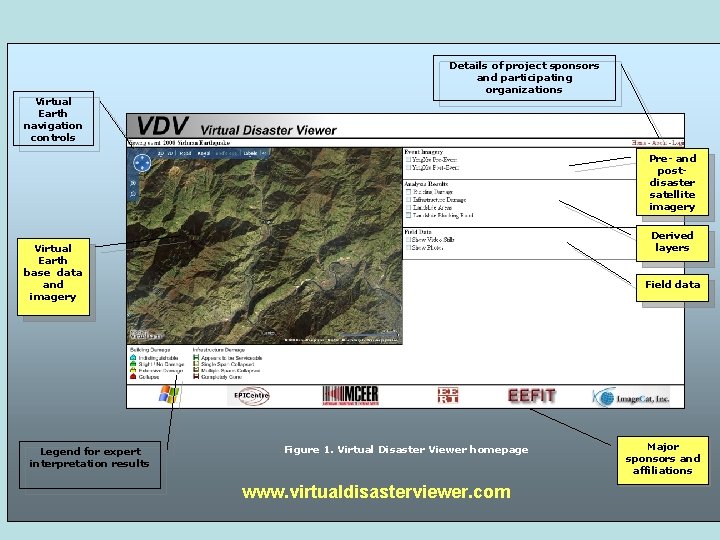
Virtual Earth navigation controls Details of project sponsors and participating organizations Pre- and postdisaster satellite imagery Derived layers Virtual Earth base data and imagery Legend for expert interpretation results Field data Figure 1. Virtual Disaster Viewer homepage www. virtualdisasterviewer. com Major sponsors and affiliations
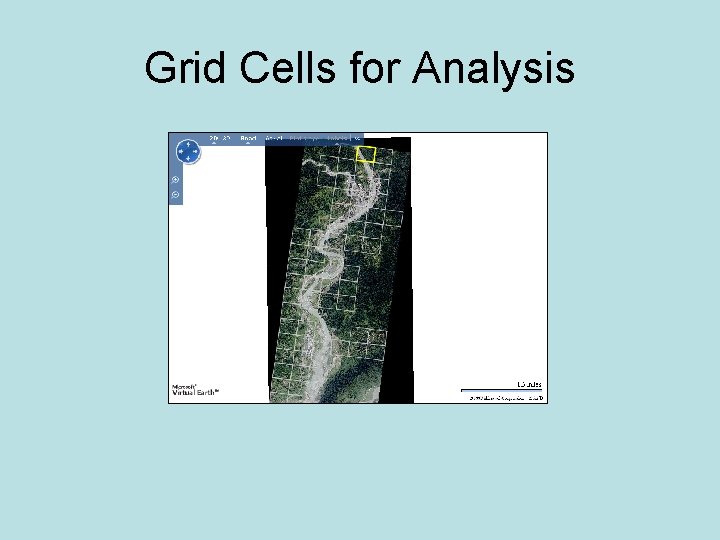
Grid Cells for Analysis
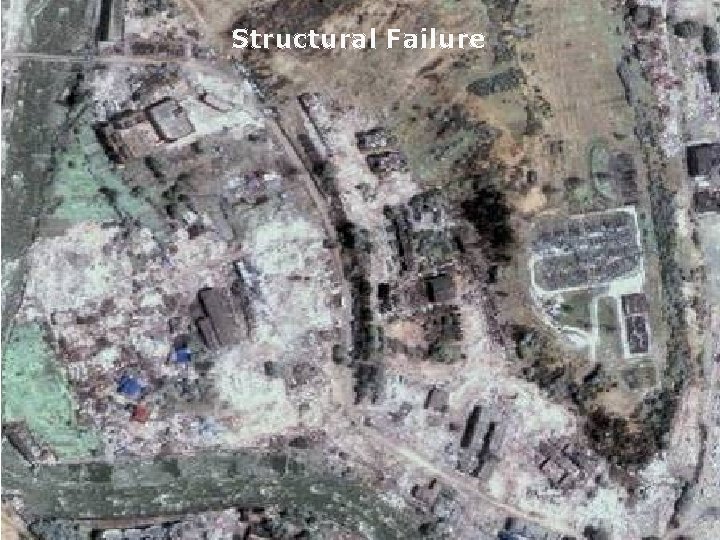
Structural Failure
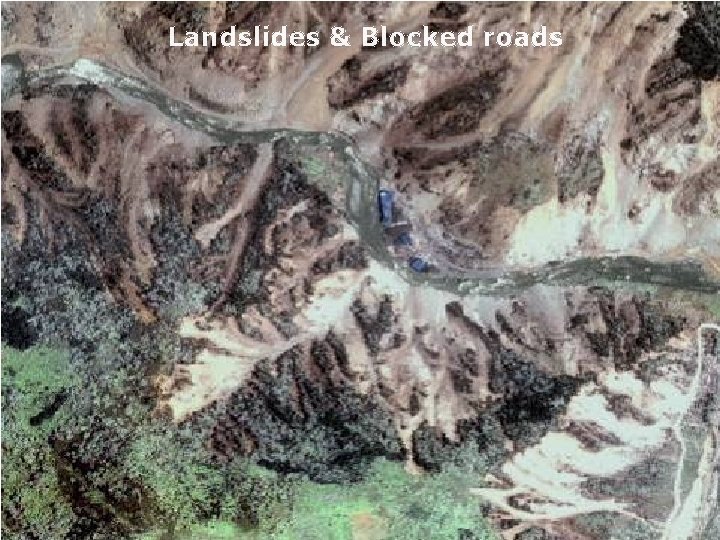
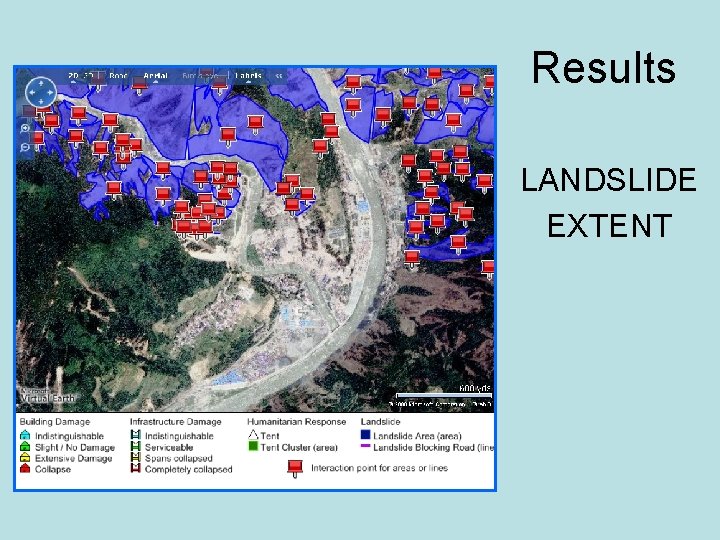
Landslides & Blocked roads
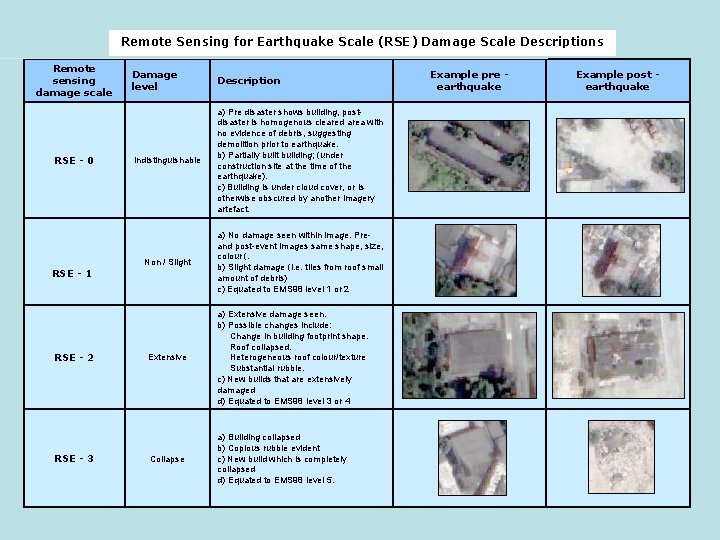
Remote Sensing for Earthquake Scale (RSE) Damage Scale Descriptions Remote sensing damage scale RSE - 0 Damage level Description Indistinguishable a) Pre disaster shows building, postdisaster is homogenous cleared area with no evidence of debris, suggesting demolition prior to earthquake. b) Partially built building; (under construction site at the time of the earthquake). c) Building is under cloud cover, or is otherwise obscured by another imagery artefact. Non / Slight a) No damage seen within image. Preand post-event images same shape, size, colour (. b) Slight damage (i. e. tiles from roof small amount of debris) c) Equated to EMS 98 level 1 or 2 RSE - 1 RSE - 2 RSE - 3 Extensive a) Extensive damage seen. b) Possible changes include: Change in building footprint shape. Roof collapsed. Heterogeneous roof colour/texture Substantial rubble. c) New builds that are extensively damaged d) Equated to EMS 98 level 3 or 4 Collapse a) Building collapsed b) Copious rubble evident c) New build which is completely collapsed d) Equated to EMS 98 level 5. Example pre earthquake Example post earthquake
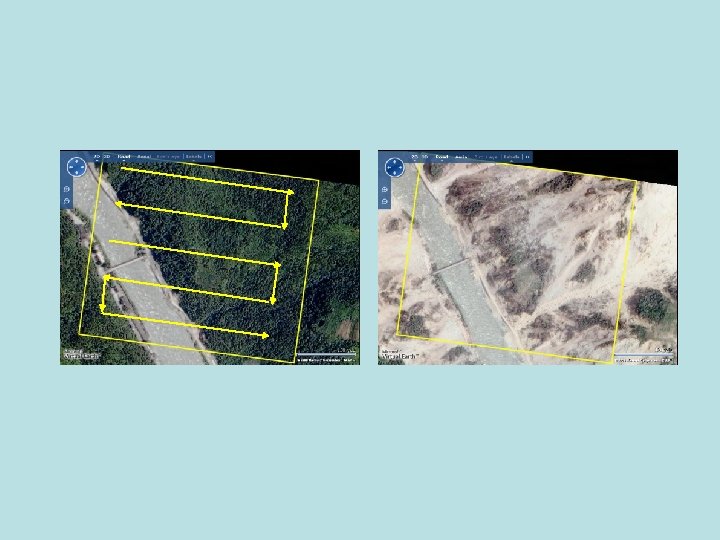
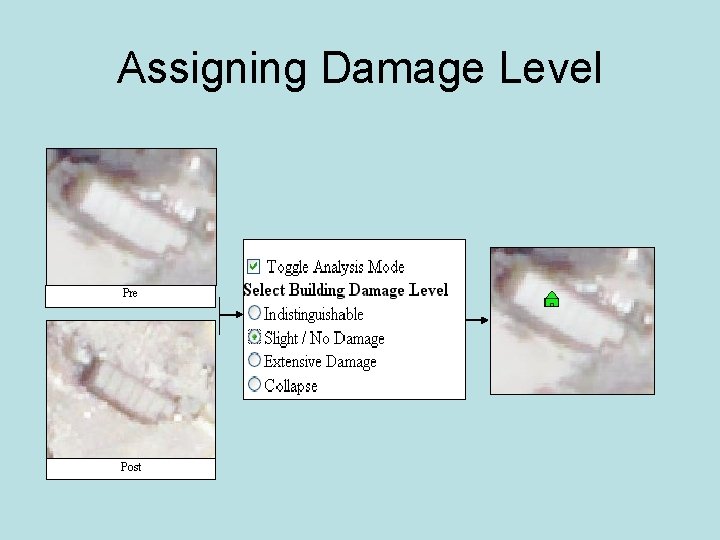
Assigning Damage Level Pre Post
Results BUILDING DAMAGE
Results LANDSLIDE EXTENT
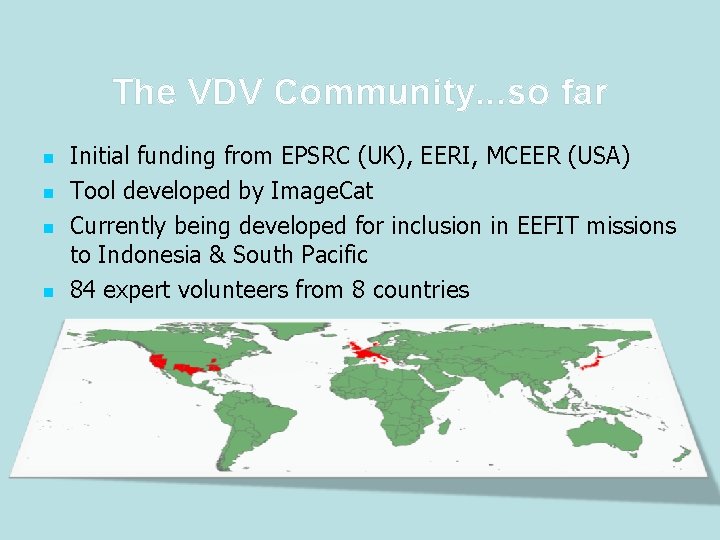
The VDV Community. . . so far Initial funding from EPSRC (UK), EERI, MCEER (USA) Tool developed by Image. Cat Currently being developed for inclusion in EEFIT missions to Indonesia & South Pacific 84 expert volunteers from 8 countries
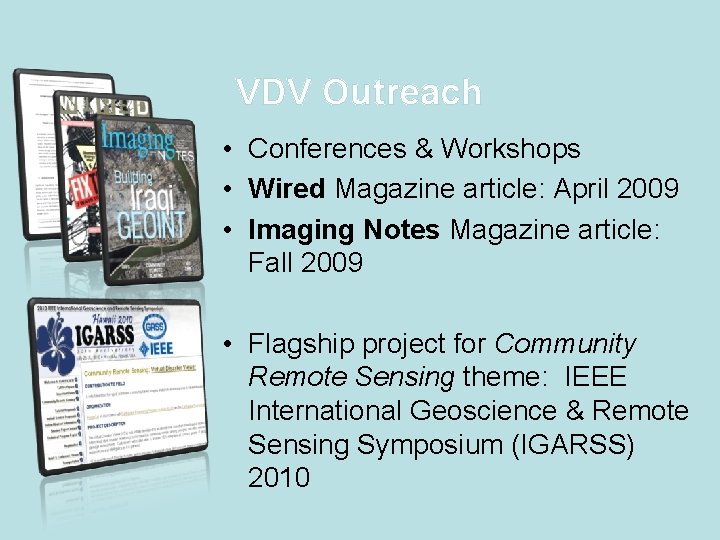
VDV Outreach • Conferences & Workshops • Wired Magazine article: April 2009 • Imaging Notes Magazine article: Fall 2009 • Flagship project for Community Remote Sensing theme: IEEE International Geoscience & Remote Sensing Symposium (IGARSS) 2010
Future VDV • Sumatra & Samoa currently being developed • Validation of expert analysis & assessing experts’ skills – “superusers” • Extend functionality may include – Video field blogs & text summaries of professional findings – Greater use of commenting facilities – Develop analytical tools for automatic interpretation of results
Summary • VDV developed to fill technological need for a post-disaster data portal • Multiple functions developed according to needs of field teams on per-event basis • Currently broadening VDV’s outreach for future funding and data partnerships • A growing community of expert users and contributors are realizing VDV’s potential