
Virtual Characters Overview n n n What is


- Slides: 13
Virtual Characters
Overview n n n What is a digital character? Why do would we want digital characters? Scope of the problem What we want to tackle How we want to tackle it
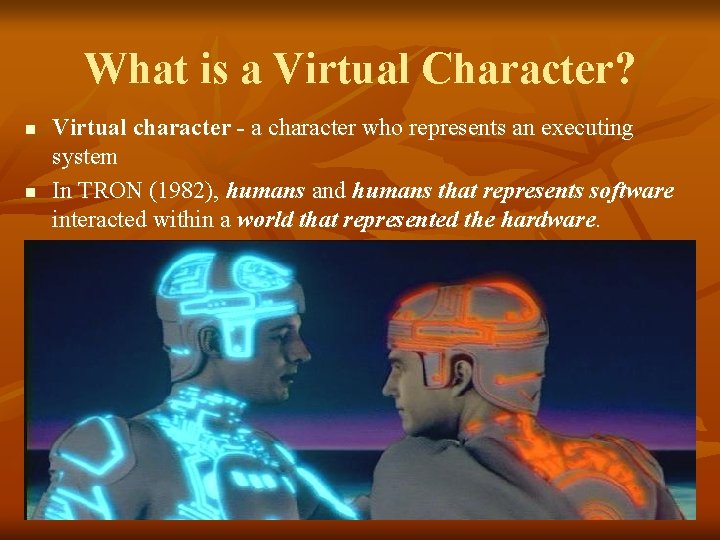
What is a Virtual Character? n n Virtual character - a character who represents an executing system In TRON (1982), humans and humans that represents software interacted within a world that represented the hardware.
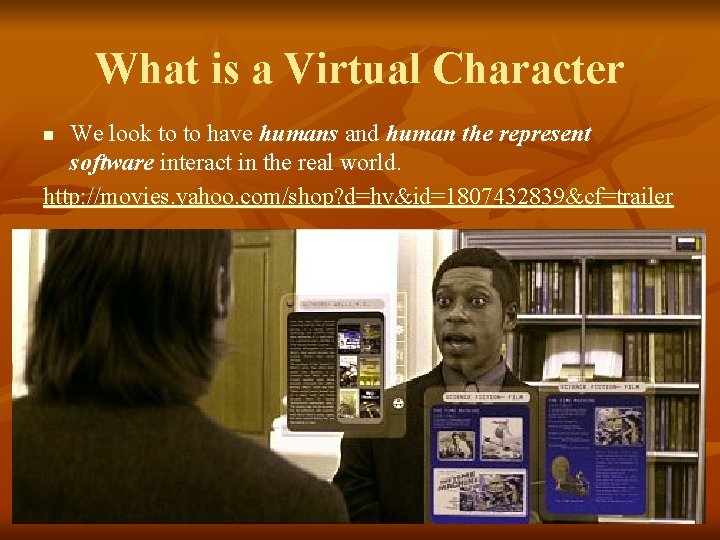
What is a Virtual Character We look to to have humans and human the represent software interact in the real world. http: //movies. yahoo. com/shop? d=hv&id=1807432839&cf=trailer n
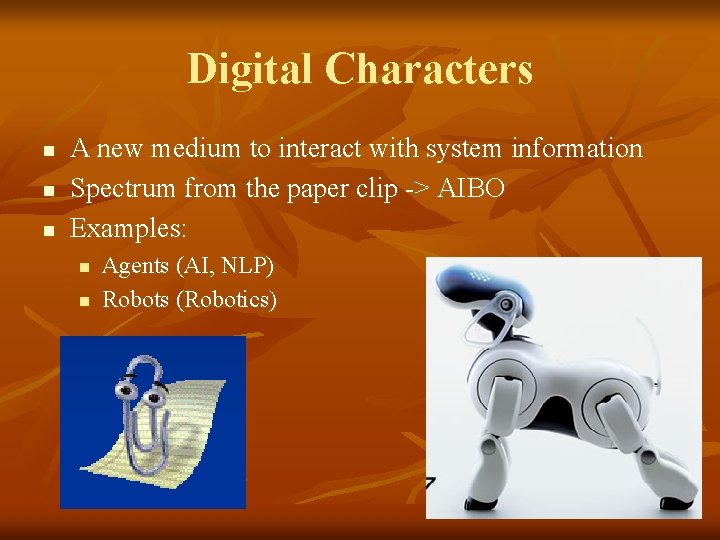
Digital Characters n n n A new medium to interact with system information Spectrum from the paper clip -> AIBO Examples: n n Agents (AI, NLP) Robots (Robotics)
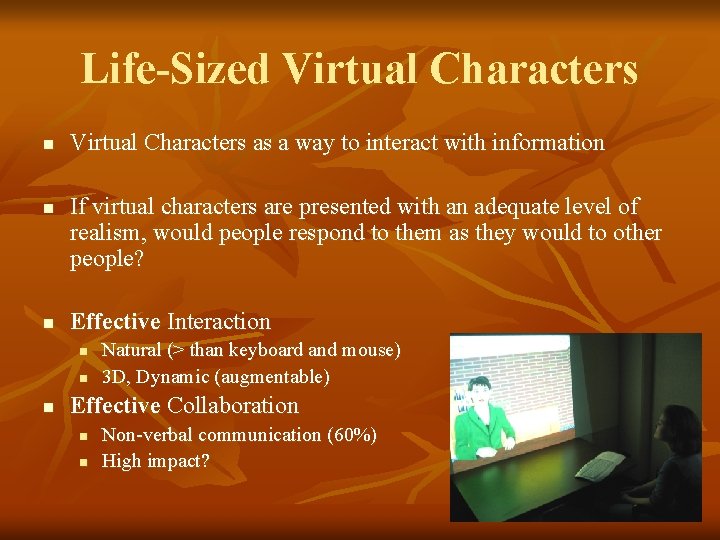
Life-Sized Virtual Characters n n n Virtual Characters as a way to interact with information If virtual characters are presented with an adequate level of realism, would people respond to them as they would to other people? Effective Interaction n Natural (> than keyboard and mouse) 3 D, Dynamic (augmentable) Effective Collaboration n n Non-verbal communication (60%) High impact?
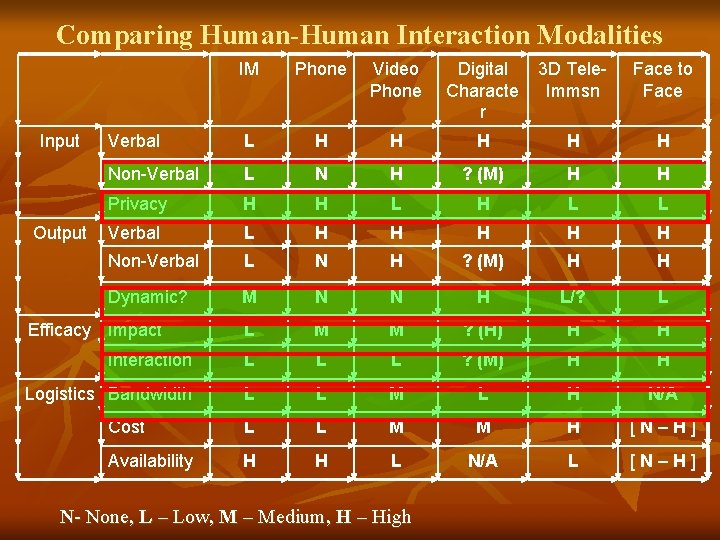
Comparing Human-Human Interaction Modalities IM Phone Video Phone Digital Characte r 3 D Tele. Immsn Face to Face Verbal L H H H Non-Verbal L N H ? (M) H H Privacy H H L L Verbal L H H H Non-Verbal L N H ? (M) H H Dynamic? M N N H L/? L L M M ? (H) H H Interaction L L L ? (M) H H Logistics Bandwidth L L M L H N/A Cost L L M M H [N–H] Availability H H L N/A L [N–H] Input Output Efficacy Impact N- None, L – Low, M – Medium, H – High
Digital Characters n Advantages: n n n Input: Non-Verbal, privacy Output: Non-Verbal, dynamic Efficacy: Impact, interaction Logistics: Bandwidth, Cost Disadvantages: n n n Input: Non-verbal fidelity Output: Non-verbal fidelity Efficacy: Interaction fidelity
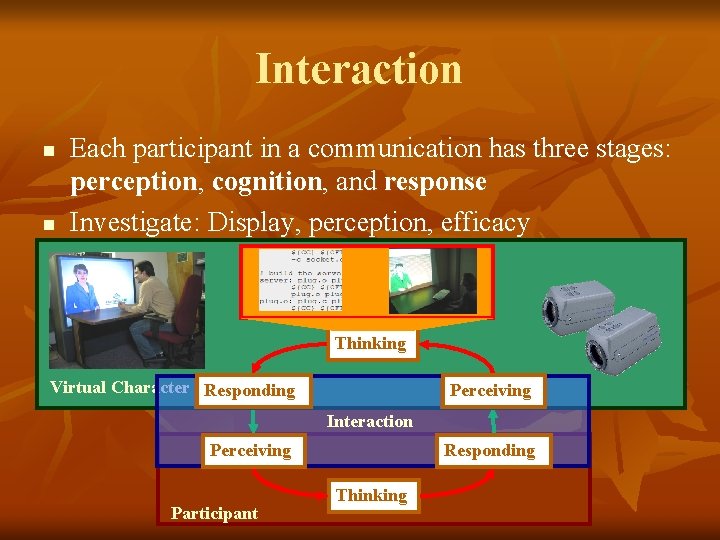
Interaction n n Each participant in a communication has three stages: perception, cognition, and response Investigate: Display, perception, efficacy Thinking Virtual Character Responding Perceiving Interaction Perceiving Participant Responding Thinking
What we plan on studying n n There are many components in digital characters We will focus only on interaction n Input (perception) n n n Output (response) n n n How can we have the system capture non-verbal information? (emotion, gestures, eye-gaze, etc. ) Proposed solution: Initially straps -> advanced computer vision techniques How do we display the digital character? Proposed solution: Evaluate different display technologies Eventually we will look at efficacy (future research)
How we plan on studying it n Perception: n n STRAPS: Track head, arms, upper body, and objects (telephone). Develop techniques to transmit eye-gaze and expressions User Studies: Evaluate effectiveness of each component Response: n Evaluate the display modality. User Studies: n n Immersive vs Non-Immersive Life-sized vs. Non-life sized 2 D vs 3 D Goal: TV + webcams + laptop
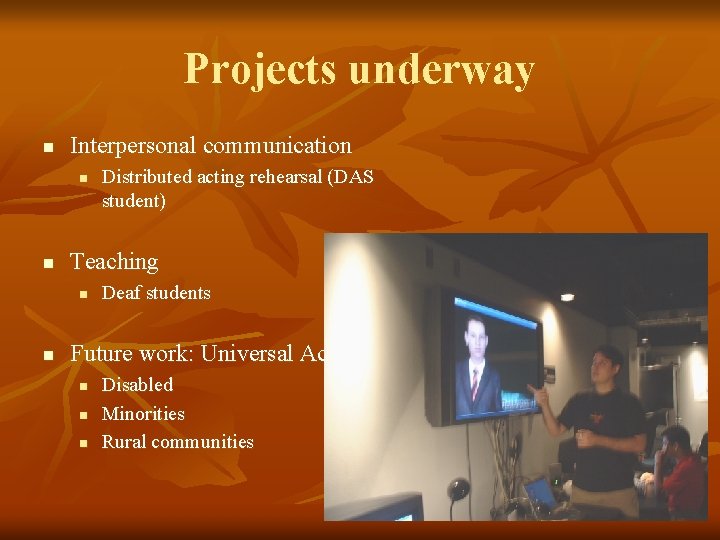
Projects underway n Interpersonal communication n n Teaching n n Distributed acting rehearsal (DAS student) Deaf students Future work: Universal Access n n n Disabled Minorities Rural communities
Recruiting n Looking for n n MS and Ph. D students Equipment n n n n Wide area 12’x 12’ tracker V 8 HMD 42” plasma TV Cyberware Scanner 6 data projectors (stereo) Firewire cameras High-end PCs, video n Work with n n n Cognitive Psychologists Computer Scientists Computational Geometry Aesthetic computing Simulation/modeling Digital Arts and Science